
Reviewed · WALKING TOURS IN ROME
Rome: Walking Tour of World War 2 in Rome
Walking past Rome’s monuments is easy. Understanding what those same streets meant during World War II is the twist.
I love how this Rome WWII walking tour points out the kind of details you usually miss, from Fascist-era staging in central squares to memorials that seem to blend into the city fabric. I also like the small group setup, limited to 10 people, which keeps the conversation focused and gives you room to ask questions. One drawback to consider, though: you are walking and talking for 2.5 hours, and the subject matter is heavy, so it helps if you feel good about history that is emotionally direct.
In This Review
- Key things you’ll notice right away
- Why this Rome WWII walk changes what you see
- Meeting at Trajan’s Column, and what to look for
- The walk from Trajan’s Column to Piazza Venezia
- Ancient Rome at the Forum, and the Mussolini connection
- Capitoline Hill and the Caesar assassination site you might miss
- The Jewish Ghetto stop, and why the story matters
- Piazza Navona to the Tiber River, plus the Church’s wartime role
- June 1944 in Rome: the moment the city changed
- The guide makes a difference, and James sets the tone
- Price and value: is $88 for 2.5 hours worth it?
- Comfort and weather: how to plan so the tour stays enjoyable
- Who this tour suits best
- Should you book this Rome WWII walking tour?
- FAQ
- Where is the meeting point?
- How early should I arrive?
- How long is the tour?
- Is the tour guided in English?
- How big is the group?
- Is the tour wheelchair accessible?
- What is included in the price?
- What is not included?
- What should I bring or wear?
- Does the tour run in bad weather?
Key things you’ll notice right away
- Hidden-in-plain-sight WW2 traces in central Rome, not just big monuments
- Piazza Venezia to Mussolini balcony context, showing why this square mattered
- Trajan’s Column start point, which helps you orient the whole route fast
- Forum and Capitoline area connections, including how Mussolini shaped what Romans saw
- Jewish Ghetto history stop, with a focus on the community and how it fit into the era
- June 1944 liberation framing, including how the US Fifth Army entry changed the mood in the city
Why this Rome WWII walk changes what you see
Rome can make you feel like you are always in the “oldest” version of the world. This tour does something different. It threads World War II through the places you already recognize, so the city reads like a timeline instead of a photo backdrop.
You start with the big picture and get it in clear chunks. Rome was the capital of Fascism for about twenty years, it was occupied by Nazi forces for nine months, and then, in June 1944, the city was liberated by Allied forces. Once you hear that sequence, you start noticing why so many decisions made by Italy’s wartime regime were built into streets, signage, and even how ancient Rome got used as a prop.
More Walking Tours in Rome
- Rome: Guided Food Walking Tour with Wine in Trastevere
★ 4.9 · 3,105 reviews - Rome: Trastevere & Campo de Fiori Street Food Walking Tour
★ 4.9 · 2,768 reviews - Rome: Paranormal Night Walking Tour & Secret Backstreets
★ 4.9 · 1,921 reviews - Rome: Trastevere Street Food Walking Tour with Local Expert
★ 4.8 · 1,784 reviews
Meeting at Trajan’s Column, and what to look for
The tour meets at Trajan’s Column. Your guide stands in front of the cafe at Trajan’s Column along the fencing and holds an orange sign with a lion head.
Arrive early in a very practical way: check in 15 minutes before your scheduled start. Tours depart promptly, and late arrivals can miss the group. This is one of those “small” rules that matters because you are on foot and the whole flow depends on everyone starting together.
If you want this experience to feel good, show up ready. Wear comfortable walking shoes and bring a shoulder cover for inside churches. In warm months, it saves you from awkward last-minute improvising when a doorway turns into a clothing check.
The walk from Trajan’s Column to Piazza Venezia
The route begins at Trajan’s Column, then quickly moves to Piazza Venezia, the main stage of Fascist Italy.
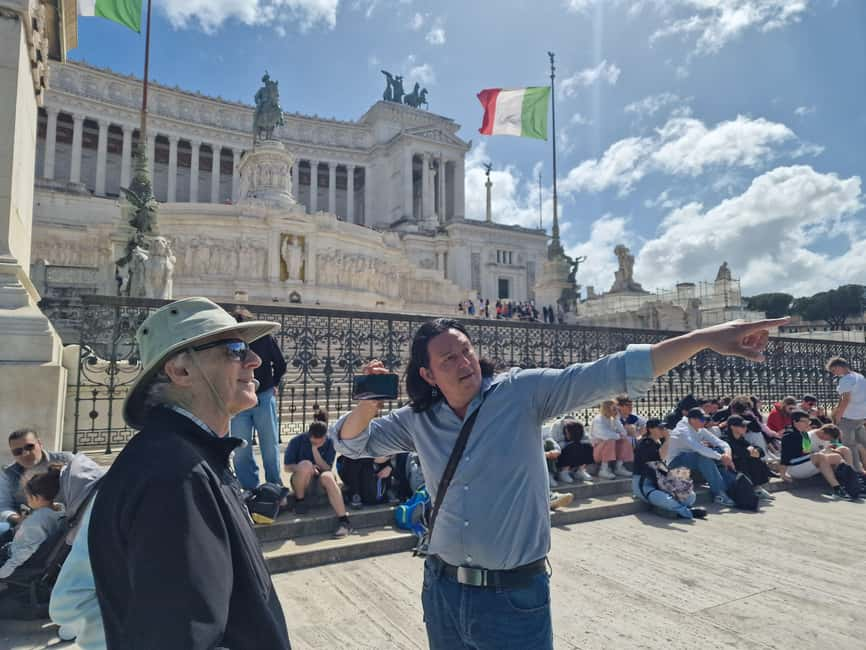
In Piazza Venezia, you get the context behind the iconic square. Mussolini spoke from his famous balcony to thousands of followers in the square below, which means this is not just a grand viewpoint. It was designed for mass attention, with a political message built into the architecture and the crowd flow.
Here is why that matters for your day. Once you understand that the square was engineered for public performance, it stops feeling like scenery. You start reading the city as a communication tool, not just a set of landmarks. If you have already visited Piazza Venezia on a normal sightseeing route, this is where you get a different lens on the same view.
Ancient Rome at the Forum, and the Mussolini connection
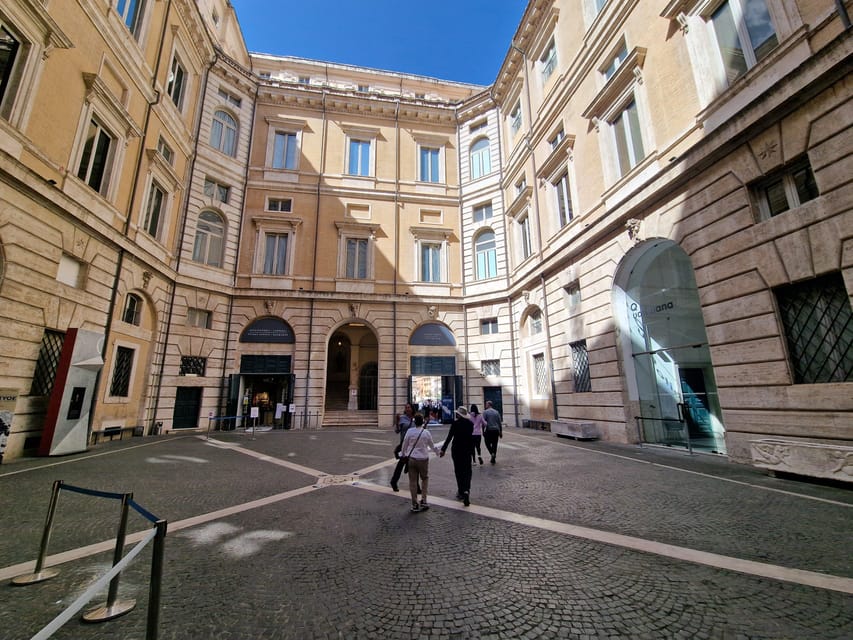
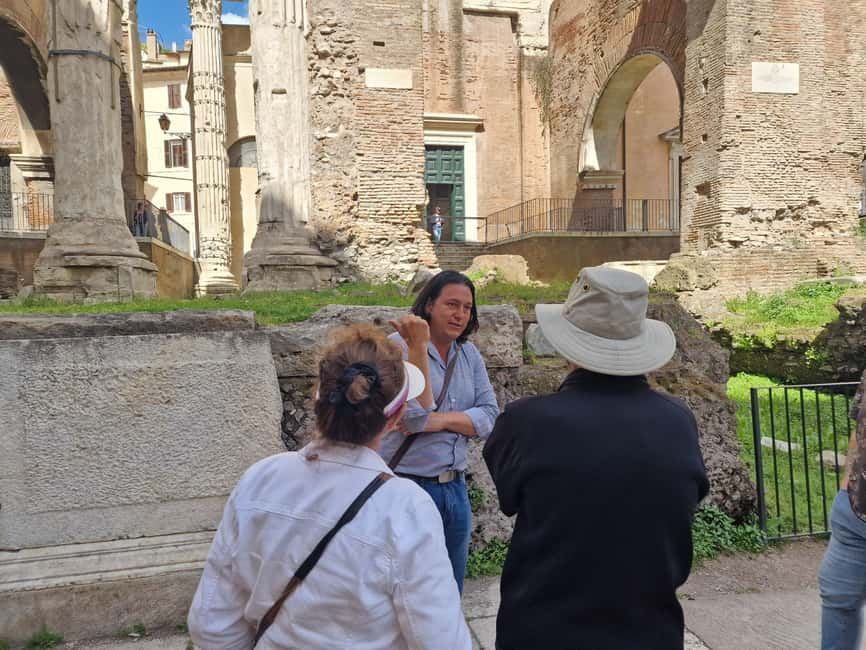
From Piazza Venezia, you move through the Ancient Roman Forum area. This stop is where the tour explains a very Roman trick: linking modern power to ancient greatness.
Mussolini had an obsession with Ancient Rome, and the tour shows how that obsession left visible impacts on what you see in the city. The result is a strange mix of eras. You are standing in spaces created by ancient Romans, but learning how Fascist leaders borrowed that prestige to shape what Italy wanted to look like.
One detail worth watching for on this stretch is the way the guide points out the logic behind what was uncovered, emphasized, or rearranged. The more the guide explains the connection, the more it feels like the city is telling you two stories at once, ancient and wartime.
Capitoline Hill and the Caesar assassination site you might miss
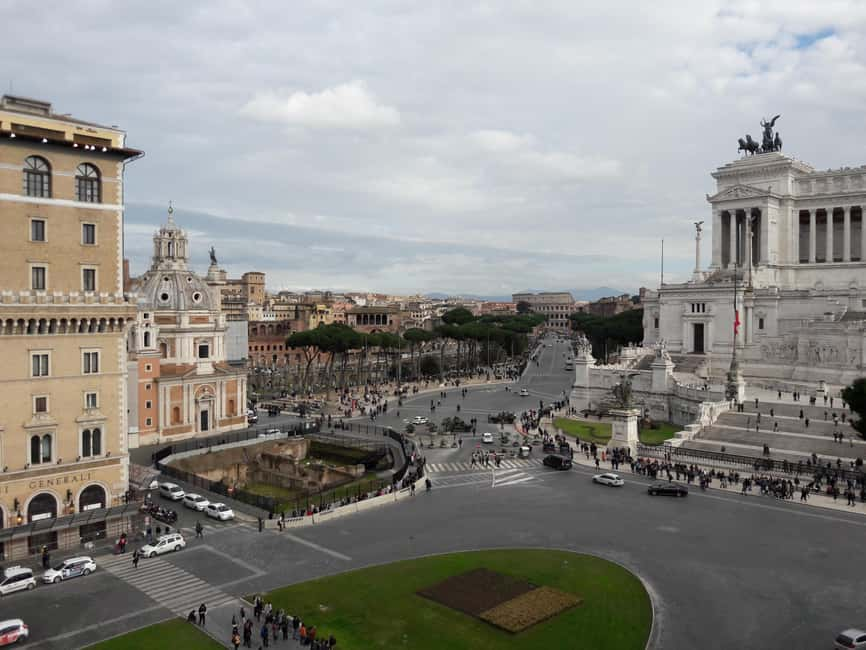
Your route continues through the central hill areas, including the Capitoline Hill region. A review also notes a stop at the site where Julius Caesar was assassinated, a place they had unknowingly passed before.
This is a good reminder: Rome is full of spots that look familiar and still hide context. Even if you think you know the central streets, the guide’s job is to steer your eyes to the right corner, the right marker, the right detail. When that happens, the walking tour becomes more than facts. It becomes pattern recognition, where you learn how to see.
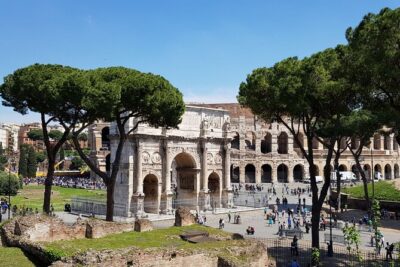
Another shape for the same afternoon in Rome:
The Jewish Ghetto stop, and why the story matters
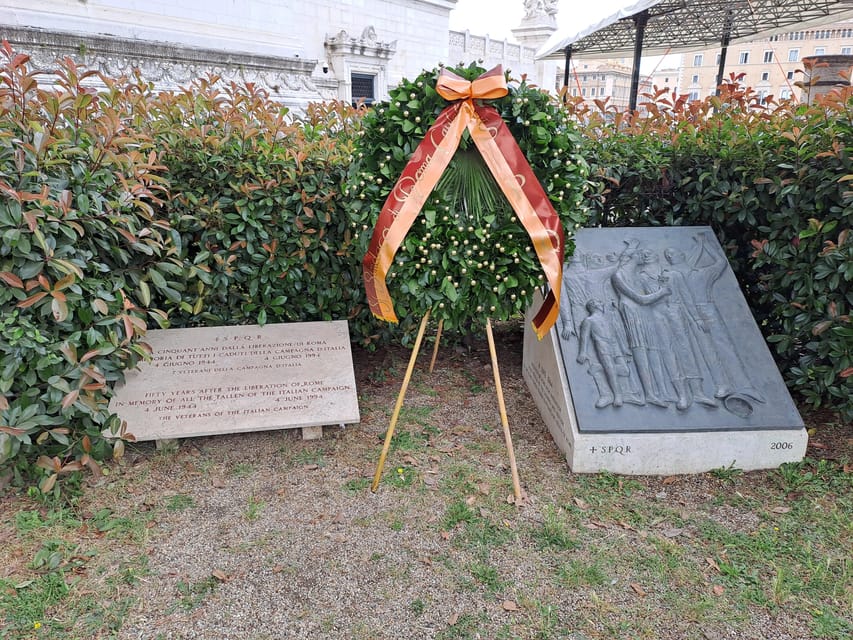
Next comes the Jewish Ghetto. This part of the tour focuses on the history of the Jewish community in Rome and places that story inside the broader WWII-era pressures.
You are not just hearing general timeline points. You are connecting a living community to the political atmosphere surrounding it. The guide’s framing helps you understand how war and ideology can affect more than battlefields. They can shape everyday safety, identity, and belonging.
If you are doing this on a day when you also plan to visit other religious or historical sites, pace yourself. This stop lands with weight, and you want a clear mind to take it in.
Piazza Navona to the Tiber River, plus the Church’s wartime role
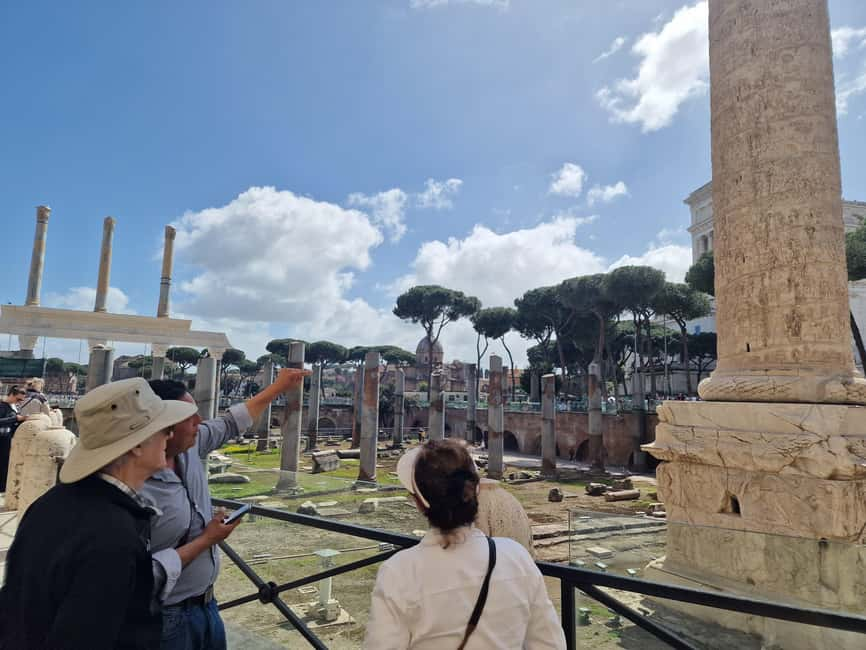
After the ghetto, the route moves through Piazza Navona, toward the Tiber River.
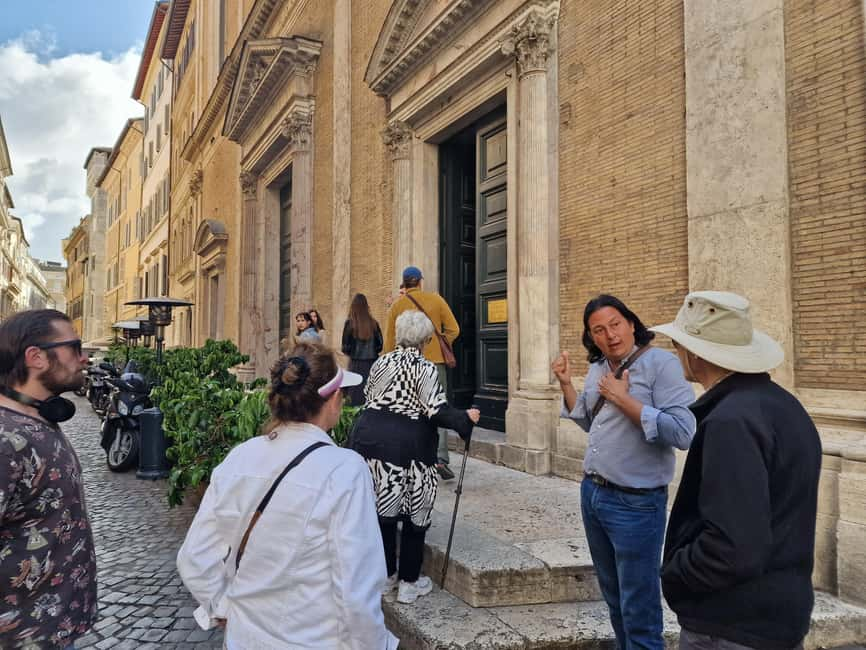
This is where the tour discusses the Church and its position throughout the Fascist period and the war. In Rome, churches are everywhere, and it is tempting to treat them like pure art stops. Here, the guide helps you see them as institutions operating in a political era, with power, influence, and limits shaped by what the regime was doing.
Piazza Navona also helps this portion work. It is an open space that makes it easier to grasp how public life functioned around the war period, and it gives you a natural break before the river-side context shifts the mood.
June 1944 in Rome: the moment the city changed
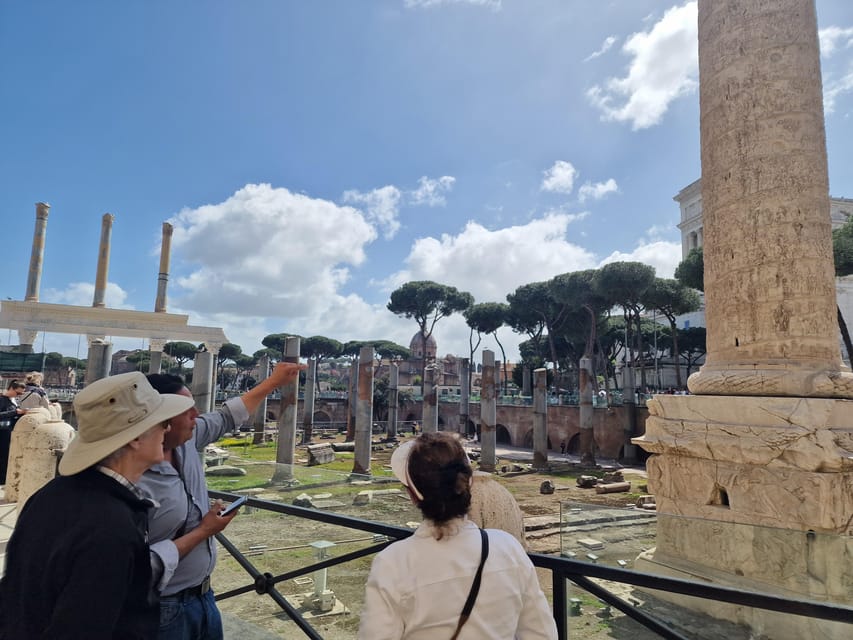
The tour ends by recalling June 1944, when Nazi forces fled the city and the US Fifth Army entered Rome. The guide describes the scenes of mass jubilation.
Even if you already know the headline version, this ending is useful. It ties the earlier stops together into a cause and effect chain. Fascist staging in central squares, the shaping of ancient imagery, the pressures placed on communities, and the Church’s role all connect to the reality that the city eventually flipped from occupation to liberation.
This last stretch is also where you get the “memorials hidden in plain sight” idea in full effect. Once you have the political timeline in your head, Rome’s visible markers and subtle clues stop feeling random.
The guide makes a difference, and James sets the tone
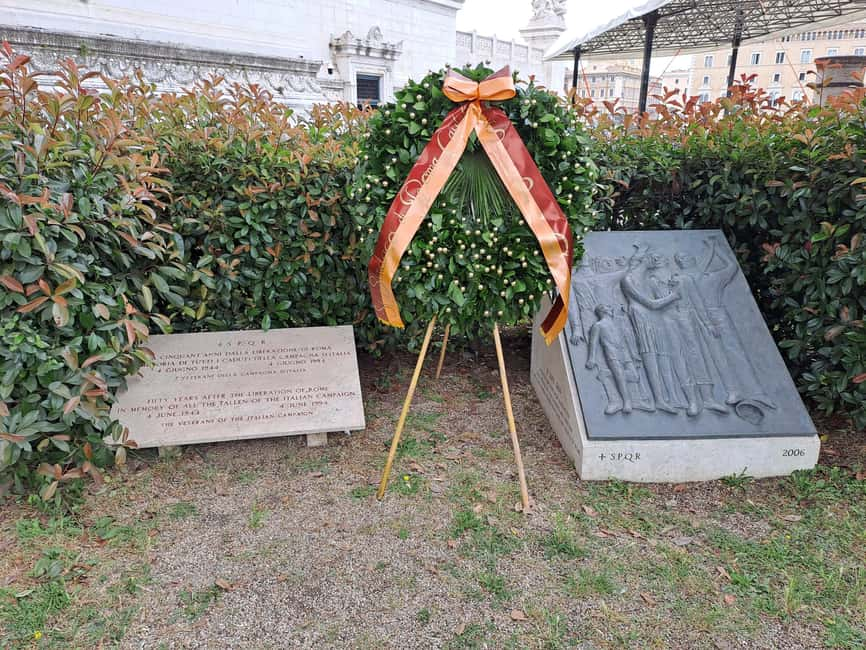
The experience runs with a live, English-speaking guide, and it shows in how the information is delivered. One review specifically praises James for being a true expert on WWII Italy and the liberation of Rome, with answers to questions and attention to small details you would otherwise walk past.
Another standout from reviews is the use of historical photos and video to bring stories to life. That matters because the central Rome landmarks can feel static. Images and short clips help you picture the human scale behind political decisions.
Also, because the group is limited to 10, you are not stuck in a lecture mode. You can ask questions and get clarification on anything that feels confusing, especially the links between Fascist propaganda and the way ancient sites were presented.
Price and value: is $88 for 2.5 hours worth it?
At $88 per person for about 2.5 hours, this is not a casual add-on. But it is also not trying to sell you a bus tour with faraway stops. You are paying for an expert guide and a route that packs major WWII and Fascism touchpoints into one walking circuit.
Think about what you get:
- A focused central Rome route tied to WWII-era power and occupation
- Expert interpretation of why those landmarks matter
- Small group time, limited to 10 participants
- Clear context that makes your other Rome days easier
The tour does not include transportation to and from the meeting point, and it does not include food and drink. So you should budget your normal meals and plan how you will get to Trajan’s Column. If you are already spending a busy Rome day on foot, this fits well because it turns familiar sights into a guided, chronological story instead of separate visits.
If your goal is to understand what you are seeing, $88 is a reasonable price for that kind of attention and time. If your goal is only light sightseeing, you might prefer something less thematic.
Comfort and weather: how to plan so the tour stays enjoyable
This tour goes in all weather conditions unless a site is closed by authorities for safety reasons. That means your comfort matters.
Bring:
- bottled water
- sunscreen
- a hat
- an umbrella
Wear comfortable walking shoes. Dress warmly in colder months. In warmer months, plan to bring a cover for bare shoulders inside churches. That last point is not about style. It is about keeping the momentum of the route without stress.
And yes, the topic can feel emotionally heavy at times. Comfortable clothing, water, and shade help you stay present and absorb what the guide is explaining.
Who this tour suits best
This is ideal if you want more than dates and names. You like understanding how politics shows up in buildings, squares, and city planning. It is also a strong pick for WWII history fans who want Rome’s Fascist period and Nazi occupation explained in connection with the landmarks you will actually walk past.
It can also work well as a last or near-last activity in your trip. One review notes it transformed how everything previously seen in Rome fit together. Even if you have not visited every site yet, the tour helps you build a framework you can use on your remaining days.
Should you book this Rome WWII walking tour?
Book it if:
- you want a context-rich way to see central Rome
- you care about how Fascism and WWII played out in everyday city space
- you like guided explanations that point out details you would miss on your own
Skip it, or consider another style, if:
- you do not want to spend 2.5 hours on a walking route with a heavy historical theme
- you prefer purely visual sightseeing without political or social context
FAQ
Where is the meeting point?
The tour meets at Trajan’s Column. The guide stands in front of the cafe along the fencing, holding an orange sign with a lion head.
How early should I arrive?
Check in 15 minutes prior to the scheduled tour time. Tours depart promptly, and late arrivals may miss the tour.
How long is the tour?
The duration is 2.5 hours.
Is the tour guided in English?
Yes. The live tour guide speaks English.
How big is the group?
It is a small group, limited to 10 participants.
Is the tour wheelchair accessible?
Yes, the tour is listed as wheelchair accessible.
What is included in the price?
The expert tour guide is included.
What is not included?
Transportation to and from the meeting point, transportation during the tour, and food and drink are not included.
What should I bring or wear?
Bring bottled water, sunscreen, a hat, and an umbrella. Wear comfortable walking shoes, and bring a shoulder cover for inside churches.
Does the tour run in bad weather?
Tours proceed in all weather conditions unless the site is closed by authorities for safety reasons.
Latest additions from Rome
- Rome: Testaccio Market Food Tour with Street Food & Wine★ 5.0 · 8 reviews
- Exclusive Pasta & Tiramisu Class with Wine near by Colosseum★ 5.0 · 8 reviews
- Private Professional Photoshoot in Rome★ 5.0 · 8 reviews
- Loreto “Shrine of the Holy House of the Virgin Mary” Private Tour from Rome★ 5.0 · 8 reviews
- Rome Day to discover Florence and Pisa Hotel Pickup★ 4.5 · 8 reviews
- Rome: Christmas Nativities and Angels Tour★ 3.1 · 8 reviews
- Guided Tour of Vatican Museums and Sistine Chapel★ 5.0 · 8 reviews
- Rome: Cooking Class of fresh Pasta and Tiramisu Cake★ 5.0 · 8 reviews
Walking Tours in Rome, compared.

Guided Food Walking Tour with Wine in Trastevere
Read our review →
Trastevere & Campo de Fiori Street Food Walking Tour
Read our review →
Paranormal Night Walking Tour & Secret Backstreets
Read our review →
Trastevere Street Food Walking Tour with Local Expert
Read our review →
Guided City Center Evening Sightseeing Walking Tour
Read our review →
Small-Group City Highlights Moonlight Walking Tour
Read our review →
Best of Rome Walking Tour including Trevi Fountain
Read our review →Browse the lists this tour appears in