
Reviewed · MAJOR BASILICAS OF ROME TOURS
Rome Walking Tour of Holy Sites: Basilica of the Holy Cross in Jerusalem, San Giovanni in Laterano and Scala Santa
Three holy stops in one walk can feel personal. I like that this tour keeps things private, not herded, and that the guide’s storytelling ties the sites together in about 2 hours. The main drawback is the dress code, because uncovered knees or shoulders can get you refused entry in places of worship.
You also get practical flexibility with multiple start times, which makes it easier to fit into a busy Rome day. And since the admission for the stops is listed as free, you spend more time looking and less time budgeting.
Plan for the church rules: no food inside (water is allowed), and comfortable shoes matter because you’re on your feet for the full route. If you’re sensitive about kneeling, it’s worth thinking ahead for the Holy Stairs moment.
In This Review
- Key highlights you’ll feel right away
- Piazza San Giovanni, a 2-hour loop, and a route that makes sense
- Scala Santa, the Holy Stairs, and why people take it slowly
- Basilica di Santa Croce in Gerusalemme, frescoes plus relics you can actually see
- San Giovanni in Laterano, the cathedral that ties it all together
- How the private format changes the whole feel
- Time management tips for a smooth, respectful visit
- Price and value, what you’re really paying for
- Who should book this Holy Sites walking tour
- Should you book? My call
- FAQ
- How long is the Rome Walking Tour of Holy Sites?
- Where do I meet the guide?
- Where does the tour end?
- Is the tour private?
- What language is the tour offered in?
- Do I need to pay admission tickets for the sites?
- What is the dress code?
- Are food and drinks allowed during the tour?
- Is hotel pickup or drop-off included?
- What is the cancellation policy?
- Are children allowed?
Key highlights you’ll feel right away
- Private group time with a guide who slows down for questions and pauses
- Scala Santa in one go, including time to appreciate the steps and the surrounding chapel setting
- Holy Cross relic focus at Santa Croce in Gerusalemme, including mentions of the nails and thorns
- Rome’s major papal cathedral stop, San Giovanni in Laterano as the oldest and first of the four major papal basilicas
- Free admission listed for each stop, so your money goes to the guide experience
- Prayer-friendly pacing, with time built in for contemplative moments at key points
Piazza San Giovanni, a 2-hour loop, and a route that makes sense
This is a walking-focused religious tour with a clear flow. You start at Piazza di S. Giovanni in Laterano, then move through three headline sites that many people visit one at a time, often with long gaps between.
The pace is built around about 40 minutes per stop, so you get depth without losing the day to endless lines and slow decision-making. You’ll end at a basilica area close to the finish point listed (Piazza di S. Croce in Gerusalemme), but the tour description also emphasizes finishing at San Giovanni in Laterano. Because the data includes both end points, your safest move is to trust the exact meeting instructions in your confirmation message.
This matters for logistics. If you’re planning lunch, a museum visit, or a ride to your hotel, you’ll want to treat this as a “centerpiece” activity that anchors your block of time rather than a quick add-on.
More Walking Tours in Rome
- Rome: Guided Food Walking Tour with Wine in Trastevere
★ 4.9 · 3,105 reviews - Rome: Trastevere & Campo de Fiori Street Food Walking Tour
★ 4.9 · 2,768 reviews - Rome: Paranormal Night Walking Tour & Secret Backstreets
★ 4.9 · 1,921 reviews - Rome: Trastevere Street Food Walking Tour with Local Expert
★ 4.8 · 1,784 reviews
Scala Santa, the Holy Stairs, and why people take it slowly
Your first stop is the Pontifical Sanctuary of the Holy Stairs, known as Scala Santa. The framing is strong from the start: these are the steps associated with Jesus ascending to face interrogation before the crucifixion, and the tour explains their sacred significance and the belief that they date back to biblical times.
One detail I think you’ll appreciate is the way the tour connects the stairs to the Christian story of translation and relic movement. You’ll hear how the steps were brought from the Holy Land to Italy by St. Helena, which turns the visit from sightseeing into a more grounded historical-religious narrative.
Practical note: the Scala Santa experience is commonly done with kneeling. That’s exactly the kind of moment where comfort can affect your focus. If you tend to feel knee pain, bring or plan for knee pads. The route includes about 40 minutes at this stop, which is long enough to move at a reflective pace rather than just rush forward.
What can be a consideration here is emotional intensity. If you’re not in the mood for contemplative, prayer-linked travel, you may find this first stop heavier than you expected. On the other hand, if you want meaning, this is where you’ll feel it first.
Basilica di Santa Croce in Gerusalemme, frescoes plus relics you can actually see
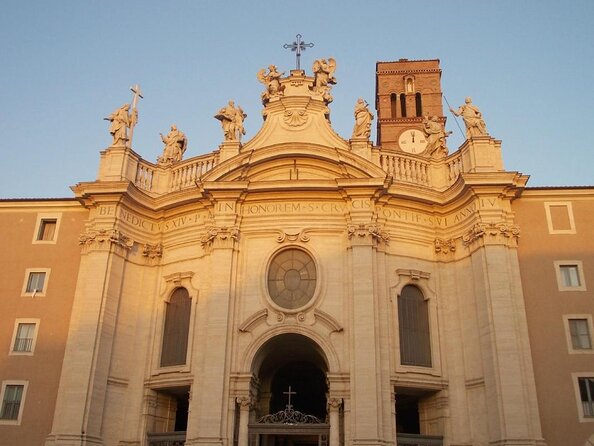
Next up is Basilica di Santa Croce in Gerusalemme. You’ll hear that it’s tied to Sant’Elena, the mother of Emperor Constantine, and that the church was built beginning in the fourth century in the place associated with her buildings.
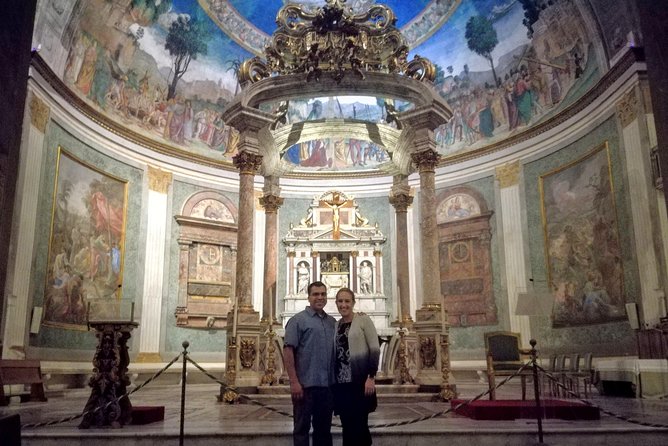
Visually, this is where the tour shifts from sacred steps to sacred objects. The experience description highlights vibrant Renaissance frescoes, and that’s important because it gives your eyes something to hold onto while your guide explains the relic tradition.
The big draw is the relic presentation. The tour is set up so you don’t just walk through the space. You learn what you’re looking at, including reminders of the Holy Cross Passion such as nails and thorns among other revered relics.
There’s also a special detail worth planning for: you may find a full-size copy of the Shroud of Turin, described as a gift from Turin. That’s the kind of item that turns a “religious stop” into a “wait, that’s here?” moment, and it’s the sort of thing that lands best when you’re not rushed.
A common practical constraint: you can’t eat inside churches, except for water. So if you’re tempted to grab a snack to keep going, keep it outside and save your energy for the final stop.
San Giovanni in Laterano, the cathedral that ties it all together
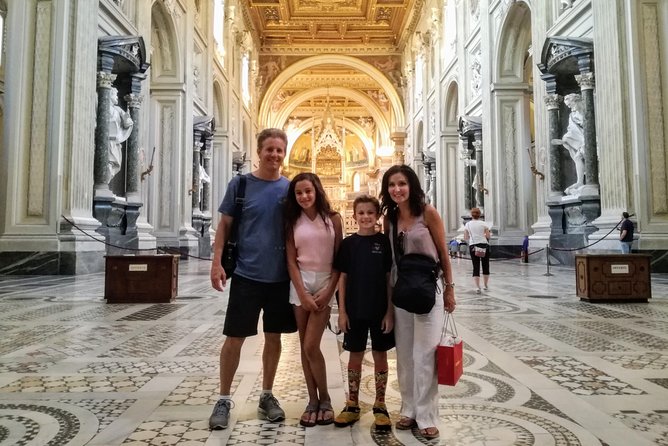
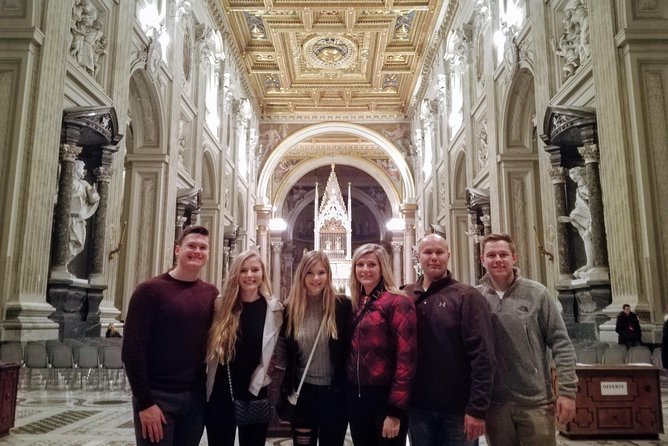
The last major stop is the Arcibasilica di San Giovanni in Laterano. This is presented as the first of the four major papal basilicas and one of the oldest and most important Western basilicas, which is a fancy way of saying: this is a centerpiece church, not a side chapel.
Why this stop works after Scala Santa and Santa Croce in Gerusalemme is the rhythm. You go from the sacred steps, to the relic-focused Passion setting, to the official cathedral environment where church art and relics sit inside an institution that has endured for centuries.
The tour description also emphasizes that San Giovanni in Laterano is Rome’s official cathedral and a major art-and-relic destination. In practice, that means your guide’s role becomes even more valuable: without context, basilicas can blur together. With context, you start to see why these places mattered to patrons, clergy, and pilgrims over time.
One thing to watch here is that this is still a place of worship. Keep your voice low, treat the space gently, and remember the dress rule applies. If you dress for the tour, you’ll enjoy it more, because you won’t spend time worrying about whether you’re allowed inside.
How the private format changes the whole feel
This is a private tour, meaning only your group participates. That single detail can dramatically change what you take away.
In a group tour, you often have two speeds: fast moving and slower sprinting. Here, the experience is described as personal, and the stop-by-stop pacing suggests you’ll have time to ask questions and not feel pushed out the door.
That also helps with prayer and quiet moments. Several guide experiences highlighted the idea of waiting while someone prayed on the Holy Steps and while someone venerated or reflected at the Holy Cross area. If that sounds like your style of travel, you’ll likely love how the guide’s timing supports it.
Guide quality is a real variable, and you might get a range of personalities. From the names mentioned, guides such as Tomasso, Francesco, Giorgio, Bruno, and Giovanni Giorgio are highlighted for taking their time, answering questions, and keeping the story clear and engaging. You can’t choose the guide from the data you provided, but you can choose your expectations: arrive ready to talk, and you’ll probably get a better experience.
Other trails between the great basilicas:
Time management tips for a smooth, respectful visit
This runs about 2 hours total, and each stop is roughly 40 minutes. That can sound short on paper, but it works because the route is tight. You’re not zig-zagging across Rome.
To keep the day easy:
- Wear shoes you can stand in without thinking about it.
- Dress in a way that meets the rules up front.
- Plan to pause, not just photograph.
The dress code is specific and strict: no shorts or sleeveless tops. Knees and shoulders must be covered for both men and women, and you may risk refused entry if you don’t comply.
Also remember the church food rule. Food and drinks aren’t allowed in the churches, except for water. So if you get hungry, fix it before you arrive or plan water only.
Finally, this tour is offered in English and is near public transportation. That’s helpful if you’re coming from a hotel without a direct taxi drop-off.
Price and value, what you’re really paying for
The listed price is $346.87 per person for a tour that lasts about 2 hours and includes a local guide and a private format.
Is it worth it? For me, the value hinges on two things:
1) You’re paying for access and explanation, not just walking between churches. The Holy Stairs and relic displays are easy to miss if you don’t know what you’re seeing.
2) You’re paying for pace. Private time, slower pacing, and room for questions is what turns a checklist day into a meaningful one.
If you’re traveling with a faith-based goal, or you simply want your time to feel thoughtful rather than rushed, the price starts to make sense. If you’re the type who just wants photos and fast stops, you might do better with a cheaper self-guided plan.
But if your ideal Rome day is guided, guided with context, and guided at a pace you can actually enjoy, this looks like a strong fit.
Who should book this Holy Sites walking tour
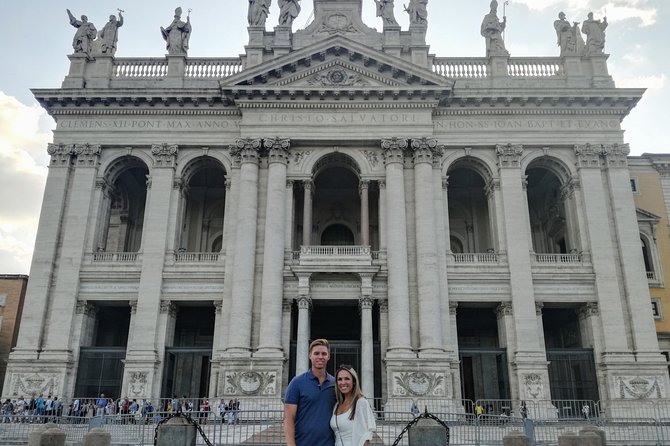
This tour is a great match if you:
- Want three major holy sites without wasting time bouncing around the city
- Like your history explained clearly and tied to what you see in the building
- Prefer a private pace with time to ask questions and take pauses
- Care about a respectful, church-appropriate visit
It’s also a good option for people who find Rome overwhelming. This route is focused, and the script your guide follows helps you stay oriented: steps first, relics second, cathedral third.
Should you book? My call
Book it if you want a guided, respectful walk that connects Scala Santa to relic veneration and ends at one of Rome’s top cathedral experiences. The combination of free admission at the listed stops and a private guide makes it feel like money spent on meaning, not logistics.
Skip it, or at least reconsider, if you’re not comfortable with the dress code and the church rules, or if you’re trying to do Rome on pure momentum with no time for contemplative pacing.
If you’re aiming for a spiritually focused day in Rome, this is the kind of tour that can make the city feel personal, one sacred stop at a time.
FAQ
How long is the Rome Walking Tour of Holy Sites?
The tour is listed as about 2 hours long, with roughly 40 minutes at each of the three stops.
Where do I meet the guide?
The meeting point is Piazza di S. Giovanni in Laterano, P.za di S. Giovanni in Laterano, Roma.
Where does the tour end?
The tour’s end location is listed as the Basilica of Santa Croce in Gerusalemme area, Piazza di S. Croce in Gerusalemme, 10, 00185 Roma.
Is the tour private?
Yes. It is a private tour/activity, and only your group will participate.
What language is the tour offered in?
The tour is offered in English.
Do I need to pay admission tickets for the sites?
Admission is listed as free for the stops, including the Scala Santa and the two basilicas mentioned.
What is the dress code?
You must cover knees and shoulders. No shorts or sleeveless tops are allowed. You may be refused entry if you do not follow this rule.
Are food and drinks allowed during the tour?
Food and drinks are not allowed in the churches, except for water.
Is hotel pickup or drop-off included?
No. Hotel pickup and drop-off are not included.
What is the cancellation policy?
You can cancel for free up to 24 hours before the experience start time for a full refund. If you cancel less than 24 hours before, you do not receive a refund.
Are children allowed?
Children must be accompanied by an adult.
Latest additions from Rome
- Private Professional Photoshoot in Rome★ 5.0 · 8 reviews
- Rome: Testaccio Market Food Tour with Street Food & Wine★ 5.0 · 8 reviews
- Exclusive Pasta & Tiramisu Class with Wine near by Colosseum★ 5.0 · 8 reviews
- Loreto “Shrine of the Holy House of the Virgin Mary” Private Tour from Rome★ 5.0 · 8 reviews
- Rome Day to discover Florence and Pisa Hotel Pickup★ 4.5 · 8 reviews
- Rome: Christmas Nativities and Angels Tour★ 3.1 · 8 reviews
- Guided Tour of Vatican Museums and Sistine Chapel★ 5.0 · 8 reviews
- Rome: Cooking Class of fresh Pasta and Tiramisu Cake★ 5.0 · 8 reviews
Major Basilicas of Rome Tours, compared.
Santa Maria Maggiore: Pope Francis Entry Ticket, Audio Guide
Read our review →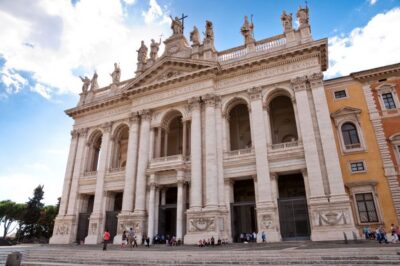
Santa Maria Maggiore Upper Areas Skip-the-Line Ticket
Read our review →
San Clemente Underground & Basilica Small Group Tour
Read our review →
San Clemente Underground and Basilica Guided Tour
Read our review →
Basilica of St John Lateran & Holy Steps 1-Hour Tour
Read our review →
Rome Catacombs Night Tour with Santa Maria Maggiore After Hours
Read our review →Browse the lists this tour appears in