
Reviewed · ROME BY NIGHT TOURS
Rome: Vatican Night Tour
Rome is best when the city is lit up and calmer. This Vatican Night Tour takes you through the most famous spots near the Tiber after dark, with a guide who connects the dots between Rome and the Vatican without any long museum lines. You’ll start at Piazza di Spagna, pass key landmarks, and finish in St Peter’s Square for that classic night-time view.
Two things I really like: the route covers lots of major sights in one outing, and the tour keeps moving so you get that sense of Rome unfolding street by street. I also like the pay-what-you-wish approach at the end, because it turns the price into something more fair for your actual experience. The tour is in English and capped at 30 people, which helps it feel more human.
One drawback to consider before you go: you’re doing a lot of walking for about 1 hour 30 minutes to 2 hours. If your legs are not happy, or you want museum entry at night, this may not match your expectations.
In This Review
- Key things to know before you go
- Price and what the pay-what-you-wish model really means
- The 7:15 pm game plan, from Piazza di Spagna to the Vatican
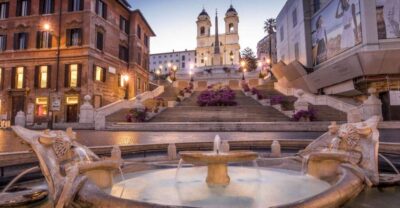
- Stop 1: Spanish Steps at night, where the viewpoint does the talking
- Stop 2: Via dei Condotti, shopping street with a serious backstory
- Stop 3: Castel Sant’Angelo after dark, stories that come with the skyline
- Stop 4: Mausoleum of Augustus, seeing power as architecture
- Stop 5: Museo dell’Ara Pacis, the Altar of Peace without the ticket hassle
- Stop 6 and 7: Vatican City at night, then the approach to St Peter’s Square
- Guides, pacing, and why names like Caitlin and Yusef keep showing up
- What you should wear and bring for an evening walk
- Who this tour fits best (and who it does not)
- Value check: is $4.59 a bargain or just marketing?
- Should you book this Vatican Night Tour?
- FAQ
- Where does the tour start and when?
- Where does the tour end?
- How long is the Vatican Night Tour?
- Does the tour include entry into the Vatican Museums?
- What stops are included during the walk?
- Is food or drinks included?
- Are tips included in the price?
- Is the tour in English?
- Can I cancel, and how does the refund work?
Key things to know before you go
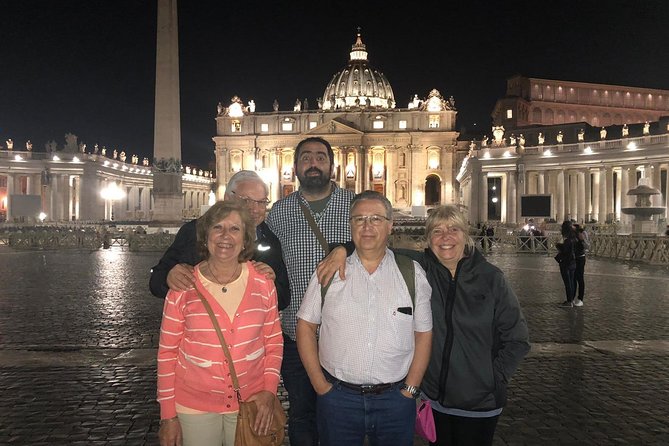
- After-dark viewpoints: you’ll see Rome and the Vatican landmarks illuminated, with a calmer feel than daytime.
- Big-sights route: Spanish Steps, Via dei Condotti, Castel Sant’Angelo, Augustus, Ara Pacis, and the Vatican area in one stretch.
- No Vatican Museums entry: the tour ends in Vatican City, but you will not go into the museum spaces at night.
- Pay what you wish at the end: you decide what the experience was worth.
- Smallish group: up to 30 travelers, guided in English.
Price and what the pay-what-you-wish model really means
The listed price is $4.59 per person, and the tour uses a pay-what-you-wish concept at the end. That combo is the big value story here. You’re not committing to a full fixed-price museum day, yet you still get a live local guide and a planned route through high-demand areas.
In plain terms, you can treat this like a low-risk intro. If you love the pace, the storytelling, and the evening atmosphere, you can pay accordingly. If you are not getting what you expected, the model is designed so you are not stuck paying full price anyway.
That said, pay-what-you-wish works best when you show up ready to walk and listen. If you spend the whole time checking your watch, it’s harder for the guide’s effort to land.
More of Rome after the lights come on:
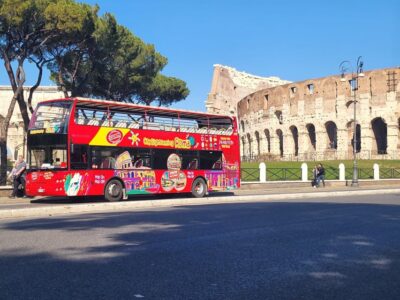
- Rome: City Highlights Open-Top Bus Night Tour
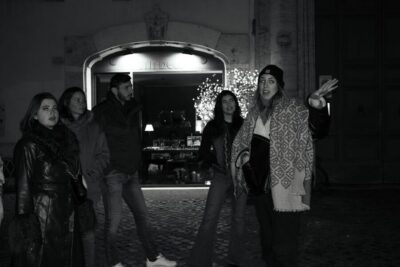
★ 4.1 · 2,038 reviews - Rome: Paranormal Night Walking Tour & Secret Backstreets
★ 4.9 · 1,921 reviews - Rome by Night: E-bike Small Group Tour -Food & Wine (Option)
★ 4.9 · 1,233 reviews - Colosseum Sunset Tour with Entry
★ 4.5 · 1,230 reviews
The 7:15 pm game plan, from Piazza di Spagna to the Vatican
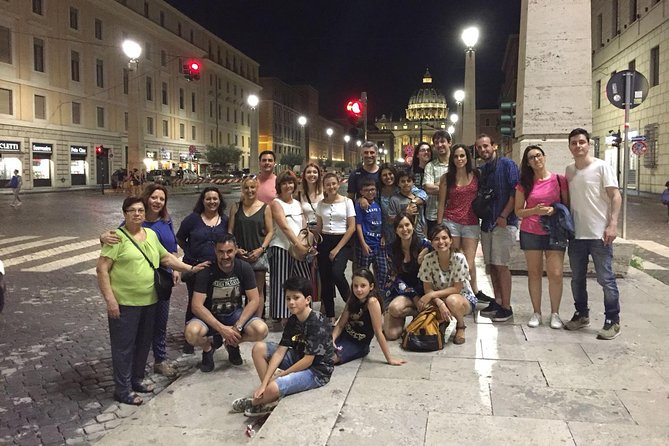
This tour starts at 7:15 pm at Piazza di Spagna, right by the obelisk area (near the top of the Spanish Steps). Ending point is St Peter’s Square in Vatican City. The duration is about 1 hour 30 minutes to 2 hours, and the route is built around short stops where you get orientation plus the main stories behind what you’re seeing.
Why start here? Piazza di Spagna is one of the best “first frames” for Rome. In early evening, you get the grand scale without the daytime crush. Then you move east and north, heading toward the river and the Vatican zone, so the geography stays logical instead of feeling like you’re crisscrossing the map.
Also, note the pacing: each stop is brief, around 15 minutes. You’re not lingering at one monument for long. This is ideal if you want a survey tour. If you want deep museum time, you’ll be happier with a daytime visit that includes ticketed entry.
Stop 1: Spanish Steps at night, where the viewpoint does the talking
The tour begins up top on the Spanish Steps, next to an obelisk marker. Even if you’ve seen photos a hundred times, night changes the feel. The light makes the stone look warmer, and the stairs feel more theatrical, like Rome put on a show just for walking.
What you get here is not ticketed access. It’s orientation. Your guide sets the stage, explains why this area matters historically, and gets you thinking about Rome’s layers. This matters because the rest of the tour becomes easier to follow when you know what you’re looking for.
Practical tip: comfortable shoes. The Spanish Steps are not a place you want to be wearing slippery soles.
Stop 2: Via dei Condotti, shopping street with a serious backstory
Next comes Via dei Condotti, one of Rome’s famous shopping streets. The tour doesn’t try to turn you into a shopper. Instead, it uses the street as a shortcut into how Rome grew, how power and wealth shaped streetscapes, and why these routes became high-status corridors.
If you love seeing how cities work beyond their postcard edges, this stop is a good one. Even if you don’t buy anything, you learn how a street’s reputation is built, and why it lands where it does.
The drawback? If you want quiet, contemplative moments, a well-known shopping street can feel a bit busier than the side streets. The guide helps by keeping you focused on what to notice instead of letting it turn into background noise.
Stop 3: Castel Sant’Angelo after dark, stories that come with the skyline
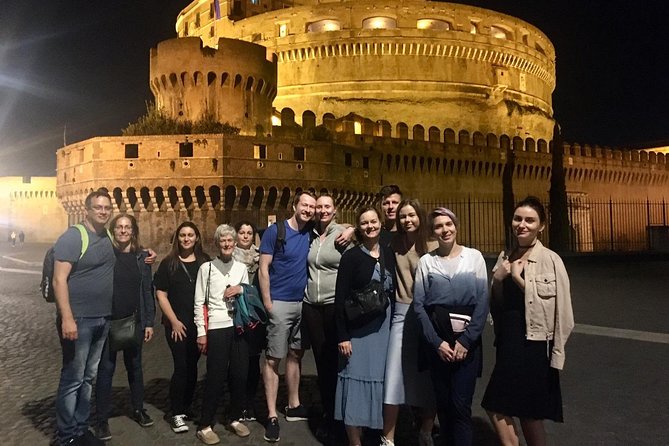
Then you pass Castel Sant’Angelo at night. This is a great example of why an evening tour works. The fortress silhouette is dramatic even from a distance, and at night it reads more clearly than in daylight glare.
Your guide uses this stop to tell the tales tied to the castle and the surrounding area. The point is not just the building itself, it’s how it connects to the city’s shifting roles over time. It also sets up the river-and-Vatican corridor that you’ll keep seeing as you move.
For photos, this is usually the kind of stop where you get an instant “oh, that’s the place” moment. And because you’re walking, you’re not stuck behind a fence waiting for a single angle.
More of Rome once the piazzas fill:
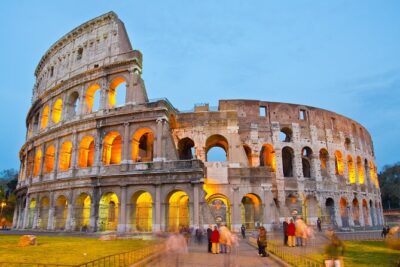
Stop 4: Mausoleum of Augustus, seeing power as architecture
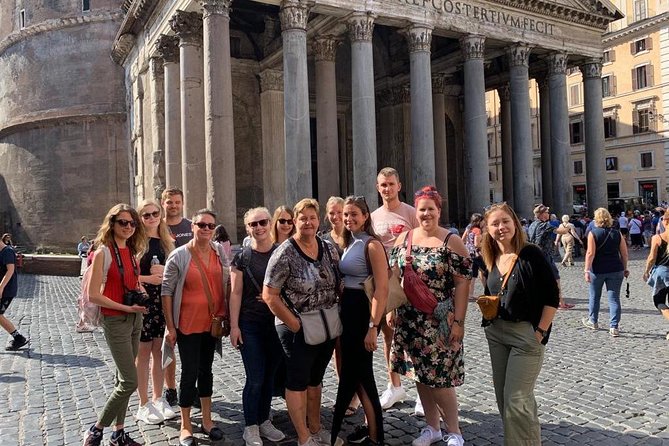
After Castel Sant’Angelo, you move to the Mausoleum of Augustus. This is one of those sites where a guide’s explanation can totally change your experience. Even if you’re not a Roman history superfan, you’ll start noticing how authority gets built into stone, shape, and placement.
Augustus is a formal emperor, and the mausoleum reflects that kind of political messaging. The tour frames it so you see the broader idea of Rome transitioning from republic ideals to imperial power, and why monuments like this were meant to last.
One consideration: the stop is short and you’re passing rather than entering. If you want to stand for 30 minutes and read every surface, you might feel slightly rushed here. But for a compact evening overview, it works.
Stop 5: Museo dell’Ara Pacis, the Altar of Peace without the ticket hassle
Next is Museo dell’Ara Pacis, connected to the ancient Ara Pacis, the Altar of Peace. This is a clever stop because it introduces a major Roman theme through a location that many people walk near but do not understand.
The “Altar of Peace” concept matters. Peace sounds simple, but in Roman terms it often meant control, order, and propaganda wrapped as public good. Your guide explains what you’re looking at and why it connects to the story of Augustus and the empire.
Because admission is free for the tour stops, you’re not dealing with another ticket checkpoint in the middle of your evening. That keeps the rhythm smooth and helps you stay focused on the explanations.
If you’re the kind of person who loves details, you might come away wanting more. That’s a good sign. It means the tour gave you enough curiosity to chase the rest on your own next day.
Stop 6 and 7: Vatican City at night, then the approach to St Peter’s Square
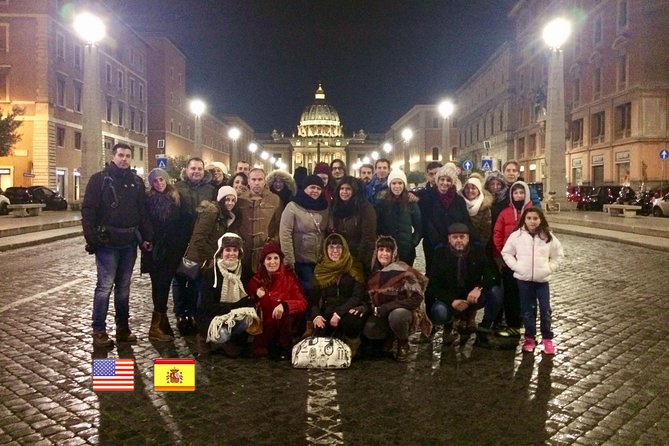
Here’s the key expectation-setting part: the tour ends in Vatican City, but you will not enter the Vatican Museums because those are closed at night. So think of this as a walking orientation tour of the Vatican zone, with the big payoff being the exterior atmosphere and the culminating square.
That choice actually makes sense. Trying to force museum time into a night window can turn into a ticket scramble and wasted energy. Instead, the tour steers you toward the parts you can enjoy after dark, when the lighting and the crowd levels feel different.
The final stretch leads you into St Peter’s Square. This is where Rome pulls out its best “evening stage set.” Even with smaller crowds than daytime peaks, the space has that scale and symmetry that hits your brain instantly.
If you’ve ever visited Rome and felt like the Vatican looked distant from street level, this tour helps you close that gap. You walk into the area with context, so it doesn’t feel like a sudden random landmark. It feels like a destination earned through the route.
Guides, pacing, and why names like Caitlin and Yusef keep showing up
A big reason this tour earns strong ratings is the guidance quality and the pacing. Multiple guides are praised for being clear, answering questions, and keeping the group moving without acting like they’re late for a different life.
Names you may see reflected in guide feedback include Caitlin and Yousef. People also mention guides like Ainara, Anna, Maria, and Mary. Across those reports, the common thread is an ability to explain what you’re seeing in a way that sticks, not in a way that turns into a lecture.
What I’d watch for in your own experience: some nights feel cooler, and the walking pace can feel easier. One review highlights how the evening temperature can be a relief in hot weather, which is exactly why evening tours can feel smarter than midday ones.
One practical note from feedback: the tour can require you to spot your guide, so arrive a few minutes early and be ready to confirm you’re with the right group. If you’re unsure, ask right away instead of waiting and losing time.
What you should wear and bring for an evening walk
This tour operates in all weather conditions, so dress appropriately. That means simple, boring things matter: layers for temperature swings, a rain-ready outer layer if showers are possible, and shoes you can walk in for 1.5 to 2 hours.
Food and drinks are not included, so plan to grab a bite before or after. If you tend to get hungry early, consider eating first and keeping your evening focused on the tour instead of thinking about snacks the whole time.
The tour also allows service animals, and most travelers can participate. If you have mobility concerns, you’ll want to think carefully about the walking time and ask before booking if you’re worried about your comfort level.
Who this tour fits best (and who it does not)
This is a great match if you want:
- A fast, guided orientation to the Rome and Vatican corridor after dark
- Illuminated photo moments, without the pressure of museum lines
- A history-and-architecture story that connects multiple locations in one evening
- A budget-friendly option that uses pay-what-you-wish
It may be less ideal if you:
- Want to go into the Vatican Museums at night (this tour does not include museum entry)
- Have limited ability to walk, since the route is compact but active
- Expect lots of long stops, because the tour is designed around short viewpoint moments
In other words, think of this as a smart “evening overview.” It’s not trying to replace a full Vatican day.
Value check: is $4.59 a bargain or just marketing?
With the pay-what-you-wish structure, the real question is whether you’ll actually use the tour well. If you show up on time, walk the route, and pay attention, it can feel like a bargain because you’re getting a guide for a relatively short time across several major landmarks.
Also, the group size cap helps protect value. Up to 30 travelers is small enough that questions can get answered without disappearing into chaos.
Your best way to judge value is to line it up with your goals. If your goal is to see a lot of sights quickly with context, this delivers. If your goal is museum entry or deep time at one site, you’ll likely feel like you’re skimming.
Should you book this Vatican Night Tour?
I’d book it if you want a guided night walk that makes the Vatican zone feel understandable fast. It’s a solid choice for first-timers, for people who like city lighting and storytelling, and for travelers who want an evening plan that won’t eat half the day.
Skip it if you specifically want the Vatican Museums at night, or if you hate walking tours. And if you’re sensitive to cold or rain, plan your clothing carefully since it runs in all weather.
If you do book, show up early at Piazza di Spagna around 7:15 pm start time, wear walking shoes, and come with one simple mindset: you’re collecting connections, not collecting tickets.
FAQ
Where does the tour start and when?
The tour starts in Piazza di Spagna, 00187 Rome, Italy, at 7:15 pm. The meeting point is on the top area by the obelisk.
Where does the tour end?
It ends in St Peter’s Square, Piazza San Pietro, 00120, Vatican City.
How long is the Vatican Night Tour?
It lasts about 1 hour 30 minutes to 2 hours (approx.).
Does the tour include entry into the Vatican Museums?
No. The tour notes that it will NOT enter the Vatican Museums because they are closed by night time.
What stops are included during the walk?
The tour includes Spanish Steps, Via dei Condotti, Castel Sant’Angelo, Mausoleum of Augustus, Museo dell’Ara Pacis (Altar of Peace), Vatican City, and then St Peter’s Square.
Is food or drinks included?
No. Food and drinks are not included.
Are tips included in the price?
Tips are not included.
Is the tour in English?
Yes, it is offered in English.
Can I cancel, and how does the refund work?
You can cancel for a full refund if you cancel at least 24 hours in advance. If you cancel less than 24 hours before the experience starts, the amount you paid will not be refunded.
Latest additions from Rome
- Guided Tour Vatican Museums & Sistine Chapel★ 4.1 · 30 reviews
- Exclusive Rome by Night Vespa Tour★ 5.0 · 30 reviews
- Transfer Rome to Airports★ 4.5 · 30 reviews
- Vatican: St.Peter’s Basilica & Dome – Reserved Entry & Tour★ 4.1 · 30 reviews
- Rome street art tour: off the beaten path with a local guide★ 5.0 · 30 reviews
- Tivoli, Hadrians Villa and Villa d’Este, a charming day trip from Rome★ 4.5 · 30 reviews
- Rome Food Tasting with Wine Pairing Italian Authentic Flavors★ 5.0 · 31 reviews
- Inspirational Cooking on the Roman Chef’s Panoramic Terrace★ 5.0 · 30 reviews
Rome by Night Tours, compared.
Paranormal Night Walking Tour & Secret Backstreets
Read our review →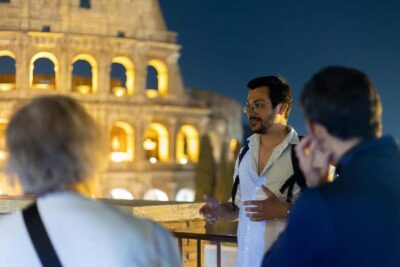
Rome by Night: E-bike Small Group Tour -Food & Wine (Option)
Read our review →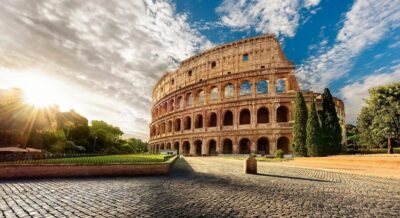
Night Tour of Rome with Local Pizza Dinner and Gelato Experience
Read our review →
Rome Bar Crawl: Interactive Night Tour with Games and Karaoke
Read our review →
Rome After Dark: Explore the Eternal City Under the Moonlight
Read our review →Browse the lists this tour appears in