
Reviewed · WALKING TOURS IN ROME
Rome: Underground Temples and Crucifixion Relics Walking Tour
Rome goes underground, fast. This walking tour pulls together early Christian Rome with the pagan layers beneath the streets, starting under San Clemente and ending at churches packed with Crusifixion-era relics. I especially like how the visit is structured like a timeline, and how the guide keeps you oriented even when you are climbing down and up through centuries. The main consideration is pace: there is a lot of walking and standing, and some parts are tight, so plan for heat and comfort.
I also like the human side. The guides named in past tours, including Mario, Francesca, Daniel, Paul, Tom, and Kiara, tend to make the stories feel concrete instead of like facts dumped in passing. You will get headsets for clear commentary, and you must follow a strict church dress code, knees and shoulders covered.
In This Review
- Key points I’d prioritize
- The San Clemente Underground Tour: three levels of Rome in one place
- What the Mithras Temple and underground river moment really means
- Lateran Cathedral area: the golden interior and Constantine context
- The Holy Stairs stop: why the time feels short but the meaning isn’t
- Santa Croce in Gerusalemme relics: nails, thorns, wood fragments, and more
- Saint Mary Major extension: when you want more mosaics and relic context
- Walking, heat, and pacing between four churches
- Price value: what $90.51 buys you (and what it does not)
- Dress code and etiquette: the practical side of church interiors
- Who should book this underground temples and relics walking tour
- Should you book it?
- FAQ
- How long is the Rome Underground Temples and Crucifixion Relics walking tour?
- What is the group size?
- What is included in the ticket price?
- What should I wear to enter the churches?
- Is this tour recommended if I have claustrophobia?
- What happens if part of a church is closed or if the tour is canceled due to weather?
Key points I’d prioritize
- San Clemente’s three layers: pagan temple to early Christianity, literally stacked under one basilica
- Temple of Mithras ruins plus a chance to touch a small detail that connects you to the underground water
- Holy Stairs stop: short visit time, huge emotional weight for many people
- Santa Croce in Gerusalemme relics: nails, wood fragments, thorns, and more tied to St Helena’s Jerusalem story
- Small group max 10 with headsets, so you actually hear and see what the guide is pointing at
The San Clemente Underground Tour: three levels of Rome in one place
San Clemente is the star. You start near the Colosseum area, then walk into a basilica that functions like a time machine, because you go beneath it to see multiple building phases packed into one spot. The idea is simple and gripping: Rome did not replace sacred spaces neatly. It built over them, adapted them, and kept using the location as belief and power shifted.
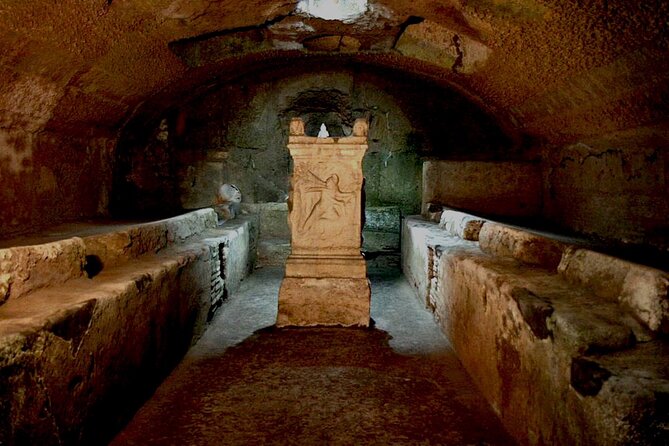
What you get down there is a “stacked city” feeling. You see three layers of ancient monuments built on top of each other, with the guide connecting what you’re looking at to pagan cults, early Christianity, and recurring themes in Roman symbolism. One of the most specific highlights is the Temple of Mithras, described as the best preserved on site, which gives you a vivid contrast to what comes next above it.
You will also notice mosaics and story-like visuals. Even if you are not the type who reads every stone, the mosaics do the heavy lifting, because they portray scenes and symbols that help you understand how religious art functioned in the early centuries.
Practical tip: underground spaces can feel cooler, but they can also feel close. If you get anxious in tight areas, take that seriously. This tour is not recommended for people with claustrophobia.
More Walking Tours in Rome
- Rome: Guided Food Walking Tour with Wine in Trastevere
★ 4.9 · 3,105 reviews - Rome: Trastevere & Campo de Fiori Street Food Walking Tour
★ 4.9 · 2,768 reviews - Rome: Paranormal Night Walking Tour & Secret Backstreets
★ 4.9 · 1,921 reviews - Rome: Trastevere Street Food Walking Tour with Local Expert
★ 4.8 · 1,784 reviews
What the Mithras Temple and underground river moment really means
This part is not just a “cool ancient room.” It is where you feel why historians spend so much time on locations like this. Mithras worship was real, structured, and full of symbolism, and seeing the setting makes it easier to understand how early Christians negotiated belief in the same city.
You will also have a moment connected to the underground river flowing below the streets of Rome, and below the Colosseum. The guide’s pointing makes the city layout feel physical rather than map-like. That touch of physicality helps you picture how water, engineering, and daily life supported religious and political life.
Also, there is something quietly personal about seeing a religious space with fewer crowds than the headline sites. The tour is a maximum group size of 10, so you can actually look where the guide directs you, instead of craning your neck with a swarm behind you.
Lateran Cathedral area: the golden interior and Constantine context
After you come up from the underground, you walk toward Rome’s cathedral area, the Basilica of St John Lateran and the nearby Arcibasilica di San Giovanni in Laterano. The tone shifts from stacked archaeological layers to big church authority. You hear why it is known as the mother and head of all churches on Earth, which helps explain why this place matters beyond being beautiful.
The stop is shorter than San Clemente, but it still covers core context: early persecutions, martyrs, and then the turning point around Emperor Constantine legalizing Christianity in 313. If you want religion explained as history and policy, this is the moment when it clicks.
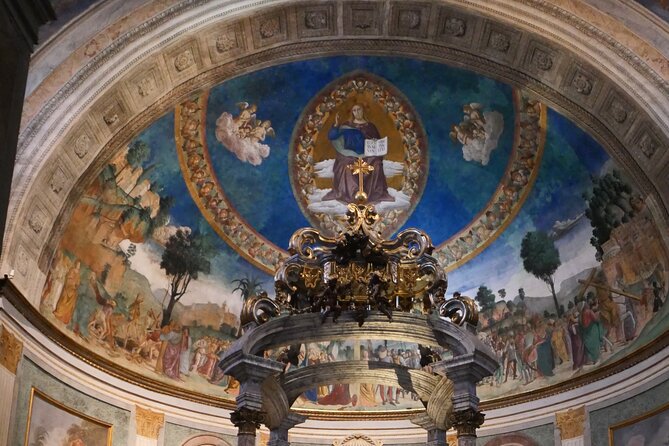
Inside, the golden interior and ancient frescoes are part of what makes the connection work. You are not just told that Christianity became official. You see the kind of visual language a dominant faith used to persuade people.
Practical tip: this is a working church environment. Expect people praying, and plan to move respectfully and quietly, especially if services are happening.
The Holy Stairs stop: why the time feels short but the meaning isn’t
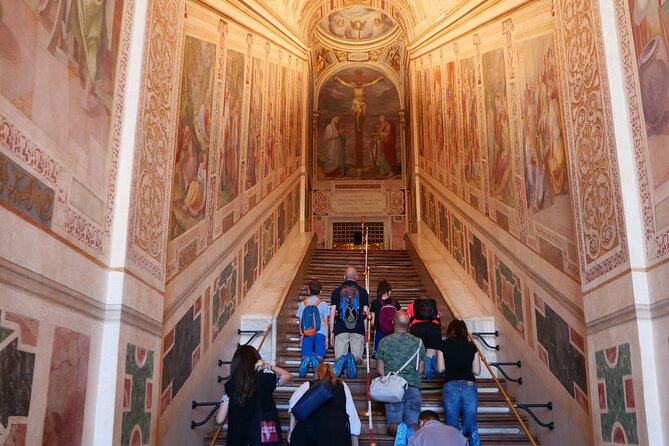
Next comes the Pontifical Sanctuary of the Holy Stairs. This is where the tour leans into devotion and legend. You learn about St Helena, described here as the Emperor’s mother, and her pilgrimage to Jerusalem to recover artifacts. It is presented as a safeguard effort, connected to an early underground church tradition in the Holy Land.
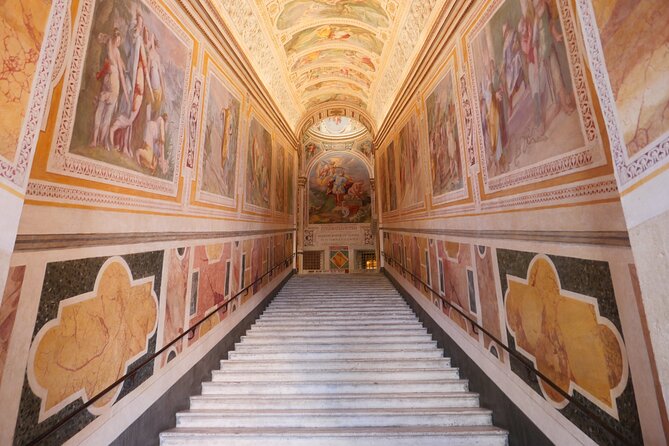
Then you see the Holy Stairs themselves, described as the original stairs of the praetorium where Jesus is said to have climbed at his judgment. Even if you are not religious in the same way as many visitors, you can still feel why people treat this stop as a pilgrimage moment. The devotion is visible in the way people pause, focus, and move.
One heads-up based on the structure of the tour: your time here is brief, about 15 minutes. That brevity can work well if you are chasing efficiency, but if you want a longer, contemplative visit, go in knowing you might want extra time on your own afterward.
Santa Croce in Gerusalemme relics: nails, thorns, wood fragments, and more
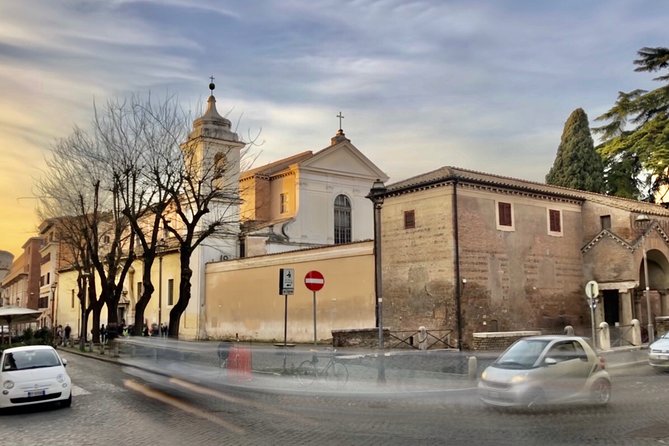
By the time you reach Santa Croce in Gerusalemme, the tour is no longer focused on early Rome’s physical layers. It is focused on tangible objects tied to the Passion story, protected through centuries.
The church itself is presented as built with earth brought from the Holy Land, connecting physical ground to sacred narrative. Inside, you see relics linked to crucifixion events, including a nail from the Crucifixion, the walnut board mentioned as Pontius Pilate placed above the cross, and wood fragments tied to the cross Jesus was crucified on.
You also get additional Passion-related items, including fragments of wall from the cave of the nativity in Bethlehem and two thorns of the crown of the Passion of Christ. Even the wording matters here. You are not just hearing the same generic Passion story. You are being shown a catalog of sacred fragments and told how they are framed within Christian tradition.
This stop is emotional for many people. And it also has a practical angle: without a guide, it can be hard to track what is what. With a guide, you understand the logic of the collection and the role these relics played in belief.
Balanced caution: relics can be controversial if you approach them as historical evidence rather than religious tradition. This tour treats them as devotional artifacts with story value. If you want a strictly academic debate format, you may feel the presentation is more faith-centered than courtroom-style proof.
Another shape for the same afternoon in Rome:
Saint Mary Major extension: when you want more mosaics and relic context
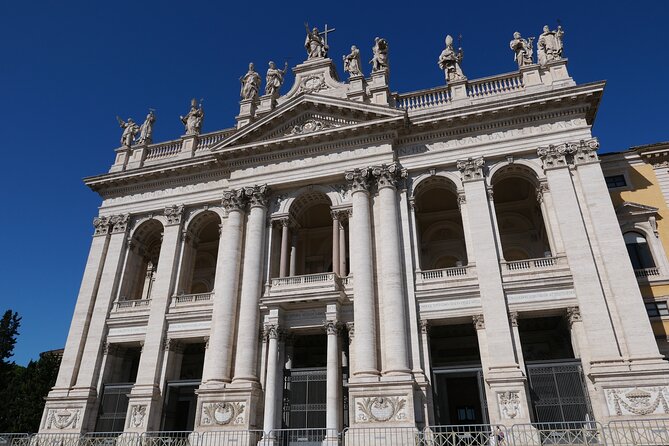
The tour route includes a walk to Papal Basilica of Saint Mary Major, with the option to extend your journey there. If you choose it, you get about an hour inside, with stunning mosaics and sacred relics that help frame why this church holds such importance in Christian history.
This is the “slow down” part of the experience, because it is longer than most stops and more about artistic detail. If you are getting sensory overload from underground spaces plus relic displays, this can feel like a breather.
Still, keep in mind the overall tour length range is roughly 2 hours 30 minutes to 3 hours 30 minutes. Depending on how your group moves and what the churches allow in the moment, your schedule can land toward either end.
Walking, heat, and pacing between four churches
The tour is built as a walking route connecting the churches. That sounds simple, but the practical reality is that you will be on your feet a lot. One clue shows up in the structure itself: multiple stops, short time blocks inside each site, and churches a few blocks apart.
You should treat this like a half-day lite, not a sit-down museum day. Bring comfortable walking shoes, and plan on moderate physical fitness, as the route includes walking and standing.
Heat is real in Rome, and this tour involves time indoors and outdoors. The best way to make it enjoyable is basic prep: water, sun protection, and a pace you can sustain without constantly checking where everyone else is.
Also note how long you actually spend at each “wow” moment. San Clemente takes about 1 hour 15 minutes, the cathedral stop is around 30 minutes, the Holy Stairs are about 15 minutes, Santa Croce is around 30 minutes, and Saint Mary Major adds about 1 hour if you extend. If your top priority is the Holy Stairs, you will likely want to plan extra time on your own later.
Price value: what $90.51 buys you (and what it does not)
$90.51 per person sounds like a niche price, but it comes with meaningful “value pieces,” not just a guide for sightseeing.
What’s included:
- A live professional guide
- Headsets, so you can actually hear details in busy interiors
- Entrance fees and all fees and taxes
So you are not just paying for someone to walk you around. You are paying for access and interpretation, especially for the underground portion at San Clemente and the additional admission at Saint Mary Major. Meanwhile, the stops for the cathedral area and the relic churches are noted as free admissions in the tour structure, so the guide’s work is doing even more heavy lifting at those points.
What is not included:
- Optional gratuities
- Hotel pickup and drop-off
My take: this is a good price if you care about context. If you only want to see the sites quickly and you already know the background, you might feel the money is mostly buying narration. But if you want the “why” behind each layer, each relic, and each transition from pagan Rome to official Christianity, the cost starts to feel fair.
Dress code and etiquette: the practical side of church interiors
Church rules are not optional here. You need knees and shoulders covered to enter the churches. That means bring a light layer even in warm weather, or plan clothing you can comfortably walk in.
Also remember what the tour is doing. You are moving between religious spaces, and the behavior expected is respectful and calm. If you are used to quick photo stops, slow down. You will have a better experience, and you will avoid feeling rushed by the need to follow group timing.
If you are sensitive to crowds, the small group size of up to 10 is a real plus. You move as a unit, and you are not forced into a mass shuffle.
Who should book this underground temples and relics walking tour
Book this if you want:
- Early Christian Rome explained as physical history, not just a list of famous churches
- A guided visit to underground layers where context matters
- A small group experience with clear audio through headsets
You might think twice if:
- You have claustrophobia, because the underground components can be tight
- You hate walking and standing for long stretches
- You want lots of quiet time at each site, because several stops are intentionally time-boxed
This tour fits well for couples, solo travelers, and families with older kids who are comfortable with a moderate pace and church etiquette. It is especially good if you already saw the big headline spots and want the Rome that sits under your feet, plus the devotion-centered relic stops that most standard tours skip.
Should you book it?
Yes, with one strong condition: you should book it if you want interpretation. The best part is not any single building. It is the way the guide connects San Clemente’s stacked layers, then the Lateran area’s Constantine context, then the Holy Stairs devotion, and finally the relics at Santa Croce in Gerusalemme.
If your goal is maximum relaxation, you may feel the pace. Plan for walking, heat, and fairly continuous movement. If you do that, you will get a tour that feels like you are walking through the story of Rome’s religious shifts, with some very specific places you will not see the same way on your own.
FAQ
How long is the Rome Underground Temples and Crucifixion Relics walking tour?
Plan for about 2 hours 30 minutes to 3 hours 30 minutes, depending on how the sites run that day.
What is the group size?
The tour has a maximum of 10 travelers.
What is included in the ticket price?
The price includes a live professional guide, headsets, entrance fees, and all fees and taxes.
What should I wear to enter the churches?
You should cover your knees and shoulders to enter the churches.
Is this tour recommended if I have claustrophobia?
No. It is not recommended for people with claustrophobia due to the underground elements.
What happens if part of a church is closed or if the tour is canceled due to weather?
If areas are closed, your guide adapts the itinerary and keeps the overall duration the same. If the tour is canceled due to weather, you are offered an alternative date or a full refund.
Latest additions from Rome
- Exclusive Rome by Night Vespa Tour★ 5.0 · 30 reviews
- Guided Tour Vatican Museums & Sistine Chapel★ 4.1 · 30 reviews
- Transfer Rome to Airports★ 4.5 · 30 reviews
- Vatican: St.Peter’s Basilica & Dome – Reserved Entry & Tour★ 4.1 · 30 reviews
- Rome street art tour: off the beaten path with a local guide★ 5.0 · 30 reviews
- Tivoli, Hadrians Villa and Villa d’Este, a charming day trip from Rome★ 4.5 · 30 reviews
- Rome Food Tasting with Wine Pairing Italian Authentic Flavors★ 5.0 · 31 reviews
- Inspirational Cooking on the Roman Chef’s Panoramic Terrace★ 5.0 · 30 reviews
Walking Tours in Rome, compared.

Guided Food Walking Tour with Wine in Trastevere
Read our review →
Trastevere & Campo de Fiori Street Food Walking Tour
Read our review →
Paranormal Night Walking Tour & Secret Backstreets
Read our review →
Trastevere Street Food Walking Tour with Local Expert
Read our review →
Guided City Center Evening Sightseeing Walking Tour
Read our review →
Small-Group City Highlights Moonlight Walking Tour
Read our review →
Best of Rome Walking Tour including Trevi Fountain
Read our review →Browse the lists this tour appears in