

Reviewed · SMALL-GROUP TOURS IN ROME
Rome: Trevi Fountain Underground Small Group Tour
One of the best surprises in Rome is going below famous landmarks. This Trevi Fountain underground tour takes you into the archaeology under the fountain, where you can actually see parts of the ancient water system that fed the area. It is a fast-paced, well-guided add-on to your Trevi visit, and it makes the whole Fontana di Trevi story feel real instead of postcard-flat.
What I like most is how clearly the guide explains the site while you are down there. You get headsets, so you are not guessing what the guide is saying in echoey underground spaces. I also love that the focus is practical Roman engineering, not just legends, so you leave understanding Aqua Virgo and why Vicus Caprarius matters.
One consideration: this is not a long, dramatic time standing directly under the fountain basin like a movie set. You will tour the underground archaeological area connected to the Trevi complex, then you still get a short surface stop at the fountain for photos and orientation. Plan your expectations around an archaeology visit with a brief Trevi moment.
In This Review
- Key highlights worth planning for
- Trevi Fountain Underground, what you will actually see
- Meeting in Piazza dei Crociferi, and how to not waste time
- Vicus Caprarius tour, the Roman aqueduct under your feet
- The layers you get beyond the aqueduct
- Trevi Fountain surface stop, photo time with context
- How long it takes, and what that means for your day
- Price and value, is $71 a good deal?
- Who this tour suits best, and who should think twice
- Practical tips so your visit goes smoothly
- Should you book the Rome Trevi Fountain Underground tour?
- FAQ
- Where is the meeting point for the Trevi Fountain underground tour?
- How long is the tour?
- What do we see underground?
- Do I need to buy entry tickets?
- Are headsets provided?
- Is there a skip-the-line option?
- What language is the tour in?
- Is the tour outdoors?
- What should I bring with me?
- Is this tour suitable for wheelchair users?
- Is free cancellation available?
- Can I reserve now and pay later?
Key highlights worth planning for

- Vicus Caprarius, the City of Water, sits underground under the Trevi Fountain complex
- Aqua Virgo aqueduct remains are visible in the underground passages tied to the Trevi story
- Roman water tech plus site stratification, including Imperial and medieval layers
- Hadrian’s castellum aquae is part of what you can see, tied to Campo Marzio water supplies
- Headsets for clarity and a guide you can actually follow
- A short Trevi Fountain photo stop keeps the experience balanced between underground and on-street Rome
Trevi Fountain Underground, what you will actually see

Trevi Fountain is one of those Rome stops that most people already think they know. Coins, crowds, and big movie vibes. Yes, you can connect it to Fellini’s La Dolce Vita, including the famous Anita Ekberg fountain image. But what makes this underground tour worth your time is that you move from the familiar surface scene to the “how did this all work” part.
Underneath the Trevi Fountain area is Vicus Caprarius, often described as the City of Water. This archaeological site is tied to one of Rome’s aqueducts, and the tour experience is built around seeing how water moved through the city and where the system left traces. Aqua Virgo is the aqueduct name associated with this water supply, and the poetic meaning of Aqua Virgo is connected to pure water.
The most memorable part is the contrast. Up top you are looking at a dramatic Baroque fountain. Underground you are looking at the physical remains of an older system, the stone evidence of Roman planning. The tour also includes multiple layers of occupation and building, so you are not just looking at one straight timeline. You are watching Rome stack eras on top of eras.
This is also why this tour feels like value when you like Rome’s real superpower: turning logistics into art. The Romans did not only build monuments, they built the plumbing behind them.
More Small-Group Tours in Rome
- Skip-the-Line Vatican, Sistine Chapel & St. Peter’s | Small Group
★ 5.0 · 7,060 reviews - Rome: Colosseum Underground Small Group Guided Tour
★ 4.7 · 4,844 reviews - Rome: Skip the Line Vatican, Sistine Chapel, St Peter Small Group
★ 5.0 · 3,847 reviews - Rome on a Golf Cart Semi-Private Tour Max 6 with Private Option
★ 5.0 · 2,502 reviews
Meeting in Piazza dei Crociferi, and how to not waste time
The tour starts at Piazza dei Crociferi, a tiny square near Trevi Fountain. That matters because the meeting point is small and easy to miss in the chaos of central Rome. The guide should be recognizable by a sign with the logo of Rome with Silvia.
Two practical tips that can save stress:
- Find your guide at Piazza dei Crociferi and do not wait at the entrance of the archaeological site.
- Wear comfortable shoes, because this is a walking-and-waiting kind of start, and later you will want sure footing on underground paths.
The tour is rain or shine, so dress like you are walking in real Rome streets and then going from outdoor weather into cooler underground air.
Vicus Caprarius tour, the Roman aqueduct under your feet
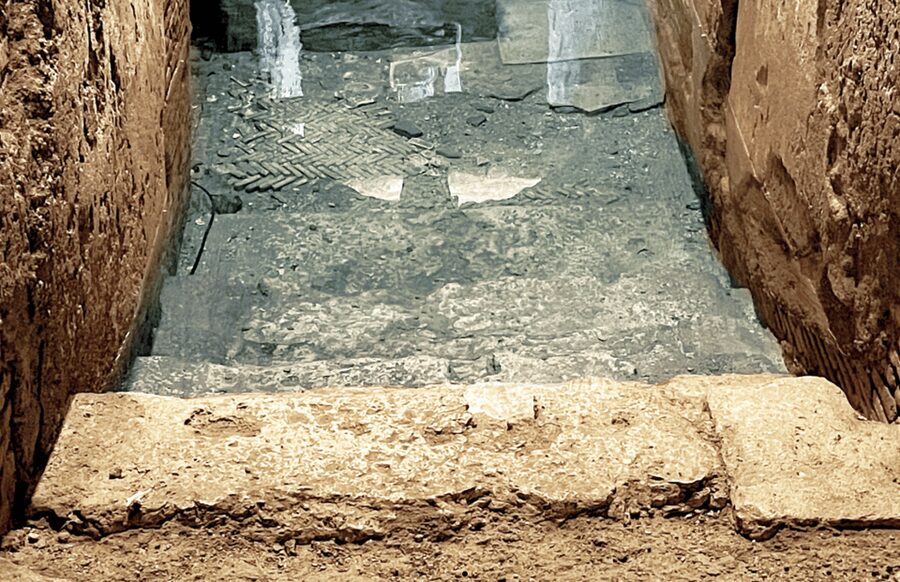
Your main guided segment is the visit to Vicus Caprarius, and it is scheduled as a guided tour lasting about 45 minutes. This is the core of the experience, and it is where the tour earns its name.
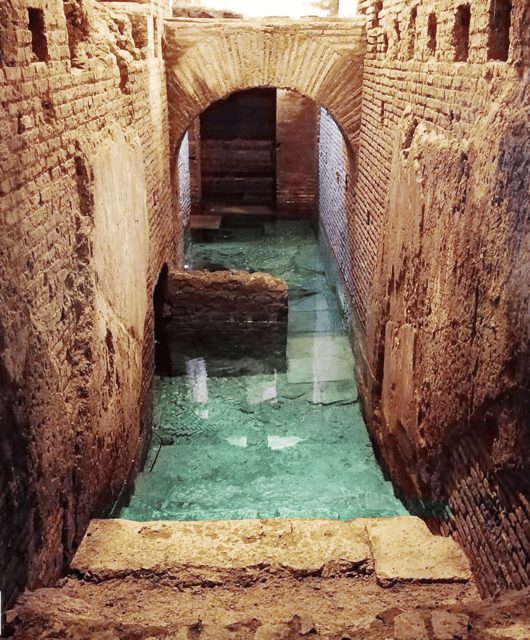
The underground area is connected to the remains of the aqueduct system that supplied water to the Trevi Fountain area. You are not just hearing that Romans had water. You are seeing evidence of it. The tour highlights the aqueduct remains under the Trevi complex, so you can picture how water was brought into the city and managed.
You also get the historical framing that turns the stones into a story. Aqua Virgo is tied to the idea of pure water, and you will hear both the legend and the engineering context. One legend connects the aqueduct naming to a virgo figure, meaning a young woman, tied to thirsty soldiers being led to a water spring.
It is not only about myth. The tour also explains how this site fits into Rome’s broader archaeology. Vicus Caprarius came to light during renovation works connected to the former Cinema Trevi in 1999, and it opened in 2004. That detail helps you understand that this is not something that has always been visible. It is a “came back to light” kind of Rome moment.
Also, this is one of the strongest examples of historical stratification in Rome. In plain terms, you can see that the same patch of ground was used and reused across centuries. That is one of the reasons Roman history feels so dense compared to cities that mostly preserved one era.
The layers you get beyond the aqueduct
The underground visit does more than point at a single aqueduct section. As part of the experience, you also visit:
- a domus from the Imperial era
- medieval houses
- the castellum aquae of the Aqua Virgo aqueduct
That set of stops matters because it changes what you get out of the tour. If you only want one theme, aqueduct remains are the obvious focus. But if you enjoy seeing how Rome changed over time, the mix of Imperial and medieval elements keeps the visit moving and keeps it from feeling like a one-note show.
The castellum aquae deserves a special mention. This monumental water tank was built by Emperor Hadrian to optimize Campo Marzio water supplies. Even if you are not a water-engineering fanatic, the idea is easy to grasp: aqueducts did not just move water, Rome also needed systems to store, regulate, and distribute it where it was needed.
So you start to connect the dots. The aqueduct brings water in. Then you need tanks and infrastructure to manage flow. Then that infrastructure supports daily life and, later, the grand public fountains people now photograph.
If you like history that explains cause and effect, this underground structure is the kind of tour that helps you see Rome as a functioning city, not just a museum.
Trevi Fountain surface stop, photo time with context
After the underground segment, you return to the surface for a Trevi Fountain photo stop and guided time, scheduled as about 15 minutes in the flow. This is short by design, which is fine. The underground portion is the main event, and the surface stop is meant to reconnect you with the landmark you came for.
What you will enjoy most here is the way your understanding changes. Once you know what Aqua Virgo is and how the underground system relates, the fountain is no longer only a visual icon. It becomes the endpoint of a long water story.
Use the photo stop smart:
- Take your classic shots quickly, because the crowd can swell fast.
- Look back up at the fountain after learning about the underground passages. It makes the experience feel like one continuous place rather than two unrelated stops.
This is also a good moment to check lighting for photos, because morning and late-day light can change everything at Trevi.
Another shape for the same afternoon in Rome:


How long it takes, and what that means for your day
The tour listing points to a 45-minute activity length, and the itinerary you follow includes a 45-minute guided segment underground plus a shorter guided portion at the fountain. Either way, you should treat this as a short, focused add-on rather than a full half-day commitment.
That is great news if your Rome day already has big-ticket priorities like the Colosseum or Vatican sites. Trevi is often squeezed into the last hour of a day when your energy is low. Doing Trevi underground makes that time feel more intentional.
It also helps that the tour includes headsets. In a busy Rome day, audio clarity matters. You do not want to miss the key details because you had to keep turning your head toward a guide.
Price and value, is $71 a good deal?
At $71 per person, this tour is not the cheapest way to see Trevi. The value depends on what you want from your visit.
You get more than entry to a normal attraction. The price supports:
- entry tickets included
- an official English speaking guide
- headsets to hear explanations clearly
- skip-the-line access through a separate entrance
For many people, the real value is the rare access to the underground area connected to Trevi Fountain. Seeing the aqueduct remains and the layered archaeological spaces is hard to replicate on your own if you do not have guided context.
I would call it a good buy if you enjoy Roman engineering, want a break from the crowd vibe, and like when tours explain why something exists, not only what it looks like.
If your priority is simply quick photos and coin tossing, you can spend less by doing Trevi on your own. But you would be skipping the part that turns this landmark into a lived Roman infrastructure story.
Who this tour suits best, and who should think twice
This tour is a strong match for:
- people who like the engineering side of Rome
- first-time visitors who want a richer Trevi experience than surface-only
- travelers who appreciate audio support, since headsets are included
It is less ideal if:
- you need wheelchair accessibility, since it is not suitable for wheelchair users
- you expect a long, showy underground experience that keeps you under the fountain for an extended time. You will get a planned underground visit plus a short surface stop.
Family logic check: the tour is in English with a live guide. If you are traveling with kids, headsets help, but the success still depends on your child interest in history and guided talk.
Practical tips so your visit goes smoothly
A few small details make this tour much easier.
Wear comfortable shoes. You are on your feet in a guided format, then you are moving through underground spaces.
Bring an ID. Passport or ID card is requested.
Expect rain or shine. If it is wet, you will still do the tour. Plan clothing that handles shifting weather between the street and underground.
Dress for temperature changes. Underground areas are often cooler than outside Rome streets, so layers can help.
Plan to focus, not multitask. This is a listening-and-looking tour. If you treat it like a photo walk, you will miss the explanations that make the underground stones make sense.
Also, do not be late to find the guide. Piazza dei Crociferi is small, and you do not want to waste time hunting around while the group is assembling.
Should you book the Rome Trevi Fountain Underground tour?
I think you should book this tour if you want the best version of Trevi Fountain, not just the most famous version. The underground focus on Vicus Caprarius and Aqua Virgo turns the landmark into something you understand, and the inclusion of Imperial and medieval layers plus Hadrian’s water tank context makes it feel like a full story in one stop.
Skip it if your only goal is a quick Trevi photo and you already know you do not care about Roman water infrastructure or archaeological sites beneath the city.
One last decision helper: if you enjoy tours that explain how Rome worked, this fits your taste. If you prefer to wander freely and keep things light, consider doing Trevi on your own and spend your time and money elsewhere.
FAQ
Where is the meeting point for the Trevi Fountain underground tour?
The meeting point is Piazza dei Crociferi, a tiny square near Trevi Fountain. Your guide will be recognizable by a sign with the Rome with Silvia logo. Do not wait for the guide at the entrance of the archaeological site.
How long is the tour?
The duration is listed as 45 minutes. The itinerary includes a guided underground visit plus a short guided stop and photo time at Trevi Fountain.
What do we see underground?
You explore Vicus Caprarius under Trevi Fountain, including remains connected to the ancient Roman aqueduct system. The tour also includes a domus of the Imperial era, medieval houses, and the castellum aquae of the Aqua Virgo aqueduct.
Do I need to buy entry tickets?
Entry tickets are included as part of the tour.
Are headsets provided?
Yes, headsets are included so you can hear the official English speaking guide clearly.
Is there a skip-the-line option?
Yes. You use a separate entrance to skip the line.
What language is the tour in?
The tour is provided in English.
Is the tour outdoors?
It runs rain or shine, so plan for outdoor time before and after the underground portions.
What should I bring with me?
Bring a passport or ID card, wear comfortable shoes, and dress for the weather.
Is this tour suitable for wheelchair users?
No, it is not suitable for wheelchair users.
Is free cancellation available?
Yes. You can cancel up to 24 hours in advance for a full refund.
Can I reserve now and pay later?
Yes. The booking offers reserve now and pay later, so you can keep your travel plans flexible and pay nothing today.
Latest additions from Rome
- Exclusive Rome by Night Vespa Tour★ 5.0 · 30 reviews
- Guided Tour Vatican Museums & Sistine Chapel★ 4.1 · 30 reviews
- Transfer Rome to Airports★ 4.5 · 30 reviews
- Vatican: St.Peter’s Basilica & Dome – Reserved Entry & Tour★ 4.1 · 30 reviews
- Rome street art tour: off the beaten path with a local guide★ 5.0 · 30 reviews
- Tivoli, Hadrians Villa and Villa d’Este, a charming day trip from Rome★ 4.5 · 30 reviews
- Rome Food Tasting with Wine Pairing Italian Authentic Flavors★ 5.0 · 31 reviews
- Inspirational Cooking on the Roman Chef’s Panoramic Terrace★ 5.0 · 30 reviews
Small-Group Tours in Rome, compared.

Skip-the-Line Vatican, Sistine Chapel & St. Peter’s | Small Group
Read our review →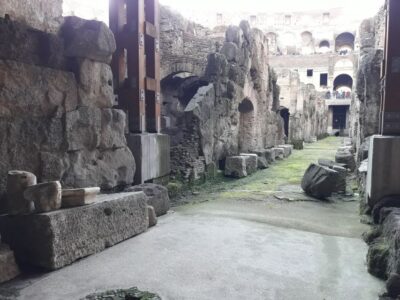
Colosseum Underground Small Group Guided Tour
Read our review →
Skip the Line Vatican, Sistine Chapel, St Peter Small Group
Read our review →
Rome on a Golf Cart Semi-Private Tour Max 6 with Private Option
Read our review →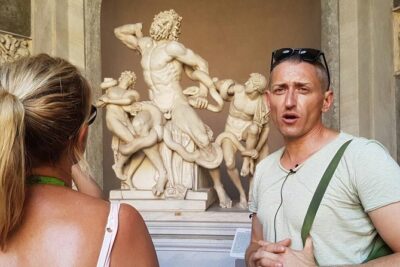
Complete Early Morning Vatican Tour | Small Group
Read our review →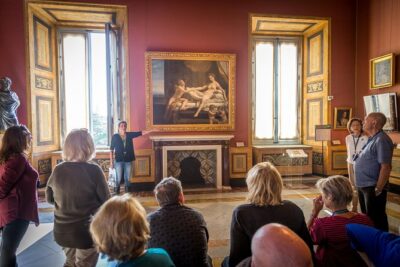
Borghese Gallery & Gardens Small Group Guided Tour
Read our review →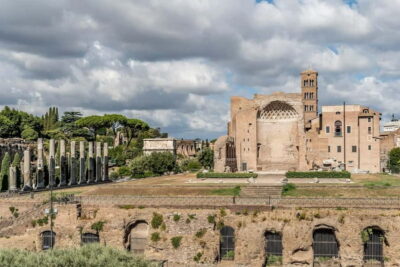
Colosseum & Forum Small Group Tour with Palatine Hill
Read our review →
Rome by Night: E-bike Small Group Tour -Food & Wine (Option)
Read our review →Browse the lists this tour appears in