Reviewed · GUIDED
Rome: Trevi Fountain District and Underground Domus Guided Tour
Trevi Fountain is busy, but this tour sends you below it. You’ll explore Rome’s underground water world at Vicus Caprarius, then pop back up to the iconic fountain.
I love the way this experience turns a famous landmark into a real water story. Two highlights for me are the 30-foot-deep view into ancient life-support systems, and the small-group feel, which keeps the pace relaxed instead of rushed.
One consideration: the underground stop is short and the site is compact, so don’t expect endless tunnels or a long maze. It’s more of a focused underground lesson than a huge underground attraction.
In This Review
- Key Things You Should Know Before You Go
- Why Trevi Works Better With a Water-System Story
- Meeting at Vicolo del Puttarello and Getting Oriented Fast
- Stop 1: Vicus Caprarius, the City of Water Underground
- The Underground Finds That Make the Story Click
- Why the Depth and Timing Matter (and What to Expect Size-Wise)
- Stop 2: Trevi Fountain as the Finale, Not the Main Course
- Price and Value: Is 53.10 Worth It?
- Small Group Size and the Guide Experience
- Who This Tour Fits Best
- Practical Tips to Make It Easier on Yourself
- Should You Book This Trevi Fountain District and Underground Vicus Caprarius Tour?
- FAQ
- How long is the Rome Trevi Fountain District and Underground Domus guided tour?
- Where do I meet the guide?
- What’s included in the $53.10 ticket price?
- Is this tour suitable for people with mobility impairments?
- How many people are in the group?
- Is free cancellation available?
Key Things You Should Know Before You Go

- Vicus Caprarius, the City of Water: you’ll go about nine meters below street level to see ancient water infrastructure tied to the Vergine aqueduct
- A 1999 discovery with cinematic vibes: the underground aqueduct was uncovered in the basement of a cinema
- Big artifacts in a small space: polychrome marble coverings, the head of Alessandro Helios, about 800 coins, and spatheia oil amphorae
- Short, punchy timing: about 45 minutes underground, plus around 10 minutes at Trevi Fountain for photos and the coin moment
- English-guided and limited to 15: easier to hear the story and ask questions without a crowd crush
- Trevi isn’t the main event: this tour is really about the water system feeding the area, with Trevi as the finale
Why Trevi Works Better With a Water-System Story
Rome has a way of turning obvious sightseeing into something more meaningful once you understand the mechanics underneath. Here, that mechanism is water. You start at Vicus Caprarius, then you end at Trevi, with the fountain feeling less like a statue pose and more like the visible tip of a much older system.
What I really like is the contrast. Trevi’s surface can be hot, crowded, and loud. Going underground gives you a calmer pace and a clearer sense of how Romans managed water long before modern plumbing. And if your guide happens to be someone like Erika or Erica (names that come up often), you can expect energy and a storytelling style that keeps the details moving.
A few more Rome options worth a look
- Vatican Museums, Sistine Chapel & St Peter’s Basilica Guided Tour
★ 4.5 · 39,149 reviews - Rome: Colosseum, Palatine Hill and Roman Forum Guided Tour
★ 4.8 · 32,814 reviews - Rome: Guided Tour of Colosseum, Roman Forum & Palatine Hill
★ 4.7 · 27,897 reviews - Rome: Colosseum & Forum with Audio Guide App -Optional Arena
★ 4.2 · 24,770 reviews
Meeting at Vicolo del Puttarello and Getting Oriented Fast
This tour starts in the Vicus Caprarius area, at Vicolo del Puttarello 25, right near Trevi. You redeem your ticket at the Vicus Caprarius site entrance, then you enter with your guide.
The meeting point matters because you’re not doing a big walking tour across Rome. You’re doing a short, concentrated experience: ticket in hand, guide-led descent underground, then a quick walk back out to Trevi to finish. If you like efficient sightseeing that uses your limited time well, this setup plays to that strength.
Also note the practical reality: this is not suitable for people with mobility impairments. So if you need step-free access, you should plan an alternate activity.
Stop 1: Vicus Caprarius, the City of Water Underground
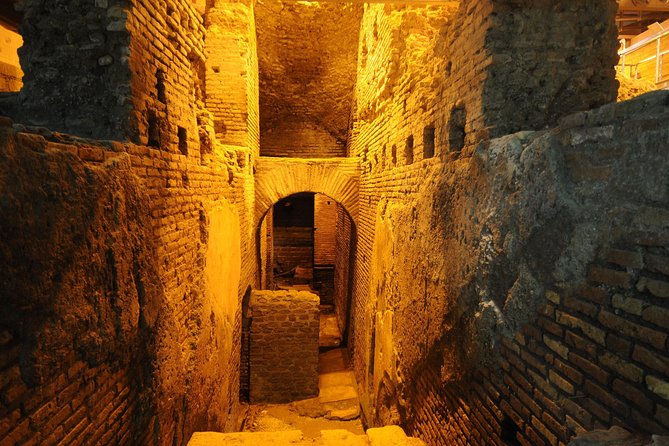
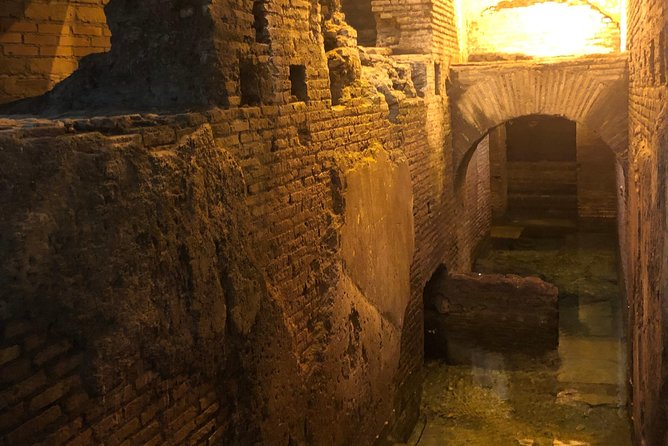
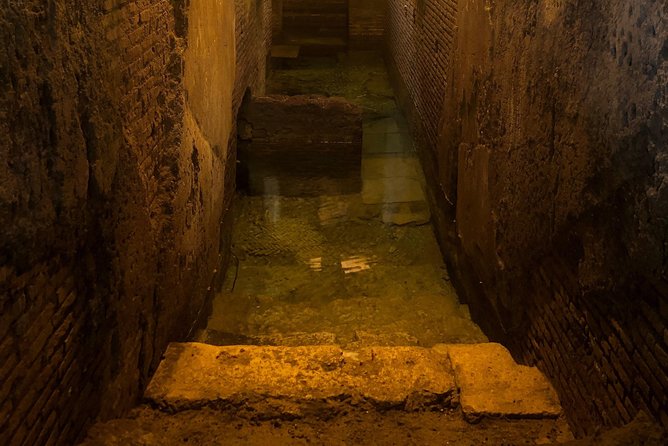
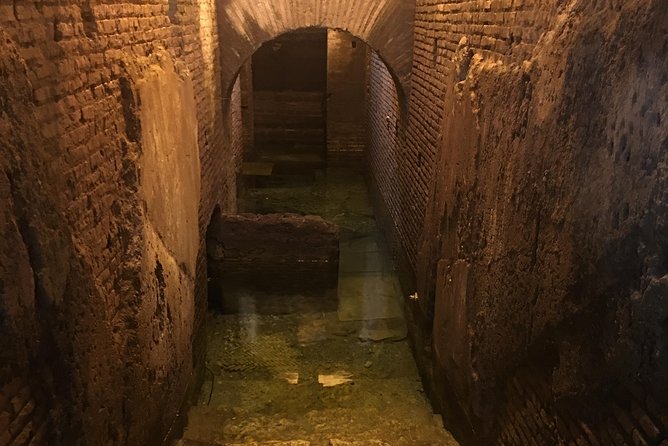
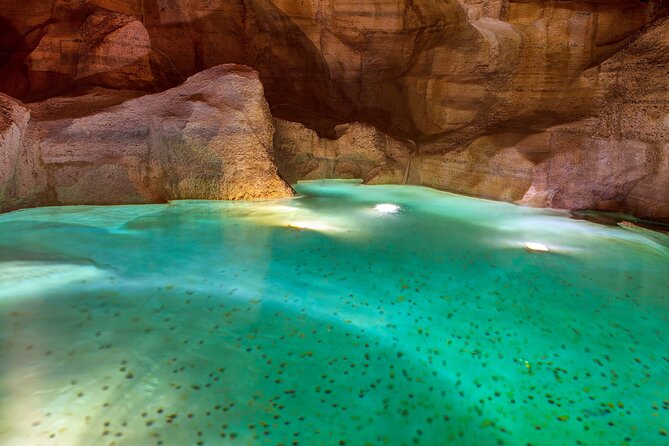
The main event is the underground archaeological site known as Vicus Caprarius, often described as the City of Water. You’ll go down roughly 30 feet, about nine meters, below the streets of Rome. Once you’re inside, you’ll see water infrastructure that connects to the Vergine aqueduct.
A key detail here is how recently this site came to light. The underground aqueduct was discovered in 1999, in the basement of a cinema. That fact alone gives the experience an unexpected modern twist. You’re not only seeing ancient engineering, you’re seeing evidence of how archaeological discoveries can pop up in the middle of today’s city life.
During your guided time, you’ll learn about the remains of a Roman villa and an ancient cistern that were excavated only a few decades ago. That means the site is both ancient in content and relatively fresh in terms of what archaeologists have been able to study and display.
The Underground Finds That Make the Story Click
The guide doesn’t just point at stones. You’ll be shown a set of artifacts that turn the water-system explanation into something tangible.
Here are the highlights the tour emphasizes:
- Polychrome marble coverings, which suggest that even spaces tied to utility and storage could still be finished for beauty
- The head of Alessandro Helios, a famous carved piece connected to the site’s treasure finds
- A treasure trove of about 800 coins, which gives a sense of human activity and value around the space
- Spatheia amphorae from Africa, used for transporting oil, pointing to trade connections far beyond Rome
If you like archaeology that links objects to daily life, this stop is where you’ll feel it. The objects aren’t random. They support the bigger explanation: Romans engineered water delivery through aqueducts, then managed storage and flow with cisterns and related infrastructure.
And the idea of the area being called the City of Water ties everything together. You’re seeing how water moved, where it was held, and why fountains and the surrounding district make sense as the end result of that earlier system.
Why the Depth and Timing Matter (and What to Expect Size-Wise)
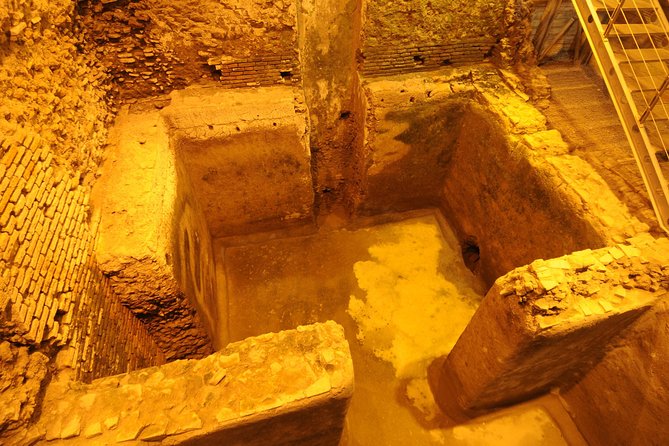
You’ll spend about 45 minutes at the underground site. That time window is long enough for a guided explanation of the water system and the main objects on display, but short enough that you’re not stuck in a slow-moving museum circuit.
Now, the one caution. The underground area is described as limited in extent, so go with the mindset of a focused visit. You’re not getting a sprawling underground adventure. You’re getting a compact but meaningful slice of Roman engineering, plus a clear story about how it fed the Trevi area.
If you’re the type who loves a quick, high-impact “aha” moment, that works in your favor. If you were hoping for a long underground wandering experience, you might feel the visit is too brief.
Another shape for the same afternoon in Rome:


Stop 2: Trevi Fountain as the Finale, Not the Main Course
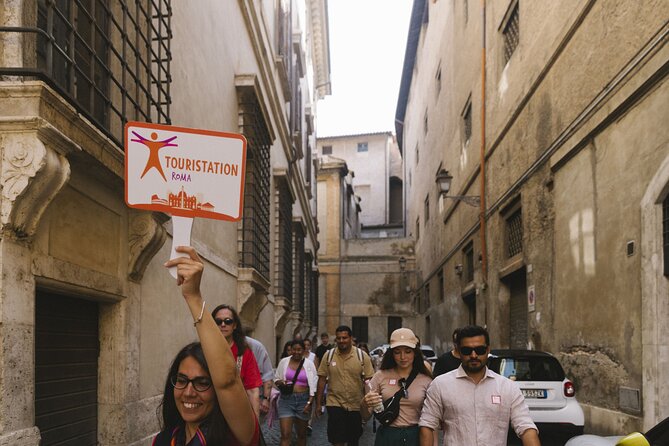
After the underground portion, you’ll exit and end your tour at Trevi Fountain. This is the satisfying part of the story arc. You see where the water ends up visually, at street level.
Your time at Trevi is short, about 10 minutes. That’s enough to throw a coin if you want to follow the legend, and to get a couple of photos, but it’s not designed for lingering or a deep dive into the whole fountain area. Trevi can also be extremely crowded, so expect that your photos may require patience and timing.
If you’re planning ahead, you’ll get more from that 10 minutes by deciding quickly what you want. Think: one wide shot, one close-up if you can find space, and then move with the flow. The tour works best when you treat Trevi like the grand reveal, not the whole show.
Price and Value: Is 53.10 Worth It?
At $53.10 per person, the price isn’t “cheap,” but it’s not outrageous for what’s included. The big value piece is that you’re paying for a reserved entry to Vicus Caprarius plus a guided tour inside, not just an open ticket to walk around on your own.
Your ticket bundle also includes:
- Vicus Caprarius reserved entry and guided tour
- Trevi Fountain access ticket
- Touristation staff assistance
- Italian gelato
So the purchase is really about convenience and interpretation. You’re not only paying to enter a site. You’re paying to understand what you’re seeing, especially the water-system links that make Vicus Caprarius feel connected to Trevi instead of like a separate attraction.
Where the value can feel weaker is if Trevi is your only priority. If you mainly want fountain photos and don’t care about aqueducts, cisterns, and the underground artifacts, then the guided underground component is the reason you’re paying more. In that case, you might prefer a different approach focused just on Trevi. For water-system fans, though, the included guidance makes the price feel more justified.
Small Group Size and the Guide Experience
The tour caps at 15 travelers. That small-group size is a real quality-of-life factor. You can hear explanations, and the guide can keep the story paced without talking over half the group.
You’ll also see from guide mentions that the style can be fun and high-energy. Names like Michelle, Erika, and Erica show up repeatedly in the experience descriptions, along with praise for engaging storytelling and clear English. I can’t promise a specific guide, but it’s a good sign for what kind of tone you’re likely to get.
English is also listed as the language offered, which is important around Roman sites where it’s easy to lose the thread without a good translation and pacing.
Who This Tour Fits Best
This is a smart pick for:
- People who love Roman engineering, aqueducts, and how cities actually worked
- Travelers who have already seen the major sights and want something that feels more local and behind the scenes
- Anyone who wants a short time commitment with a strong story payoff
It’s less ideal for:
- People who want an extended walking tour of Trevi and the surrounding streets
- Anyone who needs mobility-friendly access, since it’s not suitable for mobility impairments
- Travelers who strongly prefer large, expansive sites over compact underground spaces
Practical Tips to Make It Easier on Yourself
Here are a few practical things I’d do before going, based on how the experience is structured.
First, plan your photos. Since Trevi time is around 10 minutes, don’t treat it like you’ll have endless flexibility. Decide on shot types before you step out. Quick planning beats wandering in circles while the crowd thickens.
Second, dress for an underground visit. You’ll be going well below street level, so wear clothing and layers that feel comfortable in cooler indoor conditions and are easy to move in.
Third, bring your curiosity. The tour is very focused on the water system and what the artifacts reveal. If you enjoy asking questions, this format supports it because the group size is kept small.
Finally, use the gelato as part of your pacing. The Italian gelato is included, so treat it as a perk that helps you recover after the underground portion, when you pop back into daylight.
Should You Book This Trevi Fountain District and Underground Vicus Caprarius Tour?
Book it if you want the best version of Trevi: the one with a mechanism behind the beauty. The guided underground stop at Vicus Caprarius is the reason this works, and the artifacts plus water-system explanation make it more than a quick ticket pass.
Skip it if you’re mainly chasing Trevi Fountain photos and you dislike tours that spend most of the time away from the surface. This one is not built as a long Trevi experience. It’s built as a short underground story with Trevi as the finale.
If you’re somewhere in the middle, here’s the deciding question: do you care how the fountains got their water? If yes, this tour is a great use of time. If no, you may find a Trevi-focused plan more satisfying.
FAQ
How long is the Rome Trevi Fountain District and Underground Domus guided tour?
It runs for about 55 minutes. The underground portion is about 45 minutes, and the Trevi Fountain stop is about 10 minutes.
Where do I meet the guide?
Meet at Vicolo del Puttarello, 25, 00187 Roma RM, Italy. The ticket redemption point is the Vicus Caprarius – The Water City location at Vicolo del Puttarello, 25.
What’s included in the $53.10 ticket price?
The ticket includes assistance by Touristation staff, a reserved entry ticket for Vicus Caprarius, the Vicus Caprarius guided tour, Trevi Fountain access ticket, and Italian gelato.
Is this tour suitable for people with mobility impairments?
No, the tour is not suitable for people with mobility impairments.
How many people are in the group?
The maximum group size is 15 travelers.
Is free cancellation available?
Yes. You can cancel for a full refund up to 24 hours before the experience starts.
Latest additions from Rome
- Guided Tour Vatican Museums & Sistine Chapel★ 4.1 · 30 reviews
- Exclusive Rome by Night Vespa Tour★ 5.0 · 30 reviews
- Transfer Rome to Airports★ 4.5 · 30 reviews
- Vatican: St.Peter’s Basilica & Dome – Reserved Entry & Tour★ 4.1 · 30 reviews
- Rome street art tour: off the beaten path with a local guide★ 5.0 · 30 reviews
- Tivoli, Hadrians Villa and Villa d’Este, a charming day trip from Rome★ 4.5 · 30 reviews
- Rome Food Tasting with Wine Pairing Italian Authentic Flavors★ 5.0 · 31 reviews
- Inspirational Cooking on the Roman Chef’s Panoramic Terrace★ 5.0 · 30 reviews
Guided, compared.

Vatican Museums, Sistine Chapel & St Peter’s Basilica Guided Tour
Read our review →
Colosseum, Palatine Hill and Roman Forum Guided Tour
Read our review →
Guided Tour of Colosseum, Roman Forum & Palatine Hill
Read our review →
Colosseum & Forum with Audio Guide App -Optional Arena
Read our review →
Colosseum, Roman Forum and Palatine Hill Guided Tour
Read our review →
Colosseum Arena Floor, Palatine & Forum Guided Tour
Read our review →
Colosseum Arena, Palatine Hill & Forum Guided Tour
Read our review →