
Reviewed · ROME
Rome: Trajan Markets Experience with Multimedia Video
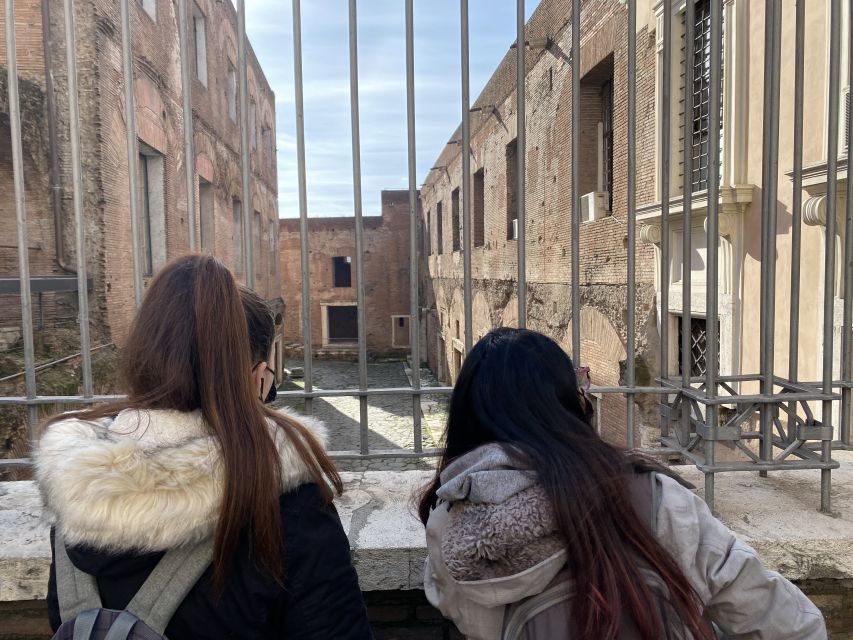
Rome rewards the curious shopper. The Trajan Markets feel like a real Roman mall, and the included 25-minute multimedia video gives you a fast, clear picture of what you are looking at. My only caution is that ticket pick up at the meeting spot can take time depending on how things are running that day.
You also get an interactive smartphone audioguide app with 170+ points of interest, so you can connect ruins you see on the ground with the bigger story of the city. The Fori Imperiali Museum then slows everything down with artifacts, including amphorae, so your brain gets a place to rest after wandering the archaeological complex.
In This Review
- Key highlights worth your attention
- Entering the Trajan Markets, a rare kind of Roman ruin
- The 25-minute Ancient Rome multimedia video: get your bearings fast
- Your smartphone app with 170+ points of interest
- Trajan Markets: the Imperial mall and the forum web around it
- The Fori Imperiali Museum: artifacts, amphorae, and multiple ancient cultures
- Price and value: what $37 buys you in Rome
- Meeting point reality check, including ticket pick-up timing
- What to bring, what to avoid, and how to prep
- Who should book this, and who might prefer something else
- Final call: should you book the Trajan Markets multimedia experience?
Key highlights worth your attention
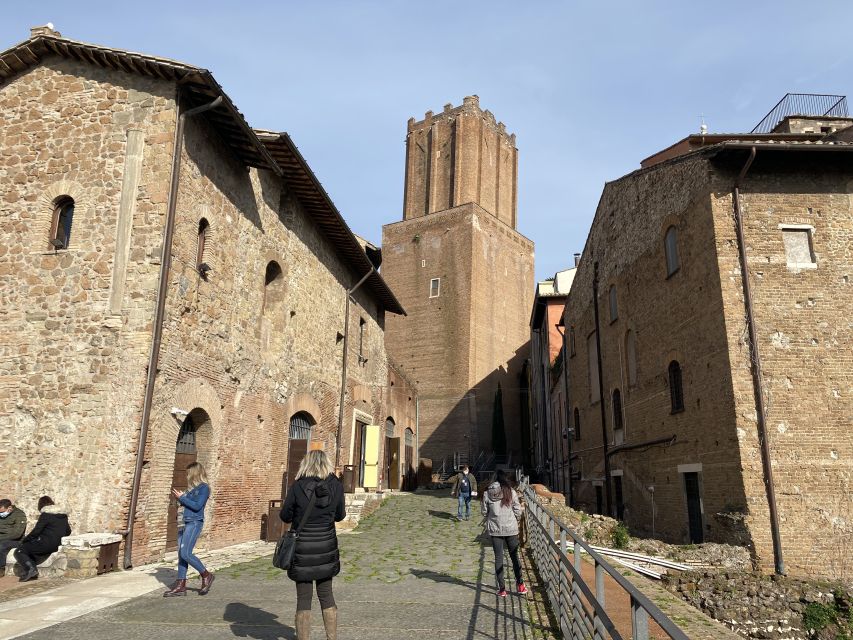
- A Roman-era shopping complex you can actually walk through, not just view from a distance
- A 25-minute orientation video that helps you recognize monuments in context
- 170+ phone-based points of interest to connect Trajan’s world to the surrounding forums
- Forum names you can picture while you stand in the right area: Caesar, Augustus, Nerva, and Templum Pacis
- Fori Imperiali Museum artifacts, including amphorae and objects tied to multiple ancient cultures
Entering the Trajan Markets, a rare kind of Roman ruin
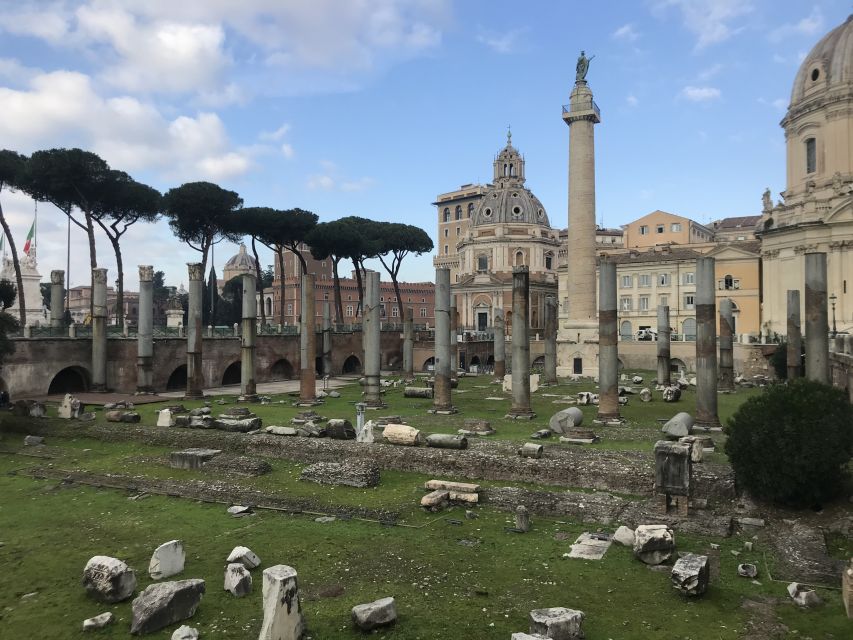
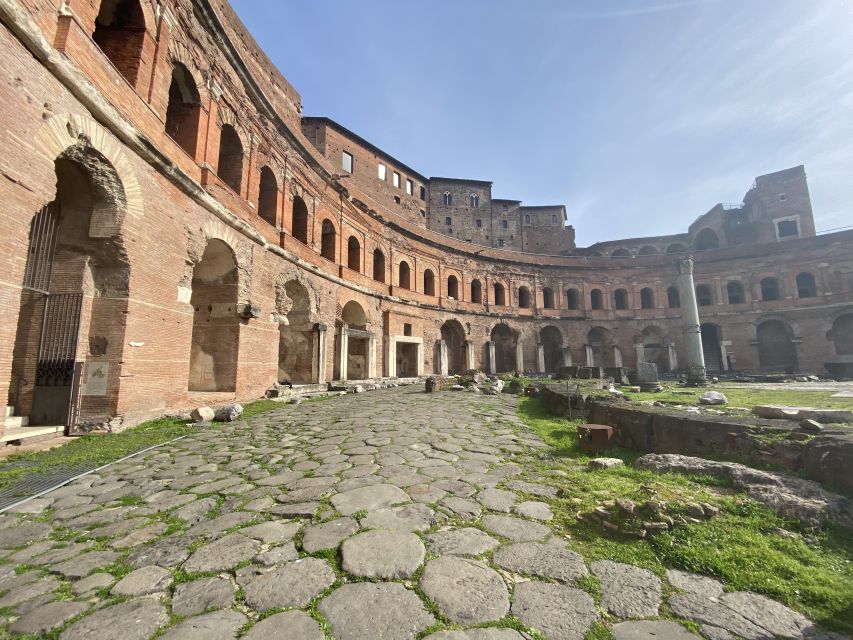
Most Roman sites are temple ruins, palaces, or leftover walls that hint at what life used to be. Trajan Markets is different. It was built as a commercial shopping hub for the Imperial Age, so when you walk its spaces, you are thinking in terms of shops, foot traffic, payments, and meeting up to trade news. That commercial angle makes the architecture feel oddly practical, almost modern.
I like how the complex is described as a semi-circle shape. That form matters because it changes how light and space work around you. You are not just seeing scattered stones, you are getting a sense of a planned structure built to handle crowds and movement.
One more thing that helps: the area later served other purposes. You will also see ruins of a 17th-century cistern. That single detail reminds you that Rome is not frozen in one period. You are standing on layers of what people needed, across centuries.
Not settled yet? These cover similar ground in Rome:
- Vatican Museums, Sistine Chapel & St. Peter’s Basilica Tour
★ 4.3 · 73,970 reviews - Vatican Museums, Sistine Chapel & St Peter’s Basilica Guided Tour
★ 4.5 · 39,149 reviews - Rome: Colosseum, Palatine Hill and Roman Forum Guided Tour
★ 4.8 · 32,814 reviews - Rome: Guided Tour of Colosseum, Roman Forum & Palatine Hill
★ 4.7 · 27,897 reviews
The 25-minute Ancient Rome multimedia video: get your bearings fast
Before you step into the archaeology, you start with a 25-minute multimedia video on Ancient Rome. For a site like this, that short intro is a big advantage. It reconstructs key monuments and helps you understand what the Imperial city looked like, so you spend less time guessing and more time noticing.
Think of it as mental scaffolding. When you later hear forum names like Caesar’s Forum or Augustus’ Forum, you do not just hear names. You can connect them to sightlines and the idea of a city built around power, administration, and public movement.
This video also makes the day flow better. You are not arriving cold and trying to build meaning on the spot. You are getting a storyline first, then proving it out with what you see in the complex.
Your smartphone app with 170+ points of interest
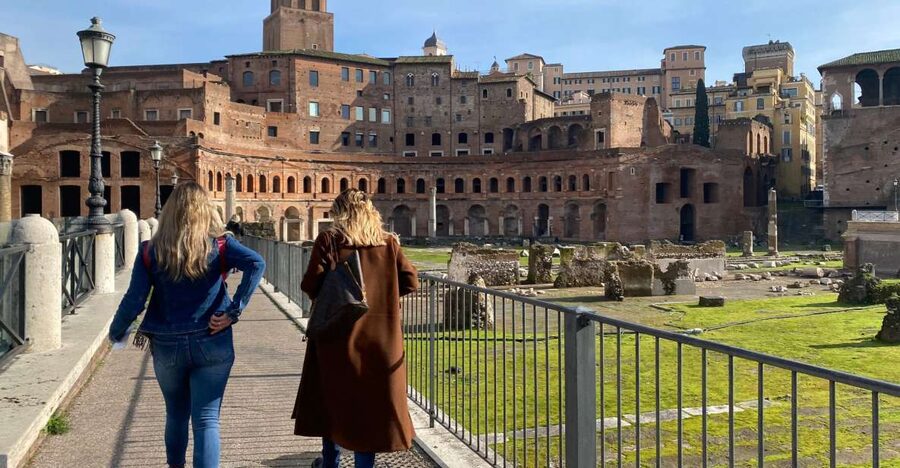
You will download an interactive city app on your phone, and it includes more than 170 points of interest. The audio part is designed so you can listen while you explore, and it pushes you to look at the city as a network, not a list of monuments.
This is one of the best values in the experience because it extends what you learn beyond the museum rooms. Even after you finish the Trajan Markets area, the app is meant to keep you connected to other nearby points, letting you make your own links between places.
Practical tip: bring headphones and make sure your smartphone is charged. The whole experience depends on you being able to listen while moving around. If your phone battery is low, the app becomes less useful at exactly the moment you want it most.
Trajan Markets: the Imperial mall and the forum web around it
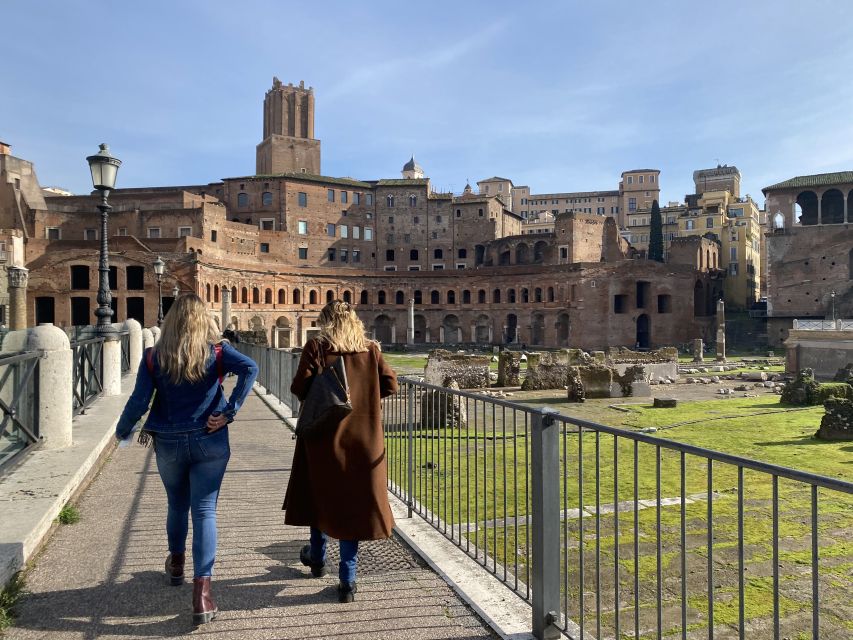
Here is where the experience gets most fun for people who like urban design, not just temples. The Trajan Markets archaeological complex is presented as the commercial center during the Roman Imperial Age, so you can treat it like a story about commerce as well as stone.
As you explore, you will look at how the complex connects to surrounding forums, which served as major trading and meeting points. The named forums include Caesar’s Forum, Augustus’ Forum, Nerva’s Forum, and the Templum Pacis. Even if you have seen these names before, standing in the right area helps them make sense as part of one system of public life.
Also watch for the shift in scale and function. A shopping complex is about circulation and access. Forums are about gatherings, visibility, and authority. Seeing both ideas nearby helps you understand how Roman power and Roman commerce were tied together.
What I find especially useful is the way the day encourages you to observe the evolution of the city from the Imperial Age. That evolution is not abstract here. It is visible in what remains, and in how later structures used the same general area. The 17th-century cistern detail reinforces that theme in a concrete way.
The Fori Imperiali Museum: artifacts, amphorae, and multiple ancient cultures
After the ruins, the Fori Imperiali Museum changes the pace. Instead of walking and comparing architectural shapes, you get to slow down and study objects.
The museum focuses on a collection of artifacts from different civilizations. That matters because Rome did not develop in a vacuum. It absorbed influences through trade, conquest, and migration. You do not just learn that Romans were active, you see how the material culture reflects that reach.
Amphorae are highlighted in the description, and if you have ever wondered how Romans moved food, wine, or supplies across distances, this kind of object is a direct answer. Amphorae are practical artifacts. They signal trade networks, storage practices, and everyday logistics.
One review noted the artificers in the museum section, which tells you there is more than just display cases. There is a sense of craftsmanship and the human work behind objects and installations. If you enjoy understanding how things were made and used, this museum stop will feel worthwhile, not like a quick waiting room.
Another shape for the same afternoon in Rome:
Price and value: what $37 buys you in Rome
At $37 per person for a one-day experience, this is not trying to be a full guided tour with a live person walking you through every interpretation. Instead, it gives you three key components that, together, make the price feel reasonable.
First, you get entry to both the Trajan Markets archaeological complex and the Fori Imperiali Museum. That’s the foundation.
Second, you get the 25-minute Ancient Rome multimedia video, which is a surprisingly effective tool for making sense of the place. Orientation reduces wasted time on confusion.
Third, you get the smartphone app with 170+ points of interest. That is where the value extends. You are not limited to two buildings. You can use the audio guide to connect nearby points and build your own city route on the fly.
Food and drinks are not included, so plan on budgeting for at least a snack or a drink while you are out. Also, a guided tour is not included, so if you want constant narration from a person, you may prefer a different format.
Meeting point reality check, including ticket pick-up timing
You meet at the Touristation Aracoeli Office at Piazza d’Aracoeli 16, near Piazza Venezia. Look for the orange Touristation flags, and there is a fountain in front of the office entrance.
A practical note from lived experience with this kind of setup: ticket pick up can be efficient, or it can turn into a wait. One person described getting their ticket handled quickly and noted a good welcome. Another person ran into delays and found the ticket printing process less smooth, taking around 15 minutes.
So here is my advice: arrive a bit early and don’t plan to start the day at the exact minute. Give yourself a cushion, especially if you have a later visit time window.
What to bring, what to avoid, and how to prep
This experience is built around walking ruins and using your phone for audio. That shapes your packing list.
Bring:
- Passport or ID card
- Comfortable shoes
- Headphones
- Charged smartphone
Not allowed:
- Pets
- Weapons or sharp objects
- Luggage or large bags
- Drones
- Alcohol and drugs
- Sprays or aerosols
- Glass objects
You will be moving through archaeological areas, so comfortable shoes are not optional. If your plan is to wear fragile shoes or high heels, change it. The ground and surfaces can be uneven, and you want your feet to stay happy.
Who should book this, and who might prefer something else
This is a strong match if you want:
- A Roman site that feels like real everyday life, commerce, not just official ceremonies
- A structured intro that makes the ruins easier to understand
- An audio-first experience where you control your pace using your phone
- Museum time with artifacts like amphorae, plus objects linked to multiple ancient cultures
It may not be the best fit if:
- You need a wheelchair-friendly route, since it is not suitable for wheelchair users
- You want a live guide providing continuous commentary
- You are likely to get stressed by ticket pick up, since timing can vary
If you are traveling solo or in a small group and you like the freedom to stop, look back, and replay audio segments as you walk, this format makes sense.
Final call: should you book the Trajan Markets multimedia experience?
If you want a morning start that quickly explains what you are seeing, then spend the day connecting architecture, forum names, and artifacts, I think this is a good buy. The blend of Trajan Markets ruins plus the Fori Imperiali Museum, paired with the 25-minute video and the 170+ point app, is a smart way to build meaning without paying for a full guided tour style.
I would book it if your priorities are orientation, independence, and seeing how Roman commerce worked in physical space. I would consider another option if you prefer a continuously guided experience or if you know you get impatient with ticket procedures on arrival.
Latest additions from Rome
- Guided Tour Vatican Museums & Sistine Chapel★ 4.1 · 30 reviews
- Exclusive Rome by Night Vespa Tour★ 5.0 · 30 reviews
- Transfer Rome to Airports★ 4.5 · 30 reviews
- Vatican: St.Peter’s Basilica & Dome – Reserved Entry & Tour★ 4.1 · 30 reviews
- Rome street art tour: off the beaten path with a local guide★ 5.0 · 30 reviews
- Tivoli, Hadrians Villa and Villa d’Este, a charming day trip from Rome★ 4.5 · 30 reviews
- Rome Food Tasting with Wine Pairing Italian Authentic Flavors★ 5.0 · 31 reviews
- Inspirational Cooking on the Roman Chef’s Panoramic Terrace★ 5.0 · 30 reviews