
Reviewed · WALKING TOURS IN ROME
Rome: Squares and Fountains Walking Guided Tour
Rome’s fountains are more fun when someone gives you the map and the backstory. This small-group walking tour strings together Baroque and Renaissance highlights you can actually walk between, starting with a scenic view above the Spanish Steps. You get a guided, art history focused route that makes the city feel organized, not just crowded.
Two things I really like: first, the guide expertise. In recent tours, guides like Sabrina (and also Martin) are praised for energy and keeping everyone engaged, even teens. Second, you’ll have practical help hearing the guide, since headsets are provided when the group gets larger than 8 people.
One thing to consider: this is moderate walking in Rome’s historic center, and it is not recommended if you have back problems or difficulty walking, and it is not wheelchair accessible.
In This Review
- Key Highlights You Will Feel Right Away
- A Panoramic Start Above the Spanish Steps
- Trevi Fountain Stories You Actually Remember
- Pantheon Dome Views to Piazza Navona’s Baroque Stage
- Bernini and Borromini Side by Side in Piazza Navona
- Hidden Alleys, then Ponte Sant’Angelo’s Big View
- Price, Group Size, and What You Get for $85
- Timing, Meeting Point, and How to Make It Easier on Yourself
- Who This Tour Suits Best (and Who Might Want a Different Option)
- Quick Stop-by-Stop Reality Check
- Should You Book This Rome Squares and Fountains Tour?
- FAQ
- Where does the tour start?
- How long is the walking tour?
- Which stops are included in the experience?
- What languages is the guide available in?
- Is food or drinks included?
- Are headsets provided?
- Is it wheelchair accessible?
- Can I cancel for a refund?
Key Highlights You Will Feel Right Away
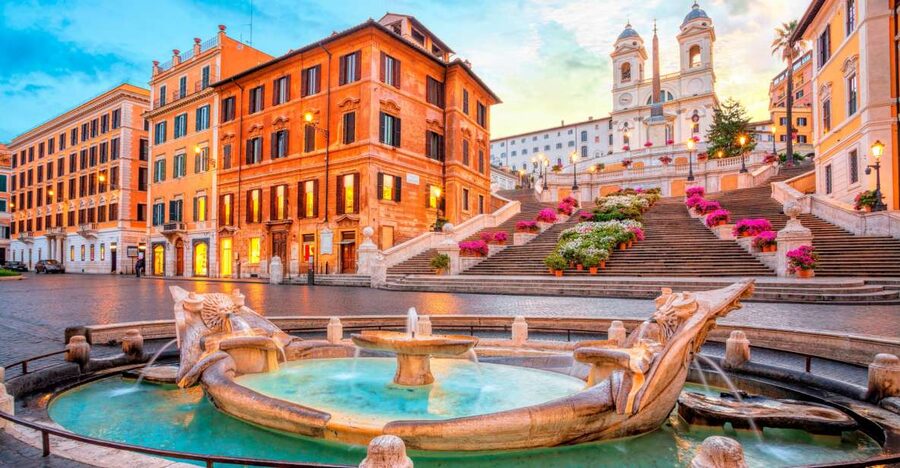
- Panoramic start at Trinità dei Monti above the Spanish Steps, before you even hit the famous stops
- Trevi Fountain myths and legends explained as you pause and photograph
- Pantheon to Piazza Navona link, with ancient and Baroque art placed in context
- Bernini and Borromini in one stop, at the Fountain of the Four Rivers and Santa Agnese in Agone
- Built-in time for an ice cream break while you’re in the middle of Piazza Navona
- Ponte Sant’Angelo finale with a strong view toward Castel Sant’Angelo
A Panoramic Start Above the Spanish Steps
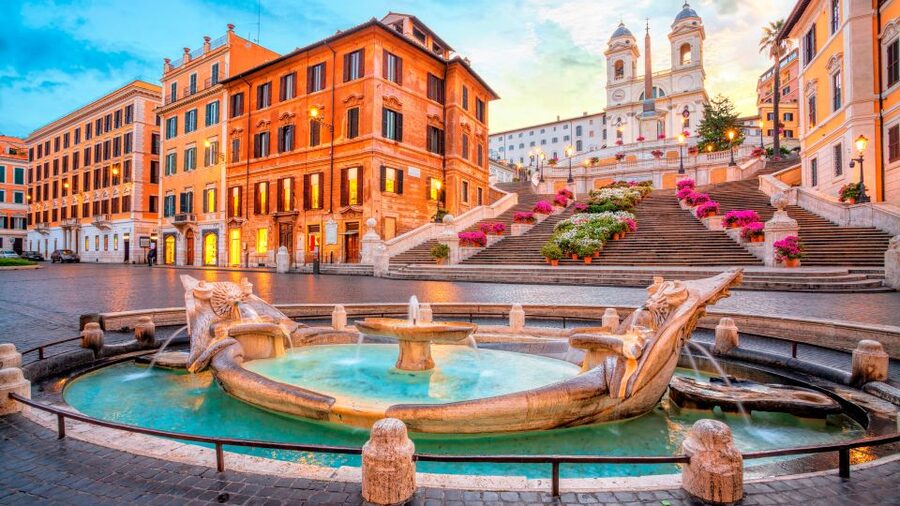
You meet at Trinità dei Monti, right above the Spanish Steps. The first payoff is not a statue or a postcard photo, it’s the view. From here, you get a quick sense of how Rome’s center is laid out, and that helps everything you see later make more sense.
The tour begins with a short stop at Santissima Trinità dei Monti, then continues right into the Spanish Steps area. Expect photo time plus guided context, not a rush-job “look, next.” I like this kind of opening because it lowers the mental load. You’re not figuring out where to be, you’re just noticing shapes, angles, and landmarks as your guide talks.
If you’re trying to make the most of Rome on a limited schedule, this start is a smart move. You’re already oriented before you hit the top tourist magnets like Trevi and Piazza Navona.
More Walking Tours in Rome
- Rome: Guided Food Walking Tour with Wine in Trastevere
★ 4.9 · 3,105 reviews - Rome: Trastevere & Campo de Fiori Street Food Walking Tour
★ 4.9 · 2,768 reviews - Rome: Paranormal Night Walking Tour & Secret Backstreets
★ 4.9 · 1,921 reviews - Rome: Trastevere Street Food Walking Tour with Local Expert
★ 4.8 · 1,784 reviews
Trevi Fountain Stories You Actually Remember
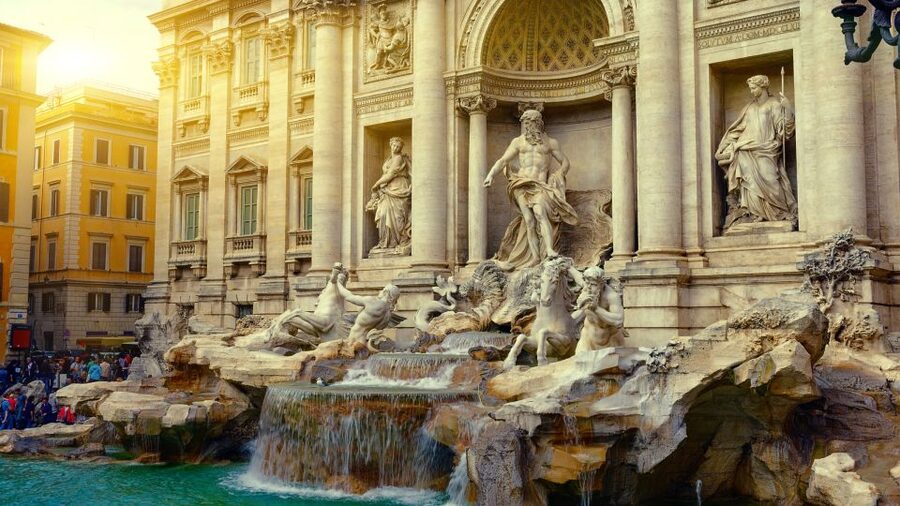
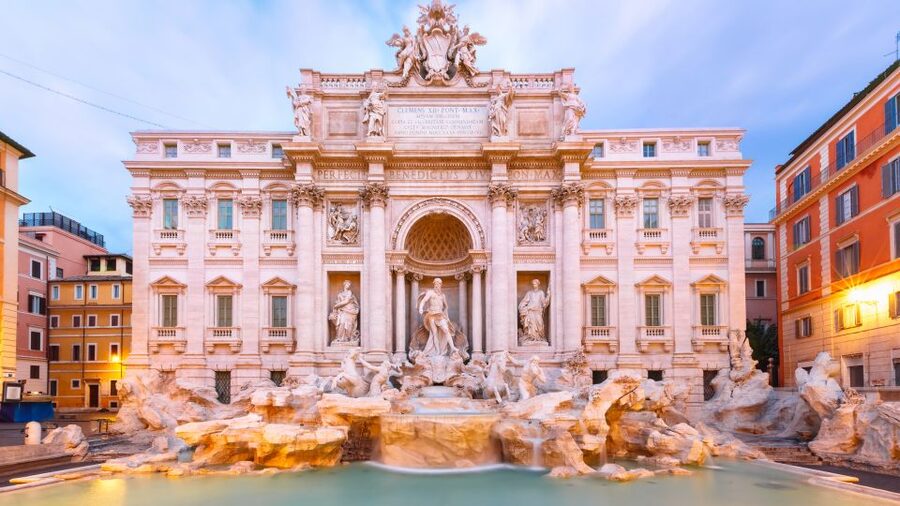
After the Spanish Steps, you head toward Trevi Fountain for a brief break and guided visit. Ten minutes might sound short on paper, but it lines up with what makes a tour like this work: you’re not trying to do everything at once. You pause, listen, and see why the fountain is such a magnet.
Trevi is famous, sure. The real value is what your guide focuses on while you’re there. The stories and legends your guide tells are part of what makes the fountain feel alive instead of just decorative. If you like folklore, art symbolism, or simply understanding why certain details matter, Trevi is where this tour pays off fast.
Practical tip: Trevi gets busy. Wear sunglasses if you need them, and keep your camera ready, because the best shots usually happen in the moments when everyone shifts slightly to make room for the guide’s point of view.
Pantheon Dome Views to Piazza Navona’s Baroque Stage
Next comes the Pantheon, one of the most instantly impressive buildings in central Rome. You get a photo stop and a guided walk-through, and the dome is a major theme. The guide also frames what you’re seeing historically, including the fact that the Pantheon’s dome was the largest in the world since ancient times.
What I like here is the contrast. You move from a space built for all the Olympian gods into a route that quickly becomes theater-like and expressive. When you then reach Piazza Navona, the city’s style shift feels intentional rather than random.
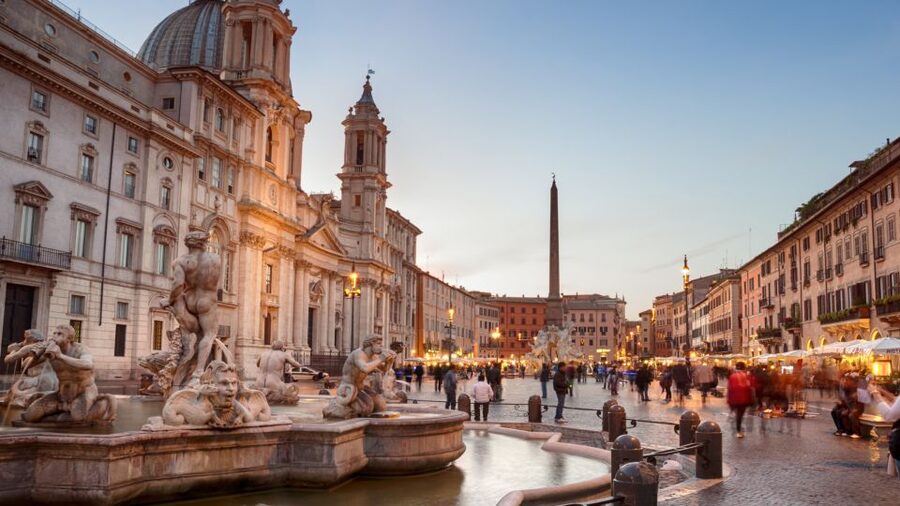
Piazza Navona is huge, and it’s been used over time for public events and festivals. You’ll hear how it evolved as a gathering place, then you’ll look at it through the lens of Baroque design. This is one of those squares where architecture and sculpture are doing the same job, guiding your eye where you should look next.
Bernini and Borromini Side by Side in Piazza Navona
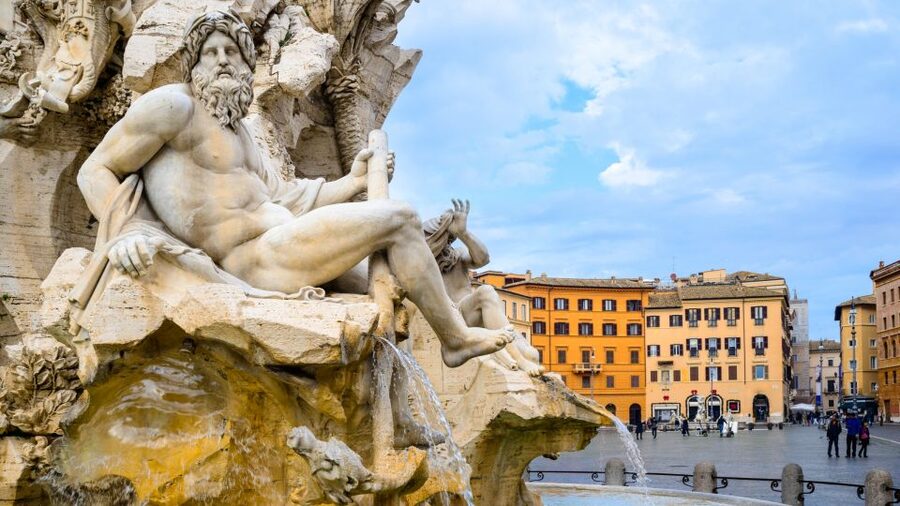
Piazza Navona is where the tour turns from “famous sights” into “why these are famous.” You’ll spend focused time around two major works linked to two giants of the Baroque era.
First up is the Fountain of the Four Rivers by Bernini. Your guide points out what you’re seeing and why it matters, and you get time for photos while the explanation is still fresh.
Then you’re close to Santa Agnese in Agone, by Borromini. Even if you’re not the type who always reads church façades like a puzzle, having a guide who connects art choices to the setting makes it easier to see. You’re not just passing a building, you’re learning how the design “performs” in the square.
There’s also a break built into this part of the walk. You’ll have time to taste one of the best ice creams in Rome. Since food and drinks are not listed as included, treat this as a chance to buy a treat during your free time, not a guaranteed meal stop. Still, it’s a nice rhythm shift. Rome tours can feel heavy on stone and sculpture, so a sweet break in the middle of Piazza Navona helps you reset.
Hidden Alleys, then Ponte Sant’Angelo’s Big View
After the major squares, you get a change of pace: you walk through hidden alleys of Rome. That’s where you can feel the city within the city, smaller lanes that feel less like a photo set and more like everyday Rome. This part matters more than it sounds. If you only do the top sights, Rome can feel like a list. Add some alley wandering and the city starts to feel lived in.
Next you reach Ponte Sant’Angelo. Here, your guide connects the bridge to its long timeline, built in the second century AD. Then you get the signature view toward Castel Sant’Angelo.
Castel Sant’Angelo is a monster landmark in the best way: it was built as Hadrian’s tomb, later turned into a fortress for the popes, and it still reads like a piece of Rome’s power history. Even if you do not go inside, the sight of it from the bridge gives you a strong sense of how the city’s rulers shaped the skyline.
The tour finale leans into atmosphere. You end with the magical feeling of the Sant’Angelo Bridge in front of Castel Sant’Angelo. This is a good way to close, because you’ve been gathering stories all day, then you get a final view that ties the stones together.
A few more Rome options worth a look
Price, Group Size, and What You Get for $85
The price is $85 per person for a 2.5-hour guided walk. That’s not cheap, but it’s not just paying for walking. You’re paying for a guide who can connect what you see at Trevi, the Pantheon, and Piazza Navona to how Rome thinks in layers.
This tour also includes practical audio support: headsets are provided for groups over 8 people. That means you can actually hear the guide in the open-air chaos, which is a big deal on busy streets.
The review scores back up the value of the guiding itself. A big chunk of the praise centers on guides like Sabrina delivering lots of information with energy, and staying organized enough that people could find her at the meeting spot. Another guide, Martin, is also singled out for tying art and monuments to Italian history with clear storytelling.
Is the tour worth it compared to doing it on your own? If you love reading labels, you can DIY many of these stops. But for most people, the biggest challenge is time and context. This walk solves both by putting the explanations in the exact place you’re looking, then keeping the pace moving.
Timing, Meeting Point, and How to Make It Easier on Yourself
This is a 2:30-hour exclusive guided walking tour that runs in a set time slot. You meet at Trinità dei Monti above the Spanish Steps, and there’s a rule that you must arrive early enough for the group to start on time, with a mandatory meeting time of 15 minutes before departure.
That matters because the tour is walking-based. If you show up late, you disrupt the group and miss the start. Rome walking tours work best when you treat the meeting spot like a train platform.
What to bring is simple and useful:
- Comfortable shoes (Rome pavement is no joke)
- Sunglasses and a sun hat if the light is strong
Also, casual clothing is recommended. Keep your day bag light. You’re moving, stopping for photos, and listening for explanations.
Who This Tour Suits Best (and Who Might Want a Different Option)
This tour is a great fit if you want:
- A structured route through central Rome’s big Baroque and Renaissance landmarks
- Stories tied to what you’re seeing, not just a list of names
- A small-group experience where the guide can keep the flow tight
It’s also a smart choice if you’re near the end of your trip and want the highlights to make more sense together. People who like clear orientation in a city usually get a lot out of this format.
On the other hand, it’s not suitable if:
- You use a wheelchair or need wheelchair access
- You have back problems or difficulty walking
Moderate walking is built into the experience, and the route involves multiple stops and city-center streets.
Quick Stop-by-Stop Reality Check
- Trinità dei Monti and Spanish Steps: good for orientation and photos with guidance
- Trevi Fountain: short pause, strong story focus, lots of photo attention
- Pantheon: one of the most awe-worthy exteriors for the route, plus dome context
- Piazza Navona: Baroque square as a stage, with Bernini and Borromini nearby
- Ice cream time: a break that helps the day feel lighter
- Hidden alleys: a change of texture from monuments to everyday Rome
- Ponte Sant’Angelo and Castel Sant’Angelo view: a satisfying closing view and atmosphere
Should You Book This Rome Squares and Fountains Tour?
Book it if you want your Rome highlights connected into a single story. This is the kind of tour that helps you go from seeing famous buildings to understanding why they look the way they do, especially around Trevi, Piazza Navona, and the Pantheon. The small-group feel and the fact that you’re often listening while you’re right at the artwork make the experience feel efficient, and the strong guide track record, including Sabrina and Martin, is a reassuring sign.
Skip it or look for a gentler alternative if you know you cannot handle moderate walking, or if accessibility is a concern. Also, if you hate crowds and you’re expecting quiet corners the whole time, you might find the city center a bit louder and busier than you’d like.
If you’re comfortable walking, arrive early, wear good shoes, and show up ready to look up and listen for details, this tour is a solid use of 2.5 hours in Rome.
FAQ
Where does the tour start?
You meet at Trinità dei Monti above the Spanish Steps.
How long is the walking tour?
The tour lasts 2.5 hours.
Which stops are included in the experience?
You’ll see Santissima Trinità dei Monti, the Spanish Steps, Trevi Fountain, the Pantheon, Piazza Navona (including time for the Fountain of the Four Rivers and Santa Agnese in Agone), then Ponte Sant’Angelo and Castel Sant’Angelo.
What languages is the guide available in?
The live guide speaks English and Italian.
Is food or drinks included?
Food and drinks are not included unless specified. The tour includes time for ice cream, but the info provided does not say it is included.
Are headsets provided?
Yes. Headsets are included for groups larger than 8 people.
Is it wheelchair accessible?
No. The tour is not wheelchair accessible and is not suitable for people with mobility impairments.
Can I cancel for a refund?
Yes. There is free cancellation up to 24 hours in advance for a full refund.
Latest additions from Rome
- Guided Tour Vatican Museums & Sistine Chapel★ 4.1 · 30 reviews
- Exclusive Rome by Night Vespa Tour★ 5.0 · 30 reviews
- Transfer Rome to Airports★ 4.5 · 30 reviews
- Vatican: St.Peter’s Basilica & Dome – Reserved Entry & Tour★ 4.1 · 30 reviews
- Rome street art tour: off the beaten path with a local guide★ 5.0 · 30 reviews
- Tivoli, Hadrians Villa and Villa d’Este, a charming day trip from Rome★ 4.5 · 30 reviews
- Rome Food Tasting with Wine Pairing Italian Authentic Flavors★ 5.0 · 31 reviews
- Inspirational Cooking on the Roman Chef’s Panoramic Terrace★ 5.0 · 30 reviews
Walking Tours in Rome, compared.

Guided Food Walking Tour with Wine in Trastevere
Read our review →
Trastevere & Campo de Fiori Street Food Walking Tour
Read our review →
Paranormal Night Walking Tour & Secret Backstreets
Read our review →
Trastevere Street Food Walking Tour with Local Expert
Read our review →
Guided City Center Evening Sightseeing Walking Tour
Read our review →
Small-Group City Highlights Moonlight Walking Tour
Read our review →
Best of Rome Walking Tour including Trevi Fountain
Read our review →Browse the lists this tour appears in