
Reviewed · PANTHEON TICKETS AND GUIDED TOURS
Rome: Spanish Steps, Trevi Fountain, Pantheon & Navona Tour
Rome feels like a maze, then it doesn’t. This 2.5-hour walk ties Rome’s biggest icons together with easy navigation help, all in one smooth route. I like that it moves fast but still explains what you’re actually looking at, not just where to stand.
Two things I especially liked: the included headsets make every stop easier to follow, and the small group size keeps the experience personal. In my notes, I kept circling back to how guides such as Max and Islam handled questions on the spot, plus how Ari’s answers stayed clear and direct.
One consideration: this tour involves walking between several major sights, and it is not recommended if you have back or knee problems. If you know you need frequent rests, you may find the pace tougher than it looks.
In This Review
- Key highlights worth showing up for
- A 2.5-hour route that turns Rome into something you can read
- Piazza del Popolo and Porta del Popolo: the gateway story
- Spanish Steps: a landmark you can enjoy without getting trapped
- Trevi Fountain: making sense of Aqua Virgo and Renaissance power
- The Pantheon stop you should plan around: exterior view, not entry
- Piazza Navona: baroque drama on an older stadium footprint
- Why the headsets change the whole experience
- Value check: does $59 buy more than a fast photo loop?
- Who this tour is best for, and who should rethink it
- Should you book this Rome highlights walk?
- FAQ
- How long is the Rome Spanish Steps, Trevi Fountain, Pantheon, and Navona tour?
- How much does the tour cost?
- What language is the tour offered in?
- Are headsets included?
- Is entry to the Pantheon included?
- Where do I meet the tour and where does it end?
- Who should avoid this tour?
- Can I get a refund if I cancel?
Key highlights worth showing up for
- Headsets included so you can hear your guide clearly while you walk Rome streets
- Max, Islam, and Ari are real guide examples, with lots of Q and A focus
- Big icons, short time (about 2.5 hours total) for first-time orientation
- Pantheon outside view only, since visiting inside is not included
- From Piazza del Popolo to Piazza Navona with lots of “look for this” moments
A 2.5-hour route that turns Rome into something you can read
This tour is built for the first, best kind of Rome confusion. You start in Piazza del Popolo and end in Piazza Navona, with a guide leading you on foot through major landmarks without making you figure everything out alone. The total time is about 2 hours 30 minutes, and the pacing is split into focused chunks at each stop.
The group limit is 25 people, which matters more than you might think. Smaller groups tend to mean fewer people blocking your view, and you get more chances to ask your guide what to look for next. On top of that, you get headsets, which is a huge help around busy streets and crowded squares.
What I like most is the “how to navigate Rome” angle. Instead of treating landmarks like isolated photo ops, the guide keeps pointing out angles, details, and context so the city starts to connect in your mind. If you want a classic highlights loop, this is a tidy way to do it without spending all day in transit.
More ways under the Pantheon dome:
- Rome: Pantheon Priority Entry Ticket & Interactive App
★ 4.1 · 5,114 reviews - Rome: Pantheon Priority Entry Tickets with Interactive App
★ 4.6 · 4,108 reviews - Rome: Pantheon Timeless Marvel Guided Tour with Entry Ticket
★ 4.9 · 4,002 reviews - Castel Sant’Angelo: Ticket with optional Vatican or Pantheon
★ 4.4 · 3,088 reviews
Piazza del Popolo and Porta del Popolo: the gateway story
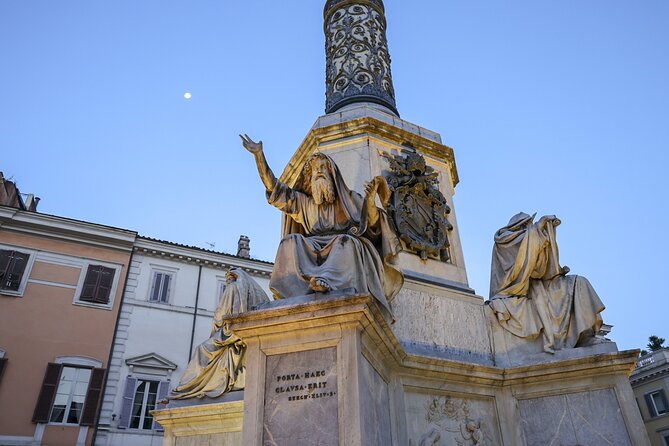
The tour begins at Piazza del Popolo, where you’ll also hear about the gate known as Porta del Popolo. The gate was originally called Porta Flaminia, but it’s officially known as Porta del Popolo today. You also get a very specific art and architecture thread to follow, because Pope Pius IV commissioned Michelangelo to design it in 1562.
Here’s the practical payoff. When you know the background, the square turns from “pretty open space” into a story about how Rome reworked older routes and built new identities over time. The guide also explains who actually carried out the work, with Michelangelo delegating it to architect Nanni di Baccio Bigio, finished in three years and completed in 1565.
This stop is about 15 minutes, so you won’t get stuck waiting around. It’s a strong opener because it gives you a mental map: Rome is always layering older infrastructure with later design choices.
Spanish Steps: a landmark you can enjoy without getting trapped
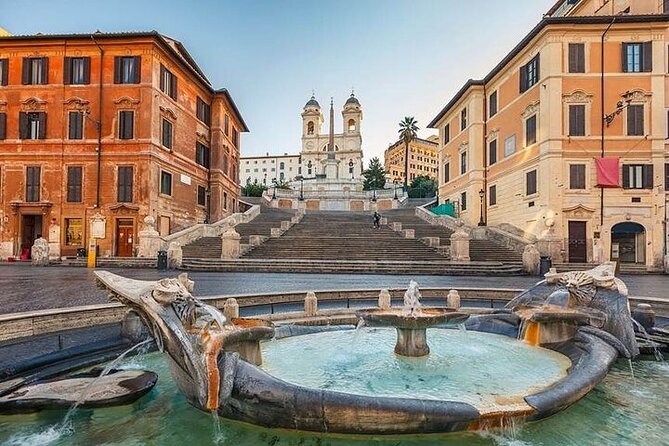
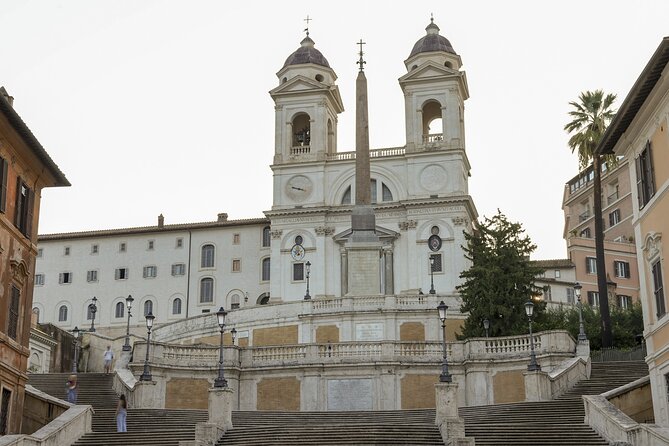
Next come the Spanish Steps, a staircase that climbs from Piazza di Spagna up to Piazza Trinità dei Monti. The history here goes back to 1723, and the steps became a magnet for artists, painters, and poets even in earlier centuries. Today, it still feels like people gather there for the same reasons, just with smartphones instead of sketchbooks.
The best way to enjoy the Spanish Steps during a short walking tour is to watch how people use the space. It’s not only a climb, it’s a viewing platform, a meeting point, and a social pause. Your guide’s job is to help you see what you might otherwise miss, like how the stairway functions as a kind of stage between the two squares.
This stop is roughly 30 minutes. That’s enough time to take photos, catch your breath, and learn what to pay attention to next. The only “drawback” here is also the most real one: it can be crowded, so comfortable footwear and patience help.
Trevi Fountain: making sense of Aqua Virgo and Renaissance power
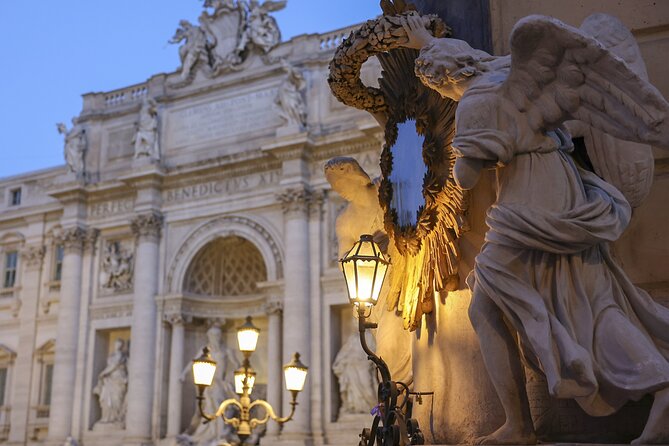
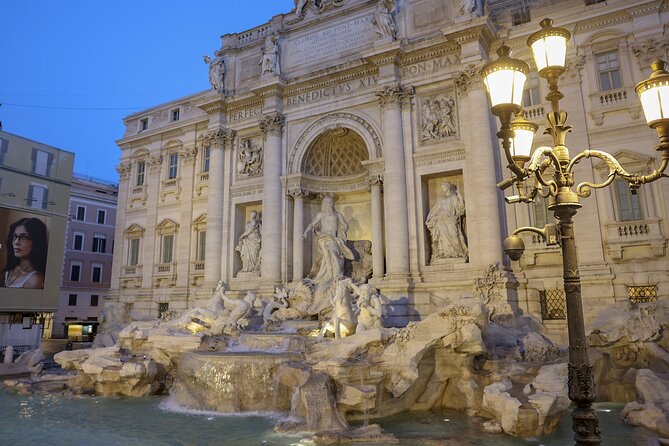
You’ll then hit Trevi Fountain, one of Rome’s must-sees. Even if you’ve seen it a thousand times in photos, it still lands differently in person, mostly because of the scale and the sculptural intensity up close. The origins are tied to water infrastructure, beginning around 19 BC as the endpoint of the Aqua Virgo aqueduct.
What makes the stop more than a quick glance is the timeline your guide gives you. The fountain you see today was constructed later during the Renaissance era, under the guidance of Pope Nicolas V. That Roman habit of reusing and upgrading old systems shows up again and again in this city, and Trevi is a perfect example.
The tour gives you about 30 minutes here, which is just right for getting oriented and still enjoying the details. Admission is listed as free, so you’re not paying extra just to stand and look. Still, do expect the classic fountain-swarm energy, so having a guide to help you choose where to stand makes a real difference.
The Pantheon stop you should plan around: exterior view, not entry
The tour includes the Pantheon, but it’s an important distinction: visiting inside is not included. You’ll spend about 30 minutes looking at it from the outside while your guide explains why this building changed the way people thought about Roman architecture.
The Pantheon’s background is the kind of story that sticks. It was built between 25 and 27 BC as a temple for pagan gods and later completed by Hadrian in 126 AD. Since the 7th century, it has been used as a church dedicated to St. Mary and Martyrs.
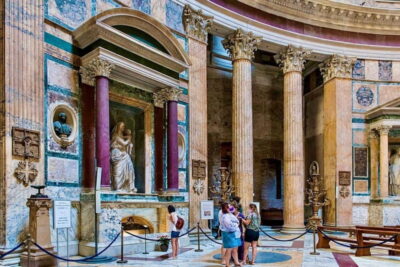
The headline architectural feature is the dome and its oculus, the central opening that lets natural light filter in. Even without entering, you can understand the engineering idea because the exterior is designed to telegraph that interior logic.
This stop is a major reason people like the tour. Reviews specifically highlight how guides, including Max, bring real passion to the Pantheon explanation. And since you’re not lining up or buying entry for the inside, the schedule stays focused.
The tradeoff is also clear: if you want to spend time inside the Pantheon itself, you’ll need a separate plan. But for many first-timers, seeing it properly from the outside with context is a smart use of limited time.
Another shape for the same afternoon in Rome:

Piazza Navona: baroque drama on an older stadium footprint
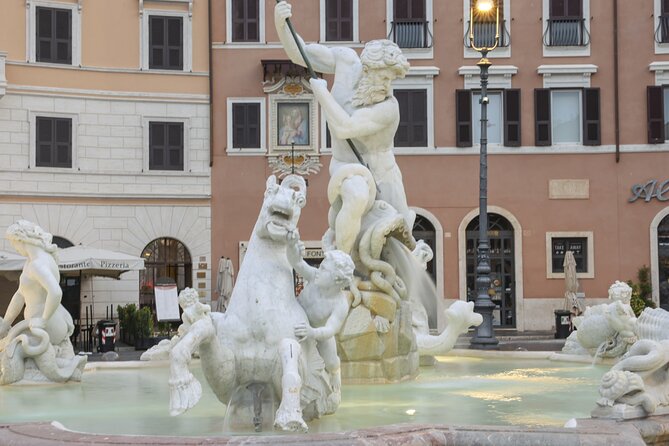
Finally, you end at Piazza Navona, which is famous for its elegant square, fountains, and baroque buildings around the edges. The guide gives you the origin story, and that’s what helps you read the space instead of just walking through it.
Piazza Navona dates back to the 1st century, when it was known as the Stadio di Domiziano. By the 15th century, it had been paved over and turned into a marketplace that served as the city’s main commercial hub for nearly 300 years. Today, you get that layered feel, where ancient purpose and Renaissance-era design overlap in the same view.
You’ll have about 30 minutes here. It’s a great finishing point because you can shift from “learning mode” to “wander and soak it in” mode. Also, ending in a lively square means it’s easier to connect to buses and walking routes afterward.
Why the headsets change the whole experience
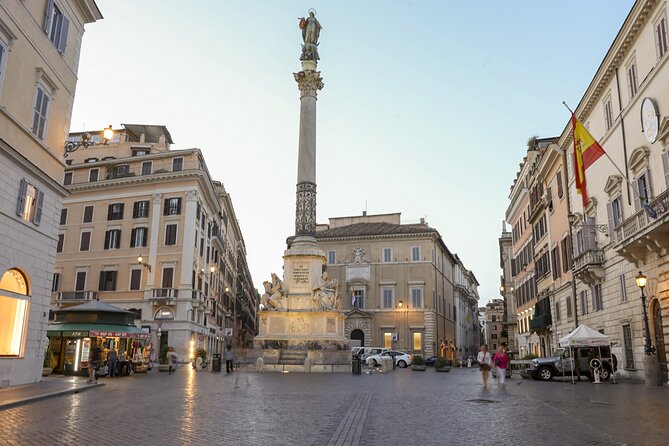
Rome has two types of noise: street sound and crowd sound. The included headsets help you beat both. When you’re walking between attractions, you need instructions that land quickly, and the guide needs to be heard without you constantly adjusting your position.
I especially appreciate this if your listening style is more active. You can focus on the guide’s points, then look right where they tell you to look. It makes the stops feel organized instead of scattered.
Headsets also help when the group gets stopped for a moment. You might be standing still while the guide points out something small or explains a detail, like the origin of a gate name or what the Pantheon dome shape is doing. You don’t have to rely on lip-reading.
Value check: does $59 buy more than a fast photo loop?
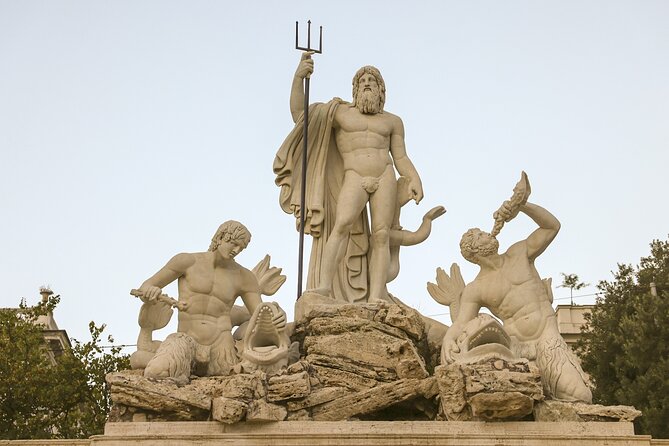
For $59 per person, you’re paying for a guide, taxes, and headsets, plus entry details that are straightforward. Most stops in this route are listed as free admission, while the Pantheon is not included inside, so you’re not paying for a ticket you never use.
Here’s how to judge value in practice. If you’re doing this type of highlights route on your own, you typically spend time searching for information, deciding where to stand, and reorienting after each stop. This tour compresses that work into a guide-led walk, and you get clear talking points at the places that matter most.
The 25-person cap and headset inclusion push the value higher, because the experience is designed to stay coherent. And the 2.5-hour format is ideal if you’re trying to see Rome’s major hits without sacrificing an entire day.
If you already know these sights deeply and you plan to go inside the Pantheon too, you might feel limited by the exterior-only part. But for an efficient first orientation, the price is easy to justify.
Who this tour is best for, and who should rethink it
This tour fits best if you want a smart highlights loop and you like learning while you walk. It’s ideal for first-time visitors who want help understanding what they’re seeing, not just a checklist. If you enjoy asking questions, the small group setup helps you get answers in the moment.
It’s also a good match if you like having Rome feel connected. From Porta del Popolo to the Spanish Steps, to Trevi, to the Pantheon’s engineering ideas, and then ending at Piazza Navona’s layered history, the guide keeps the pieces from feeling random.
The clearest mismatch is mobility. The tour is not recommended for travelers with back or knee problems, because it’s built around walking between several stops. If you need frequent pauses or step-by-step pacing, you may find the timing tight.
Also, there’s a heads-up about the Jubilee. Some monuments may be under restoration, so you should pay attention to any messages about changes.
Should you book this Rome highlights walk?
I’d book it if you’re short on time and you want your first Rome day to feel guided and understandable. The route is tight, the headsets are included, and the guide style highlighted by people like Max and Islam tends to be friendly, question-friendly, and detail-oriented.
I would think twice if you have mobility limits affecting walking, or if you specifically want to go inside the Pantheon during this stop. In that case, you’d likely want a different tour that includes entry, or you’d need a separate plan for inside.
If you’re a “show me the why” visitor, this one delivers. It doesn’t just show you Rome, it helps you read it fast, so your photos come with meaning.
FAQ
How long is the Rome Spanish Steps, Trevi Fountain, Pantheon, and Navona tour?
It’s approximately 2 hours 30 minutes.
How much does the tour cost?
The price is $59.00 per person.
What language is the tour offered in?
The tour is offered in English.
Are headsets included?
Yes, headsets are included so you can hear your guide more clearly.
Is entry to the Pantheon included?
No. The visit inside the Pantheon is not included.
Where do I meet the tour and where does it end?
It starts at Piazza del Popolo, 00187 Roma RM, Italy and ends at Piazza Navona, 00186 Roma RM, Italy.
Who should avoid this tour?
It is not recommended for travelers with back or knee problems due to the walking involved.
Can I get a refund if I cancel?
Free cancellation is available if you cancel up to 24 hours in advance for a full refund.
Latest additions from Rome
- Rome: Testaccio Market Food Tour with Street Food & Wine★ 5.0 · 8 reviews
- Exclusive Pasta & Tiramisu Class with Wine near by Colosseum★ 5.0 · 8 reviews
- Private Professional Photoshoot in Rome★ 5.0 · 8 reviews
- Loreto “Shrine of the Holy House of the Virgin Mary” Private Tour from Rome★ 5.0 · 8 reviews
- Rome Day to discover Florence and Pisa Hotel Pickup★ 4.5 · 8 reviews
- Rome: Christmas Nativities and Angels Tour★ 3.1 · 8 reviews
- Guided Tour of Vatican Museums and Sistine Chapel★ 5.0 · 8 reviews
- Rome: Cooking Class of fresh Pasta and Tiramisu Cake★ 5.0 · 8 reviews
Pantheon Tickets and Guided Tours, compared.
Pantheon Priority Entry Ticket & Interactive App
Read our review →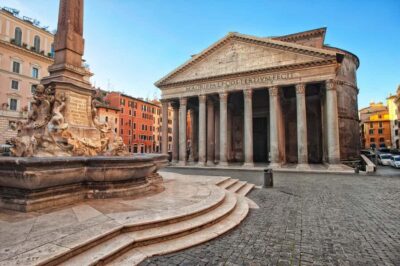
Pantheon Priority Entry Tickets with Interactive App
Read our review →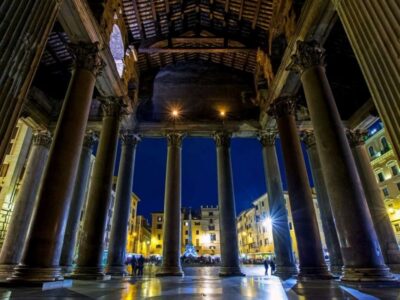
Pantheon Timeless Marvel Guided Tour with Entry Ticket
Read our review →
Castel Sant’Angelo: Ticket with optional Vatican or Pantheon
Read our review →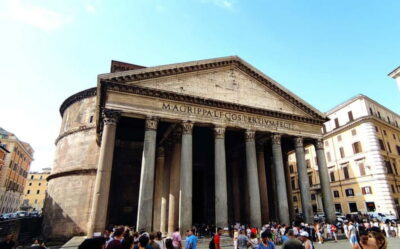
Pantheon Small-Group Guided Tour with Entry Ticket
Read our review →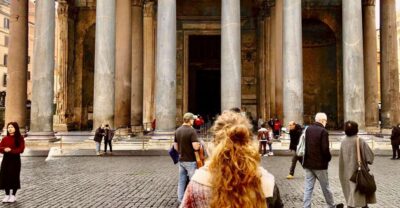
Pantheon Small Group Tour and Skip-the-Line Ticket
Read our review →
Pantheon Entry Ticket With Interactive App + Host
Read our review →Browse the lists this tour appears in