Reviewed · TOURS
Rome: Saint Paul Outside the Walls Tour
One church, two stories, tons of art. This Saint Paul Outside the Walls tour is a focused, small-group walk through a Papal Basilica tied to the Apostle Paul, then rebuilt after a major fire. I especially like how you get golden mosaics and Pope medallions explained in plain language, without turning it into a museum lecture.
The main thing to consider is the setting: it is a sacred place, so you need to show up ready for the dress code (shoulders and knees covered), and expect a bit of slow, respectful movement inside.
In This Review
- Key highlights you will actually care about
- Why San Paolo Fuori le Mura matters beyond the postcard
- Parco Schuster meet-up: start calm, not stressed
- 40 minutes inside: what the guided time is really for
- Golden mosaics and the triumphal arch: your eyes get a roadmap
- The Pope medallions timeline: history in one long line
- Saint Paul’s tomb: the visit gets personal fast
- Cloister and Benedictine Abbey: optional but genuinely worth considering
- Guide Mykhailo: strong religious lens, with one language caution
- Practical tips for a smooth, respectful visit
- Price and value for a 1-hour small-group tour at $29
- Who this tour suits best
- FAQ
- What is the duration of the Rome Saint Paul Outside the Walls tour?
- Where does the tour start and finish?
- What is included in the price?
- Is the cloister included?
- What languages are available?
- Is the tour wheelchair accessible and is there a dress code?
- Should you book this Saint Paul Outside the Walls tour?
Key highlights you will actually care about
- Small group size (limited to 6) means you can ask questions and not get lost in the crowd.
- Mykhailo’s storytelling brings a religious lens alongside art and architecture.
- Saint Paul’s tomb location beneath the main altar gives the visit a real focal point.
- Golden mosaics and the triumphal arch are easier to appreciate with a guide pointing out what matters.
- Pope medallions from Saint Peter onward turn a long gallery into a clear visual timeline.
- Optional cloister and Benedictine Abbey add quiet, medieval atmosphere for an extra 4€ entrance fee.
Why San Paolo Fuori le Mura matters beyond the postcard
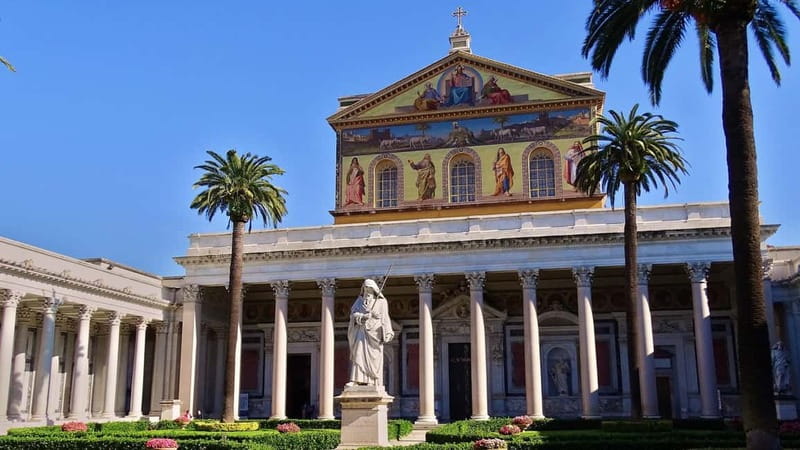
San Paolo Fuori le Mura, Rome’s four major Papal Basilicas, is the kind of place that makes you slow down without being forced. The big idea is simple: the basilica was built over the burial site of Saint Paul the Apostle, and then it was magnificently rebuilt after a devastating fire in the 19th century. That mix of faith, loss, and restoration is part of what you feel when you step inside.
From a practical point of view, the tour works because it does not try to cover everything in Rome. In about an hour, you get a tight route: basilica exterior arrival, guided time inside, and then a chance to add the cloister if you want more quiet stone-and-history time.
Not settled yet? These cover similar ground in Rome:
- Vatican Museums, Sistine Chapel & St. Peter’s Basilica Tour
★ 4.3 · 73,970 reviews - Vatican Museums, Sistine Chapel & St Peter’s Basilica Guided Tour
★ 4.5 · 39,149 reviews - Rome: Colosseum, Palatine Hill and Roman Forum Guided Tour
★ 4.8 · 32,814 reviews - Rome: Guided Tour of Colosseum, Roman Forum & Palatine Hill
★ 4.7 · 27,897 reviews
Parco Schuster meet-up: start calm, not stressed
You start at Parco Schuster, meeting in the park near the basilica. You are told to arrive about 10 to 15 minutes early, and you will receive an indication on how to find and recognize the guide. That might sound minor, but it matters in Rome. It helps you avoid wandering around with that frantic, what street am I on feeling.
Once you meet, the tour keeps a steady pace. It is small-group friendly, and you are not stuck in a long lineup. If you like your tours to feel like walking with a thoughtful local instead of following a herd, this structure fits.
40 minutes inside: what the guided time is really for
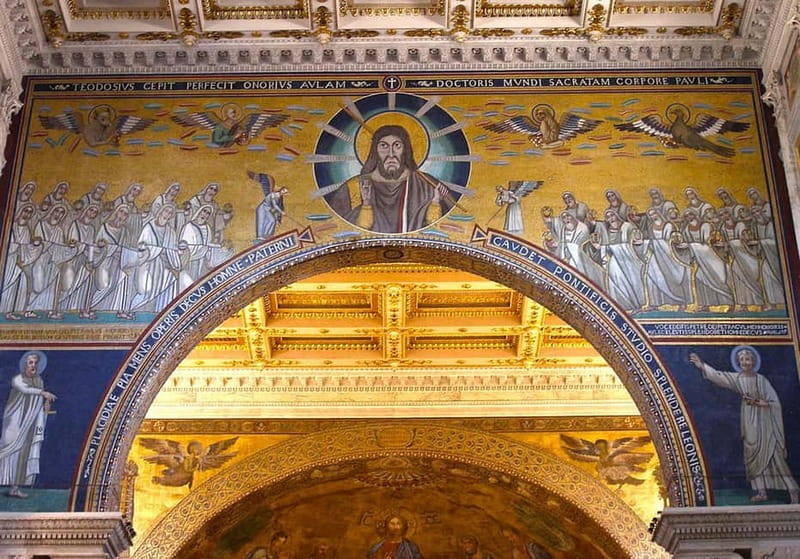
The guided portion is around 40 minutes inside, and the goal is to give you handles for what you are seeing. You will explore the basilica’s history and why the architecture and artwork were arranged the way they are.
Here is what that means in real-life terms. Many churches are stunning, but you can stand there thinking, beautiful, sure, but what am I looking at? A good guide changes the question from what is this, to why is it here, and what does it point to. That is exactly the kind of guidance described: stories behind the basilica’s art, architecture, and spiritual significance, tying history to meaning.
A nice bonus is that the tour is offered in English, Italian, and Ukrainian. If you are traveling with someone who prefers a different language, this can make the day easier.
Golden mosaics and the triumphal arch: your eyes get a roadmap
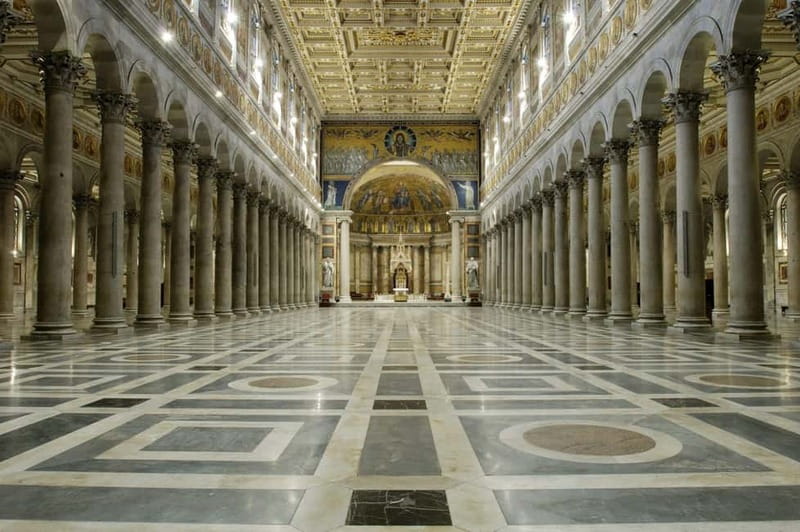
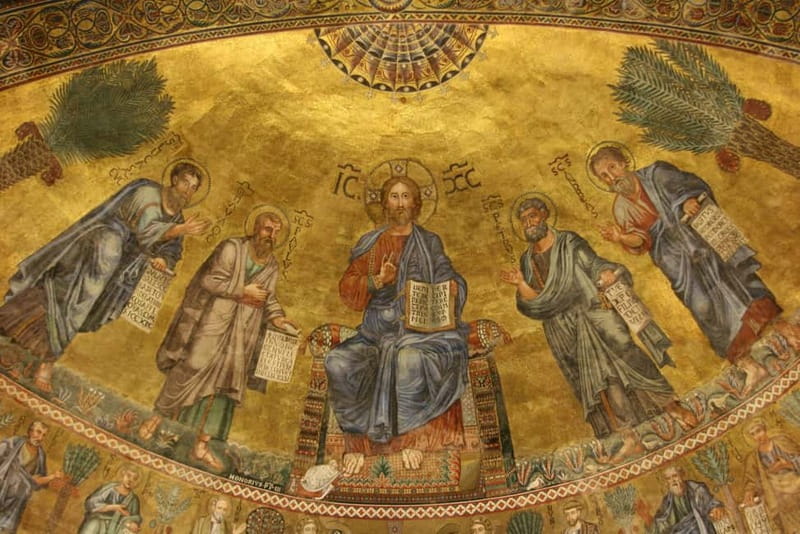
Inside, you are meant to marvel at a vast, serene interior, with luminous golden mosaics and an imposing triumphal arch. If you have visited big Roman churches before, you already know the challenge: scale hits you first, and then everything starts to blur together.
On this tour, you do not just stare up at gold. You get help noticing the key visual features, so the mosaics stop feeling like a wall of glitter and start feeling like organized storytelling. The triumphal arch also becomes easier to read when you understand what it is doing in the space.
I also appreciate how the guide connects those visuals to the larger message of the basilica. It keeps the visit from becoming only art appreciation, or only religious reflection. You get both, in a balanced way.
The Pope medallions timeline: history in one long line
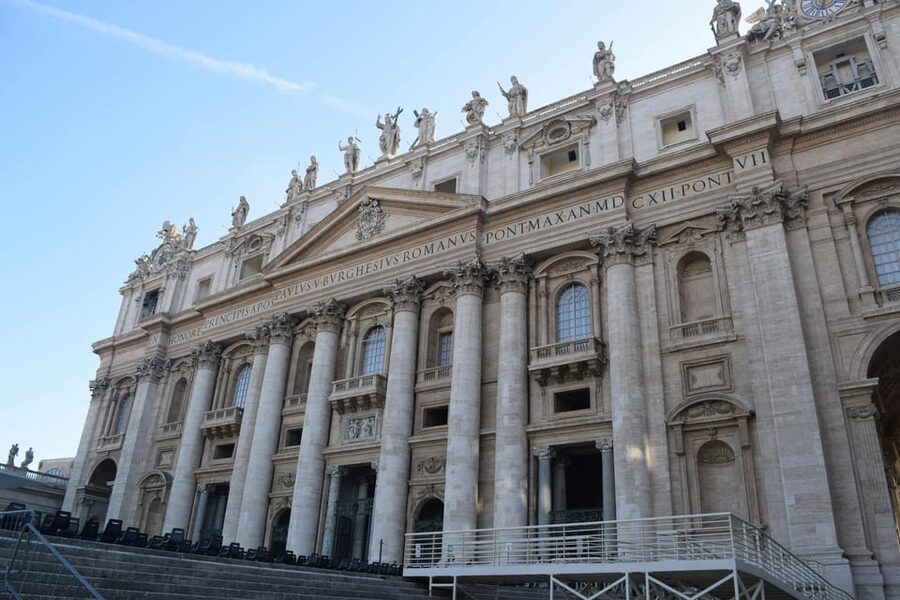
One of the standout details is the line of medallions depicting the Popes, from Saint Peter to the present day. That could easily be overwhelming. A long sequence of faces and symbols can blur fast, especially if you are tired or if the lighting makes details hard to read.
With a guide, it turns into a timeline. You are not just looking at portraits. You are understanding that the basilica visually links the early Church leadership to later centuries. It gives you a way to place what you are seeing in time, not just in space.
This is also where the small-group format helps. When you can stop and ask one question without losing the group, you actually get the most from a feature like this.
Another shape for the same afternoon in Rome:
Saint Paul’s tomb: the visit gets personal fast
Beneath the main altar, you can see the tomb of Saint Paul. Pilgrims come here to pray and reflect, and the tour is designed to respect that reality. Even if you are not coming for religious reasons, it is hard to ignore the focus. The space quietly asks you to slow down and pay attention.
Practically, this stop changes the mood of the whole tour. Earlier you have been learning art and architecture. Here you are seeing the “why.” The basilica is not only a historical building, it is a living place of remembrance.
If you tend to rush when you travel, this part is your built-in reminder to breathe and take your time. You will likely leave feeling calmer than when you arrived.
Cloister and Benedictine Abbey: optional but genuinely worth considering
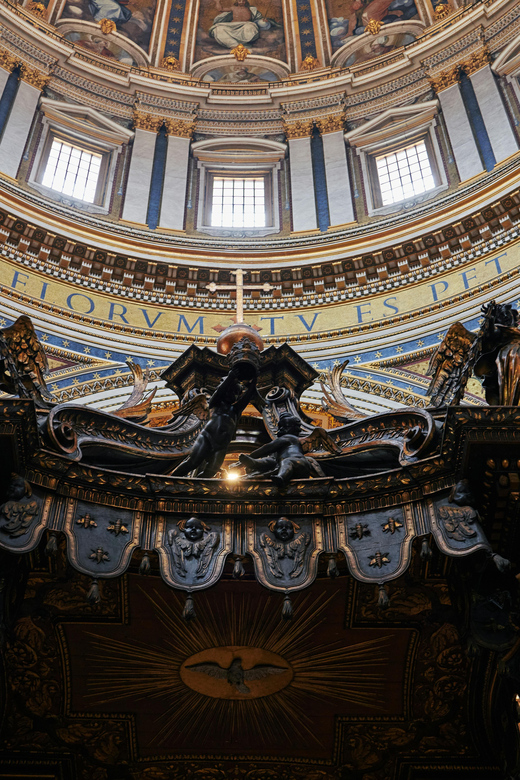
The tour includes the basilica guided experience, and the cloister and Benedictine Abbey are optional. If you choose them, there is an additional entrance fee of 4€.
Why would you pay extra? The cloister is described as a peaceful oasis of medieval art. That kind of setting is the perfect counterweight to the basilica’s larger, more ceremonial spaces. If you like quiet corners, stone details, and the slower rhythm of monastery life, this add-on can be a nice payoff.
Drawback: if you are on a tight schedule, or if you prefer to keep your tour strictly to one hour, you might skip the extra ticket and just enjoy the main basilica portion.
Guide Mykhailo: strong religious lens, with one language caution
The experience provider is Mykhailo Hevko. Two themes stand out in the feedback you get from the people who rate the tour highly: his knowledge and kindness, plus the way he makes explanations feel engaging instead of dry.
One review notes that Mykhailo is a student of theology, and that religious perspective adds value. That tracks with what you are there to see. San Paolo Fuori le Mura is not an ordinary church building. A guide who understands the spiritual layers can help you notice details you might otherwise walk past.
Language note: at least one visitor reported that English was not very strong, with a noticeable accent. This does not mean the tour is unusable in English, but it is worth keeping in mind. If English clarity is important for you, consider choosing Italian or Ukrainian if that is an option for your group.
Practical tips for a smooth, respectful visit
Dress for a sacred place. Shoulders and knees must be covered, and short skirts are not allowed. If you are traveling in warm weather, bring something simple like a light scarf or shawl you can throw over your shoulders when you enter.
Other rules are straightforward and mostly about safety and respect:
- No weapons or sharp objects
- No short skirts
- No alcohol or drugs
- No glass objects
You are also walking around inside holy space, so keep your pace measured. The tone of the tour is spiritual and historical, not hurried. You will get more out of it if you give yourself a little patience.
Also, since the tour is wheelchair accessible, the pacing is likely designed to accommodate different mobility needs. Still, expect you will spend time standing and looking up at mosaics and arches.
Price and value for a 1-hour small-group tour at $29
At $29 per person for a near 1-hour experience, this tour is priced like a solid add-on rather than a long-day commitment. The value comes from how focused it is.
Here is the value logic I see:
- You are paying for a guide who explains specific visual features (mosaics, triumphal arch, Pope medallions), not just entry to a church.
- The group is limited to 6 people, so you get more attention and fewer “lost in the shuffle” moments.
- You also get optional pathways, like the cloister and Benedictine Abbey for 4€, if you want more depth.
If you already plan to spend time in central Rome and want a high-impact stop that is different from the usual Colosseum and Vatican crowds, this is a good use of time. If you want to see everything in a day, keep expectations realistic. One hour will not replace a long independent church visit. It will, however, give you a stronger first pass.
Who this tour suits best
You should strongly consider this tour if:
- You like art history explained simply, with meaning behind what you see.
- You want a calmer, less chaotic experience in Rome.
- You are interested in Saint Paul and want the tomb and main altar treated as more than a photo spot.
- You prefer small-group guiding, limited to 6 participants.
You might skip it if:
- You hate any dress code rules, even briefly.
- You want a self-guided “wander at your own pace only” day with no guidance at all.
- You are very sensitive to language clarity, and you would struggle with an accent in English. In that case, choose Italian or Ukrainian if possible.
FAQ
What is the duration of the Rome Saint Paul Outside the Walls tour?
The tour runs for near 1 hour, with the guided time inside the basilica taking about 40 minutes.
Where does the tour start and finish?
You meet at Parco Schuster near the basilica. The tour finishes at the Basilica of Saint Paul Outside the Walls (Базиліка Святого Павла за Мурами).
What is included in the price?
The price includes the guided tour of Saint Paul Outside the Walls.
Is the cloister included?
The cloister and Benedictine Abbey are optional and require an additional entrance fee of 4€.
What languages are available?
The guided tour is available in English, Ukrainian, and Italian.
Is the tour wheelchair accessible and is there a dress code?
The tour is wheelchair accessible. For the visit, you must dress appropriately with shoulders and knees covered, and short skirts are not allowed.
Should you book this Saint Paul Outside the Walls tour?
Book it if you want a short, high-quality introduction to San Paolo Fuori le Mura with clear explanations of the artwork and the Saint Paul focus, and you like the idea of a small group capped at 6. The standout reason is the guide experience, especially the blend of art stories and a religious viewpoint from Mykhailo.
Skip it if you are only interested in a quick photo stop, or if the idea of covering shoulders and knees will annoy you more than the art will impress you.
Latest additions from Rome
- Guided Tour Vatican Museums & Sistine Chapel★ 4.1 · 30 reviews
- Exclusive Rome by Night Vespa Tour★ 5.0 · 30 reviews
- Transfer Rome to Airports★ 4.5 · 30 reviews
- Vatican: St.Peter’s Basilica & Dome – Reserved Entry & Tour★ 4.1 · 30 reviews
- Rome street art tour: off the beaten path with a local guide★ 5.0 · 30 reviews
- Tivoli, Hadrians Villa and Villa d’Este, a charming day trip from Rome★ 4.5 · 30 reviews
- Rome Food Tasting with Wine Pairing Italian Authentic Flavors★ 5.0 · 31 reviews
- Inspirational Cooking on the Roman Chef’s Panoramic Terrace★ 5.0 · 30 reviews
Tours, compared.
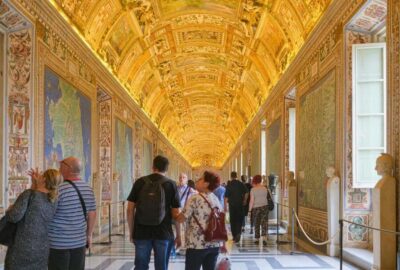
Vatican Museums, Sistine Chapel & St. Peter’s Basilica Tour
Read our review →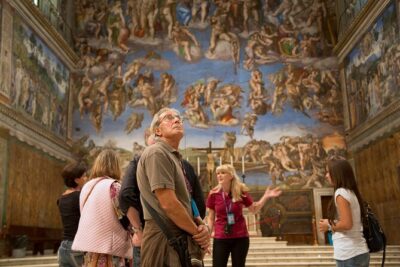
Vatican Museums, Sistine Chapel & St Peter’s Basilica Guided Tour
Read our review →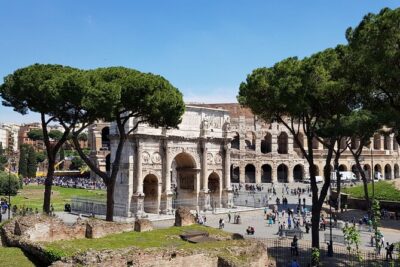
Colosseum, Palatine Hill and Roman Forum Guided Tour
Read our review →
Guided Tour of Colosseum, Roman Forum & Palatine Hill
Read our review →
Colosseum, Roman Forum and Palatine Hill Guided Tour
Read our review →
Colosseum Arena Floor, Palatine & Forum Guided Tour
Read our review →
Vatican Museums, Sistine Chapel and Basilica Tour
Read our review →