
Reviewed · ROME
Rome: Roman Army Experience
One hour can teach you more than you expect. The Roman Army Experience mixes a museum walk-through with practical drills using reproduction armor and weapons.
I love the focus on hands-on tactics, not just photos and dates, and I really like that the route includes both an indoor lesson and an outdoor courtyard session. A small group of up to 6 also means you get time on the gear instead of watching from the back.
One thing to consider: it is hands-on and physical, so it is not a great fit if you have back problems or if you are over 95.
In This Review
- Key points to know before you go
- A 1-hour Roman Army Experience in Rome, built for hands-on learning
- Inside the Res Militares Museum, faithful armor and weapons
- Half-hour historical overview, how Roman soldiers actually lived
- Courtyard tactics: gladius, shield, and the Testudo formation drill
- Throw the pilum and learn why Romans attacked in waves
- Gladiators vs legionaries: what the roles really meant
- Price and group size value: what $41 buys you
- What to bring for comfort, sun, and short bursts of training
- Language, instructor style, and what you get from a small-group class
- Who this Roman military workshop is for
- Should you book the Roman Army Experience? My decision guide
- FAQ
- How long is the Roman Army Experience?
- What is included in the price?
- Do I need to arrange my own transportation?
- What languages are offered?
- Is it a small group activity?
- What should I bring, and is there anything I should avoid?
- Who is this experience not suitable for?
Key points to know before you go
- Small group size (up to 6) means more participation and less waiting around
- Faithful reproduction armor and weapons are made by artisans, tied to archaeological finds
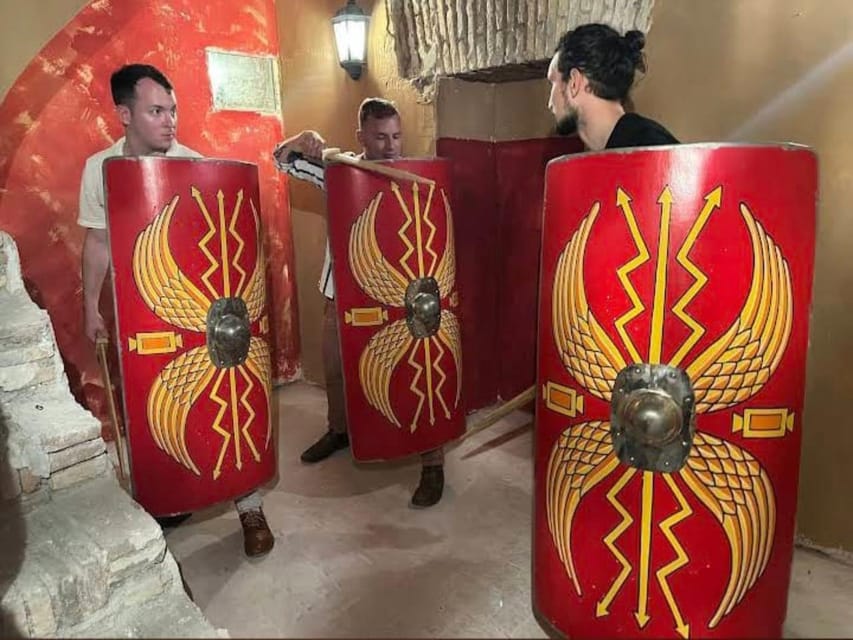
- Learn and practice Testudo (Roman defensive formation) with a formation size limit of 4 people
- You will try the gladius and shield, then move on to a pilum (javelin) throw
- The instructor teaching style is a big part of the fun, including humor and clear explanations in English and Italian
- You get a practical comparison of legionaries vs gladiators, so the roles make sense beyond movies
A 1-hour Roman Army Experience in Rome, built for hands-on learning
If you want Roman history you can feel in your hands, this is a smart choice. The Roman Army Experience is designed around one clear idea: learn how Rome fought by using the tools and formations Roman soldiers relied on.
You will spend about an hour total, with a half-hour historical overview and then practical training. The pacing is useful when you are in Rome for a short trip, because you get a real skill-based experience without losing an entire day to a long tour.
And because the group is limited to 6 participants, the experience stays interactive. That matters, because the best parts here are the ones where you step forward and try the armor, shield, and weapons.
Not settled yet? These cover similar ground in Rome:
- Vatican Museums, Sistine Chapel & St. Peter’s Basilica Tour
★ 4.3 · 73,970 reviews - Vatican Museums, Sistine Chapel & St Peter’s Basilica Guided Tour
★ 4.5 · 39,149 reviews - Rome: Colosseum, Palatine Hill and Roman Forum Guided Tour
★ 4.8 · 32,814 reviews - Rome: Guided Tour of Colosseum, Roman Forum & Palatine Hill
★ 4.7 · 27,897 reviews
Inside the Res Militares Museum, faithful armor and weapons
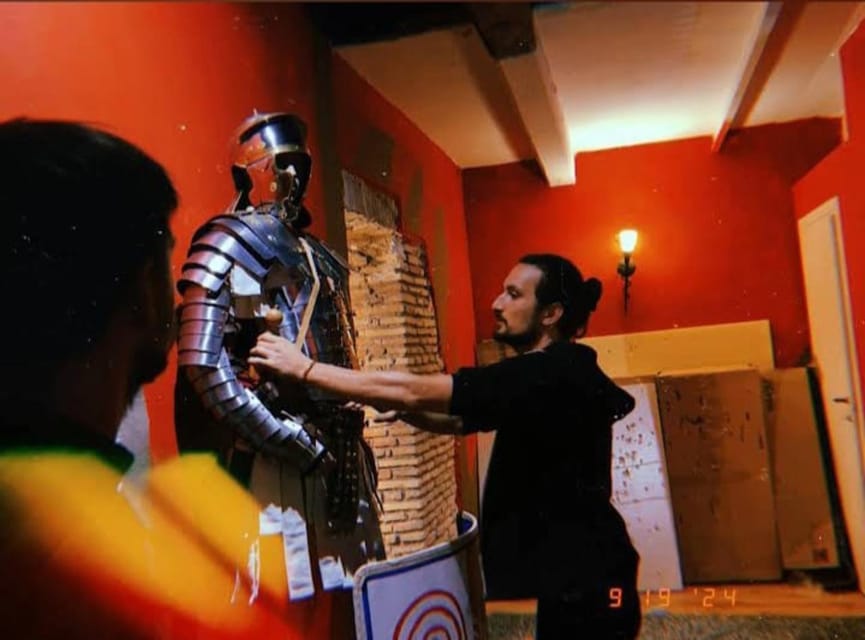
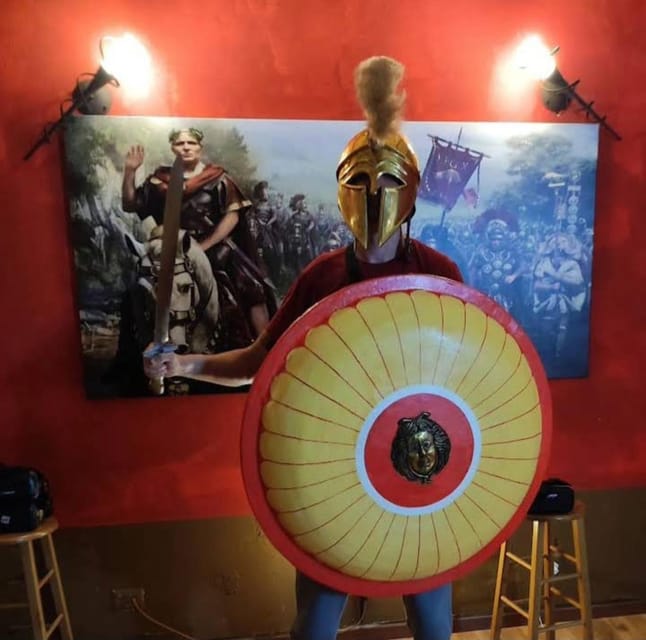
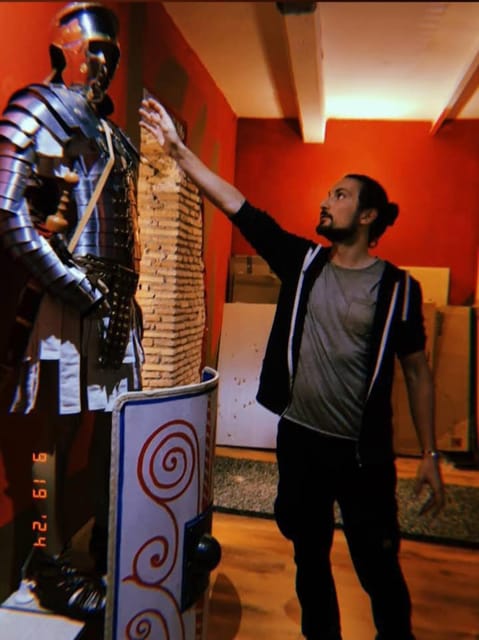
The start of the experience happens at the Res Militares Museum in Rome. You see a lineup of Roman military equipment across different time periods, with armor, helmets, swords, and shields presented as faithful reproductions.
What I like about this approach is how it helps you spot patterns. Instead of learning only one iconic look, you see how equipment changes by period, and you understand why Romans adapted their gear as tactics and needs evolved.
The reproductions are not just random “costume armor.” They are made by artisans following archaeological finds from main excavation sites. That gives you a stronger connection to the real world behind the objects, even if you are not a specialist.
Half-hour historical overview, how Roman soldiers actually lived
Before you start training, you get a structured historical overview of Roman military life and warfare. Expect a clear run-through of the lifestyle of Roman soldiers and the basic logic behind Roman battle tactics.
This part matters because it turns your later practice into something more than play-acting. When you later form up for Testudo or handle a gladius and shield, the history lesson gives your actions a reason.
The experience also includes facts and curiosities meant to make the subject stick. You are not just collecting information, you are learning how Romans thought about close combat and coordinated movement.
Courtyard tactics: gladius, shield, and the Testudo formation drill
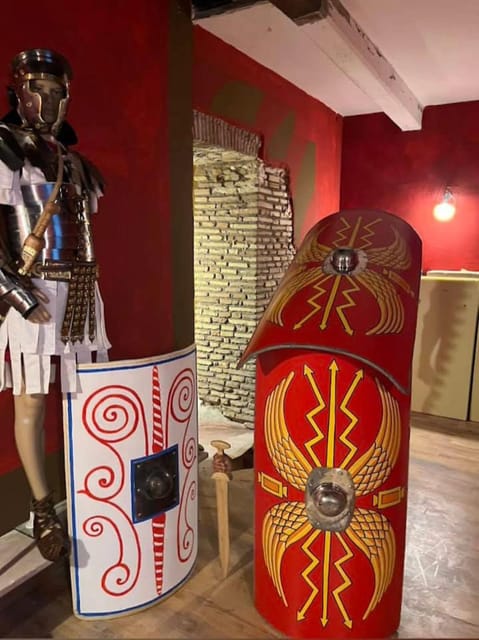
Around halfway through, the tour moves outside to the internal courtyard of the shop. This change of setting is practical, because you need space to practice real movements.
This is where you learn how to use the gladius and shield, and where you start learning the main tactics behind a close clash between two armies. The goal is coordination, not just individual swagger. You will be taught how the equipment works together, and why formation mattered as much as the weapon.
Then comes Testudo, the Roman defensive formation. You gather together and put the formation together, with a clear rule: maximum of 4 people per Testudo formation. Your formation gets tested, which keeps the drill energetic and forces everyone to pay attention to spacing and timing.
One practical point: even if you are not an athlete, this kind of training is easier when you stay focused and follow the instructor’s cues. You do not need special skills, but you do need to be ready for short bursts of physical activity.
Throw the pilum and learn why Romans attacked in waves
After the shield and sword work, you switch gears to the pilum. This Roman javelin throw is not presented as a random trick, it is part of the battle sequence.
You learn how the pilum was thrown at the enemies before the two lines of armies charged. That sequencing is the key idea you take home. It is not just about throwing far, it is about setting up the next phase of the fight so the enemy is less able to respond effectively.
When you try it yourself, you also get explanations of how different weapons were intended to be effective. The instruction connects the effort you make with the purpose of the weapon in Roman combat.
And yes, this tends to be the favorite moment for many people. It is a concrete activity, you can improve during the session, and it feels genuinely Roman rather than generic “medieval” cosplay.
Another shape for the same afternoon in Rome:

Gladiators vs legionaries: what the roles really meant
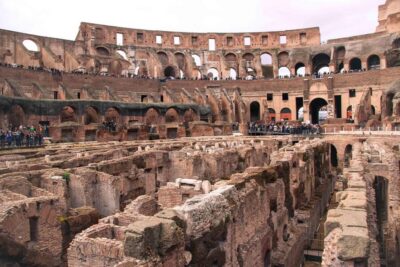
A smart part of the experience is how it separates gladiators from legionaries. Gladiators are described as entertainers who fought for glory and freedom, often portrayed as slaves in stories of escape and status.
Legionaries, on the other hand, are described as Roman citizens, most of the time, protecting the borders and serving Rome’s interests. This difference helps you understand what you are seeing when you compare Roman martial culture to the spectacle culture people associate with the Colosseum.
If you are traveling with kids or teens, this comparison is gold. It gives them a clear framework for what they are looking at in Rome, beyond the Roman soldier image that movies often simplify.
Price and group size value: what $41 buys you
At $41 per person, the value is in the mix. For an hour, you get a half-hour history overview, plus practical instruction where you handle reproduction weapons and armor and practice tactics.
A lot of Rome tours either lean heavily on talking or heavily on acting. This one balances both, and that balance is what makes the price easier to justify.
Also, the group size helps the cost feel fair. With a maximum of 6 participants, the instructor has time to correct your stance, explain the purpose of what you are doing, and keep the session moving without turning it into a long wait.
The fact that the weapons and armor are described as faithful reproductions also matters. You are not just renting props, you are learning with equipment built around archaeological context.
What to bring for comfort, sun, and short bursts of training
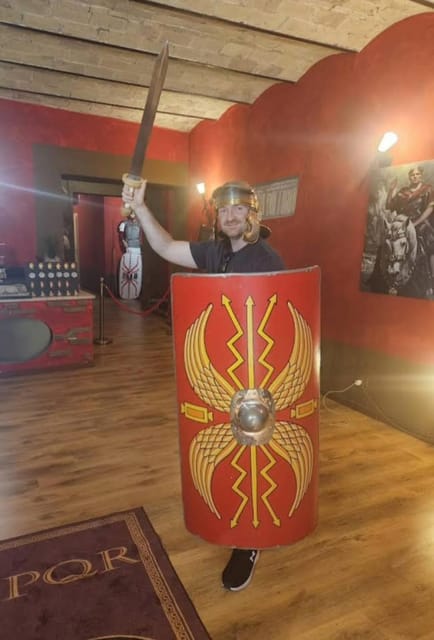
Plan for a session that includes an outdoor courtyard moment. The basics are simple, but they make a difference.
Bring:
- Comfortable shoes (you will be standing and moving)
- A hat and sunscreen (outdoor time)
- Water (because you will be active)
Wear comfortable clothing suitable for physical activity. If you are in Rome during hot weather, don’t underestimate the courtyard stretch of the schedule.
Smoking is not allowed during the experience. It is a straightforward rule, but it is worth noting because you may be in a training zone rather than a quiet museum room.
Language, instructor style, and what you get from a small-group class
Instruction is available in English and Italian. That is helpful if your group has mixed language comfort, and it also means the teaching can slow down or clarify points when needed.
In the experience, the instructor is the engine that makes the session click. One instructor, Davide, is specifically mentioned for being extremely helpful and knowledgeable, even wearing a reenactment uniform that adds realism.
What you are paying for is not only the props. You are paying for a guide who can explain Roman tactics and then translate that into clear physical instruction, with enough humor to keep it fun and not dry.
Who this Roman military workshop is for
This is best for people who want more than a passive museum visit. If you like history and you also like doing things, you will probably enjoy the structure.
It is also suitable for:
- History enthusiasts who want tactical context, not just facts
- Families, since the session is hands-on and built for participation
- People who learn well through action and repetition, especially for formation practice like Testudo
It is not suitable for:
- People with back problems
- People over 95
That does not mean you are out of luck in Rome, it just means this particular experience is more physical than a typical museum tour.
Should you book the Roman Army Experience? My decision guide
Book it if you want a high-participation Rome activity that fits into a tight schedule. If your idea of a good day is combining a short history lesson with trying real weapon handling and formation drills, this one hits the mark.
Skip it if you want a quiet sit-down tour, or if your body is not comfortable with physical movement and close-up coordination. Also, if you have limited tolerance for outdoor heat, plan your timing and bring water and sun protection.
For value, the sweet spot is this: $41 for a full hour with practical tactics, reproduction gear, and a small group cap. It is hard to find that level of participation at that price in central Rome.
If you like the Roman soldier theme, but you want something more grounded than costumes, this museum-style training session is a strong pick.
FAQ
How long is the Roman Army Experience?
The experience lasts 1 hour total.
What is included in the price?
It includes a half-hour historical overview, a practical demonstration and participation in Roman military tactics, and time using historical reproduction weapons and armor.
Do I need to arrange my own transportation?
Transportation to and from the activity location is not included, so you will need to get there on your own.
What languages are offered?
The instructor teaches in English and Italian.
Is it a small group activity?
Yes, it is small group with a limit of 6 participants.
What should I bring, and is there anything I should avoid?
Bring comfortable shoes, a hat, sunscreen, and water. Smoking is not allowed.
Who is this experience not suitable for?
It is not suitable for people with back problems and it is not suitable for people over 95.
Latest additions from Rome
- Rome: Angels and Demons Private Tour with Transfers★ 5.0 · 8 reviews
- Vatican City: St. Peter’s Basilica and Papal Tombs Guided Tour★ 4.0 · 8 reviews
- Vatican City: Museums & Sistine Chapel Tour with St. Peter’s★ 3.1 · 8 reviews
- Colosseum, Palatine and Forum tour with virtual guide★ 5.0 · 8 reviews
- Sistine Chapel @ its best! First time slot Vatican Museums access★ 5.0 · 8 reviews
- Private Vatican In Depth 5-Hour Tour – Skip The Line★ 4.5 · 8 reviews
- Vespa Rental in Rome★ 4.0 · 8 reviews
- Private tour of Rome – Golf cart★ 5.0 · 8 reviews