
Reviewed · WALKING TOURS IN ROME
Rome: Private Walking Tour of Highlights & Secret Spots
Rome can feel like a lot at once. This private walking tour helps you see the city in a smart loop and makes time for secret spots you would miss on your own. You get major landmarks, then you get the quieter corners that make them click.
Two things I love: the mix of Roman street-food tastings plus standout stops like the Pantheon and Largo Argentina, and the fact that it is truly private, so your pace can stay comfortable. One possible drawback: several of the biggest sights on the route have admission not included, so you’ll want to plan for extra ticket cost.
In This Review
- Key Reasons This Tour Feels Like Rome, Not a Checklist
- A 3-Hour Rome Loop You Can Actually Enjoy
- Chiesa di Sant’Ignazio di Loyola, Baroque Ceiling Magic (Stop 1)
- Pantheon Without the Crowd Pressure (Stop 2)
- Piazza S. Eustachio for Supplí and Cheese-Filled Roman Comfort (Stop 3)
- Piazza Navona, Where Rome Poses for You (Stop 4)
- The Giordano Bruno Area: Market Bites and Food Pride (Stop 5)
- Largo Argentina: The Murder Spot That Still Feels Heavy (Stop 6)
- Il Portico Di Ottavia, Jewish Ghetto Atmosphere (Stop 7)
- Teatro di Marcello, Then Portunus, Then Hercules Victor (Stops 8 to 10)
- Mouth of Truth, Myth You Can Touch (Stop 11)
- Circo Massimo: Games, Performances, and Chariot Races (Stop 12)
- Tiber Island Finish, Boat-Shaped Views (Stop 13)
- The Extra Story Pause About Empire Power
- Price and Value: When $117.62 Actually Makes Sense
- Who This Tour Suits Best
- Should You Book This Rome Private Walking Tour?
- FAQ
- How long is the Rome private walking tour?
- How much does the tour cost?
- Is this a private tour?
- What language is the tour offered in?
- Where does the tour start and end?
- Is a mobile ticket provided?
- Are tickets included for all stops?
- What kind of food is included?
- Is the tour near public transportation?
- What is the cancellation policy?
Key Reasons This Tour Feels Like Rome, Not a Checklist
- Private, only your group for a quieter, more flexible experience
- A tight 3-hour route that connects baroque churches to ancient temples and legends
- Street-food moments at Piazza S. Eustachio and a nearby market area
- Myth and real ruins together, including the Mouth of Truth and Largo Argentina
- Temple stops you can actually make sense of, like Portunus and Hercules Victor
- Guides with strong English and patience, with names like Daniel, Enzo, Juan, and Claudio showing up in guide praise
A 3-Hour Rome Loop You Can Actually Enjoy
If you only have a half day in Rome, you want two things: momentum and context. This tour does both by clustering sites in a sensible walk and then adding the story behind each place. You start at Chiesa di Sant’Ignazio di Loyola and then move through major ancient Rome landmarks, with plenty of brief pauses along the way.
Because it is private, you are not stuck with the pace of a large group. Guides are also praised for being flexible and for watching you so nobody feels left behind, which matters when your feet start to complain.
The route is mostly timed in short stops, so it is not a long, exhausting slog. Still, you are walking through central Rome, so wear comfortable shoes and expect some uneven pavement.
More Private Tours in Rome
- Rome by Golf Cart Private Tour: Beyond the Landmarks
★ 5.0 · 4,361 reviews - Early Morning Vatican, Sistine, St. Peter’s Semi or Private Tour
★ 5.0 · 3,779 reviews - Rome on a Golf Cart Semi-Private Tour Max 6 with Private Option
★ 5.0 · 2,502 reviews - Rome Private Arrival Transfer: Fiumicino Airport to Hotel in Rome
★ 4.5 · 2,492 reviews
Chiesa di Sant’Ignazio di Loyola, Baroque Ceiling Magic (Stop 1)
You begin at Chiesa di Sant’Ignazio di Loyola in Piazza S. Ignazio, where the selling point is the breathtaking frescoed ceiling and baroque atmosphere. This is a great opener because it resets your brain from street level into Rome as spectacle. In just about 10 minutes, you get a feel for why baroque Rome looks like it is trying to pull you upward.
This stop is also a free-ticket moment, so it is low stress. The practical trick here is to slow down and give your eyes time. Even if you are not a church person, the ceiling artwork is the kind of thing that changes from blurry to clear when you look long enough.
Pantheon Without the Crowd Pressure (Stop 2)
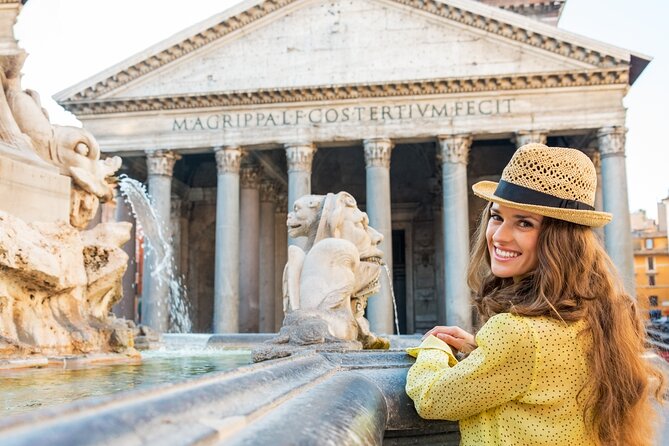
Next up is the Pantheon, and the tour frames it as both an architectural and engineering masterpiece that emperors dedicated to their gods. It is one of those places where you do not need to be an expert to get the point, but you do need a guide to explain why it mattered, not just what it looks like.
Important practical note: admission is not included for the Pantheon. So plan a little time and cost for entry. If you want to keep the day smooth, arrive ready to handle a separate ticket purchase rather than hoping it is all handled for you.
Also, this kind of stop can be busy. A private guide helps you time your look and focus you on what to notice, so you spend your energy wisely.
Piazza S. Eustachio for Supplí and Cheese-Filled Roman Comfort (Stop 3)
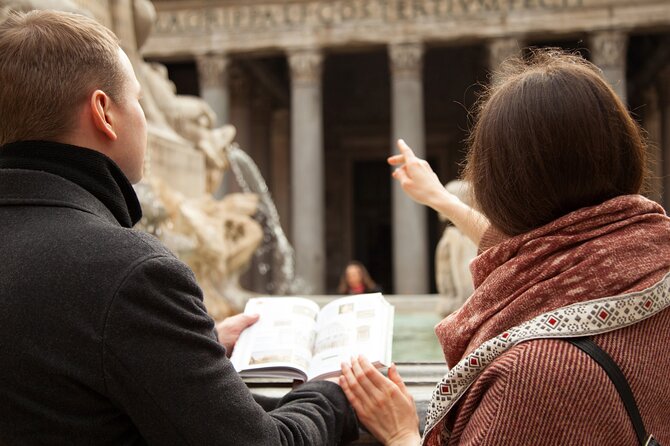
At Piazza S. Eustachio, the tour adds real food, not just sightseeing photos. You get a Supplí tasting and an invitation to try delicious cheese-hearted Roman food. This is a smart break built into the middle of the walk, when you are likely to be hungry but not yet exhausted.
The value here is not only the taste, it is the context. You are getting a small, guided introduction to how Romans snack and eat on the street. For many first-timers, this is the moment you stop thinking of Rome as monuments only and start thinking of it as everyday life.
This stop is free for admission, so you just pay your attention. The practical move: if you are sensitive to spicy or strong flavors, still try one bite, but know you can control the rest.
Piazza Navona, Where Rome Poses for You (Stop 4)

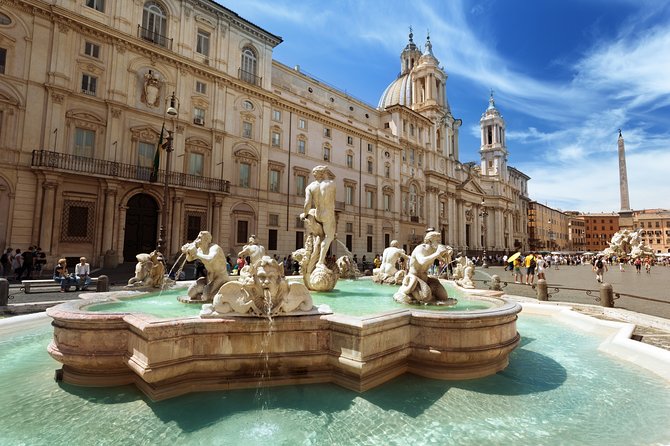
Then you hit Piazza Navona, which the tour describes as the most famous and elegant square in Rome, lined with fountains and baroque palaces. You also get the colorful art street atmosphere that comes with it.
This stop is great for orientation. Even if you have seen pictures, being there helps you understand how Rome’s streets funnel people and how the architecture and street life feed each other. It is also a good pause zone if you want to regroup.
Because admission is free here, it is low risk. Just keep in mind: it is one of the most photogenic squares in the city, so you will likely see a lot of activity. In a private tour, that is easier to manage because your guide can guide you around the densest pockets.
More Walking Tours in Rome
The Giordano Bruno Area: Market Bites and Food Pride (Stop 5)
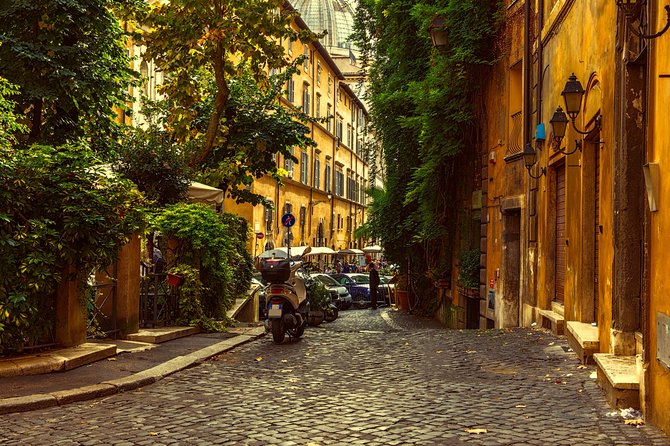
At Monumento a Giordano Bruno, you shift from “pretty square” to “real local food energy.” The tour has you explore the local food market and try delicacies, plus learn why Italian food products are considered some of the best in the world.
This is a valuable stop because it connects history to taste. Food markets tell you what a city values right now, not just what it valued centuries ago. You also get an educational angle that fits the rest of the tour, where almost every stop has a story hook.
Admission is free for this stop, so again it is not a ticket drain. The main consideration is appetite. If you plan to eat a big gelato later, do not overdo it here unless you are committed to a long day of sampling.
Largo Argentina: The Murder Spot That Still Feels Heavy (Stop 6)
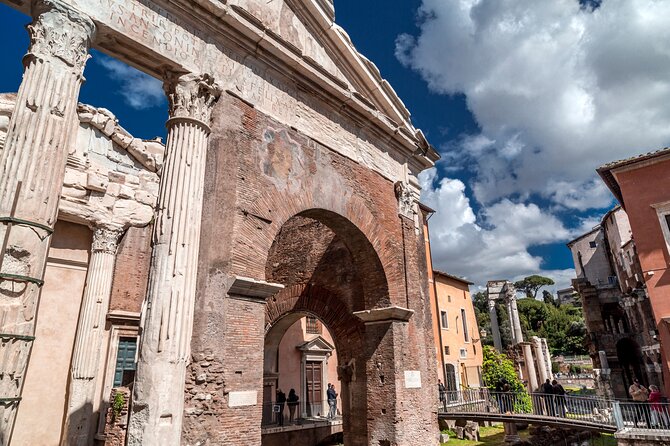
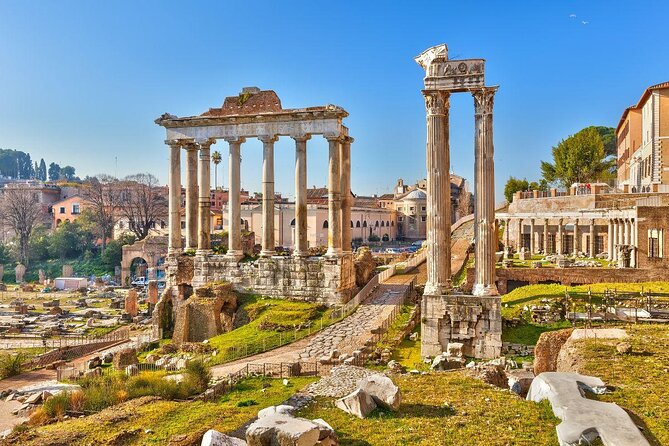
Now things turn serious at Area Sacra di Largo Argentina. You meet the archaeological ruins and learn about the fatal spot where Julius Caesar was murdered.
This is the kind of Roman site where the facts hit differently when you are standing in the space. The tour gives you the “why” you need, so it is not just stones. You understand what people were doing there, and why the story became one of the city’s most famous tragedies.
Admission is free here, so you can spend your time without worrying about extra entry costs. The drawback is emotional, not logistical. If you prefer lighter stops, you might want to keep the pace gentle and give yourself a minute before moving on.
Il Portico Di Ottavia, Jewish Ghetto Atmosphere (Stop 7)
Next you visit Il Portico Di Ottavia, tied to the Jewish Ghetto. The tour sells it as a secret neighborhood that seems frozen in time and has kept authenticity.
This is where the walking tour style really earns its keep. In a normal sightseeing day, you might pass through this area without really noticing it. With a guide, you can see how the streets feel lived-in and how history is not only in museums.
Admission is free for this stop. The main practical tip is to slow down and watch the street rhythm. Your eyes will start noticing details faster once you stop trying to take everything in at once.
Teatro di Marcello, Then Portunus, Then Hercules Victor (Stops 8 to 10)
Three ancient stops in a row is a lot, but they are connected in a way that works. Each one helps you build a mental map of what Rome’s power looked like.
Stop 8: Teatro di Marcello
You see the building that was the largest and most important theatre in Rome in the 1st century. Admission is not included. The guide framing helps you understand theatre as infrastructure for public life, not just entertainment.
Stop 9: Temple of Portunus
This is the Temple of Portunus, built in the 2nd century at the Tiber port for the god of harbors. Admission is not included. This stop is great because it shows how Roman religion tied directly into trade, travel, and the river economy.
Stop 10: Temple of Hercules Victor
Then comes Temple of Hercules Victor, described as the oldest marble building still preserved in Rome. Admission is not included.
These are the “ticket-risk” parts of the tour. The upside is that when you do pay attention, each stop gives you a different piece of the ancient puzzle. The practical downside is cost: you may spend more than you expected if you assumed everything on the walk was included. If you are the type who hates surprise expenses, make sure you budget for these entries ahead of time.
Mouth of Truth, Myth You Can Touch (Stop 11)
At Mouth of Truth, the tour focuses on the legend of the antique marble mask, and yes, it suggests you see if you dare to try it. The format here is playful, and that is a good break after the temples and ruins.
Admission is free. The main consideration is timing and crowds, since this is a legend that draws people. In a private tour, your guide can help you avoid standing around too long. Even if you skip the full “dare” part, just learning the story makes the stop more satisfying than a quick photo.
Circo Massimo: Games, Performances, and Chariot Races (Stop 12)
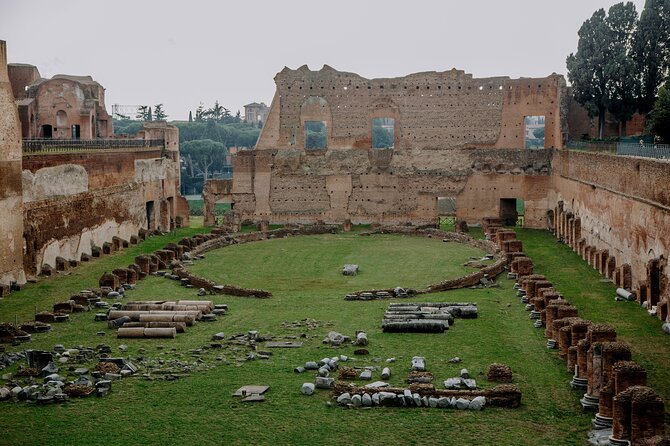
Next is Circo Massimo, described as the circus where ancient Romans held games, performances, and chariot races. Admission is free here, which is always a win in central Rome.
This stop is interesting because it reminds you that Rome was not only about emperors and laws. It was also loud, competitive, and social. You get a context shift that makes the later Tiber and island views feel less isolated and more connected to how people lived.
Because it is an outdoor site, expect the weather to matter. Bring water and wear layers if it is cool or windy.
Tiber Island Finish, Boat-Shaped Views (Stop 13)
You end at Tiber Island, after crossing the bridge. The tour emphasizes the views of the boat-shaped island, and you get a final chance to reset your perspective and take photos without rushing.
Admission is free. This is also a good psychological finish. By now you’ve seen religion, politics, markets, tragedy, and entertainment. The island views tie it together as one city, not separate chapters.
The Extra Story Pause About Empire Power
The tour also includes a final look at a place connected to how the rulers of the most powerful empire decided the fates of old Europe. It is a classic Roman move, big ideas grounded into specific corners of stone and street.
Because the exact location name is not spelled out in your details, treat this as a guided narrative stop rather than a predetermined “must-identify-this-building” moment. If you like understanding the why behind Rome’s power structures, you should enjoy this part.
Price and Value: When $117.62 Actually Makes Sense
At $117.62 per person for roughly 3 hours, the price is not just for walking. You are paying for a private guide who can connect stops, manage pacing, and add the human layer that makes Rome less like a slideshow.
Here is what you get value for, based on the tour format:
- A private experience where you can ask questions and stay on your pace
- Guided storytelling that links sites like Pantheon, Largo Argentina, and the Jewish Ghetto areas into one coherent day
- Food tastings in Piazza S. Eustachio and the market area near the Giordano Bruno stop
- Several free admission stops, so you are not paying entry fees at every turn
The main “cost consideration” is admission not included at major sights like the Pantheon and several ancient buildings (Teatro di Marcello, Temple of Portunus, Temple of Hercules Victor). If you budget for those ahead of time, the overall value feels fair. If you want a tour where everything is included with no ticket planning, you might feel the pinch.
As for guides, names like Daniel, Enzo, Juan, and Claudio come up with praise for being professional, courteous, flexible with schedules, and attentive to safety and energy levels. That matters because Rome walking days can be longer than the calendar says.
Who This Tour Suits Best
This is a strong fit if:
- You want a first-time Rome orientation that still includes Roman “daily life” moments like street food
- You like ancient sites but want them explained in plain language
- You prefer private pacing over a large-group shuffle
- You enjoy mixes of myth, architecture, and food in one half-day
It might be less ideal if:
- You hate paying separate entries and prefer fully bundled ticket tours
- You want lots of time at each sight rather than short, meaningful stops
Should You Book This Rome Private Walking Tour?
I think you should book it if you want one guided day that gives you both the big names and the textured local feel. The route makes sense, the pacing is built around short stops, and the food moments help you connect Rome’s past to its present.
Before you click confirm, do two things: budget for the sights marked as admission not included, and plan to arrive at the start location on time. One practical warning from real-life touring style is that meeting points can be a little tricky at first in Rome, especially when streets are busy, so take a moment to double-check where you are. If you want to get oriented fast and leave with more than photos, this private walk is a smart use of your time.
FAQ
How long is the Rome private walking tour?
It is approximately 3 hours.
How much does the tour cost?
The price is $117.62 per person.
Is this a private tour?
Yes. It is a private tour/activity, and only your group participates.
What language is the tour offered in?
The tour is offered in English.
Where does the tour start and end?
It starts at Chiesa di Sant’Ignazio di Loyola (Piazza S. Ignazio, 00186 Roma) and ends at Tiber Island (00186 Rome).
Is a mobile ticket provided?
Yes, the tour includes a mobile ticket.
Are tickets included for all stops?
No. Admission is not included for the Pantheon, Teatro di Marcello, Temple of Portunus, and Temple of Hercules Victor. Other listed stops are free.
What kind of food is included?
There is a Supplí tasting at Piazza S. Eustachio, and you also try delicacies in the local food market near the Giordano Bruno monument area.
Is the tour near public transportation?
Yes, it is near public transportation.
What is the cancellation policy?
Free cancellation is available. You can cancel up to 24 hours in advance for a full refund, and refunds are not available if you cancel less than 24 hours before the start time.
Latest additions from Rome
- Rome: Testaccio Market Food Tour with Street Food & Wine★ 5.0 · 8 reviews
- Exclusive Pasta & Tiramisu Class with Wine near by Colosseum★ 5.0 · 8 reviews
- Private Professional Photoshoot in Rome★ 5.0 · 8 reviews
- Loreto “Shrine of the Holy House of the Virgin Mary” Private Tour from Rome★ 5.0 · 8 reviews
- Rome Day to discover Florence and Pisa Hotel Pickup★ 4.5 · 8 reviews
- Rome: Christmas Nativities and Angels Tour★ 3.1 · 8 reviews
- Guided Tour of Vatican Museums and Sistine Chapel★ 5.0 · 8 reviews
- Rome: Cooking Class of fresh Pasta and Tiramisu Cake★ 5.0 · 8 reviews
Walking Tours in Rome, compared.

Guided Food Walking Tour with Wine in Trastevere
Read our review →
Trastevere & Campo de Fiori Street Food Walking Tour
Read our review →
Paranormal Night Walking Tour & Secret Backstreets
Read our review →
Trastevere Street Food Walking Tour with Local Expert
Read our review →
Guided City Center Evening Sightseeing Walking Tour
Read our review →
Small-Group City Highlights Moonlight Walking Tour
Read our review →
Best of Rome Walking Tour including Trevi Fountain
Read our review →Browse the lists this tour appears in