Reviewed · PRIVATE TOURS IN ROME
Rome Private Tour: Highlights and Hidden Gems
Rome feels personal on this tour. I love how private it is, meaning the route can bend to your interests instead of forcing you into a cookie-cutter script. I also love the Trastevere-to-landmark mix that helps you understand where you are, fast.
One thing to plan for: the stops are mostly outside-only, so you are not going in for long museum-style visits. That is great for pacing, but if your dream day includes interiors of the Pantheon or Colosseum, you will want separate tickets.
In This Review
- Key things I’d bank on before you go
- Price and what you’re really buying in Rome
- Picking Walking vs Vespa, and choosing the right kind of Rome day
- Private walking tour
- Private Vespa tour
- Trastevere first: the neighborhood warm-up that makes landmarks make sense
- Piazza Navona: where to stand, what to notice, and where to eat later
- Pantheon area orientation: seeing the masterpiece without needing a ticket here
- Campo de’ Fiori: market square energy and a good moment to reset
- Spanish Steps: classic Rome, best approached with context
- Isola Tiberina and nearby stops: Rome’s story across the river
- Colosseum area “getting your bearings” without the inside time
- The included drink or snack stop, and why it’s not just a freebie
- Guides who make it feel personal: the names you may meet
- Timing, pacing, and the “itinerary can change” reality
- Logistics that help: meeting points and how to avoid a stressful start
- Who should book this Rome private tour, and who might skip it
- Should you book this Rome private Highlights and lesser-seen corners tour?
- FAQ
- Where do I meet for the private walking tour?
- Where do I meet for the Vespa tour?
- How long is the tour?
- Are entrance tickets included for the landmarks?
- Is the tour only for my group?
- Is a helmet provided for the Vespa option?
- Does the tour include food or drinks?
- Can I cancel and get a full refund?
Key things I’d bank on before you go
- Private, local guide time so you can ask questions and slow down where Rome grabs you.
- Walking or Vespa options to match your energy and how much ground you want to cover.
- A drink or snack break built into the route, not as an afterthought.
- Major sights for orientation like the Pantheon and Colosseum, plus lesser-seen streets around them.
- Trastevere as the warm-up so Rome feels less like a map and more like a neighborhood.
Price and what you’re really buying in Rome
$318.19 per person sounds steep until you translate what you get. You are not paying for a staff of chaperones. You are paying for private attention for about three hours, with a local guide who can tailor the day on the fly. In a city like Rome, time matters. Getting lost is easy. Getting oriented, quickly, is not.
This is also built as a low-stress sightseeing structure. The tour is designed to move through multiple areas without the usual herd energy of big group tours. You will pass a lot of famous names, but the real value is how your guide connects them to street-level life: what to notice, why it looks that way, and where locals tend to hang out nearby.
Another small detail that matters: it includes a local drink or snack. Rome sightseeing can turn into a constant loop of looking up and walking on empty. This break keeps the day pleasant instead of exhausting.
More Private Tours in Rome
- Rome by Golf Cart Private Tour: Beyond the Landmarks
★ 5.0 · 4,361 reviews - Early Morning Vatican, Sistine, St. Peter’s Semi or Private Tour
★ 5.0 · 3,779 reviews - Rome on a Golf Cart Semi-Private Tour Max 6 with Private Option
★ 5.0 · 2,502 reviews - Rome Private Arrival Transfer: Fiumicino Airport to Hotel in Rome
★ 4.5 · 2,492 reviews
Picking Walking vs Vespa, and choosing the right kind of Rome day
You have two start points depending on the option you book.
Private walking tour
You meet at Piazza di Sant’Apollinare (46, 00186 Roma). This is a good pick if you want to take your time, get steady photo angles, and have real conversational space with your guide.
Walking tends to slow down at the best moments. That includes pausing in squares, noticing architecture details at street level, and tasting small neighborhood rhythm. It also naturally creates gaps for a snack or a cold drink.
Private Vespa tour
You meet near Cavour Metro Station, at Via in Selci. You put on your helmet and ride the scooter.
If you like covering more ground with less leg fatigue, Vespa is the obvious win. You still get stops and explanations, but you are more likely to see a wider slice of Rome in the same time window. It is also a more “Roman” way to move around, since the city is built for short hops and quick turns.
Practical note: you are wearing a helmet for the Vespa option, and the experience is active. If you dislike scooters or get motion-sick, walking will feel calmer.
Trastevere first: the neighborhood warm-up that makes landmarks make sense
A typical route often begins by threading through Trastevere, that character-rich area that feels older than the maps. Your guide uses it like a training session for your eyes. Suddenly, you know what “local” looks like: the pace of the streets, the style of trattorias, the way shops cluster, and where people actually stop for a coffee.
Trastevere matters because it changes how you read the rest of the day. When you later reach something monumental, like a giant temple-style building or an amphitheater, you understand it was built in a living city, not dropped from the sky.
Expect your guide to mix broad orientation with specific pointers. You will likely pass multiple noteworthy streets and see how neighborhoods flow into the sights you have already heard about.
Another shape for the same afternoon in Rome:
Piazza Navona: where to stand, what to notice, and where to eat later
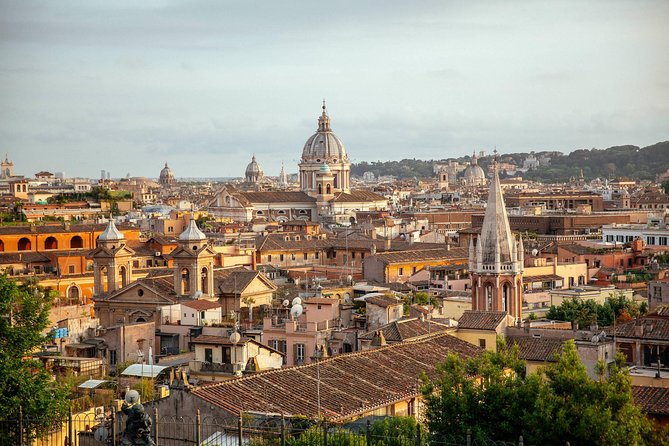
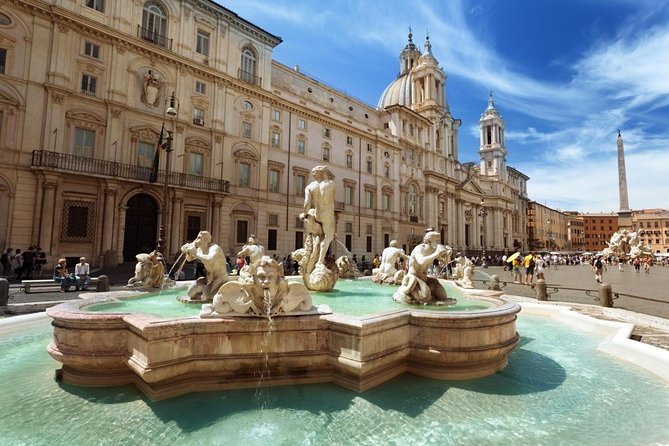
Piazza Navona is one of Rome’s big stage sets, and it deserves a guide’s eye. I love how you do not just walk through this square, you learn how to look at it. You will be surrounded by churches, monuments, and the famous Bernini fountains, plus plenty of spots to grab coffee or a bite.
This stop also functions as a breather. It is a place where your pace can slow down without losing momentum for the overall tour. Your guide will often point out which angles are best for photos and which sight lines help you orient yourself for the next stretch.
Even better, this is usually where the “food wisdom” begins. In past guided moments, guides like Nico and Simona have shared practical restaurant recommendations after explaining what you are seeing. That is the kind of intel that saves you from the tourist-trap menu roulette later.
Pantheon area orientation: seeing the masterpiece without needing a ticket here
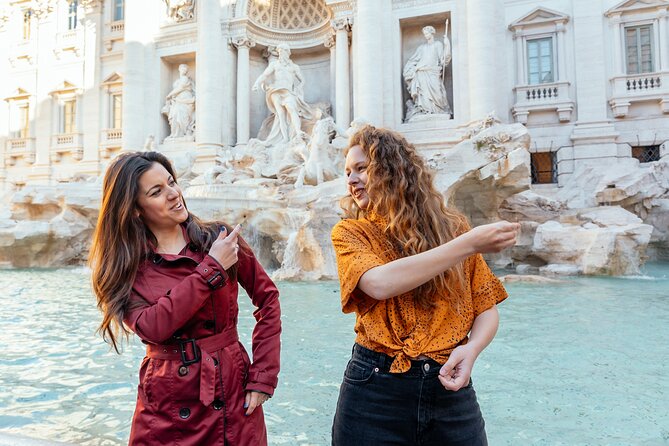
The Pantheon is the kind of structure you feel before you fully understand. Even when you are not going inside, stopping at the Pantheon helps you anchor your mental map of Rome’s center.
Your guide frames it in plain terms: why the building’s proportions hit so hard, what makes its design revolutionary for its era, and how it became a lasting reference point in Rome’s architectural story.
One practical upside here: since entrances are not included, you avoid the ticket queue problem during your tour window. The tradeoff is simple. If you want the full interior experience, you will need to plan that separately.
Campo de’ Fiori: market square energy and a good moment to reset
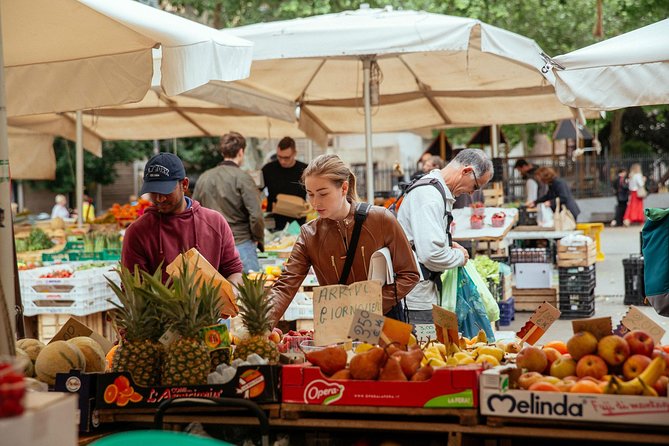
Campo de’ Fiori sits just south of Piazza Navona, with the energy of a square that still feels attached to daily life. Your guide will use the setting to show you how Rome’s social habits shaped the streets, not just the monuments.
This is a stop where your senses do the work. Look around and you will notice how the square sits at an intersection of rioni, neighborhood zones. The name itself literally means field of flowers, which is a fun detail to keep in mind as you stand there and realize how quickly Rome’s landscape tells new stories over time.
Spanish Steps: classic Rome, best approached with context
The Spanish Steps can feel like a postcard, which is exactly why your guide’s job matters. You want to know what you are looking at and why it became one of the city’s signature staircases.
You will see the steep slope connecting the Piazza di Spagna at the bottom to Piazza Trinità dei Monti at the top. Your guide can also point out the church presence at the top (Trinità dei Monti) and help you understand why the area turned into a meeting point for centuries of Rome life.
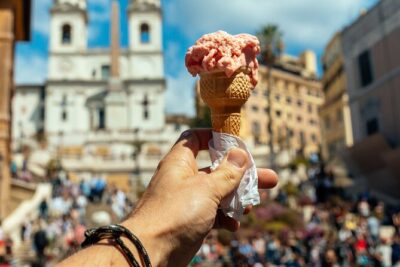
This is also a place where you can plan your next moves. If you already know you want to shop, people-watch, or grab gelato, your guide can help you decide which direction to go after your tour ends.
Isola Tiberina and nearby stops: Rome’s story across the river
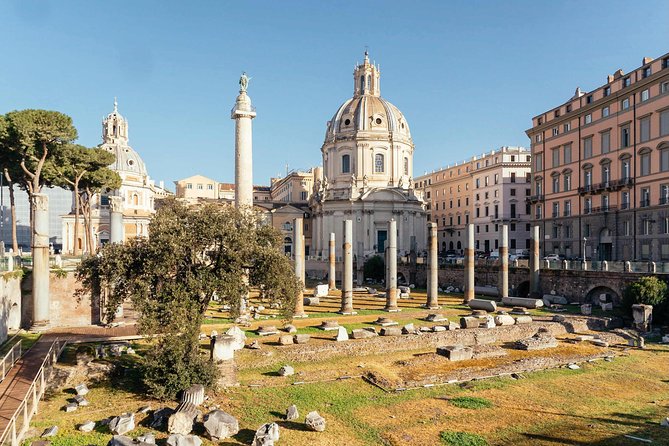
A route may include stops around Isola Tiberina, the island in the Tiber. This is the kind of location that makes Rome feel like it is built in layers. Water acts like a boundary and a connector at the same time, and guides usually point out how that changes the neighborhoods on either side.
You might also hear names tied to the area, like Piazza della Rotonda or Palazzo Madama, depending on the exact flow your guide uses. The key value is less about ticking off points and more about learning which streets and buildings act like anchors when you are walking on your own afterward.
Colosseum area “getting your bearings” without the inside time
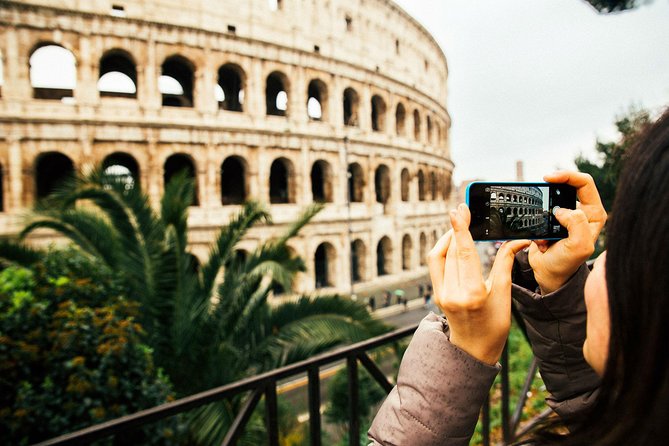
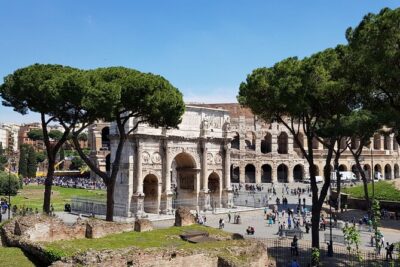
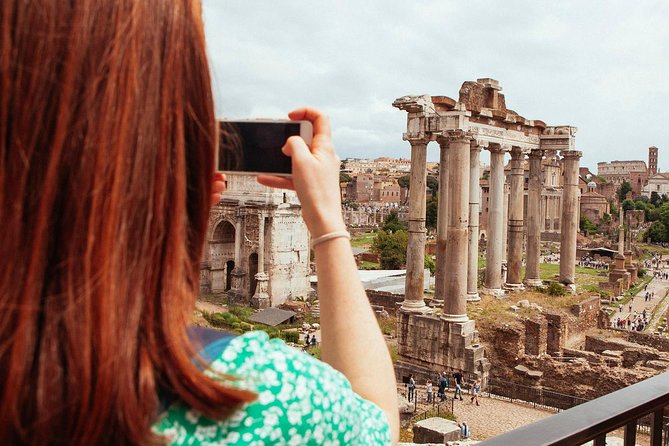
The Colosseum is on the agenda, usually as an orientation moment near the Roman Forum area. Your guide helps you understand the scale and shape of the amphitheater and where it sits in the city.
Since the tour does not include entrance tickets, you will see it from the outside. That can be a good move because it keeps your three-hour window focused and avoids splitting your time between entrances and explanations.
If you are the type who wants the inside audio-guide experience, this tour still works well. Think of it as the way to return later and know exactly where you are standing and what you are looking at.
The included drink or snack stop, and why it’s not just a freebie
A short drink or snack is one of the smartest inclusions for a Rome tour. It is the difference between sightseeing that feels like a run and sightseeing that feels like a day.
Walking routes often use this moment when you naturally have a lull in walking. Vespa routes use it to reset you after you cover more distance. Either way, you are more likely to remember what your guide explained because your brain gets a break.
In practical terms, this is also where guides tend to share where to eat next. People in Rome can give you fifty recommendations. A good local guide gives you a handful that make sense for your day and your timing.
Guides who make it feel personal: the names you may meet
Withlocals uses local multilingual guides, and the tour is explicitly private, meaning the guide’s style shapes the day. In real examples from this experience, guides like Simona and Simone have been praised for being engaging and for tailoring the walk based on what you have already seen. Some guides even adjust detours mid-route, like John and Stefan did, so the day matches your interests instead of forcing a fixed script.
Other guides stood out for practical comfort choices. Nico, for example, was noted for keeping the group in the shade when temperatures were high, and for sharing how to move around using an app for taxis. That kind of “how to survive Rome” advice is worth more than another monument fact.
So yes, the route matters. But the guide is the product.
Timing, pacing, and the “itinerary can change” reality
This experience runs about three hours. That time frame is long enough to see multiple neighborhoods and major sights, but short enough that you should expect some flexibility.
Your starting point depends on whether you chose walking or Vespa, and the order of stops can shift. The consistent theme is that you will hit a blend of orientation sights and lesser-seen street-level places. The exact mix can also depend on your interests, which is why the private format is such a win.
If you are visiting Rome for the first time, I like booking this early in your trip. It gives you a mental map. If you are returning, it helps you spot what you missed and choose better neighborhoods for meals.
Logistics that help: meeting points and how to avoid a stressful start
The walking tour meeting point is Piazza di Sant’Apollinare. The Vespa option meets at Via in Selci near Cavour Metro Station. Either way, show up a few minutes early. Rome street corners look similar, and you want to start calmly.
The tour uses a mobile ticket, and the booking includes confirmation at the time of booking. If you are the kind of traveler who likes everything squared away, keep your ticket ready on your phone so you can check in fast.
Also, double-check which mode you booked. Walking and Vespa start in different places. That sounds obvious until you are standing in the wrong neighborhood with a helmetless heart.
Who should book this Rome private tour, and who might skip it
This is a great fit if you want:
- A private guide and a route that adjusts to your interests
- A fast way to get your bearings around big sights like the Pantheon and Colosseum
- Time in neighborhoods like Trastevere and around lively squares such as Piazza Navona
- A built-in break with a drink or snack
You might want to skip it if:
- You mainly want long interior visits and museum ticket time, since this tour focuses on outside viewing rather than entrances
- You prefer totally unscripted wandering with no guide context at all
Family note: the tour can work for kids since guides are used to adjusting pace and attention. If you bring children, tell your guide what you need early on, like shorter stops and shade breaks.
Should you book this Rome private Highlights and lesser-seen corners tour?
I’d book it if you want a smarter first day, or a better second-day upgrade, without turning your itinerary into a checklist. The price makes sense when you think of it as private time plus orientation plus local food guidance in one package.
Choose walking if you want calm, chatty pacing and lots of photo angles. Choose Vespa if you want to cover more ground and you feel comfortable riding.
Just go in with one expectation clear: this is mostly an outside-viewing experience. Plan your interior ticket days around what you truly care about, and let this tour handle the map-making and neighborhood feel.
If that sounds like your style, you will likely leave with Rome feeling less confusing, and more like a city you could actually navigate without help.
FAQ
Where do I meet for the private walking tour?
You meet your guide at Piazza di Sant’Apollinaire, 46, 00186 Roma.
Where do I meet for the Vespa tour?
The Vespa tour meets at Via in Selci near the Cavour Metro Station.
How long is the tour?
It lasts about 3 hours.
Are entrance tickets included for the landmarks?
Entrance tickets are not included. The tour visits the sights from the outside.
Is the tour only for my group?
Yes. It is a private tour, only you and your local guide.
Is a helmet provided for the Vespa option?
Yes. On the Vespa tour you will put on your helmet and ride the scooter.
Does the tour include food or drinks?
Yes. It includes 1 local drink or snack.
Can I cancel and get a full refund?
Yes. You can cancel for a full refund up to 24 hours before the experience’s start time.
Latest additions from Rome
- Guided Tour Vatican Museums & Sistine Chapel★ 4.1 · 30 reviews
- Exclusive Rome by Night Vespa Tour★ 5.0 · 30 reviews
- Transfer Rome to Airports★ 4.5 · 30 reviews
- Vatican: St.Peter’s Basilica & Dome – Reserved Entry & Tour★ 4.1 · 30 reviews
- Rome street art tour: off the beaten path with a local guide★ 5.0 · 30 reviews
- Tivoli, Hadrians Villa and Villa d’Este, a charming day trip from Rome★ 4.5 · 30 reviews
- Rome Food Tasting with Wine Pairing Italian Authentic Flavors★ 5.0 · 31 reviews
- Inspirational Cooking on the Roman Chef’s Panoramic Terrace★ 5.0 · 30 reviews
Private Tours in Rome, compared.
Rome by Golf Cart Private Tour: Beyond the Landmarks
Read our review →
Early Morning Vatican, Sistine, St. Peter’s Semi or Private Tour
Read our review →
Rome on a Golf Cart Semi-Private Tour Max 6 with Private Option
Read our review →
Rome Private Arrival Transfer: Fiumicino Airport to Hotel in Rome
Read our review →
Rome Highlights by Golf Cart Private Tour
Read our review →
Private Vatican Highlights Guided Tour with Sistine Chapel
Read our review →
Private Vatican Museums and St. Peter’s Basilica Early Bird Tour
Read our review →