
Reviewed · WALKING TOURS IN ROME
Rome: Piazza del Popolo and City Sights Free Walking Tour
Rome rewards the curious. This 2.5 hour walk starts at Piazza del Popolo and strings together big sights with the kind of context you miss in a quick photo stop. I like how the route moves from grand monuments to lived-in city streets, then caps at Castel Sant’Angelo.
What I really like: you get a guided story that connects ancient Rome to the city’s later religious roots, not just a list of buildings. I also like that the same guide who explains the architecture can point you to practical stuff like where to eat and how to pace your evenings.
One consideration: since it is tip-based, your total cost depends on you, and if you already plan to spend big on paid tours, this one may feel simple. Still, for the time and the personal attention, it usually lands as good value.
In This Review
- Key Points That Make This Tour Worth Your Time
- Why Piazza del Popolo Is the Best Start Point in Rome
- Ramesses II Obelisk and Piazza Views You Can Use Later
- Porta del Popolo: The Marble Details People Miss
- Aurelian Walls and the Roots of Christianity Thread
- Walking to Castel Sant’Angelo: From Mausoleum to Castle
- Restaurant and Nightlife Tips That Feel Like Local Advice
- Guide Styles: Why Names Like Lucio, Nick, Joan, and Alessandro Matter
- Price, Duration, and Value for Money in Real Terms
- Timing Tips and How to Get the Most Out of the Walk
- Who This Tour Is Best For (and Who Might Skip It)
- Should You Book This Free Walking Tour?
Key Points That Make This Tour Worth Your Time
- Piazza del Popolo lead-in with the towering Ramesses II obelisk as your first landmark
- Porta del Popolo details, including marble columns and statues that most people rush past
- Aurelian Walls context, including the gate’s role in the boundary between Piazza del Popolo and Piazzale Flaminio
- Castel Sant’Angelo backstory, from Hadrian’s mausoleum to a fortress turned castle
- Live English guide who also shares restaurant picks and nightlife suggestions
- Small-group feel that keeps questions welcome and makes navigation easier on foot
Why Piazza del Popolo Is the Best Start Point in Rome
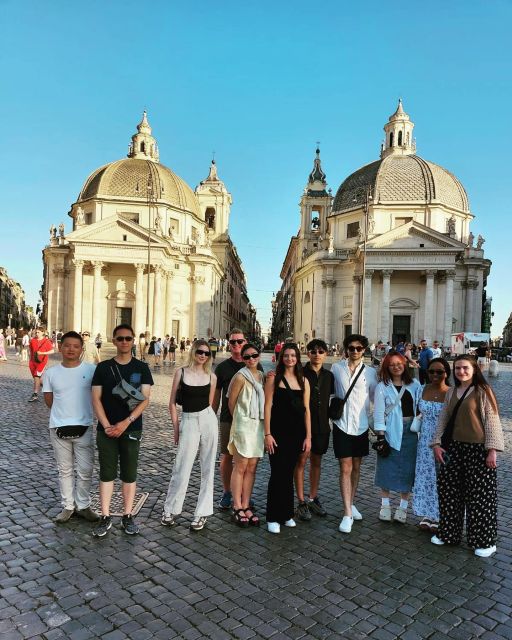
Most first-time Rome itineraries start at the Colosseum, St. Peter’s, or the Trevi Fountain. This one begins somewhere quieter, but instantly impressive: Piazza del Popolo. You meet at the gates outside the arches, so you are not hunting for a tour booth. Within minutes, you are oriented to a huge square and the main streets feeding out from it.
I like the pacing right away. The tour does not just march from monument to monument, it explains what you are actually looking at while you are looking at it. That matters in Rome, where half the fun is noticing the differences in stone, layout, and symbolism that you miss when you are moving too fast.
The atmosphere is also friendly for newcomers. You get the sense that your guide expects questions. If you are trying to figure out where to go next after the walk, this start helps because you leave with a mental map, not just photos.
More Walking Tours in Rome
- Rome: Guided Food Walking Tour with Wine in Trastevere
★ 4.9 · 3,105 reviews - Rome: Trastevere & Campo de Fiori Street Food Walking Tour
★ 4.9 · 2,768 reviews - Rome: Paranormal Night Walking Tour & Secret Backstreets
★ 4.9 · 1,921 reviews - Rome: Trastevere Street Food Walking Tour with Local Expert
★ 4.8 · 1,784 reviews
Ramesses II Obelisk and Piazza Views You Can Use Later
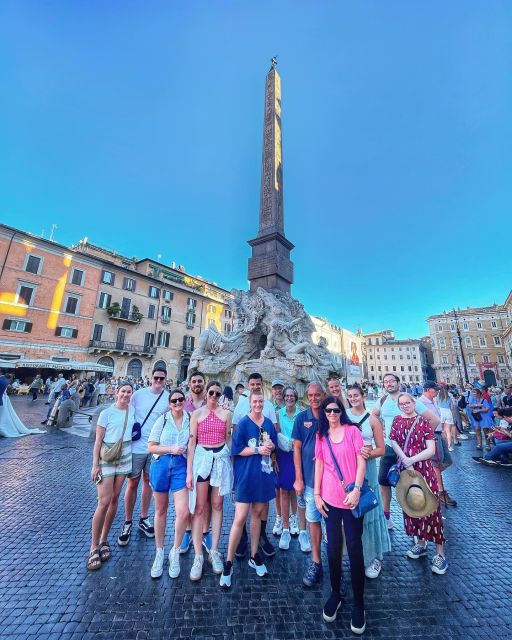
Your first big visual is the obelisk of Ramesses II towering over the square. It is easy to treat an obelisk as decoration, but your guide can frame it as part of Rome’s habit of collecting, reusing, and recontextualizing older pieces. That is the kind of fact that makes later walks more interesting, because you start spotting patterns.
This stop also teaches you something practical. Piazza del Popolo sits like a hub, with lines of sight and major routes radiating outward. When you leave, you will be able to navigate better for the rest of your trip, especially if you plan to explore by foot.
If you like architecture and urban design, the guide’s way of pointing out relationships between spaces is what makes this feel more valuable than a standard highlights walk. You are learning how Rome is organized, street by street.
Porta del Popolo: The Marble Details People Miss
From the obelisk, you head toward the Porta del Popolo, one of the showpiece gates associated with the Aurelian Walls. This is not a generic stop. The guide calls attention to the marble columns and statues that decorate the entrance. They are the kind of craft details that look stunning up close but are almost invisible from a distance.
I love that the tour teaches you how to look. In Rome, you can stand in front of a facade for five minutes and still not know what you are seeing. Here, you get cues on what to notice, like how the gate functions as both a boundary and a statement.
There is also a useful lesson in the gate’s setting. The Porto del Popolo forms a boundary between Piazza del Popolo and Piazzale Flaminio. That boundary concept matters because it helps you understand why cities develop the way they do, not just where famous buildings happen to be.
Aurelian Walls and the Roots of Christianity Thread
One of the tour’s strengths is how it connects ancient city life to later religious history. You hear about the roots of Christianity while walking through Rome’s layers, rather than in a museum context where everything feels separated by glass and labels.
Your guide weaves ancient history into the route so it feels like one story. That approach makes the “why” stick. It also helps you spot the difference between a monument you can admire and a monument that actually explains something about Rome’s evolution.
If you enjoy small side stories, you are in the right place. The guide shares amusing tales and points out angles you might not notice on your own. I especially like that this tour does not force you to memorize dates. It gives you themes you can remember, then you can explore deeper later if you want.
Walking to Castel Sant’Angelo: From Mausoleum to Castle
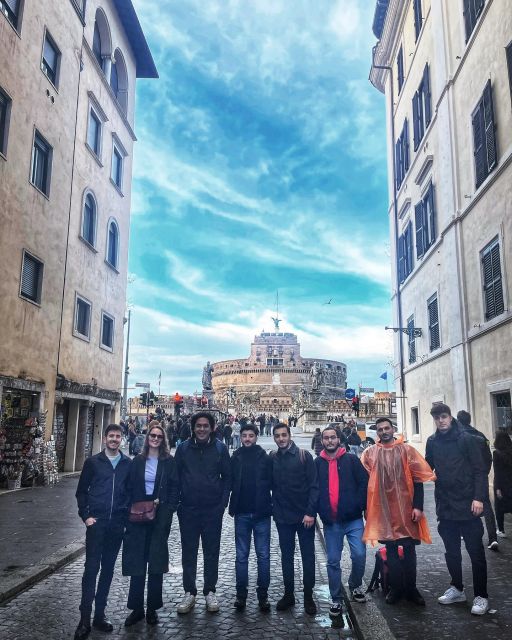
The walk heads toward Castel Sant’Angelo, and this is where the tour turns into pure drama in stone. Your guide explains the core origin: the structure was built by Emperor Hadrian as a mausoleum. Later, it was converted into a castle around the 14th century.
That timeline is the big payoff. If you only know Castel Sant’Angelo as a dramatic photo spot near the Tiber, you will still enjoy it. But with the origin story, you start seeing it differently. You realize it is not just a fortress, it is a long-running symbol that kept getting repurposed as Rome changed.
Watch for how the guide frames the fortress aspect too. Castel Sant’Angelo sits in a strategic position, and the story helps you understand why the city would build something so defensible. Even if you are not a military history person, you can follow along because the explanation connects structure to purpose.
This stop also has another hidden benefit: it is a natural checkpoint for your planning. Once you reach Castel Sant’Angelo, you can choose where to go next with more confidence, whether that means continuing along the river or using it as a turnaround point for dinner.
A few more Rome options worth a look

Restaurant and Nightlife Tips That Feel Like Local Advice
One thing I value in any Rome guide is practical guidance. Here, your guide offers tips on the best restaurants and even nightlife suggestions. That means you are not leaving with only sightseeing homework.
What makes this useful is that the restaurant talk happens during the walk, when you are still absorbing the neighborhood vibe. Your guide can tie food ideas to the route and the areas you will pass again later. You also get a sense for where locals tend to spend evenings, which can save you time and disappointment.
If you want a simple strategy for your own planning, use the guide’s picks as a starting list, then pick one based on your mood. If you are tired, go for the closest recommended option. If you want something lively, ask what nearby streets are best at night.
Also, guides on this tour have been praised for being responsive and friendly, and that matters when you ask follow-up questions. If you have dietary needs or you want a specific vibe, a chat before you split off can help you adjust fast.
Guide Styles: Why Names Like Lucio, Nick, Joan, and Alessandro Matter
A tour is only as good as the guide’s voice and flow, and this one gets strong marks for that. People have mentioned guides such as Lucio, Nick, Joan, and Alessandro, with praise for staying upbeat, keeping explanations easy to follow, and answering questions.
I like hearing that the guide can also point out details that do not always show up in standard Rome scripts. For example, one highlight from a guide’s storytelling included historical women in the city. That kind of perspective can make familiar monuments feel fresh again.
You may notice the difference between guides who recite facts and guides who teach you how to read the city. This tour leans toward teaching. The guide’s tone stays engaging, so even if you are not a lifelong Roman history nerd, you still get pulled in.
Price, Duration, and Value for Money in Real Terms
This costs $3.54 per person on the listing price side, and it is described as a free walking tour that is tip-based. That combination is important. You are not buying a ticket for a museum entry or a reserved attraction. You are paying for interpretation, direction, and time with a live guide.
The duration is 2.5 hours, which is a sweet spot. It is long enough to cover meaningful sights like the gate area and Castel Sant’Angelo, but short enough that you do not burn an entire morning or afternoon. In Rome, that matters because you often want to follow the walk with independent wandering while the stories are still fresh.
Value-wise, the big question is whether you would otherwise spend time figuring things out on your own. If you are trying to get your bearings fast and understand what you are seeing, this tour can save you effort. If you already have a full day packed with paid tours, you might use this as a lighter companion session to sharpen your context.
Also, the tour is in English and is wheelchair accessible, which is a genuine planning advantage if you need an itinerary that can accommodate mobility needs.
Timing Tips and How to Get the Most Out of the Walk
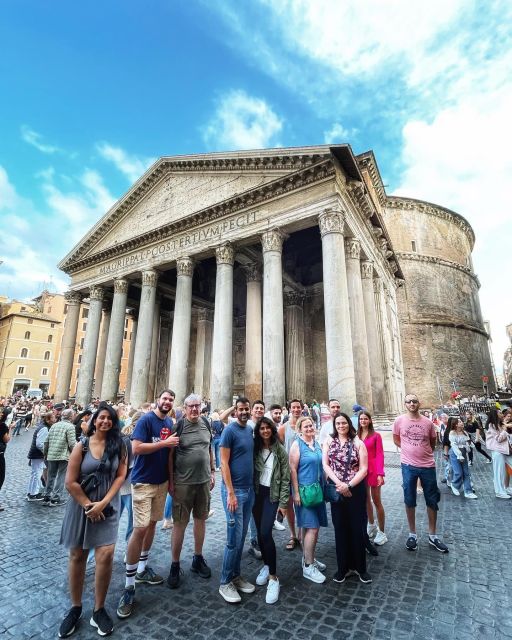
You will start at Piazza del Popolo and then walk toward Castel Sant’Angelo, so plan for steady city walking. The total time is 2.5 hours, so bring comfortable shoes and expect a few stops while the guide explains what you are looking at.
If you like photos, take advantage of your guide’s habit of telling you when to pause for angles. A few reviews noted that the guide leaves time for pictures, which is smart. Rome photos go from decent to great when you catch the right moment, and a guide who knows the flow helps you not feel rushed.
For your own schedule, this is a great fit as one of your first days. You get a map in your head, plus a story thread you can use when you visit other nearby areas later.
If you have a tight itinerary, pick this tour as your orientation session. Then build your rest of the day around the neighborhoods and routes the guide highlights.
Who This Tour Is Best For (and Who Might Skip It)
This works best for you if:
- you want a guided overview with stories, not just a checklist
- you like Rome’s “how it became what it is” explanations
- you want practical help with food and nightlife
- you are new to walking in Rome and want navigation support
It might be less ideal if you already know the Aurelian Walls and Castel Sant’Angelo timeline cold, and you only care about ticketed, entry-based sights. Still, even then, the guide’s emphasis on detail and the restaurant pointers can make it worthwhile.
If you are traveling with someone who gets bored by long museum talks, the outdoor pace can help. It keeps moving, so the tour feels less like a lecture and more like a smart walk with a friend who knows the city.
Should You Book This Free Walking Tour?
I think you should book it if you want a practical way to learn Rome’s layers in a short time. The strongest reason is the blend: big sights at Piazza del Popolo and Castel Sant’Angelo, plus the kind of context that makes everything you see afterward click. The second reason is value. Even with the tip-based model, paying attention to a live guide for 2.5 hours in central Rome is rarely a bad deal.
My final advice: book this early in your trip, bring comfortable shoes, and plan to ask questions. If you do that, you will leave with more than pictures. You will leave with a better sense of the city’s structure and a set of go-to ideas for dinner and nighttime plans.
Latest additions from Rome
- Guided Tour Vatican Museums & Sistine Chapel★ 4.1 · 30 reviews
- Exclusive Rome by Night Vespa Tour★ 5.0 · 30 reviews
- Transfer Rome to Airports★ 4.5 · 30 reviews
- Vatican: St.Peter’s Basilica & Dome – Reserved Entry & Tour★ 4.1 · 30 reviews
- Rome street art tour: off the beaten path with a local guide★ 5.0 · 30 reviews
- Tivoli, Hadrians Villa and Villa d’Este, a charming day trip from Rome★ 4.5 · 30 reviews
- Rome Food Tasting with Wine Pairing Italian Authentic Flavors★ 5.0 · 31 reviews
- Inspirational Cooking on the Roman Chef’s Panoramic Terrace★ 5.0 · 30 reviews
Walking Tours in Rome, compared.

Guided Food Walking Tour with Wine in Trastevere
Read our review →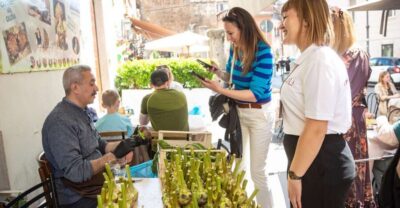
Trastevere & Campo de Fiori Street Food Walking Tour
Read our review →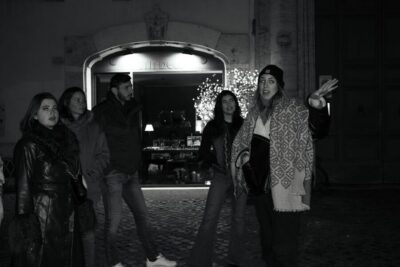
Paranormal Night Walking Tour & Secret Backstreets
Read our review →
Trastevere Street Food Walking Tour with Local Expert
Read our review →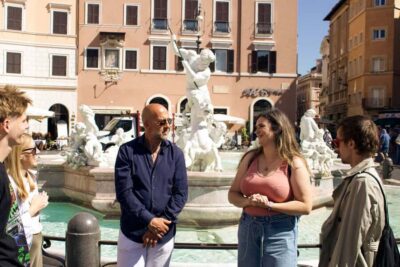
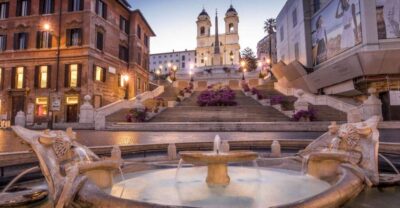
Guided City Center Evening Sightseeing Walking Tour
Read our review →
Small-Group City Highlights Moonlight Walking Tour
Read our review →
Best of Rome Walking Tour including Trevi Fountain
Read our review →Browse the lists this tour appears in