
Reviewed · APPIAN WAY AND AQUEDUCTS TOURS
Rome: Mini hike to the ancient Parco degli Acquedotti
Aqueducts meet Roman neighborhoods on one hike. I love the surreal mix of ancient aqueduct stone and living greenery in Parco degli Acquedotti, and I love how the walk turns into Roman water engineering in plain, human terms, guided by Sal. You get a view of Rome that feels both engineered and wild at the same time.
The one possible drawback: it’s a moderate 9 km one-way route on uneven ground, and you’ll finish near Giulio Agricola, so you need a simple plan to reach your lodging afterward.
Key takeaways (before you lace up)
- Start in Pigneto, then walk through real city streets before the aqueduct scenery takes over.
- Follow an ancient aqueduct line into the park, with stops that connect engineering to everyday life.
- Small group (max 10) keeps the pace chatty, not frantic.
- Rain or shine, with route adjustments possible for safety.
- Bring proper shoes and water since the terrain can be rough, especially after wet days.
- Sal’s style mixes practical shade breaks with history, nature, and plenty of photo angles.
In This Review
- Why This Rome Aqueduct Hike Feels Like Time Travel
- Pigneto Meeting Point: Find the Right Subway Exit Fast
- From Via del Pigneto to Mandrione: The Walk That Builds the Story
- Porta Furba, Arco di Sisto V: When You Feel the Old City Tighten Up
- Local Café Break and Torre Fiscale Park: Energy Control for a Moderate Hike
- Parco degli Acquedotti: The Surreal Mix of Nature and Ancient Architecture
- Views, Weather Changes, and How the Guide Keeps You Safe
- Pace, Distance, and Who This Moderate Route Fits Best
- Price and Value: Why $53 Feels Fair for This Kind of Guide
- Should You Book This Parco degli Acquedotti One-Way Hike?
- FAQ
- Where does the hike start and where does it finish?
- How long is the tour?
- How difficult is this hike?
- Is the hike one-way?
- What language is the tour offered in?
- What should I bring?
- Is it okay to wear sandals or flip flops?
- Does the tour run in bad weather?
- Is it suitable for children?
Why This Rome Aqueduct Hike Feels Like Time Travel
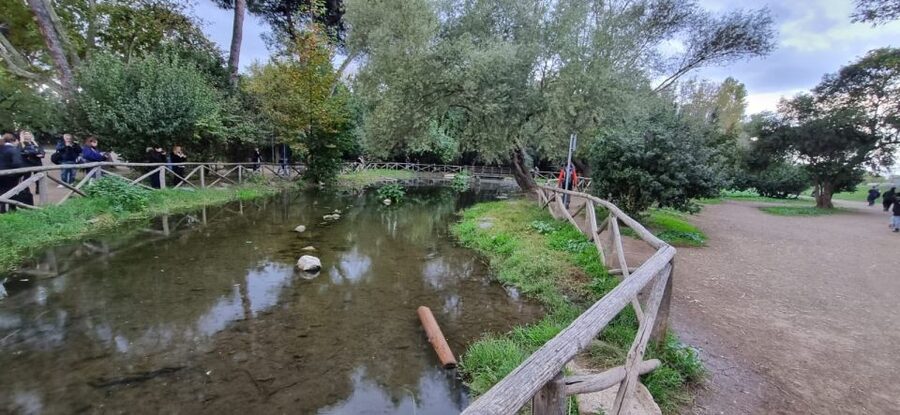
This is the kind of Rome tour that doesn’t start at a monument. It starts in a neighborhood, then gradually builds you toward the park where ancient infrastructure is still the star.
What makes the experience special is the mix. You’re not just walking past aqueducts. You’re moving through a place where nature has had centuries to soften the edges, while the architecture still tells you how Romans pulled water into the city. It can feel almost cinematic when the long stone lines stretch out and the greenery frames them.
I also like that the guide approach is interpretive, not lecture-heavy. You’ll learn what the aqueducts were doing, how they were built with the materials at hand, and why this system mattered for daily life. One moment you’re noticing details like structure and materials, and the next you’re looking for the wide, epic lines.
Pigneto Meeting Point: Find the Right Subway Exit Fast
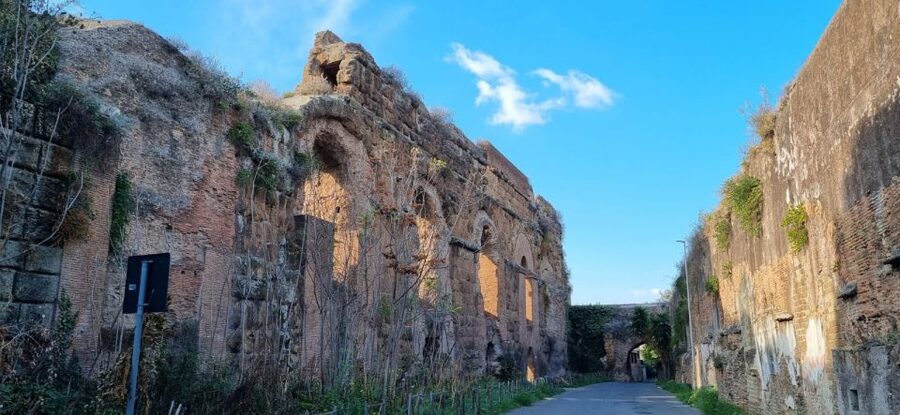
You’ll meet right outside the subway station Pigneto on the C-Line. The meeting point is outside the station, and it helps to arrive about 15 minutes early, since this is a guided start and the group needs to be together before moving off.
The station has two exits. Meet at the side described as near a Conad grocery store, or alternatively at the exit facing a bridge, depending on how your group route is planned. If that sounds vague, don’t stress too much, just plan to get to the station early and check for your guide and group.
Starting in Pigneto is a nice choice because it sets the tone. The day isn’t only about ruins. You’ll get a sense of how modern people live in the city right alongside older layers.
More of the Appian Way and the aqueducts:
- Rome: Appian Way & Aqueducts E-Bike Tour (Catacombs & Food)
★ 4.9 · 1,498 reviews - Rome: Appian Way, Catacombs, & Roman Aqueducts E-bike Tour
★ 4.9 · 1,421 reviews - Appian Way Aqueducts Bike Tour (Catacombs & Lunch Option)
★ 5.0 · 975 reviews - Rome: Appian Way, Aqueducts, and Catacombs Tour
★ 4.7 · 942 reviews
From Via del Pigneto to Mandrione: The Walk That Builds the Story
Once you start on Via del Pigneto, you’re guided through a sequence of stops that make the aqueduct park feel earned. Instead of jumping straight into countryside vibes, you transition through parts of the city where you can see the scale of Rome beyond the postcard core.
You’ll pass through Parchetto Condiviso del Mandrione, a smaller park space that helps break up the route without turning the hike into a rest-only affair. Then you continue along Via del Mandrione, where the walking keeps you moving while the guide points out what you’re actually looking at and why it matters.
This section is a smart setup for the rest of the day. It teaches you how to read the city. You start noticing how old systems influenced where people could live and move, and you begin connecting that to what you’ll see later at the aqueducts.
Also, because the group size is limited to 10 people, you can keep your questions coming without feeling like you’re stuck behind a pack.
Porta Furba, Arco di Sisto V: When You Feel the Old City Tighten Up
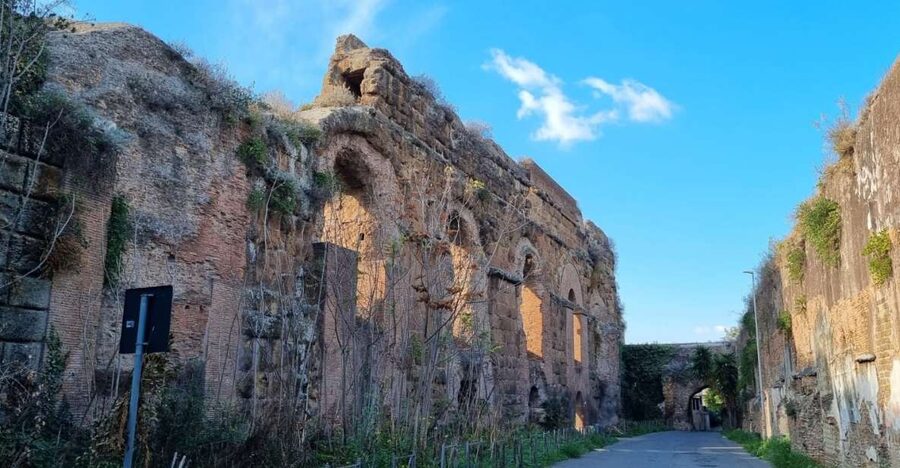
One of the key early historical stops is Porta Furba, or you may also pass the Arco di Sisto V area, depending on the day’s route flow. This is where the walk starts feeling more explicitly Roman in a way you can sense under your feet.
The benefit of this stop is not only visual. It gives you context for the route you’re about to take. Aqueducts weren’t isolated projects, and even when you’re heading toward a park, the story is still about movement through Rome and the city’s growth over time.
You’ll also hit a reset point here with a more relaxed pace and a short break later. That matters because the day has both city streets and uneven park terrain ahead.
Local Café Break and Torre Fiscale Park: Energy Control for a Moderate Hike
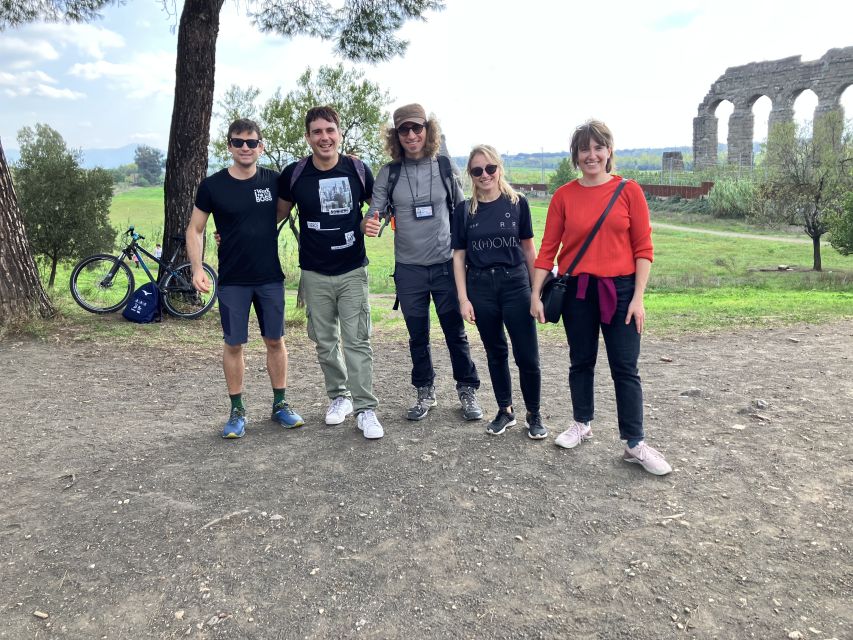
At some point you’ll pause at a local café for a break. This is one of those small choices that makes the whole day more enjoyable, especially if you’re coming in hot or tired from a busy Rome schedule.
Right after that, you head toward Torre Fiscale Park. This stretch matters because it’s a bridge from “walking in the city” to “walking in an ancient park.” You’re still following the story, but the environment starts shifting so you can feel the aqueduct park coming closer.
One thing I appreciate is the way the tour is paced for comfort. You’re going for a guided hike, not a sprint. If weather is warm, expect the guide to keep water and shade in mind, and you’ll want to match that energy by drinking consistently during the hike.
Parco degli Acquedotti: The Surreal Mix of Nature and Ancient Architecture
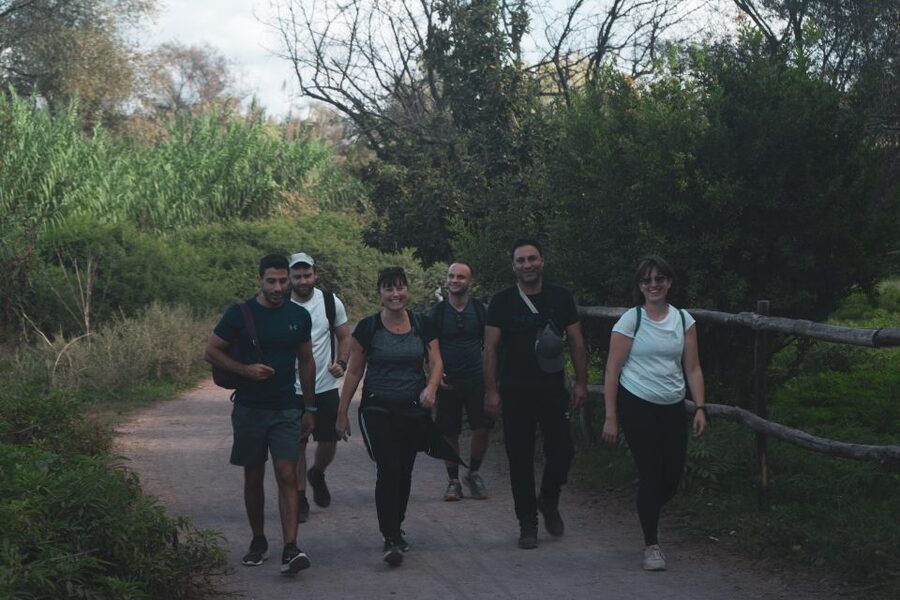
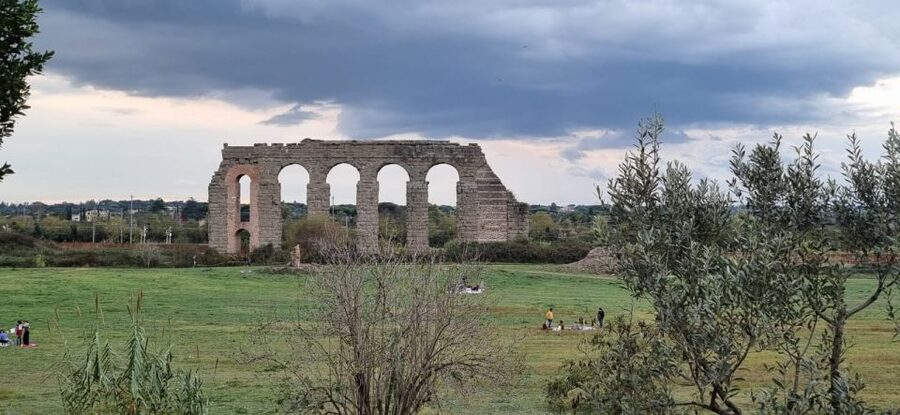
Now for the main event: Parco degli Acquedotti, a Roman-era park where the aqueducts lead you through a landscape shaped by both humans and nature. When people describe it as surreal, it’s usually because your eyes don’t know what to prioritize. Is it a nature walk, or is it an engineering exhibit?
The answer is: both. You’ll follow ancient aqueduct lines and learn how they were used and why they were built the way they were. The guide connects the technical side, like materials and construction logic, to the human side, like what it enabled for Rome.
On good-weather days, you might get a beautiful mountain backdrop. It’s not a guarantee, but it’s the kind of bonus that turns a cool historical walk into a full-on view moment.
Photography is a real strength here. With the aqueducts stretching into the distance and the park greenery framing them, you’ll find both macro details (textures and materials) and wide angles (the lines and scale). If you like taking photos, this park section is where your camera gets a workout.
Another shape for the same afternoon in Rome:


Views, Weather Changes, and How the Guide Keeps You Safe
This tour runs rain or shine. The route may be adjusted if weather turns rough or if obstacles appear, like a fallen tree. In other words, don’t assume the exact path will be identical every day.
That matters because the experience is designed as a hike, and safety has to come first. The guide can shorten or extend depending on conditions, and you’ll get alternatives if the terrain or safety situation requires it.
Practical tip: wear hiking shoes. The tour notes uneven terrain across about 9 km (5.5 miles), and shoes are especially helpful on or after rain. If you’re tempted to bring sandals, don’t. This is not that kind of walk.
If the weather is hot, plan on doing exactly what the guide does well: take water breaks, use shade when available, and keep your pace steady. One thing the guide style highlights is not pushing. You want your brain switched on for interpretation, not powered down by heat.
Pace, Distance, and Who This Moderate Route Fits Best
This is listed as a moderate hike. The distance is about 9 km (5.5 miles) with uneven terrain. The day is around 3 hours, but your real experience can run a little differently based on route adjustments and the pace of the group.
It’s generally family-friendly in the older-kid sense. Children must be 14+ and accompanied by adults. That age requirement matters because the hike is long enough that younger kids might struggle with steady walking on mixed surfaces.
It’s not suitable for wheelchair users, and it also lists limits for people with heart problems or respiratory issues. If any of those conditions apply to you, treat this as a conversation with your doctor first, since the route includes walking time and uneven ground.
The other practical match: if you enjoy both neighborhoods and outdoors, this one works. If you only want classic monuments, you might find the city-to-park shift takes time to warm up, but it pays off once you’re surrounded by aqueducts.
Price and Value: Why $53 Feels Fair for This Kind of Guide
At $53 per person for about 3 hours, you’re paying for guided interpretation plus a structured route you wouldn’t easily assemble yourself. In a place like Parco degli Acquedotti, a guide makes a big difference because the park is more than a view. It’s a living record of how water engineering shaped settlement and survival.
The guide is a professional interpretive nature guide, and that shows in how the day blends engineering with what you notice in the environment. This isn’t just, Here is an aqueduct. It’s, Here’s how water systems worked, what materials did, and how nature and human design became part of the same story.
Also, the group size is small, limited to 10 participants. That’s not a luxury detail. It changes the day. You can ask questions while walking, and you’re less likely to get swallowed by a large tour crowd.
If you’re trying to get more meaning per hour in Rome, this is a strong value play.
Should You Book This Parco degli Acquedotti One-Way Hike?
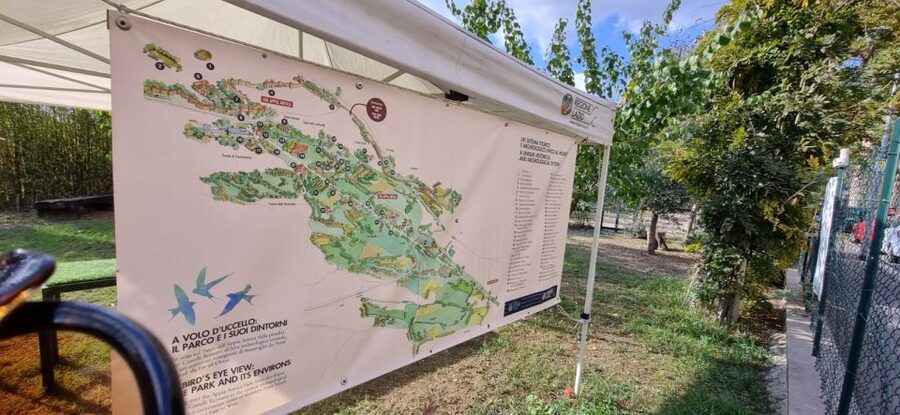
I’d book this if you want Rome beyond the usual monuments, and you like tours that teach you how to see. You’ll get aqueduct history, nature observations, and that rare feeling of standing inside an ancient system that still looks visually powerful today.
Book it with your logistics brain switched on. It’s a one-way hike that finishes close to Giulio Agricola (A-Line). If your hotel is far from that subway stop, plan your end connection ahead of time so you don’t spend your “end of tour” time figuring things out.
If you’re short on time, this might also be a smart choice because it hits two worlds in one go: city neighborhoods at the start, then the park experience as the payoff. Just bring the right shoes and enough water, and you’ll be set for a memorable afternoon.
FAQ
Where does the hike start and where does it finish?
You start outside the subway station Pigneto (C-Line) and finish close to the subway station Giulio Agricola (A-Line), near Via Lemonia, 214.
How long is the tour?
The duration is listed as 3 hours.
How difficult is this hike?
It’s rated moderate with about 9 km (5.5 miles) and uneven terrain.
Is the hike one-way?
Yes. It is a one-way experience, starting at Pigneto and ending near Giulio Agricola.
What language is the tour offered in?
The live guide language is offered in English and German.
What should I bring?
Bring comfortable walking shoes and plan for 1.5 liters of water. You should also wear clothing suited for an urban hike. A raincoat, sunscreen, and a hat are recommended.
Is it okay to wear sandals or flip flops?
No. Sandals or flip flops are not allowed.
Does the tour run in bad weather?
Yes, it takes place rain or shine.
Is it suitable for children?
Children must be 14+ and accompanied by adults. It is not suitable for children under 12.
Latest additions from Rome
- Exclusive Pasta & Tiramisu Class with Wine near by Colosseum★ 5.0 · 8 reviews
- Private Professional Photoshoot in Rome★ 5.0 · 8 reviews
- Rome: Testaccio Market Food Tour with Street Food & Wine★ 5.0 · 8 reviews
- Loreto “Shrine of the Holy House of the Virgin Mary” Private Tour from Rome★ 5.0 · 8 reviews
- Rome Day to discover Florence and Pisa Hotel Pickup★ 4.5 · 8 reviews
- Rome: Christmas Nativities and Angels Tour★ 3.1 · 8 reviews
- Guided Tour of Vatican Museums and Sistine Chapel★ 5.0 · 8 reviews
- Rome: Cooking Class of fresh Pasta and Tiramisu Cake★ 5.0 · 8 reviews
Appian Way and Aqueducts Tours, compared.
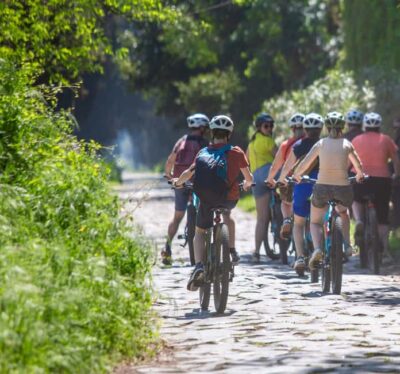
Appian Way & Aqueducts E-Bike Tour (Catacombs & Food)
Read our review →
Appian Way, Catacombs, & Roman Aqueducts E-bike Tour
Read our review →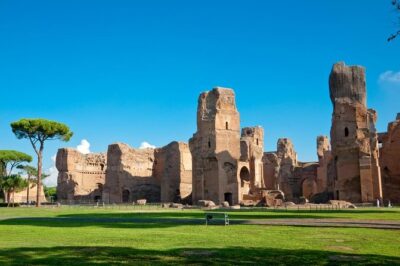
Appian Way Aqueducts Bike Tour (Catacombs & Lunch Option)
Read our review →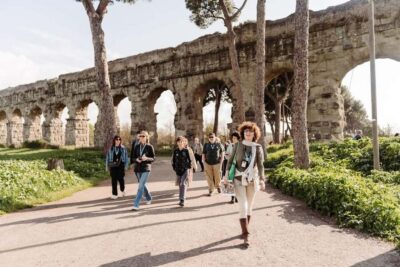
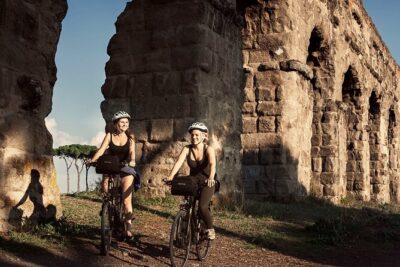
Appian Way, Catacombs and Aqueducts Park Tour with Top E-Bike
Read our review →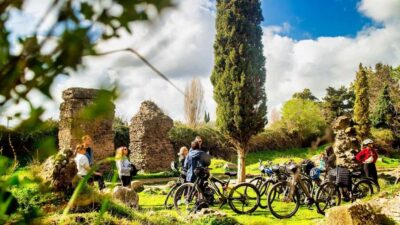
Appian Way Aqueducts Bike Tour (UPG Catacombs & Lunch)
Read our review →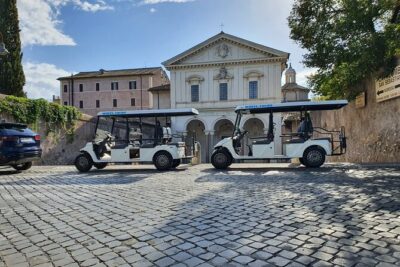
Rome Catacomb & Appian Way Small-Group Tour by Golf Cart
Read our review →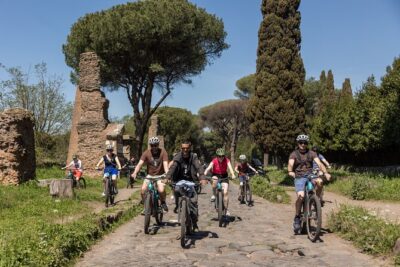
Appian Way & Aqueducts small group e-bike tour(catacombs & food)
Read our review →Browse the lists this tour appears in