
Reviewed · WALKING TOURS IN ROME
Rome Jewish District Walking Tour
Two thousand years of change fits in one stroll. This Rome Jewish district walking tour connects early Jewish life, later confinement in the ghetto, and the visible traces you can still walk past today. I especially like the relaxed, private feel, so you can ask questions without racing.
I also love how the route ties street scenes to real events, from Augustus-era fish market details to WWII-era inscriptions tied to the Nazi occupation in 1943-44. One possible drawback: at $301.03 per person for a 2-hour private tour, it is not a budget move, and any food tasting is extra.
In This Review
- Key things to know before you go
- How the Jewish story reshapes your walk through Rome
- Campidoglio to the first stop: pace, meeting point, and what to expect
- Antico Quartiere Ebraico: freedom, walls, and the ghost of the curfew
- Il Portico di Ottavia: fish markets, noble families, and WWII inscriptions
- Teatro di Marcello: rione life, legends, and real Rome street energy
- Tiberina Island and the last steps: ending where the city feels close
- Price and value: is $301.03 per person worth it?
- Who should book this Jewish Rome walk
- Should you book this tour?
- FAQ
- How long is the Rome Jewish District Walking Tour?
- Is this a private tour?
- How much does the tour cost?
- What is included, and what is not included?
- Where do I meet the guide, and where does the tour end?
- What language is the tour offered in, and what should I wear?
- What happens if the weather is bad or I need to cancel?
Key things to know before you go
- Private 2-hour walk with your guide’s full attention and a relaxed pace
- From early tolerance to the walled ghetto era, with curfew and restrictions explained on the ground
- Il Portico di Ottavia fish market tales, including how Jewish women used market waste to make fish broth
- WWII references in the neighborhood, including Nazi occupation memories from 1943-44
- Teatro di Marcello neighborhood atmosphere leading toward a finish near Tiberina Island
How the Jewish story reshapes your walk through Rome
Rome’s Jewish story is not a side note. It is woven into major turning points of the city, from the first centuries of the Roman Empire to the modern world’s hardest chapters. This tour is built to help you feel that continuity, without drowning you in dates.
You start with the big contrast: early Jewish settlement versus the later ghetto system. The early period is framed as a time when Jews were among the first settlers in Rome, living in the heart of the city with considerable freedom and a level of religious tolerance. Then the narrative turns, as Roman Jews were forced into an enclosed ghetto area with a curfew and other restrictions, lasting roughly from the 1500s to the 1800s.
One reason I like this structure is simple. You do not just memorize facts. You walk through places where those systems shaped daily life, from where people lived to how they moved.
More Walking Tours in Rome
- Rome: Guided Food Walking Tour with Wine in Trastevere
★ 4.9 · 3,105 reviews - Rome: Trastevere & Campo de Fiori Street Food Walking Tour
★ 4.9 · 2,768 reviews - Rome: Paranormal Night Walking Tour & Secret Backstreets
★ 4.9 · 1,921 reviews - Rome: Trastevere Street Food Walking Tour with Local Expert
★ 4.8 · 1,784 reviews
Campidoglio to the first stop: pace, meeting point, and what to expect
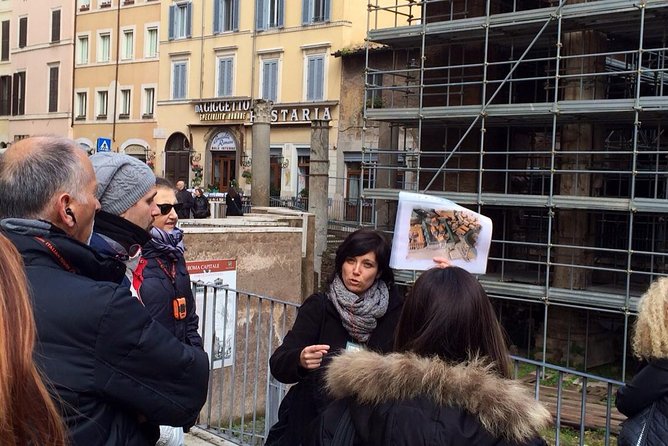
The walk begins at Piazza del Campidoglio, a central, easy-to-find spot with strong transit connections. You meet your guide about 10 minutes before the selected departure time, and you will finish near Tiber Island (the itinerary also explicitly includes Tiberina Island).
This matters because the tour is private. That means your guide can slow down if you want more explanation, or speed up if you are eager to see everything. The format is also supported by the tour’s approach: you get the full attention of the guide, plus a professional art historian guide level of context.
Dress is smart casual, and the tour depends on good weather. So think in practical terms: comfortable shoes for uneven pavement, and a light layer in case the evening cools down.
Antico Quartiere Ebraico: freedom, walls, and the ghost of the curfew
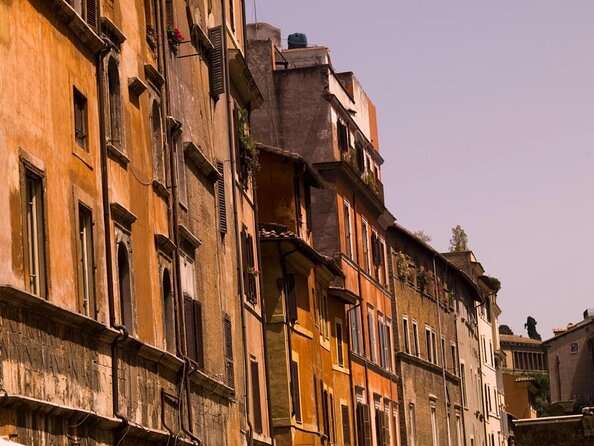
The first stop is the Antico Quartiere Ebraico area, where the story of Rome’s Jewish community begins long before the “ghetto” name entered common use. You learn that Jews were among the first settlers in Rome almost 2000 years ago, living with relative harmony in the broader city. That contrast is not just moral. It is historical, and it becomes physical when you understand what later restrictions did to where people could live.
The tour then moves to the enforced enclosure. Jews were placed inside the walled ghetto beginning in the 1500s, and the restrictions included an imposed curfew. When you hear that while standing near what remains of the district, the system starts to make emotional sense, not just academic sense.
A detail I find useful: the “sad, crumbling remains” of the walled district were torn down only in the 19th century. That line alone changes how you picture Rome. You are not looking at a far-away timeline. You are looking at something that was dismantled in relatively recent history, which helps you understand why traces, markers, and memory still matter.
Il Portico di Ottavia: fish markets, noble families, and WWII inscriptions
Next you head to Il Portico di Ottavia, where the guide leads you through one of Rome’s most layered areas, moving from Roman times to the Middle Ages and the Renaissance. The remains you visit connect directly to Augustus, since the porch is described as an imposing structure built for his sister.
Then comes one of the tour’s most memorable details: the porch area was the site of the city’s important fish market. The story goes beyond commerce. Jewish women were said to collect market waste to cook their famous fish broth. I like this kind of explanation because it puts heritage back into daily routines, food, and skill, instead of keeping the history in a museum box.
This stop also covers how the neighborhood changed with later settlement and wealth. In the Middle Ages and Renaissance, important Roman families settled there and built noble palaces. So, as you walk, you see how power and prosperity repeatedly reshaped the same city space.
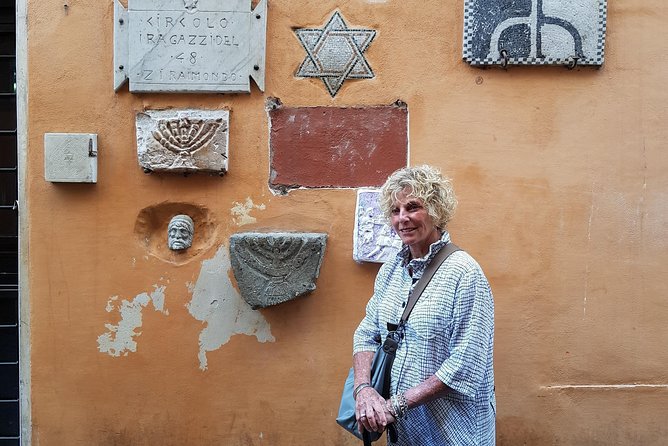
And then you get the hard turn you should expect on a Jewish Rome walk: inscriptions tied to the Nazi occupation of Rome in 1943-44. These markers can feel heavy, but that is also the point. History is not only about what people built. It is also about what was done to them.
If you want a lighter reset, the tour route gives you a chance to taste local Jewish specialties on your own expense. The tour specifically mentions tasting delicatessen items, typical Jewish pastry, and famous fried artichokes. I recommend budgeting a little extra for this, because it is often the easiest way to end a heavy topic with something human and immediate.
Teatro di Marcello: rione life, legends, and real Rome street energy
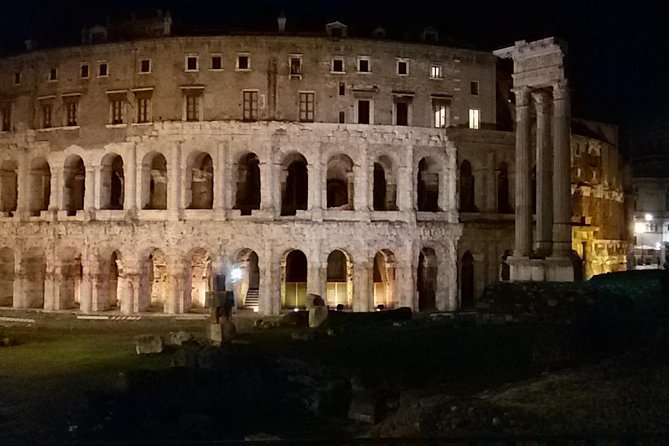
The walk continues toward Teatro di Marcello, a place where the guide shifts the tone toward everyday Roman neighborhood life. You are encouraged to slow down and notice the atmosphere, not just the monuments. This is described as a stronghold of Roman popular custom, where the rest of the city can feel hectic by comparison.
The area is presented as the core of the rione, with squares, corners, and alleys that work as meeting points for gossip and an aperitif. That matters because it helps you understand Rome as living culture, not only as preserved stone.
The guide also points out architectural variety in a practical way. You see ancient churches and aristocratic palaces, plus older hidden workshops and picturesque corners. You also hear about Middle Age towers and Renaissance baronial family palaces, along with papal memories connected to the broader setting.
One legend mentioned here involves mineral oil that supposedly sprang out of the ground. You will hear it as a story, not a geology lesson, and it fits the way Rome often explains its own origins through myth and local lore.
Even if you do not stay long at each spot, the stop helps you connect the Jewish narrative to the larger city rhythms. You start to see how a community’s history overlaps with the fabric of Rome’s neighborhoods, including the social life that continues around older walls and older stories.
Another shape for the same afternoon in Rome:
Tiberina Island and the last steps: ending where the city feels close
The tour ends at Tiber Island, with Tiberina Island explicitly included as part of what you explore. That finish point is more than a location. It gives you a visual reset after the denser history of the ghetto and the market area.
From a travel perspective, river locations do two things well. They create an easy endpoint for photos and mental mapping. They also help you feel the city’s geography, especially if you plan to continue walking or use nearby transit after the tour.
Price and value: is $301.03 per person worth it?
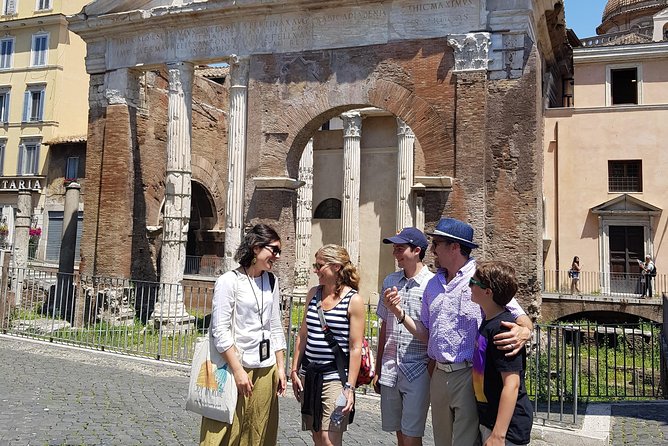
Let’s be honest about the math. At $301.03 per person for an approximately 2-hour private walking tour, you are paying for more than walking. You are paying for a guide who stays with you the whole time, including a professional art historian guide element, and for the ability to ask questions in real time.
This price can feel steep if you are comparing it to group tours. But this experience is positioned around depth and context, not just stop counting. The tour also includes “admission ticket free” at key points, so you are not constantly adding separate site fees.
Where the value really depends on you is this: you will get more from the tour if you care about how history shows up in specific places, and if you want the guide to connect those places to daily life themes like food, restrictions, and social space. If you are more interested in broad highlights with minimal explanation, you might consider a cheaper group option.
My practical take: if you are spending time in Rome for a short visit and you want one focused cultural story with a lot of guided meaning, this price can make sense. If you are staying longer and prefer to explore on your own, you might pick a different format.
Who should book this Jewish Rome walk
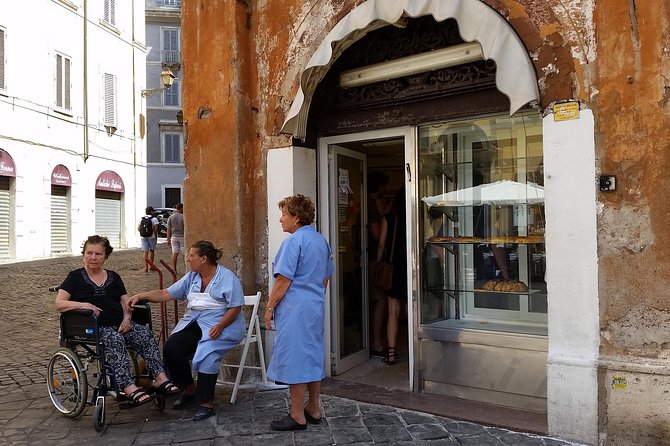
This tour is a good fit if you want a structured story that stays grounded in streets you can actually see. It suits people who enjoy walking with explanation, and who want context that connects the Roman Empire, later restrictions of the ghetto era, and WWII memory.
It is also ideal if you value a private setup. If your group has questions, different interests, or someone who prefers a slower pace, the private format makes a difference. The meeting point at Piazza del Campidoglio also makes it relatively convenient versus tours that start far from major transit lines.
Should you book this tour?
If Jewish Rome history is on your list, and you want it told through real places, I think this is a strong choice. The combination of ghetto-era context, Il Portico di Ottavia food-market detail, and the WWII-era inscriptions gives you both cultural depth and a sense of why the neighborhood still matters.
Consider skipping or comparing if budget is tight, since $301.03 per person is premium pricing. Also note that weather can affect it, so have a flexible day in your schedule.
If you go, bring curiosity and a little extra spending money for the optional food tasting. The tour does a good job of mixing heavy history with human-scale details, like stories about food and neighborhood life, and that balance is what makes the walk feel worth your time.
FAQ
How long is the Rome Jewish District Walking Tour?
It lasts about 2 hours.
Is this a private tour?
Yes. It is a private tour/activity, so only your group participates.
How much does the tour cost?
The price is listed as $301.03 per person.
What is included, and what is not included?
Included are a local guide and a professional art historian guide. Food tasting is not included in the tour cost, and hotel pickup and drop-off are also not included.
Where do I meet the guide, and where does the tour end?
Meet at Piazza del Campidoglio, 00186 Roma RM, Italy. The tour ends at Tiber Island, 00186 Rome, Metropolitan City of Rome Capital, Italy.
What language is the tour offered in, and what should I wear?
It is offered in English. The dress code is smart casual.
What happens if the weather is bad or I need to cancel?
The experience requires good weather. If it is canceled due to poor weather, you will be offered a different date or a full refund. You can cancel for a full refund up to 24 hours in advance of the start time.
Latest additions from Rome
- Rome: Testaccio Market Food Tour with Street Food & Wine★ 5.0 · 8 reviews
- Exclusive Pasta & Tiramisu Class with Wine near by Colosseum★ 5.0 · 8 reviews
- Private Professional Photoshoot in Rome★ 5.0 · 8 reviews
- Loreto “Shrine of the Holy House of the Virgin Mary” Private Tour from Rome★ 5.0 · 8 reviews
- Rome Day to discover Florence and Pisa Hotel Pickup★ 4.5 · 8 reviews
- Rome: Christmas Nativities and Angels Tour★ 3.1 · 8 reviews
- Guided Tour of Vatican Museums and Sistine Chapel★ 5.0 · 8 reviews
- Rome: Cooking Class of fresh Pasta and Tiramisu Cake★ 5.0 · 8 reviews
Walking Tours in Rome, compared.

Guided Food Walking Tour with Wine in Trastevere
Read our review →
Trastevere & Campo de Fiori Street Food Walking Tour
Read our review →
Paranormal Night Walking Tour & Secret Backstreets
Read our review →
Trastevere Street Food Walking Tour with Local Expert
Read our review →
Guided City Center Evening Sightseeing Walking Tour
Read our review →
Small-Group City Highlights Moonlight Walking Tour
Read our review →
Best of Rome Walking Tour including Trevi Fountain
Read our review →Browse the lists this tour appears in