Reviewed · COLOSSEUM TICKETS AND TOURS
Rome: Introduction to the Colosseum and Ancient City Tour
One arena, thousands of years of Rome. That is what makes this 2.5-hour Colosseum intro tour a smart pick, you get reserved access and an expert-led walkthrough that turns the site into a story you can follow. I especially like the way the guide explains the monument’s engineering and how ancient events played out, and then you get time after the guided portion to wander the Palatine Hill and Roman Forum areas at your own pace. One drawback to plan for up front, you need a valid ID at the entrance, and there is no suitcase compartment.
In peak summer (July and August), the visit time drops to 2 hours, so pick a morning slot when you can. This tour is offered in several languages (French, German, English, Italian, Spanish), and you’ll use radios/headsets so you can hear the guide even when things get crowded. It also ends near Trajan’s Column, so you can keep your momentum with one more iconic Roman landmark right after.
In This Review
- Key things that make this Colosseum tour worth your time
- Reserved Entry Into the Colosseum, Without the Long Wait
- What You’ll Learn in the Colosseum: Politics, Games, and Design
- Palatine Hill: Rome’s Starting Point, Layer by Layer
- Roman Forum: The Day-to-Day Center of an Empire
- Ending at Trajan’s Column: A Strong Roman Victory Reference Point
- Price and Value: What Your Money Is Buying
- What to Bring, What Not to Bring, and How to Stay Smooth
- Languages and Guide Style: You’ll Get Clear Explanations
- Is This the Right Tour for You?
- Should You Book This Rome Colosseum Introduction?
- FAQ
- How long is the Colosseum and Ancient City tour?
- How much does the tour cost?
- Is entrance to the Colosseum included?
- Do I need to buy a separate ticket?
- Does this tour skip the ticket line?
- What if I forget or don’t bring ID?
- What languages are available?
- Where does the tour end?
- What should I bring?
- Is food or drink allowed during the tour?
- Is the tour refundable if I cancel?
Key things that make this Colosseum tour worth your time
- Skip the ticket line so you start seeing real stone sooner, not just standing in it.
- Radios and headsets help you hear every explanation in a noisy, windy, high-traffic setting.
- Colosseum engineering stories that connect Flavian politics, mass entertainment, and design.
- Palatine Hill and Roman Forum pacing: guided first, then time on your own for views and photos.
- Trajan’s Column finish gives your walk-through a satisfying endpoint and an easy next stop.
Reserved Entry Into the Colosseum, Without the Long Wait
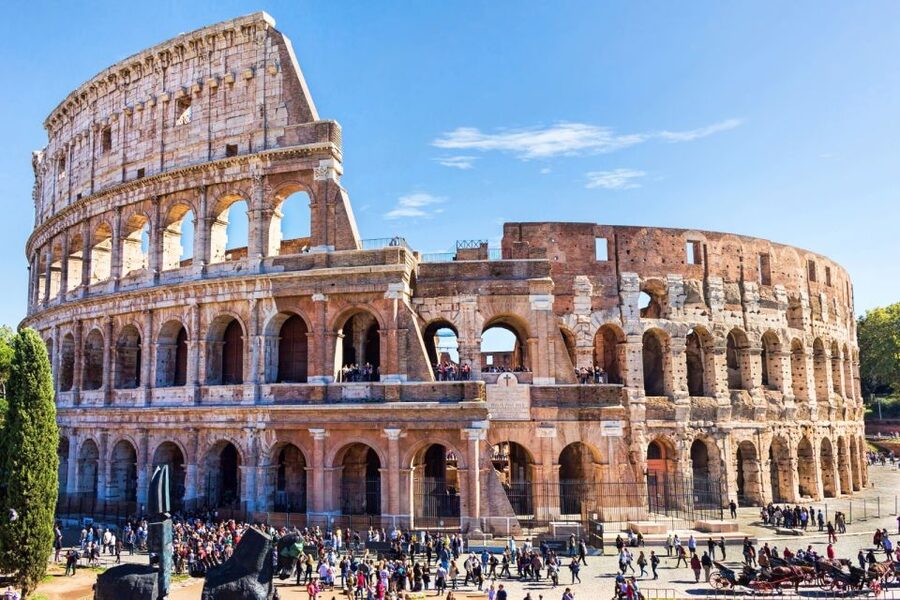
The biggest practical win here is that you’re not starting your visit trapped in the ticket-line shuffle. With reserved access, you move into the Colosseum with an expert guide right away, which matters because the site can feel overwhelming if you’re trying to figure it out solo.
Once inside, the tour’s focus is clear: you are learning how the Colosseum worked as a building and as a political tool. It helps a lot that this tour includes radios/headsets, because you’re often standing with your back to the guide, looking up at arches and levels, or moving as a group. Being able to hear what the guide is pointing at makes the whole experience less stressful.
One more logistics point you should not skip, bring the ID you’re required to use for entrance. The tour notes are direct: guests without proper ID cannot be guaranteed access, and the tour also requires full participant names matching the booking. If you travel with kids, remember that children need an ID/passport too.
More ways into the Colosseum:
- Rome: Colosseum, Palatine Hill and Roman Forum Guided Tour
★ 4.8 · 32,814 reviews - Rome: Guided Tour of Colosseum, Roman Forum & Palatine Hill
★ 4.7 · 27,897 reviews - Rome: Colosseum & Forum with Audio Guide App -Optional Arena
★ 4.2 · 24,770 reviews - Rome: Colosseum, Roman Forum and Palatine Hill Guided Tour
★ 4.5 · 23,903 reviews
What You’ll Learn in the Colosseum: Politics, Games, and Design
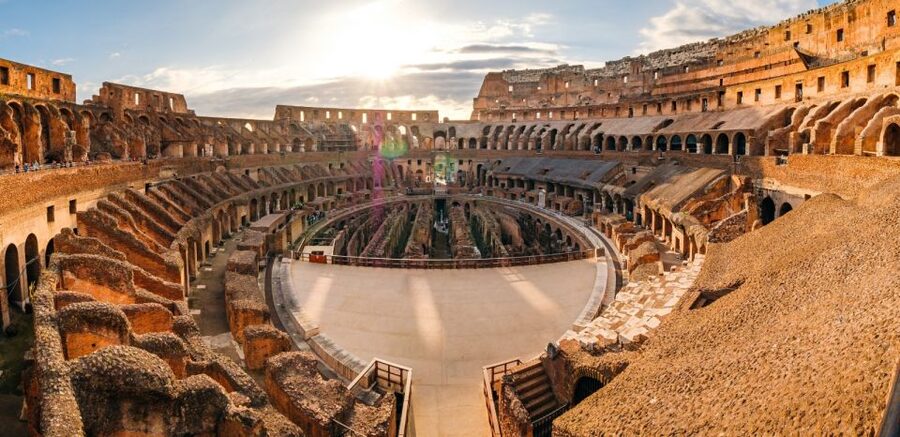
The Colosseum gets labeled as an arena, but this tour frames it as something much bigger: a statement. You’ll hear that it had more than 80 entrances and could hold around 50,000 spectators. That scale is hard to picture until someone walks you through what the building needed to do, and why it was built in the first place.
The Flavian Dynasty is central to the story. You’ll learn it was built as a gift to Roman citizens to boost the dynasty’s popularity, it hosted entertainment and games, and it also showcased Roman engineering. I love tours that treat these as connected ideas instead of random facts. Here, the politics explain the design, the design explains how crowds moved, and the entertainment explains why the building looks the way it does.
You’ll also hear the longer-term reality of Roman spectacle. Festivals and games could last up to 100 days in the Colosseum. That changes how you look at the ruins. You stop thinking only about gladiators and start imagining repeated events, shifting crowds, and constant activity.
And yes, you’ll get stories tied to gladiators and the on-site experience. The best part is that the guide’s explanations are aimed at helping you see the Colosseum like a working system, not just a museum piece.
Palatine Hill: Rome’s Starting Point, Layer by Layer
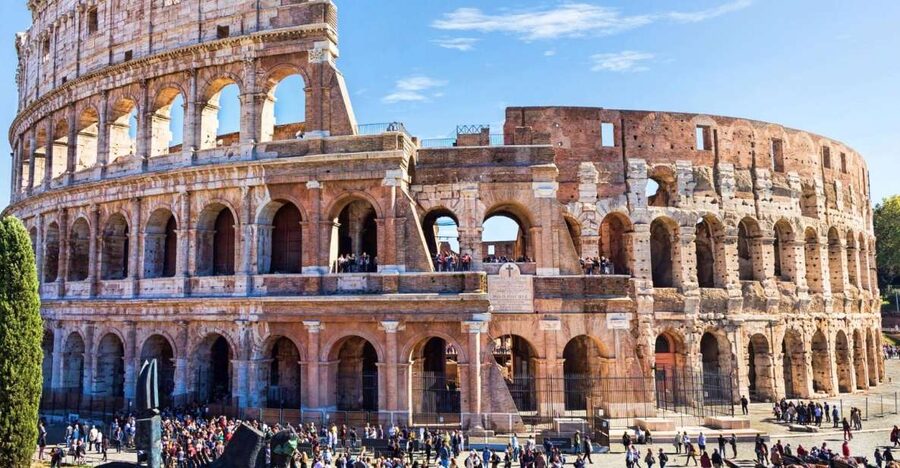
After the guided portion, the tone shifts slightly. You’re still in the same ancient zone, but you’re now in a place where the ruins feel like a timeline laid across the ground.
Palatine Hill is described as the foundation point of Rome, and this tour leans into that. You can see layers from the early kingdom of Rome in the 7th century BCE, then the Roman Republic in later centuries BCE. The most dramatic jump is to the Imperial Age, with the jaw-dropping palace of Emperor Domitian. That’s the moment when Palatine stops being just “old” and becomes power in stone.
What I like about this stop is the range of periods you can visually connect. You can also spot evidence of the Renaissance presence of the Farnese family, and later the 20th-century presence of Mussolini. That mix is exactly why Palatine can feel more alive than some other ruin fields. The hill doesn’t just show one empire. It shows how each era reused, reshaped, and reinterpreted the past.
Your time here after the guide matters. The tour is structured so you benefit from expert direction early, then you get the freedom to pause for panoramic views of the Colosseum and take your time with photos.
Roman Forum: The Day-to-Day Center of an Empire
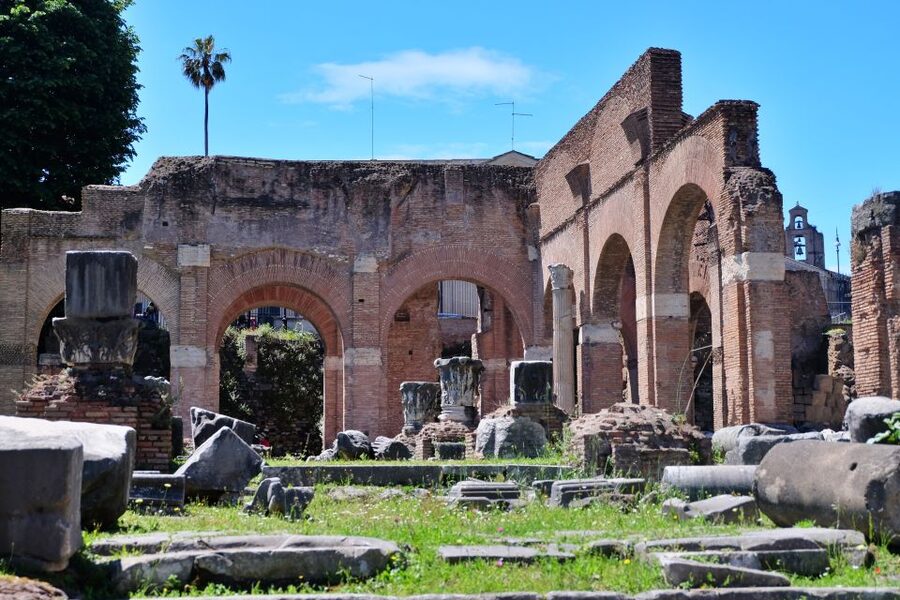
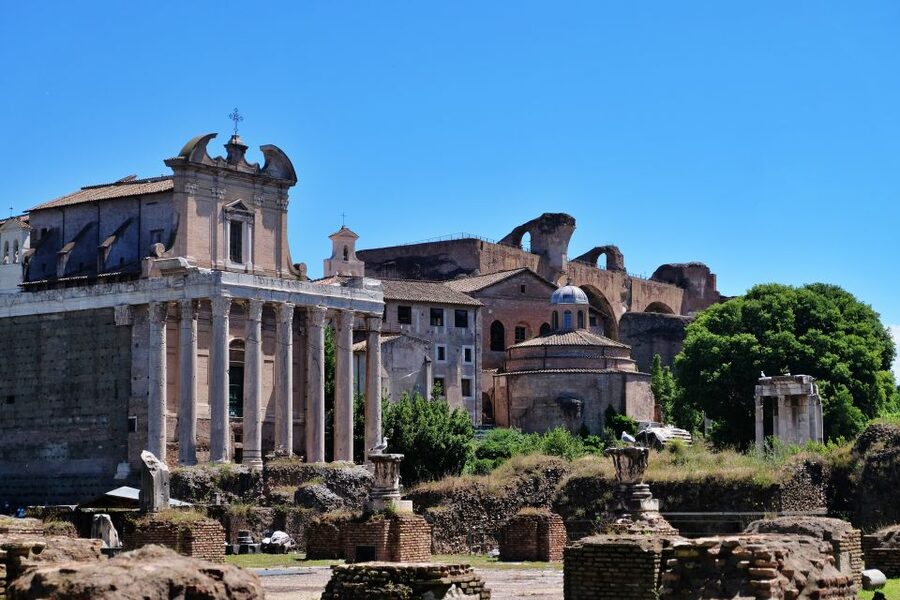
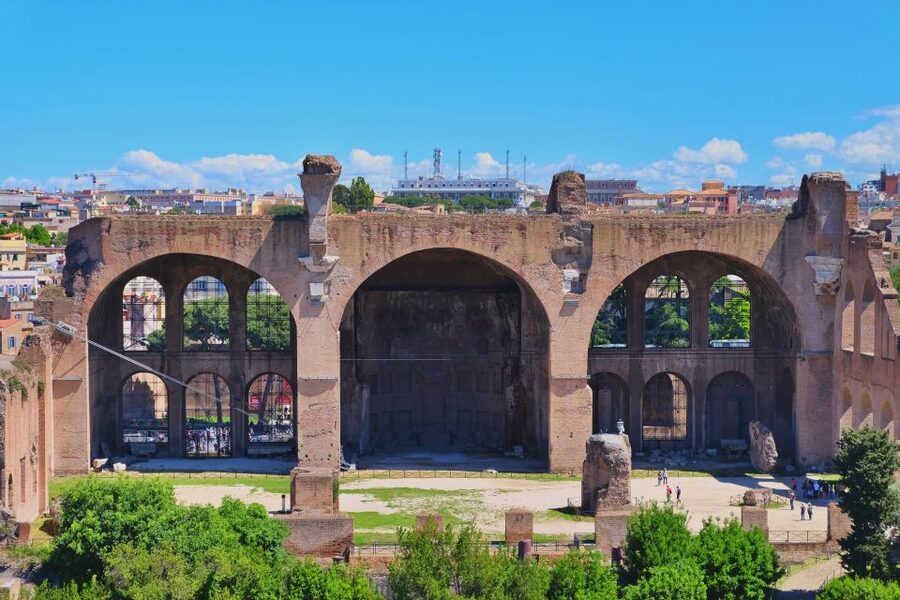
If the Colosseum is about spectacle, the Roman Forum is about daily life and power. You’ll learn it was the social, political, religious, and financial center of the Roman Empire. That list sounds official, but the tour’s guidance helps you translate it into what you’re actually looking at.
One helpful way this tour frames the Forum is as a place where different layers of Roman society rubbed shoulders. The tour notes make that point directly, from homeless beggars to rich senators. I find that perspective changes how you walk through the ruins. You stop reading the Forum as a collection of temples and political buildings and start imagining movement, bargaining, debate, worship, and rumor.
The Forum is also where you’ll naturally slow down because the structures are still standing in recognizable shapes. With an expert guide pointing out what to focus on, you’re more likely to notice the patterns instead of just scanning for the “big postcard view.”
And again, your own pacing matters. The guided explanation sets the context, then you can wander with less pressure. If you want to linger at a viewpoint or take a break in a less crowded stretch, this format makes that easier.
Ending at Trajan’s Column: A Strong Roman Victory Reference Point
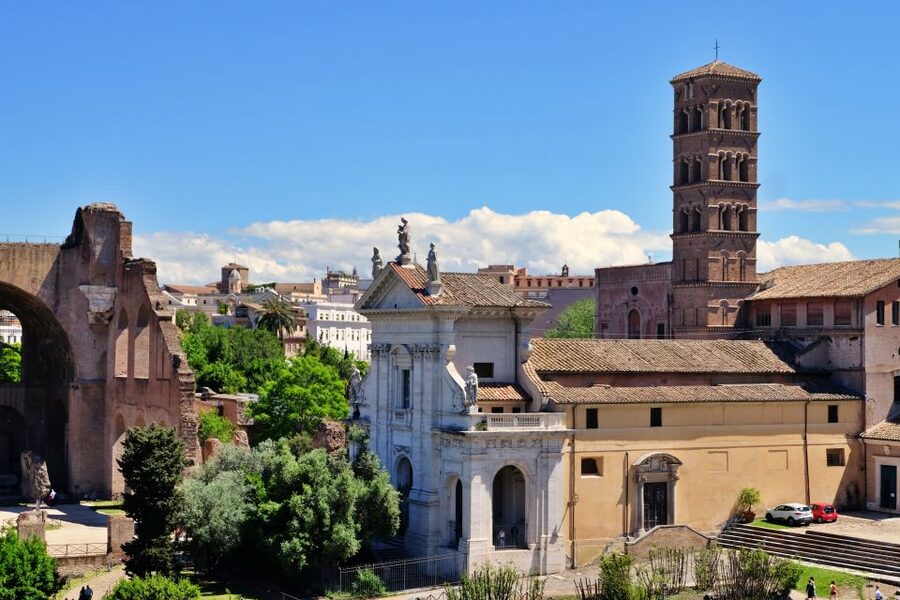
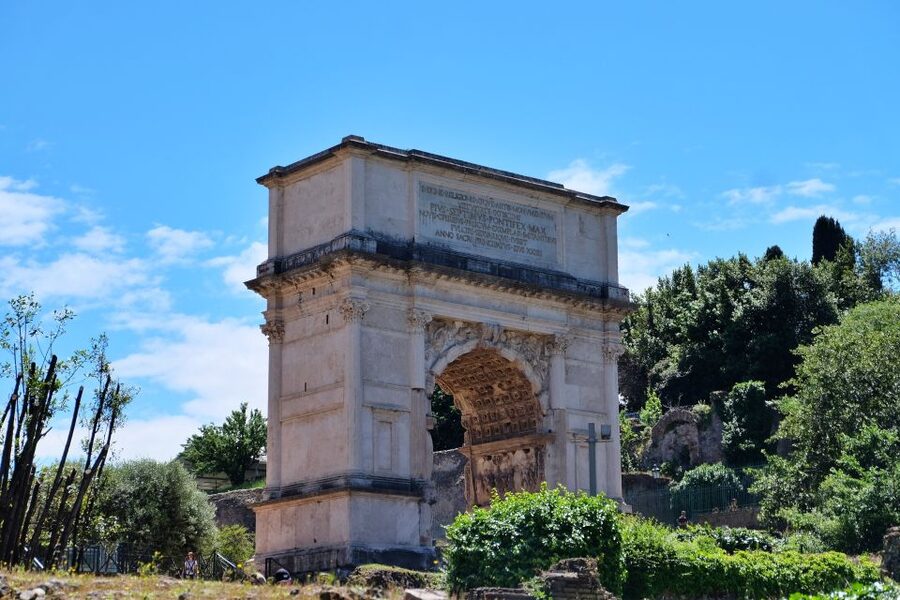
The tour ends at Trajan’s Column, and that matters more than it sounds. When you finish at Trajan’s Column, you’re not abruptly thrown back onto street navigation. You’re already anchored to a famous symbol of Roman victory and power, which ties back to the broader themes you learned at the Colosseum and in the Forum.
Trajan’s Column is a visual reminder that the Romans loved messaging as much as engineering. After watching crowds and ceremonies described around the Colosseum, it feels satisfying to end somewhere that also communicates power, only in a different form.
If you’ve got more time after the tour, you’ll likely find it easier to keep your walking route coherent. You also reduce the risk of feeling like you just did a whirlwind stop with no clear next step.
A few more Rome options worth a look

Price and Value: What Your Money Is Buying
At $58 per person for a 2.5-hour experience, the value depends on what you factor in. The tour price is set as an all-in experience, but the important note is that archaeological site access includes an entrance fee portion for adults: €16 for adults plus a €2 reservation fee. Children under 18 have free entry for the sites.
So what are you really paying for with the $58? In practical terms, you’re paying for:
- an expert licensed guide during the key storytelling portion
- radios/headsets so you can actually hear in a crowded environment
- reserved entry to help you avoid time lost in lines
- the tour structure that includes both the Colosseum and the Palatine Hill and Roman Forum visit
For many people, the “value” is not just the entry. It’s the way the tour organizes your visit into a clear narrative. Without context, the Colosseum can feel like stone and crowds. With context, you understand why the building has the features it has, and you connect it to the social world of the Forum and the power center of Palatine.
One more note on timing: in July and August, the visit time is 2 hours. If you’re traveling in those months, choose a time slot that still gives you a buffer for heat, photos, and breaks.
What to Bring, What Not to Bring, and How to Stay Smooth
This tour is very clear about what the entry rules are, and you’ll want to follow them. Bring your passport or ID card for adults, and passport/ID card for children too. This matters because the tour’s note is firm, if you show up without the required ID, entrance cannot be guaranteed.
Also pay attention to restrictions on bags and items. Oversize luggage isn’t allowed, and there is no suitcase compartment. If you’re traveling with a big bag, plan to travel light or store luggage elsewhere before you head to the meeting point.
On the safety and security side, the tour says no pets, no weapons or sharp objects, no smoking, no food and drinks, no alcohol and drugs, no sprays or aerosols, no glass objects, and no unaccompanied minors. Electric wheelchairs are also listed as not allowed. If you or someone in your group uses mobility equipment, you’ll want to check options carefully before booking.
Finally, meeting point can vary depending on the option booked. Do yourself a favor and double-check your exact meeting location when you confirm.
Languages and Guide Style: You’ll Get Clear Explanations
This tour operates in French, German, English, Italian, and Spanish, which is great if you don’t want to fight with a language barrier at a site full of details. The presence of radios/headsets also helps, because even if you’re not in the front, the guide’s voice comes through.
The guide quality seems to be a standout strength. One French-led experience we have details on was guided by Catherine, with very precise explanations in French. Another example highlighted Alessandro Palma in Italian for explanations packed with curious details and an engaging, friendly style.
That matters because the Colosseum and Forum can overwhelm you quickly if the guide is just reading facts. Here, the guide is expected to connect the story to what you can see, from entrances and crowd capacity to why the building was designed the way it was.
Is This the Right Tour for You?
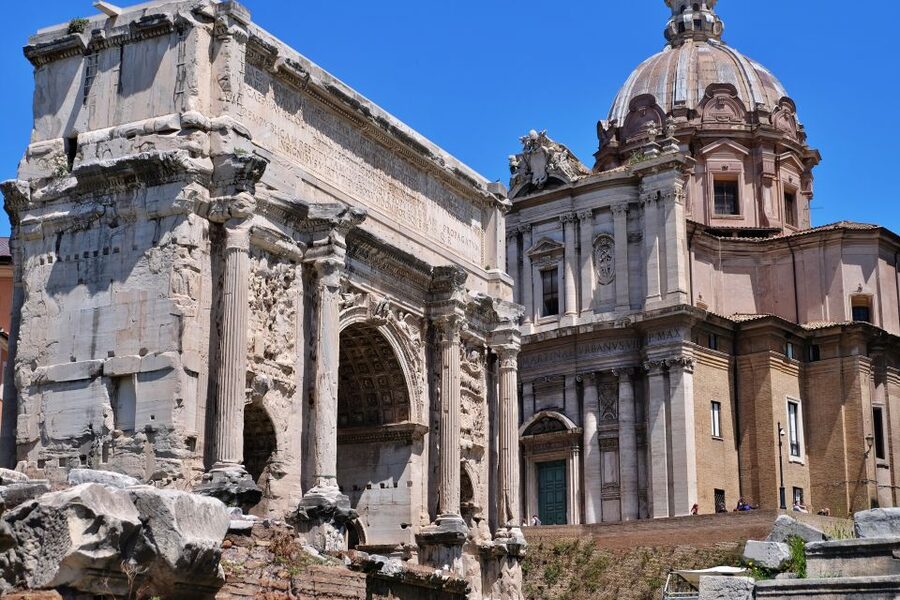
I think this is a strong fit if you want:
- a fast, organized start at the Colosseum with reserved access
- expert context for the Colosseum’s engineering and Roman political purpose
- a walk through Palatine Hill and the Roman Forum with a guide, then your own time for views and photos
- a tour that ends at a major landmark, not a random drop-off
It might be less ideal if you:
- don’t have the right ID documents ready
- need space for large luggage, because there’s no suitcase compartment
- dislike rules, since the list of prohibited items is strict
If you’re the type who wants to understand what you’re looking at, this tour format is a win.
Should You Book This Rome Colosseum Introduction?
Yes, you should book it if you want a practical way to get oriented fast and still feel like you had time to breathe. The reserved entry, radios/headsets, and clear focus on Colosseum purpose plus Palatine Hill and Forum highlights make it easy to justify the cost, especially compared to piecing everything together on your own.
The one decision factor that should drive your choice is simple: you have your ID, you’ll travel light, and you can handle a busy archaeological area. If that’s true, this is a solid way to spend your limited time in Rome, and it ends you right where the next Roman story starts at Trajan’s Column.
FAQ
How long is the Colosseum and Ancient City tour?
The duration is listed as 2.5 hours. In July and August, the visit time is 2 hours.
How much does the tour cost?
The price is $58 per person.
Is entrance to the Colosseum included?
Yes. The tour includes entrance to the Colosseum, and it also includes a Palatine Hill and Roman Forum visit.
Do I need to buy a separate ticket?
The tour information notes that the archaeological entrance fee for adults is €16 plus a €2 reservation fee, with free entry for children under 18. Your guided tour price includes guide services and related tour amenities, but the site fee portion is specifically mentioned.
Does this tour skip the ticket line?
Yes, it says skip the ticket line.
What if I forget or don’t bring ID?
ID is required at the entrance. The tour notes state that guests who show up without ID cannot be guaranteed access.
What languages are available?
The live tour guide is offered in French, German, English, Italian, and Spanish.
Where does the tour end?
The tour ends at Trajan’s Column.
What should I bring?
You should bring a passport or ID card. Children also need a passport or ID card.
Is food or drink allowed during the tour?
Food and drinks are listed as not allowed.
Is the tour refundable if I cancel?
The activity is non-refundable.
Latest additions from Rome
- Guided Tour Vatican Museums & Sistine Chapel★ 4.1 · 30 reviews
- Exclusive Rome by Night Vespa Tour★ 5.0 · 30 reviews
- Transfer Rome to Airports★ 4.5 · 30 reviews
- Vatican: St.Peter’s Basilica & Dome – Reserved Entry & Tour★ 4.1 · 30 reviews
- Rome street art tour: off the beaten path with a local guide★ 5.0 · 30 reviews
- Tivoli, Hadrians Villa and Villa d’Este, a charming day trip from Rome★ 4.5 · 30 reviews
- Rome Food Tasting with Wine Pairing Italian Authentic Flavors★ 5.0 · 31 reviews
- Inspirational Cooking on the Roman Chef’s Panoramic Terrace★ 5.0 · 30 reviews
Colosseum Tickets and Tours, compared.
Colosseum, Palatine Hill and Roman Forum Guided Tour
Read our review →
Guided Tour of Colosseum, Roman Forum & Palatine Hill
Read our review →
Colosseum & Forum with Audio Guide App -Optional Arena
Read our review →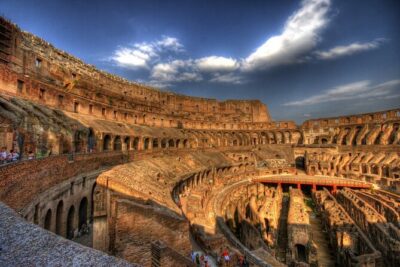
Colosseum, Roman Forum and Palatine Hill Guided Tour
Read our review →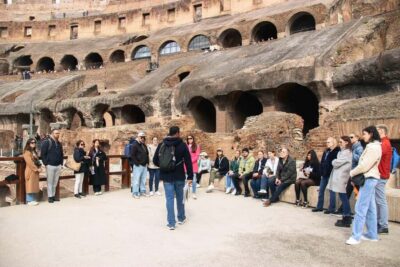
Colosseum Arena Floor, Palatine & Forum Guided Tour
Read our review →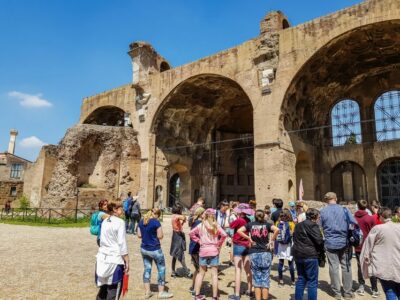
Colosseum Arena, Palatine Hill & Forum Guided Tour
Read our review →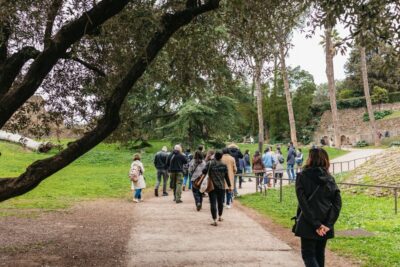
Colosseum,Forum & Palatine Tour + Optional Arena Floor
Read our review →