
Reviewed · ROME IN A DAY TOURS
Rome Highlights Tour Squares and Fountains Stroll Through History
Rome’s greatest hits, efficiently walked. I love how this route strings together the Spanish Steps and Trevi Fountain with major “must-see” stops, and I also like that you get an expert art historian guide plus headsets so you can actually hear the story.
The main drawback is simple: it’s a lot of pavement and footwork, and it is not recommended for people with motor difficulties or walker users.
In This Review
- Key things to know before you go
- A tight route through Rome’s biggest “wow” spots
- Starting at Piazza della Trinità dei Monti, then up to the Spanish Steps
- Trinità dei Monti and the Spanish Steps: what to actually notice
- Trevi Fountain without ticket stress: your best photo spots
- Pantheon outside: the one-stop “architecture decoder”
- Piazza Navona and Fontana dei Quattro Fiumi: Bernini’s drama
- Ponte Sant’Angelo and Castel Sant’Angelo views: Tiber-side perspective
- St. Peter’s Basilica stop: a quick, iconic look
- What the art historian guide actually changes
- Price and value: is $69.84 a good deal?
- Pacing, comfort, and who this walk fits best
- Should you book Rome Highlights Tour: Squares and Fountains?
- FAQ
- How long is the Rome highlights walking tour?
- Where do I meet, and where does the tour end?
- Is the tour in English?
- Is Trevi Fountain admission included?
- What admissions or entry fees are included or free?
- Are food and drinks included?
- Is the tour suitable for people with mobility issues?
- What is the cancellation policy?
Key things to know before you go
- Headsets for over eight people so you do not miss key details while the group moves.
- An art historian guide for about 2.5 to 3 hours, which helps you read Rome beyond postcard photos.
- A tight highlights loop that covers Spanish Steps, Trevi, Pantheon (outside), Piazza Navona, and views toward Castel Sant’Angelo and St. Peter’s.
- Trevi Fountain admission is included, so you can spend your time looking instead of checking ticket rules.
- Pace can be flexible with the right guide, and past guides have adjusted for knee issues by changing the walking rhythm.
A tight route through Rome’s biggest “wow” spots
This is a highlights walk built for first-timers who want speed without going on autopilot. In roughly 2 to 2 hours and 30 minutes, you hit several of Rome’s most recognizable squares, fountains, and monuments, all with an English-speaking guide and clear audio via provided headsets.
At $69.84 per person, the value is mostly about the guide time and the fact that you are covering multiple major landmarks in one go. You are not just looking, you are getting the “why this looks like that” explanation, which is exactly what makes a short tour worthwhile in Rome.
One more smart detail: the tour group is capped at 50, and headsets are included for groups over eight. That usually means fewer missed words and a smoother flow through crowded areas.
More Rome in a Day Tours
- Rome in a Day Group Tour with Vatican Museums and Colosseum
★ 4.5 · 2,450 reviews - Rome Highlights by Golf Cart Private Tour
★ 5.0 · 2,379 reviews - Best of Rome Walking Tour including Trevi Fountain
★ 4.5 · 923 reviews - Golf Cart Small-Group Guided Tour: Rome City Highlights
★ 5.0 · 907 reviews
Starting at Piazza della Trinità dei Monti, then up to the Spanish Steps
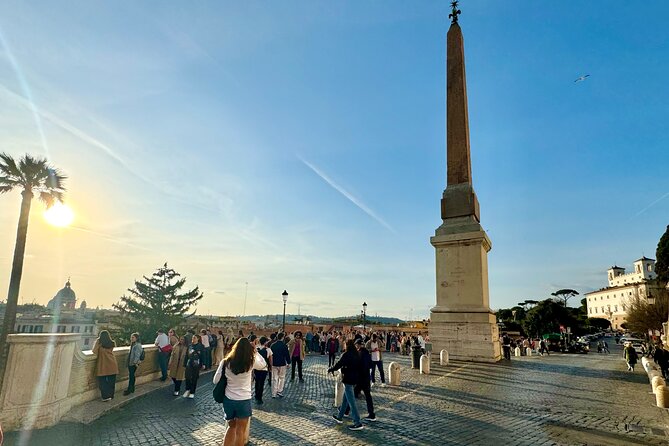
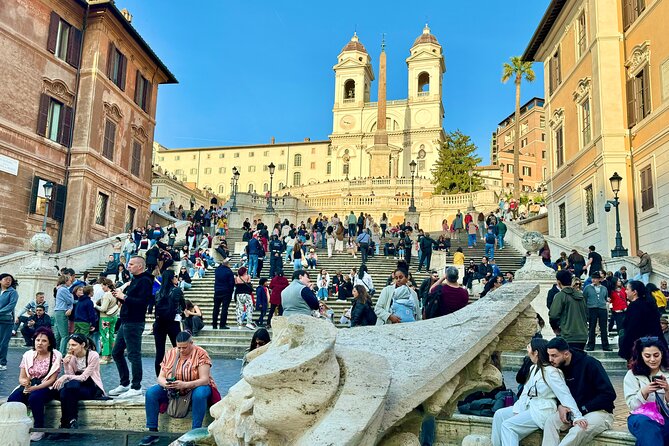
You meet at Piazza della Trinità dei Monti, 380, 00187 Roma RM. The schedule expects you to show up 15 minutes before departure, so plan to arrive early and take a quick breath at the top before the group starts moving.
From this start point, the tour naturally orients you toward the Spanish Steps, because the church above the stairs, Santissima Trinità dei Monti, dominates the view. That matters because the Spanish Steps are not just a staircase, they are a theatrical connection between streets, embassies, and the politics of who gets to display taste in Rome.
Expect some walking and some uneven ground. The tour includes multiple brief stops, usually around 10 to 15 minutes each, which means you get “watch, learn, move” rather than long museum-style pacing.
Trinità dei Monti and the Spanish Steps: what to actually notice
The church of Santissima Trinità dei Monti sits just above the top of the stairs, and it is closely tied to the Spanish Steps complex. The stairs themselves are famous for their monumental scale, 135 steps, linking the Piazza di Spagna area at the bottom to the Piazza Trinità dei Monti at the top.
What I’d focus on during this segment is the geometry. The Spanish Steps are designed to pull your eye up the slope, but they also function as a social stage where diplomats, patrons, and visitors met over time. As you climb, you are not just exercising, you are seeing why Rome builds sightlines like this.
The guide experience is a big part here. In past tours with this operator, guides such as Andrada and Sabrina have been praised for making the history feel personal and for explaining art and Baroque influences in plain English. That kind of talk turns a climb into a mini lesson, and your photos look better because you know what you are aiming for.
Practical tip: if you want your photos to look less chaotic, aim for a few seconds during the quiet moments when the group shifts. The steps are busy, so timing and stance matter.
Trevi Fountain without ticket stress: your best photo spots
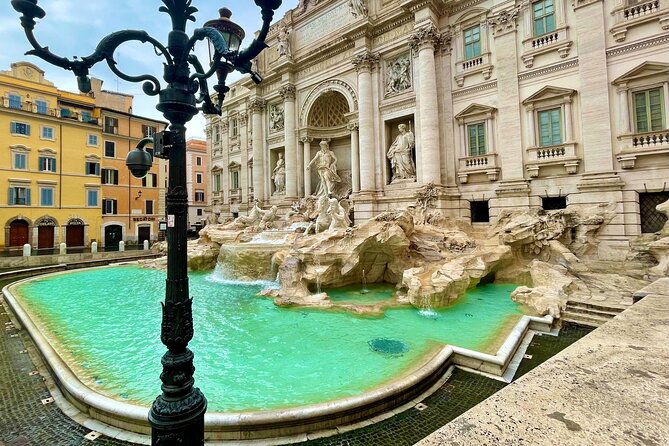
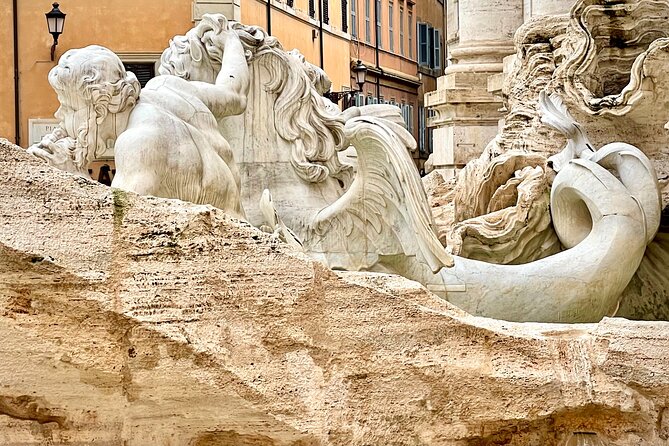
Trevi Fountain is the big one on this walk, and the tour makes it easier by including admission for this stop. That means you can focus on the fountain itself instead of handling rules while everyone else is standing around.
The fountain is huge and unmistakable, a towering Baroque masterpiece designed by architect Nicola Salvi and completed in 1762. It is also one of the largest fountains in Rome, so even if you have seen it in photos a hundred times, up close it hits differently because you can actually see the sculptural details.
When you are standing there, try to shift your attention from the legend to the design. Look at how the composition pulls your gaze across the water surface and upward. This is where a good art historian guide is worth every penny, because you will start noticing symbols and styling choices you would normally miss.
Also, plan for lines and crowding. This is why the tour gives you only about 10 minutes at the stop. It is long enough to see, but short enough that you are not trapped waiting. If you care about capturing the classic angle, treat this as your first attempt, then keep walking and enjoy the rest of the sights while the group moves.
Pantheon outside: the one-stop “architecture decoder”
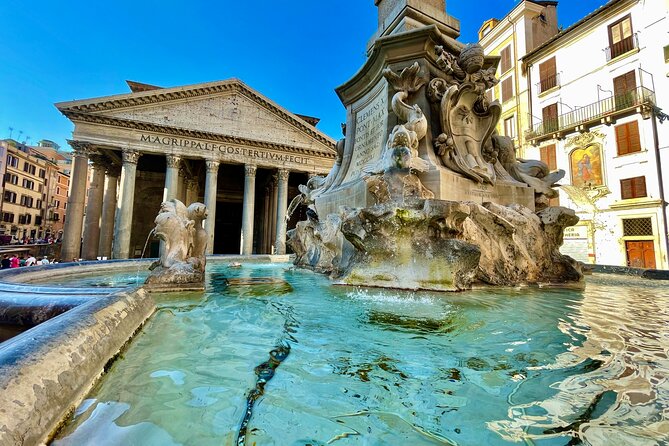
The Pantheon stop is listed as an outside visit, not an entry. That is fine, because the outside still gives you plenty to chew on, especially if your guide is talking about Roman engineering and later Catholic reuse.
Built on the site of earlier temples, the current Pantheon is tied to Hadrian’s era and is usually associated with a date around the early second century. The building’s story matters because it explains why this place survived and kept changing roles over time.
I like this kind of stop because you can get the impact without paying ticket time or losing the group. You stand, you look, you listen, then you move on. Rome is full of “arrive, stare, leave” places, and the Pantheon is one of the better ones to do that with because it still rewards observation.
If you want to be extra strategic, arrive at the outside view with a simple goal: identify the scale, the entry shape, and how the façade relates to the street. Rome does this all the time, it frames monuments like they belong to the city, not the other way around.
A few more Rome options worth a look

Piazza Navona and Fontana dei Quattro Fiumi: Bernini’s drama
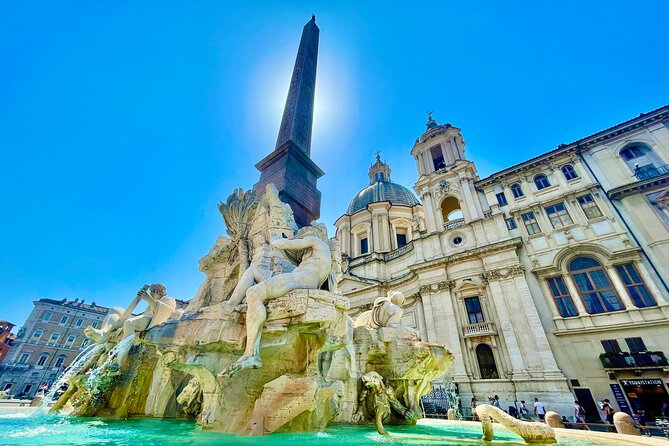
Piazza Navona is a former stadium site that became a public stage for games and later a showcase for Baroque design. You can see the oval shape in the layout, and you can feel how the square works as a backdrop for crowds, street life, and big religious commissions.
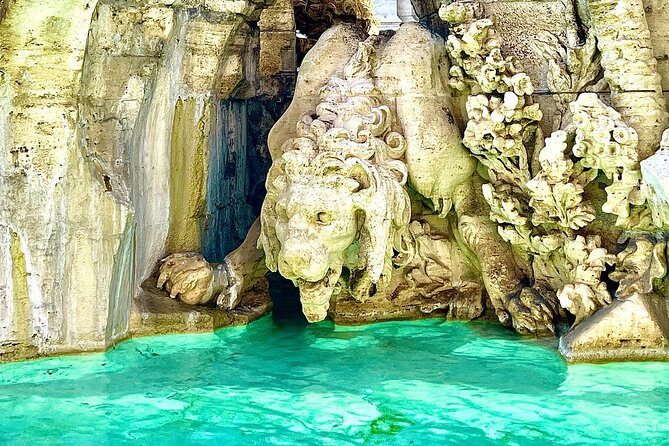
The Fountain of the Four Rivers, Fontana dei Quattro Fiumi, sits right in the piazza. It was designed in 1651 by Gian Lorenzo Bernini for Pope Innocent X, and the patronage story is part of why the fountain feels like more than decoration. It is art commissioned to project power, taste, and worldview.
During this stop, I’d lean into symbolism and composition. The “four rivers” theme is not random, it is a statement about the world and Rome’s place in it, and the guide can point you to what to look for in the details. That’s also one place where the guide style really affects your experience. Past guides connected this stop to broader art history, and that helped the fountain feel like a piece of Rome’s larger visual language instead of a static stop.
You will have about 15 minutes here, enough time to take pictures, notice the setting, and hear the story without feeling rushed. You also avoid the mistake people make when they spend too long trying to get the perfect photo and miss the explanation.
Ponte Sant’Angelo and Castel Sant’Angelo views: Tiber-side perspective
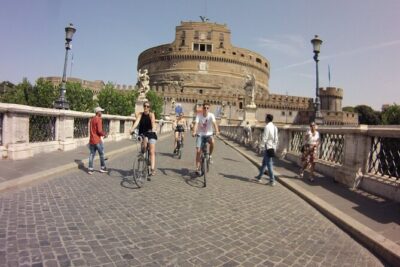
After Piazza Navona, the tour brings you toward the Tiber. Ponte Sant’Angelo is a Roman bridge completed in 134 AD, built to connect the city to the mausoleum of Hadrian, now Castel Sant’Angelo.
The bridge is pedestrian, and it is faced with travertine marble. It has five arches spanning the river. The best part is that you get a scenic view of Castel Sant’Angelo while you are walking, so the monument doesn’t feel isolated from the city like a lot of rooftop museum stops do.
Even though your time at this area is short, this is a smart moment in the tour arc. You started with stairs and fountains, then shifted to a big religious and artistic zone. This is the “city river” section, where Rome looks more practical and grounded, because the Tiber is literally the spine of movement and history.
The tour also includes time at St. Angelo Bridge, and that segment is marked with admission free. If you like city views, this is usually where you get your best “postcard but not staged” moment.
St. Peter’s Basilica stop: a quick, iconic look
St. Peter’s Basilica is included as a scenic view stop, with about 1 minute noted. Admission is free for this stop, which helps you avoid wasted time checking anything complicated.
This is not an in-depth visit. It is a classic “see it and orient yourself” moment. In a short tour like this, that is the right strategy. You get the reference point for your later Vatican days, and you leave with a strong visual memory even if you plan to come back for a longer visit.
If your main goal is to understand Rome in one day, this is a useful capstone. It tells you what Rome’s power center looks like, in a single glimpse, while you are already walking through the city’s baroque and classical layers.
What the art historian guide actually changes
The tour’s biggest advantage is not the number of monuments, it is the guide’s job: turning those monuments into something you can interpret. The description calls for a professional art historian guide available for about 2.5 to 3 hours, and the headsets help you catch the details even when the group is moving.
This is exactly why guides like Sabrina, Andrada, and Alfredo have earned such strong praise on past versions of this concept. The consistent theme is clarity and enthusiasm, plus explanations that connect Baroque style and Roman political choices to what you see in front of you.
If you like art history, you get more than dates. You start learning how patrons shaped design, why Rome repeats themes in different eras, and why certain squares and fountains feel like stages. If you are not an art-history person, the storytelling still helps because it gives you a simple mental map for what you are seeing.
One small but important plus: guides can adjust pacing. In one case, a guide helped a guest with knee problems by changing the walking pace and using shortcuts. You should still expect walking, but that kind of responsiveness makes the experience feel less rigid.
Price and value: is $69.84 a good deal?
For $69.84 per person, you are paying for a guided highlights route that lasts about 2 to 2.5 hours, includes headsets for clear listening, and includes Trevi Fountain admission. Group discounts also apply, which can lower the price further depending on how you book.
Here’s how I think about value. If you would otherwise spend money on a private guide, you are often paying a lot more for similar coverage time. If you would otherwise just wander without context, the guide can turn your time into something you understand, not just something you pass through.
The one place you should be realistic is that this tour does not cover long entry times or deep museum experiences. Some stops are outside views, and not every location lists an admission ticket as included. You are buying efficient orientation and art context, not a full day of indoor ticketed sights.
Pacing, comfort, and who this walk fits best
This is best for you if you want an introduction that actually helps you navigate the city. First-timers often love this format because you leave with a mental route from the Spanish Steps area to Trevi, the Pantheon zone, Piazza Navona, and the river view toward Castel Sant’Angelo and St. Peter’s.
It is also a good fit if you care about art and architecture, especially Baroque work. The Four Rivers Fountain and Trevi are your clues. With the guide explaining what you are looking at, those stops feel more alive.
It is not ideal if mobility is an issue. The tour is not recommended for travelers with motor difficulties or walker users. You should also consider the smart casual dress code and the fact that you will be outdoors for most of the walk.
If weather turns ugly, the activity can be affected, with changes or alternatives possible. Plan to keep expectations flexible.
Should you book Rome Highlights Tour: Squares and Fountains?
I’d book this if your goal is to see the classics fast and understand them while you are there. The mix of Spanish Steps, Trevi, Piazza Navona, and quick monument views gives you a strong Rome foundation in half a day, and the professional art historian guide plus headsets are the kind of details that make a short tour actually work.
I would skip it if you want lots of indoor time, or if walking is a challenge. Also, check your expectations about admissions. Trevi Fountain is included, but other stops are marked as outside or free, so you may still pay nothing for some places while paying for nothing is not the point.
Bottom line: this is a high-signal highlights walk. If you go in ready to listen and look closely, it is one of the best ways to get oriented in Rome before you start making your own routes.
FAQ
How long is the Rome highlights walking tour?
The tour is about 2 hours to 2 hours 30 minutes.
Where do I meet, and where does the tour end?
You start at Piazza della Trinità dei Monti, 380, 00187 Roma RM, Italy. The tour ends at Piazza di Ponte Sant’Angelo in front of Castel Sant’Angelo Bridge.
Is the tour in English?
Yes, the tour is offered in English.
Is Trevi Fountain admission included?
Yes, admission ticket for Fontana di Trevi is included.
What admissions or entry fees are included or free?
Fontana dei Quattro Fiumi is listed as not included. The Pantheon stop is an outside visit and is listed as not included. St. Angelo Bridge is free. St. Peter’s Basilica is listed as free for the scenic view stop.
Are food and drinks included?
No. Food and drinks are not included unless specified.
Is the tour suitable for people with mobility issues?
The tour is not recommended for travelers with motor difficulties and walker users.
What is the cancellation policy?
Free cancellation is available if you cancel up to 24 hours in advance for a full refund.
Latest additions from Rome
- Rome: Testaccio Market Food Tour with Street Food & Wine★ 5.0 · 8 reviews
- Exclusive Pasta & Tiramisu Class with Wine near by Colosseum★ 5.0 · 8 reviews
- Private Professional Photoshoot in Rome★ 5.0 · 8 reviews
- Loreto “Shrine of the Holy House of the Virgin Mary” Private Tour from Rome★ 5.0 · 8 reviews
- Rome Day to discover Florence and Pisa Hotel Pickup★ 4.5 · 8 reviews
- Rome: Christmas Nativities and Angels Tour★ 3.1 · 8 reviews
- Guided Tour of Vatican Museums and Sistine Chapel★ 5.0 · 8 reviews
- Rome: Cooking Class of fresh Pasta and Tiramisu Cake★ 5.0 · 8 reviews
Rome in a Day Tours, compared.
Rome in a Day Group Tour with Vatican Museums and Colosseum
Read our review →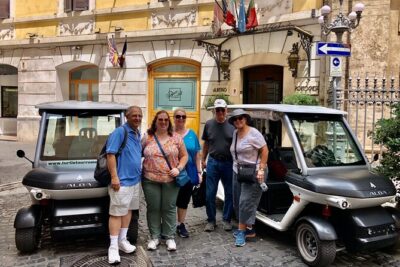
Rome Highlights by Golf Cart Private Tour
Read our review →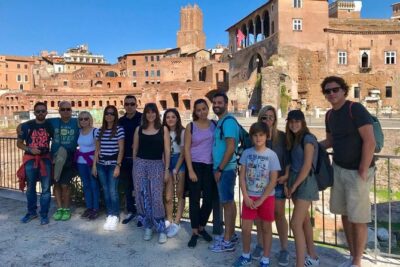
Best of Rome Walking Tour including Trevi Fountain
Read our review →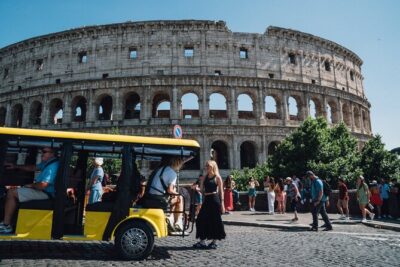
Golf Cart Small-Group Guided Tour: Rome City Highlights
Read our review →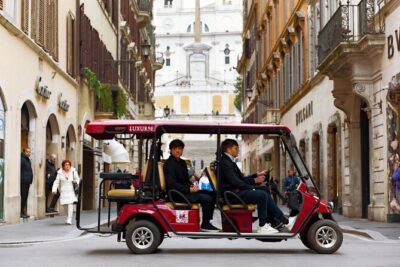
Rome Highlights & Hidden Gems Guided Walking Tour
Read our review →Browse the lists this tour appears in