
Reviewed · GOLF CART TOURS IN ROME
Rome Golf Cart Tour: Highlights of the Eternal City
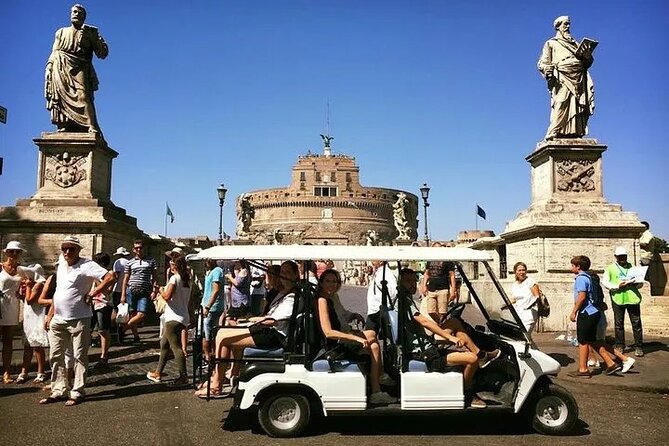
A golf cart makes Rome feel manageable. In about 3 hours, you sweep past big sights and quieter streets with an English-speaking driver on a private ride.
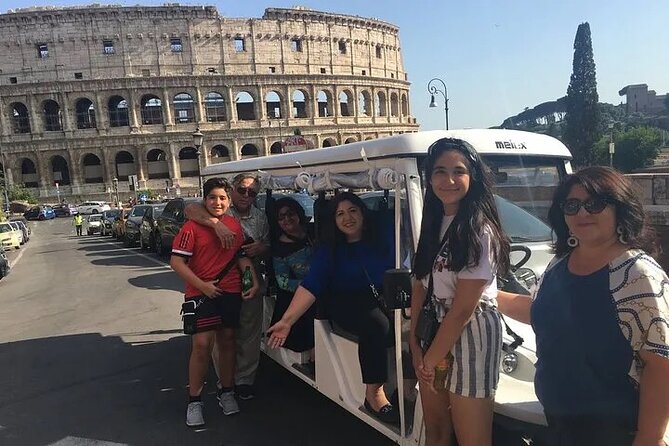
You get an easy start with pickup from your central hotel, then cruise in a golf cart or eFiat instead of grinding through traffic and cobblestones on foot.
What I really like is the way the route mixes top classics with less frantic streets, so the day feels efficient without feeling rushed. The Pantheon, Piazza Navona, and Trevi Fountain all get short, well-placed moments, and guides like Francesco and Yvonna are often praised for making the stops make sense, not just look pretty.
One thing to consider: each stop is brief, so if you want long museum-style time, you will need to plan follow-up visits. Also, parts of central Rome involve bumpy pavement, so go in expecting a little jostle even with the comfortable ride.
In This Review
- Quick hits for your Rome golf cart ride
- Why a golf cart works so well for first-time Rome
- Pickup, eFiat seats, and slipping past traffic the smart way
- Pantheon in 15 minutes: the trick is seeing it, then moving on
- Piazza Navona: baroque Rome in one concentrated slice
- Trevi Fountain and Spanish Steps: two classics, timed for photos
- Campo de’ Fiori: a different kind of Rome moment
- Villa Borghese and Palatine Hill: the Roman layers behind the scenes
- Circo Massimo and Aventine Hill: long views of ancient entertainment and power
- Piazza del Popolo at the city gate: reset your eyes
- Chiesa di Sant’Ignazio di Loyola: baroque detail without a museum day
- Price and time: is $163.26 per person worth it?
- Who should book this, and who should skip it?
- Should you book this Rome golf cart tour?
- FAQ
- How long is the Rome golf cart tour?
- How much does it cost per person?
- Is pickup from my hotel included?
- Where does the tour start?
- What language is the tour?
- Are entry tickets included?
- Is this a private tour?
- Is there a mobile ticket?
- Is free cancellation available?
- Is the tour suitable for most people?
Quick hits for your Rome golf cart ride
- Central hotel pickup for a low-stress start (if you choose the private experience)
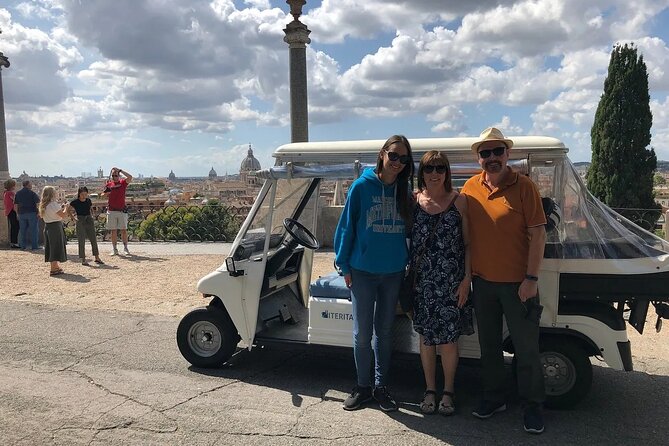
- Golf cart or eFiat transport, built for moving through Rome’s tighter lanes
- Quieter backstreets to reduce time lost to traffic
- Short photo stops at major landmarks like Pantheon, Navona, and Trevi
- English-speaking driver who can answer questions on the go
- Multiple departure times, so you can fit it into your schedule fast
Why a golf cart works so well for first-time Rome
Rome can be a lot on your feet. You step out, you crane your neck, you dodge scooters, you walk uphill, and suddenly the day is gone. This tour flips the formula: you still see the icons, but you spend your energy on moments that matter.
A big win is that the ride is private to your group. That means you can focus on your own pace, your own questions, and your own photo priorities, instead of feeling like you are just being carried past stops.
And because the plan is built around moving through Rome efficiently, you get to cover ground without doing a full day of nonstop walking. If you want the highlights early in your trip, this is the kind of outing that helps the rest of your Rome days click into place.
More Golf Cart Tours in Rome
- Rome by Golf Cart Private Tour: Beyond the Landmarks
★ 5.0 · 4,361 reviews - Rome on a Golf Cart Semi-Private Tour Max 6 with Private Option
★ 5.0 · 2,502 reviews - Rome Highlights by Golf Cart Private Tour
★ 5.0 · 2,379 reviews - Rome: Golf Cart Tour with Artisanal Gelato Tasting
★ 4.8 · 1,396 reviews
Pickup, eFiat seats, and slipping past traffic the smart way
If you book the private experience, you can start with pickup from your central Rome hotel. That removes one of the biggest hassle factors in Rome: figuring out where to meet and how to get there on time.
Once you are with the driver, the method is simple. You get transported between sights, then you step out for quick windows to take in the setting. The route is designed to use calmer streets, which is a practical difference. In Rome, time equals energy, and traffic equals lost energy.
You’ll also notice the driver plays an active role. In multiple guide examples shared with this tour, people mention the guide being friendly, flexible, and ready to answer questions while you move. In other words, you are not just sitting in a vehicle watching landmarks float by.
For comfort, the cart experience tends to be easier on tired legs. Still, expect some bumpy pavement during photo stops and quick transfers, since you are in central Rome.
Pantheon in 15 minutes: the trick is seeing it, then moving on
The Pantheon is one of those places where just being there feels like you walked into a time capsule. It started as a Roman temple commissioned under Marcus Agrippa, later becoming a Catholic church in 609 AD.
You get about 15 minutes there. That is not enough for a slow, lingering visit. But it is enough to do the key thing: orient yourself. Look up at the dome. Take in the scale of the interior. Feel the mix of Roman engineering and later religious use. Then, when you are done, you are back on the cart for the next stop before the crowds turn your attention span into dust.
One practical tip: treat this stop like a checklist moment. You want to leave with a mental picture of what the Pantheon actually feels like, so you can enjoy every other church and square on your trip with better context.
Piazza Navona: baroque Rome in one concentrated slice
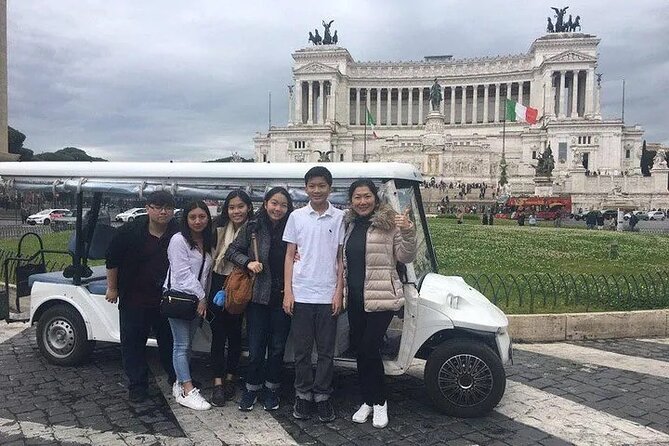
From the Pantheon, you roll to Piazza Navona, with about 15 minutes on the ground. This square is famous for its baroque layout, built on the remains of the Stadium of Domitian.
Navona works well for a short stop because it is basically designed to be looked at from multiple angles. You can watch street life, frame the fountains, and soak in the way the buildings curve the space. You also get a chance to reset your eyes after the Pantheon’s dome and interior.
A quick reality check: Navona is popular. Even if you only have a small slice of time, plan to prioritize photos first, then let the square’s atmosphere land second. That sequence keeps the time from slipping away.
Trevi Fountain and Spanish Steps: two classics, timed for photos
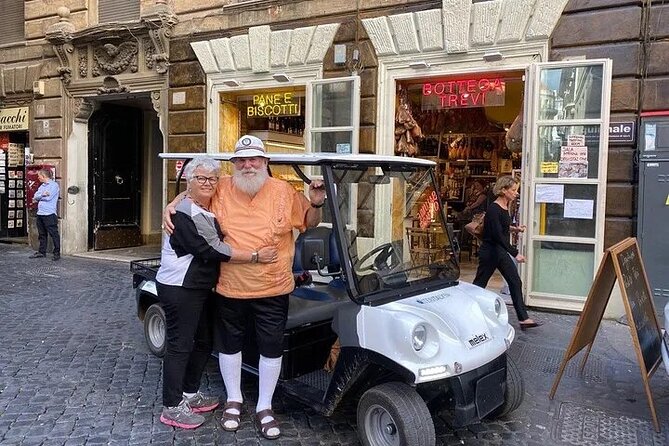
At the Trevi Fountain, you get about 10 minutes. The fountain itself is 18th century, designed by Nicola Salvi and completed with contributions from other artists over time. It is also one of those sights where the location matters as much as the sculpture. You are not just seeing water, you are seeing a postcard scene with crowds, arches, and street energy.
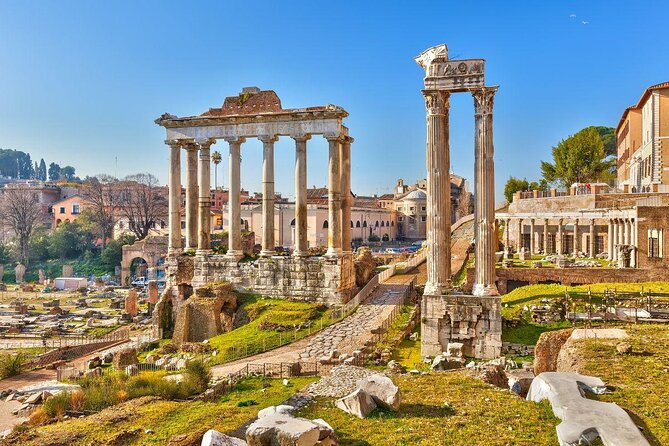
Next comes the Spanish Steps, about 5 minutes. The steps climb between the Piazza di Spagna and Piazza Trinità dei Monti, with the church above shaping the skyline. In a short visit, you are really doing two things: getting the geometry of the climb and capturing the view points where you can see the stairway as a whole.
Here is how to get the most out of small timing windows:
- Take one wide shot that shows the steps or the fountain in context.
- Take one close photo that shows texture or crowd lines.
- Save your third photo for when you feel you have the scene right.
If you do that, even brief stops feel satisfying instead of rushed.
A few more Rome options worth a look
Campo de’ Fiori: a different kind of Rome moment
Your next quick window is Campo de’ Fiori for about 5 minutes. This is a lively square with colors, voices, and a sense of local rhythm. In the center, you’ll see the statue of Giordano Bruno, burned alive in the square.
Campo de’ Fiori is valuable on a cart tour because it offers atmosphere, not just monuments. It helps you remember that Rome is not only about famous facades. It is also where daily life happens next to big history.
If you enjoy street scenes, this is one of the stops that can unexpectedly become a highlight, especially if you get a moment where the square looks like it is flowing naturally.
Villa Borghese and Palatine Hill: the Roman layers behind the scenes
You then reach Villa Borghese, a large public park in Rome with buildings, museums, and major attractions. It’s the kind of place that often gets skipped if your only plan is to chase the loudest landmarks. But here, it becomes a breather in the middle of a packed route.
After that comes the Palatine Hill, described as the centremost of the seven hills and called the first nucleus of the Roman Empire. Even if you do not have time for a long dig into ruins, this stop still works because it gives you a sense of where Rome’s power started.
What you should do with Palatine in a short time:
- Look at the hill’s position and imagine the city structure around it.
- Think of it as a vantage point, not just a museum label.
- Use the cart ride to compare it to other areas later in your trip.
This stop is how you connect the icons you see with the geography that shaped everything.
Circo Massimo and Aventine Hill: long views of ancient entertainment and power
The tour continues to Circo Massimo, about 5 minutes. This was the ancient chariot racing stadium and mass entertainment venue in Rome, described as the first and largest of its kind. Even with limited time, Circo Massimo is a great place to visualize how big Rome’s public spectacles were.
Then you head to the Aventine Hill, one of the seven hills of ancient Rome. It belongs to the modern ward of Ripa, and it gives you another layer of how the city developed around its hills.
These stops are not as instantly crowd-stopping as the Pantheon or Trevi, but they reward you if you like understanding the city’s structure. They also help you feel less like you are only seeing Rome from the most famous angles.
Piazza del Popolo at the city gate: reset your eyes
Next is Piazza del Popolo, about 5 minutes. It sits inside the northern gate once called Porta Flaminia, and the name literally points to the people.
This stop is a smart pacing move. After ancient hills and monumental squares, you get a cleaner, more open feeling. You can take a breath, check your bearings, and reset your photos for the last part of the tour.
If you like to understand how neighborhoods connect, this is one of the best “glue stops” because the square relates to a former gate, not just a building.
Chiesa di Sant’Ignazio di Loyola: baroque detail without a museum day
Finally, you visit Chiesa di Sant’Ignazio di Loyola, about 5 minutes. This church’s design traces back to plans involving Jesuit mathematician Orazio Grassi and others, with details connected to Carlo Maderno. The facade and layout draw inspiration from nearby church models, including elements like pilasters, columns, large windows, and niches.
This stop matters because it gives you baroque architecture detail when your schedule otherwise only allows quick looks. You are not trying to master the whole style in five minutes. You are getting a taste that makes later churches feel less random.
Look for contrasts: where the facade draws your eye upward, where the columns and window rhythms repeat, and how the church’s design language fits the surrounding street scale.
Price and time: is $163.26 per person worth it?
At $163.26 per person for about 3 hours, this tour is not the cheapest way to see Rome. But it is often excellent value when you weigh what you are buying: time, comfort, and an efficient first pass through the city.
Here’s what makes the price easier to justify:
- Private tour format means you are not sharing a guide with unrelated groups.
- Pickup from your central hotel is included for the private experience, saving you transit time.
- An English-speaking driver can explain what you are seeing while you move between sites.
- Multiple departure times help you avoid wasting half a day waiting.
What to keep in mind:
- Entry tickets are listed as not included, even though many of the included stops are marked as admission ticket free. That usually means you are not paying for these specific sights, but you should still be prepared that some additional things you choose later may cost extra.
- Lunch is not included, so you’ll want a plan for food afterward.
For my money, the strongest case is when you are short on time, want a low-stress introduction, or have limited mobility and do not want to string together long walks between far-apart landmarks.
Who should book this, and who should skip it?
This is a great fit if:
- You want a first-day or mid-trip orientation to Rome.
- You prefer fewer long walks, especially between major sights.
- You like history told in a practical way while you see the city’s layout.
- You are traveling with kids or anyone who gets tired easily, since the cart covers the distance.
You might want to skip it if:
- You want long time inside multiple major sites, like you would on a full-day walking tour with timed museum visits.
- You are the type who hates any schedule at all, because stops are brief by design.
Also, pick your timing. The tour notes numerous departure times, which is a big deal in Rome when weather, heat, and crowd levels change quickly.
Should you book this Rome golf cart tour?
If you want a smart, efficient first look at Rome, I think this tour is a strong yes. The best parts are the combination of comfort, private pacing, and a route that hits big-name landmarks plus quieter, local-feeling streets.
I would book it if you can use the tour as a foundation. You see Pantheon, Navona, Trevi, the Spanish Steps, and major viewpoints, then you can return later on your own for the places that hook you most.
But if you already know you want slow museum time and deep interior visits, pair this with other plans. Treat it like your Rome map with photos, not like your only Rome day.
FAQ
How long is the Rome golf cart tour?
It runs for about 3 hours.
How much does it cost per person?
The price is listed at $163.26 per person.
Is pickup from my hotel included?
Pickup is offered from your central Rome hotel for a private experience.
Where does the tour start?
The start point is Pic Nic – Just Amir srl at Piazzale delle Canestre, SNC, 00197 Roma RM, Italy.
What language is the tour?
The driver provides the experience in English.
Are entry tickets included?
Entry tickets are not included. Some stops on the route are marked as admission ticket free.
Is this a private tour?
Yes. Only your group participates.
Is there a mobile ticket?
Yes, a mobile ticket is offered.
Is free cancellation available?
Yes, you can cancel for a full refund up to 24 hours in advance of the experience start time.
Is the tour suitable for most people?
It is listed as most travelers can participate, and service animals are allowed.
Latest additions from Rome
- Guided Tour Vatican Museums & Sistine Chapel★ 4.1 · 30 reviews
- Exclusive Rome by Night Vespa Tour★ 5.0 · 30 reviews
- Vatican: St.Peter’s Basilica & Dome – Reserved Entry & Tour★ 4.1 · 30 reviews
- Transfer Rome to Airports★ 4.5 · 30 reviews
- Rome street art tour: off the beaten path with a local guide★ 5.0 · 30 reviews
- Tivoli, Hadrians Villa and Villa d’Este, a charming day trip from Rome★ 4.5 · 30 reviews
- Rome Food Tasting with Wine Pairing Italian Authentic Flavors★ 5.0 · 31 reviews
- Inspirational Cooking on the Roman Chef’s Panoramic Terrace★ 5.0 · 30 reviews
Golf Cart Tours in Rome, compared.
Rome by Golf Cart Private Tour: Beyond the Landmarks
Read our review →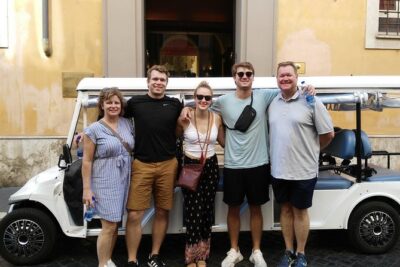
Rome on a Golf Cart Semi-Private Tour Max 6 with Private Option
Read our review →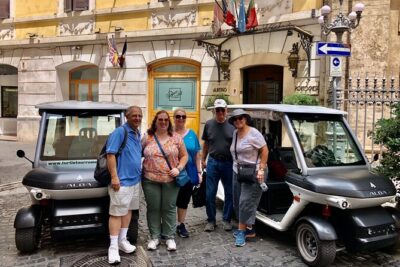
Rome Highlights by Golf Cart Private Tour
Read our review →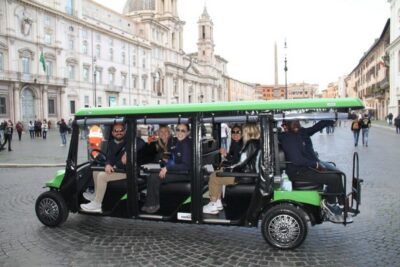
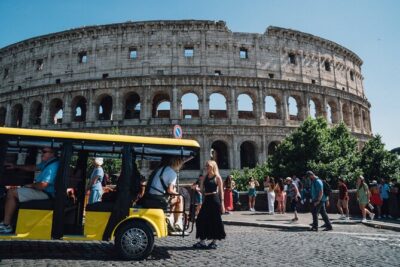
Golf Cart Small-Group Guided Tour: Rome City Highlights
Read our review →
Private/Group 4 Hours Golf Cart SightseeingTour
Read our review →
Browse the lists this tour appears in