
Reviewed · WALKING TOURS IN ROME
Rome: Fountains and Fallen Angels Small Group Walking Tour
Rome turns spiritual on this small-group walk. You trace fountains and churches from Piazza della Repubblica to Trevi Fountain, with a guide like Roberto who connects art, faith, and street-level stories. I especially like the small group size and the way the tour makes Trevi Fountain feel more than a postcard stop.
You also get real time to ask questions. With morning or afternoon departures, it fits your day, and the pace stays easy to follow even though the route is active. Plus, the stops are mostly free to enter, so your money goes to the guide and the walking time, not admissions.
One thing to watch is the church dress code. Shoulders, back, and knees have to be covered to go inside, and the tour involves constant walking, so comfortable shoes matter. There’s also a practical limit: you can view Palazzo del Quirinale, but you cannot enter the building.
In This Review
- Key highlights worth your attention
- Why this Rome fountains-and-fallen-angels walk feels different
- Price and value: what $60.07 really covers
- The meeting point and how to avoid the start-of-tour scramble
- Piazza della Repubblica to Fountain of Moses: small stops with big stories
- Santa Maria degli Angeli e dei Martiri: why the Michelangelo connection is more than a name
- Santa Maria della Vittoria and the art of expression
- Quattro Fontane and San Carlo alle Quattro Fontane: the crossroads you’ll actually remember
- Sant’Andrea al Quirinale and Bernini’s oval church effect
- Palazzo del Quirinale: what you can see, and what you can’t
- Trevi Fountain at the end of the buildup
- Santi Apostoli, Palazzo Venezia, and the calm break you need
- How a 3 to 4 hour walk fits different styles of travelers
- Weather and comfort: the small details that make the day work
- Should you book Fountains and Fallen Angels?
- FAQ
- How long is the Rome Fountains and Fallen Angels walking tour?
- What is the price per person?
- Is the tour in English?
- How big is the group?
- Do I need tickets for the stops?
- Can I enter Palazzo del Quirinale during the tour?
- What should I wear for church visits?
- What happens if the weather is poor?
Key highlights worth your attention
- Max 5 travelers, so you can actually ask questions and get clear answers.
- Faith meets fountain art, with stops tied to major artists like Michelangelo, Bernini, and Borromini.
- Trevi Fountain plus the side streets, including Quattro Fontane and San Carlo alle Quattro Fontane.
- Church interiors are part of the story, not just quick photo stops.
- A guided flow that saves time, so you avoid wandering and missing key details.
Why this Rome fountains-and-fallen-angels walk feels different
If you only hit the big names in Rome, you can end up with a city that feels like a checklist. This tour works because it links two things most people treat separately: fountains and church art. You walk through squares and crossroads, then step into churches where the same themes show up in sculpture, painting, and architecture.
The fallen-angel angle matters too. You are not just looking at pretty buildings. You’re being guided toward how religious ideas shaped what artists built and how symbols were placed in public spaces. That makes even a short stop feel intentional.
And yes, Trevi is still Trevi. But the tour uses the route to “set the table” first, so when you finally reach the crowd magnet, you know what to look for besides the obvious.
More Small-Group Tours in Rome
- Skip-the-Line Vatican, Sistine Chapel & St. Peter’s | Small Group
★ 5.0 · 7,060 reviews - Rome: Colosseum Underground Small Group Guided Tour
★ 4.7 · 4,844 reviews - Rome: Skip the Line Vatican, Sistine Chapel, St Peter Small Group
★ 5.0 · 3,847 reviews - Rome on a Golf Cart Semi-Private Tour Max 6 with Private Option
★ 5.0 · 2,502 reviews
Price and value: what $60.07 really covers
At about $60.07 per person for a 3 to 4 hour small-group walking tour, the price is fair for the structure. Almost every stop lists admission as free, so you are paying mainly for the guide, the direction, and the interpretation.
Also, this is not a giant bus-style loop. The group limit is 5 travelers, which changes the experience. You get less time stuck waiting and more time learning. If you’ve ever done Rome with no guide, you know the city can be overwhelming. Here, the guide gives you a way to “read” Rome, instead of just seeing it.
The biggest value win is that the guide’s explanations turn short walks into high-signal moments. Stops range from about 5 to 20 minutes each, so you’re not stuck for ages at one site. Instead, you get a sequence that keeps momentum while still covering meaningful art.
The meeting point and how to avoid the start-of-tour scramble
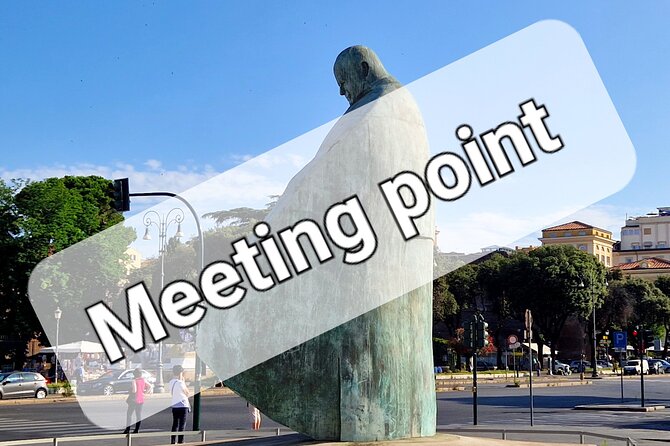
The tour starts at Statua di San Giovanni Paolo II in the Esquilino area, and it ends at Piazza Venezia (near the bus station Piazza Venezia). That’s a helpful flow because you end in a central spot.
Still, Rome meeting points can be tricky, especially when the instruction is “by a statue” and the statue sits in a busy transit zone. Your best move is simple: before you go, open the map location, zoom in, and identify a nearby landmark you can recognize quickly. If you arrive early, use that time to confirm you’re at the correct spot, not just to wait.
Once you’re together, the tour starts on time. The guide also keeps an eye on the schedule to stay aligned with what you can see and enter.
Piazza della Repubblica to Fountain of Moses: small stops with big stories
The route kicks off at Piazza della Repubblica, also known as Piazza Esedra. This area is a strong “Rome anchor” because you can see how the city organizes space: monuments, streets, and sightlines pulling you in multiple directions.
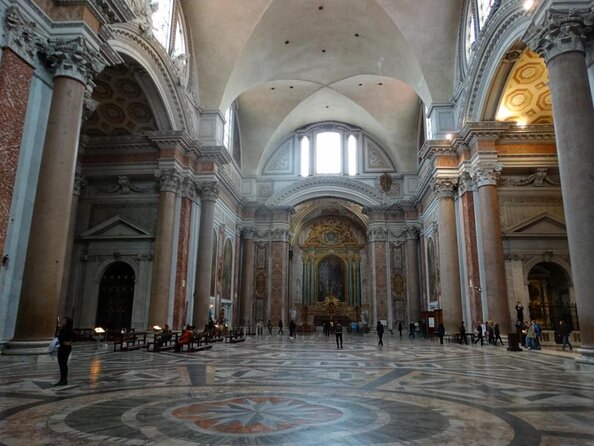
From there, you move toward Santa Maria degli Angeli e dei Martiri, where the design is the first big wow. You’re walking into a church that blends into the remains of ancient Baths. That mix is the point: Rome constantly reuses and reframes older layers. It is a practical lesson in how the past never fully leaves, it just gets built over.
Then you get a quick look at the Fountain of Moses, designed by Domenico Fontana. It’s one of those stops that can be easy to miss if you’re moving fast. With a guide, you learn how the fountain fits the broader artistic language of the city. Even a short 5 minute pause becomes a meaningful “symbol check” rather than just a photo.
Santa Maria degli Angeli e dei Martiri: why the Michelangelo connection is more than a name
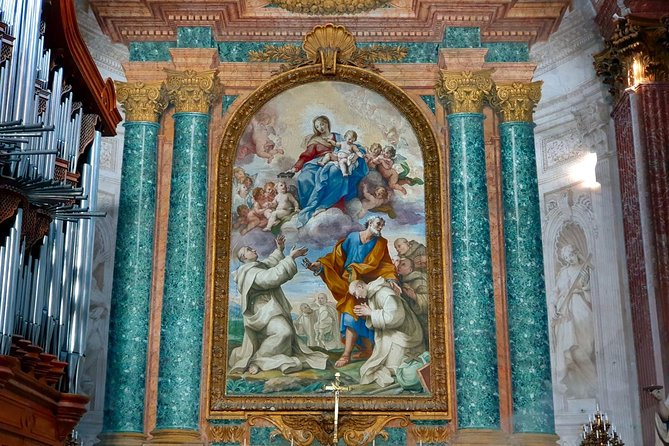
This church is where the tour’s art focus really starts to click. Michelangelo designed it, and the setting matters just as much as the credit line. The church’s structure is tied into the remains of the Baths, so you get a visible reminder that Rome’s religious spaces often grew out of existing urban muscle.
Practically, this stop is a good one if you like a mix of architecture and story. It’s about 20 minutes, which is enough time to see the main interior impression without feeling rushed into a single viewpoint.
One consideration: churches can vary in how crowded they feel on the day you visit. If it’s busy, use that time to watch for the details the guide highlights, rather than trying to take in everything at once.
More Walking Tours in Rome
Santa Maria della Vittoria and the art of expression
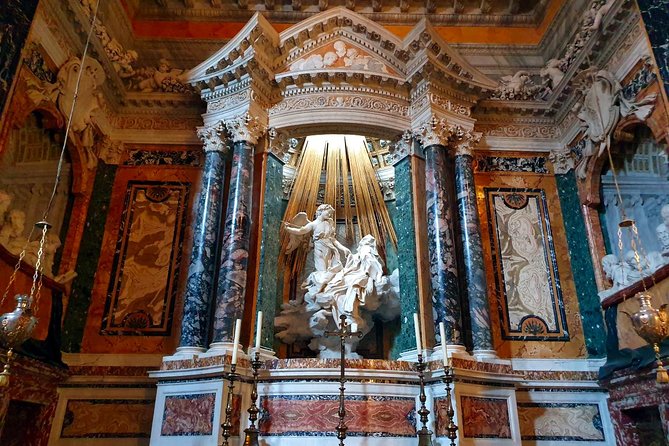
Next comes Santa Maria della Vittoria. This church is known for religious art tied to St. Mary and for one of Bernini’s most famous works: The Ecstasy of Saint Teresa.
Even if you’ve seen Bernini’s art reproduced in books, seeing it in context changes the impact. The guide’s job here is to help you notice what makes this style different: how emotion is staged through form and composition, and how baroque art uses drama to communicate religious meaning.
This stop is also about time balance. It’s around 20 minutes, so you get to look, then you get an explanation that helps your eyes find what you would probably miss alone.
Dress code matters most at church stops. Plan your outfit accordingly: shoulders, back, and knees covered. If you’re wearing a hat, expect to remove it as a sign of respect at sacred sites.
Quattro Fontane and San Carlo alle Quattro Fontane: the crossroads you’ll actually remember
Quattro Fontane is a street-corner classic, famous for the four fountains that define the intersection. This is the kind of place where Rome looks like it’s doing theater. You’re standing where multiple views open up, and the guide helps you see how the fountains create balance in the streetscape.
From there, you head to San Carlo alle Quattro Fontane, designed by Borromini. This is a great “architectural switch” moment. At Quattro Fontane, you’re reading the street. At San Carlo, you’re reading design choices and how they shape your movement through the space.
The stop is about 15 minutes. That’s enough time to absorb the main character of the church, without turning it into a long sit-down experience.
Sant’Andrea al Quirinale and Bernini’s oval church effect
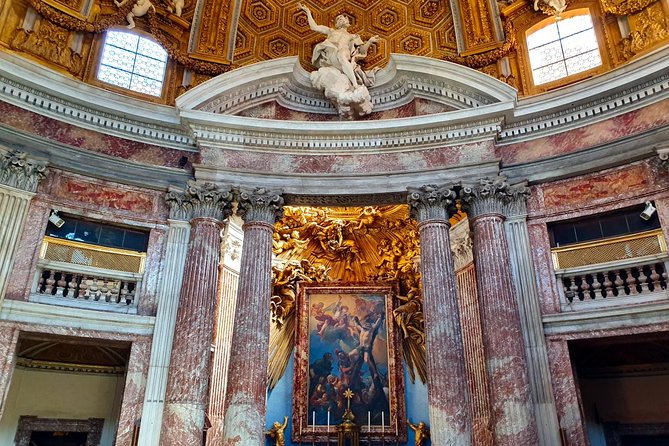
Chiesa di Sant’Andrea al Quirinale is where Bernini’s oval design becomes the star. The tour gives you around 20 minutes here, which is key. Oval spaces can feel confusing if you only look at one spot. With a guide, you’re more likely to understand how the shape guides attention.
This stop also fits the tour’s “fallen angels” logic because baroque church design often aimed to create awe. Even if you’re not religious, you’ll probably appreciate how much intention goes into the form.
If you’re the type who likes art details, this is a strong stop. If you’re mainly chasing big monuments, it can feel quieter. Either way, it’s a refreshing contrast to the louder squares.
Palazzo del Quirinale: what you can see, and what you can’t
You’ll reach Palazzo del Quirinale, the residence of the President of the Italian Republic. You can’t enter the building during the tour, but you still get a look that helps you place this part of Rome in the modern political story.
The stop is short, around 10 minutes. That’s appropriate here because the value is the exterior context and the guide’s framing, not an extended visit inside.
If you’re hoping for multiple interior stops, keep your expectations realistic. This is a route built around interpretation at key points, not a “ticket to everything” day.
Trevi Fountain at the end of the buildup
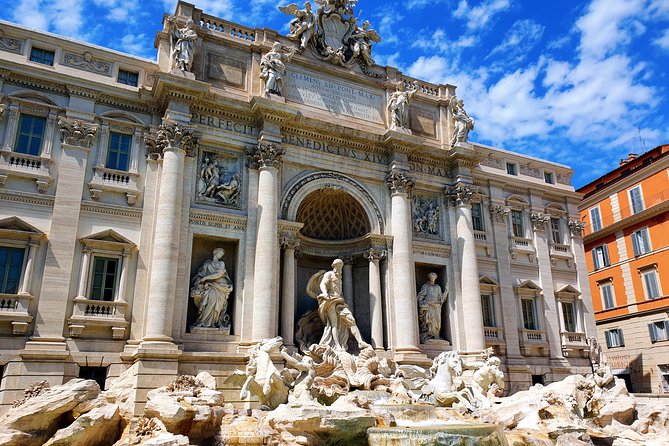
Trevi Fountain is the worlds most famous fountain, and the tour gives you about 20 minutes there. With the earlier stops in place, you’re less likely to feel like you’re just stuck in the usual photo crush.
Here’s what I like about how this works: you arrive knowing the “why,” not just the “what.” The guide connects the fountain to broader artistic and religious themes, so you can look past the surface and notice composition and symbolism.
One practical tip, even with a guide: keep your expectations flexible. Trevi can be crowded. Your best strategy is to pause, listen, then take a few photos once you understand what you’re looking at, rather than trying to shoot while moving in circles.
Santi Apostoli, Palazzo Venezia, and the calm break you need
After Trevi, the route shifts to quieter, church-and-art stops that feel more local. You visit Santi Apostoli, a church known for impressive paintings and the tombs of two Apostles. This stop is about 20 minutes, and it’s another one where the guide’s commentary turns a church visit into something you can actually process.
Then you get to Museo Nazionale del Palazzo di Venezia, described as an idyllic oasis of the “Palazzo Venezia.” This is about 20 minutes too. I like this as a deliberate pacing tool. It’s a chance to slow down, reset your feet, and take in the atmosphere without the constant pressure of standing in the street.
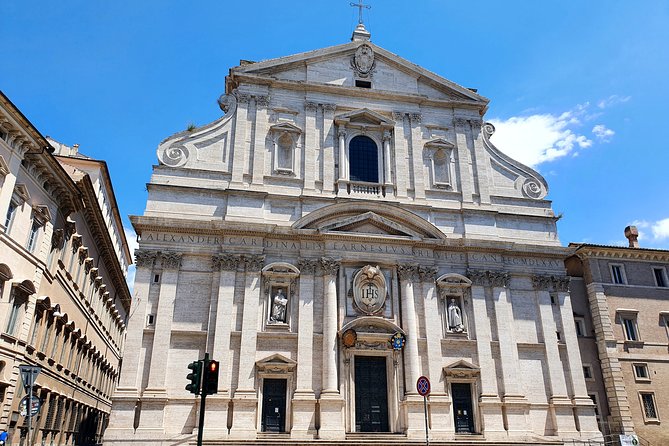
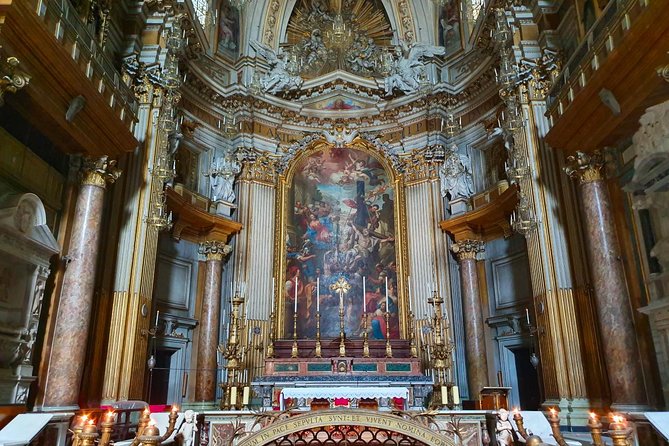
Finally, you go to Chiesa del Gesù, the mother church of the Jesuits and a model building of baroque. This is one of the tour’s “finish strong” moments because baroque design often hits hardest when you see it in a real room, not just in photos.
How a 3 to 4 hour walk fits different styles of travelers
This tour is built for active adults, people who want more than one-time sightseeing. It’s also good for couples, solo travelers, and friends who like small-group conversation.
It may not be ideal if:
- You hate walking and want a mostly seated day.
- You need frequent long breaks.
- You plan to skip church dress code rules, because you’ll need covered shoulders, back, and knees to enter.
On the other hand, if you enjoy art, symbolism, and architecture, you’ll probably get a lot from the “thread” the guide follows across multiple sites.
Language is English, and the experience is designed for most travelers to participate. The route is a walking tour, so wear shoes you trust.
Weather and comfort: the small details that make the day work
This experience requires good weather. If conditions are poor, you’ll be offered a different date or a full refund.
Plan for sun or shade depending on the season. Also plan for church time, which means you may be standing in interiors for explanations. Bring water if you tend to run warm during walking days.
And yes, the route is active. Even though each stop is short, you still move between them. That’s part of the value. Rome changes with each turn, and the walking keeps you connected to how the city actually feels.
Should you book Fountains and Fallen Angels?
I think you should book this tour if you want a Rome day that links art to meaning, not just locations. The best reason to go is the small group format, capped at 5 travelers, which lets you ask questions and actually learn while you walk.
It’s also a solid choice if you like major artists and want to see them in context, Michelangelo’s church design, Bernini’s sculpture and oval church form, and Borromini’s architectural personality. The route includes the big star, Trevi Fountain, but it doesn’t stop there.
Skip it only if you refuse church dress code rules or you want a mostly passive, low-walking sightseeing plan. If you can do covered knees and good shoes, this is one of the more thoughtful ways to experience Rome in a half-day window.
FAQ
How long is the Rome Fountains and Fallen Angels walking tour?
The tour lasts about 3 to 4 hours.
What is the price per person?
The price is $60.07 per person.
Is the tour in English?
Yes, the tour is offered in English.
How big is the group?
The maximum group size is 5 travelers.
Do I need tickets for the stops?
A mobile ticket is provided, and the listed admission for the stops is free.
Can I enter Palazzo del Quirinale during the tour?
No. The building cannot be entered during the tour, but you can view it.
What should I wear for church visits?
To enter the churches, you need to cover your shoulders, back, and knees.
What happens if the weather is poor?
If the experience is canceled due to poor weather, you’ll be offered a different date or a full refund.
Latest additions from Rome
- Rome: Testaccio Market Food Tour with Street Food & Wine★ 5.0 · 8 reviews
- Exclusive Pasta & Tiramisu Class with Wine near by Colosseum★ 5.0 · 8 reviews
- Private Professional Photoshoot in Rome★ 5.0 · 8 reviews
- Loreto “Shrine of the Holy House of the Virgin Mary” Private Tour from Rome★ 5.0 · 8 reviews
- Rome Day to discover Florence and Pisa Hotel Pickup★ 4.5 · 8 reviews
- Rome: Christmas Nativities and Angels Tour★ 3.1 · 8 reviews
- Guided Tour of Vatican Museums and Sistine Chapel★ 5.0 · 8 reviews
- Rome: Cooking Class of fresh Pasta and Tiramisu Cake★ 5.0 · 8 reviews
Walking Tours in Rome, compared.

Guided Food Walking Tour with Wine in Trastevere
Read our review →
Trastevere & Campo de Fiori Street Food Walking Tour
Read our review →
Paranormal Night Walking Tour & Secret Backstreets
Read our review →
Trastevere Street Food Walking Tour with Local Expert
Read our review →
Guided City Center Evening Sightseeing Walking Tour
Read our review →
Small-Group City Highlights Moonlight Walking Tour
Read our review →
Best of Rome Walking Tour including Trevi Fountain
Read our review →Browse the lists this tour appears in