Reviewed · COLOSSEUM TICKETS AND TOURS
Rome Colosseum Ancient Rome Exclusive Private Guided Tour
Rome’s biggest ruins feel manageable with a guide. This is a private walking tour that uses reserved Colosseum entry to help you see the main power spots without getting lost in the chaos.
I especially like two things: the licensed local Blue Badge guide who explains what you’re looking at, and the private pacing, so you can ask questions and linger when something grabs your attention. In the same day, you also cover Palatine Hill and the Roman Forum, not just the Colosseum headline.
One drawback to factor in: you must follow tight entry rules, including a mandatory meeting time, plus the Colosseum can still get delayed because of capacity and security screening. If you have walking limitations, this route may not be a great match.
In This Review
- Key points before you go
- Private Colosseum access plus three big stops, in one smooth loop
- Where to meet, what time to show up, and the ID rules that matter
- Entering The Colosseum: first and second tiers with story cues
- Palatine Hill: Romulus and Remus, Domitian’s hippodrome, and sweeping views
- Roman Forum power centers: Julius Caesar, triumphs, and the Sacred Way
- Between the main sites: arches and monuments you can still photo
- Arch of Constantine
- Arch of Titus
- Basilica of Maxentius and Constantine
- Temple of Venus and Roma
- Curia Julia and Capitoline Hill
- How the guide makes ruins click (and makes time feel fair)
- What to wear, what not to bring, and how long you’ll be on your feet
- Who this tour is for (and who should choose something else)
- Should you book this Rome Colosseum private tour? My take
- FAQ
- How long is the Rome Colosseum, Palatine Hill, and Roman Forum private tour?
- Is this a private tour or a shared group tour?
- What language is the tour offered in?
- Are Colosseum tickets included in the price?
- Where does the tour start and end?
- Do I need a photo ID to enter?
- Is hotel pickup or drop-off included?
- What happens if the Colosseum is closed for events, strikes, or heavy rain?
- Is the experience refundable if I cancel?
Key points before you go
- Reserved Colosseum ticket and reservation fee included so you show up ready to enter.
- Private group experience with time for questions and a more human pace.
- Three core sites in about 3 hours, plus extra monuments along the way.
- Palatine Hill details that actually change how you see Rome, from Romulus and Remus to Domitian’s hippodrome views.
- Security and ID rules are strict, so plan for extra moments at the start.
Private Colosseum access plus three big stops, in one smooth loop
This tour is built for a very specific kind of Rome visitor: the one who wants the headline sites, but also wants the story behind them. You get a private walking plan that links the Colosseum with Palatine Hill and the Roman Forum, then adds nearby monuments so your brain builds a map instead of a pile of ruins.
The price looks high at first glance, until you notice what’s included. The Colosseum entrance ticket is valued at €18 per person and the reservation fee at €2 per person. That means you’re not paying separately for the biggest bottleneck. The rest of the cost mostly covers the guide time and the personalized flow across multiple sites.
Also, this is one of those days where “private” is not just a marketing word. A small group, plus an art and archaeology minded approach from the guide, helps you connect details like architecture, political power, and everyday Roman life. You spend less time staring at stone and more time understanding what that stone used to do.
More Private Tours in Rome
- Rome by Golf Cart Private Tour: Beyond the Landmarks
★ 5.0 · 4,361 reviews - Early Morning Vatican, Sistine, St. Peter’s Semi or Private Tour
★ 5.0 · 3,779 reviews - Rome on a Golf Cart Semi-Private Tour Max 6 with Private Option
★ 5.0 · 2,502 reviews - Rome Private Arrival Transfer: Fiumicino Airport to Hotel in Rome
★ 4.5 · 2,492 reviews
Where to meet, what time to show up, and the ID rules that matter
Meet at Via Labicana, 96, 00184 Roma RM. Your tour ends at the Roman Forum area, 00186 Rome, so plan your own way onward after the walk.
The big practical rule is the mandatory meeting time: you’re required to arrive 15 minutes prior to departure for organizational reasons. When you combine that with the Colosseum’s security screening, it’s smart to be early enough to stay calm.
You also need a valid photo ID for entry. Acceptable options include student ID, driver license, passport, or state ID, and you may be asked for your name, last name, and date of birth at the beginning of the tour. Security can block entry if the details don’t match your ID, so double-check that the names you provide during booking are correct.
One more small thing that can matter: the visit order can shift based on admission availability. So even though the day is planned around the Colosseum, Palatine Hill, and the Forum, the first stop might swap around if tickets need to be timed differently.
Entering The Colosseum: first and second tiers with story cues
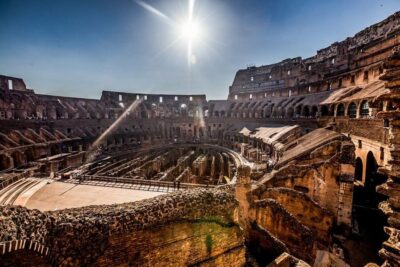
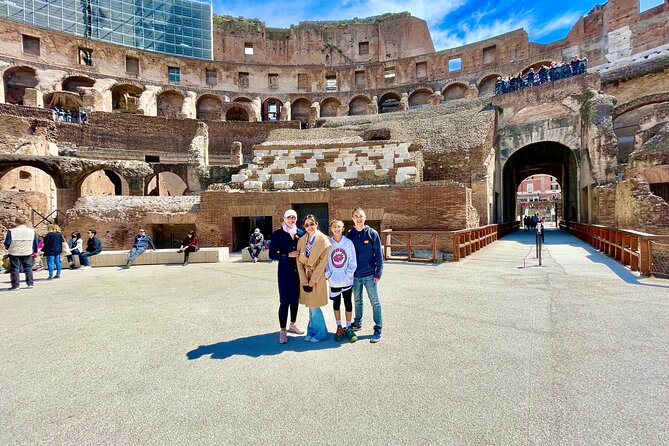
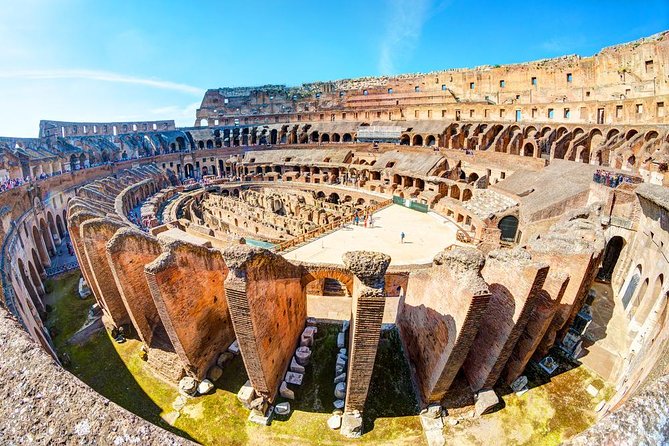
At the Colosseum, you’re led through a focused visit that includes the first and second tiers, with an emphasis on views and context. This is ideal because those upper-down vantage points help you read the building as a complete machine, not just a dramatic exterior.
You’ll learn how the amphitheater worked historically, with explanations that connect art, archaeology, and Roman culture. The goal is simple: when you look at rows, arches, and walls, you should start seeing function, not just scale.
Practical note: the Colosseum has strict rules on what you can bring. Bottles and glasses containers, alcohol, aerosols, backpacks, bulky bags, and luggage or trolley bags are forbidden inside. Medium and small shoulder backpacks may be allowed, but they still get checked with metal detectors and visually inspected. So pack light.
Also, even with pre-booked reservations, delays can happen. The Colosseum can accommodate up to 3,000 people at once, and security and crowding can slow entry. In real life, that means your best friend is a calm start, not a hero sprint.
Palatine Hill: Romulus and Remus, Domitian’s hippodrome, and sweeping views
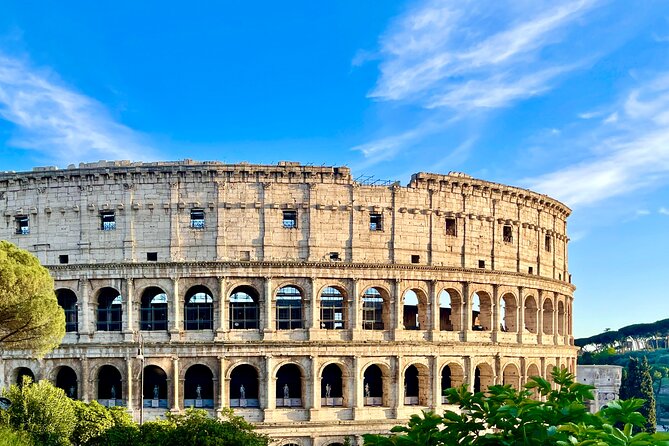
Palatine Hill is where Rome goes from impressive to personal. You walk through the area of an older settlement that dates back to the 9th century BC, which helps you understand how deep the city’s roots run.
Then the guide connects the legend to the landscape. You’ll hear about the myth of Romulus and Remus, the brothers raised by a wolf, and how their story ties into power and control. It sounds like theater until you stand in the right place and realize the Romans told these myths as meaning-making tools.
One of the standout moments here is the Hippodrome, described as an elliptical sunken garden from the Palace of Domitian. That detail matters because it shows that Roman leisure spaces were not just sport venues. They were planned environments designed for spectacle and social status.
You also get the payoff views: you can admire the Circus Maximus and look down toward the valley of the Roman Forum. If you’ve ever wanted to understand Rome as layers instead of isolated monuments, this is the place where that clicks.
Roman Forum power centers: Julius Caesar, triumphs, and the Sacred Way
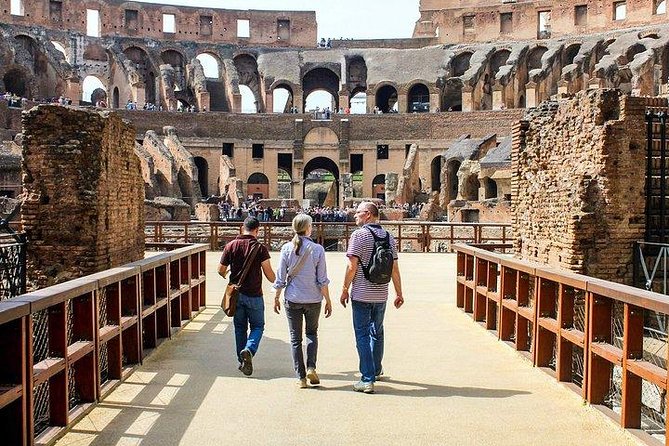
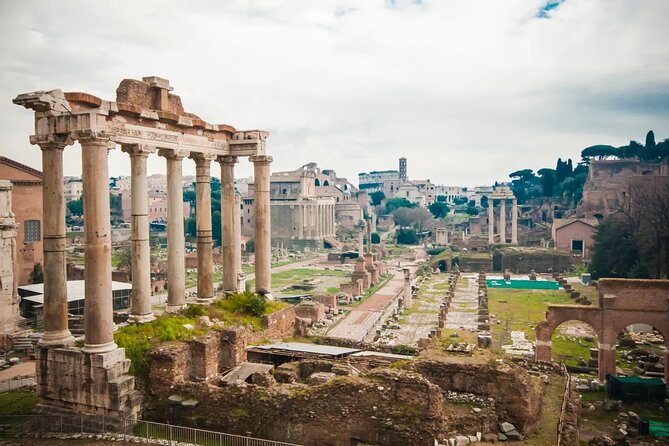
The Roman Forum is one of the most evocative archaeological areas on earth, and this tour treats it like more than a checklist. You visit key ruins including the Temple of Julius Caesar, Arch of Titus, House of the Vestal Virgins, Senate House, and Basilica of Maxentius.
The Sacred Way is a highlight because it gives you the rhythm of movement. This is the triumphal road where centurions marched after Caesar’s return from countless battles and conquests. Standing there with a guide helps you translate that space into Roman behavior: processions, prestige, and politics all written into the street plan.
In a short visit, the Forum can feel like a jumble of columns and broken walls. The value of this tour is that you’re not just looking. You’re learning how each site fit into the Roman machine: law, religion, and public leadership.
And yes, it still feels dramatic. Even in a time-limited walk, you get the sense that this was where the city decided what mattered.
More ways into the Colosseum:
Between the main sites: arches and monuments you can still photo
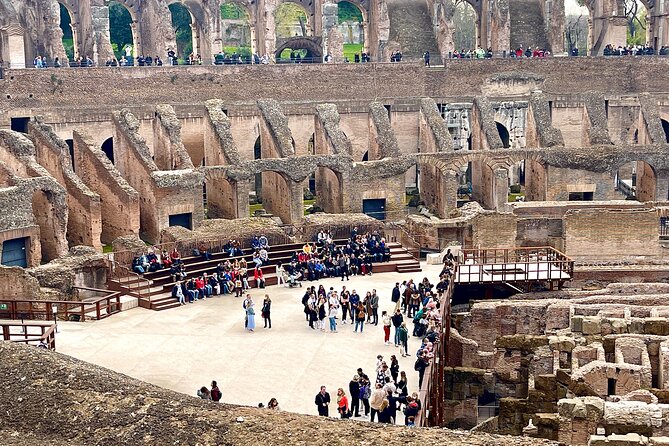
After the core Colosseum and Forum blocks, the tour includes several nearby stops that are easy to miss if you’re rushing on your own.
Arch of Constantine
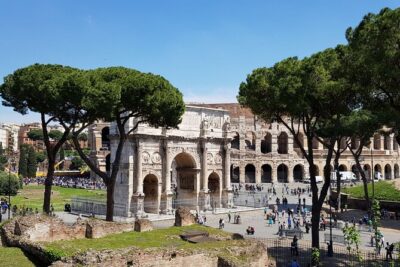
The Arco di Costantino is the largest Roman triumphal arch, commissioned by the Senate to commemorate Constantine’s victory over Maxentius at the Battle of the Milvian Bridge in AD 312. It was dedicated in 315 and spans the Via triumphalis, the route taken by victorious military leaders during triumphal processions. Even if you only get a short look, it’s worth it because the scale is hard to absorb without context.
Arch of Titus
Next door in atmosphere, the Arch of Titus (constructed around AD 81) commemorates Titus’s official deification and victory over the Jewish rebellion in Judaea, with relief panels showing the triumphal procession after the fall of Jerusalem in AD 71. The arch also preserves a contemporary depiction of artifacts connected to Herod’s Temple, and the menorah carved into the monument is described as a model later used for the emblem of the state of Israel.
This is not a “fun fact only” stop. With a good guide, you start to notice how Roman art preserves political messaging, and how later history keeps tugging at those images.
Basilica of Maxentius and Constantine
The Basilica di Massenzio was the largest building in the Forum and the last Roman basilica built there. It’s one of those stops that helps you understand why Romans built huge interior spaces for civic life.
Temple of Venus and Roma
The Templum Veneris et Romae is described as the largest temple in Ancient Rome, created under Hadrian. Construction began in 121, it was inaugurated in 135, and finished in 141. It was damaged by fire in 307 and restored with alterations by Maxentius. Seeing it in its landscape setting is a strong reminder that Roman religion and empire-building were tied together, physically and symbolically.
Curia Julia and Capitoline Hill
You also visit the Curia Julia, the senate house built in 44 BC, which survives mostly intact because of later conversion into the basilica of Sant’Adriano al Foro. Note that the roof and some upper elements date from later remodelling, so you learn to separate ancient fabric from later restoration.
Finally, the Capitolium or Capitoline Hill is one of the Seven Hills between the Forum and the Campus Martius. It connects to Saturn, to Jupiter Optimus Maximus, and to the idea that the hill symbolized eternity.
How the guide makes ruins click (and makes time feel fair)
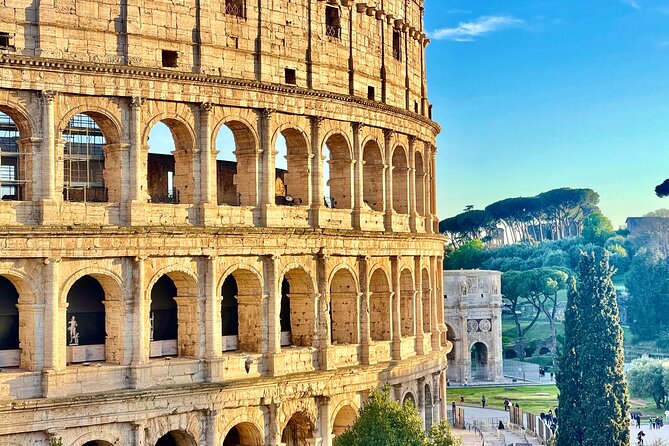
The best part of a private ruins tour is not just access. It is translation. You’re walking through spaces that were designed for a Roman worldview, and without a guide, you might miss how the architecture tells the story.
The guides on this kind of tour come across as genuinely invested in clear explanations. For example, Stefani is praised for being patient, kind, and very good at handling questions, plus even helping with photos. Chiara is described as making Roman history understandable and accessible, with a warm, welcoming style that feels like touring with a friend who truly loves the subject. Simone is noted for being an expert across architecture and culture across centuries, including using visual aids to help you picture what structures looked like in their original glory.
One especially memorable kind of moment is when the Palatine Hill excavations are discussed. An example highlighted is ongoing excavations that seem to uncover Iron Age hut foundations considered to be the Casa Romuli. When you hear that while looking at the hill itself, the whole place feels alive instead of frozen in postcards.
And because this is private, the pacing can be shaped by you. If you have curious questions, this is the format where you get answers without feeling rushed out the door.
What to wear, what not to bring, and how long you’ll be on your feet
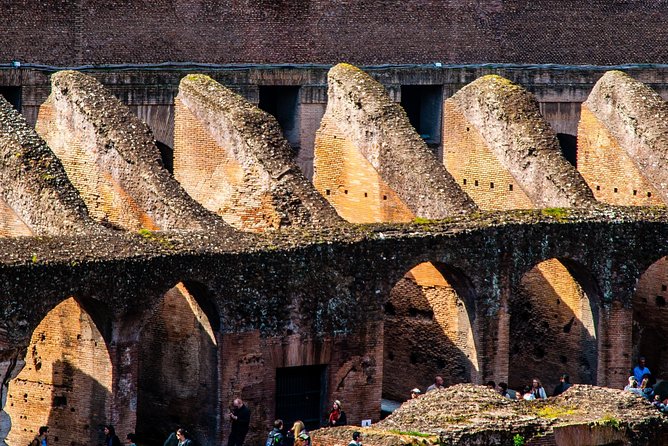
Plan around a tour duration of about 3 hours 10 minutes (with possible 20 to 30 minute variation for organizational reasons). Also note that it is not recommended for travelers with walking problems, because you’re moving through several major archaeological areas.
Wear shoes you can trust on uneven ancient stone and cobblestones. In summer, bring sun protection. In rainy weather, expect slick surfaces and adjust your pace.
And for the Colosseum, check your bag before you get there. No bottles and glasses containers. No backpacks or bulky bags. Medium and small shoulder backpacks might be allowed, but they are still screened and checked.
A final practical tip: since the tour ends in the Roman Forum area, bring a plan for getting back to your hotel or next stop. This avoids the end-of-tour scramble.
Who this tour is for (and who should choose something else)
This tour fits best if you want a guided, story-first day covering the biggest Roman anchor points. It’s also a good choice if you care about how Roman power expressed itself through buildings, arches, and public spaces, and you like asking questions.
It can work for many ages since the Colosseum stop is designed to be easy and fun for all ages, but children must be accompanied by an adult, and a discount for children can require a valid ID card.
If you dislike crowds, you might still find the Colosseum entry process busy, because security and capacity can slow things down even with reserved timing. If walking is difficult for you, you may want a different format with fewer stops.
Should you book this Rome Colosseum private tour? My take
Book it if you want a structured day that links the Colosseum to Palatine Hill and the Roman Forum, and you value a guide who can explain what you’re seeing in plain language. The included Colosseum ticket and reservation fee help the math, and the private pacing makes the experience feel less like a race.
Skip or rethink it if you cannot handle several stops on your feet, or if you get stressed by ID checks, security screening, and a required arrival time. If that sounds like you, consider a slower alternative.
If you’re the kind of traveler who wants to understand the meaning behind the stones, this is a strong bet.
FAQ
How long is the Rome Colosseum, Palatine Hill, and Roman Forum private tour?
It runs about 3 hours and 10 minutes, though there can be a 20 to 30 minute variation for organizational reasons.
Is this a private tour or a shared group tour?
It is a private tour, meaning only your group participates.
What language is the tour offered in?
The tour is offered in English.
Are Colosseum tickets included in the price?
Yes. The Colosseum entrance ticket and the Colosseum reservation fee are included.
Where does the tour start and end?
The meeting point is Via Labicana, 96, 00184 Roma RM, Italy. The tour ends in the Roman Forum area, 00186 Rome, Metropolitan City of Rome Capital, Italy.
Do I need a photo ID to enter?
Yes. You must have a valid photo ID to enter the Colosseum, and the information you provide must match your ID.
Is hotel pickup or drop-off included?
No. Hotel pickup and hotel drop-off are not included.
What happens if the Colosseum is closed for events, strikes, or heavy rain?
If closures happen, the operator offers an alternative itinerary and a partial refund may be provided.
Is the experience refundable if I cancel?
No. The experience is non-refundable and cannot be changed for any reason.
Latest additions from Rome
- Rome: Testaccio Market Food Tour with Street Food & Wine★ 5.0 · 8 reviews
- Exclusive Pasta & Tiramisu Class with Wine near by Colosseum★ 5.0 · 8 reviews
- Private Professional Photoshoot in Rome★ 5.0 · 8 reviews
- Loreto “Shrine of the Holy House of the Virgin Mary” Private Tour from Rome★ 5.0 · 8 reviews
- Rome Day to discover Florence and Pisa Hotel Pickup★ 4.5 · 8 reviews
- Rome: Christmas Nativities and Angels Tour★ 3.1 · 8 reviews
- Guided Tour of Vatican Museums and Sistine Chapel★ 5.0 · 8 reviews
- Rome: Cooking Class of fresh Pasta and Tiramisu Cake★ 5.0 · 8 reviews
Colosseum Tickets and Tours, compared.
Colosseum, Palatine Hill and Roman Forum Guided Tour
Read our review →
Guided Tour of Colosseum, Roman Forum & Palatine Hill
Read our review →
Colosseum & Forum with Audio Guide App -Optional Arena
Read our review →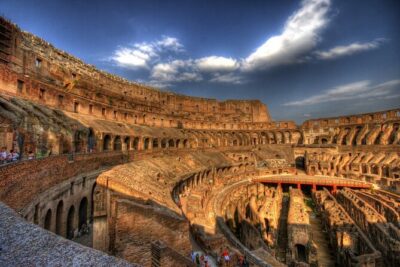
Colosseum, Roman Forum and Palatine Hill Guided Tour
Read our review →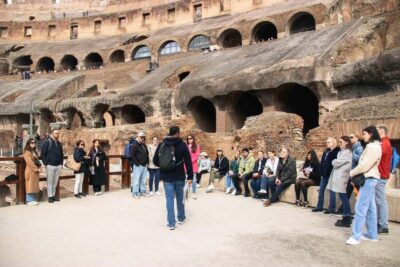
Colosseum Arena Floor, Palatine & Forum Guided Tour
Read our review →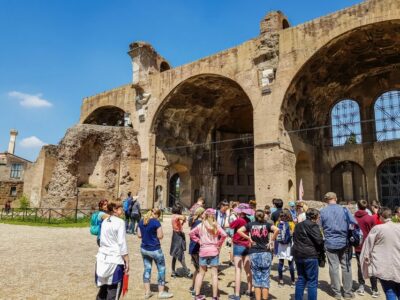
Colosseum Arena, Palatine Hill & Forum Guided Tour
Read our review →
Colosseum,Forum & Palatine Tour + Optional Arena Floor
Read our review →