
Reviewed · CONCERTS
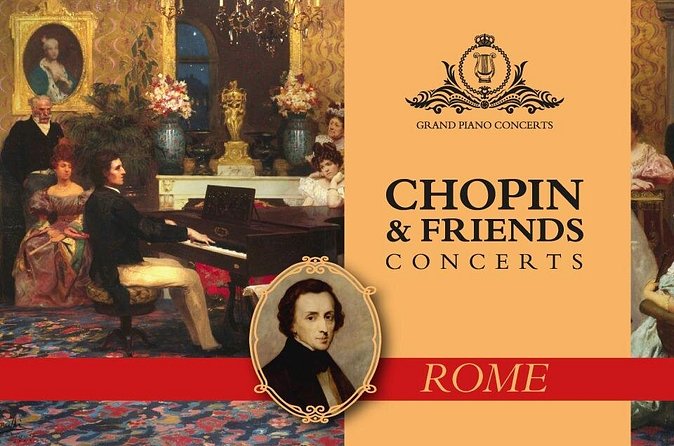
Rome: “Chopin & Italian Friends” Piano Concert
Chopin in a church is a rare thing. I love how this concert is built around Fryderyk Chopin with Italian opera composers woven in, and I also love the setting, because you can hear the piano in a church with real-world, honest acoustics. One thing to consider: some performances can involve distracting street noise, so where you sit can matter.
For a $35 ticket, you get a short, focused show (about an hour) that feels special without asking you to commit to an all-night plan. The host greets you in English and Italian, and the concert runs Monday to Saturday in one church, Sundays in another, so you can pick a day that fits your Rome schedule.
In This Review
- Key highlights worth showing up for
- Why a Chopin-centered piano concert feels right in Rome
- Waldensian Church on weekdays, Methodist Church on Sundays
- The 1-hour program: from Verdi prelude to Chopin scherzo
- Solo piano arrangements of opera energy: what to expect
- Price and value: what $35 buys you in a church concert
- Practical tips to make the most of your seats and your evening
- Who should book this concert, and who might not
- Should you book Chopin and Italian Friends in Rome?
- FAQ
- Where does the concert take place in Rome?
- How long is the piano concert?
- How much does the ticket cost?
- What music is included in the program?
- Which languages will the host or greeter speak?
- Is entrance ticket included?
- Is the venue wheelchair accessible?
- Is free cancellation available, and how long do I have?
- Can I reserve and pay later?
Key highlights worth showing up for
- Chopin-first program: lots of Chopin, with familiar favorites mixed into a tight running time
- Italian composers on solo piano: Verdi, Mascagni, and Puccini appear in arrangements for one performer
- Church venue sound: this is one of the rare chances to hear piano in a church setting
- One-hour format: perfect if you want something cultural but not too long
- Language support: host or greeter works in English and Italian
Why a Chopin-centered piano concert feels right in Rome
Rome has plenty of big, famous music moments. But this is the opposite kind of experience: one piano, one performer, and a program that’s designed to keep you listening close. If you like classical music that you can actually follow, you will probably enjoy how the concert leans on recognizable melodies and dramatic turns.
What makes it work for me is the pairing. Chopin brings that unmistakable Polish lyricism, then the program borrows opera and theater energy from Italian composers like Verdi, Mascagni, and Puccini. Even when the music changes style, the solo-piano format creates a consistent thread, so it does not feel like random tracks on a playlist.
The value angle is simple: for a relatively modest price, you get a rare venue experience (a church concert) plus a concentrated selection of well-known composers. It is not trying to be a museum tour or a lecture. It is just music, delivered in a way you can actually hear.
A few more Rome options worth a look
- Rome: “The Most Beautiful Opera Arias” Concert
★ 4.3 · 2,495 reviews - Rome: Opera Concert at Palazzo Poli – Fontana di Trevi
★ 4.7 · 1,026 reviews - Rome: The Three Tenors at St. Paul’s Church Concert Ticket
★ 4.7 · 699 reviews - Rome: Italian Opera Night Concert by Candle Glow
★ 4.6 · 630 reviews
Waldensian Church on weekdays, Methodist Church on Sundays
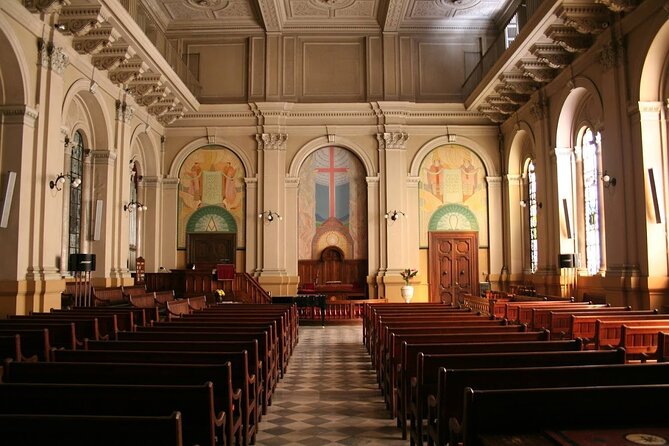
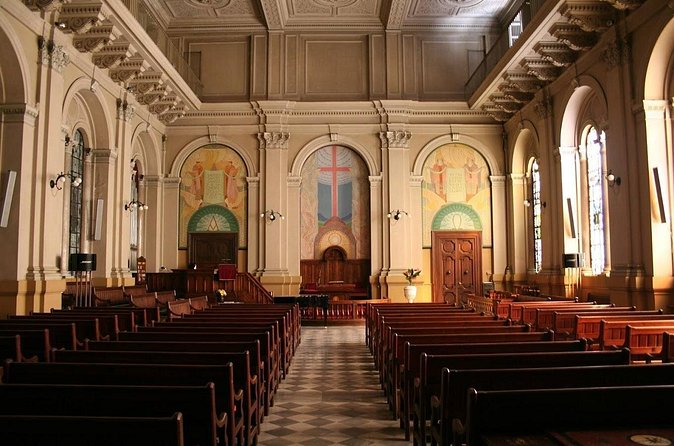
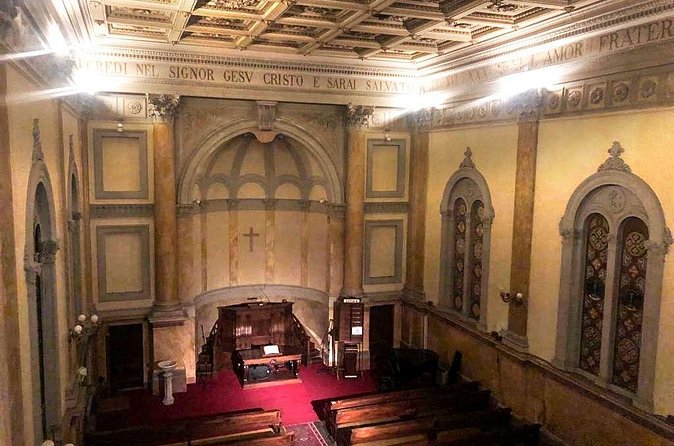
The venue schedule is one of those practical details that affects how your evening feels. From Monday to Saturday, the concert performs at the Waldensian Church. On Sundays, it moves to a Methodist Church. Same basic idea, but church acoustics can vary a lot from building to building.
Why that matters for you: church sound can make quiet passages feel bigger, and it can also carry outside distractions. One review noted street noise as a problem, which is exactly the kind of thing you should factor in when you plan your seat and your expectations. If you are sensitive to noise, I would aim for an earlier arrival so you can get situated before the room gets loud.
Also, you should expect an intimate environment. The concert lasts about 1 hour, so there is less time for distractions to fade into the background. That can be wonderful, if the sound is clean, and frustrating, if outside noise is strong.
The 1-hour program: from Verdi prelude to Chopin scherzo
This concert is tightly structured, and the piece list gives you a clear path through different moods. The program runs in this order:
- G. Verdi, Preludio da Traviata
- F. Chopin, Etude op. 25 n. 1
- F. Chopin, Fantaisie Impromptu op. 66
- P. Mascagni, Intermezzo da Cavalleria
- G. Puccini, Intermezzo da Manon Lescaut
- F. Chopin, Prelude op. 28 n. 4
- G. Ponte, Tarantella
- F. Chopin, Ballade op. 23
- G. Puccini, Foglio d’album
- C. Debussy, Clair de lune
- G. Gershwin, Rhapsody in blue
- F. Chopin, Scherzo n. 2 op. 31
Here is how to listen to it, practically, so you get more out of every minute.
Verdi to Chopin, then back to drama. The evening opens with Verdi from La Traviata. That sets a theatrical tone right away, so you know you are not only in a lyrical world. The program then moves into Chopin’s Etude op. 25 n. 1, which is all about clarity and control. Etudes can sound like exercises on paper, but live they become tension and release.
Impromptu and intermezzi: the emotional calendar flips quickly. After Chopin’s Fantaisie Impromptu, you get Mascagni’s Intermezzo from Cavalleria and Puccini’s Intermezzo from Manon Lescaut. Those pieces are often remembered for singer-like phrasing, even when played on piano. In other words, you might find yourself hearing vocal lines, even without a voice in the room.
Short Chopin prelude, then a rhythmic reset. The Prelude op. 28 n. 4 is brief, but it can feel like a spotlight. Then G. Ponte’s Tarantella brings rhythm and movement back fast, a good change of pace after the more reflective Chopin moments.
The centerpiece feel: Chopin Ballade. The Ballade op. 23 is a big emotional building block in this program. In a one-hour concert, placing a Ballade in the middle makes sense, because it anchors your attention. If you came for Chopin, this is likely where your listening brain locks in.
Debussy and Gershwin: proof this is more than opera. C. Debussy’s Clair de lune slows everything down, and then the program jumps to Gershwin’s Rhapsody in blue. That pairing might seem surprising until you remember that the piano can handle color and contrast in a single voice. If you enjoy hearing classical concert music with a wider view, this part is a real treat.
Closing with Chopin’s Scherzo. The final piece, Chopin Scherzo n. 2 op. 31, is a strong ending. It is energetic and dramatic, so you leave with momentum instead of a fade-out.
Solo piano arrangements of opera energy: what to expect
A big selling point is that the program includes Italian compositions in arrangements for solo piano. That means you are getting orchestral or operatic ideas translated into one instrument.
Here is what that usually feels like for you as a listener. First, the piano will carry both melody and inner motion, so you end up tracking rhythm and harmony more actively. Second, the dramatic feeling is expressed through dynamics and articulation rather than through multiple instruments. That can be exciting because it makes the music feel immediate and human.
Also, because the concert is only one hour, you will not get long, meandering sections. You get highlighted moments, transitions, and emotional jumps. That is ideal if you want to leave feeling like you actually heard something complete.
One caution from real-world experience: one performance was reported as missing parts of the planned list, and in another case the listener felt the street noise was too much. That does not mean every concert will be affected, but it does support a good rule: assume a live program can vary slightly, and aim to arrive prepared to listen through imperfect conditions.
Price and value: what $35 buys you in a church concert
At $35, the headline value is not just music. It is the combination of composers, venue, and time.
You get:
- A dedicated Chopin program with multiple major works
- Italian composer moments from Verdi, Mascagni, and Puccini
- A one-off venue experience inside a church (a format that is uncommon in Rome)
- A clear timetable of about 1 hour
If you compare this to bigger concert formats, the cost is easier to justify because you are not paying for a long evening, a large hall, or a complex production setup. You are paying for focus and atmosphere.
If you are already a serious classical fan, you might notice the program includes more than only Chopin, with Debussy and Gershwin added for color. That can be a plus, because it keeps the concert from feeling like a single-composer lecture. If you only want the purest Chopin experience, you still get plenty of him on the program, including Ballade op. 23 and Scherzo n. 2.
Another shape for the same afternoon in Rome:
Practical tips to make the most of your seats and your evening
You do not need a complicated plan for this concert, but a little readiness pays off.
First, pick your day with the venue in mind. Monday through Saturday means Waldensian Church. Sundays mean Methodist Church. If you are trying to avoid potential street noise issues, arrive early so you can choose a spot that feels quieter once you see the room layout.
Second, plan your timing like it is a real Rome outing. This is a church concert, so expect it to feel different from a typical theater. Give yourself a buffer to find the meeting point, since the meeting point can vary depending on the option booked. Once you arrive, let the host or greeter in English or Italian help you get oriented.
Third, treat it like an attentive listening hour. With pieces ranging from Chopin etudes to Gershwin Rhapsody in blue, it helps if you let go of expecting an opera production. This is piano storytelling. Focus on the phrasing and rhythm shifts, not on what the full orchestra might be doing somewhere else.
Finally, if you are going with mobility needs, good news: the event is wheelchair accessible. That matters because church entries and seating areas can vary, so it is helpful to know accessibility is supported.
Who should book this concert, and who might not
I think this concert is a strong match if you want:
- A Chopin-heavy program
- An intimate setting where the piano is the main character
- A cultural activity that does not eat up your whole night
- The chance to hear a classical program in a church
It may be less ideal if:
- You are very sensitive to street noise or outside distractions
- You need a perfectly rigid, no-variation program experience, because live concerts can differ in small ways
If you are traveling with mixed music tastes, the Italian composers and the inclusion of Debussy and Gershwin can help. It is not a stuffy, one-genre-only evening.
Should you book Chopin and Italian Friends in Rome?
I would book it if you want a memorable, focused night that mixes famous composer names with a rare setting. The church venue is the standout reason, and the solo-piano format makes the music feel close, not distant.
Use a simple decision filter:
- If you love Chopin, this is an easy yes. You are getting multiple major works.
- If you like Italian opera and want to hear it transformed for piano, you will likely enjoy the Verdi, Mascagni, and Puccini choices.
- If noise would ruin your evening, arrive early and be ready to choose your seating with care.
In short, for a one-hour concert with real atmosphere, this is a good value bet in Rome.
FAQ
Where does the concert take place in Rome?
The concert performs at Waldensian Church from Monday to Saturday, and at Methodist Church on Sundays.
How long is the piano concert?
The duration is 1 hour.
How much does the ticket cost?
The price is $35 per person.
What music is included in the program?
The program includes pieces by Verdi, Chopin, Mascagni, Puccini, Ponte, Debussy, and Gershwin, plus the final Chopin Scherzo n. 2 op. 31.
Which languages will the host or greeter speak?
The host or greeter speaks English and Italian.
Is entrance ticket included?
Yes, the entrance ticket for the piano concert is included.
Is the venue wheelchair accessible?
Yes, the experience is wheelchair accessible.
Is free cancellation available, and how long do I have?
There is free cancellation up to 24 hours in advance for a full refund.
Can I reserve and pay later?
Yes. You can reserve now & pay later, keeping your plans flexible.
Latest additions from Rome
- Guided Tour Vatican Museums & Sistine Chapel★ 4.1 · 30 reviews
- Exclusive Rome by Night Vespa Tour★ 5.0 · 30 reviews
- Transfer Rome to Airports★ 4.5 · 30 reviews
- Vatican: St.Peter’s Basilica & Dome – Reserved Entry & Tour★ 4.1 · 30 reviews
- Rome street art tour: off the beaten path with a local guide★ 5.0 · 30 reviews
- Tivoli, Hadrians Villa and Villa d’Este, a charming day trip from Rome★ 4.5 · 30 reviews
- Rome Food Tasting with Wine Pairing Italian Authentic Flavors★ 5.0 · 31 reviews
- Inspirational Cooking on the Roman Chef’s Panoramic Terrace★ 5.0 · 30 reviews
Concerts, compared.
Opera Concert at Palazzo Poli – Fontana di Trevi
Read our review →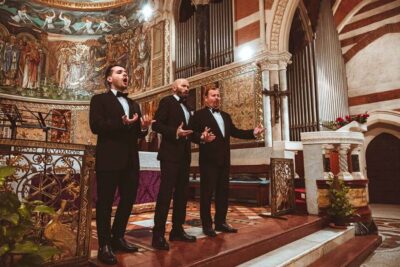
The Three Tenors at St. Paul’s Church Concert Ticket
Read our review →
The Great Opera Arias Concert at Palazzo Poli – Trevi Fountain
Read our review →
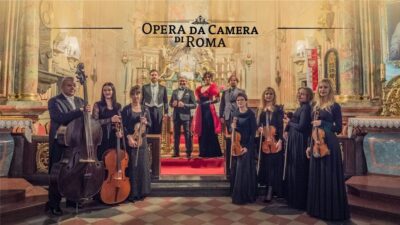
Concert Ticket – The Most Beautiful Opera Arias by Opera da Camera di Roma
Read our review →
Open Air Opera Concert with Terrace aperitivo over Navona square
Read our review →Browse the lists this tour appears in