
Reviewed · CATACOMBS OF ROME TOURS
Rome: Catacombs Skip-the-Line Tour in English
Rome gets quieter underground. This 2-hour Rome catacombs skip-the-line tour takes you into San Domitilla’s underground world with an English native guide, walking a real piece of the tunnel system outside the city walls. You also get time above ground later on the Appian Way, so the day has a nice rhythm.
I love the skip-the-line setup, because your ticket is handled and you can focus on the tour instead of waiting. I also love the focus on the human side of early faith, including the tombs of Nereus and Achilleus and some of the earliest Christian artworks you can see in Rome.
One caution: you’ll want a strong English level, since the tour is led in English and the stories move quickly.
In This Review
- Key things I’d watch for on this Rome catacombs tour
- First stop: Via delle Sette Chiese, 282, and how to show up ready
- Skip-the-line entry at San Domitilla: what saves your time
- Going underground: what the guide actually does for you
- Pagan-to-Christian Rome in the tunnels: the theme that ties it together
- The tombs of Nereus and Achilleus, plus the earliest Christian art
- Appian Way free time: why you get it after the catacombs
- Price and what $56 gets you (and what it does not)
- Small groups, storytelling style, and how guides shape your experience
- Practical limits: English level, no photos, and mobility
- Who should book this Rome catacombs tour?
- Should you book the Rome: Catacombs Skip-the-Line Tour?
- FAQ
- Where is the meeting point for the tour?
- How long is the San Domitilla catacombs tour?
- What is included in the price?
- Is photography allowed inside the catacombs?
- Is this tour wheelchair accessible?
- Can I cancel, and what language level do I need?
Key things I’d watch for on this Rome catacombs tour
- Skip-the-line tickets are included, so you do not have to sort out entry when you arrive.
- Native English guides tell the story like a script, with humor that keeps the mood from turning flat or stiff (names that come up often include Sean, Mike, Divan, and Peter).
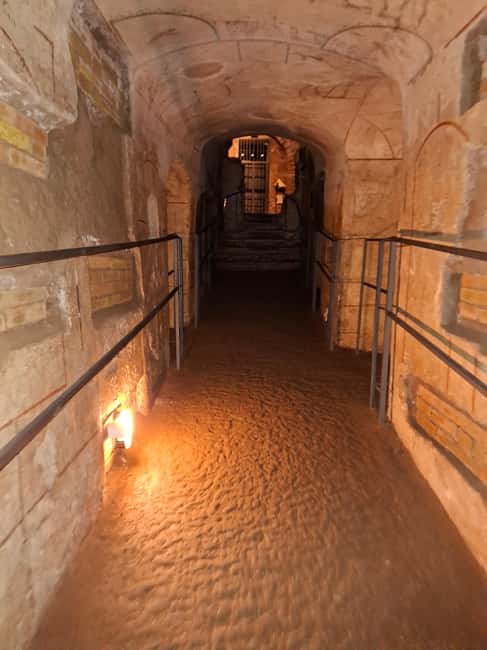
- You’ll explore part of an over 180-mile tunnel system, outside Rome’s city walls.
- The guide connects persecution, burial practice, and Rome’s shift from pagan religious life to Roman-Christian Rome.
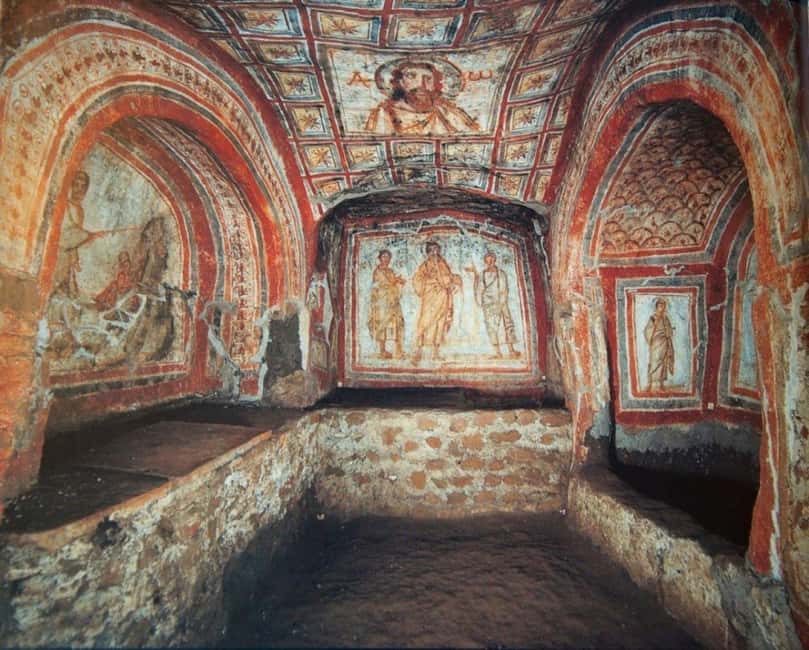
- Stops include the tombs of Nereus and Achilleus plus some of the earliest Christian artworks available in Rome.
- A 2-hour format works well, and then you get free time on the Appian Way.
First stop: Via delle Sette Chiese, 282, and how to show up ready
Your tour starts at Via delle Sette Chiese, 282. When you arrive, look for the garden area with the picnic tables near the white gazebo or umbrellas, then meet your guide there.
Underground tours run on comfort and footing. Bring comfortable shoes and plan for cooler air, since catacombs tend to feel damp and shaded even when Rome is warm above ground. A jacket is a smart call, and dress in weather-appropriate layers so you are not stuck sweating while waiting and then freezing underground.
Because the tour is only about 2 hours total, you will feel every minute. That makes it even more important to arrive on time, use the bathroom before you head in, and keep your water and phone gear simple.
Finally, know the rules before you go in. Inside, photography is not allowed, so leave your gear set up for memories later, not inside the tunnels.
Other descents into the catacombs:
- Rome: Capuchin Crypts and Catacombs Tour with Transfers
★ 4.6 · 6,456 reviews - The Original Roman Crypts and Catacombs Tour with Transfers
★ 4.5 · 4,896 reviews - Rome: Catacombs of St. Callixtus Entry Ticket & Guided Tour
★ 4.6 · 3,037 reviews - Rome: Guided Roman Catacombs Tour with Transfers
★ 4.6 · 1,830 reviews
Skip-the-line entry at San Domitilla: what saves your time
The big practical win here is the skip-the-line ticket being included. In practice, it means you spend less time standing around and more time inside the catacombs with your English guide.
San Domitilla is the underground location you’ll visit, and the tour focuses on a curated portion of the underground network. You are not trying to map a maze on your own. Instead, your guide brings you down and moves you along a route designed for understanding, not just seeing.
This is also where the guide matters. People consistently praise the way their guide turns facts into a story you can follow. In one common pattern, guides such as Sean start by setting context, then layer in how the catacombs fit into Rome as a city and as a turning point in religion and burial.
If you hate slow check-in moments on sightseeing days, this format is a good match. You still get a guided experience, but with less friction at the start.
Going underground: what the guide actually does for you
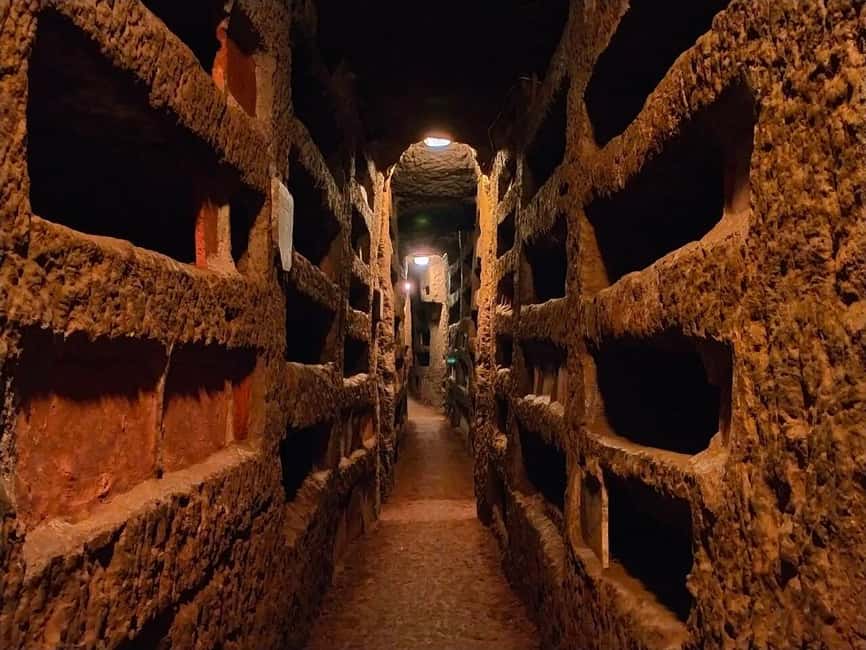
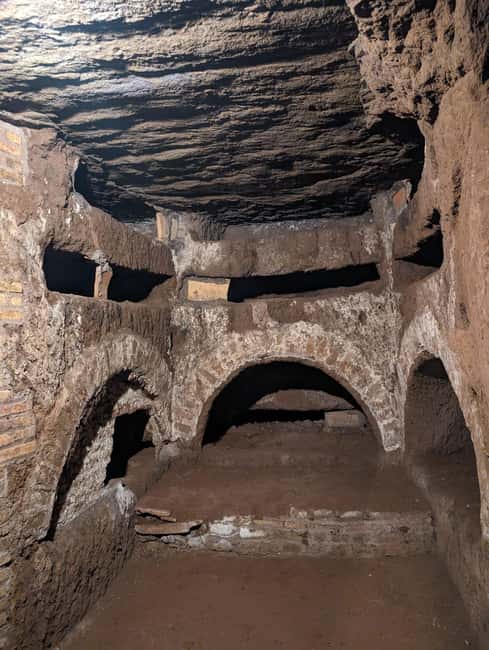
Once you descend, expect a structured walk through early Christian underground spaces. The tour explores part of the enormous system, described as more than 180 miles of tunnels outside the city walls, so it helps to have someone interpreting what you are looking at.
Your guide explains the transition Rome went through, from pagan religious life into what you can call Roman-Christian Rome. That is not just a headline. You hear how persecution shaped community life, and how burial rites and rituals changed along with belief.
The tone is also part of the value. Multiple guides in the program get praised for mixing seriousness with humor. Divan, for example, is often described as balancing respect for a sombre setting with a story style that keeps everyone engaged. Mike and Peter show up in feedback for keeping the pace lively while still covering the historical thread clearly.
That matters because catacombs can feel repetitive if you only look at corridors and niches. On a guided tour, you get the “why” behind what you see, so the space starts to make sense as society in stone.
Pagan-to-Christian Rome in the tunnels: the theme that ties it together
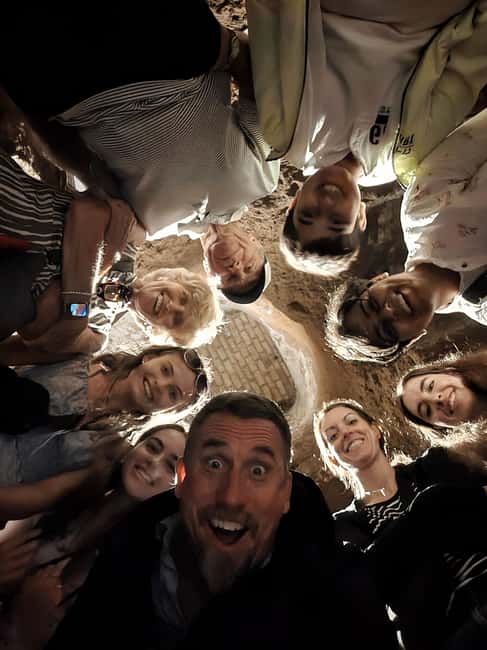
The catacombs work best when you understand them as a response to people’s needs. This tour emphasizes the transformation from pagan religion to Roman-Christian Rome, and it frames the burial sites as part of that shift.
You’ll hear stories connected to religious persecutions and the lived reality of communities under pressure. Then the guide ties those pressures to burial practice, including how rituals were handled and why specific kinds of underground spaces developed.
This is the tour’s core idea: you are seeing physical locations, but you are also learning how Rome’s beliefs changed how people prepared for death, remembrance, and community.
If you have only seen Rome through major monuments like the big-ticket ruins, this feels like a different side of the city. It’s not grand and open-air. It is human-scale and close, and your guide helps you read it as history happening to real people.
And because the route is relatively short, about 2 hours, the tour stays focused. You get the main story arc without feeling dragged through every possible side corridor.
The tombs of Nereus and Achilleus, plus the earliest Christian art
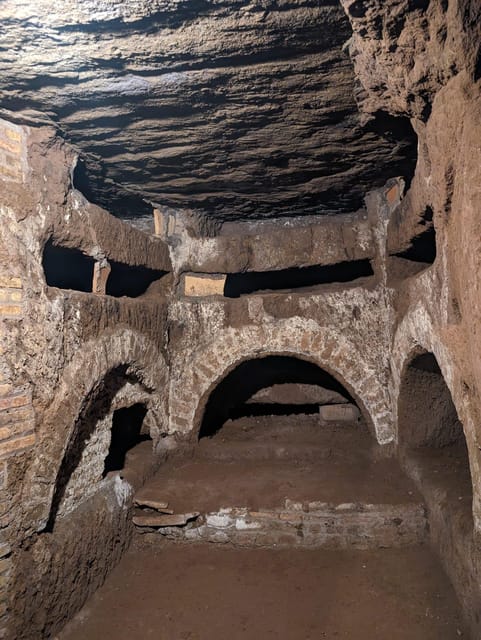
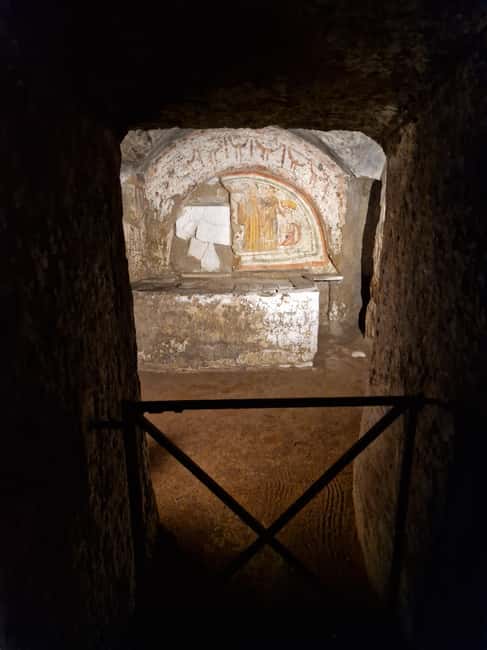
One of the most specific highlights you’ll aim for is the tombs of Nereus and Achilleus. Seeing named tombs gives the whole underground experience a concrete anchor. Instead of generic “catacombs,” it becomes a place with identifiable people and references your guide can connect back to the broader religious and burial story.
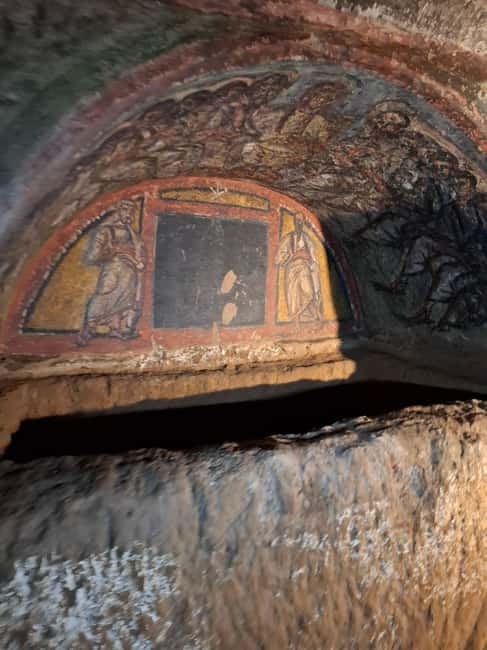
Another major highlight is artwork. This tour includes a chance to admire some of the earliest Christian artworks available to see in Rome. That is huge if you want more than architecture. Instead of only corridors and burial spaces, you also get examples of early visual expression connected to belief.
When a guide points these things out in context, the artworks stop being random decoration. They become part of the transition story: how early Christians communicated identity and faith in a world that was not always welcoming.
Practical note: since photography is not allowed inside, this is one of the tours where you should rely on your guide’s descriptions and your own attention in the moment. If you are the kind of person who reads signs slowly, you will appreciate the guided pace and the way the guide explains what to look for.
A few more Rome options worth a look




Appian Way free time: why you get it after the catacombs
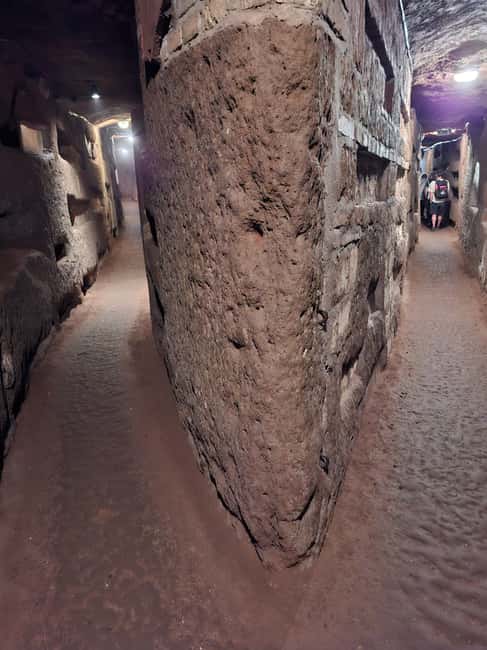
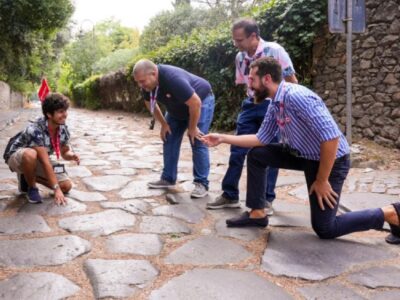
After the underground portion, you get free time on the Appian Way. That is not just filler time. It’s a chance to reset your eyes and mood, especially after being underground and focused on sombre history.
The Appian Way also helps you connect the underground story back to Rome’s surface world. Even if you do not plan a big hike, just having time to walk and breathe makes the whole experience feel more balanced.
Think of it like this: the catacombs portion gives you the “how people lived with faith and fear.” The Appian Way time gives you the “where Rome carried that forward.”
You come back to the meeting point at the end, returning to Via delle Sette Chiese, 282.
Price and what $56 gets you (and what it does not)
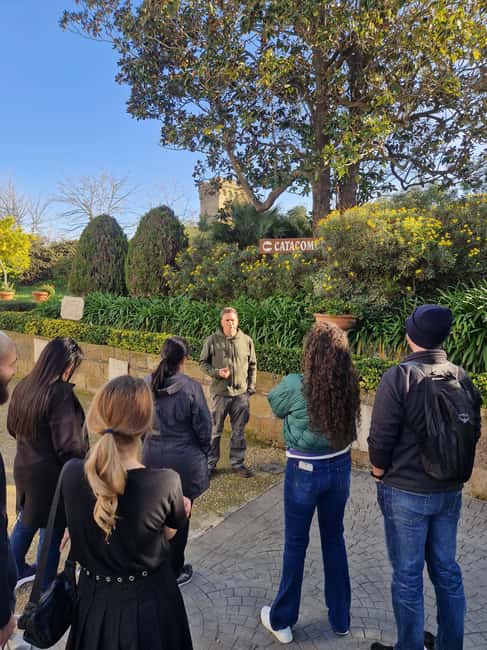
At $56 per person, this tour is priced for a guided entry experience that includes the skip-the-line ticket and an English-speaking guide for a compact 2-hour time window.
For value, the key is what is bundled. You are not only paying for access. You are paying for interpretation, pacing, and a guide who explains religious change, burial rites, and the significance of specific tombs and early artworks.
What is not included is transfer. So you will want to plan your own way to the start location and back. If you are relying on taxis or public transport, factor that into your real day budget.
Also, this is a good price point if you want a serious history experience without losing half a day. Short tours are easier to fit in between the rest of your Rome plans, especially if you plan to do other sites on the same day.
Finally, the tour offers flexible booking style, including reserve now and pay later, which helps if your schedule is still moving around.
Small groups, storytelling style, and how guides shape your experience
This tour is set up as a guided experience with a small-group or private underground approach. In other words, you should expect more than a loud lecture while everyone follows a line.
In the feedback, guides repeatedly get praised for being engaging, using humor, and answering questions. Names that come up often include Sean, Mike, Divan, Peter, and Heather. People also mention styles like rapid-fire facts plus jokes, or a documentary-like narrative where the tour builds step-by-step through time.
That guide quality is not a small detail. Catacombs are easy to misunderstand if you treat them like an art museum without context. A strong guide turns corridors into a story of belief, community, and burial practice.
If you get a guide like Sean, you might notice how they start with broader context and then connect the dots as you go. If you get someone like Divan, you may feel the balance between respectful tone and a lighter conversational rhythm.
The practical takeaway for you: if you care about understanding what you are seeing, prioritize this tour specifically because the guide role is central here.
Practical limits: English level, no photos, and mobility
Three things to plan around:
- Strong English level needed. The tour is live in English, and the pacing assumes you can follow the stories without frequent repeats.
- No photography inside. You can still enjoy the visit, but plan to take mental notes rather than phone photos.
- Not suitable for wheelchair users. If mobility is a concern, this is a real limitation, not a mild inconvenience.
If you meet those requirements, you will have a smoother time. If not, you might find the experience more stressful than it needs to be.
Who should book this Rome catacombs tour?
This is a great fit if you want a focused, guided Rome catacombs experience with strong storytelling and clear historical framing. It works especially well if you like early Christian history and you want the pagan-to-Christian transition explained in a way that connects to what you see.
It’s also a strong choice for people who want to avoid the biggest crowds and prefer a smaller-group feel. The format is short enough to keep the day moving, and it includes both underground history and above-ground free time on the Appian Way.
You might consider skipping or switching plans if English is a challenge, if you rely on photos for memory, or if mobility needs make underground walking difficult.
Should you book the Rome: Catacombs Skip-the-Line Tour?
If you can handle English well and you are comfortable with no photos inside, I think this is a smart book. You get skip-the-line entry, a native English guide, a guided route through part of a huge tunnel system, and a story that connects persecution, burial rites, and the shift from pagan religion to Roman-Christian Rome. Add the tombs of Nereus and Achilleus, plus some of the earliest Christian artworks, and you get more than a quick look.
It is also priced for value because the guided interpretation is the main product, not just access. And the Appian Way free time helps the whole experience feel complete instead of one long underground stretch.
FAQ
Where is the meeting point for the tour?
You meet in the garden at the picnic tables near the white gazebo or umbrellas, at Via delle Sette Chiese, 282.
How long is the San Domitilla catacombs tour?
The duration is 2 hours.
What is included in the price?
The tour includes a skip-the-line ticket and an English-speaking guide.
Is photography allowed inside the catacombs?
No, photography is not allowed inside.
Is this tour wheelchair accessible?
No, it is not suitable for wheelchair users.
Can I cancel, and what language level do I need?
You can cancel up to 24 hours in advance for a full refund. The tour notes a need for a strong level of English since it is conducted in English.
Latest additions from Rome
- Guided Tour Vatican Museums & Sistine Chapel★ 4.1 · 30 reviews
- Exclusive Rome by Night Vespa Tour★ 5.0 · 30 reviews
- Transfer Rome to Airports★ 4.5 · 30 reviews
- Vatican: St.Peter’s Basilica & Dome – Reserved Entry & Tour★ 4.1 · 30 reviews
- Rome street art tour: off the beaten path with a local guide★ 5.0 · 30 reviews
- Tivoli, Hadrians Villa and Villa d’Este, a charming day trip from Rome★ 4.5 · 30 reviews
- Rome Food Tasting with Wine Pairing Italian Authentic Flavors★ 5.0 · 31 reviews
- Inspirational Cooking on the Roman Chef’s Panoramic Terrace★ 5.0 · 30 reviews
Catacombs of Rome Tours, compared.

Capuchin Crypts and Catacombs Tour with Transfers
Read our review →
The Original Roman Crypts and Catacombs Tour with Transfers
Read our review →
Catacombs of St. Callixtus Entry Ticket & Guided Tour
Read our review →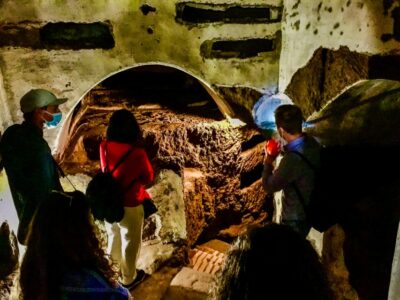

Catacombs and Capuchin Crypt Guided Tour with Transfer
Read our review →
Appian Way & Aqueducts E-Bike Tour (Catacombs & Food)
Read our review →
Appian Way, Catacombs, & Roman Aqueducts E-bike Tour
Read our review →Browse the lists this tour appears in