
Reviewed · CAPITOLINE MUSEUMS TICKETS
Rome Capitoline Museums Private Guided Tour and Panoramic Views
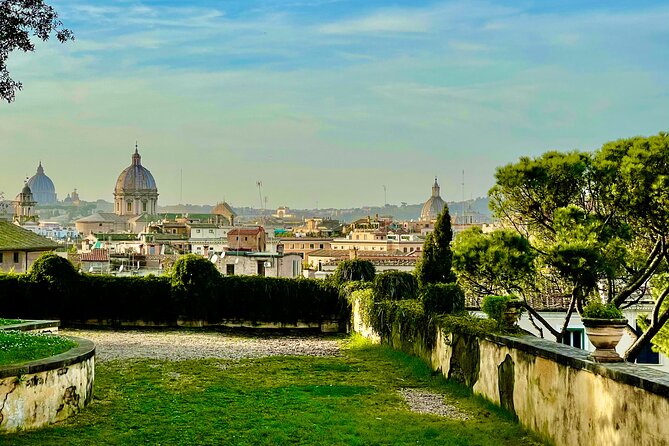
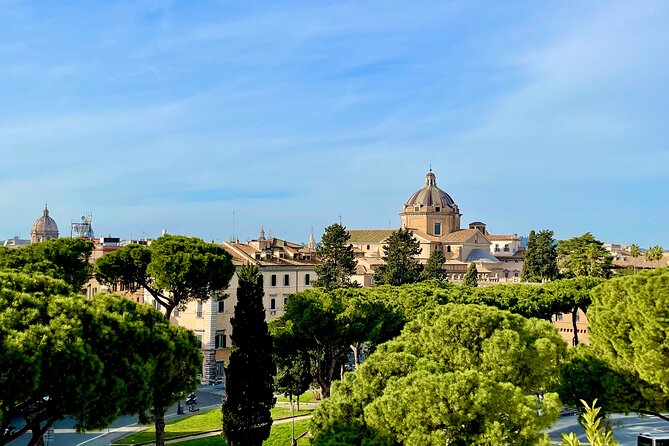
Rome feels extra real from the Capitoline Hill. This private guided tour turns the Capitoline Museums into a story you can actually follow, with panoramic views and a look out over Rome that makes the city’s layers click.
I especially like two things. First, I love how the tour treats the art like evidence, from the bronze legends in the museum halls to the famous symbols of Rome’s self image. Second, I like that you get an art-history pace without feeling rushed, including the chance to see how the museum connects to ancient Rome’s geography. One possible drawback: this is a painting and sculpture focused experience, so if you want a casual, low-effort sight-seeing loop, the museum time may feel like a lot.
In This Review
- Key points before you go
- Capitoline Museums first, and Rome spreads out in the best way
- Bronze legends: Brutus, the Spinario, and the Capitoline Wolf
- Pinacoteca paintings: from Caravaggio names to the story behind them
- Marcus Aurelius in context, then a Forum view from below
- Piazza del Campidoglio, Michelangelo’s urban plan that still works
- The replica in Piazza del Campidoglio, why the copy matters
- Palazzo Senatorio: the civic face of power
- Palazzo Nuovo and Palazzo dei Conservatori: where sculpture met space
- How to pace a 2.5 to 3 hour private museum day without getting tired
- Price and value: is $288.97 per person worth it
- Who should book this Capitoline Museums private tour
- Should you book this private Capitoline Museums tour?
- FAQ
- How long is the Rome Capitoline Museums private guided tour?
- Are museum tickets included?
- Is this tour private?
- Is skip-the-line access included?
- What is included in the price, and what is not?
- What cancellation options are available?
Key points before you go
- Skip-the-line museum access with a professional art historian guide
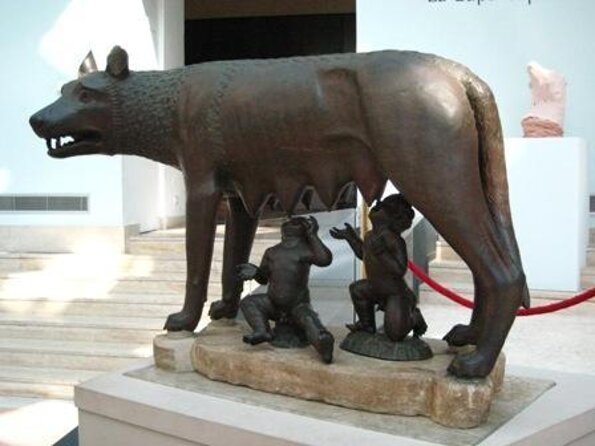
- Bronze highlights like the Capitoline Wolf and the Spinario
- Pinacoteca masterpieces, including major works associated with Caravaggio and other Renaissance to Baroque heavy hitters
- Marcus Aurelius moments in two places, original context and the gilded bronze replica
- Forum views from an underground connection near the Tabularium remains
- Michelangelo’s urban design at Piazza del Campidoglio, plus civic palaces around it
Capitoline Museums first, and Rome spreads out in the best way
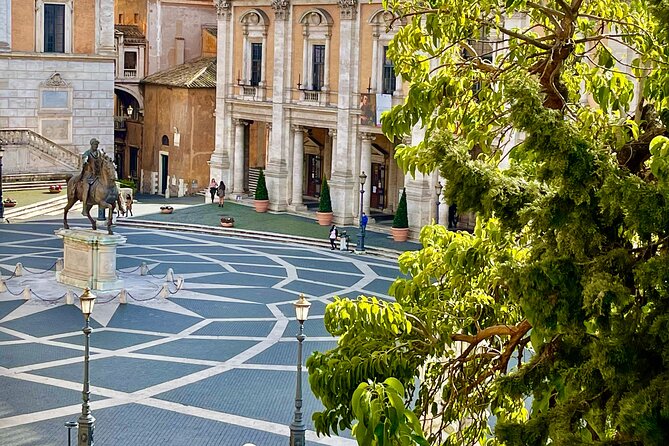
Start at the Capitoline Museums on Piazza del Campidoglio, and you immediately feel why this hill matters. It is one of those spots where Rome’s “now” and Rome’s “then” are not separate. They stack on top of each other, and the views pull you forward.
A private guide here pays off fast. You get to spend your mental energy on what matters, instead of standing in lines and trying to figure out what you are looking at. The best version of this tour is that you can steer the pace: more time on the sculptures if you like antiquity, or more time on the paintings if your eyes go straight to canvas.
Timing is part of the value. The tour runs about 2 hours 30 minutes to 3 hours, so you get a serious chunk of museum time and key exterior sights without turning into an all-day marathon. In summer, that matters, since long waits outside can wear you out quickly.
More Private Tours in Rome
- Rome by Golf Cart Private Tour: Beyond the Landmarks
★ 5.0 · 4,361 reviews - Early Morning Vatican, Sistine, St. Peter’s Semi or Private Tour
★ 5.0 · 3,779 reviews - Rome on a Golf Cart Semi-Private Tour Max 6 with Private Option
★ 5.0 · 2,502 reviews - Rome Private Arrival Transfer: Fiumicino Airport to Hotel in Rome
★ 4.5 · 2,492 reviews
Bronze legends: Brutus, the Spinario, and the Capitoline Wolf
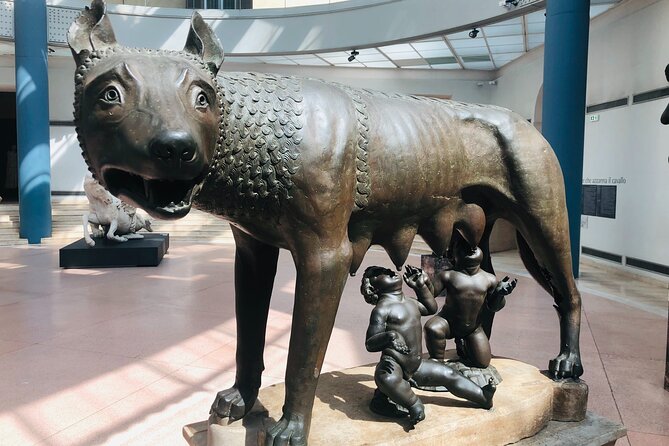
Inside the Musei Capitolini, the early focus is on objects that Rome used to talk about itself. You will see famous bronze sculpture highlights such as the bust of Capitoline Brutus, and that unforgettable pair of symbols tied to Rome’s origin myths.
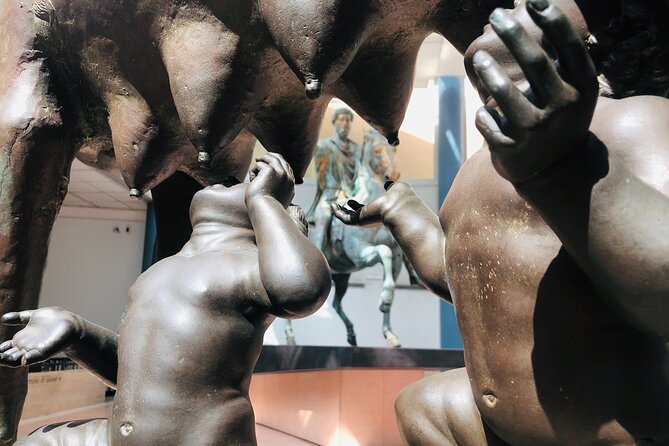
The Spinario is one of those works that instantly changes your view of Roman sculpture. It is small compared to what people imagine, but it is powerful. The gesture and the realism show how much craft was packed into these bronze pieces. Then there is the Capitoline Wolf, the Romulus and Remus story in sculpture form, and also a visual shorthand for the Eternal City. Seeing it in context, with explanations that connect myth to civic identity, is where the tour really earns its keep.
You will also move through collections that broaden the timeline beyond strict Roman-only viewing. The museum’s Greek and Etruscan vases help you understand what Rome was absorbing, borrowing, and reshaping. Even if you do not call yourself an art person, vases and objects teach you the “style language” of antiquity. You start to recognize how cultures influence each other long before the Renaissance reboots the whole look.
The pleasant surprise here is that you are not trapped in one room. You keep flowing, so the experience feels like a guided walk through ideas, not a single long gallery stall.
Pinacoteca paintings: from Caravaggio names to the story behind them
After the bronze works, you shift into the Pinacoteca, the museum’s painting section. This is where the tour adds a second kind of depth: how Roman audiences went from antiquity to Renaissance ambition, and then into Baroque drama.
This portion is built around major painting names, including works associated with Caravaggio, Guido Reni, Carracci, Guercino, Domenichino, Veronese, Titian, Tintoretto, Rubens, and Pietro da Cortona. That lineup matters because it is not just a collection list. It gives your guide the chance to explain how styles changed across time, and how patrons and artists shaped what people wanted to see.
If you like paintings, you will feel the payoff right away. The guide can slow you down on the big pieces and connect them to the “why” behind the technique, the subject, and the period. In a museum this large, that is the difference between seeing a painting and actually understanding it.
If you do not care about paintings, be honest with yourself here. A museum with a strong Pinacoteca section can stretch your patience. The experience gets much better if you treat it as an art-history lesson you can control, asking questions and choosing which works to linger on.
Marcus Aurelius in context, then a Forum view from below
One of the smartest parts of the route is the way the tour builds toward the exterior view energy, then pays it off with both art and architecture.
At the exedra, you get the spectacular equestrian statue of Emperor Marcus Aurelius among remains of ancient temples that are still visible. This is the moment when the Capitoline hill stops being “just another museum location” and becomes a perspective point over the city. Equestrian statues are not only about power. In Rome, they also become anchors for how people imagine space and authority.
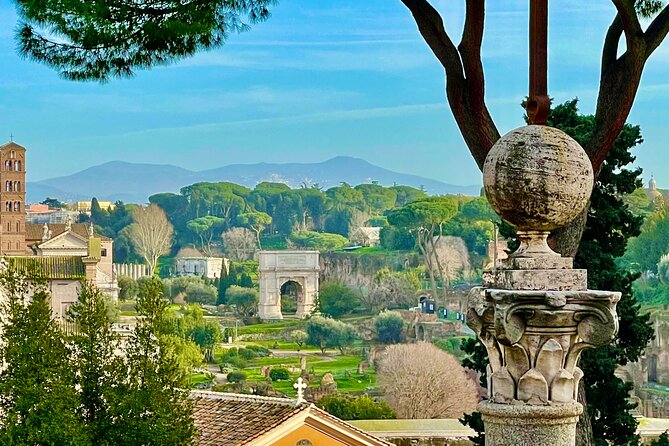
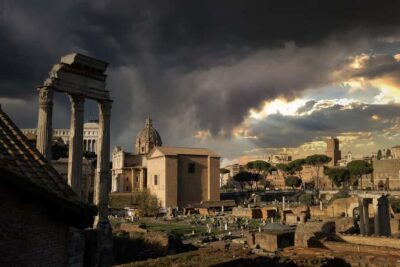
Then you get the more unusual experience: an underground tunnel passing among the Tabularium remains, leading to a view toward the Roman Forum. Even if you know the Forum already, this reframing is different. Instead of walking through the Forum itself, you see it through a museum-linked viewpoint. The result is a more layered understanding of what you are seeing upstairs in the galleries, and what you are seeing outside across the city.
If you love architectural clues, this stop will feel like a cheat code. You connect ruins, purpose-built spaces, and the way Rome designed sightlines. It is the kind of detail that makes you look at photos later and understand what you are actually looking at.
Piazza del Campidoglio, Michelangelo’s urban plan that still works
Next you move into Piazza del Campidoglio, and this is one of those Roman public spaces that rewards attention. The story goes back to the 1500s, when Michelangelo was commissioned to fix the square’s layout when the hill was in a serious state of abandonment.
The design is about uniformity and control. The layout gives your eyes a clear path, and it makes the equestrian statue placement feel intentional instead of random. The central podium for Marcus Aurelius becomes a fulcrum, and the staircase with giant steps directs movement in a dramatic way. The balustrade topped with classic marble groups finishes the composition like a stage set.
Even if you already know Michelangelo’s name, seeing his design in motion is another thing. You watch how people climb, where they pause for photos, and how the geometry frames Rome behind you.
A quick, useful tip: take a moment to look across the square before you look for your next photo. This is the best way to feel how the plan directs your viewpoint. Otherwise, the space can feel like a fancy plaza where people are just walking through.
More time in the Capitoline collections:
The replica in Piazza del Campidoglio, why the copy matters
You then see the Replica Statua Equestre di Marco Aurelio, placed in Piazza del Campidoglio since 1997. It is described as an absolutely faithful copy based on a photogrammetric survey, created as a metal reproduction after additions and adjustments.
This matters because it changes how you experience the square. Copies in museums can feel like placeholders, but this one is meant to preserve the visual and planning logic of the public space. In other words, the tour is not only showing you the past. It is also showing you how Rome maintains the original experience when conditions require moving the original work.
The original statue was removed from Piazza del Campidoglio in 1981 and transported for restoration and diagnostic tests to address damage from atmospheric agents and pollution. Seeing the replica lets you understand what Michelangelo’s design would have looked like, with the statue in its civic role.
Palazzo Senatorio: the civic face of power
Palazzo Senatorio gives you the “civic” side of the Capitoline story. It was built between the mid-12th century and the last quarter of the 13th century on the ruins of the ancient Tabularium. From 1144, it served as the seat of the Municipality of Rome, and the Senator was responsible for administration of justice and the interests of citizens.
The façade facing Piazza del Campidoglio includes loggias with round arches arranged across three levels, with recovered ancient columns and Ionic capitals. In the first-floor court, you see how medieval architecture reused older materials, bridging eras the way Rome often does.
A practical note here: this is not a “touch everything” stop. It is more about recognizing forms and understanding function. Your guide can point out what to notice on the façade and why the layout matters.
Palazzo Nuovo and Palazzo dei Conservatori: where sculpture met space
Palazzo Nuovo, built in the early 1600s and completed by the mid-1600s, sits across from the mirrored Palazzo dei Conservatori. Michelangelo designed the broader piazza concept commissioned by Pope Paul III, and Palazzo Nuovo’s construction followed his direction.
This palace began as a home for ancient statues that did not have a place in the Palazzo dei Conservatori. Later, Palazzo Nuovo officially became a museum in 1734, after Clement XII Corsini acquired the Albani collection, adding hundreds of sculptures. That kind of acquisition story helps you understand why museums sometimes feel like they “collect” ideas, not only objects. You are seeing curated placement built over decades.
At Palazzo dei Conservatori, you get the institutional core of the hill. It was the residence of the Conservators, magistrates elected by the people to administer the city since its construction in the 13th century. The square’s rebuilding and reorganization came into focus around the Jubilee of 1500, when Pope Nicholas V entrusted Michelangelo with work there.
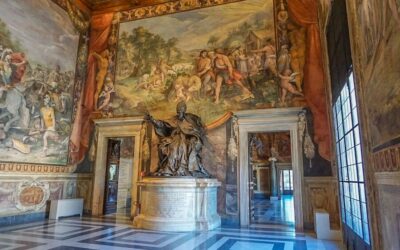
Inside, you will see art gallery holdings, tapestries, and bronze sculpture including the Capitoline Wolf. You will also see apartment fresco cycles, with authors including Pietro da Cortona. The frescoes connect you back to ancient Rome’s themes, but filtered through Renaissance to Baroque storytelling.
If you like “how Rome repurposes itself,” these palaces are where that theme becomes obvious. They are physical proof that the city keeps reusing its own stage.
How to pace a 2.5 to 3 hour private museum day without getting tired
This tour is designed to be compact, but you are still walking on museum floors, then moving between palaces and squares on the Capitoline hill. Wear shoes you can move in for a few hours and bring water if you tend to get dry in heat.
Dress code is smart casual. That usually means comfortable layers. You want to look fine for pictures, but you also want flexibility, since indoor rooms can be cooler and outdoor viewing points can be hot.
Mentally, prepare for an art-history style structure. This is not only a “look at that” tour. One strong guide style described for this experience is an academic, period-focused approach that responds to your interest level and asks questions. If you want a lighter, faster route, tell your guide early and pick your must-see works up front.
A good strategy:
- Decide your top two priorities, then let everything else support them.
- If paintings are your main interest, give the guide permission to slow down at the Pinacoteca.
- If antiquity is your thing, spend extra time on the bronze and vases, and treat the painting section as a highlights scan.
The good news is private format gives you control.
Price and value: is $288.97 per person worth it
At $288.97 per person, the biggest question is what you are buying. You are not paying only for museum entry. You are paying for a private art historian guide, guaranteed skip-the-line tickets, and a tightly planned route that includes panoramic views and timed access to multiple buildings around Piazza del Campidoglio.
Also, the included package covers tax, VAT, and insurance, which matters more than most people think. You avoid the little “add-on” surprises at the end.
Where the price feels most fair is when you do two things:
1) You actually want the interpretation, not just the labels.
2) You want to avoid losing time in lines and figuring out what matters.
Where the price can feel steep is if you are casual about art history and mostly want broad, quick Rome coverage. That is not a flaw of the tour. It is a mismatch of expectations. If you want a short loop where you mainly sample sights, you might not use the full value of the guide’s expertise.
In short, this is strong value for people who like to understand what they are seeing.
Who should book this Capitoline Museums private tour
This fits best if you:
- Want a private, guide-led museum experience with skip-the-line access
- Like antiquity and want context for objects like the Capitoline Wolf and Spinario
- Enjoy paintings and would appreciate seeing major names in the Pinacoteca with period context
- Want panoramic views and an architectural walk tied to Michelangelo’s plan
- Prefer smart pacing over a rushed checklist
It might not be your best choice if you:
- Want a quick, casual Rome stroll with minimal interpretation
- Expect a tour that is mostly exterior-only or mostly general sightseeing
The sweet spot is art history curiosity paired with enough stamina for a few hours of museum focus plus outdoor steps and viewpoints.
Should you book this private Capitoline Museums tour?
I think you should book it if you want Rome to make sense through its art and its civic design. The combination of Capitoline sculpture, Pinacoteca painting highlights, the Marcus Aurelius moments, and that Forum view through the underground connection creates a tour that feels more connected than a simple museum visit.
If you are choosing based on time, this is also efficient. You get major parts of the Capitoline complex in one guided flow, without line stress.
If your style is quick photo stops and minimal explanation, you might feel the price is too high for the amount of interpretation you will use. But if you want the meaning behind what you see, this tour is a very solid way to start understanding Rome from the hill that shaped the city’s self-image.
FAQ
How long is the Rome Capitoline Museums private guided tour?
The tour lasts about 2 hours 30 minutes to 3 hours.
Are museum tickets included?
Admission tickets are included for the Musei Capitolini and for Palazzo Senatorio, Palazzo Nuovo, and Palazzo dei Conservatori. Piazza del Campidoglio and the Marcus Aurelius replica have free admission.
Is this tour private?
Yes. It is a private tour, and only your group participates.
Is skip-the-line access included?
Yes. Guaranteed skip-the-line tickets are included.
What is included in the price, and what is not?
Included: a professional art historian guide, private tour format, guaranteed skip-the-line tickets, tax, VAT, insurance, and panoramic views. Not included: food and drinks, hotel pickup, and transportation to or from attractions.
What cancellation options are available?
Free cancellation is available up to 24 hours in advance for a full refund. If you cancel less than 24 hours before the start time, you do not get a refund.
Roman Collections, Shorter Wait
- Vatican Museums, Sistine Chapel & St. Peter’s Basilica Tour
★ 4.3 · 73,970 reviews - Vatican Museums, Sistine Chapel & St Peter’s Basilica Guided Tour
★ 4.5 · 39,149 reviews - Rome: Vatican Museums, Sistine Chapel and Basilica Tour
★ 4.3 · 16,039 reviews - Vatican Museums & Sistine Chapel Skip-the-Line Entry Ticket
★ 4.4 · 13,838 reviews
Latest additions from Rome
- Rome: Testaccio Market Food Tour with Street Food & Wine★ 5.0 · 8 reviews
- Exclusive Pasta & Tiramisu Class with Wine near by Colosseum★ 5.0 · 8 reviews
- Private Professional Photoshoot in Rome★ 5.0 · 8 reviews
- Loreto “Shrine of the Holy House of the Virgin Mary” Private Tour from Rome★ 5.0 · 8 reviews
- Rome Day to discover Florence and Pisa Hotel Pickup★ 4.5 · 8 reviews
- Rome: Christmas Nativities and Angels Tour★ 3.1 · 8 reviews
- Guided Tour of Vatican Museums and Sistine Chapel★ 5.0 · 8 reviews
- Rome: Cooking Class of fresh Pasta and Tiramisu Cake★ 5.0 · 8 reviews
Capitoline Museums Tickets, compared.
Capitoline Museums Experience with Multimedia Video
Read our review →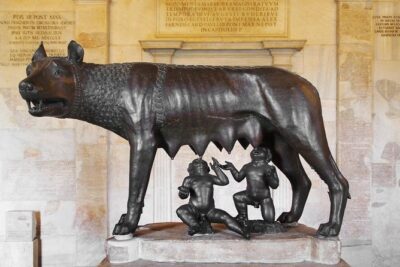
Capitoline Museum Experience with Multimedia Video
Read our review →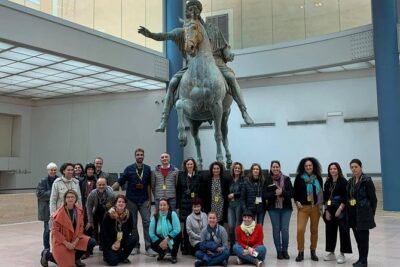
Capitoline Museum English Guided Tour & Skip-the-Line Ticket
Read our review →
Percy Jackson and the Olympian Gods Tour at the Capitoline Museums
Read our review →
Percy Jackson Tour for Kids at the Capitoline Museums of Rome with Special Guide
Read our review →
Percy Jackson and Ancient Myths Tour at the Capitoline Museums with Alessandra
Read our review →Browse the lists this tour appears in