
Reviewed · GOLF CART TOURS IN ROME
Rome by Golf Cart: see more, walk less
Rome feels different when you stop walking.
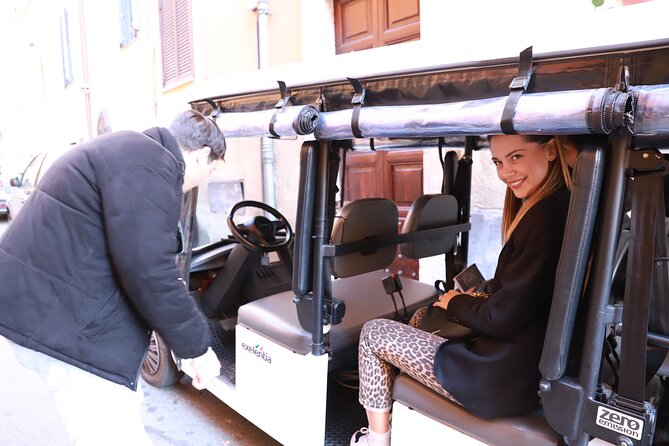
This private golf cart tour is a smart way to see Rome’s biggest hits fast, with great chances for photos and a guide you can ask questions. I especially like the quick, timed view opportunities at the Colosseum and the outside moments looking up at St. Peter’s Basilica. One consideration: the Colosseum is mainly a pass-by, so you won’t get a long, slow hang time there.
The best part for me is how the ride feels like Rome in motion, not a classroom. Guides like Giacomo and Francesco are often described as fun and organized, and the vibe is meant to feel relaxed, not rushed. Also, you’ll get a mix of stops, from ancient Rome to Baroque fountains, while still ending back near where you started.
In This Review
- Key things to know before you go
- Why a golf cart works so well for Rome
- Meeting point and how to plan your start in Piazza Barberini
- The Colosseum pass-by: great photos, not a long linger
- Piazza Navona: ancient foundation meets Baroque drama
- Pantheon: the dome tells its story fast
- Campo de’ Fiori: market energy and street-level Rome
- The twin-church square, then Trevi Fountain with Neptune’s chariot
- Circus Maximus: mass entertainment turned into an open-air park
- Altare della Patria and the view toward St. Peter’s Basilica
- Who should book this golf cart tour?
- Should you book Rome by Golf Cart, see more, walk less?
- FAQ
- How long is the golf cart tour?
- Where is the meeting point?
- Is pickup offered?
- Is this tour private?
- What language is the tour offered in?
- Can I bring a service animal?
- What key sights will I see?
- What is the cancellation policy?
Key things to know before you go
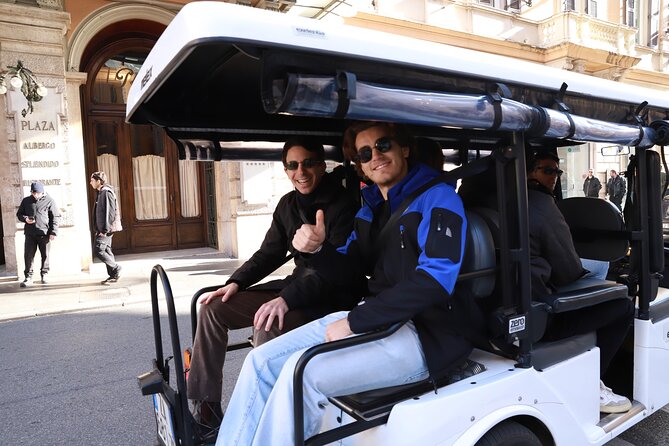
- Photo-first Colosseum pass, with time for quick shots rather than a long stop
- Piazza Navona + Pantheon in one smooth route, so you’re not wasting time retracing steps
- Trevi Fountain with Neptune’s chariot, including the coin-toss tradition as part of the moment
- Circus Maximus turnoff, seeing the space that once fueled mass chariot-racing entertainment
- Altare della Patria (Victor Emmanuel II Monument) view as a final anchor before St. Peter’s
Why a golf cart works so well for Rome
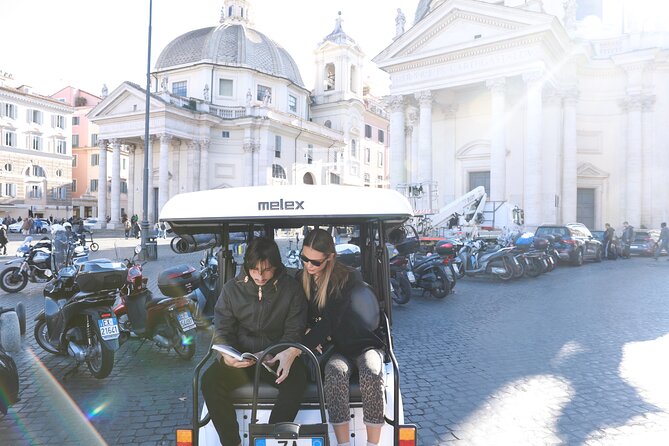
Rome is huge, and your feet are only so powerful. A golf cart tour is basically a shortcut to the classic sights without the constant sidewalk shuffle. In a city where it’s easy to spend half your day just moving between areas, the value here is time: you get more viewpoints in about 3 hours than most walking-heavy plans.
I also like that this is built around Rome’s “see it from the right angle” moments. From the cart, you can spot the scale of major monuments quickly, then decide where you want to return later on foot. That matters with Rome, where you will almost always want a second look.
The tour’s pacing is your biggest trade-off. Because the plan covers many landmarks, you’ll typically experience each highlight as a stop-and-look moment, not an extended deep visit. If your dream is to linger for an hour at one site, you might feel a bit compressed. If your dream is to get your bearings fast and build your next-day walking routes, you’ll probably love this style.
More Golf Cart Tours in Rome
- Rome by Golf Cart Private Tour: Beyond the Landmarks
★ 5.0 · 4,361 reviews - Rome on a Golf Cart Semi-Private Tour Max 6 with Private Option
★ 5.0 · 2,502 reviews - Rome Highlights by Golf Cart Private Tour
★ 5.0 · 2,379 reviews - Rome: Golf Cart Tour with Artisanal Gelato Tasting
★ 4.8 · 1,396 reviews
Meeting point and how to plan your start in Piazza Barberini
You’ll meet at the start point in front of Mammina, Piazza Barberini 13. Pickup is offered, and the whole setup is near public transportation, which is handy if your hotel is elsewhere in the center. The tour also uses a mobile ticket, so you’re not juggling paper confirmations in a city full of cobblestones.
Because it’s a private tour, only your group will participate. That generally means fewer waiting games and more room to ask the guide to tailor small details on the fly, like where to stand for better photos or what to prioritize if the day feels crowded.
I recommend planning to arrive a few minutes early, especially if you’re starting from a hotel that’s a short walk away. Rome can be confusing at first, and that first five minutes sets the mood. You’ll want to start relaxed so the ride feels like the easy, fun Roman outing it’s meant to be.
Practical tip: if you’re prone to motion sickness, take a position where you feel stable and keep your eyes on the direction you’re traveling. The route involves real city streets and traffic flow, so comfort varies by person.
The Colosseum pass-by: great photos, not a long linger
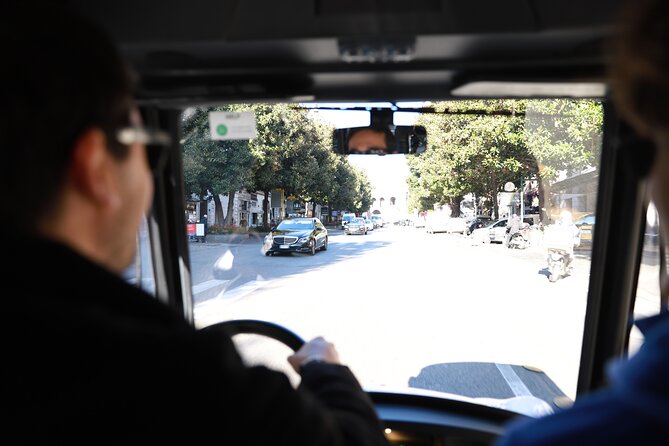
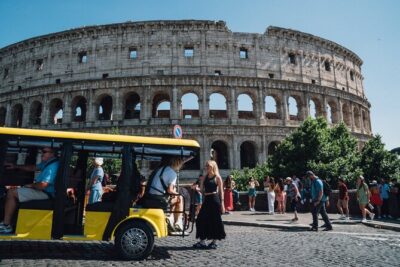
The Colosseum is the headline for a reason, and this tour treats it like a “grab the magic shot” moment. You pass by the monument without a prolonged stop, which can feel surprising if you expect time to wander around the exterior in detail.
Here’s why I still think it works. The cart lets you view the Colosseum quickly from multiple angles while keeping your overall schedule intact. If it’s your first time in Rome, that initial hit is valuable. You’ll come away with photos that show scale and a sense of where things sit in the broader area.
What to watch for: aim for the angle that shows the Colosseum against the surrounding streets, not just a tight close-up. You’ll get a better “I’m really in Rome” feeling that way, and it helps you orient later if you go back.
If you’re a super-fan who wants to spend a long time planning viewpoints, reading stonework, or doing a deeper walkaround, you’ll likely want a separate Colosseum plan. Think of this stop as the spark, not the full meal.
Piazza Navona: ancient foundation meets Baroque drama
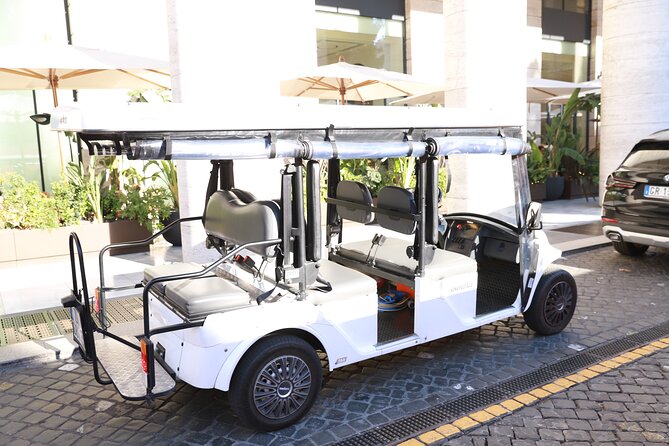
After the Colosseum, you head to Piazza Navona, a square that sits on the ancient Stadium of Domitian. That alone is a neat mental trick. You’re standing in a lively place today, but the geometry underneath goes back to ancient games and public gatherings.
The Baroque layer is what most people notice first. Piazza Navona is famous for its dramatic architectural style and its main fountain area, tied to Bernini’s influence. Even if you’re not a Baroque expert, the space is easy to read because the buildings and fountains are designed to draw your eyes in.
I love this stop because it’s not just a monument. It’s a square. That means you’re experiencing Rome as street life, not only as stone and signage. You’ll likely spot cafes nearby, and the whole area feels like a place where people gather on purpose.
The only downside of a cart tour here is time. You’ll get a strong introduction, but you won’t have hours to wander every corner. If you want to savor it like locals do, plan an extra stroll after the tour with a coffee and a slow loop around the plaza.
Pantheon: the dome tells its story fast
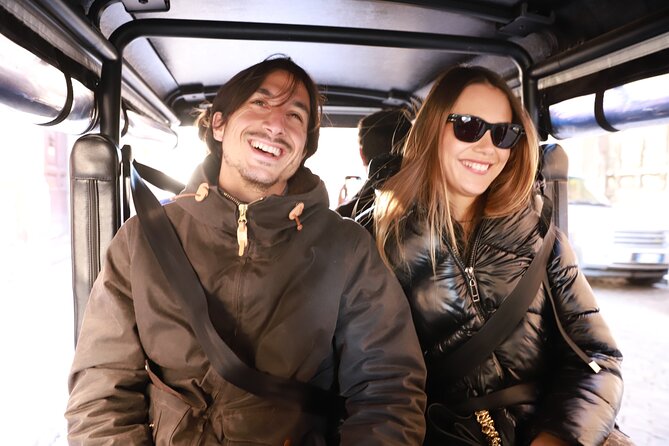
Next up is the Pantheon, one of Rome’s most impressive reminders that ancient engineering was not just good, it was bold. The key feature is the massive dome and the central oculus, the open circle at the top that shapes light and attention.
Even without going into details about architectural history, you can still appreciate what the space does. The dome gives you that immediate sense of scale, like you’re standing under a carefully engineered universe. The oculus then becomes the focal point, because light pours in through a single opening and makes the whole scene feel alive.
From a cart tour, you’re not meant to treat the Pantheon like a long museum stop. Instead, you get a clean overview and the time to reposition for good views before moving on.
My tip: when you see the dome, pause for one extra breath and look at it from where the cart places you. Many first-time visitors only notice the front facade, but the dome is what makes the Pantheon feel like a Roman masterpiece that still works today.
More Walking Tours in Rome

Campo de’ Fiori: market energy and street-level Rome
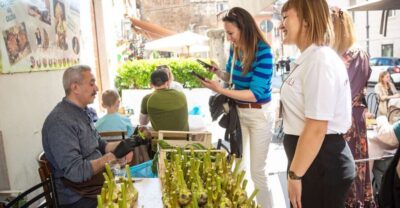
Campo de’ Fiori is next, and it changes the tone. This is a lively square with a daily market setup and the kind of cafe and restaurant surroundings that make it feel like Rome on a human scale.
The historical angle here is that the market square has long served as a public gathering place. That matters because it explains why the square still feels like a hub, not a tourist stage. You’ll notice that when you’re there, the space naturally pulls people in from every direction.
I like this stop on a cart tour because it balances the heavier monuments. You go from big stone statements to everyday life, and it keeps the day from feeling like nonstop sightseeing.
If you want the best experience, treat it like an intermission. Buy a simple snack or a small drink if it fits your schedule, then use that energy to keep exploring with a clear mind. Just don’t let the market slow you too much. The whole point of the cart plan is that you’ll cover more territory than you would on foot.
The twin-church square, then Trevi Fountain with Neptune’s chariot
One stop takes you to a large urban square with twin churches and an Egyptian obelisk, serving as a gateway toward Rome’s historic center. Even with a short stop, this is a powerful moment because the composition is so intentional, and it helps you understand how Rome funnels you from one “world” to the next.
Then you move on to a Baroque masterpiece featuring Neptune’s chariot, where visitors toss coins as a tradition meant to bring you back. That’s the big fountain moment, and it tends to draw crowds fast. The cart approach helps because you can get close enough for the iconic view without spending your entire time fighting for the best vantage point.
What I recommend: before you toss your coin, take ten seconds to watch how people cluster. Find a small opening, position yourself, and then make the moment quick. You’ll enjoy it more if you don’t feel like you’re jostling.
Also, don’t underestimate how helpful this sequence is for photo planning. The fountain is busy, so having already seen a few major squares makes it easier to recognize what you really want in your photos: the architecture, the crowd, or the fountain’s drama.
Circus Maximus: mass entertainment turned into an open-air park
Next is the ancient Roman chariot-racing stadium, now a public park and archaeological site. In other words, you get a chance to picture Rome when crowds gathered for spectacle.
This stop is valuable because it reminds you that “theater” in ancient Rome was not only buildings. It was movement, speed, and collective excitement in a space built for it. Seeing the site from the cart helps you understand the layout without needing a lengthy guidebook lesson.
I like how this part of the route changes what kind of Rome you feel. Up to this point, you’ve seen monuments that impress you with beauty or engineering. Here, you see Rome as it once was at full volume.
Again, the limitation is time. You’ll get the overview, then you’ll need to come back on foot if you want to go deeper into the archaeology or take a longer walk through the park area. Treat this stop as a “now I get what that was” moment.
Altare della Patria and the view toward St. Peter’s Basilica
The tour then aims at one of the most imposing visual anchors in the center, the Altare della Patria, also known as the Victor Emmanuel II Monument. Even from the outside, it’s hard to miss. This is one of those places where the scale hits first, then the details follow.
From there, you’ll be able to see St. Peter’s Basilica from outside and admire the square. This is a major reason I think the cart tour works as a first or half-day plan. You get the classic Rome skyline payoff without having to commit to a long walking route right away.
Why this matters for your trip strategy: St. Peter’s is so visually dominant that it changes how you judge the city’s distances. Once you’ve seen it from outside, you’ll better understand where to head next for a full visit, photos at golden hour, or a planned walk through the surrounding streets.
I also recommend taking a moment at the end to look back at what you’ve already covered. The tour route gives you a mental map, and that helps you enjoy your remaining time more calmly.
Who should book this golf cart tour?
This tour is a strong match if you want to maximize time and keep your feet fresh. If you have limited time in Rome, prefer not to do long walks between sights, or like the idea of a private guide helping you navigate and answer questions, the cart format is a practical win.
It’s also a good fit for people who enjoy quick, well-paced introductions to a lot of major landmarks. You’ll get a structured route and a chance to stop for photos, then you can decide what you want to revisit more slowly.
It might be less ideal if you want extended time at one or two sites, since the plan moves on quickly. It’s also best if you’re comfortable with city driving and short viewpoint stops rather than a slow, lingering museum-style route.
As for language, the tour is offered in English. And since service animals are allowed, it’s easier for more people to bring what they need. Most travelers can participate.
What to bring: comfortable clothes, water, and your phone fully charged for photo moments. Rome’s sidewalks can be slippery and uneven, even when you’re not walking far, so plan for that.
Should you book Rome by Golf Cart, see more, walk less?
I’d book it if you’re in Rome for a short stay and you want a fast, organized way to hit the big names without wearing yourself out. The value is in the mix of coverage and the private format, where you can ask questions and get guidance on what to notice.
I’d skip it or pair it with another plan if you know you want long visits at the Colosseum or you’re hoping for slow, deep exploration at each stop. This tour is designed for the fast look and the strong photo moments, then letting you follow your curiosity afterward.
One smart way to decide: ask yourself if you want Rome as a guided route or Rome as a collection of long, self-guided wandering days. If the guided route sounds good, this cart tour is a solid choice.
FAQ
How long is the golf cart tour?
The tour lasts about 3 hours.
Where is the meeting point?
The meeting point is in front of Mammina, Piazza Barberini 13.
Is pickup offered?
Yes, pickup is offered. The meeting point is listed at Piazza Barberini 13.
Is this tour private?
Yes. It is a private tour/activity, and only your group participates.
What language is the tour offered in?
The tour is offered in English.
Can I bring a service animal?
Yes, service animals are allowed.
What key sights will I see?
You’ll pass by or visit major landmarks including the Colosseum (quick look for photos), Piazza Navona, the Pantheon, Campo de’ Fiori, Trevi Fountain, Circus Maximus, Altare della Patria (Victor Emmanuel II Monument), and you’ll see St. Peter’s Basilica from outside.
What is the cancellation policy?
You can cancel for a full refund up to 24 hours in advance. If the minimum number of travelers isn’t met, the experience may be canceled and you’ll be offered another date or a full refund.
Latest additions from Rome
- Rome: Testaccio Market Food Tour with Street Food & Wine★ 5.0 · 8 reviews
- Exclusive Pasta & Tiramisu Class with Wine near by Colosseum★ 5.0 · 8 reviews
- Private Professional Photoshoot in Rome★ 5.0 · 8 reviews
- Loreto “Shrine of the Holy House of the Virgin Mary” Private Tour from Rome★ 5.0 · 8 reviews
- Rome Day to discover Florence and Pisa Hotel Pickup★ 4.5 · 8 reviews
- Rome: Christmas Nativities and Angels Tour★ 3.1 · 8 reviews
- Guided Tour of Vatican Museums and Sistine Chapel★ 5.0 · 8 reviews
- Rome: Cooking Class of fresh Pasta and Tiramisu Cake★ 5.0 · 8 reviews
Golf Cart Tours in Rome, compared.
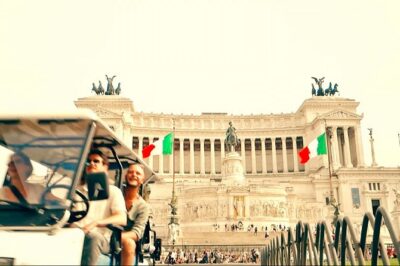
Rome by Golf Cart Private Tour: Beyond the Landmarks
Read our review →
Rome on a Golf Cart Semi-Private Tour Max 6 with Private Option
Read our review →
Rome Highlights by Golf Cart Private Tour
Read our review →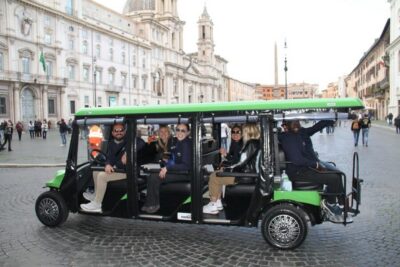
Golf Cart Small-Group Guided Tour: Rome City Highlights
Read our review →
Private/Group 4 Hours Golf Cart SightseeingTour
Read our review →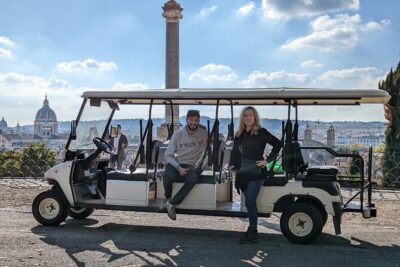
Browse the lists this tour appears in