
Reviewed · CATACOMBS OF ROME TOURS
Rome: Appian Way & Catacombs Golf Cart Tour – Shared|Small groups
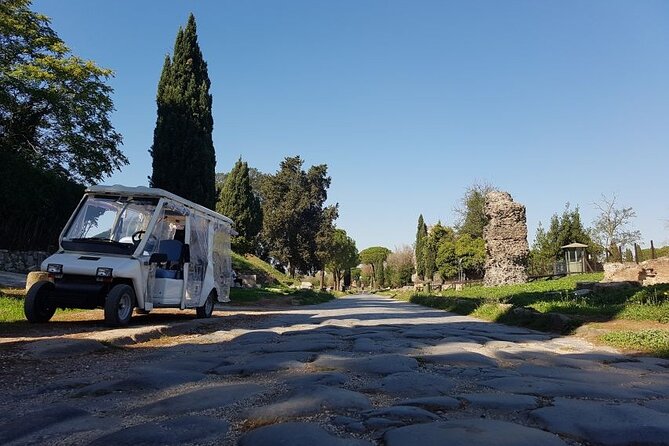
The Appian Way feels endless, and this tour helps. You ride a golf cart along Rome’s most historic road, then step into catacombs for a darker side of the city. It is a great way to get the “Rome outside the center” feeling without turning it into a marathon.
Two things I really like: first, the pace is built for sightseeing, not pedaling. The golf cart lets you cover long stretches of the Via Appia Antica while your guide points out what matters. Second, the stops are varied, from early Christian tradition at Domine Quo Vadis to the Circus of Maxentius, then down into burial tunnels.
One drawback to consider: the ride is longer than it sounds, and if you end up seated farther back, you might find it a bit harder to hear the guide clearly. Also, the catacombs choice can change based on availability, so plan for either St Callisto or St Sebastiano.
In This Review
- Key takeaways before you go
- Why the Appian Way by golf cart works in Rome
- Domine Quo Vadis church stop: a Bible story with footprints
- Catacombs of St Callisto or St Sebastiano: your guided walk underground
- Circus of Maxentius: an ancient track with a story twist
- The hilltop stop for Cecilia Metella and Caetani Castle views
- Capo di Bove and the Quintili area: small stops, strong context
- The Via Appia Antica ending stretch through the Appian Park
- Price, timing, and group size: what you’re paying for
- Who this tour suits best (and who might want a different plan)
- Should you book this Rome golf cart Appian Way and Catacombs tour?
- FAQ
- How long is the Rome Appian Way & Catacombs golf cart tour?
- What sites does the tour include?
- Which catacombs will we see?
- Is entry included for Cecilia Metella’s tomb and the Quintili villa?
- What is included in the price?
- How big is the group?
- Is free cancellation available?
Key takeaways before you go
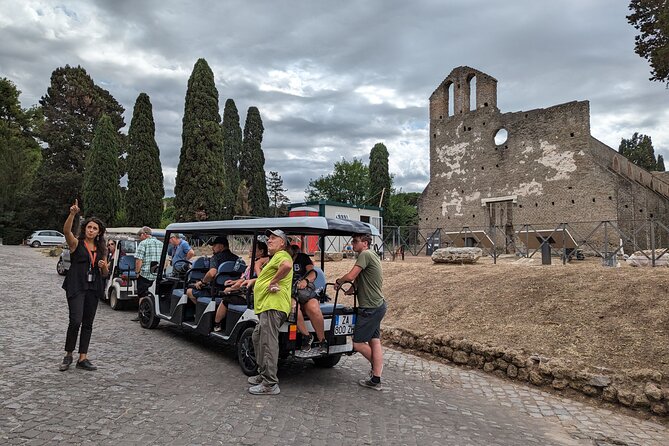
- Golf cart comfort on a long ancient road: you still feel the distance of the Via Appia Antica, without the legwork.
- Two possible catacombs with a guided interior tour: St Callisto or St Sebastiano, depending on what is available.
- Circus of Maxentius entry included: one of Rome’s best-preserved circus spaces in this area.
- Hilltop photo stop with Cecilia Metella and Caetani Castle context: you get the story even if you skip certain entrances.
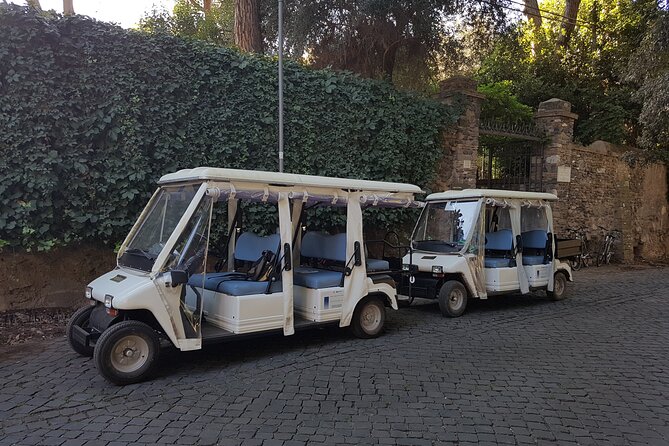
- Small group size (max 7): easier questions, less shuffling, and more time at the stops.
Why the Appian Way by golf cart works in Rome
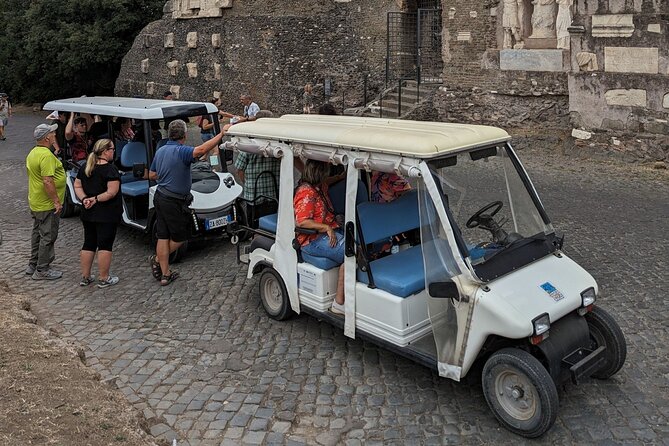
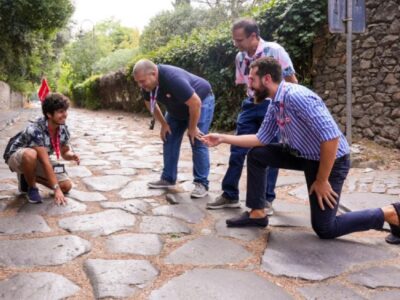
The Via Appia Antica is one of those places you understand better after you actually travel along it. The road is lined with burial spaces, churches, sepulchers, and mausoleums, and the sheer length is part of the impact. On a bike or on foot, that can turn into a workout. On a golf cart, it stays a tour.
You get to see the Appian Way’s “edge of Rome” vibe, the quiet stretches, and the way ancient sites appear in fragments rather than all at once like the Colosseum. For many people, that shift is the whole point of booking this instead of another top-sight sprint.
The tour is also built for a small group, with a maximum of 7 travelers. That matters because you are not just passing through, you are listening, stopping, and asking questions when something clicks.
More Golf Cart Tours in Rome
- Rome by Golf Cart Private Tour: Beyond the Landmarks
★ 5.0 · 4,361 reviews - Rome on a Golf Cart Semi-Private Tour Max 6 with Private Option
★ 5.0 · 2,502 reviews - Rome Highlights by Golf Cart Private Tour
★ 5.0 · 2,379 reviews - Rome: Golf Cart Tour with Artisanal Gelato Tasting
★ 4.8 · 1,396 reviews
Domine Quo Vadis church stop: a Bible story with footprints
You start at the Chiesa del Domine Quo Vadis, a church connected to the apocryphal Acts of Peter. This is the story moment where Saint Peter encounters the risen Christ while fleeing persecution in Rome. The tradition centers on the Latin question Domine, quo vadis?, meaning Lord, where are you going?, with an answer that points back to Rome.
What makes this stop feel different is the tangible detail tied to the tradition, the miraculous footprints that are preserved at the church. The stop is short, about 10 minutes, and that is the right amount of time here. You are not trying to do a deep study, you are setting the emotional and spiritual tone before heading into the more physical layers of Roman life.
If you enjoy religious history and how traditions can shape a place, this quick introduction is a nice warm-up. If you only want ruins and architecture, you might treat it as a brief detour, but it still gives context for what you will see next.
Catacombs of St Callisto or St Sebastiano: your guided walk underground
Next comes the part most people remember: the catacombs. You do not just look from the entrance. You get an included guided tour and admission of either Catacombe di San Callisto or Catacombe di San Sebastiano, depending on availability.
These are among the most important cemeterial complexes in Rome. They began around the middle of the second century and sit inside a much larger burial landscape that covers about 90 acres. The galleries stretch roughly 12 miles in total length and are arranged in four levels, more than 20 meters deep. That scale is hard to picture until you are inside a space that was designed for generations of burial.
The guide also frames what you are seeing. Tens of martyrs, 16 popes, and very many Christians were buried here. That mix helps you understand that this was not a single family tomb. It was a whole system for community memory, faith, and survival under pressure.
A practical note: catacombs are a cool, enclosed experience. You might want a layer, even in warm months, since underground spaces can feel chilly.
Circus of Maxentius: an ancient track with a story twist
After you return onto the Appian Way, you stop at the Circus of Maxentius and go inside. This is the second biggest Roman circus in the area and also one of the best preserved. The tour notes a fascinating detail: it was probably never used, and it has been associated with the Ben Hur film set.
The circus itself is the star. It is not as famous as the Circus Maximus in central Rome, but that is exactly why it fits well here. You get a clearer sense of what a Roman circus looked like when the space has not been overwhelmed by modern traffic and crowds.
The tour frames the circuses as political and funerary in character. Only inaugural games are recorded here, and they are generally thought to have been funerary. There is a connection to Maxentius’ son, Valerius Romulus, who died in AD 309 at a young age and was likely interred in the nearby cylindrical tomb, known as the tomb of Romulus.
This stop is short, around 20 minutes, but it gives you a different angle on Roman power. Instead of focusing only on gladiators and emperors in the city center, you see how grand public spaces existed at the edge of empire.
The hilltop stop for Cecilia Metella and Caetani Castle views
One of the smartest parts of this tour is the hilltop pause connected to Mausoleo di Cecilia Metella e Castrum Caetani, within the Parco Archeologico dell’Appia Antica. You get a view stop plus explanation of the Tomb of Cecilia Metella and the Caetani Castle.
Even better, you do not have to buy an entrance ticket to enjoy the story and the scenery. The stop is about 15 minutes, and the guide helps you understand why this area matters on the Appian Way.
On the opposite side of the road, the tour also brings you close to a unique example of Cistercian gothic style, the S. Nicola church. That pairing works. You get the classic ancient monument feeling from the tomb area, then you see how later religious architecture folded into the same landscape.
If you are the type who likes photos, this is one of your best chances. Just remember: entrances for Cecilia Metella’s tomb are not included here, so if you know you want to go inside, you would need to plan that separately.
More Small-Group Tours in Rome
Capo di Bove and the Quintili area: small stops, strong context
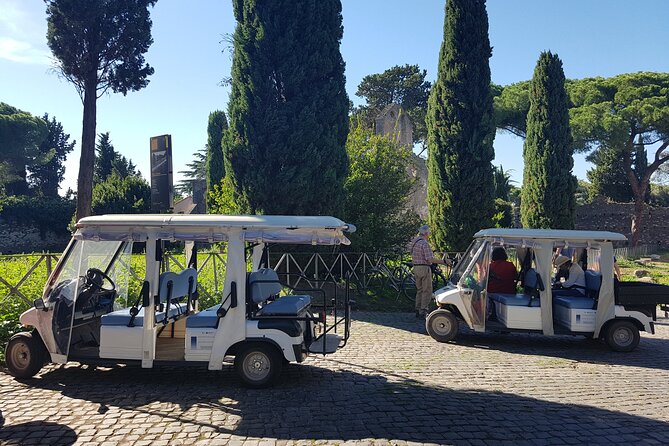
You get two more archaeological stops that stay short but help you connect the dots across the Appian Way.
First is Complesso di Capo di Bove (about 15 minutes), tied to the private villa of a multi-millionaire philosopher and preceptor of Emperor Marcus Aurelius. That title alone is a reminder that the Appian Way was not only for emperors and monumental tombs. It also belonged to people who shaped ideas and education.
Next is Villa dei Quintili and Santa Maria Nova, also about 10 minutes. This residential area of the suburb of Rome was originally owned by the brothers later killed at the hand of Emperor Commodus. The tour uses that stark historical fact to underline how quickly fortunes could change in Roman politics. Again, the main point for you is interpretation, not a long interior visit.
Entrances for both the Cecilia Metella tomb and the Quintili villa are not included. The tour is set up so you can enjoy the sites, then keep moving. If you love stepping into buildings and reading inscriptions up close, you might end up wanting extra time on these two later, but for a 3-hour experience the trade-off is reasonable.
The Via Appia Antica ending stretch through the Appian Park
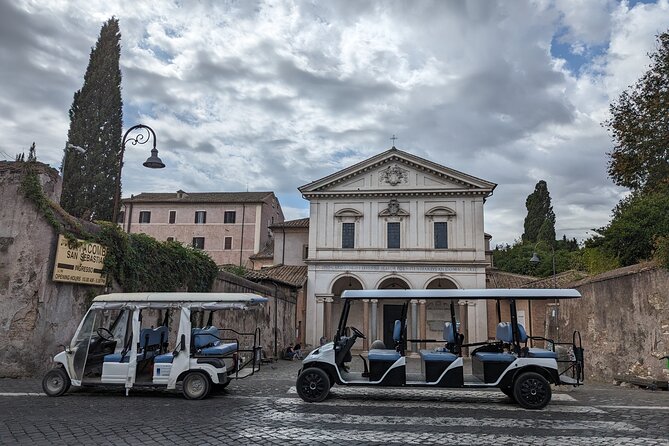
After the set-piece stops, you finish with the “road itself” experience. You drive along the Regina Viarum, looking at the burial places lining the way, including catacombs, churches, sepulchers, and mausoleums. This is where the guide ties everything together and answers the big question: why are there so many burial sites here?
It makes the whole tour click. You start noticing how the Appian Way functioned as a corridor for memory. The route mattered, the distance mattered, and the visibility mattered. Roman burial culture was not always hidden. Sometimes it was built into the act of passing by.
Then you head back along the Ancient Appian Way toward the starting point, with about 30 minutes driving in the Appia Antica Archaeological Park area. That return drive is not wasted time. It helps you absorb what you just learned, and it keeps the overall pace comfortable.
The tour ends back at the meeting point on Via Appia Antica, so you can reorient yourself fast for dinner or a quick stop nearby.
Price, timing, and group size: what you’re paying for
At $91.32 per person for about 3 hours, this is not a budget “quick look.” But the value is in the mix of access and transportation.
You are paying for three things that cost money and time in Rome:
- Golf cart transport for a long route
- Admission plus a guided interior visit for the catacombs
- Entry included for the Circus of Maxentius
You also get bottled water, half a liter per person, which sounds small until you remember how long you will be out on the Appian Way.
There are also sensible savings built in. Entrance to Cecilia Metella’s tomb and the Quintili villa are not included, and the tour specifically notes you do not need to buy tickets for those particular parts. That keeps the cost down and lets you decide later if you want extra entry time.
A booking detail to keep in mind: the tour is often reserved about 53 days in advance on average. If your dates are fixed, booking early is a smart move.
As for language and comfort, the tour is offered in English and uses mobile tickets. The group stays small, max 7 travelers, which is a big deal when you want to ask questions and not feel rushed.
Who this tour suits best (and who might want a different plan)
This is a strong fit if:
- You want the Appian Way experience without turning your day into a physical challenge
- You care about both Christian history and Roman monumental sites
- You already saw the headline sights in central Rome and want a quieter, lower-crowd day
It also works well for people who like structure. You know the order, you know the major stops, and you get a tour guide to connect the stories.
You might want a different option if:
- You only want places with extensive time inside buildings, because this is designed for movement and short guided stops
- Hearing the guide is critical for you, since seating position can affect audio clarity
If you go, sit where you can hear easily, and do not be afraid to ask questions early. In a small group, those answers can become the highlight of the day.
Should you book this Rome golf cart Appian Way and Catacombs tour?
Yes, if you want a high-value history day that stays comfortable. The combination of the Appian Way drive, an included guided catacombs visit (St Callisto or St Sebastiano), and a real interior stop at the Circus of Maxentius is a solid package for the time.
I would especially recommend it if you have limited hours in Rome and want to cover a lot without getting exhausted. The golf cart choice is not just convenience, it changes how you experience the distance and rhythm of the Appian Way.
If you are the type who wants to linger inside tombs and villas for long periods, you can still book this, but plan on pairing it with extra time elsewhere. The tour gives you the big picture, then lets you decide how far to go next.
FAQ
How long is the Rome Appian Way & Catacombs golf cart tour?
It runs about 3 hours.
What sites does the tour include?
You visit Chiesa del Domine Quo Vadis, one of the catacombs (St Callixtus or St Sebastiano based on availability), the Circus of Maxentius, stops connected to Cecilia Metella and Caetani Castle, and other Appian Park areas along Via Appia Antica. The tour ends back at the meeting point.
Which catacombs will we see?
You will visit Catacombe di San Callisto or Catacombe di San Sebastiano depending on availability.
Is entry included for Cecilia Metella’s tomb and the Quintili villa?
No. Cecilia Metella’s tomb and Quintili’s villa entrances are not included, and you do not need to buy tickets for those parts on the tour stops.
What is included in the price?
Bottled water, half a liter mineral water per person, is included. Catacombs admission and guided tour are included, and Circus of Maxentius admission is free as listed on the tour details.
How big is the group?
This tour has a maximum of 7 travelers.
Is free cancellation available?
Yes. You can cancel up to 24 hours in advance for a full refund.
Down Into the Catacombs
- Rome: Capuchin Crypts and Catacombs Tour with Transfers
★ 4.6 · 6,456 reviews - The Original Roman Crypts and Catacombs Tour with Transfers
★ 4.5 · 4,896 reviews - Rome: Catacombs of St. Callixtus Entry Ticket & Guided Tour
★ 4.6 · 3,037 reviews - Rome: Guided Roman Catacombs Tour with Transfers
★ 4.6 · 1,830 reviews
The Appian Way and the Aqueducts
- Rome: Appian Way & Aqueducts E-Bike Tour (Catacombs & Food)
★ 4.9 · 1,498 reviews - Rome: Appian Way, Catacombs, & Roman Aqueducts E-bike Tour
★ 4.9 · 1,421 reviews - Appian Way Aqueducts Bike Tour (Catacombs & Lunch Option)
★ 5.0 · 975 reviews - Rome: Appian Way, Aqueducts, and Catacombs Tour
★ 4.7 · 942 reviews
Latest additions from Rome
- Rome: Testaccio Market Food Tour with Street Food & Wine★ 5.0 · 8 reviews
- Exclusive Pasta & Tiramisu Class with Wine near by Colosseum★ 5.0 · 8 reviews
- Private Professional Photoshoot in Rome★ 5.0 · 8 reviews
- Loreto “Shrine of the Holy House of the Virgin Mary” Private Tour from Rome★ 5.0 · 8 reviews
- Rome Day to discover Florence and Pisa Hotel Pickup★ 4.5 · 8 reviews
- Rome: Christmas Nativities and Angels Tour★ 3.1 · 8 reviews
- Guided Tour of Vatican Museums and Sistine Chapel★ 5.0 · 8 reviews
- Rome: Cooking Class of fresh Pasta and Tiramisu Cake★ 5.0 · 8 reviews
Catacombs of Rome Tours, compared.
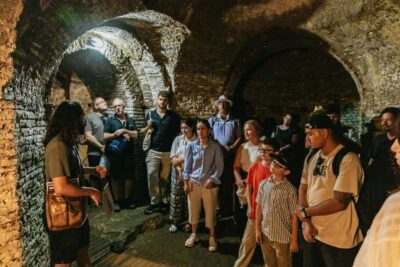
Capuchin Crypts and Catacombs Tour with Transfers
Read our review →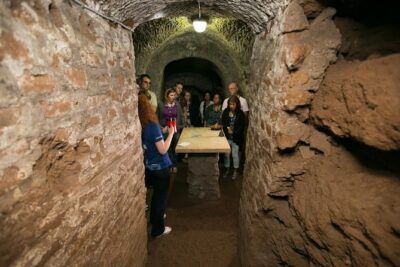
The Original Roman Crypts and Catacombs Tour with Transfers
Read our review →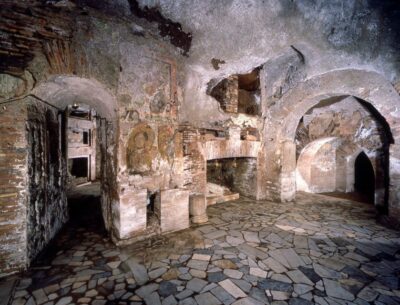
Catacombs of St. Callixtus Entry Ticket & Guided Tour
Read our review →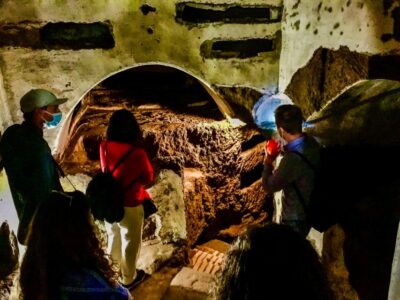
Catacombs and Capuchin Crypt Guided Tour with Transfer
Read our review →
Appian Way & Aqueducts E-Bike Tour (Catacombs & Food)
Read our review →
Appian Way, Catacombs, & Roman Aqueducts E-bike Tour
Read our review →Browse the lists this tour appears in