
Reviewed · WALKING TOURS IN ROME
Roamin’ Around Rome Guided Walking Tour
Rome works best on foot. I love how this tour stitches together iconic landmarks with smart stops in between, and I love that the guide turns each sight into a story you can actually picture. One drawback, it is still a 2.5-hour walk, so if you struggle with long standing and uneven sidewalks, plan accordingly.
I also like that you get a strong mix of Rome’s classics and art, from the history-focused Piazza Venezia area to frescoes at Galleria Sciarra and an inside visit to St Ignazio di Loyola, often called the Instagram church. Just know that when a site needs an entrance ticket, you usually see it from outside, so you should expect photo points and explanations more than paid interior time.
In This Review
- Key things to know before you go
- A 2.5-hour route that strings together Rome’s big hits
- Piazza Venezia and Palazzo Venezia, where empire-era settings start to make sense
- Trajan’s Column and the Forum area, what you see without paying tickets
- Pantheon and Piazza Navona, learning how Rome keeps stealing the spotlight
- Trevi Fountain coin toss and what to notice as you move through the area
- Galleria Sciarra and St Ignazio di Loyola, the art stops most people remember
- Night tour flavor, Fori Imperiali and the Colosseum under evening lights
- Price and value for $36, what’s included and what to budget for
- Comfort, pace, and practical notes that matter in Rome
- How to get the most from your guide, from Furio to Sonia
- Should you book this guided walking tour?
- FAQ
- How long is the Roamin’ Around Rome Guided Walking Tour?
- How much does it cost?
- What is included in the tour price?
- Are entrance tickets included for the attractions?
- What language is the tour guide?
- Is the tour suitable for people with mobility issues?
Key things to know before you go
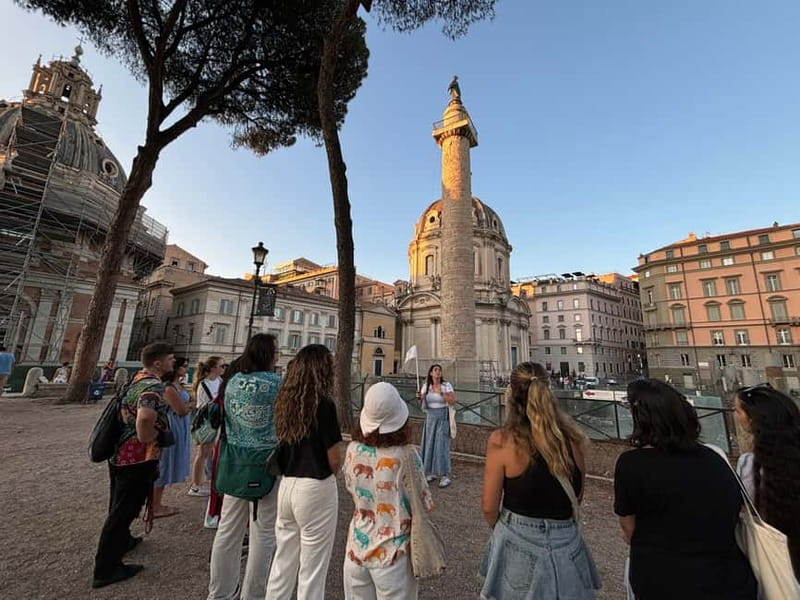
- Guides make or break it, and this one often lands big on that, with names like Furio, Pillar, Fabiano, and Sonia showing up in strong feedback.
- Two different routes exist (day vs night), so read the exact stop list before you book.
- Most ticketed sights are outside-viewed, meaning you will look, listen, and learn, not necessarily go in.
- St. Ignazio di Loyola is an inside stop on both day and night options, plus you’ll see the fresco-filled Galleria Sciarra.
- Trevi Fountain includes the coin moment, plus you’ll keep moving so the magic does not get stuck in a selfie line.
A 2.5-hour route that strings together Rome’s big hits
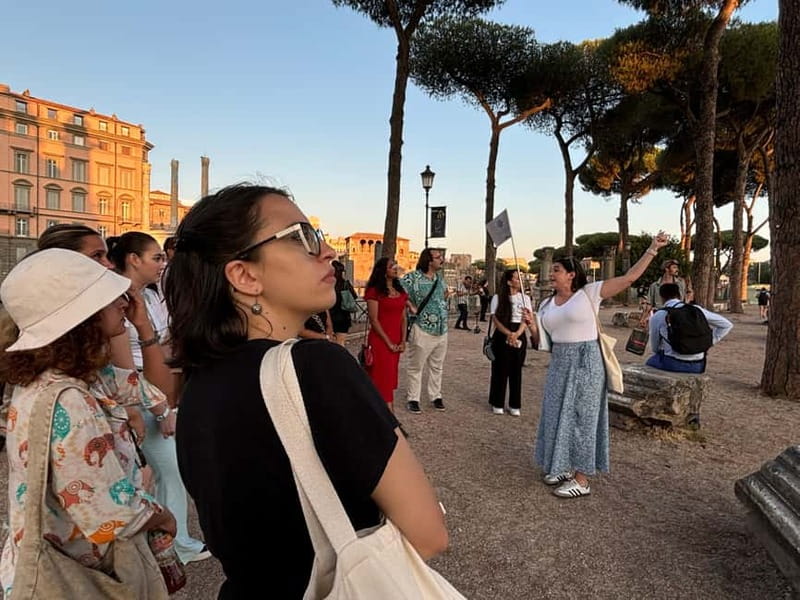
For $36, you are buying time and organization. Rome can feel like a scatter of monuments, but this tour gives you a walking path that links the dots, so you finish with a mental map instead of a pile of photos.
The pace is meant for seeing. You’ll move through lively streets and peaceful squares, with frequent stops for context and spotting details you might miss on your own. The tour time is short enough that you will still have energy left for dinner afterward, but long enough that you will feel like you actually did something.
If you like Rome with your feet moving and your brain switched on, this fits. If you want a slow museum day with lots of sitting, you may find the format a bit brisk.
More Walking Tours in Rome
- Rome: Guided Food Walking Tour with Wine in Trastevere
★ 4.9 · 3,105 reviews - Rome: Trastevere & Campo de Fiori Street Food Walking Tour
★ 4.9 · 2,768 reviews - Rome: Paranormal Night Walking Tour & Secret Backstreets
★ 4.9 · 1,921 reviews - Rome: Trastevere Street Food Walking Tour with Local Expert
★ 4.8 · 1,784 reviews
Piazza Venezia and Palazzo Venezia, where empire-era settings start to make sense
The experience typically begins in the core sights area, and Piazza Venezia is your “turn the lights on” moment. You will be looking at the Vittoriano zone, with Palazzo Venezia in the mix, and the guide’s job is to help you connect what you are seeing now with what stood there before.
Palazzo Venezia is a great example of why a guide helps. You are not just looking at a grand facade, you are learning what it means in the story of the city and why it sits exactly where it does. The route also sets you up for the bigger Rome landmarks that come next, so by the time you reach the ruins-adjacent areas, you are not starting from scratch.
One practical note: your “views” time here is typically about perspective and orientation. If you were hoping for lots of paid entrances, the tour generally does not promise that.
Trajan’s Column and the Forum area, what you see without paying tickets
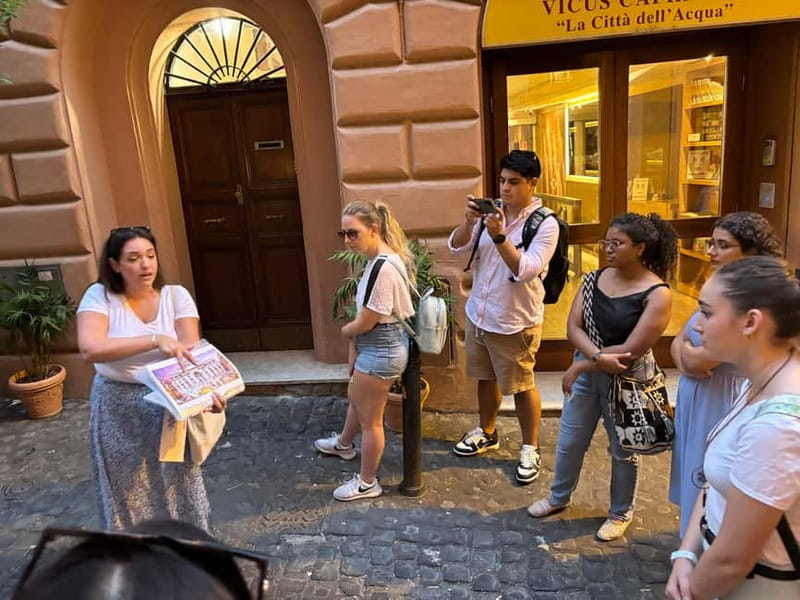
One smart feature of this tour is how it handles ticketed attractions. When an entrance ticket is required, you are usually brought past or around the site for outside viewing, not full entry.
Trajan’s Column, plus the Market and Forum area outside, gives you a chance to understand the scale and layout even if you do not pay for extra interiors. The guide can point out what you are looking at in plain terms, like why this zone matters and how Trajan’s era echoes through Rome’s later city life.
This is also one of the best parts for building confidence. Rome’s ruins can be confusing if you show up cold. Even limited outside access becomes more satisfying when the guide gives you a framework, so the next time you walk around independently, you will recognize shapes, names, and relationships.
If you are the type who loves going inside every major site, you may need to plan a separate ticket day. But as a connector tour, this part works.
Pantheon and Piazza Navona, learning how Rome keeps stealing the spotlight
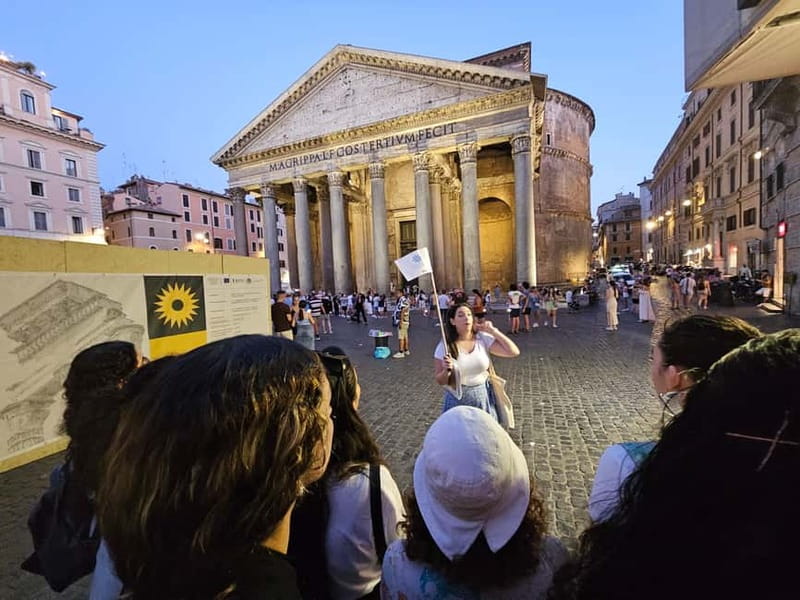
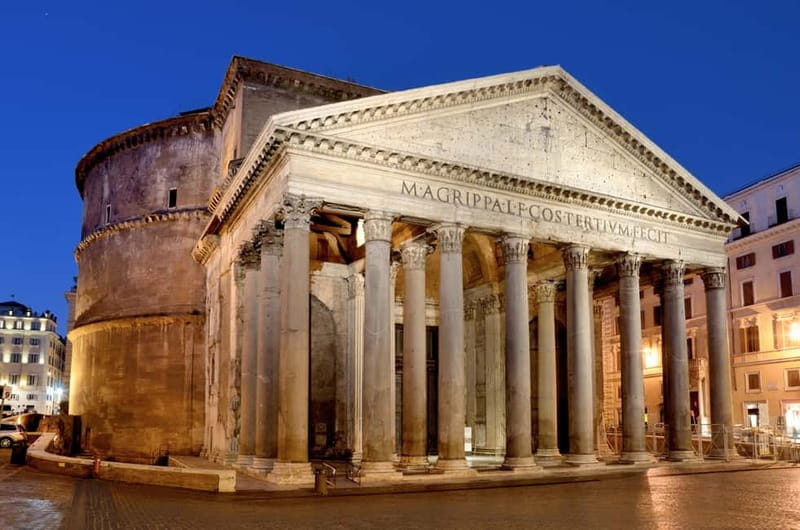
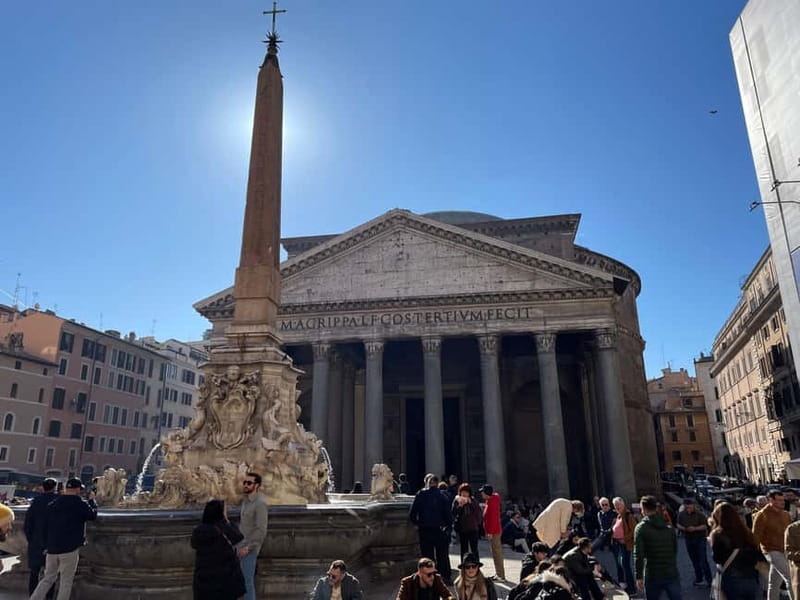
The Pantheon is a highlight for a reason. On this tour, you see why it is considered one of the best-preserved monuments from Rome’s imperial period, and you get the stories that explain what you are seeing in the space around you.
I like that the guide’s explanations turn the Pantheon from a “big dome on a postcard” into a physical experience. You start noticing proportions, the way the building sits in its surroundings, and how that design contributes to the awe factor. You also get nearby context that helps Piazza Navona later feel less random and more connected.
Piazza Navona is not just scenic here. It is a perfect pause after monument intensity, with room to breathe, look up, and absorb the energy of the square. For many people, it becomes the “okay, Rome is alive” moment, without needing an extra ticket.
Trevi Fountain coin toss and what to notice as you move through the area
Trevi Fountain is your most famous stop, and the tour does not treat it like a detour. You will toss a coin into the Fontana di Trevi and do the classic wish-the-return-to-Rome ritual, then keep going rather than getting trapped in a long pause.
What makes this worthwhile is the walk-up. As you approach, you can notice how the area is staged, how people flow, and where the views land for photos that do not feel like you are standing in a jam. The guide’s talking points help you look beyond the obvious, so the fountain becomes more than just a famous picture spot.
And because this tour keeps moving, you have less chance of burning your whole afternoon on one bottleneck. It is still busy, but you get more value from the time.
A few more Rome options worth a look
Galleria Sciarra and St Ignazio di Loyola, the art stops most people remember
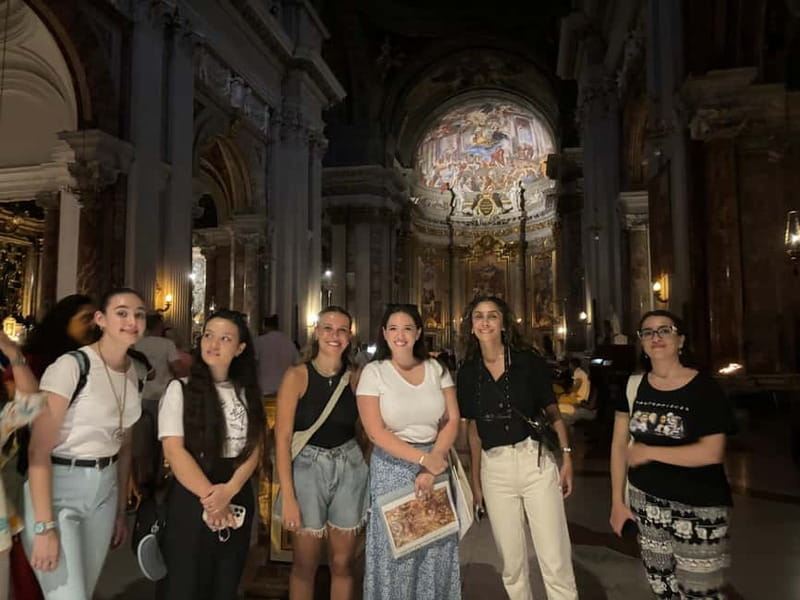
Galleria Sciarra is where I think this tour shows its personality. You get a side route into a more artistic, less generic Rome moment, with stunning frescoes that reward even quick glances. It is the kind of stop that makes you think, why does this feel like a secret, even though it is right there in the city?
Then comes St Ignazio di Loyola. This is an inside visit, and it is the church stop many people know by its nickname, the Instagram church. That label can sound cheesy, but it points to the real payoff: you see why people photograph it, and you also learn what you are looking at rather than just snapping and moving on.
If you care about art and want more than street-level sightseeing, this pairing is strong. A lot of walking tours will mention churches. This one uses the church as a real stop with context, and that difference adds up.
Night tour flavor, Fori Imperiali and the Colosseum under evening lights
The night option changes the feel. You still hit the same core ideas, iconic sights plus art and atmosphere, but the street-level energy is different, and the route leans more toward the ancient-city spine.
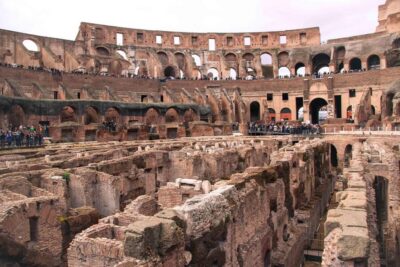
On the night itinerary, you can expect stops like Piazza di Sant’Agostino, Vicus Caprarius, and Via dei Fori Imperiali and Julius Caesar’s Forum. Those sound like a history lover’s fantasy list, but the practical benefit is that you get to see how these places connect in one line of walking. By the time you reach the Colosseum, the setting feels less like a standalone monument and more like a piece of a larger puzzle.
A big bonus here is timing. Evening makes Rome feel more human sized. The monuments are still huge, but the city rhythm slows enough that the walk feels like exploration instead of a sprint.
Price and value for $36, what’s included and what to budget for
At $36 per person for a 2.5-hour guided walk, the value is not in paid admissions. It is in having a professional guide organize the route and explain what you are seeing.
Included items are straightforward: a professional guide and the walking tour of Rome’s historic heart. Not included: entrance fees to attractions, food and drinks, and hotel pickup or drop-off. That means your real budget is mostly your comfort items, like water and whatever you choose to pay for if you later decide to go inside a specific site.
Here is how I’d judge the value: if you are the type who likes understanding what you see, a guide for $36 for 2.5 hours is usually a smart move in Rome. If you already know the city deeply and prefer to wander freely, you might not need this structure. But for most first-timers or anyone who wants to avoid confusion, this kind of guided route is a strong deal.
Also, the guide language is English and Spanish, so you can pick a tour that matches your comfort.
Comfort, pace, and practical notes that matter in Rome
This tour is not for everyone physically. It is not recommended for travelers with back problems, pregnant travelers, or people with heart problems or other serious medical conditions, and it is not suitable for mobility impairments or wheelchair users.
That is not a scare tactic, it is a realistic warning. You will be on your feet for a solid stretch, and the sidewalks and spacing in old Rome are not made for slow, careful movement everywhere.
A few practical reminders from the activity rules: you should bring a passport or ID card (a copy is accepted). Alcohol and drugs are not allowed, and audio recording is not allowed. Meeting time can change based on what the provider needs to coordinate, and late arrivals are not refunded.
I’d also tell you to bring your listening posture. One review asked for something to hear better, so if you struggle to hear in a crowd, position yourself closer to the guide and keep your phone at hand only for photos, not for constant fiddling.
How to get the most from your guide, from Furio to Sonia
The strongest praise here is about the guides. Furio gets called out as amazing and engaging, Pillar is described as kind and full of knowledge, Fabiano is praised for being patient with parents who walked slow, and Sonia is also highlighted as delivering a standout tour.
So here is my advice for getting the best experience: treat this like a conversation, not a lecture. When the guide pauses at a sight, take one extra second to look for the detail they mention before you move on. That is where the value lives.
Also, don’t sleep on the “smaller” stops. Galleria Sciarra and St Ignazio di Loyola often provide more memorability than another time outside a major monument. If you show up rushing, you will miss what makes those stops special.
Finally, since entrance tickets often are not part of the plan, decide in advance what you care about most. If you know you want interior time somewhere big, add a separate ticket day after your walking tour, rather than expecting this route to cover it all.
Should you book this guided walking tour?
Book it if you want a tight, story-driven walk through central Rome in just 2.5 hours, and if you like the idea of an expert guide pointing out what you are seeing while you stay in motion. The Trevi coin moment, Pantheon time, St Ignazio inside visit, and frescoes at Galleria Sciarra create a satisfying mix without turning your day into an all-day production.
Skip it or choose a different approach if you need low-impact movement. This is not wheelchair-friendly and can be tough for people with back, heart, or serious medical conditions. Also, if you are the type who insists on entering major sites that require tickets, plan on spending extra money elsewhere, since many attractions are viewed from outside.
One more decision factor: this tour has had at least one reported cancellation and refund frustration tied to minimum participant numbers. That does not mean it will happen to you, but it is smart to monitor messages close to your date and understand how refunds are handled through your booking channel.
If you want Rome that feels organized, animated, and not overwhelming, this is an easy yes.
FAQ
How long is the Roamin’ Around Rome Guided Walking Tour?
The tour duration is 2.5 hours.
How much does it cost?
The price is $36 per person.
What is included in the tour price?
You get a professional guide and a walking tour of Rome’s historic heart. Entrance fees, food, and drinks are not included.
Are entrance tickets included for the attractions?
No. Attractions that require an entrance ticket are visited from outside, so you should budget for any paid entries separately if you want to go inside.
What language is the tour guide?
Live tour guides are available in English and Spanish.
Is the tour suitable for people with mobility issues?
It is not suitable for wheelchair users or people with mobility impairments, and it is not recommended for travelers with back problems, pregnant travelers, or those with heart problems or other serious medical conditions.
Latest additions from Rome
- Rome: Testaccio Market Food Tour with Street Food & Wine★ 5.0 · 8 reviews
- Exclusive Pasta & Tiramisu Class with Wine near by Colosseum★ 5.0 · 8 reviews
- Private Professional Photoshoot in Rome★ 5.0 · 8 reviews
- Loreto “Shrine of the Holy House of the Virgin Mary” Private Tour from Rome★ 5.0 · 8 reviews
- Rome Day to discover Florence and Pisa Hotel Pickup★ 4.5 · 8 reviews
- Rome: Christmas Nativities and Angels Tour★ 3.1 · 8 reviews
- Guided Tour of Vatican Museums and Sistine Chapel★ 5.0 · 8 reviews
- Rome: Cooking Class of fresh Pasta and Tiramisu Cake★ 5.0 · 8 reviews
Walking Tours in Rome, compared.

Guided Food Walking Tour with Wine in Trastevere
Read our review →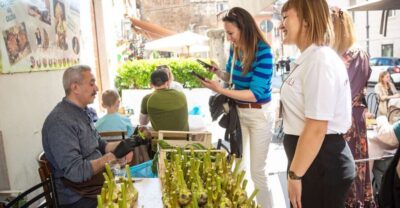
Trastevere & Campo de Fiori Street Food Walking Tour
Read our review →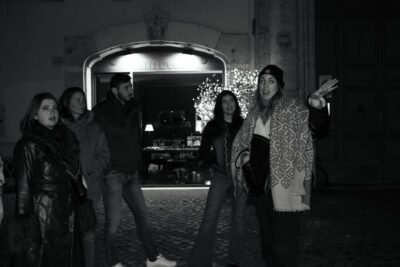
Paranormal Night Walking Tour & Secret Backstreets
Read our review →
Trastevere Street Food Walking Tour with Local Expert
Read our review →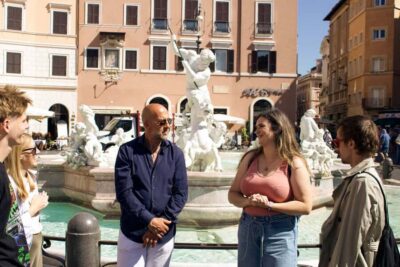
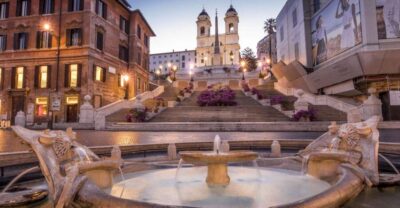
Guided City Center Evening Sightseeing Walking Tour
Read our review →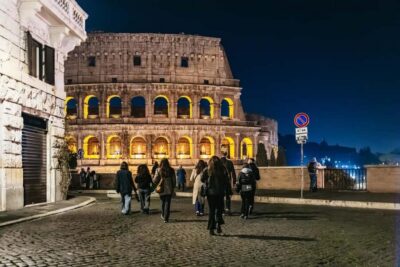
Small-Group City Highlights Moonlight Walking Tour
Read our review →
Best of Rome Walking Tour including Trevi Fountain
Read our review →Browse the lists this tour appears in