Reviewed · TOURS
Relics from Passion of the Christ Tour in Rome
Relics and history in Rome, minus the chaos. This 3-hour, English-language small-group route strings together some of the city’s most moving Passion-era artifacts, with an expert local guide doing the heavy lifting. I especially like how the stops are arranged for a steady pace, and how the sites connect the story from Jerusalem to Rome in a way you can actually follow.
I also love the specific, tangible details you get at each church, from the wood connected to the manger to relic fragments shown at Basilica di Santa Croce in Gerusalusalemme. One thing to consider: you will not climb the Holy Steps on your knees, even though the tradition matters, and you should expect a good amount of walking during the 3-hour window.
In This Review
- Key highlights that make this tour worth your time
- Relics in Rome: what you are really seeing
- Piazza di Santa Maria Maggiore start, and how the 3-hour flow fits
- Santa Maria Maggiore: manger wood and Bernini under the altar
- Santa Prassede mosaics and the scourging pillar from Jerusalem
- Scala Santa Holy Steps: what you see instead of kneeling
- San Giovanni in Laterano: Borromini, the mosaic story, and Peter and Paul
- Santa Croce in Gerusalemme: Calvary earth and the Passion relic lineup
- Why the small-group format matters (and when it might not)
- Price and value: what $102.25 buys you
- Who should book this Passion relics route
- Should you book this tour?
- FAQ
- FAQ
- How long is the Relics from Passion of the Christ Tour?
- What is the group size?
- What language is the tour offered in?
- Where does the tour start and end?
- What is included in the ticket price?
- Is food included?
- Can I choose a morning or afternoon departure?
- Is there free cancellation?
Key highlights that make this tour worth your time
- Small group size (max 10), so you can ask questions and keep up with the narrative
- Relic details you might miss alone, like what’s beneath altars and which spots the guide points out
- Five major churches in one stretch, including Santa Prassede, Scala Santa, and San Giovanni in Laterano
- A Passion-focused sequence, built around artifacts said to have traveled from Jerusalem
- Choose morning or afternoon, which makes it easier to fit around your other Rome plans
- Mobile ticket + entry included, so you do not waste time hunting for admissions
Relics in Rome: what you are really seeing
This tour is for people who want more than a quick look at big churches. You are here for relics, but also for context: why these items ended up in Rome, and what their presence meant for believers over time.
What makes it work well is the guide-led format. You are not just told that a relic exists. You are shown how it connects across the route, stop by stop, from the manger wood tradition to scourging, judgment, and the Passion artifacts preserved and displayed in different ways.
And because it is small-group paced, it does not feel like you are sprinting through sacred spaces. You get time at each church that is long enough for the story, but short enough to keep momentum.
Not settled yet? These cover similar ground in Rome:
- Vatican Museums, Sistine Chapel & St. Peter’s Basilica Tour
★ 4.3 · 73,970 reviews - Vatican Museums, Sistine Chapel & St Peter’s Basilica Guided Tour
★ 4.5 · 39,149 reviews - Rome: Colosseum, Palatine Hill and Roman Forum Guided Tour
★ 4.8 · 32,814 reviews - Rome: Guided Tour of Colosseum, Roman Forum & Palatine Hill
★ 4.7 · 27,897 reviews
Piazza di Santa Maria Maggiore start, and how the 3-hour flow fits
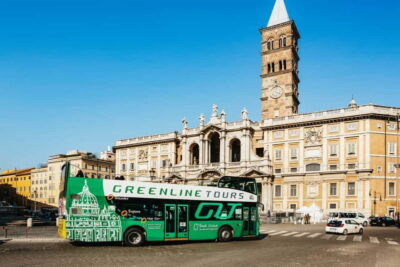
The tour begins at Piazza di Santa Maria Maggiore and ends at Basilica di Santa Croce in Gerusalusalemme. Expect an overall duration of about 3 hours, with the pace sometimes running closer to 3 to 4 hours depending on questions and walking speed.
The structure is built around brief, efficient museum-style learning inside active religious sites. Time at each stop is roughly:
- Santa Maria Maggiore: about 30 minutes
- Santa Prassede: about 20 minutes
- Scala Santa: about 30 minutes
- San Giovanni in Laterano: about 30 minutes
- Santa Croce in Gerusalusalemme: about 20 minutes
That timing matters. You get enough minutes to hear the story behind each relic, but you are not stuck for hours at one location waiting your turn.
Practical note: food and drink are not included, so plan a snack or meal before or after. Also, you should expect standing, walking, and moving between churches as part of the experience.
Santa Maria Maggiore: manger wood and Bernini under the altar
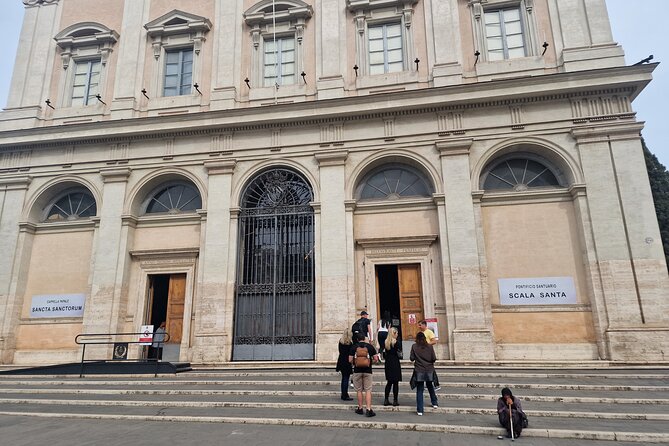
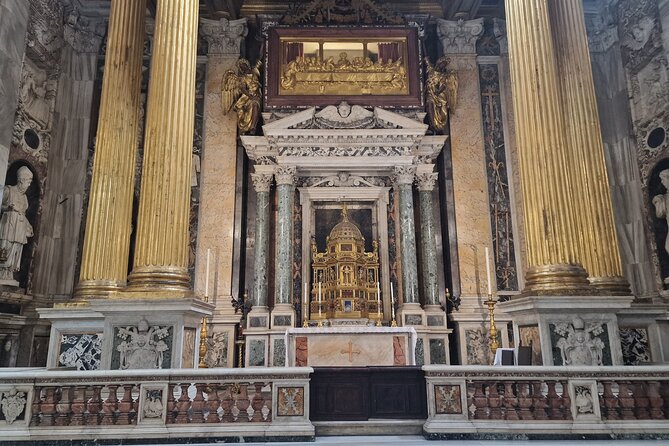
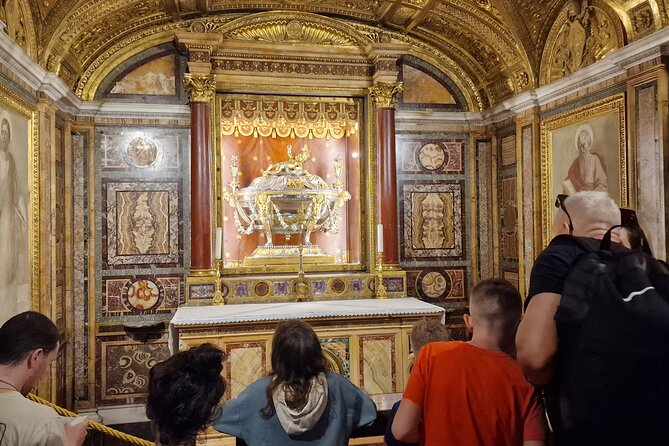
Your first major stop is Basilica di Santa Maria Maggiore, one of Rome’s oldest Marian churches. The big hook here is the relic connected with the baby Jesus: the tour highlights wood from the manger associated with where the infant once lay, stored beneath the main altar.
This is also where the church becomes more than a relic case. You learn how different eras left their mark, because Santa Maria Maggiore carries layers of Italian art history. One of the standout moments the guide covers is that it also holds the body of the devout Baroque master Gian Lorenzo Bernini.
Why I think this stop is a smart opener for your day: it anchors the whole route. The Passion story you are following later does not start at Calvary. It starts earlier, with the idea of incarnation and fulfillment, and Santa Maria Maggiore sets that tone without getting too heavy right away.
If you want to make the most of this first stop, arrive ready to listen. The key details are part of what the guide frames for you, and that framing is what turns the church into a story you can follow.
Santa Prassede mosaics and the scourging pillar from Jerusalem
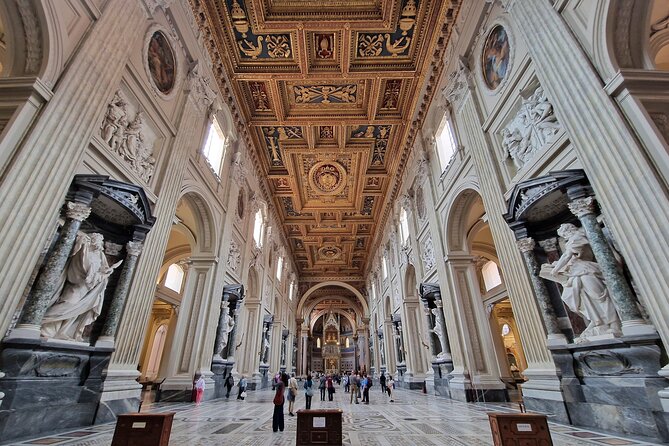
Next you head to Basilica di Santa Prassede, where the emphasis is on the 9th-century mosaics plus a very specific relic tied to the suffering of Jesus.
The tour spotlights a stone pillar on which Jesus was scourged, said to have been brought from the Praetorium in Jerusalem to Rome in the 13th century. That dates the journey and gives you something concrete to picture, not just a vague idea of holy objects in Rome.
The mosaics also matter. Even if mosaics are not usually your thing, this stop works because the guide links the visual art to the relic focus. You start to see how these churches function like living history rooms, where decoration and devotion share the same walls.
A small consideration: this is one of the shorter stops at about 20 minutes. If you ask lots of questions, you might feel a little rushed unless the guide’s pacing has built in time for interaction. In a small group, you can often steer the conversation, but time is still time.
Scala Santa Holy Steps: what you see instead of kneeling
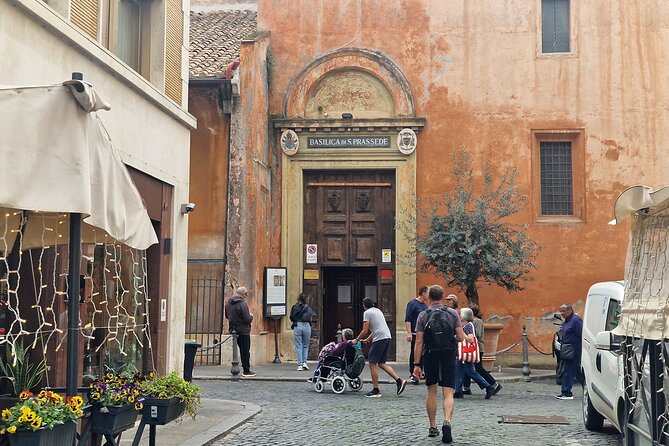
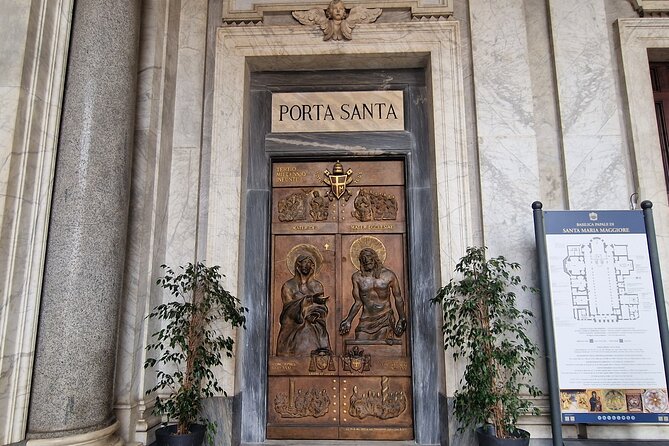
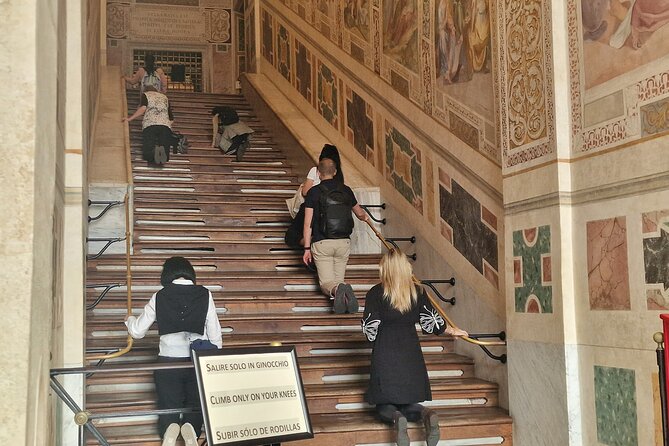
Then comes the tour’s most “pilgrimage tradition” moment: Santuario della Scala Santa, known as the Holy Steps. The tour explains that the steps are associated with Jesus being judged by Pontius Pilate and that they were transported to Rome in the 4th century by St Helena.
Here’s the key practical difference: you will not ascend the stairs on your knees, even though the pilgrim tradition exists. Instead, you still get a focused experience by peering into the Holy of Holies at the top to see the icon painted by the Gospel writer St Luke.
So how do you decide if this suits you? If you want a hands-on, physically traditional pilgrimage moment, you may find the no-kneeling approach disappointing. If you are mainly there for learning, reverence, and a clear explanation of what matters, Scala Santa still delivers, because the guide points you to what you can access and understand.
This is also a good stop to let the story sink in. Between scourging and judging, the relic route starts feeling less like sightseeing and more like a guided meditation through history.
Another shape for the same afternoon in Rome:
San Giovanni in Laterano: Borromini, the mosaic story, and Peter and Paul
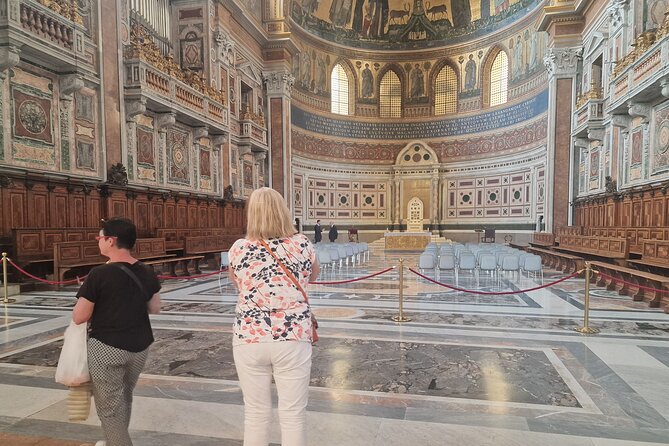
Your fourth stop is Arcibasilica di San Giovanni in Laterano, the cathedral of Rome, and it brings the route into a different kind of grandeur. The tour focuses on the architectural design associated with Borromini, plus the symbolism and history of the stunning mosaic.
Then there is the standout relic moment that many people remember: your expert guide points out the place above the high altar where the skulls of Saints Peter and Paul rest.
That detail changes the feel of the stop. These are not abstract names in a text. They are physically marked within a major church space, and the tour helps you understand why that matters to Christian tradition and memory.
One reason this works well in a guided format: without help, it can be hard to spot what is important. The guide’s pointing matters, and the narration turns the building into something you can read.
Santa Croce in Gerusalemme: Calvary earth and the Passion relic lineup
The tour’s climax is Basilica di Santa Croce in Gerusalusalemme, also called the Basilica of the Holy Cross. This is where the relic list becomes very specific, very tangible, and very intense.
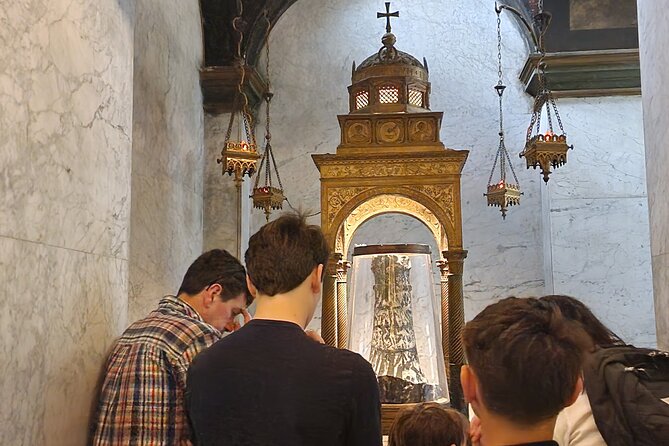
The tour explains that the basilica was built on earth brought from Calvary in the 4th century, linking the ground itself to the Passion setting. Then it moves into the “see it with your eyes” part, describing and showing fragments said to include:
- Fragments of the Holy Sepulcher
- The Cave of Bethlehem
- A Nail of the Crucifixion
- Two thorns of the Crown of Thorns
- A small walnut board reading Jesus the Nazarene king of the Jews
- Wood of the Cross Jesus was crucified on
This stop is powerful because it is not one relic in isolation. It feels like a curated timeline of suffering, judgment, and identity. Even if you do not follow every tradition in the same way, the guide’s explanations help you understand why these objects have been preserved and displayed, and why people travel specifically to see them.
Time here is about 20 minutes, so you will want to listen closely rather than trying to process everything at once. If you tend to take lots of photos, consider saving your camera focus for the moments your guide highlights. That is where the meaning is being taught.
Why the small-group format matters (and when it might not)
This tour caps out at 10 travelers, and that small scale is not a luxury detail. It affects how much you get from the story.
With a group that small, you can:
- stay oriented as the route changes between churches
- ask questions and get direct answers instead of waiting for the end
- hear the guide’s explanations without constantly competing with other voices
Also, in practice, the group can feel even smaller than the cap. Some departures run with very few people, which can make the experience feel more like an intimate lesson than a scripted walk.
The one downside is that the tour depends on the guide keeping the schedule moving. If you like to linger silently in churches, you might find the stop durations feel structured. Still, you get enough minutes at each site to take it in without feeling like a drive-by.
Price and value: what $102.25 buys you
At $102.25 per person for about 3 hours, this tour is not the cheapest way to see Rome. But it is also not selling you a generic church crawl.
You are paying for three things that add up quickly:
- Entry to each site is included
- you get an expert local guide to explain what you are seeing
- you get a tight route across multiple major churches, so you are not spending time figuring out how to connect the story yourself
The fact that it is booked on average 73 days in advance suggests demand for this kind of faith-and-history focus. If you wait until the last minute, you might have fewer options for morning versus afternoon departures.
What you can do to get good value is simple: come with questions and treat each stop like a chapter. If you show up expecting only architecture, you might feel like you could have done it independently. But if you want the relic connections and the history behind them, this format is the value.
Who should book this Passion relics route
This tour fits best if you:
- care about Christian history and want relic context in a guided way
- enjoy hearing the story behind objects, not just walking into churches
- want a break from the most crowded Roman sights for a few hours
It also works well if you are traveling with a partner or someone who appreciates meaningful places, because the small-group cap keeps the vibe calm.
If you are not into relics at all, you may find the whole route feel too faith-focused. The art and architecture are there, but the tour’s engine is the relic story.
Should you book this tour?
Book it if you want a focused, guided route through major Roman churches tied to the Passion story, especially if you like clear explanations and hate wasting time guessing what matters inside a church.
Skip it or reconsider if you only want the big-picture Rome highlights, or if you are hoping for a kneeling ascent of the Holy Steps. You are seeing Scala Santa in a guided, respectful way, but not in the full traditional physically devotional style.
FAQ
FAQ
How long is the Relics from Passion of the Christ Tour?
The tour lasts about 3 hours. The time at each stop is limited, with about 30 minutes at Santa Maria Maggiore, 20 minutes at Santa Prassede, 30 minutes at Scala Santa, 30 minutes at San Giovanni in Laterano, and 20 minutes at Santa Croce in Gerusalusalemme.
What is the group size?
The tour has a maximum of 10 travelers, so it stays small-group and more personal than big bus tours.
What language is the tour offered in?
The tour is offered in English.
Where does the tour start and end?
It starts at Piazza di Santa Maria Maggiore, Roma, and ends at Basilica di Santa Croce in Gerusalusalemme at Piazza di S. Croce in Gerusalusalemme, 10, Roma.
What is included in the ticket price?
Entry to each site is included, and you get an expert local guide.
Is food included?
No. Food and drink are not included.
Can I choose a morning or afternoon departure?
Yes. The tour offers a choice of morning or afternoon departures to fit your schedule.
Is there free cancellation?
Yes. You can cancel for a full refund up to 24 hours in advance of the experience start time.
Latest additions from Rome
- Rome: Angels and Demons Private Tour with Transfers★ 5.0 · 8 reviews
- Vatican City: St. Peter’s Basilica and Papal Tombs Guided Tour★ 4.0 · 8 reviews
- Vatican City: Museums & Sistine Chapel Tour with St. Peter’s★ 3.1 · 8 reviews
- Colosseum, Palatine and Forum tour with virtual guide★ 5.0 · 8 reviews
- Sistine Chapel @ its best! First time slot Vatican Museums access★ 5.0 · 8 reviews
- Private Vatican In Depth 5-Hour Tour – Skip The Line★ 4.5 · 8 reviews
- Vespa Rental in Rome★ 4.0 · 8 reviews
- VIP Yacht Escape from Rome to Naples Island Gems Ischia & Procida★ 5.0 · 8 reviews
Tours, compared.
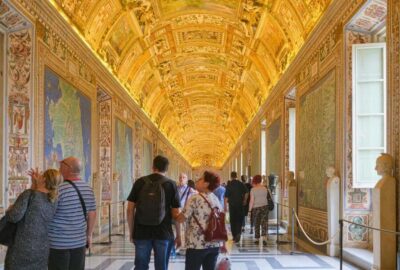
Vatican Museums, Sistine Chapel & St. Peter’s Basilica Tour
Read our review →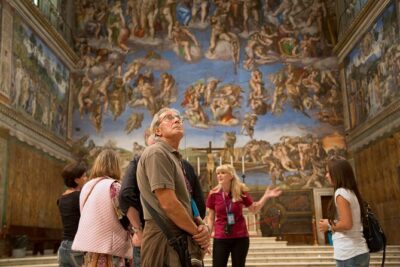
Vatican Museums, Sistine Chapel & St Peter’s Basilica Guided Tour
Read our review →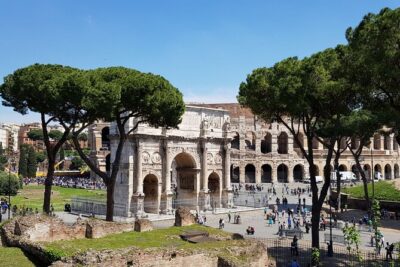
Colosseum, Palatine Hill and Roman Forum Guided Tour
Read our review →
Guided Tour of Colosseum, Roman Forum & Palatine Hill
Read our review →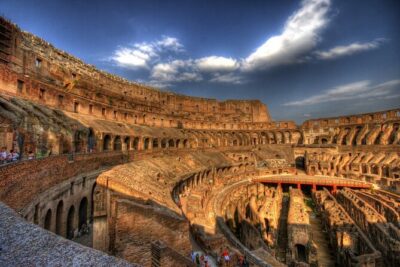
Colosseum, Roman Forum and Palatine Hill Guided Tour
Read our review →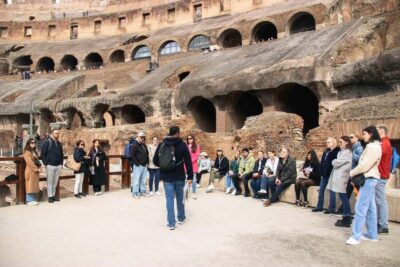
Colosseum Arena Floor, Palatine & Forum Guided Tour
Read our review →
Vatican Museums, Sistine Chapel and Basilica Tour
Read our review →