
Reviewed · MUSEUMS
Private Vatican Tour: Egyptian and Etruscan Museum with transfers
Your Vatican day should feel organized.
This private 3.5 hour tour mixes Egyptian and Etruscan collections with the Vatican Museum highlights, then finishes in St. Peter’s Basilica. Two things I really like: you get guaranteed priority entry so you waste less time in the crush, and you’re with a professional Blue Badge guide who can point out what matters in a place that can otherwise feel like a visual snowstorm. One drawback to consider: pickup is only available for hotels within the Aurelian Walls, so if you’re farther out you’ll need an alternate plan.
I also like that the format is focused, not sluggish. You hit the must-see rooms like the Gallery of Maps and Gallery of Tapestries, then you reach the Sistine Chapel with context for what you’re looking at. Add in a possible Jubilee-rotation issue, where some parts can be under restoration or closed, and you’ll want to stay flexible if the route changes.
In This Review
- Key things you’ll notice right away
- How this private tour keeps the Vatican from swallowing your day
- Priority entry and transfers, what they mean for your schedule
- Entering the Vatican Museums: your guide’s role in a maze
- Egyptian Museum stop: mummies, papyri, and what to pay attention to
- Etruscan Museum and the Golden Room: jewelry with a timeline
- The sculpture highlights, from Belvedere Courtyard to Laocoön
- The Gallery of Maps: a 120-meter snapshot of Italy
- Gallery of Tapestries and the story they were designed to tell
- Gallery of Candelabras: an architecture and sculpture meeting point
- Sistine Chapel with meaning, not just images
- St. Peter’s Basilica at the end: Bernini and Michelangelo in the spotlight
- Price and value: is $541.85 per person a good deal?
- Who this tour suits best
- Booking checklist: small things that affect whether you get in
- Should you book this private Vatican tour?
- FAQ
- Is this tour private?
- Do you provide hotel pickup and drop-off?
- How long is the tour?
- What does the tour include for museum entry?
- What’s the dress code requirement?
- What language is the guide?
Key things you’ll notice right away
- Priority entry that saves your sanity, not just a few minutes
- Special access to areas tied to the Egyptian and Etruscan Museums
- Michelangelo support in the Sistine Chapel, explained by a guide
- Maps and tapestries in Renaissance context, not quick look-and-guess stops
- St. Peter’s Basilica included at the end, with major works like Bernini and Michelangelo
How this private tour keeps the Vatican from swallowing your day
The Vatican Museums are famous for one thing: long lines and packed galleries. This tour is designed to work around that reality with a direct, guided route, rather than sending you off with a mobile ticket and a hope.
Because it’s private, your guide can set a pace that fits your group, including how long you linger at big moments like the sculpture highlights and the Sistine Chapel. That matters, because the Vatican rewards attention. If you move too fast, you’ll miss the “why” behind the art. If you move too slow, you’ll be stuck in bottlenecks. This itinerary is built to land in the right zones without feeling rushed.
I also appreciate that the tour doesn’t treat the Vatican like one giant checklist. It uses a clear thread, starting with Egyptian and Etruscan rooms, then moving through signature museum galleries, before finishing with St. Peter’s Basilica. It’s a smart way to make sense of the collection as a whole.
More Private Tours in Rome
- Rome by Golf Cart Private Tour: Beyond the Landmarks
★ 5.0 · 4,361 reviews - Early Morning Vatican, Sistine, St. Peter’s Semi or Private Tour
★ 5.0 · 3,779 reviews - Rome on a Golf Cart Semi-Private Tour Max 6 with Private Option
★ 5.0 · 2,502 reviews - Rome Private Arrival Transfer: Fiumicino Airport to Hotel in Rome
★ 4.5 · 2,492 reviews
Priority entry and transfers, what they mean for your schedule
You’re picked up at your hotel in Rome if it’s within the Aurelian Walls. The meeting time is set for you, and you meet your private vehicle outside your accommodation. From there, you go straight to the Vatican Museums.
Transfers sound like a small detail, but in Rome that can be the difference between a calm morning and a stressful one. With a pickup and drop-off included, you’re not trying to solve transportation while also trying to time the Vatican crowd.
The other major time-saver is the skip-the-long-lines priority entry. That doesn’t magically erase congestion, but it avoids the most frustrating part of the experience. The Vatican can get extremely crowded, and the difference between waiting in line versus walking in with a fast-track plan is real.
You’ll also use a mobile ticket, which is helpful because it cuts down on paper handling and keeps check-in smoother.
One more note I’d keep in mind: this is a Jubilee period. The Vatican sometimes changes access during extraordinary celebrations, and some monuments may be under restoration or closed. A good private guide can adapt, but you should expect that flexibility.
Entering the Vatican Museums: your guide’s role in a maze
Once inside, the tour becomes a controlled route through galleries. The Vatican Museums can feel like a maze, and without someone steering you, it’s easy to see the art but miss the structure.
That’s where a professional Blue Badge guide changes the day. Your guide doesn’t just tell you what you’re looking at. They help you prioritize, so you spend your limited time on the most meaningful works and rooms.
A detail worth highlighting: one of the named guides that comes up in strong feedback is Serena. Guests praised her ability to navigate on-site staff and crowds, and her knack for explaining hidden meaning in Michelangelo’s frescoes before you even reach the Sistine Chapel. Even if you do not get Serena, that’s the kind of guide skill this tour is aiming for.
Egyptian Museum stop: mummies, papyri, and what to pay attention to
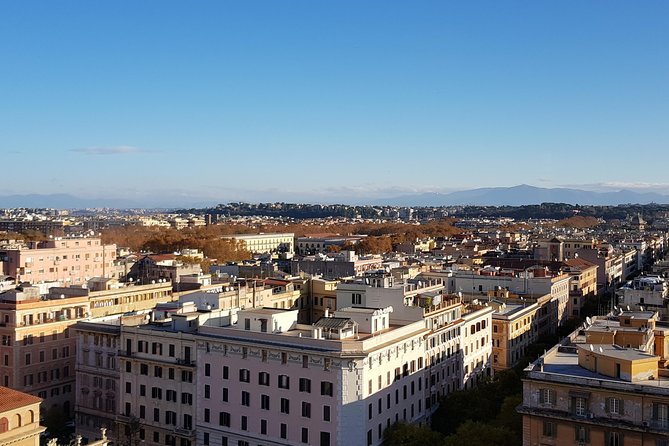
The Egyptian Museum is a quick stop on the schedule, but it’s not a random add-on. It’s one of the Vatican Museums’ best “different universe” moments, and it sets a tone right away.
At this stop, you’re looking at Egyptian artifacts and displays that commonly include mummies, papyri, and hieroglyphic inscriptions. The trick in a short visit is to notice patterns. Instead of trying to read everything, focus on how the display tells a story: objects connected to beliefs, identity, and preservation.
If you care about Egypt beyond general “ancient ruins” vibes, this is a strong sampler. It’s fast enough to keep you moving through the Vatican, but structured enough that it won’t feel like a hurried corridor.
Potential drawback: because the visit time is limited, you may want a plan for what you personally care about most in Egyptian culture, because you won’t have hours to branch out.
Etruscan Museum and the Golden Room: jewelry with a timeline
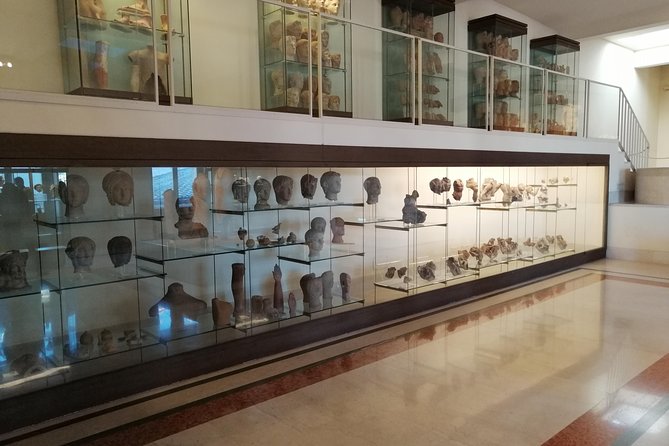
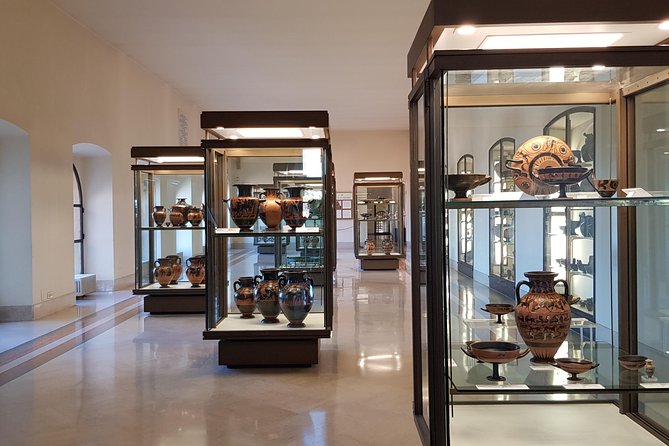
Next comes one of the tour’s standout strengths: the Etruscan Museum experiences, including the Golden Room, which is mostly closed to the general public. That special access is exactly the kind of value you’re paying for on a private tour.
Inside the Golden Room, you’ll see jewelry dating from roughly the 9th to the 1st century BC, spanning the Iron Age through the period when Etruscan cities progressively converged into the Roman state. That timeline matters, because it turns objects into history you can follow.
The Etruscans are often a “who are they?” topic for visitors, even in Italy. A guided stop like this helps you connect the dots between art, social status, and how cultures shift over time. You’re not just looking at gold. You’re seeing how power and identity were expressed through fine objects.
One practical consideration: jewelry displays are detailed, and some rooms can be bright and reflective. Go in expecting visual density, and lean on your guide to help you focus on the key pieces and what they mean.
Other Roman collections with a shorter wait:
The sculpture highlights, from Belvedere Courtyard to Laocoön
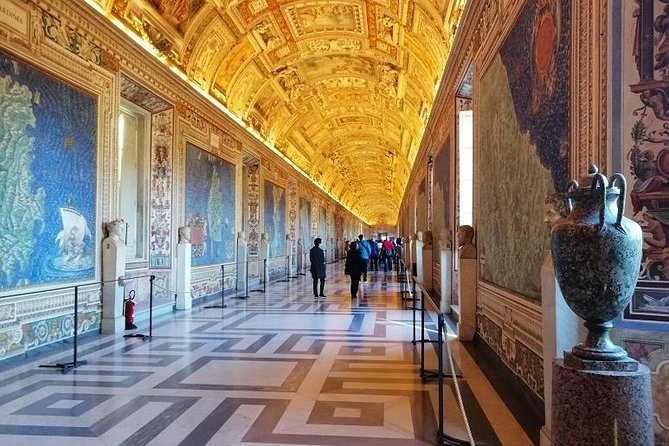
After the museum special zones, you move into the broader Vatican highlights. One of the most famous zones on this route is the Belvedere Courtyard, where the atmosphere changes from gallery-lined to open-air sculpture viewing.
You’ll also pass through stops that focus on major sculptures, including the Laocoön and the Belvedere Torso. These works are particularly interesting because they helped shape Renaissance and later taste. Michelangelo and other artists revered these forms, so you’re seeing art that influenced other art, not just art that ended there.
This is a good moment to slow down for a few seconds. Stand where your guide tells you, and compare the body language and texture across the sculptures. Even in a quick stop, that kind of viewing makes the experience feel deeper than “I saw it.”
If you’re more modern-art minded, don’t worry. The Vatican’s sculpture section can be surprisingly readable once you start looking at gesture, proportion, and how marble was used to create movement.
The Gallery of Maps: a 120-meter snapshot of Italy
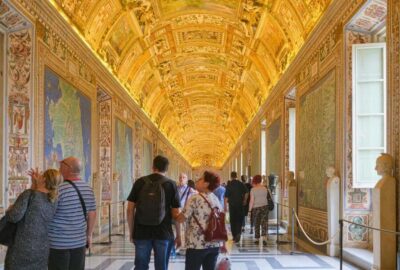
One of the most memorable rooms on the route is the Gallery of Maps. This is where the Vatican shows off something that feels less like holy art and more like Renaissance science, politics, and storytelling.
The maps were created in the 16th century under Pope Gregory XIII and stretch for about 120 meters. You’re walking along a long sequence of topographical, hand-painted maps of Italy, which gives you a sense of how people imagined the peninsula at that moment in time.
What I like about this stop is the “aha” factor. If you only think of the Vatican as spiritual power, this room reminds you it also held administrative, educational, and cultural influence.
The downside is simple: it’s long and linear, so if you’re prone to fatigue in long indoor walks, this might be the section where you need to stay mentally sharp. Still, with a guide directing you to what to notice, it’s far from boring.
Gallery of Tapestries and the story they were designed to tell
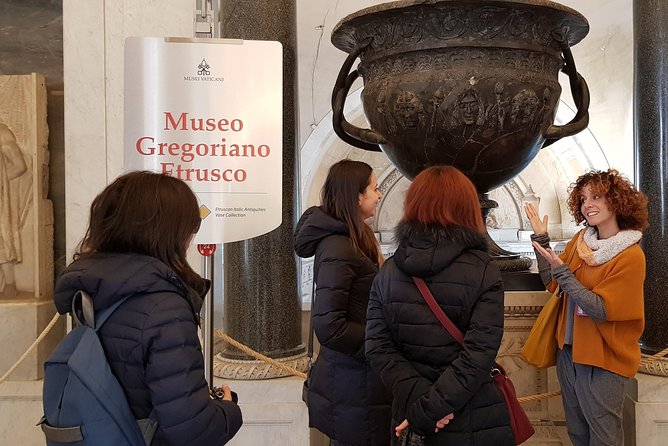
Next up is the Gallery of Tapestries, which features 15th and 16th-century tapestries woven with scenes from biblical and historical narratives.
These tapestries were inspired by designs from Raphael’s school, which is a major reason they’re worth seeing. You’re not only looking at textile art. You’re seeing how a famous artistic network translated ideas into something large, portable, and highly visible.
A helpful way to view tapestries is to look for the “scene design.” Don’t focus on one tiny section only. Let your eyes travel across the composition, because these pieces were meant to tell a story at a distance as well as up close.
Also, tapestries are visually complex, and short time can make them feel like a blur. A guide helps by telling you what the main narrative threads are before you start scanning details.
Gallery of Candelabras: an architecture and sculpture meeting point
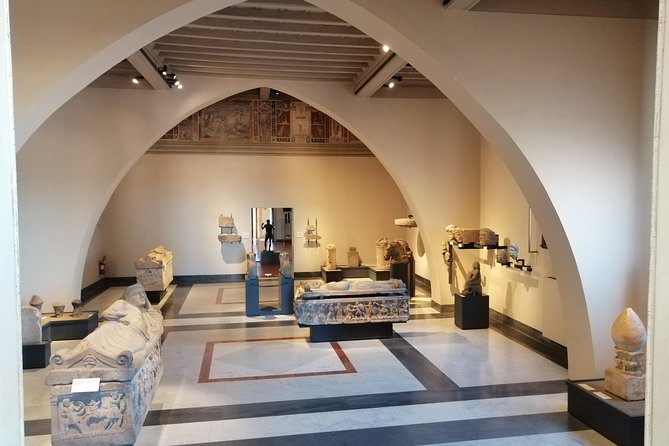
The Gallery of Candelabras is another highlight on this route. It’s named for large marble candelabras that divide the gallery into thematic areas, and it combines the feel of grand display with ancient sculpture and decorative structure.
You’ll see Greek and Roman statues, sarcophagi, and reliefs. The room itself is part of the experience, because the layout helps you understand the museum’s method of grouping objects by theme.
This stop is especially good if you like the “how museums think” angle. The Vatican isn’t just showing objects. It’s building a path for your attention.
Sistine Chapel with meaning, not just images
Then you reach the Sistine Chapel, and this is where the guide’s coaching really pays off. The Sistine Chapel can be stunning even if you know nothing. But it can also become overwhelming if you do not have a map in your mind.
Your guide will help you understand the frescoes by Michelangelo, including the hidden meaning and key details you might otherwise miss. This is one of the main reasons people enjoy this kind of guided approach, because the chapel isn’t only about seeing famous art. It’s about seeing how it works.
A practical note: the Sistine Chapel is a religious space. Dressing appropriately matters, and you should expect rules for behavior. The tour includes the Sistine Chapel stop with an admission component, so you’re there for the real experience, not a photo stop.
St. Peter’s Basilica at the end: Bernini and Michelangelo in the spotlight
The tour finishes with St. Peter’s Basilica, with about 1 hour on site. Admission there is free, but you still get meaningful guidance to direct your time.
Key works you’ll have a chance to see include Michelangelo’s Pietà and Bernini’s Baldachin. The Baldachin is described as a bronze canopy over the high altar, towering more than 90 feet tall and packed with Baroque detail. The Pietà, from 1498 to 1499, is one of Michelangelo’s best-known sculptures.
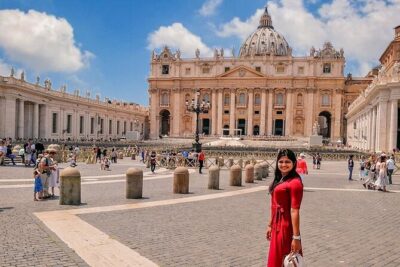
You’ll also see views from St. Peter’s Square, which helps you place the basilica in its real-world setting. That outside perspective is useful if the inside feels like sensory overload. It gives your brain a second to reset.
One consideration: St. Peter’s can be crowded in its own way. Even with a guided route, you’ll want to keep your expectations flexible. The point is to see the major works without spending your energy navigating.
Price and value: is $541.85 per person a good deal?
At $541.85 per person for about 3 hours 30 minutes, this tour is not cheap. But value isn’t just about time. It’s about what you get to avoid, and what you get access to.
Here’s where the value comes from, based on what’s included:
- Priority entry that helps you skip the long-line headache at the Vatican Museums
- Private guide time, which is essential in museums where your attention is limited
- Hotel pickup and drop-off within the Aurelian Walls, so you’re not solving transport mid-visit
- Special access tied to the Egyptian and Etruscan Museums, including the Golden Room (mostly closed to the public)
- Coverage of major highlights across multiple gallery types, finishing with St. Peter’s Basilica
If you’re the kind of visitor who wants a structured day and hates waiting, the price can make sense. If you are a slow museum wanderer, you might prefer a longer Vatican day with fewer stops, because this is a focused route rather than an all-day drift.
This tour also makes sense if you’re visiting for a first time and want a guided orientation without committing to a full day. It gives you a half-day in the Vatican, then you’re free to explore Rome independently after.
Who this tour suits best
This experience is a great fit if:
- You want private attention and a controlled route through the Vatican Museums
- You care about understanding what you see, especially at the Sistine Chapel
- You’d rather pay for priority entry and access than spend your energy in lines
- You’re staying in central Rome within the Aurelian Walls for pickup
It might be less ideal if:
- Your hotel is outside the pickup area, since transfers are limited to hotels within the Aurelian Walls
- You prefer unguided exploration and don’t want a set schedule
Booking checklist: small things that affect whether you get in
Before you go, the big rule is dress code. For places of worship and selected museums, you need shoulders and knees covered. That means no shorts and no sleeveless tops. If you don’t comply, you risk being refused entry.
Also, keep an eye out for messages about possible closures or restoration tied to the Jubilee. The Vatican sometimes shifts access, and a guided tour will try to adapt, but your schedule may still change slightly.
Finally, this is a private tour, so it’s designed for only your group.
Should you book this private Vatican tour?
Yes, if you want a smooth, high-impact Vatican day with real guidance. The strongest reasons to book are the priority entry, the private guide coaching, and the special museum access that includes the Golden Room and the standout Egyptian and Etruscan segments. The route also connects the Vatican’s collections into something you can actually follow, instead of leaving you to guess your way through.
If you have time to plan your own Vatican route and you enjoy slow, unstructured browsing, you could do the sites on your own. But if your priorities are speed, understanding, and access, this is the kind of tour that turns a chaotic mega-attraction into a manageable, memorable half-day.
FAQ
Is this tour private?
Yes. It’s a private tour, and only your group participates.
Do you provide hotel pickup and drop-off?
Yes, pickup and drop-off are offered from centrally located hotels within the Aurelian Walls.
How long is the tour?
The duration is about 3 hours 30 minutes.
What does the tour include for museum entry?
Admission tickets are included for the Vatican Museums stops listed in the itinerary, and the St. Peter’s Basilica portion is admission free.
What’s the dress code requirement?
You must cover knees and shoulders. That means no shorts or sleeveless tops for both men and women, or you risk being refused entry.
What language is the guide?
The tour is offered in English.
Latest additions from Rome
- Rome: Testaccio Market Food Tour with Street Food & Wine★ 5.0 · 8 reviews
- Exclusive Pasta & Tiramisu Class with Wine near by Colosseum★ 5.0 · 8 reviews
- Private Professional Photoshoot in Rome★ 5.0 · 8 reviews
- Loreto “Shrine of the Holy House of the Virgin Mary” Private Tour from Rome★ 5.0 · 8 reviews
- Rome Day to discover Florence and Pisa Hotel Pickup★ 4.5 · 8 reviews
- Rome: Christmas Nativities and Angels Tour★ 3.1 · 8 reviews
- Guided Tour of Vatican Museums and Sistine Chapel★ 5.0 · 8 reviews
- Rome: Cooking Class of fresh Pasta and Tiramisu Cake★ 5.0 · 8 reviews
Museums, compared.
Vatican Museums, Sistine Chapel & St. Peter’s Basilica Tour
Read our review →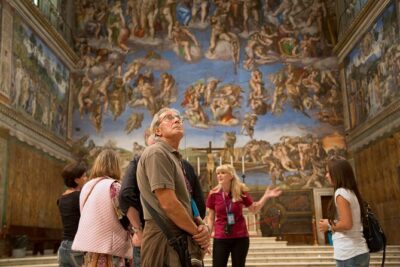
Vatican Museums, Sistine Chapel & St Peter’s Basilica Guided Tour
Read our review →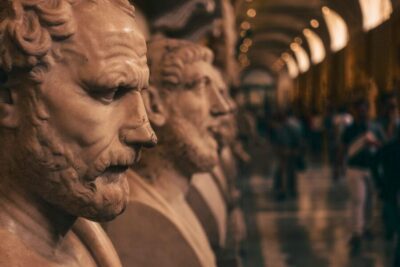
Vatican Museums, Sistine Chapel and Basilica Tour
Read our review →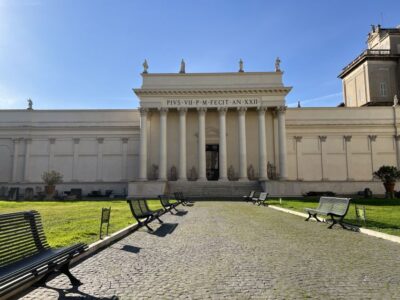
Vatican Museums & Sistine Chapel Skip-the-Line Entry Ticket
Read our review →
Vatican Museums, Sistine Chapel & Basilica Tour
Read our review →
Vatican Museums & Sistine Chapel Skip-The-Line Ticket
Read our review →