
Reviewed · MUSEUMS
Private Tour – National Etruscan Museum
Villa Giulia turns Etruscan art into a story. This private tour of the National Etruscan Museum (Museo Nazionale Etrusco di Villa Giulia) is perfect when you want more than a quick scan. I like the unhurried pace it gives you, plus the chance to ask questions without feeling rushed. You also get to choose morning or afternoon timing, which makes it easier to fit into a full Rome day.
The biggest plus is the way a professional guide helps you “read” what you’re looking at, from famous sculptures to smaller finds you might otherwise miss. One possible drawback: this is a single-site visit. If you’re hoping for multiple major stops in one outing, plan something else alongside it.
In This Review
- Villa Giulia: A Museum Set in a Real Roman Landmark
- What a Private Tour Changes in a Museum Like This
- Your 2-Hour Itinerary, Stop by Stop: Museo Nazionale Etrusco di Villa Giulia
- Stop 1: The National Etruscan Museum, Villa Giulia
- Beyond the Big Objects: Inscriptions and Museum Context That Make It Click
- Price and Value for a Rome Private Museum Tour
- Timing, Meeting Point, and How to Show Up Ready
- Who This Tour Is Best For
- What Makes Guides Like Vincenzo Matter Here
- Should You Book This National Etruscan Museum Private Tour?
- FAQ
- How long is the Private Tour – National Etruscan Museum?
- What is included in the ticket price?
- Is admission included?
- Is this tour private?
- What language is the tour offered in?
- Do I get a choice of time of day?
- Where does the tour meet?
- Is hotel pickup or drop-off included?
- Is private transportation included?
- What is the cancellation policy?
- Is the museum tour close to public transportation?
- Can most travelers participate?
Villa Giulia: A Museum Set in a Real Roman Landmark
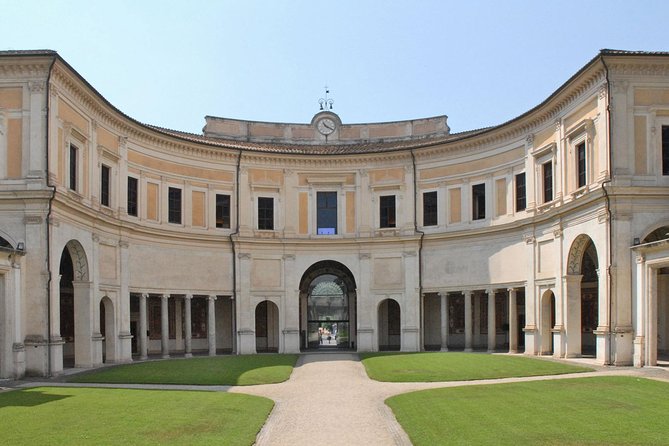
Even before you get to the galleries, Villa Giulia has enough personality to hold your attention. The museum is inside Villa Giulia, originally built as the suburban residence of Pope Julius III in the 1500s. It was designed by Vignola and completed with the participation of Ammannati and Vasari, so you’re standing in a place that blends Renaissance architecture with a serious museum mission.
In 1889, the villa became home to the museum of pre-Roman antiquities of Latium. Later, two wings were added between 1912 and 1923. That matters for your experience because you’re not just moving through rooms. You’re walking through a building that was shaped to present the Etruscans clearly over time, and the layout supports that feeling.
What a Private Tour Changes in a Museum Like This
This is a private tour, meaning only your group participates. You are not negotiating around strangers, shared audio sets, or a group countdown. The tour lasts about 2 hours, and admission and tickets are included, so you can focus on the art and the context rather than logistics.
Here’s what “private” really buys you in the National Etruscan Museum:
- You can slow down at a favorite object without worrying that you’ll hold everyone up.
- You can ask follow-up questions as they pop up, instead of saving them for the end.
- You can tailor your attention, whether you care most about sculpture, tomb imagery, metalwork, or inscriptions.
Because this tour gives you unlimited time to ask questions, the guide can correct common misconceptions on the spot. That can be the difference between seeing an object as just “old stuff” and understanding how Etruscans expressed identity, belief, and status.
More Private Tours in Rome
- Rome by Golf Cart Private Tour: Beyond the Landmarks
★ 5.0 · 4,361 reviews - Early Morning Vatican, Sistine, St. Peter’s Semi or Private Tour
★ 5.0 · 3,779 reviews - Rome on a Golf Cart Semi-Private Tour Max 6 with Private Option
★ 5.0 · 2,502 reviews - Rome Private Arrival Transfer: Fiumicino Airport to Hotel in Rome
★ 4.5 · 2,492 reviews
Your 2-Hour Itinerary, Stop by Stop: Museo Nazionale Etrusco di Villa Giulia
This tour has one main stop: the Museo Nazionale Etrusco di Villa Giulia. The good news is that you get depth. The slightly risky part is that you need to be comfortable spending most of your time in one museum building, rather than hopping between sites.
Stop 1: The National Etruscan Museum, Villa Giulia
Expect a guided visit through key sections of the museum, with time to linger. The highlights aren’t random. They’re chosen because they represent major themes of Etruscan civilization and because they’re widely recognized pieces you’ll often hear about later.
You’ll also get specific museum context, including sections dedicated to:
- Etruscan epigraphy (inscriptions)
- The history of the museum itself
- The architectonic complex of Valle Giulia
If you like your museum time to feel organized, these are the kinds of details a good guide helps you connect. Instead of just moving from object to object, you start seeing patterns.
Highlights You’ll Spend Time On
Here are some of the standout exhibits included in this museum’s most notable displays. Your guide will help you focus on what matters about each one, not just the fact that it exists:
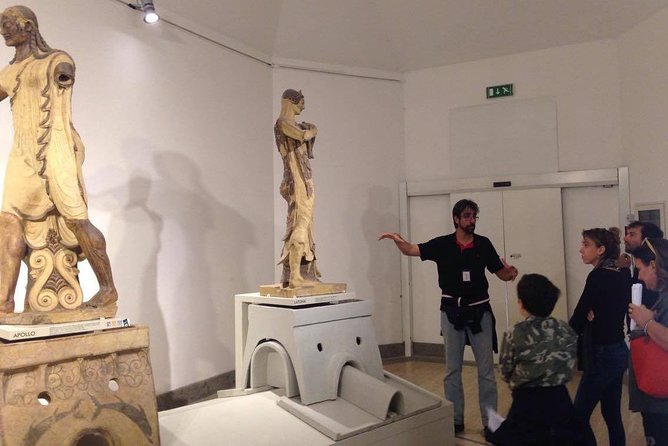
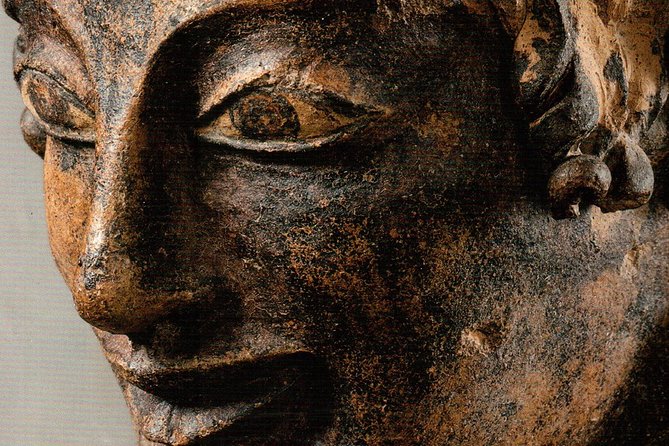
- Apollo from Veio (6th century BC). This gives you an instant reference point for how Greek-influenced figures circulated and transformed in Etruscan culture.
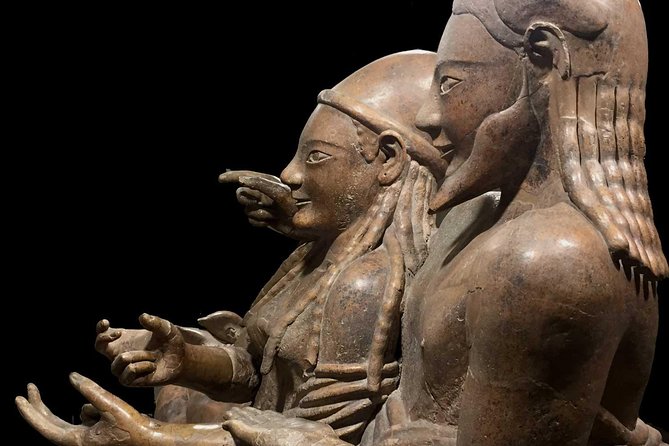
- Sarcophagus of the Spouses from Cerveteri (6th century BC). This is the kind of image that can stop you mid-walk. The couple reclining tells a story of identity and representation, and the museum setting makes it feel less like a relic and more like a statement.
- The Pyrgi finds (5th century BC), including high relief and golden thin sheets. If you’ve ever wondered why inscriptions and precious materials matter so much, these pieces help answer it.
- Apollo dello Scasato from Falerii (4th century BC). Another Apollo, but later in time, which is useful for noticing how styles shift across centuries.
- The Centaur from Vulci (6th century BC). Myth and monsters are a great way into Etruscan art because they show how imagination mixed with craftsmanship.
- The Cista Ficoroni from Palestrina (4th century BC). Even if you are not a metalwork specialist, a cista like this is often a turning point because it shows how objects could be both practical and symbolic.
Tip for your own pacing: if one of these objects grabs you, don’t be shy about staying near it. With a private setup, I’d focus your energy on fewer works more deeply, because that’s where the stories stick.
Beyond the Big Objects: Inscriptions and Museum Context That Make It Click
One thing I value in a guided museum visit is when the guide helps me understand what kind of information I’m looking at. In Villa Giulia, that often comes down to epigraphy and the way the museum frames its own history.
Etruscan epigraphy is not just “words on stone.” It’s how scholars connect artifacts to language, names, places, and religious or civic practice. When you’re in the presence of inscription-focused displays, a guide can explain why certain marks matter and how they help reconstruct Etruscan life.
The museum also includes sections devoted to the history of the museum and the architectonic complex of Valle Giulia. That helps you avoid a common museum trap: thinking every gallery is just a warehouse of masterpieces. Instead, you start noticing that this collection has been curated in a specific building, over specific time periods, with specific interpretive priorities.
When a guide does this well, you leave with a stronger mental map. You don’t just remember objects. You remember themes.
Price and Value for a Rome Private Museum Tour
At $138.18 per person for about 2 hours, this tour sits in the paid-guidance range where you’re mainly paying for two things:
1) Admission and tickets being included, so you do not have to add entry costs on top
2) A professional local guide who can turn museum material into understanding
The private format matters for value too. If you’re traveling with a small group, private guidance often costs less per person than you’d expect when you factor in the ability to ask questions freely and stay at the objects you care about. It also prevents the time waste that can happen when a group tour moves fast through the same highlights you’d want to slow down for.
My practical take: this is a good value if you like museum context. If you only want to stroll at your own speed with no explanation at all, you might prefer free-form time in the museum. But if you want the objects to make sense while you’re seeing them, a guided private visit is often the simplest way to get it.
Other Roman collections with a shorter wait:
Timing, Meeting Point, and How to Show Up Ready
This tour meets at the National Etruscan Museum of Villa Giulia, Piazzale di Villa Giulia 9, 00196 Roma RM, Italy. The activity ends back at the meeting point, so you don’t need to coordinate separate exits or transportation afterward.
A few practical notes that can make your experience smoother:
- The site is near public transportation, so you have options if you don’t want to rely on taxis.
- Hotel pickup and drop-off are not included, so plan to get yourself there on your own.
- Private transportation is not included, so keep your plans simple for the day you book.
Also, choosing morning or afternoon tour time is genuinely helpful in Rome. You can pick the slot that fits your energy and the rest of your day’s sights.
Who This Tour Is Best For
This one is especially strong for:
- Museum lovers who want context, not just a checklist of objects
- People who enjoy Etruscan civilization specifically, or want a serious entry point into it
- Travelers who hate being rushed, and prefer to linger at the sculptures and objects that catch their attention
- Small groups who benefit from private guidance, especially when someone in the group wants extra time for questions
It may not be your best match if your ideal day is fast, multi-stop sightseeing across several major attractions. This tour is focused. You’ll get a strong museum experience, not a “see everything in Rome in one afternoon” solution.
What Makes Guides Like Vincenzo Matter Here
The experience stands or falls on guidance quality in a museum like this, and the name that shows up is Vincenzo. He’s described as lively and insightful, and the way he talks about Etruscan civilization apparently helps people picture it as a real society, not just a set of artifacts behind glass.
That’s exactly what you want from a guide in Villa Giulia. The Etruscans can feel distant until someone connects the visual clues to human life: status, belief, family, myth, and public identity. When a guide brings those links into your view, objects become stories you can follow.
Should You Book This National Etruscan Museum Private Tour?
I’d book it if you want a focused, high-quality introduction to the National Etruscan Museum in Villa Giulia with time to ask questions. You’re paying for tickets, a professional guide, and the private pacing that helps you actually process what you see. For $138.18 per person, the value is strongest when you care about understanding the objects, not just checking them off.
Skip it if you prefer unguided museum wandering and you already know Etruscan art well enough that you do not need explanation. Also skip if you want a multi-site Rome day, because this experience is intentionally concentrated on one museum.
If your goal is clear, unhurried learning in a place that blends Renaissance setting with Etruscan masterpieces, this is a very solid choice.
FAQ
How long is the Private Tour – National Etruscan Museum?
It lasts about 2 hours.
What is included in the ticket price?
The tour includes tickets, a private tour, and a professional local guide.
Is admission included?
Yes, an admission ticket is included.
Is this tour private?
Yes. Only your group participates.
What language is the tour offered in?
The tour is offered in English.
Do I get a choice of time of day?
Yes, you can choose a morning or afternoon tour time.
Where does the tour meet?
The meeting point is the National Etruscan Museum of Villa Giulia, Piazzale di Villa Giulia 9, 00196 Roma RM, Italy.
Is hotel pickup or drop-off included?
No, hotel pickup and drop-off are not included.
Is private transportation included?
No, private transportation is not included.
What is the cancellation policy?
Free cancellation is available, and you can cancel up to 24 hours in advance for a full refund.
Is the museum tour close to public transportation?
Yes, it is near public transportation.
Can most travelers participate?
Most travelers can participate.
Latest additions from Rome
- Private Professional Photoshoot in Rome★ 5.0 · 8 reviews
- Rome: Testaccio Market Food Tour with Street Food & Wine★ 5.0 · 8 reviews
- Exclusive Pasta & Tiramisu Class with Wine near by Colosseum★ 5.0 · 8 reviews
- Loreto “Shrine of the Holy House of the Virgin Mary” Private Tour from Rome★ 5.0 · 8 reviews
- Rome Day to discover Florence and Pisa Hotel Pickup★ 4.5 · 8 reviews
- Rome: Christmas Nativities and Angels Tour★ 3.1 · 8 reviews
- Guided Tour of Vatican Museums and Sistine Chapel★ 5.0 · 8 reviews
- Rome: Cooking Class of fresh Pasta and Tiramisu Cake★ 5.0 · 8 reviews
Museums, compared.
Vatican Museums, Sistine Chapel & St. Peter’s Basilica Tour
Read our review →
Vatican Museums, Sistine Chapel & St Peter’s Basilica Guided Tour
Read our review →
Vatican Museums, Sistine Chapel and Basilica Tour
Read our review →
Vatican Museums & Sistine Chapel Skip-the-Line Entry Ticket
Read our review →
Vatican Museums, Sistine Chapel & Basilica Tour
Read our review →
Vatican Museums & Sistine Chapel Skip-The-Line Ticket
Read our review →