
Reviewed · GOLF CART TOURS IN ROME
Private Piazza’s, Fountains, Monuments & Basilicas Rome Golf Cart
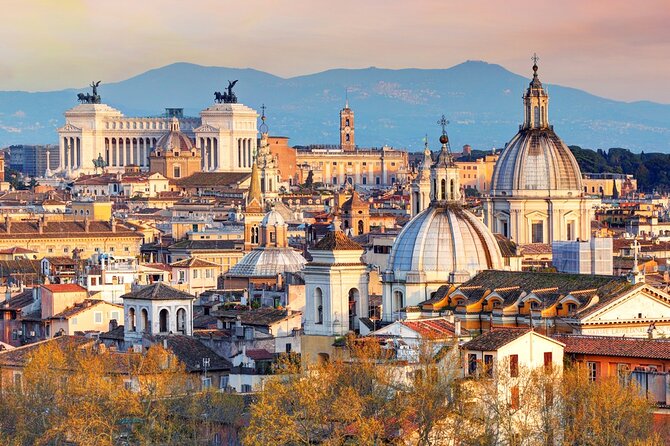
Rome hits different when you are not stuck behind glass. This private golf cart tour gives you unobstructed views while a live guide walks you through what you are seeing, from legend to ruins to major churches. You also get a quick, first-timer-friendly orientation across a smart slice of the city.
My favorite part is the combination of ride-and-lean-in sightseeing. You cover a lot of famous stops in a 3 to 4 hour stretch, yet you still get commentary that links the sights across centuries. The main watch-out is that most ticket sights are only viewed from the outside, so if you want to go inside big-name monuments, plan on extra time later.
You also need comfortable shoes. Even with the cart, you will spend time on streets and at viewpoints, and some stops are simply easier when you can walk well.
In This Review
- Key things that make this tour worth your time
- Private golf cart, wide views, and fast Rome orientation
- Price, duration, and what $150.18 per person buys you
- Meeting at Maya Tours and how the route actually plays out
- Gianicolo panorama to the Fontana dell’Acqua Paola, why the hill matters
- Trastevere energy, Romulus and Remus, and the Mouth of Truth
- Aventine Gardens, Villa keyhole views, the pyramid, and Aurelian Walls
- Baths of Caracalla to Palatine Hill and the Arch of Constantine
- Colosseum, Roman Forum, and Circus Maximus, see the whole system
- Roman Ghetto to Castel Sant’Angelo, then Piazza Navona at pace
- Pantheon, Trevi Fountain, Spanish Steps, and Villa Medici viewpoints
- Should you book this private golf cart tour?
- FAQ
- How long is the Private Piazza’s, Fountains, Monuments & Basilicas Rome Golf Cart tour?
- How much does the tour cost per person?
- Where do we meet the driver?
- Where does the tour end?
- Is the tour offered in English?
- Are monument and basilica entrances included?
- Do I need to bring lunch?
- Is this a private tour?
- Can I cancel for a full refund?
- Are there any notes due to the Jubilee?
- Is it suitable for children?
Key things that make this tour worth your time
- Wide, city-level sightlines instead of peering past bus windows
- Live commentary that connects stories across millennia
- Private group experience, so you are not squeezed into a crowd
- Morning or afternoon timing to match your energy and light
- Mostly exterior viewing, great for orientation, not a ticket substitute
Private golf cart, wide views, and fast Rome orientation
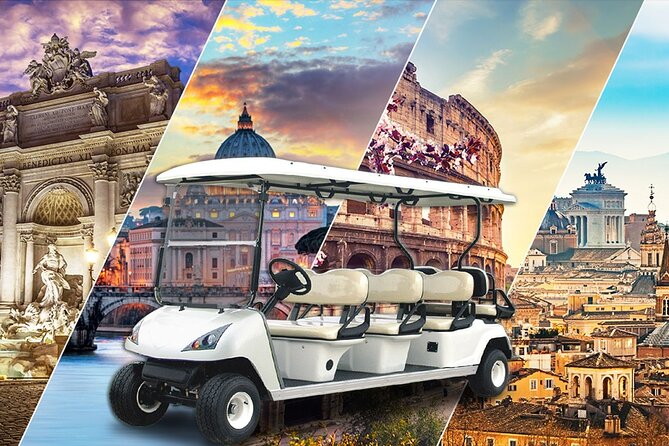
Rome is full of postcard scenes, but buses tend to turn them into snapshots. A golf cart changes the vibe. You glide through traffic zones that would be annoying on foot, and you get angles you cannot get from the back row of a coach. That matters early on, when you are still figuring out where the hills, rivers, and squares actually sit.
This is also a good match if you do not want to spend your first day hunting for the right street at the right time. You get guided context while you move. That is the difference between seeing a monument and understanding why it matters. And because it is private, the pacing can feel more natural than a big-group sprint.
More Golf Cart Tours in Rome
- Rome by Golf Cart Private Tour: Beyond the Landmarks
★ 5.0 · 4,361 reviews - Rome on a Golf Cart Semi-Private Tour Max 6 with Private Option
★ 5.0 · 2,502 reviews - Rome Highlights by Golf Cart Private Tour
★ 5.0 · 2,379 reviews - Rome: Golf Cart Tour with Artisanal Gelato Tasting
★ 4.8 · 1,396 reviews
Price, duration, and what $150.18 per person buys you
At $150.18 per person for roughly 3 to 4 hours, this is not a budget tour. But it can be good value if you think about what you are paying for: transportation plus live guidance plus a route that hits high-impact areas fast.
You are also paying for comfort and access. The cart lets you experience the city’s rhythm without having to do all the legwork immediately. One guide you might encounter could be Ahmed, who (based on past tour experiences) focuses on safety and pacing for families with kids. Another you might meet could be Claudio, an artist-style guide who explains fountains, sculptures, and landmarks with extra clarity.
If you compare this to doing everything solo, the price makes more sense when you are trying to cover lots of famous stops in one go. If your priority is museum tickets and inside access, you should treat this as an exterior orientation tour, not a replacement for timed-entry visits.
Meeting at Maya Tours and how the route actually plays out
You start at the Maya Tours office, then your driver picks you up from there. You will check in at the front desk, then roll out toward your first big viewpoint.
The tour ends in Piazza del Popolo or close by upon request. That is a smart finishing place because it sits on a major arrival axis. From there, you can keep exploring on foot or grab transit without having to retrace your entire day.
Since there is both morning and afternoon timing, you can choose based on your priorities. Morning can help if you want cooler temperatures and easier photo lighting for viewpoints. Afternoon can feel more relaxed for a longer day of walking afterward. Either way, you will be in a steady rhythm of ride, stop, look, listen, move.
Gianicolo panorama to the Fontana dell’Acqua Paola, why the hill matters
The tour kicks off with a terrace viewpoint: Belvedere del Gianicolo. You are on the right bank of the Tiber River, climbing into the hill area dotted with plane trees. This is a classic “Rome lesson” spot because it shows you how the city stacks up across hills and neighborhoods. You can stand, orient yourself, and then watch how the rest of the tour connects to that big-picture layout.
Next comes the Fontana dell’Acqua Paola, also known as the Fontanone. Built in 1612 to mark the end of the Acqua Paola aqueduct (restored by Pope Paul V), it is a monumental fountain that signals Rome’s long love affair with waterworks and public spectacle. Even from the outside, it is the kind of stop where the guide’s commentary adds meaning fast. You start seeing fountains as engineering history, not just scenery.
If you care about photos, bring them-ready patience. Viewpoints like Gianicolo reward slow looking. And because the tour moves around hills, it is worth wearing shoes that can handle uneven sidewalks.
Trastevere energy, Romulus and Remus, and the Mouth of Truth
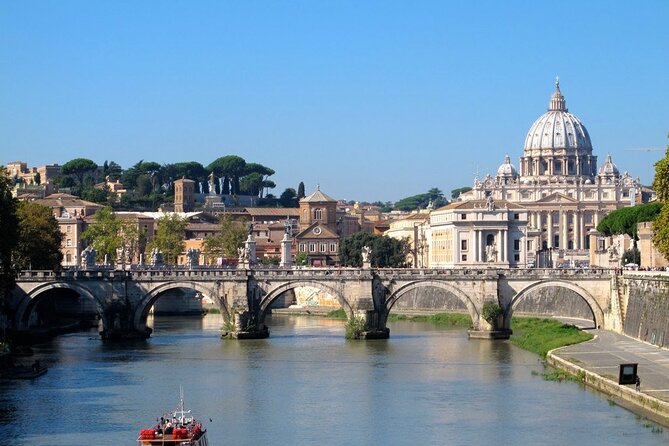
Trastevere is next on the route, and it is easy to see why it stays popular. This is the area that keeps a centuries-old working-class feel while still attracting modern food and craft spots. You will notice it as you roll by, and your guide helps translate the neighborhood’s personality into something you can remember after the tour.
Then the story slides into Rome’s origin myth near the river: the legend of Romulus and Remus. You learn how the river “embraces” the twins and protects them until the famous she-wolf arrives, before Romulus goes on to found Rome in 753 BC. Even if you already know the legend, it lands differently when you are standing near the water that anchors the tale.
After that, you will stop at the Mouth of Truth. It is an ancient marble mask displayed against the left wall of the portico at Santa Maria in Cosmedin, near Piazza della Bocca della Verità. The mask has become famous through pop culture, but the place matters too. This stop gives you a quick snapshot of how Rome reuses older material and keeps it in public life.
Tip for this stretch: slow down with your eyes. These are stops where the guide’s framing helps you notice details you would otherwise walk past.
More Private Tours in Rome

Aventine Gardens, Villa keyhole views, the pyramid, and Aurelian Walls
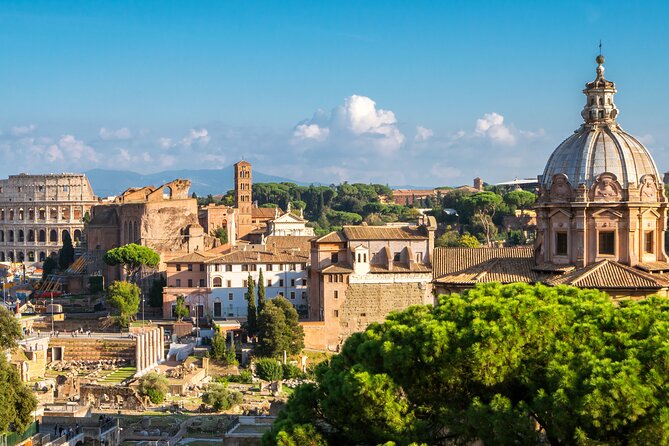
The tour moves to the Orange Trees Garden, which is the Roman name for Parco Savello on the Aventine Hill. It covers about 7,800 square meters and offers one of those classic “Rome from above” views. It also gives you a quieter pause during a tour that could otherwise feel rushed. Expect your guide to connect what you are seeing to how Rome’s power shifted across areas and elevations.
Not far from that, you will get the famous keyhole view at the Villa area, where Il Buco della Serratura lines up with St. Peter’s Basilica’s dome at the end of an allée framed by clipped cypresses. This is a small stop that feels surprisingly magical because the viewpoint is precise. You are not just admiring scenery, you are experiencing a designed perspective.
Next: the Pyramid of Cestius. It is an ancient Roman pyramid near the Porta San Paolo area and the Protestant Cemetery. The standout detail is style. It is built in the manner of Nubian pyramids as a tomb for Gaius Cestius, connected to the Epulones religious corporation. From outside, it is still visually arresting, and it is a helpful reminder that Rome had time periods where tomb architecture looked nothing like what we expect from ruins.
Then you roll past the Aurelian Walls, built between 271 and 275 AD during Emperor Aurelian’s reign. These walls superseded the earlier Servian Wall from the 4th century BC. Seeing them on this tour matters because you start understanding Rome not just as monuments, but as a defended city that kept changing its edges.
Baths of Caracalla to Palatine Hill and the Arch of Constantine
Rome’s ancient spine starts to show clearly around the Baths of Caracalla. These thermae were among the city’s biggest public bath complexes, likely built between AD 212 and 216/217, during the reigns of Septimius Severus and Caracalla. You might not be going inside on this tour, but the scale still hits. Baths were social centers, political statements, and architecture designed for long stays. Your guide’s commentary helps you picture the movement and crowd energy without needing a ticket.
Next you reach Palatine Hill, called the centremost of the seven hills and often described as the first nucleus of the Roman Empire. This stop helps you make sense of why so many political layers pile up in the same general area.
Then the route includes the Arch of Constantine, commissioned by the Roman Senate to commemorate Constantine’s victory over Maxentius at the Battle of the Milvian Bridge in AD 312. An arch like this is more than a frame for photos. It is propaganda in stone, built to tell you what the new order wants people to remember.
If you want the most out of these stops, lean on the guide for the story threads. This is exactly the kind of place where background turns ruins into something you can follow.
Colosseum, Roman Forum, and Circus Maximus, see the whole system
The big three are next: the Colosseum, the Roman Forum, and Circus Maximus. Even without entry tickets, seeing them in sequence gives you a cleaner mental map.
- The Colosseum is the largest ancient amphitheater ever built, still the largest standing amphitheater in the world, even after all this time. From outside, you get the shape and scale, which makes it easier to recognize later when you are walking nearby on your own.
- The Roman Forum was once the market area and became the center of ancient government life, surrounded by ruins of major institutions. It is one of those spaces where the guide can make you feel the “decision-making hub” vibe instead of treating it like a random pile of stones.
- Circus Maximus was the chariot-racing stadium and mass entertainment venue between the Aventine and Palatine hills. Seeing the valley setting helps you understand how entertainment shaped daily life.
A practical note: this is where your walking tolerance matters. Even if you ride between stops, you will likely step out to look, reposition for best angles, and move with your group.
Roman Ghetto to Castel Sant’Angelo, then Piazza Navona at pace
The route includes the Roman Ghetto area, established in 1555 in Rione Sant’Angelo. It is close to the Tiber and connected to areas around Theatre of Marcellus. From the outside, this stop is not about sightseeing facades. It is about understanding how different communities were separated and managed within the city. Your guide’s framing is what turns a neighborhood pass into a meaningful moment.
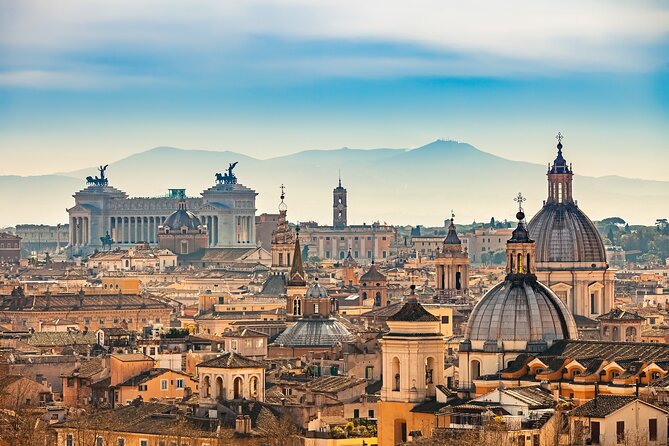
Next: the Mausoleum of Hadrian, known as Castel Sant’Angelo. It starts as an imperial mausoleum commissioned by Emperor Hadrian, then later popes used it as a fortress and castle. Today it is a museum. Even from outside, you get the “tower of power” feeling, and it helps you understand why Rome’s leaders loved buildings that could also protect them.
Then you come to Piazza Navona, built on the site of Domitian’s Stadium from the 1st century AD. The oval shape of the plaza is a quiet clue that you are walking on remnants of entertainment infrastructure. If you chose an afternoon or night-friendly timing, this stop can be extra satisfying because it feels like a stage set for Rome.
Pantheon, Trevi Fountain, Spanish Steps, and Villa Medici viewpoints
These are the postcard stops, so you should expect crowds at some point, even if you only see them from outside. The key is using the guide to anchor what you are seeing in context.
First, the Pantheon. It began as a Roman temple ordered by Marcus Agrippa during Augustus’s reign, then after a fire, the current building was commissioned by Emperor Hadrian and likely dedicated around AD 126. Since AD 609, it has been a Catholic church. Even without entering, you can appreciate why the structure stayed important across eras.
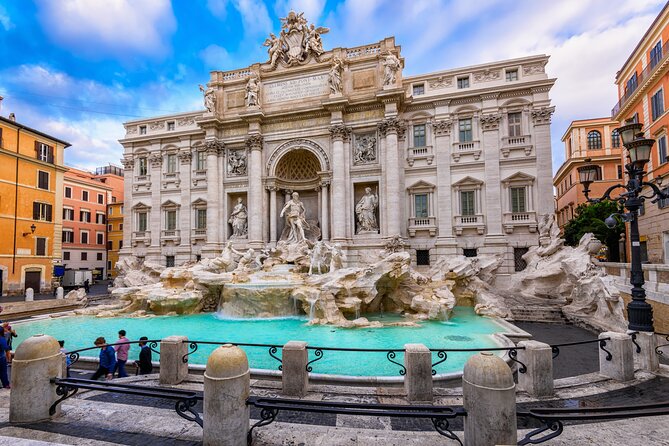
Then comes the Trevi Fountain, designed by architect Nicola Salvi and completed by Giuseppe Pannini in 1762. This fountain is famously busy, and it is also an example of how Rome turned water display into city theater. Let your guide point out what to notice beyond the obvious.
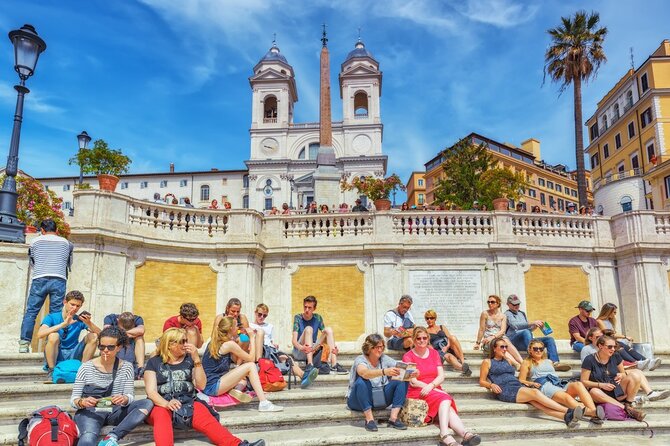
Next: the Spanish Steps. You climb a steep slope between Piazza di Spagna and Piazza Trinità dei Monti at the top. The church dominates the view area above, so it is a good stop for people who like to understand why Rome’s stairs are more than just stairs. They are social gathering points and viewing routes.
After that, you reach Villa Medici, a Mannerist villa and architectural complex on the Pincian Hill next to Trinità dei Monti, with gardens adjoining the larger Borghese gardens. Even if you only view it externally, it adds a different flavor to the route, more refined and architectural than purely monumental.
Finally, the tour finishes back in Piazza del Popolo, where the city’s main pathways spread out and you can decide what you want to chase next.
Should you book this private golf cart tour?
Book it if you want a fast, guided intro to Rome that shows you the big highlights without turning your day into a logistics puzzle. It is especially worth it for first timers, multi-generation families, and anyone who wants the city stories layered over the scenery.
Skip or supplement it if your top goal is going inside famous sites. This tour focuses on sights from the outside and does not include entry, so you will likely want a second visit for ticket attractions like major interiors. Also, wear good walking shoes, because even a golf cart day can still mean hours of movement.
If you are choosing just one “orientation” outing early in your trip, this is a strong candidate. When you later return on your own, you will already know how the monuments connect, where the viewpoints sit, and what to prioritize next.
FAQ
How long is the Private Piazza’s, Fountains, Monuments & Basilicas Rome Golf Cart tour?
It runs about 3 to 4 hours.
How much does the tour cost per person?
The price is $150.18 per person.
Where do we meet the driver?
You start by checking in at the Maya Tours office, then the driver picks you up from there.
Where does the tour end?
The tour ends in Piazza del Popolo or close by upon request.
Is the tour offered in English?
Yes, it is offered in English.
Are monument and basilica entrances included?
No. Entry inside monuments and attractions is not included, and sights that require tickets are visited only from the outside.
Do I need to bring lunch?
Lunch is not included.
Is this a private tour?
Yes. It is private, and only your group participates.
Can I cancel for a full refund?
Yes, free cancellation is available. You must cancel at least 24 hours before the start time for a full refund.
Are there any notes due to the Jubilee?
Yes. Some monuments or areas may be under restoration during the Jubilee, so you should watch for any messages with changes.
Is it suitable for children?
Children must be accompanied by an adult, and most travelers can participate. Service animals are allowed.
If you want, tell me your travel dates and whether you prefer morning or afternoon, and I’ll suggest a simple game plan for what to do before and after the cart tour.
Latest additions from Rome
- Guided Tour Vatican Museums & Sistine Chapel★ 4.1 · 30 reviews
- Exclusive Rome by Night Vespa Tour★ 5.0 · 30 reviews
- Transfer Rome to Airports★ 4.5 · 30 reviews
- Vatican: St.Peter’s Basilica & Dome – Reserved Entry & Tour★ 4.1 · 30 reviews
- Rome street art tour: off the beaten path with a local guide★ 5.0 · 30 reviews
- Tivoli, Hadrians Villa and Villa d’Este, a charming day trip from Rome★ 4.5 · 30 reviews
- Rome Food Tasting with Wine Pairing Italian Authentic Flavors★ 5.0 · 31 reviews
- Inspirational Cooking on the Roman Chef’s Panoramic Terrace★ 5.0 · 30 reviews
Golf Cart Tours in Rome, compared.
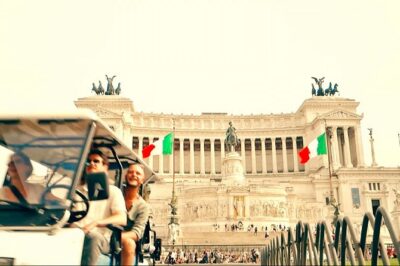
Rome by Golf Cart Private Tour: Beyond the Landmarks
Read our review →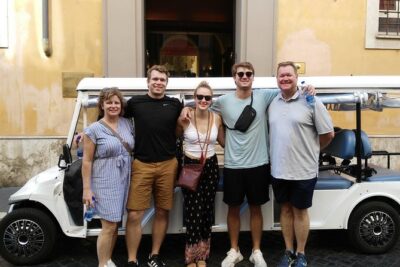
Rome on a Golf Cart Semi-Private Tour Max 6 with Private Option
Read our review →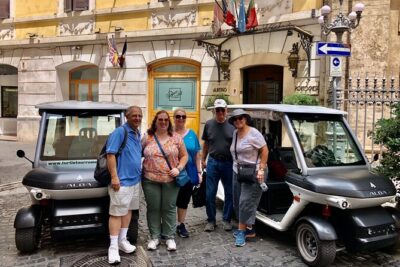
Rome Highlights by Golf Cart Private Tour
Read our review →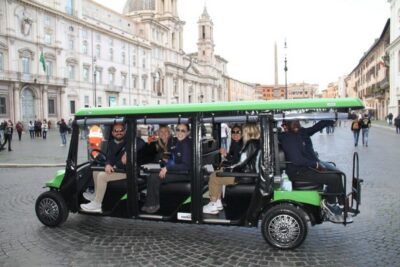
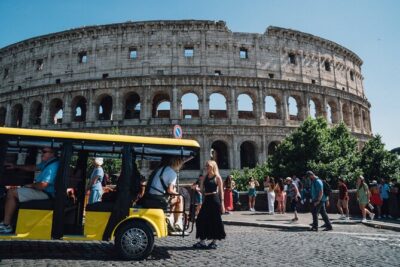
Golf Cart Small-Group Guided Tour: Rome City Highlights
Read our review →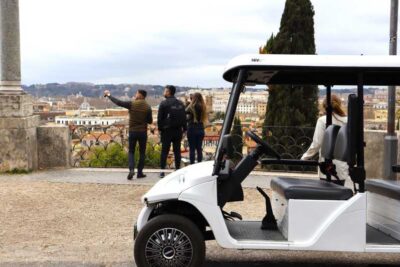
Private/Group 4 Hours Golf Cart SightseeingTour
Read our review →
Browse the lists this tour appears in