
Reviewed · ROME
Popes and Artists: sex, lies and betrayals in the 1600s
Rome gets messy in the 1600s. I love how this tour reveals secret streets behind the art, and I love the way the guide, Luisa, ties what you see to real human drama, popes and artists included. One drawback to consider: it is not suitable for mobility impairments, and you will want comfortable shoes, plus no sleeveless shirts.
In about 2.5 hours, you start at Via della Stamperia by Accademia S. Luca, then walk through Trevi, Piazza di Pietra, Sant’Ignazio di Loyola, the Pantheon, Caravaggio at St. Louis of the French, Piazza Navona, and finish at Piazza Fiammetta, with church entrances and painting explanations included.
In This Review
- Quick take: what makes Popes and Artists different
- A 1600s Rome story walk, from Trevi’s stage to Piazza Fiammetta
- Meeting Luisa at Via della Stamperia, then moving fast in a small group
- Trevi Fountain and Piazza di Pietra, where the Baroque story starts loud
- Sant’Ignazio di Loyola and the Pantheon, art, theology, and status in one walk
- St. Louis of the French and Caravaggio’s trilogy, the story behind the paintings
- Piazza Navona, Bernini-and-Borromini energy, and sculptors that couldn’t share the spotlight
- Piazza Fiammetta, the woman of the 1500s, and duels for love
- Price, comfort rules, and the practical side of enjoying this tour
- Who should book, and who might want a different Rome experience
- FAQ
- How long is the Popes and Artists tour?
- What is the price per person?
- How big is the group?
- What languages are available for the live guide?
- Where do we meet, and where does the tour end?
- What does the tour include?
- What should I bring and wear?
- Is the tour suitable for everyone, including mobility impairments?
Quick take: what makes Popes and Artists different
- A story-first route through Baroque Rome, not just a checklist of famous monuments
- Luisa’s live storytelling, the kind that makes 1600s scandals feel painfully real
- Caravaggio time inside a church, with an explanation of his trilogy of paintings
- Competition and duels at Piazza Navona, tied to two famous sculptors
- A dramatic finish at Piazza Fiammetta, built around a woman and the duels her love triggered
A 1600s Rome story walk, from Trevi’s stage to Piazza Fiammetta
This experience is for you if you like your art history with names, motives, and consequences. The premise is simple: Rome in the Baroque century was powered by talent, money, reputation, and politics. And those ingredients do not make for gentle bedtime stories. You walk through the center and watch the city become a stage for Bernini, Borromini, Caravaggio, and the popes who commissioned and controlled the party.
I also like that the tour is built around hidden life as much as famous works. You still pass major sights, but you spend serious time on smaller streets and side buildings where the “how did this happen” feeling kicks in. The result is that you start to see Rome as a living network, not a museum. Artists maneuvered for patronage. Courtesans worked the margins. Rivalries turned into public feuds. It’s the same theme again and again: art and power are tangled.
At the same time, it’s not all gloom. There’s passion, competition, and even a kind of dark humor in how people keep making the same mistakes centuries later. You are paying for a guided narrative that connects the dots for you in a way that an audio guide just cannot.
Not settled yet? These cover similar ground in Rome:
- Vatican Museums, Sistine Chapel & St. Peter’s Basilica Tour
★ 4.3 · 73,970 reviews - Vatican Museums, Sistine Chapel & St Peter’s Basilica Guided Tour
★ 4.5 · 39,149 reviews - Rome: Colosseum, Palatine Hill and Roman Forum Guided Tour
★ 4.8 · 32,814 reviews - Rome: Guided Tour of Colosseum, Roman Forum & Palatine Hill
★ 4.7 · 27,897 reviews
Meeting Luisa at Via della Stamperia, then moving fast in a small group
Your tour begins at Via della Stamperia, 72, right in front of the Accademia S. Luca Academy of Painting. That matters because it puts you in the right rhythm from the start. Instead of starting at the loudest tourist pile and hoping everyone stays awake, you begin in a quieter pocket and ramp up as you go.
The group stays small, limited to 10 participants. That changes the whole feel. You can actually hear the guide and follow the story without feeling like you are being sprayed with facts from across the street. It also makes it easier for the guide, Luisa, to adapt her pacing to the questions and energy in the group, and that’s where her storytelling shines.
This is a walking tour with a clear 2.5-hour arc. You will cover multiple central sites, including several church stops, so plan to be on your feet. If you know you get tired easily, this is not the kind of tour you want to treat as casual sightseeing between meals.
And yes, there’s a simple dress rule: no sleeveless shirts. It is the kind of thing that can ruin your morning if you forget, since you’ll be entering churches during the walk.
Trevi Fountain and Piazza di Pietra, where the Baroque story starts loud
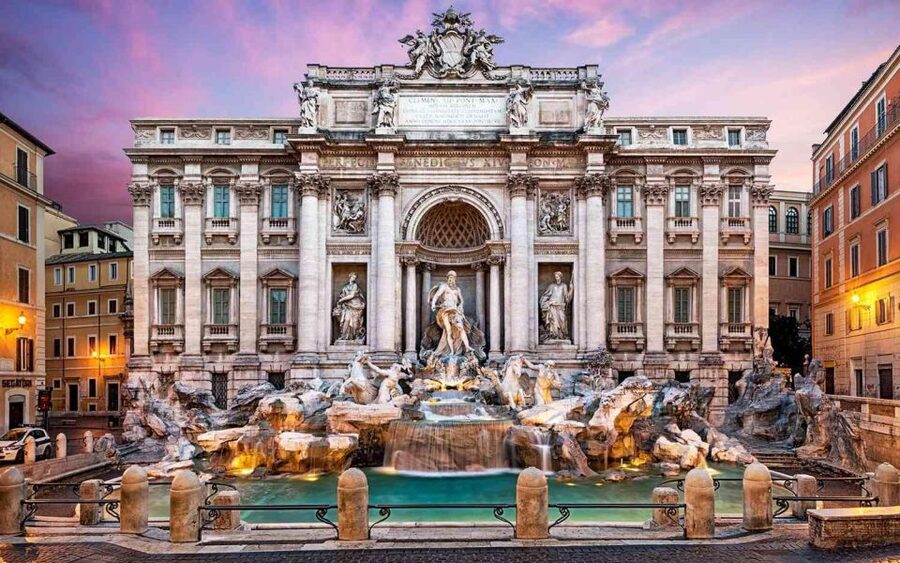
You begin at Trevi Fountain, with about 15 minutes there. It is a funny choice, because Trevi is the kind of place where people go expecting a postcard and then move on. Here, you get an explanation and a broader frame. The fountain becomes a starting point for the wider idea of the Baroque age: visual splendor built on systems of patronage, influence, and reputation.
Then you move to Piazza di Pietra for another guided stop. This is the moment where you start noticing how the route is designed. The guide uses the city’s layout like a timeline. Small squares and nearby streets help you understand how people would circulate, meet, and compete. In other words, you are not only learning what artists made. You’re learning where they likely moved, and how the city’s geography fed the scene.
One practical thing I appreciate: the pacing stays manageable. Each stop is short enough to keep attention, but long enough for you to get the point. You are not wandering with vague directions and hoping it clicks later.
Sant’Ignazio di Loyola and the Pantheon, art, theology, and status in one walk
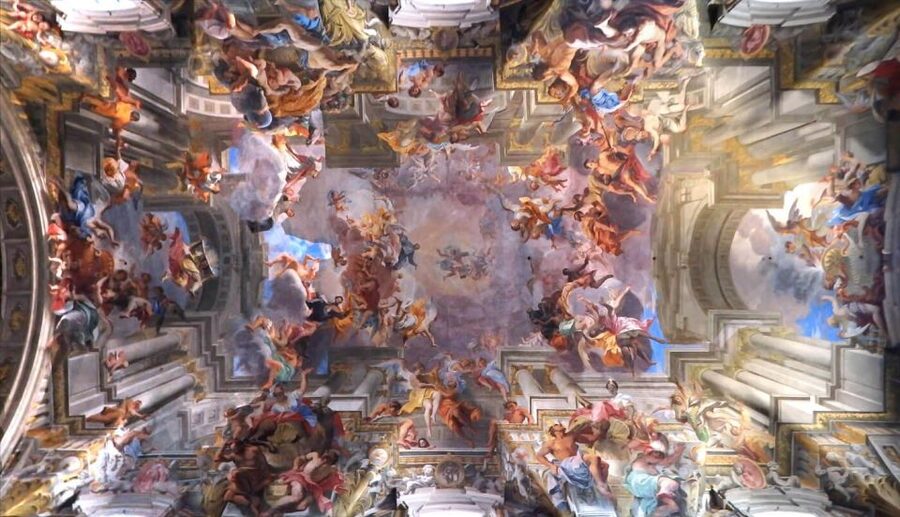
Next comes the Church of Sant’Ignazio di Loyola, with around 20 minutes. Church interiors in Rome are never neutral. They are statements. Even when the tour is not focused on a specific altar or single detail, you get context for why Baroque art was such a big deal. The story of popes supporting art is not just a feel-good “patronage” line. It includes propaganda, prestige, and survival. You hear how art could elevate a reputation, or make enemies faster than a duel.
Then you head to the Pantheon for about 10 minutes, including a guided tour. This is a quick stop, but it has a strong anchor: you will see the tomb of Raphael. For many people, the Pantheon is already iconic. The guide helps you connect that level of fame to what comes next in the story, when the Baroque century turns older artistic foundations into new showmanship.
If you are the type who always wants one clear takeaway, this part gives you it. Baroque Rome wasn’t only about talent. It was about visibility. Artists needed their work to be seen by the right people at the right time. And popes, cardinals, and powerful patrons shaped what got built, displayed, and remembered.
St. Louis of the French and Caravaggio’s trilogy, the story behind the paintings
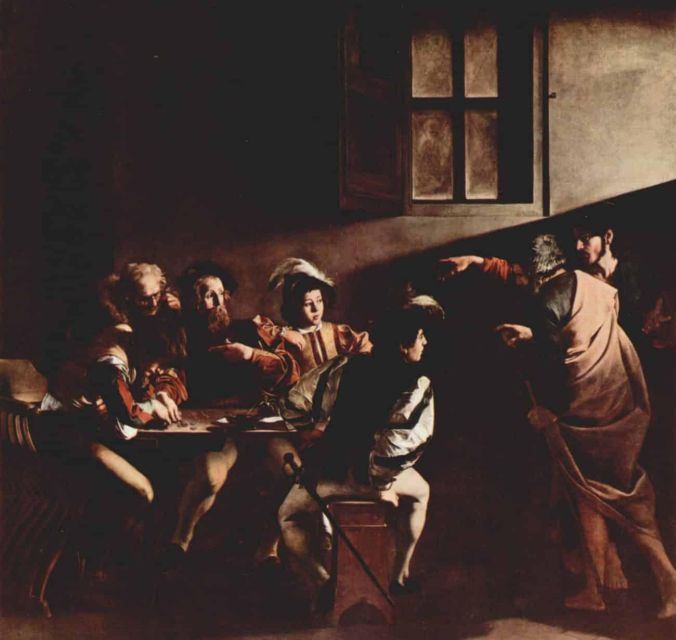
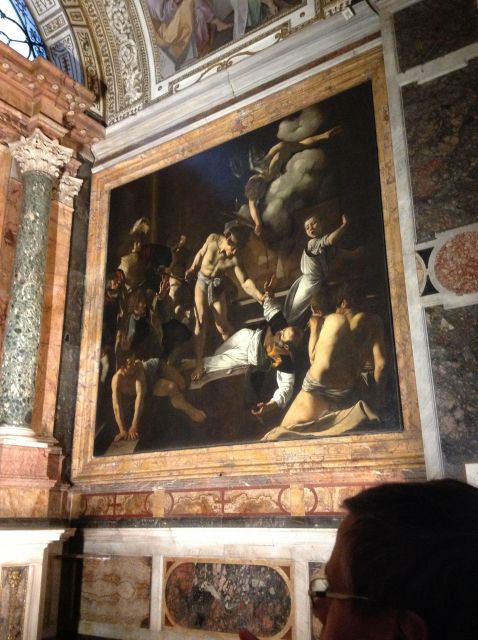
The tour’s most “lean in close” moment comes at the Church of St. Louis of the French, with about 15 minutes. This is where you go for Caravaggio’s trilogy of paintings. You are not just shown where things are. You get the explanation, plus the background that makes the works feel tied to real-life trouble.
Caravaggio stories are famous for a reason, and the guide leans into that without turning it into gossip-fueled chaos. The key point you should expect is that the trilogy has a very unbelievable story behind it, the kind that makes you look at paint as if it might still be wet. That is exactly the mental shift this tour aims for. Instead of treating these works like museum objects, you treat them like evidence from a scandal.
Here’s what makes this stop valuable for you: you will leave with a better sense of why Caravaggio’s influence lasted. Even when you do not remember every detail, you remember how the story connects emotion and impact. Baroque art is dramatic on purpose. The guide helps you see that drama as intentional, not random.
Another shape for the same afternoon in Rome:
Piazza Navona, Bernini-and-Borromini energy, and sculptors that couldn’t share the spotlight
You reach Piazza Navona for about 20 minutes. This is a natural place for drama because the square itself feels like a set. The tour uses that energy to explain the competition between two famous sculptors. You hear about rivalry, ambition, and the kinds of pressures that turn artistry into something closer to status warfare.
If you already know names like Bernini and Borromini, this stop gives you a human scale for why the names matter. It’s not only about who was more talented. It’s about who got access to power, who had patron support, and how reputation could be attacked or defended publicly. You can almost feel how hard it would be to compete when everyone is watching and the consequences are social, not just artistic.
Also, Piazza Navona is a good reality check. After multiple church stops and dense storytelling, you get a broader street-level view. It helps you picture how people actually experienced the Baroque world: outdoors, surrounded by performances, and constantly reminded that art was part of daily politics.
Piazza Fiammetta, the woman of the 1500s, and duels for love
The tour ends at Piazza Fiammetta. You finish with a story about a beautiful woman of the 1500s and the duels for her love. That ending is not random. It brings the themes full circle.
Up to this point, you heard about popes, cardinals, artists, courtesans, competition, revenge, and betrayal. By the time you reach Fiammetta, you are seeing that the Baroque machine ran on human desire as much as patronage. Love, status, and pride all overlap. The “duel” idea lands because it matches how the guide frames everything: people did not just create art, they fought to control their place in the story.
From a travel perspective, I like that the ending is in a lively central area where you can easily continue on your own. You are not stuck at some remote meeting point where everyone scatters with no plan. You can choose dinner, a gelato pit stop, or just a slow wander to let the stories sink in.
Price, comfort rules, and the practical side of enjoying this tour
The price is $59 per person for 2.5 hours. Is it good value? For me, the answer is yes if you care about context, not only visuals. What you get is more than a walk between sights. You get church entrances included, plus painting explanations at key points. That combination matters in Rome, because the difference between “seeing” and “understanding” often comes down to what a guide tells you while you’re standing in front of the work.
You should also plan for comfort. Wear comfortable shoes. The tour is designed as a connected route, which means steady walking between stops. You are also entering churches, and you cannot wear sleeveless shirts.
Mobility-wise, it is not suitable for people with mobility impairments. If walking distance and step access are a concern, you should choose a different format. This is a great story tour, but it is still a walking tour.
English and Italian are available, and the guide is live. The small group size helps a lot with clarity, especially when the story gets detailed.
Who should book, and who might want a different Rome experience
Book this tour if you want Baroque Rome in story form. You’ll like it if you enjoy plots, rivalries, and the way art ties into power. It’s a good fit for couples, friends, and solo travelers who like their history to have momentum. The tone stays historical, but it does not sanitize the mess. That balance is why the experience feels memorable.
You might skip it if you want a strictly chronological art history lecture or if you hate walking. Also skip it if mobility is a factor. This tour is built for being out in the streets and inside churches, with a clear walking pace.
If you are already a fan of Bernini, Borromini, or Caravaggio, this tour helps those names mean something in place. And if you are new to them, it gives you an easy entry point. The guide, Luisa, focuses on the relationships between artists and the popes who shaped their opportunities, so you do not feel lost.
FAQ
How long is the Popes and Artists tour?
The tour lasts 2.5 hours.
What is the price per person?
The price is $59 per person.
How big is the group?
The group is limited to 10 participants.
What languages are available for the live guide?
The live tour guide is available in English and Italian.
Where do we meet, and where does the tour end?
You meet in Via della Stamperia, 72, in front of the Accademia S. Luca Academy of Painting, and you finish at Piazza Fiammetta.
What does the tour include?
It includes entrance to churches and painting explanation.
What should I bring and wear?
Bring comfortable shoes. Sleeveless shirts are not allowed.
Is the tour suitable for everyone, including mobility impairments?
It is not suitable for people with mobility impairments.
Latest additions from Rome
- Rome: Angels and Demons Private Tour with Transfers★ 5.0 · 8 reviews
- Vatican City: St. Peter’s Basilica and Papal Tombs Guided Tour★ 4.0 · 8 reviews
- Vatican City: Museums & Sistine Chapel Tour with St. Peter’s★ 3.1 · 8 reviews
- Colosseum, Palatine and Forum tour with virtual guide★ 5.0 · 8 reviews
- Sistine Chapel @ its best! First time slot Vatican Museums access★ 5.0 · 8 reviews
- Private Vatican In Depth 5-Hour Tour – Skip The Line★ 4.5 · 8 reviews
- Vespa Rental in Rome★ 4.0 · 8 reviews
- VIP Yacht Escape from Rome to Naples Island Gems Ischia & Procida★ 5.0 · 8 reviews