
Reviewed · ROME
Piazza Navona and Trevi District Underground Pass with Audioguide
Rome is more than street level. This pass takes you into the underground spaces beneath Piazza Navona and Trevi. You’ll follow an audioguide through two very different finds: an ancient masonry stadium site and the underground aqueduct called the Vicus Caprarius.
I like that the experience is self-paced. Each stop is about 40 minutes, so you can slow down for details without feeling trapped in a big group flow.
One thing to consider: these spaces can feel tight, and the two parts may involve a walk between entrances, so plan time for crowds and weather. If you’re claustrophobic, this may not be your best fit.
In This Review
- Key points before you go
- What this Rome pass really is, and what you’re paying for
- Piazza Navona underground: the Stadio di Domiziano under your feet
- Trevi District underground: Vicus Caprarius and the City of Water
- Expect a self-guided flow, not a guided walk
- Timing, queues, and the walk between entrances
- Price and value: $54.07 for two underground layers
- Who should book, and who should skip
- Practical tips so the day runs smoothly
- Where to meet and how to plan your Roman day
- Should you book this underground pass?
- FAQ
- Is there a guided tour included with this pass?
- How long does the experience take?
- What language is the audioguide available in?
- Where do I redeem my voucher?
- What time does the tour start?
- Are food and hotel pickup included?
Key points before you go
- Two underground stops, two different stories: a stadium under Piazza Navona and an aqueduct tank tied to the Vergine aqueduct
- Audioguides are the main format: plan on navigating by signage and your own pace
- Short visits, about 40 minutes each: the whole loop is around 2 hours
- Reserved entrance tickets for both areas: you redeem at the Touristation Navona office first
- Rain-friendly indoor sections: underground chambers help if Rome is throwing weather at you
What this Rome pass really is, and what you’re paying for
This is not a classic guided tour with a person talking the whole time. What you’re buying is reserved entry for two underground areas plus an audioguide you use on site.
At $54.07 per person for an experience running about 2 hours, the value comes from access. You’re not just looking at the tops of famous landmarks. You’re paying for the chance to see what’s preserved beneath them, in places you’d usually walk past without knowing were there.
I also like the structure. The pass splits the day into two focused underground chapters, each designed for about 40 minutes. That timing matters because underground sites are naturally slower, with foot traffic, steps, and looking time.
Not settled yet? These cover similar ground in Rome:
- Vatican Museums, Sistine Chapel & St. Peter’s Basilica Tour
★ 4.3 · 73,970 reviews - Vatican Museums, Sistine Chapel & St Peter’s Basilica Guided Tour
★ 4.5 · 39,149 reviews - Rome: Colosseum, Palatine Hill and Roman Forum Guided Tour
★ 4.8 · 32,814 reviews - Rome: Guided Tour of Colosseum, Roman Forum & Palatine Hill
★ 4.7 · 27,897 reviews
Piazza Navona underground: the Stadio di Domiziano under your feet

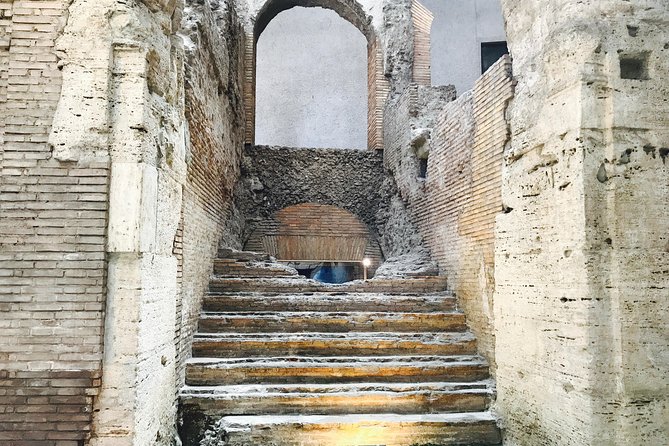
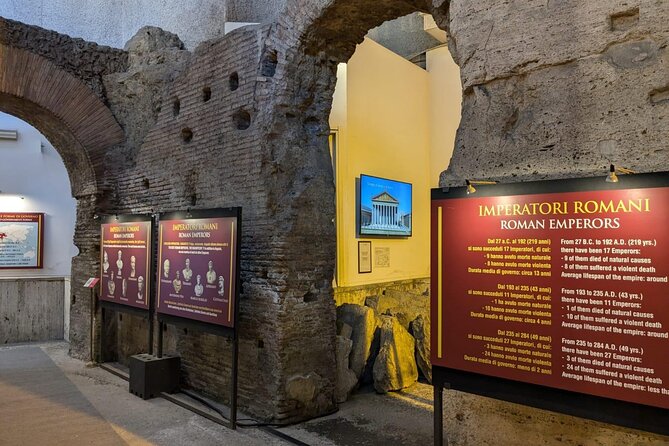
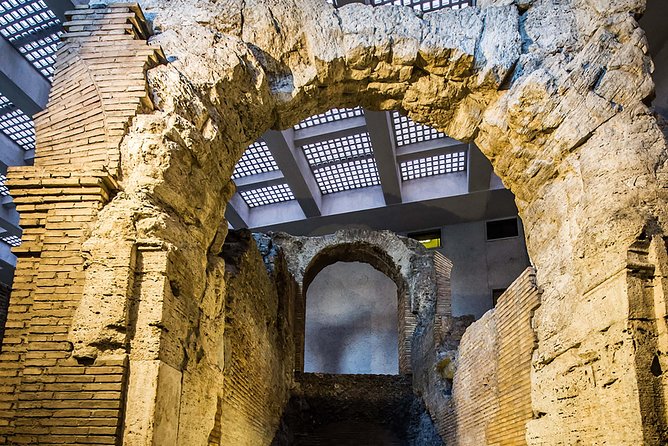
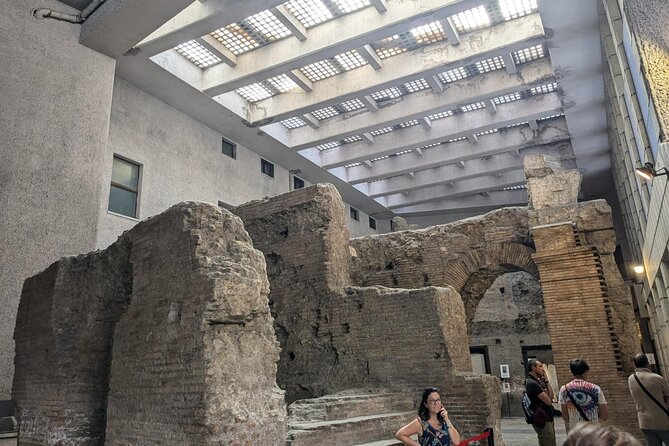
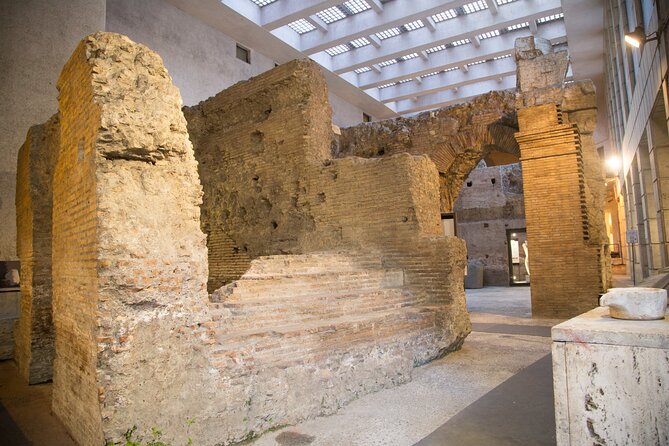
Stop one takes you to the underground level linked to the Stadio di Domiziano by Navona Square. This is described as the first and only example of a masonry stadium built in Campo Marzio around 85 to 86 A.D. It was connected to the Certamen Capitolino Iovi, a five-year competition established to inaugurate the venue in 86 A.D., modeled to imitate the Olympic-style games.
What I find compelling is how concrete the story feels. Piazza Navona today looks like a lively square, but the audioguide frames it as a layer cake of Rome. You’re basically learning how a stadium became a foundation for later life in the center of the city.
You’ll spend around 40 minutes here, and admission is included for this part. The audioguide is available in six languages, with English offered as part of the overall experience options.
Practical note: an underground stadium area also means you rely on the route and your audio track to stay oriented. If you prefer a live guide to keep you moving, this format may feel more hands-off than you expect.
Trevi District underground: Vicus Caprarius and the City of Water
The second stop is called Vicus Caprarius, often described as the City of Water. This underground area is tied to an aqueduct, and the discovery story is a big part of the appeal.
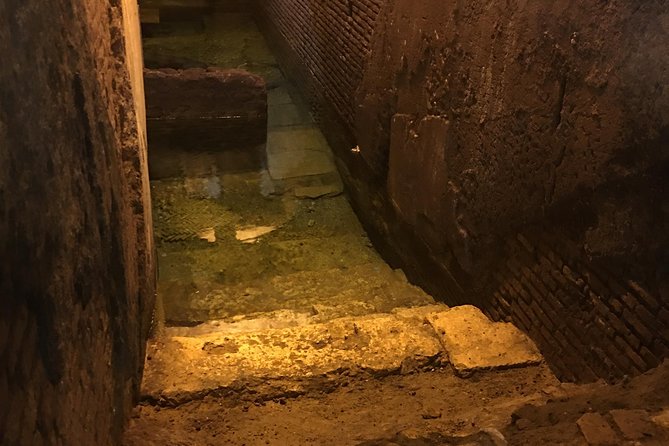
The aqueduct connection was discovered in 1999 in the basement of a cinema. Inside, you can see a water tank connected to the Vergine aqueduct. The audioguide helps you understand why that matters. Rome’s fountains are not magic, they’re engineering, and this is a window into the system that fed water into the city.
This stop is also about 40 minutes, and it’s listed with admission as free. In the real world, that translates into a lower-friction visit once you’re in, since the pass is designed to handle entry for you at redemption.
The main drawback here, if you go with kids, is that audio access may not always be as straightforward as you’d hope. If you’re traveling as a family, you should be ready to ask what’s available for children when you pick up your voucher or at the entrance point for the second location.
Expect a self-guided flow, not a guided walk
The pass is built around an audioguide, and that changes the whole feel. You are responsible for moving between indoor areas and following the audio cues.
In practice, self-guided can be great. It lets you stop, listen longer, and skip what you don’t need. It also makes the experience more flexible if Rome is hot, crowded, or raining.
But self-guided also has real friction points. The entrance for each underground portion is not always obvious at street level, and it’s easy to lose a few minutes if you’re rushing or your timing is tight. Plan for that, especially at check-in.
Audio experience quality can vary too. I’d treat the audioguide like a convenience, not a guaranteed perfect system. Bring patience if a device acts up or the audio cuts out for a moment.
Timing, queues, and the walk between entrances
The pass starts at 10:00 a.m. and the overall duration is listed at about 2 hours. That’s a useful range, but it doesn’t mean you can arrive late.
You’ll redeem your voucher at the Touristation Navona office, then head to the first underground area. Even with reserved entrance tickets, there can be waiting at redemption and crowding once you’re inside.
One more practical factor: the two underground components may not be in the same immediate spot. The second entrance can involve a 15 to 20 minute walk from the first area. That’s exactly the sort of detail that changes how you experience the day.
So I recommend building in a buffer in your head. If it’s raining hard or sidewalks are crowded, the walk can feel longer than you expect. Your best strategy is to treat the pass like two short museum-style visits, not one seamless underground circuit.
Another shape for the same afternoon in Rome:

Price and value: $54.07 for two underground layers

Let’s talk value in plain terms. You’re paying for access to protected underground spaces plus an audioguide, not for a full live guiding service. That’s why the price is higher than basic entry to a single site, but often still reasonable versus booking separate tickets.
The value equation gets stronger if you care about Roman infrastructure. The Stadio di Domiziano piece gives you the “under Piazza Navona” wow factor, while Vicus Caprarius gives you an engineering story through the aqueduct tank and the Vergine aqueduct connection.
Where the value can dip is if you were expecting a guided narration and a clear, signposted route like you’d get on a typical walking tour. If you want a staff-led tour with constant interaction, this pass may feel like an “add-on” rather than the core event.
For me, this pass earns its keep when you want a break from the street level crush, plus a chance to see Rome’s hidden layers in a compact time window.
Who should book, and who should skip
This works best for people who like Roman ruins but want something different from the standard headline stops. If you’ve already done the big sights and you crave a more unusual perspective, this underground format is a smart next step.
It also suits rainy days. The underground portions are indoors, so your visit is less vulnerable to weather.
That said, think twice if you’re dealing with claustrophobia. Underground spaces, even when they’re not extreme, can still feel confining due to crowds, steps, and enclosed corridors.
Families can enjoy it, especially kids who love history and “how did they build this?” questions. Just do a quick check on audio devices for children, since at least one family run into a snag with audio availability at the second location.
Practical tips so the day runs smoothly
Here are the choices that matter most for a smooth experience.
First, arrive early enough to redeem and orient yourself. The start time is 10:00 a.m., and rushing usually makes locating underground entrances harder.
Second, wear shoes you can move in easily. Rome’s underground routes can involve stairs and uneven footwork. You’ll be fine if you’re comfortable walking, but you won’t want to do it in uncomfortable dress shoes.
Third, expect crowds around the Navona area. Even if your underground time is short at 40 minutes each, the wait and the walk add up.
Finally, treat the audioguide as your main “guide.” If you want frequent human guidance, you might prefer a tour that includes a live guide rather than relying only on audio.
Where to meet and how to plan your Roman day
Plan to meet at Touristation Navona office to redeem your voucher. The meeting point is described as near public transportation, so you should be able to plug this into your existing Rome route without a complicated taxi plan.
Because this is scheduled for a specific start time and depends on redemption, I suggest not stacking it right after another timed booking.
Also, keep an eye on your energy level. Two underground visits plus walking can be a lot if you’re already worn out from a long day of sightseeing.
Should you book this underground pass?
Book it if you want an unusual Rome angle, not just another photo stop. The combination of Piazza Navona’s Stadio di Domiziano and the Vicus Caprarius aqueduct story gives you real variety in a short time.
Skip it if you need a guided experience with a person constantly managing the route and devices, or if you know you don’t do well in tight spaces. Also skip if you’re hoping for a totally seamless single-site experience, because you should plan for movement between entrance points.
If you do book, go with the right mindset: this is a self-guided audioguide adventure. When you lean into that, it can feel like Rome gives you a backstage pass.
FAQ
Is there a guided tour included with this pass?
No. A guided tour is not included. The experience is primarily audioguide-based with reserved entrance tickets.
How long does the experience take?
It is listed at about 2 hours total, with each underground section taking around 40 minutes.
What language is the audioguide available in?
The experience is offered in English, and the audioguide tour is available in six different languages.
Where do I redeem my voucher?
You redeem your voucher at the Touristation Navona office.
What time does the tour start?
The start time listed is 10:00 a.m.
Are food and hotel pickup included?
No. Food and drinks are not included, and pick up from and to the hotel is not included.
Latest additions from Rome
- Vatican City: St. Peter’s Basilica and Papal Tombs Guided Tour★ 4.0 · 8 reviews
- Vatican City: Museums & Sistine Chapel Tour with St. Peter’s★ 3.1 · 8 reviews
- Rome: Angels and Demons Private Tour with Transfers★ 5.0 · 8 reviews
- Colosseum, Palatine and Forum tour with virtual guide★ 5.0 · 8 reviews
- Sistine Chapel @ its best! First time slot Vatican Museums access★ 5.0 · 8 reviews
- Private Vatican In Depth 5-Hour Tour – Skip The Line★ 4.5 · 8 reviews
- Vespa Rental in Rome★ 4.0 · 8 reviews
- VIP Yacht Escape from Rome to Naples Island Gems Ischia & Procida★ 5.0 · 8 reviews