
Reviewed · WALKING TOURS IN ROME
Piazza del Popolo and Historical Sights Walking Tour in Rome
Rome hits different when someone else plots the route. This Piazza del Popolo historical sights walking tour ties together big Roman eras with a real guide, so you spend your time seeing and learning instead of guessing.
I especially like the small group size (max 15). It keeps things conversational, and it also means you can ask questions without shouting across the Colosseum crowd.
One possible drawback: it is a concentrated 2.5-hour walk with lots to cover, so if you want long pauses at monuments, you may wish for a slower day.
In This Review
- Key highlights worth your attention
- Why this Popolo to Castel Sant’Angelo route makes sense
- Porta del Popolo: starting at Rome’s north gate
- Piazza del Popolo: twin churches and Ramses II’s obelisk
- Mausoleum of Augustus: learning the “first emperor” thread
- Palazzo Borghese: spotting power in plain sight
- Gelato and a reset at Gelateria della Palma
- Pantheon: Temple of all the gods, plus tombs you can pinpoint
- Piazza Navona: the stadium shape hiding in plain view
- Via dei Coronari: Renaissance streets and the pilgrims’ steps
- St. Angelo Bridge: the story told in crossings
- Castel Sant’Angelo: from Hadrian’s ashes to medieval Rome
- Via della Conciliazione and the St. Peter’s view finale
- Price, value, and why free admission matters here
- Pace, comfort, and how to get the most from a 2.5-hour walk
- Who should book this Piazza del Popolo to Castel Sant’Angelo tour
- Should you book it
- FAQ
- Where does the tour start and where does it end?
- How long is the walking tour?
- Is this tour offered in English, and is it a small group?
- What are the main stops on the route?
- Are entrance fees included for the stops?
- Is there a gelato stop?
- How much does it cost, and is it tip based?
- Is it easy to reach the meeting point, and are service animals allowed?
- What is the cancellation and refund policy?
Key highlights worth your attention
- Piazza del Popolo to Castel Sant’Angelo in one run, with a logical flow through Ancient Rome, Renaissance streets, and the approach toward St. Peter’s
- A small group limit of 15, which makes the guide’s explanations easier to hear and follow
- Free admission ticket stops are built into the route, so you avoid extra ticket shopping for the listed sights
- Pantheon and Piazza Navona are major anchors, not quick photo pull-bys
- Via dei Coronari is treated like a time capsule, with the route described as still close to the Renaissance-era feel
- Gelateria della Palma is scheduled for a break, which is handy on a walking-heavy outing
Why this Popolo to Castel Sant’Angelo route makes sense
This tour is built for people who want Rome’s headline landmarks without spending a day stitching them together on your own. You cover a tight loop from the north side of central Rome toward the Tiber, ending with a strong visual finish aimed at Castel Sant’Angelo and St. Peter’s.
The timing is also realistic. You are not stuck in one place for an hour waiting for a line. Instead, you get short, guided stops that help you read what you are actually looking at, including symbols and names that otherwise feel random.
More Walking Tours in Rome
- Rome: Guided Food Walking Tour with Wine in Trastevere
★ 4.9 · 3,105 reviews - Rome: Trastevere & Campo de Fiori Street Food Walking Tour
★ 4.9 · 2,768 reviews - Rome: Paranormal Night Walking Tour & Secret Backstreets
★ 4.9 · 1,921 reviews - Rome: Trastevere Street Food Walking Tour with Local Expert
★ 4.8 · 1,784 reviews
Porta del Popolo: starting at Rome’s north gate
You kick off at Porta del Popolo, also known as Porta Flaminia. It is not just a decorative entrance. The gate is a useful starting point because it gives you a sense of where the city channels people in and out.
Expect about 10 minutes here. In that short window, a guide should help you connect the gate to the bigger story of how Rome worked as a lived-in city, not just a museum.
Practical tip: arrive with decent shoes. Even early in the route, you will be standing, walking, and repositioning so you can see details.
Piazza del Popolo: twin churches and Ramses II’s obelisk
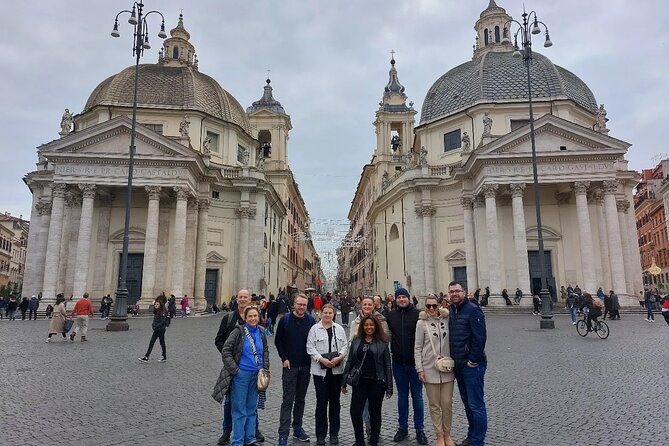
Next is the heart of the morning mood, Piazza del Popolo. This is one of those squares where, once you know what to look for, it stops feeling like a roundabout and starts feeling like a stage set.
You get around 15 minutes here, with key sights that include:
- the twin churches designed by Bernini
- the obelisk of Ramses II
If you wander this area solo, you might notice the obvious landmarks but miss why they matter together. A good guide’s job is to help you connect the art and architecture to the power and planning behind it.
Mausoleum of Augustus: learning the “first emperor” thread
From the square, the tour passes by the Mausoleum of Augustus, tied to Octavian Augustus, the first Roman emperor. This is a smart stop because it places you in the earliest phase of the Roman story after the Republic, and it also sets up why later dynasties cared so much about memory and burial.
You spend about 15 minutes here, mostly walking by and taking in the idea of the tomb as political messaging. The key value is context. You learn to recognize that Rome repeats itself, not just in buildings, but in how rulers used monuments.
Palazzo Borghese: spotting power in plain sight
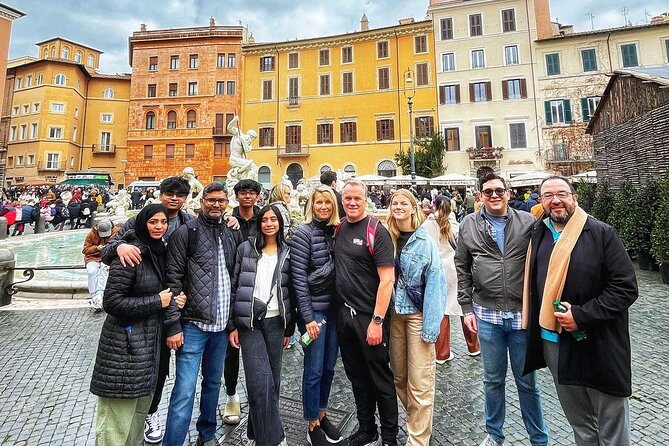
Another quick but meaningful pass: Palazzo Borghese, the 16th-century palace of the powerful Borghese family. The tour keeps this around 10 minutes, so you should treat it like an orientation stop.
The payoff is understanding that Rome’s grandeur is not only ancient. Wealth and influence in later centuries also shaped what you see today, and palaces like this help explain why the city feels layered instead of stuck in one era.
A few more Rome options worth a look


Gelato and a reset at Gelateria della Palma
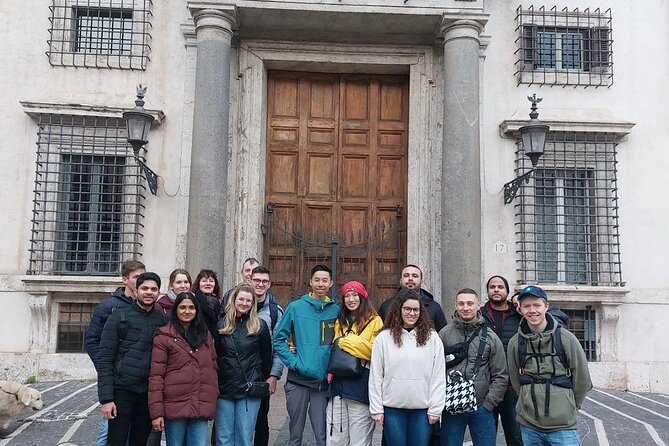
You get a gelato break at Gelateria della Palma. The tour builds in about 15 minutes for this stop, described as both a break and a bathroom pause.
One helpful detail: the shop is known for over 150 flavors, which means it is easy to find something even if you are picky. Do not overpack on sugar if you know you will be walking after. Rome is not the place for a sugar crash.
Also, since the information only says the stop is part of the itinerary, you should expect to buy what you order.
Pantheon: Temple of all the gods, plus tombs you can pinpoint
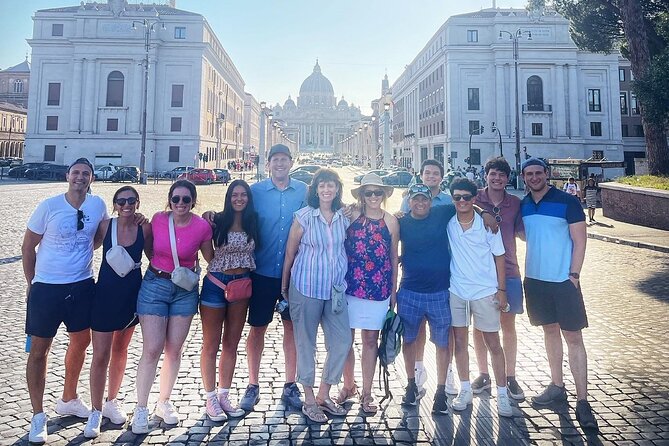
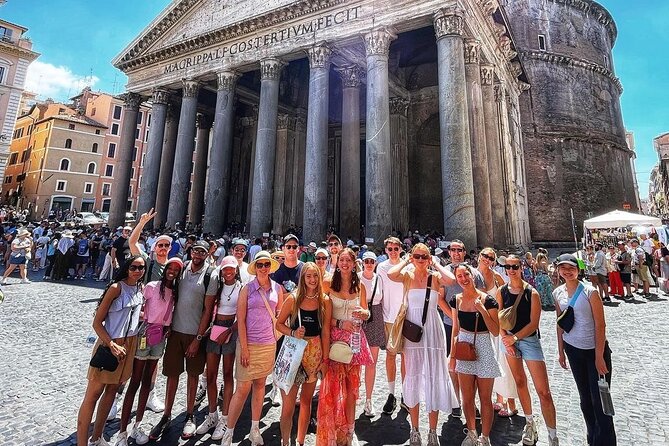
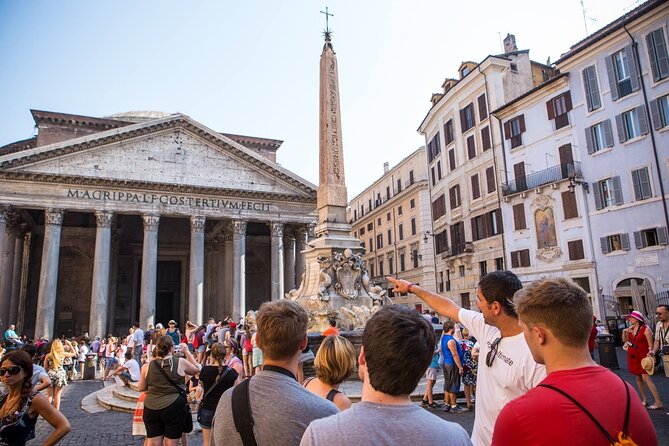
The tour’s major anchor is the Pantheon, often called the Temple of all the gods. You get about 15 minutes, and that is the right length to get the big features without feeling rushed.
Two specific takeaways mentioned on the route:
- the Pantheon is tied to bodies of Raphael
- it also connects to the burial of the first Italian royalties
If you have only seen the Pantheon from outside before, this is where you learn how to look at it. With a guide, you can connect what you are seeing to why this building became a cultural magnet long after the ancient world.
Potential consideration: like any famous interior site, it can feel crowded. Even with a short visit, try to let the guide’s “what to notice” cues guide your pace. You will get more out of the time if you pick a few priorities instead of trying to see everything at once.
Piazza Navona: the stadium shape hiding in plain view
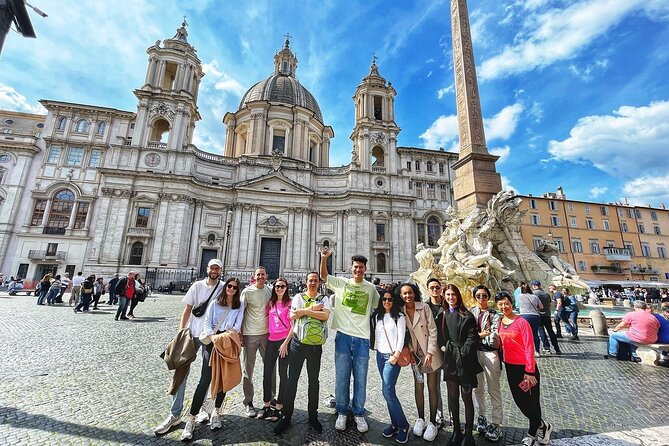
From the Pantheon area, you head toward Piazza Navona, stopping for about 20 minutes. The key interpretive detail here is that it was originally shaped like the Stadium of Domitian.
That is the kind of fact that changes how the square feels. Instead of seeing it as just a lively plaza, you can start reading it as Roman urban planning carried forward into modern Rome.
If you like architecture and urban design, this stop usually feels rewarding. If you prefer quick photo stops, you can still enjoy it, but keep your expectations tied to guided context, not a long museum visit.
Via dei Coronari: Renaissance streets and the pilgrims’ steps
After Piazza Navona, you walk through Via dei Coronari for about 15 minutes. This street is described as untouched from days of the Renaissance, and you also pass along steps of the original pilgrims.
That is a great “walking tour” moment. This is not a single monument. It is a path, and a path tells you a lot about how people moved through the city for centuries.
If your feet start to feel it, pace yourself here. The guide should be moving with you, but you may find yourself pausing to read shopfronts and street details.
St. Angelo Bridge: the story told in crossings
Next is the St. Angelo Bridge, also called the Bridge of Angels. The tour gives it about 15 minutes, with the story focused on the martyrdom of Christ.
This is one of those places where the bridge itself becomes part of the narrative, not just a way to cross the Tiber. When the guide frames it, you start noticing how crossings in Rome are often staged as moral or symbolic journeys.
If you get claustrophobic in crowds, aim to stand where you can see over the rail. You will still get views while keeping your walking rhythm.
Castel Sant’Angelo: from Hadrian’s ashes to medieval Rome
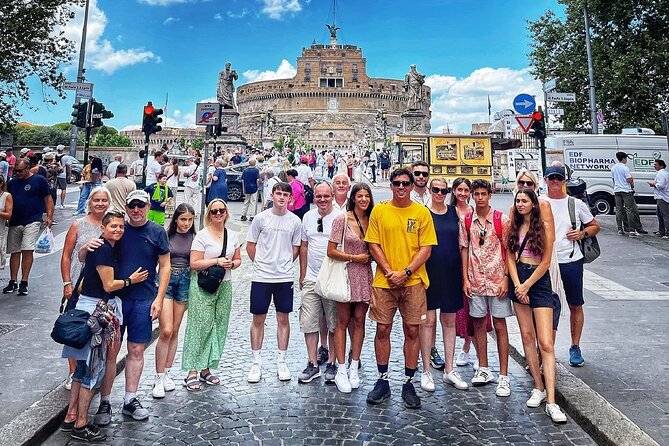
After crossing the Tiber, you reach Castel Sant’Angelo with about 5 minutes. That short time sounds tiny, but it is enough for a guided orientation moment.
The stop is framed around its original role as hosting the ashes of Emperor Hadrian, then later becoming a medieval stronghold. Even if you cannot linger long, you can walk away with the main idea: this site has had multiple jobs across Roman and post-Roman time.
Practical note: if you want longer at Castel Sant’Angelo itself, consider pairing this tour with another time on your own. This one is designed for coverage and orientation.
Via della Conciliazione and the St. Peter’s view finale
The tour finishes outside Castel Sant’Angelo with a view toward St. Peter’s Basilica from Via della Conciliazione. The route includes about 15 minutes here.
This is a strong finish because it links your walk to the Vatican area without you needing to force it. You get a first, guided look at the approach toward St. Peter’s, which can make your later Vatican planning feel less intimidating.
One thing to watch for: depending on your exact timing, your view quality might change. Rome’s lighting and crowds shift fast. Bring patience, and enjoy the moment you have rather than chasing a perfect photo.
Price, value, and why free admission matters here
The price listed is $4.23 per person, and the tour is described as tip based at the end. That matters for value. You are not paying for a buffet of stops with overpriced add-ons. You are paying for a guide plus a set of timed orientation moments.
Even better, the itinerary lists free admission tickets at the stops along the route. That can save you time and stress because you are not scrambling for paid entry just to hit the “big names” like the Pantheon and major squares.
Also, this is scheduled for about 2 hours 30 minutes, and it is booked on average 50 days in advance. If your dates are flexible, you can usually try for another time. If they are not, lock it in earlier to avoid last-minute availability issues.
Pace, comfort, and how to get the most from a 2.5-hour walk
This is a walking tour with a lot of visual material in a short window. The stop durations are mostly 10 to 20 minutes, which means you should expect quick context, not long explanations.
To get the most out of it:
- wear comfortable shoes with good grip
- keep water on your list, since you are only guaranteed a scheduled break
- listen for the guide’s cues about what to notice, especially at Pantheon and Piazza del Popolo
It helps if you have a light sense of what you want. For example, if you love art, focus on the Bernini twin churches mention. If you love ancient Rome, latch onto the Augustus link. If you love urban design, pay attention to Piazza Navona’s stadium shape.
Who should book this Piazza del Popolo to Castel Sant’Angelo tour
I think this tour fits best if you want:
- a small group walking experience
- help connecting major sights with stories that make them make sense
- a good first pass through central Rome before you plan the rest of your days
It is also a nice option for solo travelers who want company without the feel of a giant bus group. The route is packed enough that you can feel productive on a first day, but not so long that you disappear for a full half-day.
You might also like it if you care about details beyond the standard postcard angle. Guides on this route, including names like Justin, Luccio, Nick, and Claus, are highlighted for answering questions clearly and keeping the pace engaging.
If you want a monument-by-monument deep dive with lots of time inside, this may feel short. But if you want a tight, guided thread across Rome’s most famous anchors, this is a smart play.
Should you book it
Yes, if you want to check off major Rome sights fast and walk away with a clearer sense of how the city layers ancient, Renaissance, and Catholic Rome into one connected story. The combination of a 15-person limit, English guide, and free admission stops makes it feel like strong value for time.
I would hold off only if you hate walking, want long indoor stays, or prefer to build your own route without any structured pacing.
FAQ
Where does the tour start and where does it end?
The tour starts at Piazza del Popolo, 00187 Roma RM, Italy. It ends outside Castel Sant’Angelo, finishing with a view toward St. Peter’s Basilica.
How long is the walking tour?
The duration is about 2 hours 30 minutes.
Is this tour offered in English, and is it a small group?
Yes. The tour is offered in English, and the group size is limited to a maximum of 15 travelers.
What are the main stops on the route?
You pass by Porta del Popolo, Piazza del Popolo, the Mausoleum of Augustus, Palazzo Borghese, stop for a break at Gelateria della Palma, then reach the Pantheon, Piazza Navona, Via dei Coronari, St. Angelo Bridge, Castel Sant’Angelo, and finish along Via della Conciliazione.
Are entrance fees included for the stops?
The itinerary lists each stop with admission ticket free, meaning you are not expected to buy separate admission tickets for those specific sites included in the route.
Is there a gelato stop?
Yes. There is a scheduled stop at Gelateria della Palma for a break and gelato.
How much does it cost, and is it tip based?
The price is $4.23 per person, and the tour is tip based at the end.
Is it easy to reach the meeting point, and are service animals allowed?
The meeting point is described as near public transportation, and service animals are allowed. The tour also notes that most travelers can participate.
What is the cancellation and refund policy?
You can cancel for a full refund up to 24 hours in advance. If you cancel less than 24 hours before the start time, the amount paid is not refunded.
Latest additions from Rome
- Guided Tour Vatican Museums & Sistine Chapel★ 4.1 · 30 reviews
- Exclusive Rome by Night Vespa Tour★ 5.0 · 30 reviews
- Transfer Rome to Airports★ 4.5 · 30 reviews
- Vatican: St.Peter’s Basilica & Dome – Reserved Entry & Tour★ 4.1 · 30 reviews
- Rome street art tour: off the beaten path with a local guide★ 5.0 · 30 reviews
- Tivoli, Hadrians Villa and Villa d’Este, a charming day trip from Rome★ 4.5 · 30 reviews
- Rome Food Tasting with Wine Pairing Italian Authentic Flavors★ 5.0 · 31 reviews
- Inspirational Cooking on the Roman Chef’s Panoramic Terrace★ 5.0 · 30 reviews
Walking Tours in Rome, compared.

Guided Food Walking Tour with Wine in Trastevere
Read our review →
Trastevere & Campo de Fiori Street Food Walking Tour
Read our review →
Paranormal Night Walking Tour & Secret Backstreets
Read our review →
Trastevere Street Food Walking Tour with Local Expert
Read our review →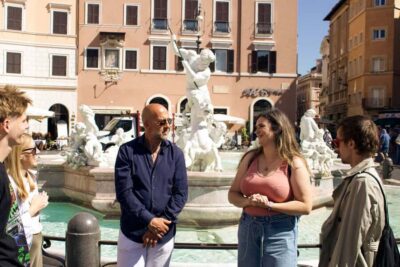
Guided City Center Evening Sightseeing Walking Tour
Read our review →
Small-Group City Highlights Moonlight Walking Tour
Read our review →
Best of Rome Walking Tour including Trevi Fountain
Read our review →Browse the lists this tour appears in