
Reviewed · ROME
Pastamania in Rome
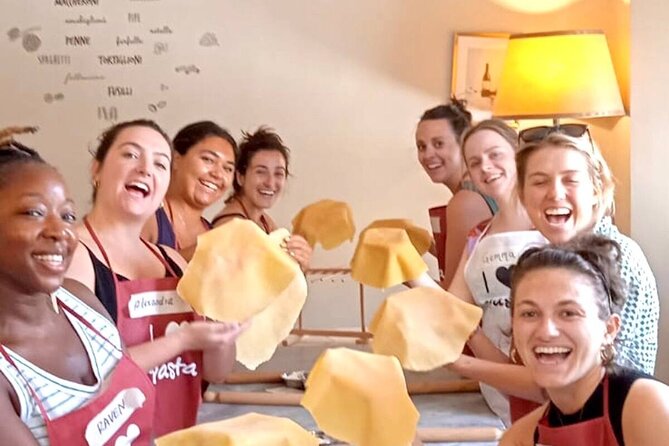
Fresh pasta in a Roman palazzo. You learn to shape ravioli, tortelli, and fettuccine a few minutes from the Pantheon and Piazza Venezia. It is a small-group evening with a pro instructor and a big communal meal at the end.
I especially love the hands-on part, not just watching dough go from raw to dinner. You knead, roll, and fill pasta yourself, and instructors like Christian, Giorgio, and Luca are described as patient and funny, with real tips you can use at home.
One thing to consider before you book: it is not accessible for people with limited mobility, including crutches.
In This Review
- Key points you will care about
- Why This Pasta Class Feels Like Real Roman Dinner Time
- Palazzo Grazioli Start Point, Then Straight Into Dough
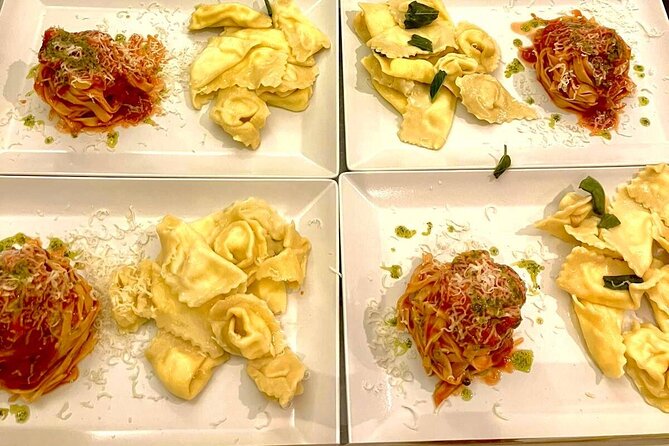
- What You Actually Make: Ravioli, Tortelli, and Fettuccine
- Ravioli you fill and close with confidence
- Tortelli with a spiced, classic filling
- Fettuccine for the noodle-maker in you
- The Sauce Plan: Butter and Sage, Tomato, and Truffle Notes
- Meet the Instructors: Christian, Giorgio, Luca, and the Rest
- The Communal Meal: A Shared Table, Not a Takeout Box
- How Long It Takes and Why the Timing Works
- Price and Value: What $49.58 Buys You in Rome
- Tips to Make Your Pasta Night Go Smoothly
- Who Should Book This Pastamania Session
- Should You Book Pastamania in Rome?
- FAQ
- Where is the meeting point for Pastamania in Rome?
- How long does the pasta class last?
- Is the class taught in English?
- How many people are in the group?
- What types of pasta will I make?
- What food is included at the end of the class?
- Is it a good activity if I am traveling solo?
- Is the experience accessible for people with limited mobility?
- Are service animals allowed?
- What is the cancellation policy?
Key points you will care about
Small group size (max 10): More attention as you work the dough and fillings
Three pasta shapes in about 3 hours: Ravioli, tortelli, and fettuccine, all made by you
Right location for a Rome evening: A meeting point at Palazzo Grazioli near the Pantheon and Piazza Venezia
A sit-down communal meal: You eat what you make at one shared table
English instruction with a focused pace: Clear guidance from start to finish
Why This Pasta Class Feels Like Real Roman Dinner Time
Rome can be exhausting. This is the kind of activity that gives you a win fast: you walk in, roll up your sleeves, and within a couple hours you are eating fresh pasta you made with your own hands. The setting helps, too, because it happens inside a historic palazzo near major sights, not in some remote studio.
The format is also practical. You are not just learning theory. You work the dough, build fillings, and shape the pasta, then you sit down together and eat. That loop, make then taste, is why people love this lesson so much.
You will also get a class that does not pretend pasta is mysterious. The instructors teach it as a repeatable craft, with small, doable corrections as you go.
Not settled yet? These cover similar ground in Rome:
- Vatican Museums, Sistine Chapel & St. Peter’s Basilica Tour
★ 4.3 · 73,970 reviews - Vatican Museums, Sistine Chapel & St Peter’s Basilica Guided Tour
★ 4.5 · 39,149 reviews - Rome: Colosseum, Palatine Hill and Roman Forum Guided Tour
★ 4.8 · 32,814 reviews - Rome: Guided Tour of Colosseum, Roman Forum & Palatine Hill
★ 4.7 · 27,897 reviews
Palazzo Grazioli Start Point, Then Straight Into Dough
You meet at Palazzo Grazioli, Via della Gatta, 14, 00186 Roma. The end of the experience brings you back to the same meeting point. Since it is close to public transportation, you can pair it with a Rome walking plan without needing a complicated route or a taxi.
The first moments usually matter more than people expect. In this class, you start with a short intro so you understand what you are about to do, not just how the final pasta should look. Then you get moving quickly.
Also, plan to show up ready to work. The whole experience is built around your hands, your timing, and your attention during shaping. If you arrive already full, you will feel that when it comes time to eat your own creations.
What You Actually Make: Ravioli, Tortelli, and Fettuccine
This class is built around three pasta styles, not one. That is a big deal for value, because it means you leave with several concrete techniques, not just a single success you cannot apply elsewhere.
Ravioli you fill and close with confidence
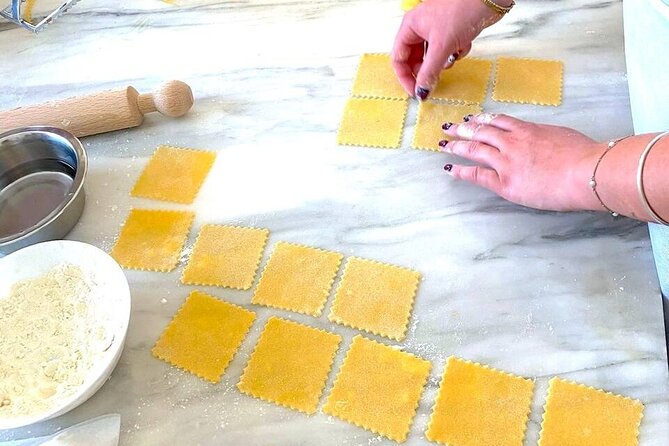
You will make ravioli, including a filling like parmigiano and ricotta with truffle oil, then pair it with butter and sage. Ravioli is the “craft” pasta of the night: you learn how much filling to use, how to seal, and how to shape so it cooks well.
Tortelli with a spiced, classic filling
Next up is tortelli, with a filling such as parmigiano, ricotta, and nutmeg, then finished with butter and sage sauce. Nutmeg is a classic flavor in this type of filling, and it gives you a reminder that Italian pasta stuffing is not bland. It is built for depth.
Another shape for the same afternoon in Rome:
Fettuccine for the noodle-maker in you
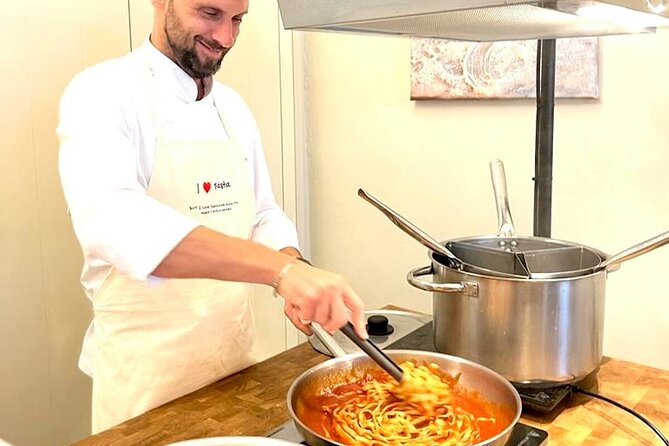
Finally, you make fettuccine and eat it with tomato sauce. Fettuccine is the pasta that feels closest to what most people imagine when they think of fresh pasta, flat and wide. It is also great for learning how thickness affects texture.
If you enjoy food that is both comforting and exact, this mix works well. You learn stuffed pasta, then shift to a noodle, so the skills do not blur together.
The Sauce Plan: Butter and Sage, Tomato, and Truffle Notes
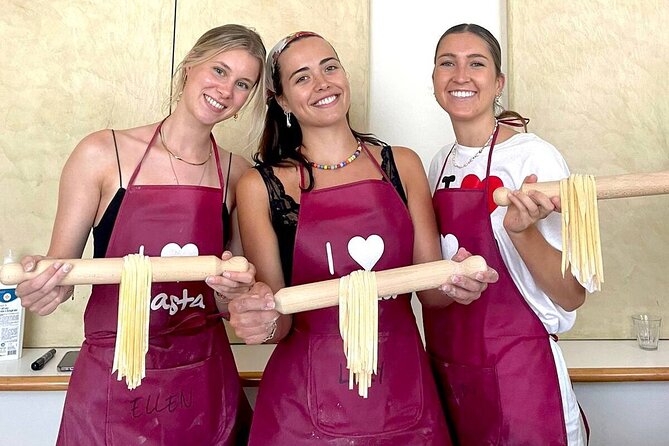
A lot of cooking classes teach dough, but sauces are where the final plate becomes memorable. Here, the menu pairs each pasta type with flavors that feel Roman and simple enough to recreate.
Butter and sage shows up with the stuffed pastas. That pairing is an underrated shortcut: sage brings aroma, butter brings gloss, and the result lets the filling taste like it is the star. Even if you mess up a shape a bit, the sauce can still make the plate satisfying.
For fettuccine, you get tomato sauce. It is a clean counterpoint to the richer butter-sage plates. It also helps you taste how dough thickness and cut size change the bite.
Truffle oil appears in the ravioli filling, giving you that perfume-like aroma people associate with more expensive dining. You do not need truffle everywhere to feel fancy.
Meet the Instructors: Christian, Giorgio, Luca, and the Rest
This is not a lecture. It is taught in a live, human way. Names like Christian, Giorgio, Luca, Fabrizio, Sofia, Ricardo, Martina, and Arianna show up in the instructor stories, and the thread is consistent: the teaching style stays relaxed while still being precise.
What I like about this approach for you is that pasta can be intimidating if someone talks at you like you are on a cooking show. In these sessions, the instructors focus on small fixes so you actually finish the task. People describe them as energetic, patient, and full of jokes, which matters because fresh pasta is easier when you are not stressed.
One very practical tip that often comes up in classes like this: do not rush the dough. If it feels stiff or hard to roll, slow down and adjust. The instructor guidance is there for that exact moment.
The Communal Meal: A Shared Table, Not a Takeout Box
The best part is the ending. You gather around a large communal table and eat the pasta you made, family-style with other people in the class. This is where the lesson turns into a Rome experience, not just a cooking activity.
You will also see dessert included, with an example like chocolate salami. That dessert choice is memorable because it is playful and not overly heavy after pasta and sauce.
Food is only half the story. The communal setup helps you meet people without awkward small talk loops. You are busy eating, comparing how your ravioli turned out, and swapping simple questions like how thick your dough ended up.
In participant notes, drinks like wine, limoncello shots, and soda show up as part of the meal experience. Even if your exact drink list varies by session, you can count on the class finishing with more than just a plate of pasta.
How Long It Takes and Why the Timing Works
The experience runs about 3 hours. That length is long enough for real learning, but not so long that you lose patience. You also avoid the Rome problem of trying to fit dinner into your sightseeing schedule. This class is basically dinner plus a skill.
It also helps that the group is capped at 10 travelers. Smaller numbers mean the instructor can check your dough and your shaping without turning your table into a waiting room.
If you are planning a tight day with monuments, put this class on a moment when you are not racing to catch a show. You want to arrive with enough energy to roll, fill, shape, and then eat.
Price and Value: What $49.58 Buys You in Rome
At about $49.58 per person, this is not the cheapest thing you can do in Rome. But it is also not paying for a ticket to a view. You are paying for ingredients, instruction, and a meal you help create.
Value here comes from three things:
- Three pasta types made by you, not just one
- A meal built around your work, not an optional add-on
- Small group attention that helps you finish the pasta, which matters if you are new
If you compare it to the cost of eating well twice, this often feels like a bargain because you get hands-on fun plus a full dinner experience in one block of time.
Tips to Make Your Pasta Night Go Smoothly
Here are the practical moves I would use if I were planning your evening:
- Eat lightly beforehand. People recommend not eating too much before you arrive, because you will want room for what you make.
- Bring curiosity, not perfectionism. Fresh pasta is forgiving, especially when you have a sauce plan.
- Watch how thick the dough is before you commit to rolling the whole batch. Thickness is the difference between silky and tough.
- Be ready to get messy. Flour and dough are part of the deal, and that is when the learning sticks.
- If you are sensitive to heat, pace yourself. Cooking and rolling can make your hands warm, and you will do better if you keep breathing and staying relaxed.
Who Should Book This Pastamania Session
This fits best if you want Rome through food, not through another photo stop. It is a strong choice for:
- Couples who want an activity that leads to dinner and conversation
- Solo travelers who want an easy way to meet people at a shared table
- Families, including kids, since the class is hands-on and playful when taught by instructors like Fabrizio and Luca
- Groups of friends who want one structured activity without committing to a full-day excursion
If you have limited mobility, you may want to skip this one. It is specifically not accessible for people with crutches and limited mobility.
Should You Book Pastamania in Rome?
I would book it if you want a memorable Rome evening that mixes a real skill with a satisfying meal. The biggest reason is simple: you leave with pasta knowledge you can repeat at home, plus a full table meal that makes the time feel worthwhile.
I would hesitate only if accessibility is a problem for you, or if you know you hate hands-on tasks. Otherwise, this is one of those activities that turns into a highlight because it is interactive, practical, and genuinely fun.
FAQ
Where is the meeting point for Pastamania in Rome?
The start (and the end) is at Palazzo Grazioli, Via della Gatta, 14, 00186 Roma RM, Italy.
How long does the pasta class last?
The experience lasts about 3 hours.
Is the class taught in English?
Yes, the experience is offered in English.
How many people are in the group?
There is a maximum of 10 travelers.
What types of pasta will I make?
You will learn to prepare ravioli, tortelli, and fettuccine.
What food is included at the end of the class?
You eat the pasta and sauces you make, and dessert is included, with an example dessert being chocolate salami.
Is it a good activity if I am traveling solo?
Yes. The experience is described as suitable for individuals, couples, friends, families, and students.
Is the experience accessible for people with limited mobility?
No. It is not accessible for people with limited mobility, such as crutches, and it is marked as not recommended for travelers with disabilities.
Are service animals allowed?
Yes, service animals are allowed.
What is the cancellation policy?
You can cancel for a full refund up to 24 hours before the experience starts. Within 24 hours, the amount paid is not refunded.
Latest additions from Rome
- Guided Tour Vatican Museums & Sistine Chapel★ 4.1 · 30 reviews
- Exclusive Rome by Night Vespa Tour★ 5.0 · 30 reviews
- Transfer Rome to Airports★ 4.5 · 30 reviews
- Vatican: St.Peter’s Basilica & Dome – Reserved Entry & Tour★ 4.1 · 30 reviews
- Rome street art tour: off the beaten path with a local guide★ 5.0 · 30 reviews
- Tivoli, Hadrians Villa and Villa d’Este, a charming day trip from Rome★ 4.5 · 30 reviews
- Rome Food Tasting with Wine Pairing Italian Authentic Flavors★ 5.0 · 31 reviews
- Inspirational Cooking on the Roman Chef’s Panoramic Terrace★ 5.0 · 30 reviews