
Reviewed · WALKING TOURS IN ROME
National Roman Museum and Diocletian Thermal Baths Walking Tour
Rome has a special kind of wow-factor in museums. This guided, skip-the-line visit to Palazzo Massimo lets you see standouts like the Boxer at Rest, the Discus Thrower, and the Sleeping Hermaphrodite without getting stuck at the entry shuffle.
I especially like how the tour is built for real looking, with clear art and architecture context as you move room to room. It is also a smart choice for value, since you can add the Diocletian Baths plus the Basilica of St. Mary of the Angels without turning your day into a scavenger hunt.
One thing to consider: the pacing is tight, and one past guest wished they had more time at the museum before heading to the baths. If you want a slow, sit-down museum marathon, you may need to plan extra time on your own after the tour ends.
In This Review
- Key Things I’d Plan For (Before You Go)
- Skip-The-Line Start at Palazzo Massimo (Republic Square Area)
- Palazzo Massimo: Four Floors of Roman Art That Actually Makes Sense
- The Sculptures to Prioritize: Boxer, Discus, and Sleeping Hermaphrodite
- Empress Livia and the Mood of Imperial Rooms
- Upgrading to Diocletian Baths: From 298 AD Luxury to Today’s Church Space
- What You Feel at St. Mary of the Angels Inside the Baths
- Value Check: Why This $323.21 Price Can Be Worth It
- Who Should Book This Tour (And Who Might Want to Do It Another Way)
- Practical Details That Affect Your Day
- Should You Book It?
- FAQ
- Where does the tour start?
- How long is the tour?
- Is the tour in English?
- Does the tour include tickets?
- What is included at the Palazzo Massimo museum?
- What does the Diocletian Baths upgrade add?
- Is hotel pickup included?
- Is this a private tour?
- Is this tour suitable for children?
- Can I cancel for a full refund?
Key Things I’d Plan For (Before You Go)
- Skip-the-line entry starts with a guide-led handoff at the Palazzo Massimo ticket office, near Republic Square
- Four floors of Roman art at Palazzo Massimo, with sculptures, mosaics, coins, and goldsmith work spanning centuries
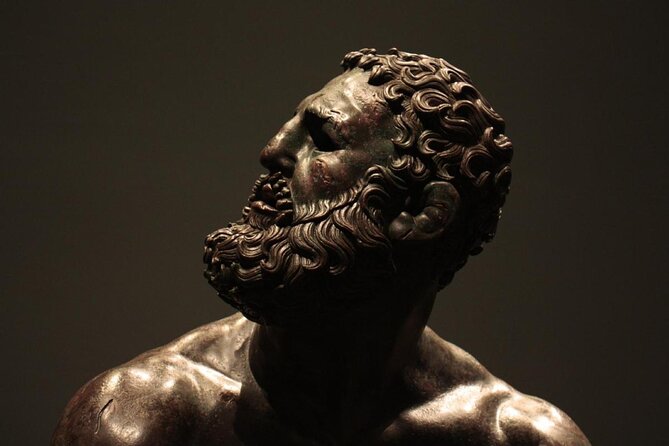
- Exact highlights you will be pointed toward, including the Boxer at Rest and the Discus Thrower
- Michelangelo’s church in the Baths at St. Mary of the Angels, tied directly to what the bath complex was originally built for
- Private or small-group option, so you can match the feel of your day
- Guides matter here, and multiple guides named in feedback, including Matteo, Serena, Georgio, and Damiano, were praised for keeping the material lively
Skip-The-Line Start at Palazzo Massimo (Republic Square Area)
The tour begins at Palazzo Massimo alle Terme, at Largo di Villa Peretti 2. That location matters because it places you right where Rome’s museum crowd usually starts stretching and slowing down. You meet your guide, collect your skip-the-line ticket, and move ahead of the long entrance queues that can eat half a museum day.
This is also the kind of start that helps you feel oriented fast. Republic Square is a busy hub, and starting near it usually means you can arrive by public transportation without overthinking routes. The tour ends back at the same meeting point, so you do not have to worry about lining up a second plan at the far end of Rome.
For timing, plan on about 2 to 3 hours total. That is a good length for first-time visitors who want a deep Roman-art hit without losing an entire afternoon.
More Walking Tours in Rome
- Rome: Guided Food Walking Tour with Wine in Trastevere
★ 4.9 · 3,105 reviews - Rome: Trastevere & Campo de Fiori Street Food Walking Tour
★ 4.9 · 2,768 reviews - Rome: Paranormal Night Walking Tour & Secret Backstreets
★ 4.9 · 1,921 reviews - Rome: Trastevere Street Food Walking Tour with Local Expert
★ 4.8 · 1,784 reviews
Palazzo Massimo: Four Floors of Roman Art That Actually Makes Sense
Palazzo Massimo alle Terme is one of the best ways to get grounded in Roman art without needing a crash course first. The museum’s collection covers a long arc, from roughly the 2nd century BC through the 5th century AD. What helps is that the art is not just displayed as objects. You get guidance on how the styles, subjects, and materials fit together across time.
You spend about one hour at the museum, and the focus is on major “you can’t miss this” examples rather than trying to cover everything. That is ideal if you are the type who wants to see fewer works, but see them better.
As you move through the floors, expect to encounter:
- sculptures that show Roman ideals of the body and movement
- mosaics and frescoes that show what everyday and elite life looked like visually
- coins and jewels that help you imagine Roman culture through small details
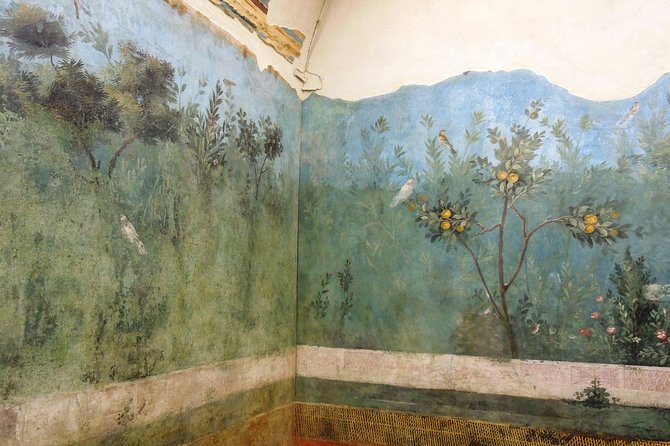
- decorative rooms connected to imperial life, including spaces associated with Empress Livia
If you are pairing this with seeing Roman ruins later, this museum stop is a shortcut. It gives you visual vocabulary, so the surrounding archaeology starts to feel less like random rubble and more like a connected world.
The Sculptures to Prioritize: Boxer, Discus, and Sleeping Hermaphrodite
One reason this tour gets strong praise is that the guide-led viewing zeroes in on specific sculptures that almost always stop people in their tracks.
Here are the highlights you will be directed to:
- Boxer at Rest: This is not just a strong image. It is a mood. It captures a pause after effort, and it is a great way to talk about Roman approaches to realism and athletic ideals.
- Discus Thrower: You get to see form and balance up close, and it is an easy gateway into understanding Roman admiration for Greek-influenced sculpture, plus how Romans adapted it for their own taste.
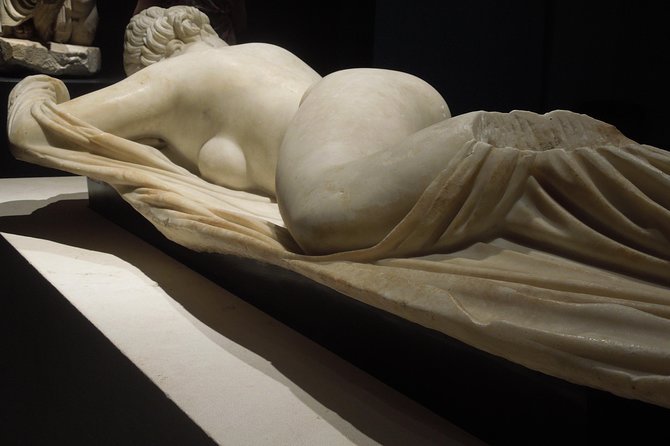
- Sleeping Hermaphrodite: This one encourages you to pay attention to materials, pose, and the storytelling quality of sculpture. It is a major example people remember long after they leave.
Guides named in feedback, including Matteo, Mattia, Serena, Georgio, and Damiano, were consistently praised for turning these objects into something you can “read,” not just look at. You do not need to know art history to get value here. The best guides translate what you are seeing into clear context.
Tip for your photos: if you like picture-taking, the pacing still works, but keep in mind the tour is timed. Grab your key shots at the moment you are viewing, not after you move on.
Empress Livia and the Mood of Imperial Rooms
Beyond the big-name statues, Palazzo Massimo also gives you a sense of how elite Romans lived and displayed power. You will see extravagantly decorated rooms linked to Empress Livia.
This part matters because it changes the museum from a collection of stand-alone artworks into something closer to a social snapshot. Coins, jewelry, mosaics, and sculpture start to feel like pieces of a single system: how wealth advertised itself, how taste signaled status, and how art shaped everyday impressions.
Also, these imperial-room moments are a nice breather in a tour that otherwise can feel like it is all about “what is the next masterpiece.” A strong guide will point out details you might otherwise miss, like patterns in decoration, material choices, and how rooms are organized.
Upgrading to Diocletian Baths: From 298 AD Luxury to Today’s Church Space
The upgrade is where the tour gets extra memorable. You move from museum art into one of ancient Rome’s most ambitious projects, built as the Diocletian Thermal Baths in 298 AD.
These were massive, and the context helps you understand why. The complex could accommodate up to 3,000 people at the same time, and it was designed with spaces beyond swimming, including gyms, libraries, and social areas.
Then comes the twist that makes many people love this tour: the baths were transformed much later when Michelangelo incorporated the Basilica of St. Mary of the Angels into the bathhouse in 1561. So you are not just seeing an ancient ruin. You are seeing how one civilization repurposed another civilization’s space.
That is a powerful experience if you like layers. You walk into a room that once had a different purpose, then you learn what changed and why.
Other Roman collections with a shorter wait:
What You Feel at St. Mary of the Angels Inside the Baths
At the Diocletian Baths stop, you will spend about one hour. You do not just get a quick peek. You learn about the bath complex atmosphere and the Roman social traditions tied to how people used thermal spaces.
Then you get to experience the physical contrast: ancient scale outside, and the church space within. It can feel almost cinematic when a guide explains how features of the bath architecture become part of the church setting.
This is also where group size matters. A private tour (or a small group option) usually makes the conversation easier, because you can ask questions without competing with a crowd. If you prefer a more personal pace, this is a good fit.
Value Check: Why This $323.21 Price Can Be Worth It
At $323.21 per person for a 2 to 3 hour guided visit, this is not a budget tour. But you are paying for three specific things that matter in Rome:
- Skip-the-line entry for the museum portion. In high season, time is money, and lines can turn “two hours” into “three hours of standing.”
- A focused guided visit through major works in Palazzo Massimo, including some of the most recognized sculptures and decorative spaces.
- The upgrade to the Diocletian Baths, which is where the tour becomes more than a museum stop and turns into a story about Rome changing over centuries.
The fact that many guides were praised for pacing and clear English helps too. When the guide is strong, the museum becomes easier to enjoy. When the guide is weaker, the tour can feel rushed. So, value here is tied closely to guide quality, and the feedback names (Matteo, Serena, Georgio, Damiano) are a reassuring sign.
One practical note: hotel pickup and drop-off are not included. You will want to get to the meeting point yourself, using public transit if that is your style. If your schedule requires door-to-door service, this might cost you more time than the price suggests.
Who Should Book This Tour (And Who Might Want to Do It Another Way)
I think this tour is a strong match if you:
- love classical art and want the big Roman sculpture and mosaic hits
- like guided context that makes museum pieces easier to remember later
- want both a museum and an architecture story in the same half-day
- prefer a tour where the pace stays moving, not drifting
You might want to think twice if:
- you prefer free-roaming museums where you can spend as long as you like per room
- you are hoping for a long, slow, deep look at every gallery corner (this is more “priority viewing” than “complete museum pass”)
- you dislike guided formats and would rather read signage at your own speed
This is also well suited for history-focused travelers who will be visiting the Roman ruins later. Palazzo Massimo gives you context you can carry outside.
Practical Details That Affect Your Day
The tour is offered in English and is described as near public transportation, which makes meeting up easier. Confirmation happens at booking time, and children must be accompanied by an adult.
The tour ends back at the meeting point at Palazzo Massimo, so it is easy to plug into the rest of your day. If you are hungry afterward, plan a meal close by, because you will end near where you started.
Should You Book It?
Yes, I would book this if you want a high-impact Roman art experience with real structure. The biggest reason is the combo: skip-the-line museum access plus the upgrade to Diocletian Baths, including the Michelangelo church connection. That pairing is the kind of Rome experience you remember, not just a checklist tick.
If you are the type who wants extra time inside museums, consider doing a short personal add-on after the tour so you can linger over your favorite sculpture or mosaic. Otherwise, this is a very efficient way to get the best of Palazzo Massimo and the bath complex transformation story in one smooth run.
FAQ
Where does the tour start?
It starts at Palazzo Massimo alle Terme, Largo di Villa Peretti 2, 00185 Rome, Italy.
How long is the tour?
The duration is listed as 2 to 3 hours approximately, depending on how the tour runs.
Is the tour in English?
Yes, the tour is offered in English.
Does the tour include tickets?
Yes. The experience includes skip-the-line entry and a guided tour of the National Roman Museum at Palazzo Massimo. The museum admission ticket is included, and the Diocletian Baths stop is listed with admission ticket marked as free as part of the tour details.
What is included at the Palazzo Massimo museum?
You get a guided visit focused on major Roman art, including sculptures and decorative works, and you will see highlights such as the Boxer at Rest, Discus Thrower, Sleeping Hermaphrodite, and rooms associated with Empress Livia.
What does the Diocletian Baths upgrade add?
If you upgrade, you add a visit to the Baths of Diocletian and the Basilica of St. Mary of the Angels, incorporated by Michelangelo in 1561.
Is hotel pickup included?
No. Hotel pickup and drop-off are not included.
Is this a private tour?
It is described as a private tour/activity, with only your group participating. There is also an option mentioned to choose between private or small-group tour.
Is this tour suitable for children?
Children must be accompanied by an adult.
Can I cancel for a full refund?
Yes. Free cancellation is available, and you can cancel up to 24 hours in advance for a full refund.
Latest additions from Rome
- Rome: Testaccio Market Food Tour with Street Food & Wine★ 5.0 · 8 reviews
- Exclusive Pasta & Tiramisu Class with Wine near by Colosseum★ 5.0 · 8 reviews
- Private Professional Photoshoot in Rome★ 5.0 · 8 reviews
- Loreto “Shrine of the Holy House of the Virgin Mary” Private Tour from Rome★ 5.0 · 8 reviews
- Rome Day to discover Florence and Pisa Hotel Pickup★ 4.5 · 8 reviews
- Rome: Christmas Nativities and Angels Tour★ 3.1 · 8 reviews
- Guided Tour of Vatican Museums and Sistine Chapel★ 5.0 · 8 reviews
- Rome: Cooking Class of fresh Pasta and Tiramisu Cake★ 5.0 · 8 reviews
Walking Tours in Rome, compared.

Guided Food Walking Tour with Wine in Trastevere
Read our review →
Trastevere & Campo de Fiori Street Food Walking Tour
Read our review →
Paranormal Night Walking Tour & Secret Backstreets
Read our review →
Trastevere Street Food Walking Tour with Local Expert
Read our review →
Guided City Center Evening Sightseeing Walking Tour
Read our review →
Small-Group City Highlights Moonlight Walking Tour
Read our review →
Best of Rome Walking Tour including Trevi Fountain
Read our review →Browse the lists this tour appears in