Reviewed · TOURS
Jubilee Golf Car Tour
Holy doors in Rome, without the marathon walking.
This 3-hour Jubilee Golf Car Tour strings together major Christian sites in a smart order, and it does it with a friendly guide who explains what you are looking at. I love the small group setup that keeps things personal, and I love the golf cart rides that make the whole day feel doable. One thing to consider is that each stop is intentionally short, so you will want to decide what you want to focus on before you get there.
What makes this route feel genuinely useful is that it is built around the city’s most meaningful churches, not random photo stops. You get free entry at every stop, plus enough guided context to understand why these places matter, from San Clemente’s layers of early Christianity to the big finale at St. Peter’s Basilica. It is also offered in English, with a mobile ticket, and the tour is run by Gallo Tour Rome srl.
At around $135.54 per person, it is not a budget trick, but it can be good value if you care more about guidance and logistics than “just show up and wander.” You start at 9:00 am at Piazza Celimontana and finish at Via Paolo VI, and it depends on good weather since it is a walking-and-cartoons kind of day.
In This Review
- Key points worth knowing before you go
- Rome’s Jubilee churches, paced for real life
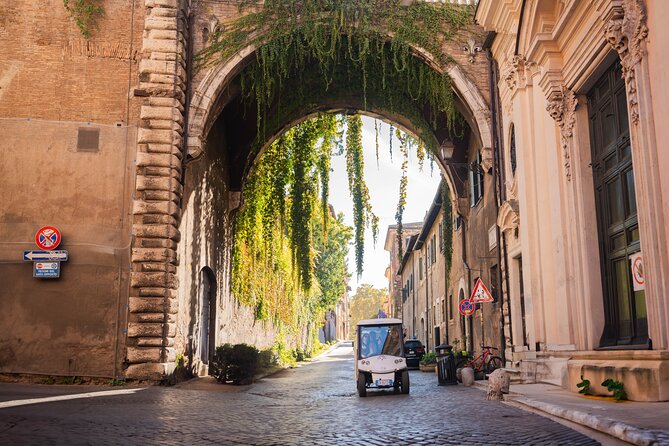
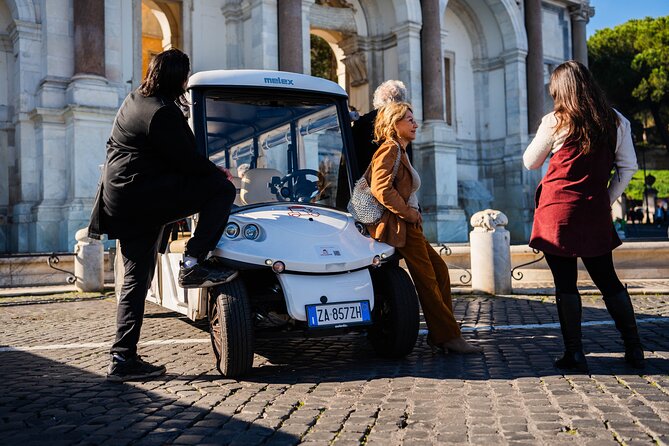
- Meeting at Piazza Celimontana and riding in a 7-person golf cart
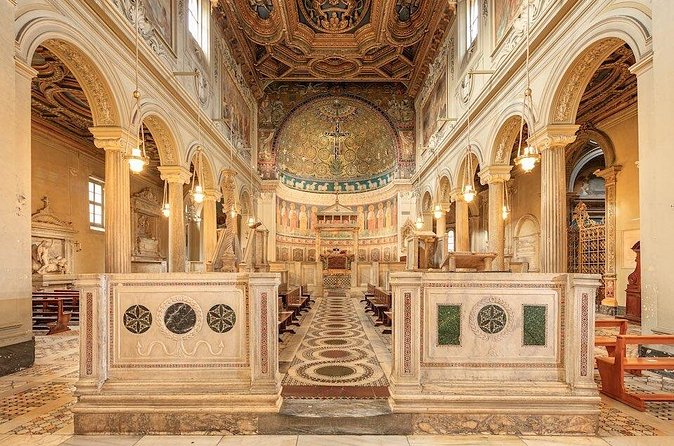
- Stop 1: Basilica of San Clemente, three layers of Christianity in one building
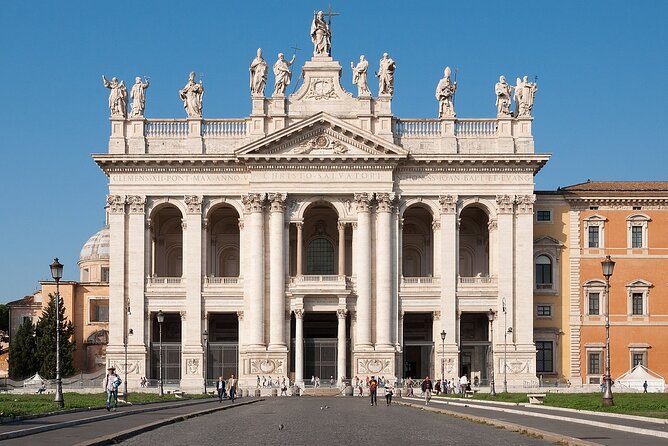
- Stop 2: Arcibasilica di San Giovanni in Laterano and the Holy Staircase tradition
- Stop 3: Santa Croce in Gerusalemme, Helena’s legacy and True Cross fragments
- Stop 4: Santa Maria Maggiore, Mary mosaics and the Sacred Cradle
- Stop 5: Chiesa di Santo Spirito in Sassia, care for pilgrims near the Vatican
- Stop 6: St. Peter’s Basilica in Vatican City, the big finish
- Price and what you truly get for $135.54
- Guides, pace, and how the day feels
- What to pack and how to make the most of short church stops
- Who this Jubilee Golf Car Tour is best for
- Should you book? My take on whether it’s worth it
- FAQ
- How long is the Jubilee Golf Car Tour?
- What is the price per person?
- What language is the tour offered in?
- How many people are on the golf cart?
- Is admission included for the church stops?
- What is included in the tour package?
- Are snacks included?
- Where do we meet and where does the tour end?
- Is there a start time?
- Are service animals allowed?
- Does the tour require good weather?
Key points worth knowing before you go
- A Jubilee-focused church circuit in about 3 hours with short, efficient stops
- Free admission ticket at every church stop, so you are not juggling entry costs
- A 7-person maximum golf cart ride, great for staying together
- Guides like Daniela, Ludo, and Tony tend to be especially detailed and people-friendly
- Stops near major central sites, so you can see a lot without Rome-style endurance
- St. Peter’s Basilica is the final anchor, helping the whole day feel complete
Rome’s Jubilee churches, paced for real life
This tour is designed for one big problem in Rome: your feet. Many classic sights are spread out and, even with metro and buses, you can burn hours just getting from one place to the next. Here, the golf cart transport helps you reset that time, then your guide uses it well once you are at each church.
I like how the day is structured around meaning, not just famous names. You are led through churches that connect to key Christian traditions and relic stories, with clear explanations that help you notice what is easy to miss when you are reading plaques on your own. It feels like a guided route you can actually finish, not an endless sightseeing checklist.
Not settled yet? These cover similar ground in Rome:
- Vatican Museums, Sistine Chapel & St. Peter’s Basilica Tour
★ 4.3 · 73,970 reviews - Vatican Museums, Sistine Chapel & St Peter’s Basilica Guided Tour
★ 4.5 · 39,149 reviews - Rome: Colosseum, Palatine Hill and Roman Forum Guided Tour
★ 4.8 · 32,814 reviews - Rome: Guided Tour of Colosseum, Roman Forum & Palatine Hill
★ 4.7 · 27,897 reviews
Meeting at Piazza Celimontana and riding in a 7-person golf cart
You meet at Piazza Celimontana at 9:00 am, then your tour ends at Via Paolo VI. That matters because the route finishes near the Vatican area, which can make it easier to keep exploring after your tour is done.
The cart portion is the real practical win. With a maximum of 7 people on board, the day stays compact and you are not squeezed into a large group experience. I also find that small-group tours reduce the stress of “where is everyone?” and “wait for the slowest person.”
If you have reduced mobility or you simply do not want to hoof it across central Rome, the golf cart can be a huge difference. The tour also lists that most travelers can participate, and service animals are allowed.
Stop 1: Basilica of San Clemente, three layers of Christianity in one building
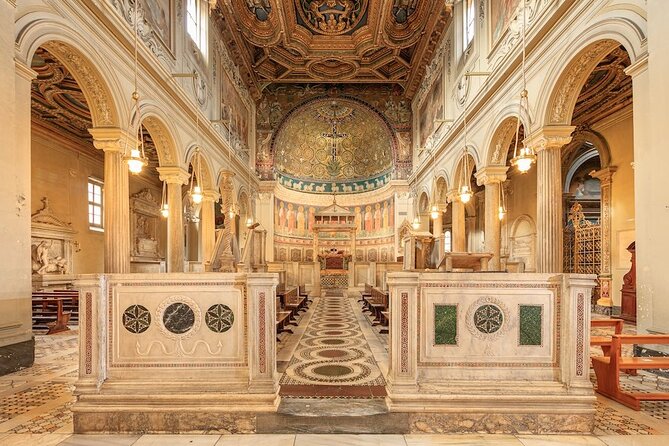
Your first stop is Basilica of San Clemente, a place that feels almost like Rome’s timeline folded into one site. The big idea here is the three overlapping archaeological levels, each connected to different eras. Even if you are not an archaeology nut, this is a powerful way to understand how Christianity grew and changed in the same urban footprint.
The time is short, about 15 minutes, so you will not have time to wander aimlessly. Go in with a plan: look for what your guide points out about the layers and how the building reflects the city’s religious evolution.
Because admission is listed as free, this is one of those stops where you can spend your attention, not your budget. And early in the day, it sets a thoughtful tone before the route moves into the major papal basilicas.
Stop 2: Arcibasilica di San Giovanni in Laterano and the Holy Staircase tradition
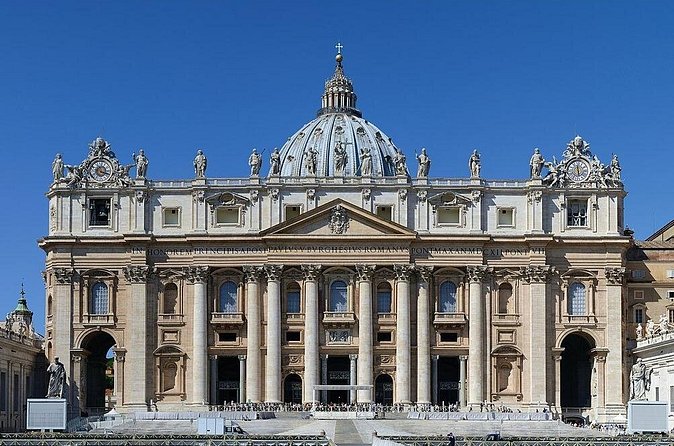
Next up is Arcibasilica di San Giovanni in Laterano, often called the cathedral of Rome. It is described as the mother church of the Catholic Church and tied to the pope as bishop of Rome. You are also dealing with a site built in the fourth century by Constantine, which is the kind of fact that changes how you look at the building.
You will also get a chance to learn about the Holy Staircase, the staircase connected to tradition of Jesus ascending to Jerusalem. It is one of those religious elements that can feel mysterious when you only hear it in passing. A good guide helps you connect the story to what you are seeing.
This stop includes about 25 minutes of time, with free admission. That extra time matters because lateran basilicas can feel dense with details, and having even a little structure makes a difference.
Stop 3: Santa Croce in Gerusalemme, Helena’s legacy and True Cross fragments
Your third stop is Basilica di Santa Croce in Gerusalemme, one of the Jubilee Churches in Rome. The tour frames it around a specific story: the basilica was built on a residence associated with Empress Helena, Constantine’s mother.
Then comes the relic element. The church houses some of the most important Christian relics, including fragments of the True Cross. Even if you do not focus on relics in your own travel style, this is worth your attention because it shows how belief, objects, and architecture have been linked for centuries in Rome.
You get around 20 minutes, so expect a highlight-focused visit. If relics are not your thing, you can still enjoy it by focusing on how the church presents its sacred items and how your guide translates the symbolism into plain language.
Another shape for the same afternoon in Rome:
Stop 4: Santa Maria Maggiore, Mary mosaics and the Sacred Cradle
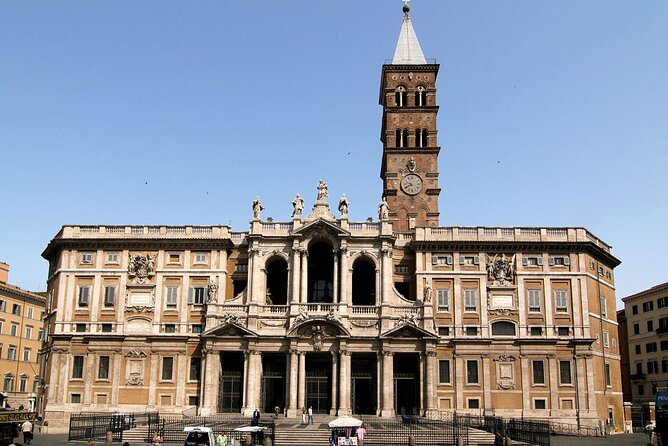
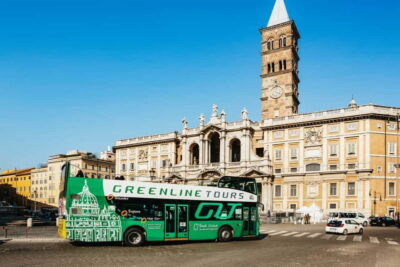
After that, you head to Basilica di Santa Maria Maggiore on the Esquiline Hill. This is dedicated to the Virgin Mary, and what stands out here is the emphasis on medieval mosaics showing scenes from the life of the Virgin. Mosaics can be overwhelming if you are staring at them for the first time, so the time with a guide helps you understand what each panel is trying to communicate.
You also get another relic story tied to tradition: the Sacred Cradle, said to have contained the baby Jesus. The key value for you is not whether you accept every tradition, but how you learn to read the church through the lens it was built to support.
This is allotted about 25 minutes with free admission. I like that Santa Maria Maggiore lands mid-tour, because it is visually rewarding but still grounded in the Jubilee theme.
Stop 5: Chiesa di Santo Spirito in Sassia, care for pilgrims near the Vatican
The next stop is Chiesa di Santo Spirito in Sassia, near the Vatican area. The tour highlights its connection to the Jesuit movement and its role in caring for pilgrims’ souls.
This stop is shorter, about 15 minutes, which makes it ideal as a breather. You get a chance to see another major church connected to how Rome handled spiritual travel and religious life, without losing too much momentum.
If you like places that explain the human side of religion, this one can be a nice shift. Not every church on a list has to be about the biggest dome or the most famous facade. Sometimes it is more interesting to understand the purpose behind the building and the community around it.
Stop 6: St. Peter’s Basilica in Vatican City, the big finish
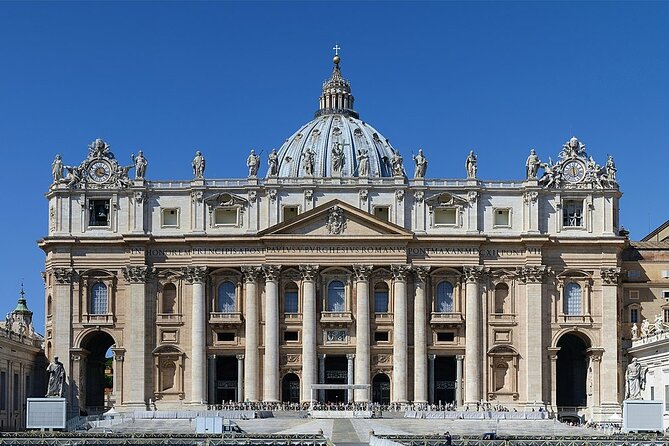
Finally, the tour ends at St. Peter’s Basilica in Vatican City, described as the most famous and largest papal basilica. You are also told it includes contributions from major architects including Bramante, Michelangelo, and Bernini, which gives you a helpful way to interpret the visual mix.
St. Peter’s Basilica is also where you will find the tomb of St. Peter, a fact that helps you understand why this place pulls people in no matter what their personal beliefs are. With 25 minutes here and free admission, this stop is timed as a proper capstone, not just a quick drive-by.
This is a good moment to slow down slightly and focus on your guide’s pointers. You may have to choose what to see most closely because 25 minutes will not cover everything. Pick one “must-not-miss” area, and let the rest be background texture.
Price and what you truly get for $135.54
Let’s talk value. At $135.54 per person, this is not the cheapest way to do churches in Rome. The money is going into two main things:
- Private transport on a golf cart with a maximum of 7 people
- Guided explanations that help you understand each site beyond its facade
The free admission ticket at each stop is another point for your budget sanity. When entries are included, you avoid last-minute ticket decisions while you are on the move.
Also, there is a mention of group discounts, which can bring the total down if your travel group is large enough to qualify. If you are traveling solo or as a couple, small group pricing still makes sense when you value guided time and reduced walking more than you value saving every euro.
One subtle value point: the tour starts in one central area and finishes near the Vatican. That can reduce the cost and stress of re-positioning yourself after the tour, especially if you want to keep exploring that neighborhood on your own.
Guides, pace, and how the day feels
The experience is guided in English, and the overall vibe is practical and structured. Multiple guides have been highlighted for being friendly and for knowing the details behind what you see. When the guide explains why a church matters, your time at each stop becomes more purposeful.
Daniela stands out in the details people like: friendly, thorough, and able to connect the dots between architecture, tradition, and what you are looking at in the moment. Ludo and Tony are also mentioned for providing an informative, agile way to tour Rome by cart.
One more human touch: some people have shared that Daniela went beyond the basic tour experience, including a hotel pickup and even a gelateria stop. That should not be treated as a guaranteed add-on, but it does suggest a service style where the guide cares about the whole day, not just the timetable.
What to pack and how to make the most of short church stops
Since you will have limited time at each basilica, you will get more from planning. Bring a small checklist in your head: one thing to look for at each stop, like a specific relic story or a specific visual detail such as mosaics at Santa Maria Maggiore.
Wear comfortable shoes anyway. Even with a golf cart, you will still walk a bit around entrances and inside churches. Churches can also be cooler than you expect, so something light for layering can help.
And if you have a “big must” for St. Peter’s, decide before you arrive. 25 minutes goes fast when you are trying to see everything.
Who this Jubilee Golf Car Tour is best for
This works especially well if you want a focused Jubilee route without the citywide scramble. It is a strong fit for:
- First-time Rome visitors who want the major sacred sites in one structured half-day
- People who prefer guided context over self-guided reading
- Travelers with limited mobility or simply those who do not want heavy walking
- Groups who want a small, manageable number of people in their tour vehicle
If you are the type who loves long, unhurried wandering and you do not need structure, you might feel the stop times are brief. But for most people, that’s the point: you get the highlights and you leave still able to enjoy the rest of Rome.
Should you book? My take on whether it’s worth it
I would book this tour if you want a smart, Jubilee-themed way to see multiple high-value churches without burning half your day in transit. The combination of free admission stops, small group cart transport, and good guide storytelling is the winning formula.
I would hesitate only if you hate the idea of short time at each stop or if your style is “walk in, photograph everything, and figure it out later.” In that case, self-guided might feel better.
If you are deciding based on value, here is my practical rule: pay for this when you want your time managed. Save your money for self-guided when you are happy to spend extra hours moving around and figuring out the details yourself.
FAQ
How long is the Jubilee Golf Car Tour?
The tour lasts about 3 hours.
What is the price per person?
The price is $135.54 per person.
What language is the tour offered in?
The tour is offered in English.
How many people are on the golf cart?
The golf cart transport is limited to a maximum of 7 people on board.
Is admission included for the church stops?
Yes. Each listed stop has admission ticket free.
What is included in the tour package?
Private transportation by golf cart is included.
Are snacks included?
No. Snacks are not included.
Where do we meet and where does the tour end?
You start at Piazza Celimontana, 00184 Roma RM, Italy, and the tour ends at Via Paolo VI, 00193 Roma RM, Italy.
Is there a start time?
Yes. The start time is 9:00 am.
Are service animals allowed?
Yes, service animals are allowed.
Does the tour require good weather?
Yes. The tour requires good weather, and if it is canceled due to poor weather, you will be offered a different date or a full refund.
Latest additions from Rome
- Rome: Angels and Demons Private Tour with Transfers★ 5.0 · 8 reviews
- Vatican City: St. Peter’s Basilica and Papal Tombs Guided Tour★ 4.0 · 8 reviews
- Vatican City: Museums & Sistine Chapel Tour with St. Peter’s★ 3.1 · 8 reviews
- Colosseum, Palatine and Forum tour with virtual guide★ 5.0 · 8 reviews
- Sistine Chapel @ its best! First time slot Vatican Museums access★ 5.0 · 8 reviews
- Private Vatican In Depth 5-Hour Tour – Skip The Line★ 4.5 · 8 reviews
- Vespa Rental in Rome★ 4.0 · 8 reviews
- VIP Yacht Escape from Rome to Naples Island Gems Ischia & Procida★ 5.0 · 8 reviews
Tours, compared.
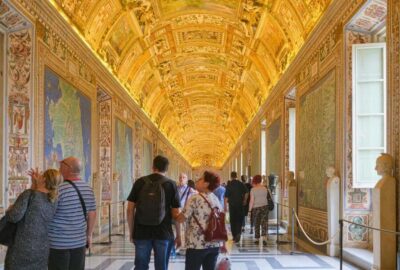
Vatican Museums, Sistine Chapel & St. Peter’s Basilica Tour
Read our review →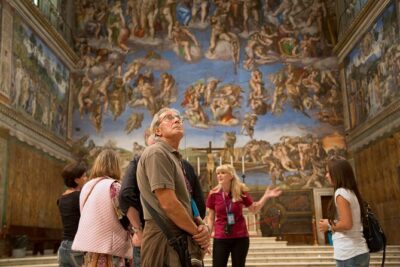
Vatican Museums, Sistine Chapel & St Peter’s Basilica Guided Tour
Read our review →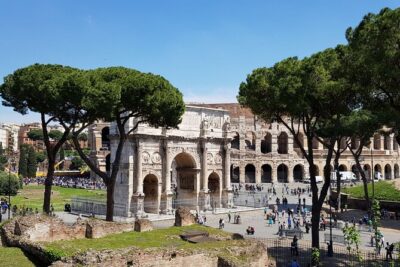
Colosseum, Palatine Hill and Roman Forum Guided Tour
Read our review →
Guided Tour of Colosseum, Roman Forum & Palatine Hill
Read our review →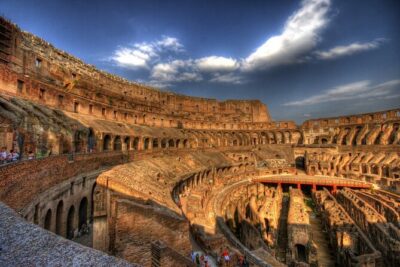
Colosseum, Roman Forum and Palatine Hill Guided Tour
Read our review →
Colosseum Arena Floor, Palatine & Forum Guided Tour
Read our review →
Vatican Museums, Sistine Chapel and Basilica Tour
Read our review →