Reviewed · TOURS
Immersive Underground and Piazzas Tour in Rome
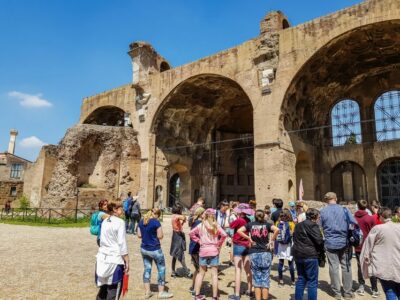
Going underground in Rome sounds simple, then it gets real. This 3 hour route turns famous squares into an archaeology lesson, with Domitian Stadium remains and water infrastructure you would never spot on your own. You also get a smooth sweep of the Pantheon and Trevi Fountain without spending your whole day in lines.
I love the fact that the morning departure saves your afternoon for other plans. I also like how many guides in this format are trained in archaeology or archaeology-adjacent study, so you are not just looking at stones, you are decoding what you are seeing. One thing to consider: the Pantheon has a strict dress expectation, and if you show up with shoulders or knees uncovered, you could be denied entry.
In This Review
- Key Points at a Glance
- Why This Underground and Piazzas Route Works in a Half-Day
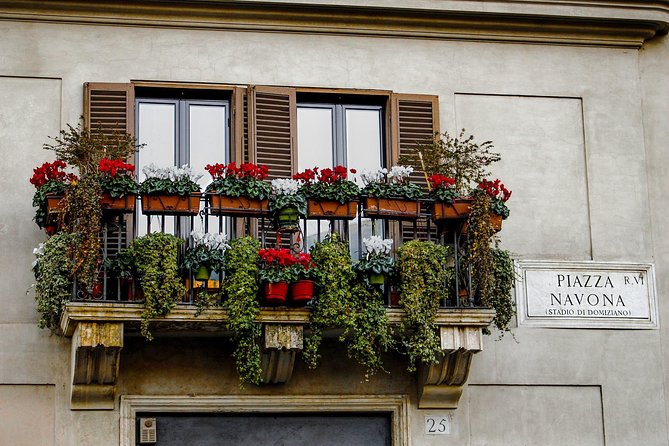
- Piazza Navona Up Top, Then the Domiziano Stadium Under Your Feet
- Pantheon Visit: Dress Rules and How to Get the Most From Short Time
- Trevi Fountain Without the Full-On Crush
- Vicus Caprarius, the City of Water Beneath Today’s Streets
- Guides, Group Size, and Why Some Rome Tours Feel Effortless
- Tickets Included, and Why That Changes Your Experience
- Who This Tour Suits, and Who Might Prefer Something Different
- Should You Book This Underground and Piazzas Tour?
Key Points at a Glance
- Morning timing that keeps your afternoon free while still ticking off top sights
- Piazza Navona above ground, Domiziano underground below it with clear storylines for both
- Small group size (max 20) for easier questions and a calmer pace
- Admission tickets included for the major sites on the route
- Pantheon dress rules matter (cover shoulders and knees)
- Jubilee-era restorations can shift routes, so check your messages before you go
Why This Underground and Piazzas Route Works in a Half-Day
Rome is a city where the “main sights” can swallow your day if you move only by crowds and guidebook timing. This tour is built to give you that big-name lineup, but with a very intentional trick: you spend time under the city at stops most visitors skip.
With a duration of about 3 hours, you can treat this as your first Roman “big picture” day. You start in the center, you move in a tight radius, and you leave before the heat and crowds fully take over. The schedule also helps if you hate the late-day scramble, because you are not trying to fit Piazza Navona, Pantheon, Trevi, and an underground archaeology stop all at once when Rome is at its busiest.
The experience is also structured for understanding, not just sightseeing. You are given context that ties the squares to what was happening underneath them. That is where the value lives. For example, once you learn how water systems fed the city and how the area around Trevi connected to an ancient residential zone, the fountain above becomes more than a photo spot.
One more practical note: your confirmation message will matter. The tour is listed with a meeting point near the Trevi Fountain area, while the highlights emphasize Piazza Navona. Either way, plan to follow the exact meeting instructions you receive, since the Jubilee period can also affect access routes.
Not settled yet? These cover similar ground in Rome:
- Vatican Museums, Sistine Chapel & St. Peter’s Basilica Tour
★ 4.3 · 73,970 reviews - Vatican Museums, Sistine Chapel & St Peter’s Basilica Guided Tour
★ 4.5 · 39,149 reviews - Rome: Colosseum, Palatine Hill and Roman Forum Guided Tour
★ 4.8 · 32,814 reviews - Rome: Guided Tour of Colosseum, Roman Forum & Palatine Hill
★ 4.7 · 27,897 reviews
Piazza Navona Up Top, Then the Domiziano Stadium Under Your Feet
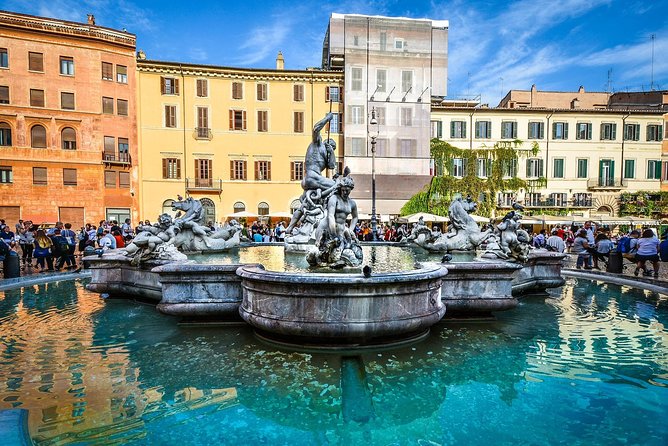
Piazza Navona is the kind of square that looks like it always belonged to Rome. It is built in monumental style at the behest of Pope Innocent X, but the shape gives it away: it resembles an ancient stadium footprint. That means you are not just standing in a pretty Baroque scene. You are standing over older athletic infrastructure.
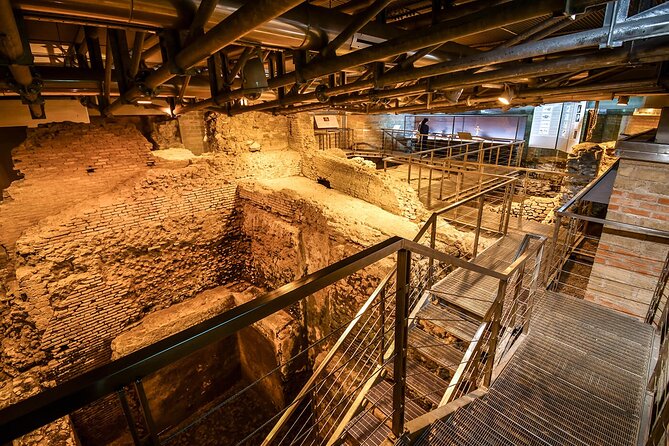
From there, the tour goes down into the archaeological area beneath the square. The Domitian Stadium remains are reached about 4.5 meters above street level, so you are not hiking into the dark. Still, it feels like stepping into a different Rome, because you are seeing what is left of the first and only example of a masonry stadium known to date in the city.
This part is especially satisfying if you like engineering. You get to connect the dots between what the square looks like today and what was once a major public venue. And because it is UNESCO listed, it carries that official weight that makes you slow down. Rome does not usually give you this type of “above and below” comparison in one tidy timeframe.
Why it’s worth your time: even if you already know the Pantheon and Trevi names, this underground stop gives you something you can’t get from postcards. You come away understanding that Rome keeps layering. The surface is only the latest chapter.
Pantheon Visit: Dress Rules and How to Get the Most From Short Time
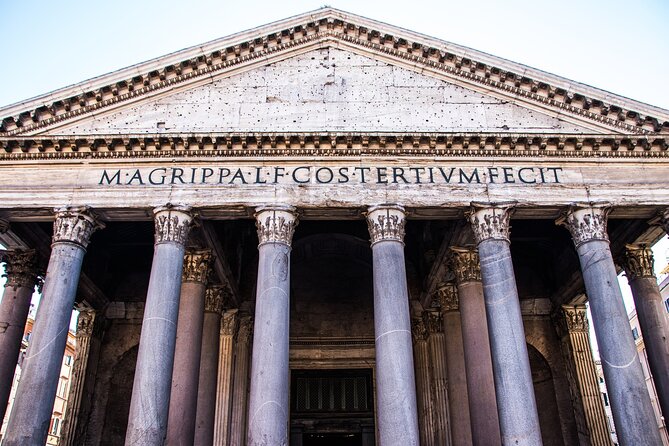
The Pantheon is one of those places where everyone wants more time. That is not always possible on a 3 hour tour, but the payoff here is that you are guided through the right highlights efficiently.
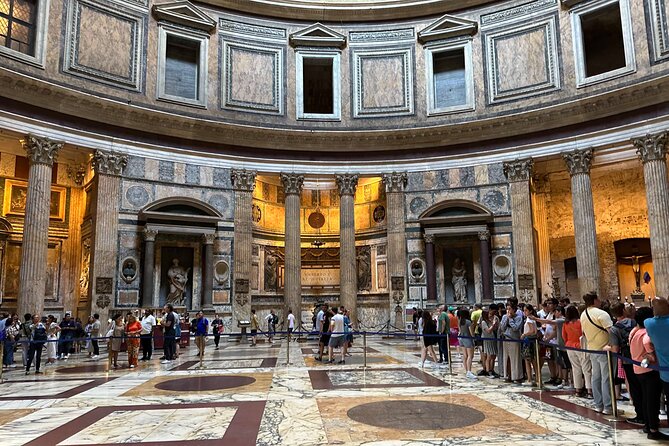
Historically, it is tied to ancient Rome’s religious thinking. The building dates back to 27 BC, founded by Marco Vipsanio Agrippa, son-in-law of Augustus, and dedicated to all past, present, and future divinities. So even if you are not a scholar, you will understand what the space was meant to represent.
Practical reality check: you must plan your outfit for entry. The Pantheon requires clothing that covers shoulders and knees. If you show up bare-shouldered or in shorts or a skirt that exposes your knees, you could be denied entry. This is not a “maybe” rule, so treat it as one.
If you want a low-stress approach, wear something modest and carry a light wrap or scarf as backup. Even on days when enforcement seems variable, it is simply too risky to rely on luck.
Time allocation is tight here, so focus your attention. Look up and take in the dome feel, then listen for what your guide points out about how the building was designed to function as both a sacred space and an architectural statement. This is also a good moment to ask questions, because you are in one place with a clear sensory “baseline.”
Trevi Fountain Without the Full-On Crush
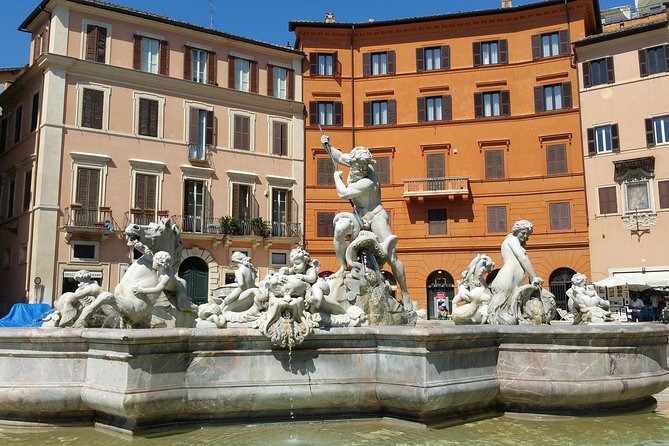
Trevi Fountain is famous enough to feel like a magnet for everyone in Rome. That means you can either spend your time fighting for visibility or you can use a strategy that makes the fountain feel readable again.
This tour gives you a short, structured stop at Trevi. You learn what makes it Baroque in spirit, and what it is actually depicting: Oceanus, the god of the sea, riding a shell-shaped chariot pulled by sea horses. The fountain was designed by Nicola Salvi and completed by Giuseppe Pannini in 1762.
The famous coin tradition is part of the experience too, but the better value is learning how to look. When you know the composition, you stop treating the fountain like a backdrop and start treating it like a storytelling machine.
Crowd note: Trevi can be too crowded at peak times to truly enjoy it. In a short visit, timing matters, and a guided group move usually helps you find angles for photos and for actually seeing the carvings instead of only the people. If your guide offers a photo spot with better viewing lines, take the hint and move with the group.
This is also a transition point in the tour, because you are about to go from a dramatic fountain above to an ancient water system story below.
Vicus Caprarius, the City of Water Beneath Today’s Streets
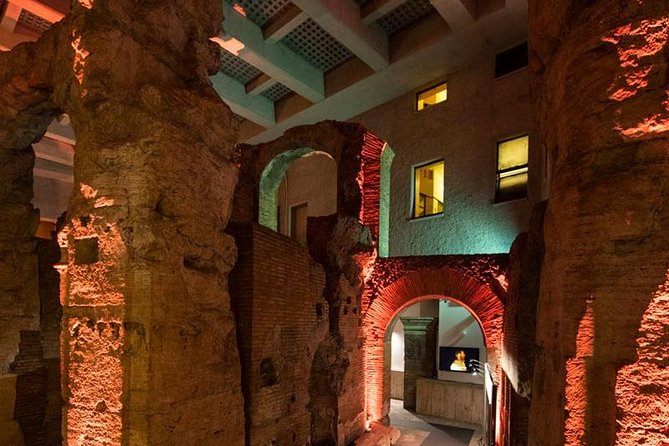
If the Trevi segment helps you see the fountain as art, Vicus Caprarius helps you see it as infrastructure.
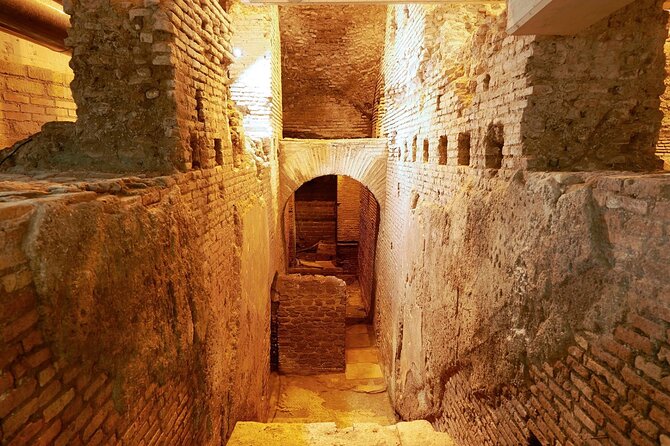
This archaeological area is located over nine meters below today’s street level. It was uncovered during surveys carried out between 1999 and 2001 during the renovation of a cinema. That means you are literally stepping into evidence that was hidden under modern Rome until relatively recently.
The name “City of Water” gets used because of a key feature: a large water reservoir built in the 2nd century AD. The reservoir likely stayed in use until the 6th century AD, which tells you something big about continuity. This was not a short-lived water project. It mattered for a long run.
Even though the stop is not long, it is one of the most conceptually powerful moments on the tour. You start connecting dots in your head: how water arrived, where it was stored, and why the city’s “most famous water” had to be supported by serious underground systems.
A practical takeaway: keep your expectations realistic about how much you can see in an underground archaeological area. The goal is understanding and context, not a museum-style deep excavation. If you are hoping for tons of time down there, you will still likely enjoy it, but you might want a second Rome archaeology option on another day.
Another shape for the same afternoon in Rome:
Guides, Group Size, and Why Some Rome Tours Feel Effortless
This is a small-group experience with a maximum of 20 travelers. In practice, that usually means more space to ask questions and less time stuck in the “human traffic jam” that big groups can create.
What elevates this tour is the way guides teach. In this format, you may get a guide with formal archaeology training or a strong academic background in archaeology and the arts, and it shows in the explanations. People rave about guides like Amanda, who keeps the mood light and funny while staying on topic. They also praise Alessandra for her Rome roots and archaeology and arts study, which makes the stories feel personal, not generic. Sabrina is another common standout, with a special focus on turning the underground into an easy-to-understand picture, including waterworks.
You may also appreciate that the pace often feels respectful of real people. Some guides are flexible with time for photos, and many are willing to answer questions without making you feel rushed. That is especially helpful if you are traveling as a family, since at least some guides are comfortable accommodating young kids who need more attention and shorter attention spans.
One more reason this matters: when you learn “why” in the moment, you remember more later. You do not just collect landmarks. You build mental connections. That is how Rome stops feeling like a pile of monuments and starts feeling like one living system.
Tickets Included, and Why That Changes Your Experience
This tour includes admission tickets for each major stop on the route. That matters more than it might sound.
For one, it reduces friction. Instead of you juggling separate entry lines or figuring out whether you bought the right timed ticket, you focus on showing up, meeting the group, and moving through the day. That alone saves mental energy, which is valuable in Rome.
Tickets also help you keep your timing honest. When you know the key entries are handled through the tour structure, you are less likely to waste time debating what to do next. The day stays tight, and that is the whole point of a 3 hour format.
Value-wise, at $114.65 per person, you are paying for guided time plus included site access. You also get a plan that hits Trevi and the Pantheon, while still giving you time under the city. If you tried to replicate this yourself, you would likely spend more time coordinating access, and you would still be missing the interpretive layer that makes the underground stops click.
Who This Tour Suits, and Who Might Prefer Something Different
This is a great match if you have limited time and want the major icons plus a genuine underground angle. First-timers often like it because it provides a fast orientation to Rome’s center, and it adds “what’s underneath” to the standard sightseeing checklist.
It is also a good fit if you like archaeology, construction, and systems. Domitian Stadium remnants and the water story of Vicus Caprarius are not just decorative. They explain how public life and daily survival worked in ancient Rome.
Where it may not satisfy everyone: if you are expecting lots of time underground or a slow, museum-style experience, the stop durations are short. You will see the key elements, but you will not get a long-form exploration at each underground location. A few visitors have felt that the indoor portion of the Pantheon did not happen on their specific day, which can change how satisfying the “headline” stop feels. The dress code is also a real constraint, so plan your clothing carefully.
If you want one guided day that makes the city feel connected, choose this. If you want maximum time in just one site, you may want a different tour format that stretches a single location longer.
Should You Book This Underground and Piazzas Tour?
I think you should book it if you want a practical Roman day plan that hits the big names and still delivers an underground story you can’t easily recreate on your own. The combination of Piazza Navona, Domitian Stadium remains, the Pantheon, Trevi Fountain, and Vicus Caprarius makes the tour feel like more than a greatest-hits walk.
Book it now if:
- you want a morning outing that protects your afternoon
- you like archaeology explanations, not just photos
- you prefer a small group feel with room to ask questions
- you want tickets included so you can move without extra planning
Skip it or consider an alternative if:
- you are very sensitive to dress-code rules and don’t want to plan outfits
- you want long underground time at a slower pace
- you mainly care about spending maximum minutes inside the Pantheon
If your goal is to understand Rome’s layers in a short window, this route is a smart way to do it.
Latest additions from Rome
- Guided Tour Vatican Museums & Sistine Chapel★ 4.1 · 30 reviews
- Exclusive Rome by Night Vespa Tour★ 5.0 · 30 reviews
- Transfer Rome to Airports★ 4.5 · 30 reviews
- Vatican: St.Peter’s Basilica & Dome – Reserved Entry & Tour★ 4.1 · 30 reviews
- Rome street art tour: off the beaten path with a local guide★ 5.0 · 30 reviews
- Tivoli, Hadrians Villa and Villa d’Este, a charming day trip from Rome★ 4.5 · 30 reviews
- Rome Food Tasting with Wine Pairing Italian Authentic Flavors★ 5.0 · 31 reviews
- Inspirational Cooking on the Roman Chef’s Panoramic Terrace★ 5.0 · 30 reviews
Tours, compared.

Vatican Museums, Sistine Chapel & St. Peter’s Basilica Tour
Read our review →
Vatican Museums, Sistine Chapel & St Peter’s Basilica Guided Tour
Read our review →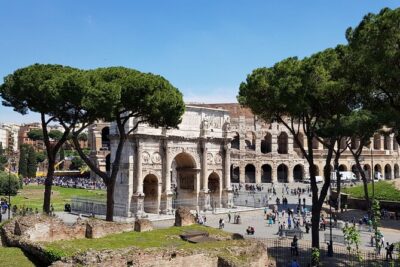
Colosseum, Palatine Hill and Roman Forum Guided Tour
Read our review →
Guided Tour of Colosseum, Roman Forum & Palatine Hill
Read our review →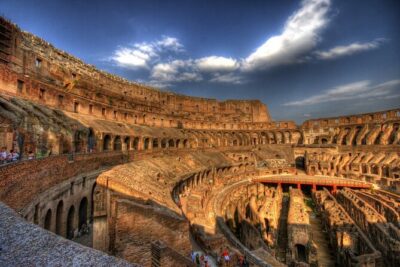
Colosseum, Roman Forum and Palatine Hill Guided Tour
Read our review →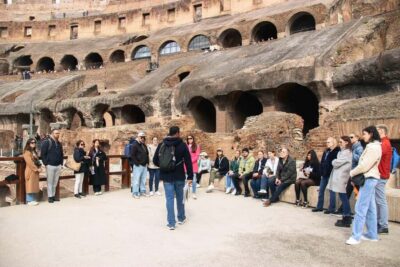
Colosseum Arena Floor, Palatine & Forum Guided Tour
Read our review →
Vatican Museums, Sistine Chapel and Basilica Tour
Read our review →