
Reviewed · PRIVATE CAR WITH DRIVER
Hidden Rome – Private Tour with Driver
Rome has a quieter side.
This private Hidden Rome route uses a car and driver to take you to big-name places like the Appian Way and Catacombe San Sebastiano, plus calmer spots most first-time itineraries skip. You get hotel pickup and drop-off, and the pacing is built around seeing more in less time, without sprinting across the city.
I especially like the mix of famous Roman engineering and off-the-main-path neighborhoods. The Appian Way’s ancient stone paving and the open-air Parco degli Acquedotti make the day feel like Rome’s real working landscape, not just photo backdrops. I also like that catacombs entry is included, so you spend less time fussing and more time looking closely.
One possible drawback: the day is action-packed, and food is not included. Also, the “guided” parts can vary a bit by guide, so if you want nonstop storytelling at every stop, plan to ask questions early and often.
In This Review
- Key takeaways before you go
- Why this Hidden Rome day feels different from the usual route
- Price and logistics, what you’re really paying for
- Getting picked up at 9:00 and settling into a private pace
- Stop 1: The Appian Way on Via Appia Antica
- Stop 2: Catacombe San Sebastiano and early Christianity underground
- Stop 3: Parco degli Acquedotti, aqueducts without the crowd
- Stop 4: Baths of Caracalla, dramatic ruins in about 30 minutes
- Across the Tiber: Trastevere’s local pace and hidden corners
- Santa Maria in Trastevere: mosaics and a gold octagon
- Colle del Gianicolo: the view that makes the day click
- The driver and guide factor: what to look for, what to ask
- Best use of your time: shoes, pacing, and food planning
- Who should book this private Rome tour?
- Should you book Hidden Rome Private Tour with Driver?
- FAQ
- How long is the Hidden Rome private tour?
- What is the price per person?
- Is hotel pickup and drop-off included?
- Is this a private tour or a group tour?
- Is the tour offered in English?
- Are the catacombs tickets included?
- Is food included in the price?
- Is admission included for Baths of Caracalla?
- Can I cancel for a full refund?
Key takeaways before you go
- Private transport with hotel pickup means you lose less time to logistics and more time to the sights.
- Appian Way via Via Appia Antica is wonderfully preserved, with large flat stones that show how the road once worked.
- Catacombe San Sebastiano admission included so you can focus on the underground atmosphere and details.
- Parco degli Acquedotti stays quieter and gives you room to stroll under and around the aqueduct remains.
- Trastevere plus Santa Maria in Trastevere adds neighborhood life and standout Christian art.
- Gianicolo viewpoint time is short but practical for getting skyline views without a long hike.
Why this Hidden Rome day feels different from the usual route
This tour is designed for people who have already seen Rome’s headline monuments, or who simply don’t want to fight crowds for every minute. Instead of staying trapped in the densest historical core, you head outward, where the city’s scale is easier to understand. Roads, aqueducts, and burial grounds may sound niche, but that’s exactly the point.
You also get a private setup, so your driver can work around your pace. In the best moments of this kind of day, the stops are short enough that you can look closely, but not so rushed that you miss why the place matters. The private format also helps if you want to steer the day slightly, like spending a touch longer at a view or asking to prioritize churches during special periods.
Just keep your expectations realistic: this is a 6-hour rhythm of drive, short walks, and a few concentrated photo moments. It is not a slow, museum-only day. If you like structure and variety, it works well.
More Private Tours in Rome
- Rome by Golf Cart Private Tour: Beyond the Landmarks
★ 5.0 · 4,361 reviews - Early Morning Vatican, Sistine, St. Peter’s Semi or Private Tour
★ 5.0 · 3,779 reviews - Rome on a Golf Cart Semi-Private Tour Max 6 with Private Option
★ 5.0 · 2,502 reviews - Rome Private Arrival Transfer: Fiumicino Airport to Hotel in Rome
★ 4.5 · 2,492 reviews
Price and logistics, what you’re really paying for
At $330.40 per person for about 6 hours, you are paying for three things that add up fast in Rome: private vehicle time, door-to-door hotel pickup, and included catacombs entry. Even if you could technically cobble together public transport and tickets, the time cost is usually the killer.
This is also a tour people book well ahead, with an average of 145 days in advance. That’s often a sign that the format sells out when schedules are tight, especially when demand rises around busy seasons.
Here’s how to think about the value. You’re not just buying access to specific sites. You’re buying:
- less transit stress
- less queue anxiety
- more concentrated time in places that are harder to reach on your own
The one cost to plan for is simple: food and drinks are not included, and your time for lunch will be up to your guide’s suggestions or your own stop decisions.
Getting picked up at 9:00 and settling into a private pace
The day starts at 9:00 am, and pickup is offered from your hotel with drop-off at the end. That matters more than it sounds. Rome can be slow to navigate, especially near the busiest streets, and you do not want to spend your morning decoding bus routes or chasing a meeting point.
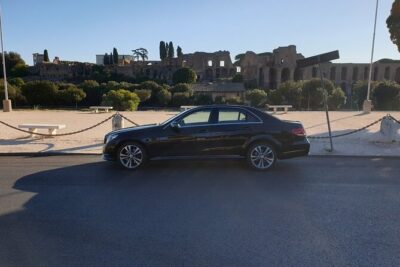
You’ll be in a private vehicle with both a driver and a guide, and the tour is only your group, not mixed with strangers. That usually translates into more flexibility when streets are busy, when you want photos with fewer interruptions, or when you need a quick pause.
For comfort, I’d plan for short walks at most stops. The tour calls for moderate physical fitness, so wear supportive shoes and keep expectations that you might move on and off the road a few times. Service animals are allowed too, which is a nice, practical detail.
Also note a seasonal factor: because of the Jubilee, some monuments may be under restoration. That can mean adjustments, so it helps to watch for any pre-tour messages.
Stop 1: The Appian Way on Via Appia Antica
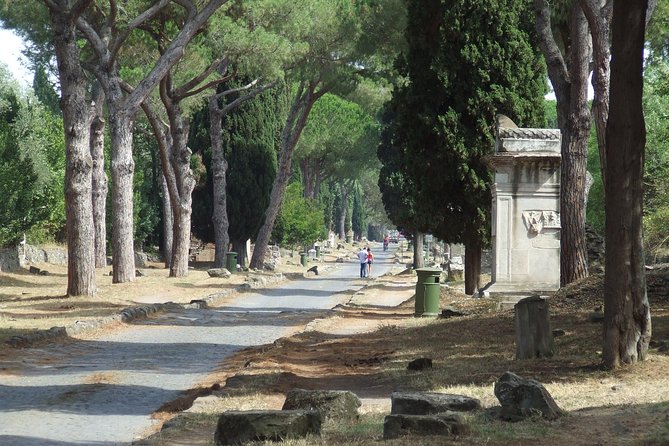
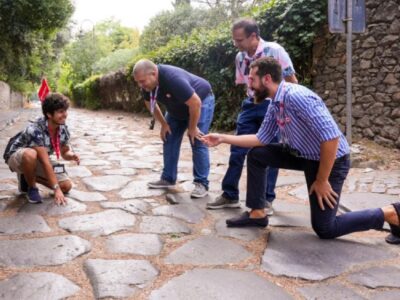
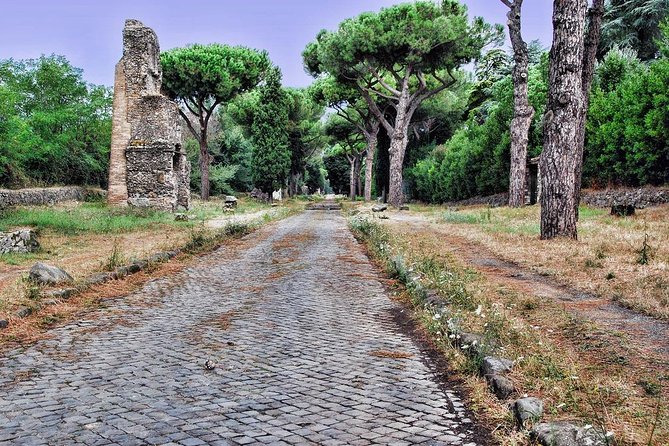
The Appian Way is the kind of Roman site that feels like proof. This road helped link Rome with distant settlements across the empire, eventually stretching far toward Brindisi in Puglia. It was built in 312 BC by Appius Claudius Caecus, and it earned a reputation as the “Queen of Roads” because of its scale for its time.
What you’re looking at today is the long-lasting power of engineering. The roadway uses large flat stones set firmly in place, worn down and reshaped by centuries of wheels, animals, and feet. It is not just a scenic stretch. It’s a physical record of how travel and power worked.
You’ll spend about 1 hour here, and admission is free. That’s a win because you can focus on the experience rather than ticket logistics. The main drawback is also simple: the Appian Way rewards slow looking. If you rush, you’ll miss the texture underfoot and the sense of distance the road once carried.
Stop 2: Catacombe San Sebastiano and early Christianity underground
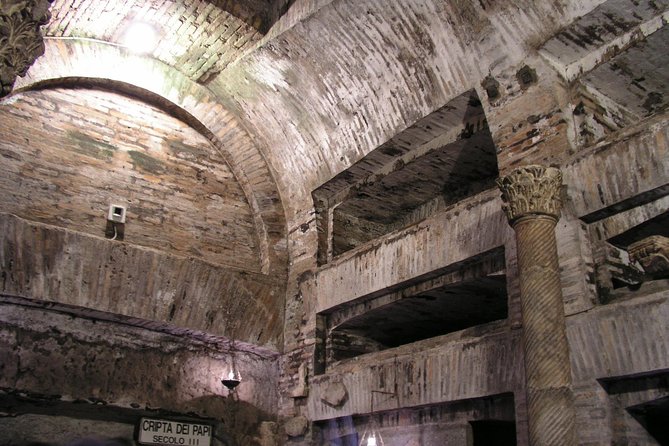
Next comes a quieter kind of awe. Catacombe San Sebastiano is a Christian cemetery named after St. Sebastian, and its older name relates to the area’s “hollows” and nearby tuff mines. In early centuries, the term “ad catacumbas” became a general label for subterranean Christian burial sites.
This place also connects to major apostolic celebrations. Another name you’ll hear here is Apostolic Memorial, tied to liturgical observances devoted to Peter and Paul in the early centuries. In other words, it’s not only a burial site. It’s part of how early communities organized meaning.
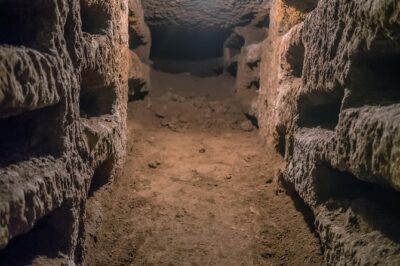
What makes the catacombs special is the layered use over time. From the first century, the area was intensely used, with caves and tunnels shaped for pagan and Christian tomb types, including loculi and columbari urn spaces. There were also residential buildings above ground with interior wall paintings, so the story extends beyond what you see underground.
Plan for about 1 hour, and catacombs admission is included. That included entry is worth noting because underground sites often mean a tighter timing window, and buying tickets can add friction. The other consideration is lighting and walking surfaces, so bring a calm pace and good footing habits.
A few more Rome options worth a look
Stop 3: Parco degli Acquedotti, aqueducts without the crowd
If the day feels heavy after the catacombs, this stop helps you breathe. Parco degli Acquedotti is one of Rome’s best less-touristed outdoor areas, and you get about 1 hour. You’re near the Appia Antica, close to the city but far from the usual tourist crush.
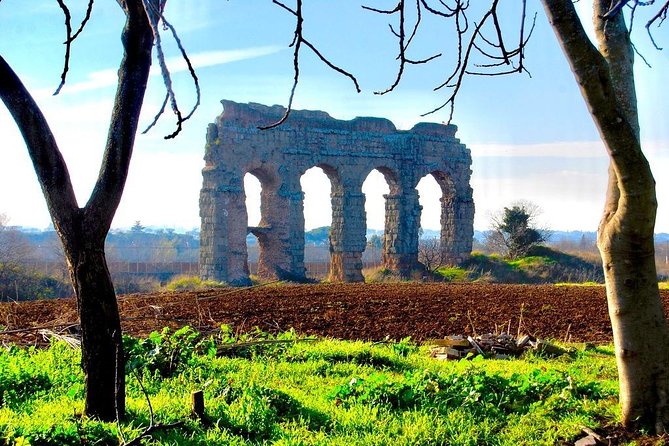
This park showcases Roman water engineering. Aqueduct structures were built to carry fresh water from the mountains and countryside into the city, and sections of the aqueducts still remain here. You’ll see stretches related to Aqua Felix and parts of Aqua Claudia.
The atmosphere is the real draw. Wide meadows, umbrella pines, and long ruins create a sense of open space that you rarely get near the central sights. On weekends, families picnic under the aqueducts, but you can often still find quieter corners during the day. Bike rentals are available in the park, which is a useful option if you want motion without too much walking.
Admission is free here, so you get time to stroll without extra costs. The small downside is weather. In Rome, outdoor comfort matters. If you’re sensitive to heat or sun, go prepared, and use shade when you can.
Stop 4: Baths of Caracalla, dramatic ruins in about 30 minutes
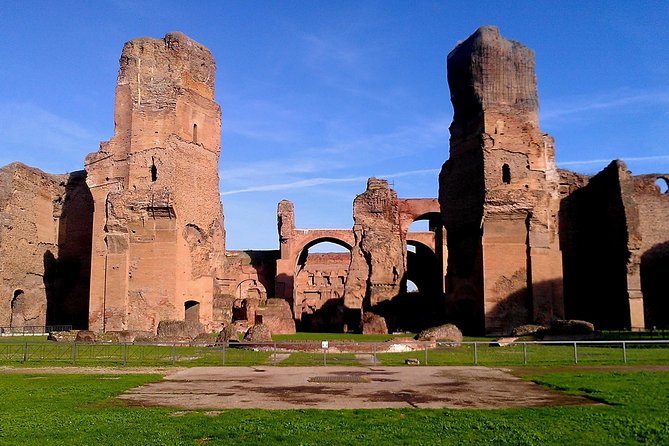
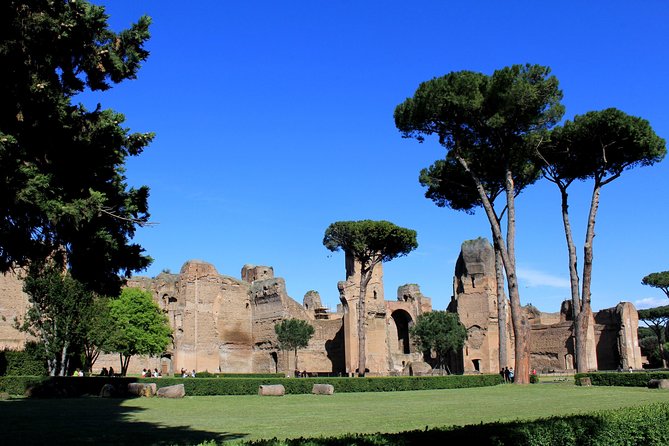
The Baths of Caracalla are one of the most impressive thermal complexes from ancient times. Built between 212 and 216, directed under Marcus Aurelius Antoninus Augustus (Caracalla), they were designed on a massive scale.
Today, much of what remains is brick walls and large collapsed vaults. And yet, the ruins still communicate power. Even in a short visit, you get a sense of the size of the space, the grand planning, and the way thermal life shaped daily routine.
You’ll have about 30 minutes here. That is not long enough to read every corner detail, but it is long enough to understand the “why” behind the site. Admission is not included for this stop, so you should expect to pay separately if you want full access.
This is also a stop where pacing matters. If you want photos and a quick understanding, 30 minutes works. If you love longer architectural walks, you might feel slightly cut off. In that case, ask your guide what the must-see areas are before you set off.
Across the Tiber: Trastevere’s local pace and hidden corners
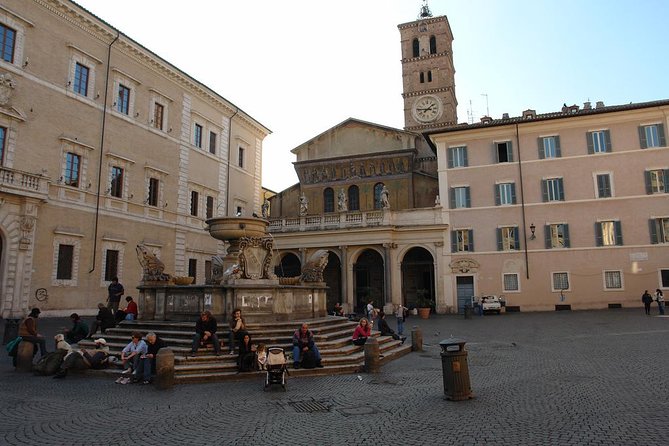
After aqueducts and underground space, the day shifts into neighborhood life. You’ll spend about 30 minutes in Trastevere, just across the Tiber from the Vatican area.
Trastevere has a reputation for being a city within a city. The Medieval street layout matters here: piazzas, cobbled vicoli (alleyways), and a sense of civic pride that keeps the area feeling like real daily Rome. The neighborhood’s relationship with change is complicated, but you will feel the everyday rhythms in the way people actually use the streets, sit outside, and move between cafés.
This is a smart stop for a couple reasons. First, it gives your brain a break from “monument mode.” Second, it helps you see Rome as lived space, not only preserved stone.
Because the time is short, you should choose your target. Aim for a quick wander near a lively piazza, grab a coffee if you can, and keep your eyes open for side streets that feel quieter than the main lanes. Admission is free, but the best photos come when you pause rather than sprint.
Santa Maria in Trastevere: mosaics and a gold octagon
This is one of the most rewarding short church visits in the whole city, especially if you care about art details. Santa Maria in Trastevere has mosaics and frescoes that have been newly highlighted thanks to recent restoration work.
The restoration brought new life to 12th-century Pietro Cavallini mosaics, including his celebrated Vita della Vergine. You’ll also see frescoes and marbles of more recent vintage, and the church includes a gloriously Baroque element: an octagonal gold ceiling with work by Domenichino. One major painting here is L’Assunzione della Vergine from 1616 to 1617.
Dating back to at least the third century, the church claims a special place as one of the earliest official Christian worship sites in Rome. Even if you’re not a church-architecture devotee, the mix of mosaics plus dramatic Baroque design makes it easy to enjoy in about 10 minutes.
Admission is free here, so it’s a low-cost payoff stop. The main consideration is volume and light. Churches can be busy, and restoration visibility can depend on timing. Still, the art you came for is usually the art you’ll leave remembering.
Colle del Gianicolo: the view that makes the day click
To close with a high note, the route includes Colle del Gianicolo, also called the Janiculum Hill. This is one of Rome’s strong view points for domes and bell towers. Even a brief stop can give you a “map in the mind” effect, where the city’s skyline makes more sense after you’ve seen aqueducts and ancient roads.
Time here is about 10 minutes, and admission is free. That’s enough to get oriented, snap a few photos, and decide if you want a longer look on your own afterward.
Along the way, the Janiculum area includes a few standouts. You’ll hear about the Tempietto designed by Donato Bramante, tied to the supposed site of St. Peter’s death. Fontana dell’Acqua Paola is the Baroque fountain built by Pope Paul V in the late 17th century. The hill also has foreign research institutions and academies linked to the United States and Spain, plus universities and botanical spaces.
Because the stop is short, I’d treat it like a viewpoint sprint, not a full museum visit. If you want the top-of-hill experience, ask your guide to confirm where you’ll pause for the broadest view.
The driver and guide factor: what to look for, what to ask
This tour works best when your driver and guide treat it like a story with travel beats, not a checklist. The reviews and guide names tied to this experience point to a pattern: many guides love Rome and know how to steer you toward places you might not find on your own.
You might meet drivers like Francesco, who’s been praised for getting to lesser-known parts of Rome and for adding church visits that weren’t originally in the plan during Jubilee time, including St. Paul, St. John, and St. Mary’s through the main doors. Another name you might see is Stefano, noted for taking people to hard-to-reach sites like the Via Appia, catacombs, and the aqueduct area, and for keeping the day fun without feeling chaotic. Peter and Stephano have been mentioned for flexibility, adapting to interests, and making the stops feel coherent.
Here’s how to make sure you get the good version of the day. Ask at the start:
- What’s the story you want me to understand by the end of the route?
- Where is the best light for photos at the Appian Way and Gianicolo?
- If we have extra time, what church or quick stop do you recommend near our route?
Also, be aware of a realistic concern. One booking reported that some stops had less guided commentary than expected. If you care about explanations at every stop, say so up front, and ask for short context while you walk.
Best use of your time: shoes, pacing, and food planning
This is a half-day with multiple settings: road stones under your feet, stairs or uneven paths underground, then outdoor walking near aqueduct remains, followed by short city neighborhood hops. The best way to enjoy it is to show up prepared.
A few practical tips that fit the day:
- Bring comfortable walking shoes with grip.
- Carry a small water bottle, especially for the park stop.
- Have your phone charged for tickets and maps, since a mobile ticket is part of the setup.
- Plan your lunch timing loosely. Since food and drinks aren’t included, the simplest approach is to accept a recommended lunch stop suggested by your guide or choose a quick meal break in Trastevere.
One more seasonal note: some monuments may be under restoration during Jubilee. If a particular view or building looks fenced off, treat it as normal Rome, not a problem. Ask what you can still see nearby.
Who should book this private Rome tour?
This works especially well if you:
- want less crowd time and more breathing room
- have already seen the biggest central monuments and want a different angle on the city
- like engineering and under-the-surface stories, like aqueducts and catacombs
- prefer private convenience over public transport transfers
It may be less ideal if you:
- want a long, slow museum-style day with deep time in one location
- expect heavy commentary at every single stop without asking questions
- are traveling with very limited walking ability, since you will be moving at several stops and the tour calls for moderate fitness
Should you book Hidden Rome Private Tour with Driver?
If you want a smart, efficient day that shows Rome as a living system of roads, water, churches, and neighborhoods, I’d say yes. The value comes from the private setup, the hotel pickup, and the included catacombs entry, paired with stops that feel like Roman life beyond the main-ticket landmarks.
Book it if your priority is variety with less stress. Consider a different option only if you want a slow and fully immersive experience in fewer places, or if you need food and snacks provided for you.
If you do book, send a message before pickup with one priority: either more viewpoints on the Janiculum side, more church time, or extra explanation at the underground and engineering stops. A good guide can turn that half day into the kind of Rome you’ll remember, not just the Rome you’ll photograph.
FAQ
How long is the Hidden Rome private tour?
It’s approximately 6 hours.
What is the price per person?
The price is $330.40 per person.
Is hotel pickup and drop-off included?
Yes, pickup and drop-off from your hotel are included.
Is this a private tour or a group tour?
It’s a private tour, and only your group participates.
Is the tour offered in English?
Yes, it is offered in English.
Are the catacombs tickets included?
Yes, Catacombe San Sebastiano admission is included.
Is food included in the price?
No, food and drinks are not included.
Is admission included for Baths of Caracalla?
No, Baths of Caracalla admission is not included.
Can I cancel for a full refund?
Yes. You can cancel up to 24 hours in advance for a full refund.
Latest additions from Rome
- Guided Tour Vatican Museums & Sistine Chapel★ 4.1 · 30 reviews
- Exclusive Rome by Night Vespa Tour★ 5.0 · 30 reviews
- Transfer Rome to Airports★ 4.5 · 30 reviews
- Vatican: St.Peter’s Basilica & Dome – Reserved Entry & Tour★ 4.1 · 30 reviews
- Rome street art tour: off the beaten path with a local guide★ 5.0 · 30 reviews
- Tivoli, Hadrians Villa and Villa d’Este, a charming day trip from Rome★ 4.5 · 30 reviews
- Rome Food Tasting with Wine Pairing Italian Authentic Flavors★ 5.0 · 31 reviews
- Inspirational Cooking on the Roman Chef’s Panoramic Terrace★ 5.0 · 30 reviews
Private Car with Driver, compared.

Rome Airport Transfer – Private Luxury Service with Driver
Read our review →
Rome Private Tour with Driver: Colosseum and Vatican in a Day
Read our review →

Mamertine Prison and Catacombs small group tour with driver
Read our review →
Browse the lists this tour appears in