
Reviewed · WALKING TOURS IN ROME
Fountains and Squares of Rome 2-Hour Walking Tour
Fountains in Rome feel like theater. This 2-hour small-group walking tour strings together the city’s most famous fountain squares with big art moments and a few legends along the way. I like that it keeps moving, so you get contrast fast, Baroque drama here, Renaissance balance there, all on foot.
Two stops make this kind of tour click: the Trevi Fountain coin ritual and the stop inside the Pantheon, where you can see the world’s largest non-reinforced concrete dome. For me, that combo is hard to beat because it turns “sights” into stories you can actually picture.
One possible drawback: at $74 per person for 2 hours, it can feel pricey if you expect entrance costs bundled into the price, since the tour only lists a guide and a small group as included.
In This Review
- Key things I’d circle on your Rome to-do list
- The 2-Hour Fountain and Square Route That Works Even If You Are Short on Time
- Piazza Barberini Meeting Point: Why Starting Here Helps
- Spanish Steps and Fontana della Barcaccia: The Half-Sunken Ship Moment
- Trevi Fountain: The Coin Toss, Palazzo Poli, and the Return-Promise Ritual
- Pantheon Interior: The Dome That Still Shocks People
- Piazza Navona on Stadium of Domitian Ground: Bernini’s Four Rivers
- Campo de’ Fiori Ending: Giordano Bruno and the Square’s Hard Edge
- Guides and Group Size: What You Gain from a Small-Group Walk
- Price and Value: Is $74 Worth It for a 2-Hour Rome Walk?
- Practical Tips Before You Go: Shoes, Timing, and Photo Strategy
- Who This Tour Suits Best, and Who Might Want Something Else
- Should You Book the Fountains and Squares of Rome Walking Tour?
- FAQ
- Where does the tour meet?
- What is the walking tour route and where does it end?
- How long is the tour?
- What is included in the price?
- What languages are available?
- Is hotel pickup or drop-off included?
Key things I’d circle on your Rome to-do list
- Piazza di Spagna plus Fontana della Barcaccia, the half-sunken ship fountain tied to the famous 135-step staircase
- Trevi Fountain’s myth-by-moment tradition, with the coin toss in front of Palazzo Poli
- Pantheon interior time, focused on the massive dome you can see up close
- Piazza Navona built over the Stadium of Domitian site, with Bernini’s Fontana dei Quattro Fiumi
- Campo de’ Fiori ending, where the bronze statue of Giordano Bruno anchors the square’s darker past
- Guide flexibility, including pacing adjustments for families and older groups based on past guest feedback
The 2-Hour Fountain and Square Route That Works Even If You Are Short on Time
This is the kind of Rome tour you book when you want the highlights without turning the whole day into logistics. In just 2 hours, you cover fountains and piazzas that many people spread across multiple days.
What makes it especially practical is that it is built around walkable, photo-friendly checkpoints. You start at Piazza Barberini, head toward the Spanish Steps area, then move to Trevi, the Pantheon, Piazza Navona, and finally Campo de’ Fiori.
You should also know the tone: it is not a silent museum march. The stops are paired with stories, so the fountains and public spaces feel like they had a job in the city, not just something to look at.
More Walking Tours in Rome
- Rome: Guided Food Walking Tour with Wine in Trastevere
★ 4.9 · 3,105 reviews - Rome: Trastevere & Campo de Fiori Street Food Walking Tour
★ 4.9 · 2,768 reviews - Rome: Paranormal Night Walking Tour & Secret Backstreets
★ 4.9 · 1,921 reviews - Rome: Trastevere Street Food Walking Tour with Local Expert
★ 4.8 · 1,784 reviews
Piazza Barberini Meeting Point: Why Starting Here Helps
Your guide meets you in front of the fountain in Piazza Barberini. That location is useful because you get an immediate sense of Rome’s piazza rhythm, open space, fountains, and people crossing paths.
It also sets up the day’s “theme.” You are not starting with a single landmark that you either love or hate. You are starting with the idea of public art in public space, and the tour keeps that focus as you move on.
Bring comfortable shoes. This is a walking tour, and Rome can be uneven underfoot. If your feet are happy, you will enjoy the quick pace much more.
Spanish Steps and Fontana della Barcaccia: The Half-Sunken Ship Moment
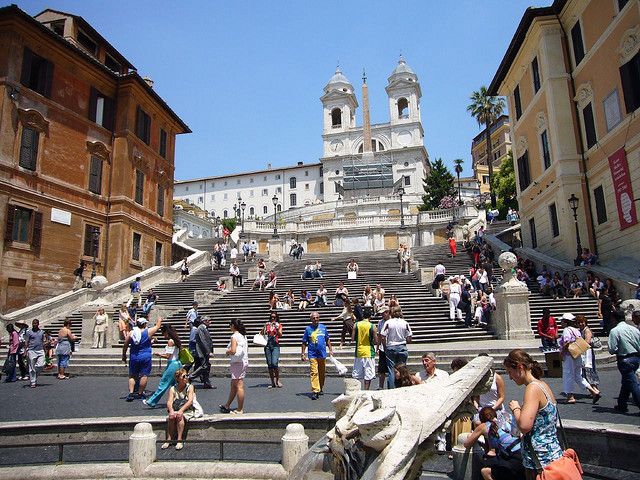
From Piazza Barberini, the route connects to Piazza di Spagna at the base of the Spanish Steps. The tour frames the stairs as more than a scenic climb: the 135 steps linked the historic Bourbon Spanish Embassy with the Trinità dei Monti church at the top.
Then you get to Fontana della Barcaccia. This Baroque fountain is shaped like a half-sunken ship, which is a great example of Baroque art doing its job, dramatic, theatrical, and meant to be felt.
A half-sunk ship sounds odd until you look at it in context. Baroque fountains often use bold forms to tell you a story, and this one looks like a moment frozen from chaos. It is also a nice “palette cleanser” after you first arrive in the area, because it is playful even when the background is historical.
If you have kids, this is a strong early stop. The ship shape makes it easy for them to engage quickly, without needing to understand every layer of Renaissance and Baroque context.
Trevi Fountain: The Coin Toss, Palazzo Poli, and the Return-Promise Ritual
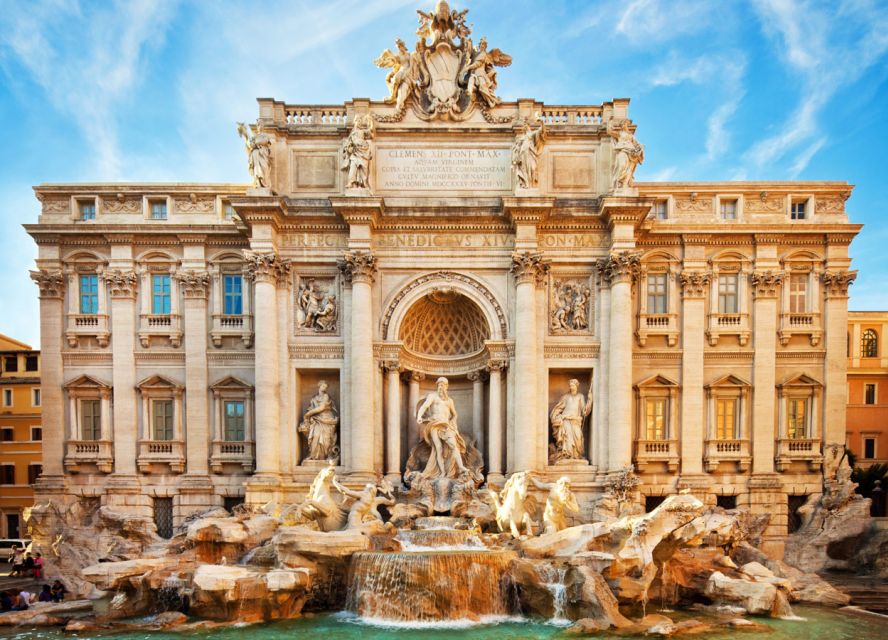
Next comes the Trevi district and Rome’s most famous fountain. The tour places you against Palazzo Poli, so you are not just staring at water. You get a framed view of how the Trevi complex sits in the city’s grand backdrop.
Then comes the part everyone knows, but it still feels good when you hear the story behind it. You throw a coin into the Trevi Fountain to ensure you will return to Rome.
Here is what I like about doing Trevi with a guide: you learn how a ritual becomes a tradition over time. The moment stays fun, but you also understand why the fountain became a magnet for pilgrims, and why people treat it like a personal promise.
One practical tip: if you are trying to get photos, plan for crowds. This tour is fast enough that you can still get good shots, but you will want to be ready to shift your angle as people move through.
Pantheon Interior: The Dome That Still Shocks People
After Trevi, the walking route continues to the Pantheon, dedicated to the Olympian gods and one of the best preserved monuments of Ancient Rome. This stop is a major pivot point in the tour because it shifts you from Baroque storytelling to Ancient engineering scale.
Once inside, the highlight is the world’s largest non-reinforced concrete dome. That detail matters because it is not a “small fact.” It is a huge visual and technical statement, and you feel it as soon as you look up.
What I like about pairing Trevi and the Pantheon on the same 2-hour walk is contrast. Trevi’s drama is about motion and myth-like symbolism. The Pantheon is about precision, scale, and survival of design.
You might also notice how the tour structure keeps you from overthinking. You do not spend half your day on one building. You get enough time to absorb the dome, then you move on while the impact is still fresh.
A few more Rome options worth a look



Piazza Navona on Stadium of Domitian Ground: Bernini’s Four Rivers
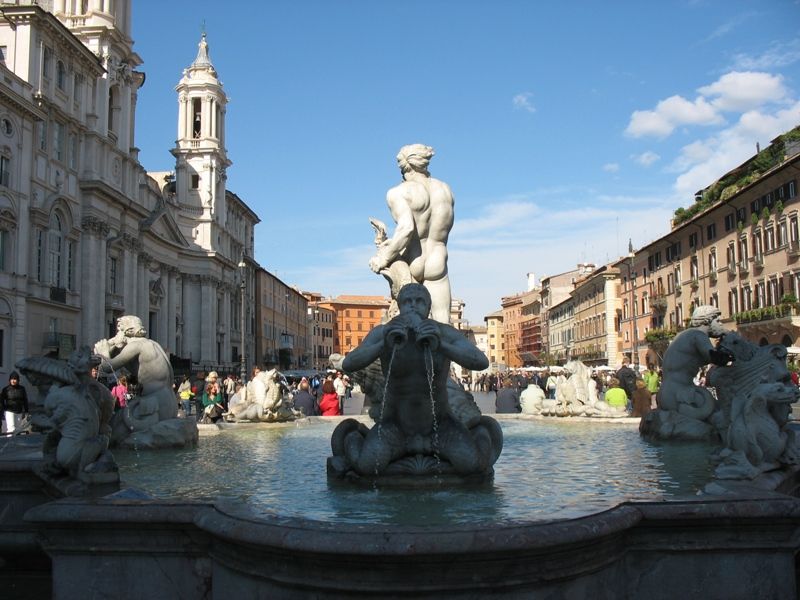
Your next stop is Piazza Navona, built on the site of the Stadium of Domitian. That is a fun fact because it changes how you read the square. You are looking at Baroque Rome, but the ground remembers an older civic purpose, a place where crowds gathered for events.
Piazza Navona is one of Rome’s most elaborate Baroque squares, and the fountain is the reason. The tour highlights Bernini’s Fontana dei Quattro Fiumi, also called the Fountain of the Four Rivers.
This is one of those fountains where the details reward you if you slow down for a minute. The “Four Rivers” theme ties to symbolism, geography, and power. Your guide’s role here is key, because you can get more meaning out of what you are seeing instead of just cataloging features.
Also, Piazza Navona is a great spot to regroup. You have been walking, looking up, and doing the coin-toss ritual. This is where the square gives you a breather while still being visually intense.
Campo de’ Fiori Ending: Giordano Bruno and the Square’s Hard Edge
The tour ends at Campo de’ Fiori. This square used to host a medieval market and later became a place for public executions.
In the center of the square is a bronze statue of Giordano Bruno, a Dominican friar and philosopher who was burnt at the stake for heresy in 1600. Ending your tour here adds a sharper note, and it is a good reminder that Rome’s piazzas were not only for celebrations.
I like ending on Campo de’ Fiori because it makes the whole experience feel more real. Fountains and grand architecture can float into “tourist Rome” mode. This ending brings you back to the human stories, the consequences, the public stage side of history.
If you still have energy after the walk, this is also a good area to keep exploring on your own, since the square is active and easy to navigate out from.
Guides and Group Size: What You Gain from a Small-Group Walk
This tour includes a guide and is designed as a small-group experience. That matters more than people think, because it affects pacing, listening time, and how quickly you can ask questions.
Past guests have praised guides like Felice, Federica, and Luisa for being friendly and patient. In particular, there is strong feedback about guides tailoring the pace for families with kids and for older groups that could not walk much.
That kind of guidance is a quiet value. A big group can turn fountains into a stop-and-go photo chase. A small group usually means you get explanations at a human pace, not a rushed script.
Also, if rain pops up near your end point, the experience can feel less stressful. One guest described the guide helping them get a cab back to their hotel when the weather turned right as the tour ended. That is not something you plan on, but it signals that the guide can think on their feet.
Price and Value: Is $74 Worth It for a 2-Hour Rome Walk?
At $74 per person for 2 hours, you are paying for two things: access to a live guide and a route that hits high-demand sites without you figuring it all out alone.
Whether it feels like a good deal depends on what you are comparing to. If you normally buy tours that bundle entrance tickets, this one might feel expensive. The tour details list the guide and small-group tour as included, and it does not mention hotel pickup or drop-off, so you are likely paying mainly for interpretation and timing.
Here is the value argument I would make: you are not just paying to “see” Trevi, the Pantheon, and Piazza Navona. You are paying to understand what you are seeing in the time window. Rome’s fountains are visual, but the meaning usually takes a guide to connect quickly.
If you are the type who enjoys context, this tour can be worth it. If you just want a self-paced highlight checklist, you might decide to DIY. But in Rome, a good guide can save you from missing the story that makes the photos more than decoration.
Practical Tips Before You Go: Shoes, Timing, and Photo Strategy
This is a walking tour, so plan around your feet. Comfortable shoes are a must, especially if you have any stiffness or uneven-ground sensitivity.
Work with the flow of the route. Since you are moving through multiple piazzas and monuments, the best “photo strategy” is to shoot quickly, then listen. If you listen first, your photos end up better, because you know what to frame.
Also, start thinking about your day like this: if you are visiting Rome for the first time, you may not want to stack a lot of other tours on top of this one. The pacing is meant to give you coverage and understanding, not fatigue.
And yes, the tour description notes legends and ice cream. Even if you are not planning a dessert stop on purpose, that hint matters. The tour aims to keep things fun, not just academic.
Who This Tour Suits Best, and Who Might Want Something Else
This tour is a strong fit if you want a high-impact Rome sampler that mixes Baroque fountains with Ancient Rome scale. In particular, it is a good choice for families, because the pacing can be tailored and the half-sunken ship fountain gives kids an instant hook.
It is also a decent option if your group is a mix of ages. The guide experience includes patience and flexibility for older visitors who may not walk much.
You might skip this tour if you hate group walks or you prefer to linger alone at one monument for a long time. Two hours can feel short if you want to sit in silence and slowly absorb the Pantheon or Piazza Navona like a local.
You might also consider a different format if you already know the fountains well and mostly want logistics-free self-guided wandering.
Should You Book the Fountains and Squares of Rome Walking Tour?
Book it if you want your Rome highlights tied together with clear explanations, and you like the idea of moving from Trevi’s tradition to the Pantheon’s dome scale, then ending on the harder story of Campo de’ Fiori. The small-group format and guide flexibility are the big reasons.
Skip it if you are mostly chasing solo time, or if $74 for a 2-hour walk feels too high compared to options you would rather use. Also, double-check what costs you might still be responsible for at specific sites, since the only listed inclusions are guide and small-group tour.
If you are choosing only one “fountains and squares” experience, I’d put this near the top of your list, especially for a first or second visit when you want the city’s public-art story in one clean route.
FAQ
Where does the tour meet?
The tour meets your guide in front of the fountain in Piazza Barberini.
What is the walking tour route and where does it end?
The tour starts in Piazza Barberini, goes to Piazza di Spagna (base of the Spanish Steps), then to the Trevi Fountain area, continues to the Pantheon, moves on to Piazza Navona, and ends at Campo de’ Fiori.
How long is the tour?
It is a 2-hour walking tour.
What is included in the price?
The price includes a live guide and a small group tour.
What languages are available?
The live tour guide is available in English and Italian.
Is hotel pickup or drop-off included?
No. Hotel pickup and drop-off are not included.
Latest additions from Rome
- Guided Tour Vatican Museums & Sistine Chapel★ 4.1 · 30 reviews
- Exclusive Rome by Night Vespa Tour★ 5.0 · 30 reviews
- Transfer Rome to Airports★ 4.5 · 30 reviews
- Vatican: St.Peter’s Basilica & Dome – Reserved Entry & Tour★ 4.1 · 30 reviews
- Rome street art tour: off the beaten path with a local guide★ 5.0 · 30 reviews
- Tivoli, Hadrians Villa and Villa d’Este, a charming day trip from Rome★ 4.5 · 30 reviews
- Rome Food Tasting with Wine Pairing Italian Authentic Flavors★ 5.0 · 31 reviews
- Inspirational Cooking on the Roman Chef’s Panoramic Terrace★ 5.0 · 30 reviews
Walking Tours in Rome, compared.

Guided Food Walking Tour with Wine in Trastevere
Read our review →
Trastevere & Campo de Fiori Street Food Walking Tour
Read our review →
Paranormal Night Walking Tour & Secret Backstreets
Read our review →
Trastevere Street Food Walking Tour with Local Expert
Read our review →
Guided City Center Evening Sightseeing Walking Tour
Read our review →
Small-Group City Highlights Moonlight Walking Tour
Read our review →
Best of Rome Walking Tour including Trevi Fountain
Read our review →Browse the lists this tour appears in