
Reviewed · ROME IN A DAY TOURS
E-Tuk Tour: Highlights of Rome
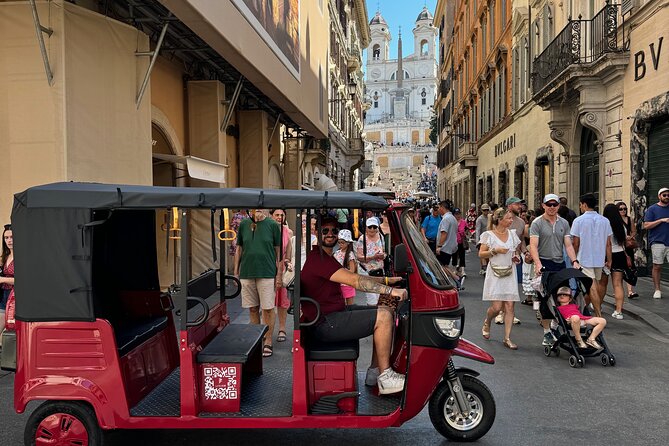
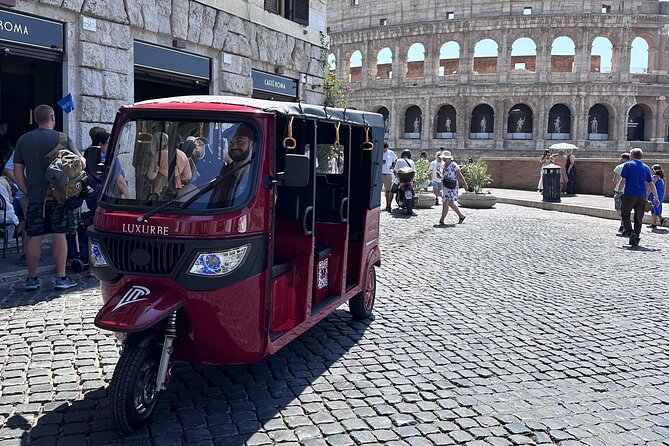
Rome minus the foot pain. This small-group E-Tuk tour threads through the city’s headline sights with photo stops and an English-speaking driver-guide who connects what you see to what came before.
I especially like the setup for first-timers: you get a fast orientation loop, plus the option for hotel pickup and drop-off so you start in the middle of the action, not stuck in transit. My main watch-out is that some famous spots are in pedestrian-only zones, so you may view them from nearby vantage points rather than stopping right at the doorway.
In This Review
- Key highlights to know before you go
- Why an electric E-Tuk works so well for Rome highlights
- Getting onboard at Piazza del Popolo, plus hotel pickup options
- The 3-hour route: what the timing feels like
- Via dei Condotti to the Spanish Steps area, twice in one loop
- Piazza Venezia and the ancient city crossroads
- The Pantheon stop: iconic dome, short look, plan for tickets if you want inside
- Teatro di Marcello and the Fish Market Forum area
- Jewish Ghetto time: narrow streets, synagogues, and everyday Rome
- Vatican City viewpoint: spiritual center, major landmarks, limited time
- Trevi Fountain and Piazza Navona: where you want photos, and where you might not stop directly
- Colosseum area and Via dei Fori Imperiali: big ruins, big scale, plan your entry
- Circo Massimo and Trinita dei Monti: the look for people who love scale
- Price and value: is $84.09 a good deal for what you get?
- Who should book this E-Tuk Highlights of Rome tour, and who should skip it
- Should you book the E-Tuk Tour: Highlights of Rome?
- FAQ
- How long is the E-Tuk Tour: Highlights of Rome?
- Where does the tour start?
- Is hotel pickup available?
- What languages are offered?
- Is it a small group?
- Are entrance tickets included for monuments?
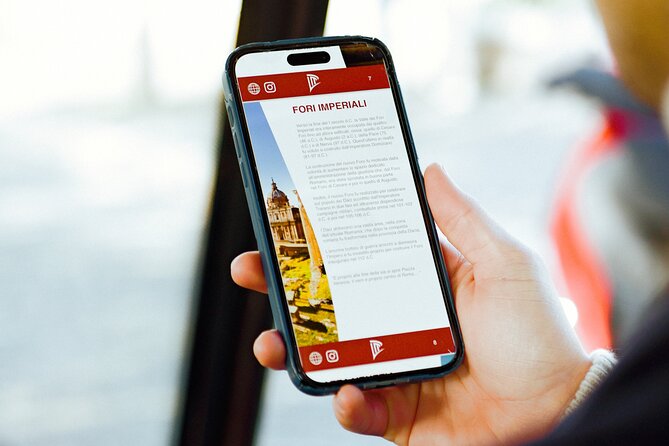
- Do I get a ticket on my phone?
- FAQ
- Can I cancel for a full refund?
Key highlights to know before you go
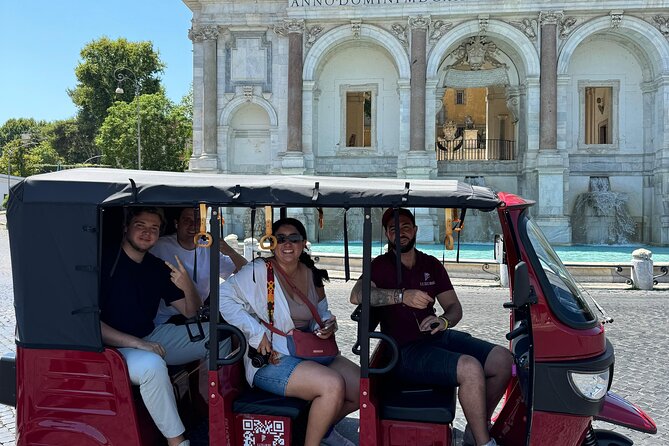
- Small group (max 15) keeps the tour personal and easier to navigate through tight central Rome
- Hotel pickup and drop-off is available if you want a smoother start and finish
- English driver-guide commentary helps you place landmarks in time, not just in space
- A mix of free stops and paid entries means you can still plan for what you want to go inside
- Open-air golf-cart style ride can mean traffic noise, so sit closer to the guide if you care about every word
Why an electric E-Tuk works so well for Rome highlights
Rome is gorgeous, and it can also be punishing. This kind of tour is a practical compromise: you still get the major names and great views, but you are not spending the entire day walking between them. The point is not speed for speed’s sake, it is coverage.
The E-Tuk format also helps with photo timing. You get short, guided stops at key landmarks, then move on before you get swallowed by the crowd. And because the guide is there from the start, the ride stops feel like part of one story, not a sequence of random postcards.
If you want to learn enough to guide your next day plans, this works. Think of it as a “get your bearings fast” sampler that points you back toward the sights you want to linger on later.
More Rome in a Day Tours
- Rome in a Day Group Tour with Vatican Museums and Colosseum
★ 4.5 · 2,450 reviews - Rome Highlights by Golf Cart Private Tour
★ 5.0 · 2,379 reviews - Best of Rome Walking Tour including Trevi Fountain
★ 4.5 · 923 reviews - Golf Cart Small-Group Guided Tour: Rome City Highlights
★ 5.0 · 907 reviews
Getting onboard at Piazza del Popolo, plus hotel pickup options
The tour starts at Piazza del Popolo (11, 00187 Roma RM). If you choose pickup, you wait street level outside your hotel or accommodation entrance. The driver arrives at the scheduled time, with a 10-minute waiting window, so you do not want to miss the meeting moment.
This matters more than you might think. Central Rome moves slowly, and pickup delays can cascade. If you are picking your starting point, Piazza del Popolo is a clear reference point, easy to reach, and you avoid the stress of finding a vehicle on side streets.
Also note the tour ends back at the original meeting point. That is good planning fuel: you can jump from the drop-off to dinner, or continue exploring on foot while the day is still fresh.
The 3-hour route: what the timing feels like
The tour is about 3 hours total, including travel time between stops. The schedule mixes quick look-outs (often around 10 minutes) with a few longer photo moments (around 15 minutes). In other words, you get just enough time to spot the landmark, take photos, and absorb the guide’s explanation.
This timing style is ideal if you want to see a lot without getting footsore. It is less ideal if your dream day is standing in line, going deep into museums, and lingering for an hour per stop. You will also notice that some stops are viewpoint-based. That keeps the pace moving in a city where vehicles cannot always park right where you want to stand.
If you care about hearing every detail, plan to sit where you can face the guide comfortably. One clear theme from the operation is that open-air touring means road noise can steal volume, especially when traffic is thick.
Via dei Condotti to the Spanish Steps area, twice in one loop
Via dei Condotti is one of those Rome streets that people remember even if they do not buy a thing. It is upscale, historic, and cobblestoned, with designer storefronts lining the way. The street’s mood is part fashion week, part old-city architecture, with Renaissance and Baroque details in the mix.
You get a stop on Via dei Condotti early, and then again later in the loop. That second pass is useful because it lets you compare the light and the crowd level, and it gives you a second chance to grab photos near the Spanish Steps end of the street.
Practical tip: even if you are not walking far, wear shoes you can handle on uneven stone. You may step off briefly for a photo or to get a better angle, especially around the Spanish Steps area.
Piazza Venezia and the ancient city crossroads
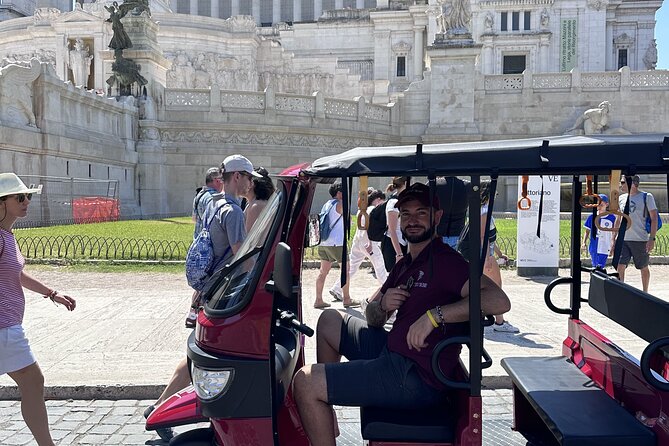
Next you roll toward Piazza Venezia, anchored by the massive Altare della Patria (the Vittoriano monument). From here, you get a key lesson in how Rome layers its eras. The square is built for monument scale, but it also sits in the middle of routes that connect to the ancient center.
This stop is short and visual. You are not here for long lingering, you are here to understand location. If you have ever felt like Rome is a maze of ruins and monuments, Piazza Venezia is a helpful knot in the map.
It is also a good moment to note what you might want to revisit on foot after the tour. From this area, you can see how your next day might route around the grand centers of Rome.
Another shape for the same afternoon in Rome:
The Pantheon stop: iconic dome, short look, plan for tickets if you want inside
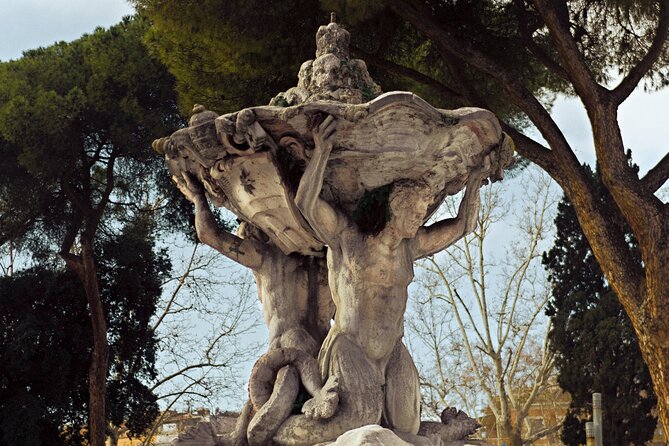
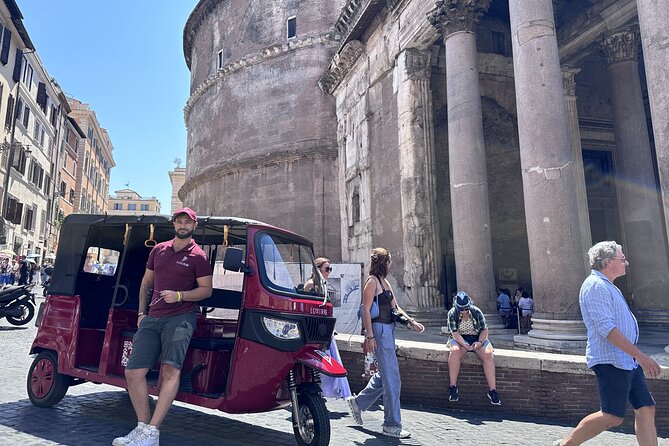
The Pantheon is the kind of place that makes even non-architecture people pay attention. Your stop includes the courtyard view and the story hook: the temple to all gods origins, the dome, and the oculus that brings daylight into the center space.
One important practical note: Pantheon admission tickets are not included. That means if you want to go inside, you will likely need a separate plan or purchase. With the stop length being about 15 minutes, you should assume you will not have time for a long entry-and-exit experience unless your timing lines up perfectly.
So what should you expect? A fast, meaningful overview from outside or nearby, with enough context to make the Pantheon feel less like a random dome and more like a masterpiece of Roman engineering.
Teatro di Marcello and the Fish Market Forum area
Rome rarely gives you one perfect straight line. It gives you layers, plus surprises.
You stop at Teatro di Marcello, an ancient open-air theater associated with Emperor Augustus and dedicated to Marcus Claudius Marcellus. The guide angle here is that you are looking at a structure from a time when entertainment scaled to tens of thousands. The theater could hold about 20,000 spectators, and today only part of it survives.
It also has a Renaissance twist. Portions of the upper levels were converted into private apartments, which is a detail that makes the ruin feel oddly human. You see history not as museum glass, but as something people reused.
Then you head to Via del Foro Piscario, tied to the ancient Fish Market Forum. It was a seafood marketplace near the Roman Forum. Even if your time is brief, the guide context helps you see that the Forum zone was not only politics and temples. It was commerce too.
This is the kind of stop that works best when you like stories. The “what was here, who used it, and why it mattered” angle is the point.
Jewish Ghetto time: narrow streets, synagogues, and everyday Rome
The Jewish Ghetto of Rome is close to the Tiber River and has a dense mix of history and daily life. The area was established in 1555, and for centuries it was a confined community. Today the streets keep that old-city feel, and you can pair your sightseeing with Jewish heritage sites.
A key value here is that you are not just looking at buildings. You are seeing how community memory stays present through narrow cobblestone streets, historic synagogues, and local Jewish eateries and shops.
The tour’s stop is about 15 minutes, which is enough for a guided orientation and a quick self-paced feel of the neighborhood. It is also enough time to point out places like the Great Synagogue and the Jewish Museum, should you want to plan a longer visit later.
One practical consideration: this area is walk-heavy compared with the ride. Even with the E-Tuk, you will likely step around for photos, so keep a light pace and avoid expecting a long stroll.
Vatican City viewpoint: spiritual center, major landmarks, limited time
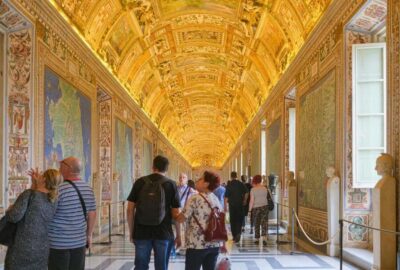
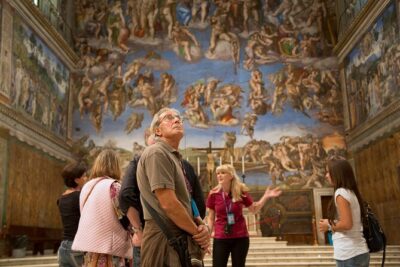
The tour includes time in the Vatican area, framed as the independent city-state and the spiritual hub of the Roman Catholic Church. You are in the orbit of major sites like St. Peter’s Basilica and the Vatican Museums, plus the Sistine Chapel.
But here is the truth for your expectations: this is a short, sightseeing stop. The tour time is not framed as a museum ticket marathon. If you want to do the Vatican Museums or St. Peter’s Basilica properly, you will need a separate plan and likely separate tickets and timed entry.
Still, even a short stop can help you place what you will later chase with more time. The guide context helps you understand what is where, and the quick panoramic moments help you remember directions.
Trevi Fountain and Piazza Navona: where you want photos, and where you might not stop directly
You hit two of Rome’s most photo-driven squares in one flow.
First is Trevi Fountain, the Baroque masterpiece where mythical sculptures sit around the famous fountain basin. The ooh factor is real, and it is not just the look. It is the noise and motion of people all trying to do the coin-toss moment.
Then you roll to Piazza Navona, home to Fontana dei Quattro Fiumi and lined with cafes. This square is a classic for people-watching, and the guide angle gives you the architectural and art context for what you see.
Here is the practical watch-out: some of these famous spots are in pedestrian-only zones, which can mean the E-Tuk cannot pull right up where you want to stand. The guide provides commentary and directions from nearby vantage points, so you still get the story, but you might not get the exact curbside fantasy stop.
For your best experience, keep your phone camera ready and be willing to walk a minute or two for a clean shot.
Colosseum area and Via dei Fori Imperiali: big ruins, big scale, plan your entry
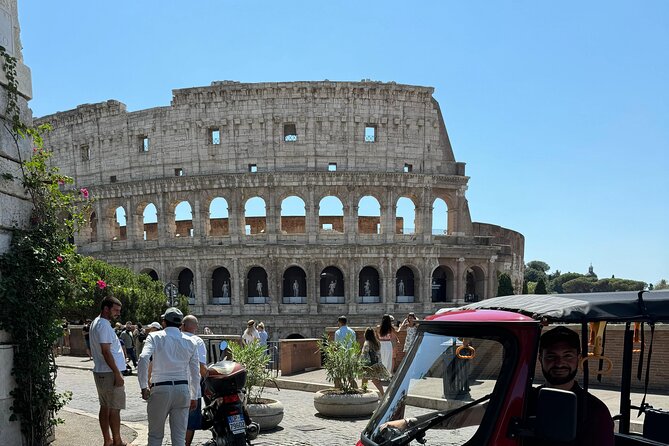
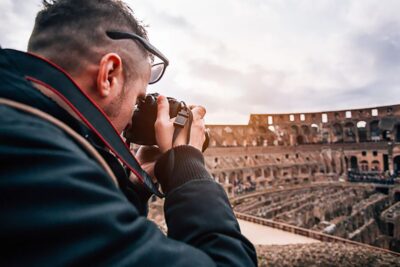
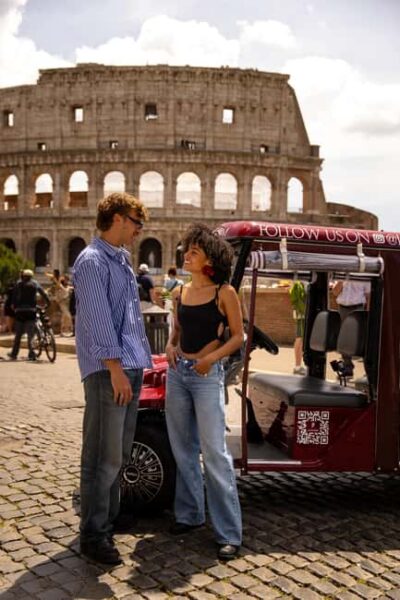
The tour includes the Colosseum as one of the headline landmarks. It was built in the period 70 to 80 AD under the Flavian emperors and could hold up to 50,000 spectators. You get the big picture of its use for gladiatorial contests and public spectacles.
Important practical detail: Colosseum admission tickets are not included. So if you want to go inside, you should plan a separate visit.
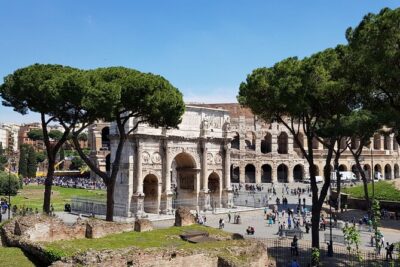
Right after that, you move to Via dei Fori Imperiali, which is part of the monumental forum system built across multiple emperors from 46 BC to 113 AD. You are looking at public squares and monumental spaces like the forums of Caesar, Augustus, Vespasian, Nerva, and Trajan, tied to political, religious, and social life.
This stop is listed as admission ticket included, which is a nice value add if you want more than just outside photos in the ancient center. Even when you are moving quickly, it helps to see how the forum blocks line up and how massive the scale was compared with today.
Circo Massimo and Trinita dei Monti: the look for people who love scale
You finish the ancient sweep with Circo Massimo, the ancient chariot-racing stadium and entertainment venue in the valley between the Palatine and Aventine hills. This place operated on huge numbers, with capacity estimated up to 250,000.
The stop is about 15 minutes, and it is listed with admission ticket included. That is great because Circo Massimo can feel abstract if you only see it from the road. With access included, you are more likely to get a sense of the arena shape and how the space worked for races and festivals.
After that is Trinita dei Monti with a shorter 10-minute stop. The tour does not frame this as an extended guided walk, so think of it as a quick orientation glimpse, a place to look around and then decide if you want a longer stop later.
Price and value: is $84.09 a good deal for what you get?
At $84.09 per person for about 3 hours, the value comes from how much ground you cover without wearing yourself out. You are paying for transportation, an English driver-guide, and multiple photo moments across Rome’s major landmarks.
What you are getting for the money:
- A guided overview across ancient Rome, the Vatican area, and major Baroque era landmarks
- A small group size (max 15), which makes it easier to get attention and follow explanations
- Optional hotel pickup and drop-off, which is often the difference between enjoying Rome and just surviving logistics
Where you should expect extra costs or time:
- Pantheon and Colosseum entry tickets are not included, so if those are top priorities, you may want to budget for separate admissions and plan more time on another day
- Several stops can be viewpoint-based because of pedestrian-only constraints in central Rome
For the right traveler, this is a smart use of time. For someone who wants to fully tour every stop inside, it is better as a first-day orientation or a half-day sampler before you commit to deeper visits.
Who should book this E-Tuk Highlights of Rome tour, and who should skip it
Book it if:
- You want big landmarks in a short window and you prefer comfort over nonstop walking
- You are new to Rome and want help turning names into directions and connections
- You like historical explanations while you move, not only while you stand still
Skip it or plan extra days if:
- You want extended time inside major sites like the Pantheon or Colosseum
- You are extremely sensitive to noise and want a quiet audio-focused experience, since open-air carts mean traffic noise can affect what you hear
Should you book the E-Tuk Tour: Highlights of Rome?
I think it is worth booking if your goal is a smooth, guided highlight reel that helps you map your next steps. The combo of English driver-guide commentary, a small group, and the ability to see both ancient and Baroque Rome without getting wrecked on your feet is the winning formula here.
But if your dream day is deep entry tickets and long stays inside every major site, treat this as a starting chapter, not the whole book. Use it to get oriented, then follow your nose back to the places that call you most.
If you do book, sit where you can hear the guide best, bring a phone camera ready for quick stops, and plan on spending extra time later at the sites that matter most to you.
FAQ
How long is the E-Tuk Tour: Highlights of Rome?
The tour lasts about 3 hours.
Where does the tour start?
The meeting point is Piazza del Popolo, 11, 00187 Roma RM, Italy.
Is hotel pickup available?
Yes. Hotel pick-up and drop-off are available if selected. Guests should wait outside their hotel or accommodation entrance at street level.
What languages are offered?
The tour is offered in English.
Is it a small group?
Yes. The tour has a maximum of 15 travelers.
Are entrance tickets included for monuments?
Some sites are free and some are not. Pantheon and Colosseum entrance tickets are not included, while Via dei Fori Imperiali and Circo Massimo list admission tickets as included.
Do I get a ticket on my phone?
Yes. The tour offers a mobile ticket.
FAQ
Can I cancel for a full refund?
Yes. Free cancellation is available if you cancel at least 24 hours before the experience start time.
Latest additions from Rome
- Guided Tour Vatican Museums & Sistine Chapel★ 4.1 · 30 reviews
- Exclusive Rome by Night Vespa Tour★ 5.0 · 30 reviews
- Transfer Rome to Airports★ 4.5 · 30 reviews
- Vatican: St.Peter’s Basilica & Dome – Reserved Entry & Tour★ 4.1 · 30 reviews
- Rome street art tour: off the beaten path with a local guide★ 5.0 · 30 reviews
- Tivoli, Hadrians Villa and Villa d’Este, a charming day trip from Rome★ 4.5 · 30 reviews
- Inspirational Cooking on the Roman Chef’s Panoramic Terrace★ 5.0 · 30 reviews
- Rome Food Tasting with Wine Pairing Italian Authentic Flavors★ 5.0 · 31 reviews
Rome in a Day Tours, compared.
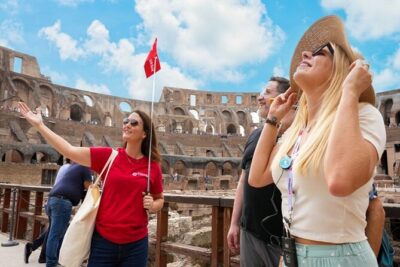
Rome in a Day Group Tour with Vatican Museums and Colosseum
Read our review →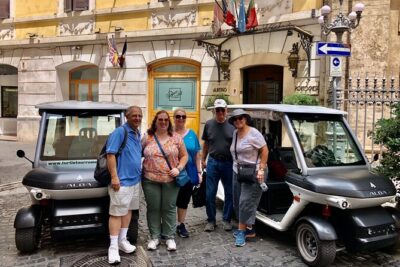
Rome Highlights by Golf Cart Private Tour
Read our review →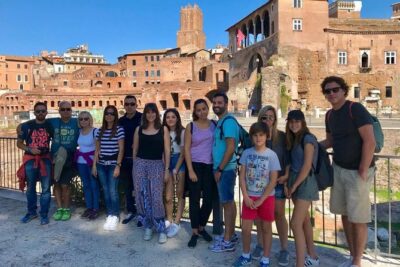
Best of Rome Walking Tour including Trevi Fountain
Read our review →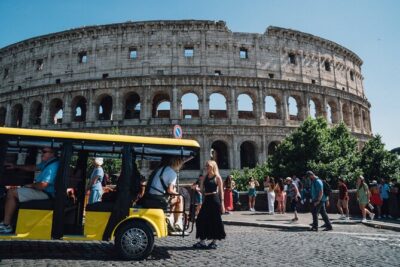
Golf Cart Small-Group Guided Tour: Rome City Highlights
Read our review →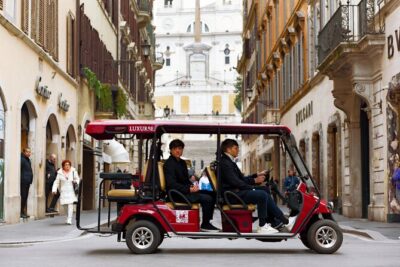
Rome Highlights & Hidden Gems Guided Walking Tour
Read our review →Browse the lists this tour appears in