Reviewed · TOURS
Cleopatra & the Women of Ancient Rome Tour: Livia, Agrippina…
Power has a face, and Rome shows it.
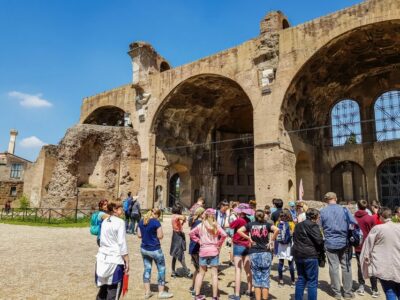
This is a women of ancient Rome storytelling walk that connects big political dramas to specific stones you can point at. You’ll hear the arcs of Cleopatra, Empress Julia Domna, the Vestal Virgin priestesses, and other power players as you move through places most standard tours rush past.
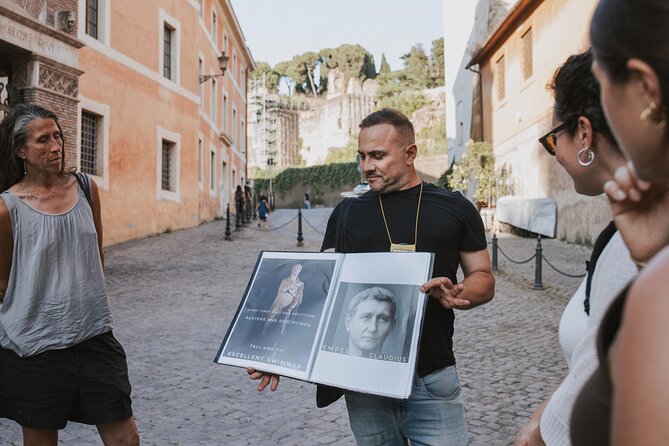
What I really like is the way the guide keeps the story readable, with modern comparisons that make the politics and psychology feel understandable. I also love that the group stays small, so you can ask questions and get personal attention instead of getting herded.
One thing to consider: this is a walking tour, and some stops involve uneven terrain and short stretches of open-air standing, so bring comfortable shoes and plan for Rome’s weather.
In This Review
- Key highlights before you go
- A women-first Rome walk with real drama in real places
- Price and what you actually get for $46.96
- Where the walk starts and how it finishes in the Jewish Quarter
- Stop 1: Piazza del Campidoglio and the Roman Forum in view
- Stop 2: Arco di Giano for a lesser-known Roman perspective
- Stop 3: Foro di Cesare, Venus Genetrix, and Cleopatra’s political context
- Stop 4: Tempio di Portuno for the feel of archaeology
- Stop 5: Teatro di Marcello, Octavia, and the Columna Bellica story
- Stop 6: Il Portico di Ottavia and Livia’s lasting influence
- The guide style: why Massimo’s storytelling works
- Group size, comfort, and who will enjoy this most
- A simple way to plan your Rome day around this tour
- Should you book Cleopatra and the Women of Ancient Rome?
- FAQ
- How long is the Cleopatra and Women of Ancient Rome tour?
- What does it cost?
- Where do I meet, and where does the tour end?
- Is there an admission fee for the stops?
- How big is the group?
- What is the cancellation policy?
Key highlights before you go
- Meet in the Imperial Forum area, then work your way through viewpoints and ruins without long waits
- Campidoglio viewpoint gives you a Roman Forum perspective while stories focus on the Vestal Virgins and Julia Domna
- Arco di Giano stop shows a less usual angle of the city, with layered scenes from multiple centuries
- Forum of Caesar focus includes a clear thread to Cleopatra tied to the Temple of Venus Genetrix
- Teatro di Marcello and Columna Bellica add a war-and-power moment you do not get in basic tours
- Portico of Octavia wraps with Livia, bringing the whole political story to a strong landing
A women-first Rome walk with real drama in real places
If your mental picture of ancient Rome is just emperors, gladiators, and wars, this tour nudges you onto a sharper track. The big idea is simple: power does not only move through generals. It moves through marriages, alliances, families, public image, and carefully timed influence.
That is why I like this format. Instead of treating Cleopatra as a single famous name, you see her in the wider Roman machine. And instead of treating women as background characters, the tour puts them in the driver’s seat, from religious authority like the Vestal Virgin priestesses to court power like Livia.
The storytelling style matters here. The guide, Massimo, is known for linking scenes so it feels like a story you want to hear to the end. Expect clear historical framing, plus a touch of drama and humor that keeps the pace from turning into a lecture.
Not settled yet? These cover similar ground in Rome:
- Vatican Museums, Sistine Chapel & St. Peter’s Basilica Tour
★ 4.3 · 73,970 reviews - Vatican Museums, Sistine Chapel & St Peter’s Basilica Guided Tour
★ 4.5 · 39,149 reviews - Rome: Colosseum, Palatine Hill and Roman Forum Guided Tour
★ 4.8 · 32,814 reviews - Rome: Guided Tour of Colosseum, Roman Forum & Palatine Hill
★ 4.7 · 27,897 reviews
Price and what you actually get for $46.96
At $46.96 per person for about 2 hours 30 minutes, the best value is not the “stuff” you see. It is the attention you get and the way the guide turns tough topics into understandable cause-and-effect.
This walk also avoids a common Rome tourist trap: burning time on crowded, high-ticket attractions when you could spend the same hours learning to read the city around you. Here, the stops are chosen for meaning, viewpoints, and context. You are not paying extra admission fees at each stop, and you are not doing the “museum shuffle” that drains your energy.
If you like tours where you leave with names you can place, plus a story you can retell later, this price makes sense. If you want a hands-on workshop or inside-only site visits with lots of ticketed time, you might prefer a different kind of experience.
Where the walk starts and how it finishes in the Jewish Quarter
You start at Via dei Fori Imperiali, 1, 00186 Roma RM and the tour finishes at the Portico of Octavia, Via del Portico d’Ottavia, 29, 00186 Roma RM. After that, you are set up to wander into the Jewish Quarter, with restaurants and wine bars nearby.
This end point is practical. You get a historically rich final stop, then you are in a lively neighborhood for dinner without needing a long transfer. If you want a simple plan, aim for a relaxed meal soon after the tour ends.
Stop 1: Piazza del Campidoglio and the Roman Forum in view
The day begins on an ancient hill with a view over the Roman Forum. From Piazza del Campidoglio, the city suddenly makes more sense. You can see how these spaces relate: where power gathered, where speeches mattered, and where religious presence carried weight.
This is also where the storytelling sets the tone with Julia Domna and the Vestal Virgin priestesses. You are not just hearing names. You are getting the idea of why these roles mattered to Roman authority. Religious figures were not separate from politics. They were part of it, because Rome treated sacred presence like public stability.
A drawback to keep in mind: you will be standing for a while to enjoy the view. If you are sensitive to sun or wind, bring sunscreen and something light for cool evenings.
Stop 2: Arco di Giano for a lesser-known Roman perspective
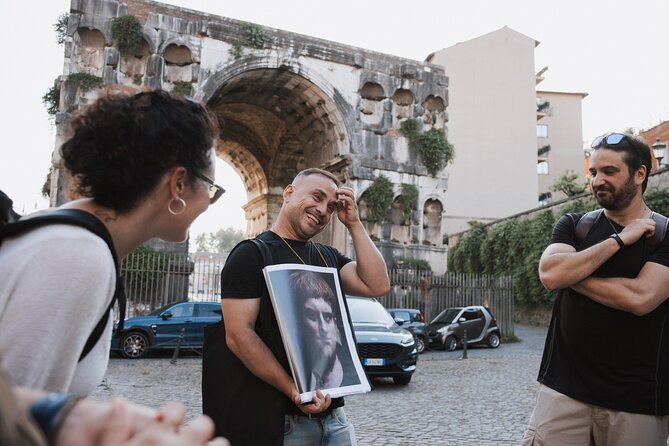
Next comes Arco di Giano, where you get one of those Rome moments that feels like a secret even though it is right in front of you. The stop is about perspective, especially a unique angle toward Palatine Hill.
What I like about this kind of stop is that it teaches your eye. You start seeing the city as layered time, not a single postcard viewpoint. In this area, the atmosphere connects multiple eras: the Arco degli Argentari from the 3rd century AD, the Temple of Hercules from the 2nd century BC, and the 13th-century San Giorgio al Velabro church.
That mixture is part of why the stories land. When the guide shifts from a personal story to a political one, you can look around and understand how Rome preserves its past in plain sight.
Another shape for the same afternoon in Rome:
Stop 3: Foro di Cesare, Venus Genetrix, and Cleopatra’s political context
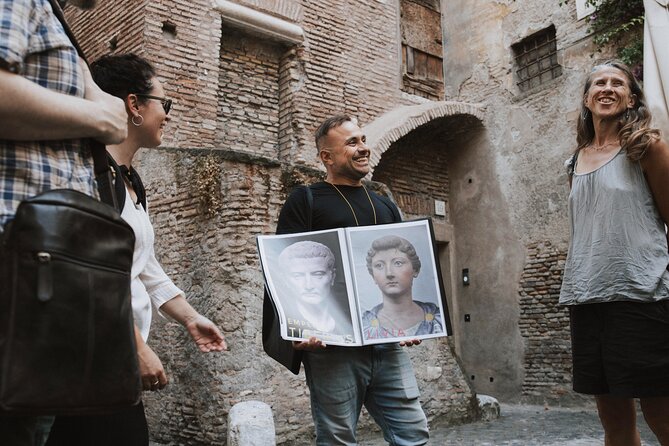
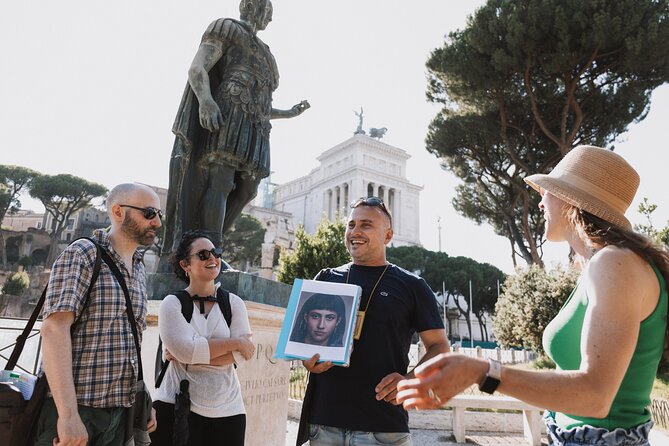
Now you move to the heart of Roman power, but the focus stays specific. At Foro di Cesare, the tour zeroes in on the ruins associated with the Temple of Venus Genetrix, commissioned by Julius Caesar.
This stop is where the Cleopatra thread becomes more than dramatic rumor. The guide explains the connections, then uses recreations of what the temple may have looked like. That matters because “ruins” can feel like blank space unless someone teaches you what you are looking for.
Cleopatra comes into the story here through Roman interpretation, Roman alliances, and Roman propaganda. You are not just hearing who she was. You are learning how Rome talked about her, how that shaped decisions, and why politics needed symbols and narratives.
If you like tours that connect architecture to ideology, this is a key reason to book.
Stop 4: Tempio di Portuno for the feel of archaeology
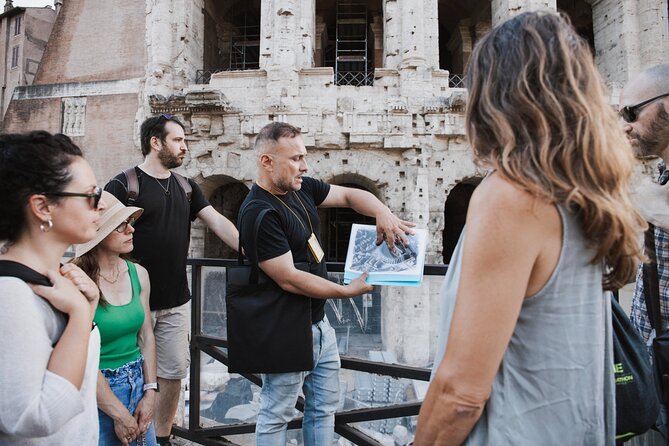
The Tempio di Portuno stop is short, but it’s useful. It is an archaeological area that reinforces how Romans built their world to last, and how the city still “reads” like a text if you know what to look for.
Because the time is brief, don’t expect a deep interior visit. Instead, expect a quick grounding moment, like a breath between heavier story beats. You get a sense of place that helps you understand what the guide is setting up for the next stops.
Stop 5: Teatro di Marcello, Octavia, and the Columna Bellica story
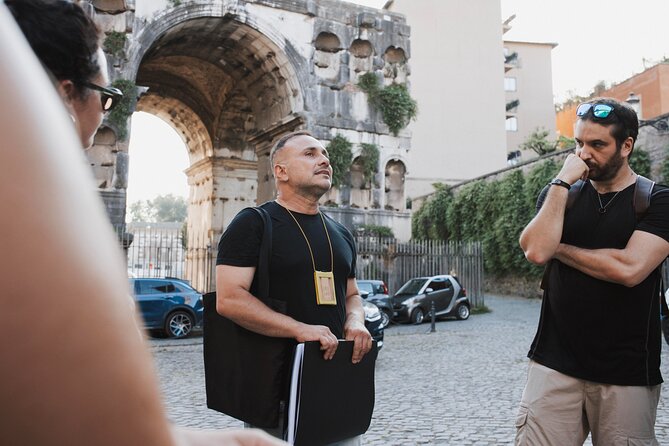
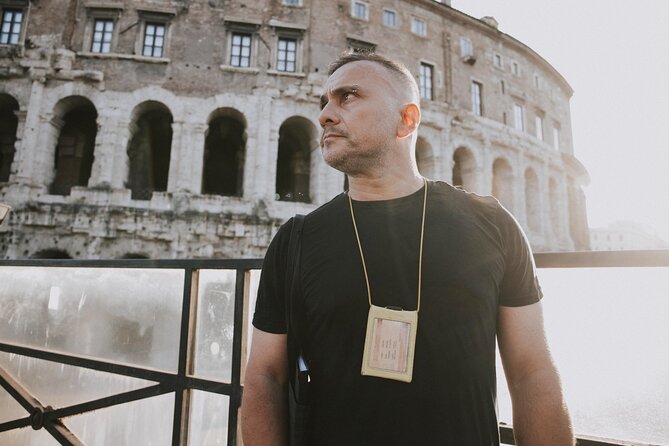
Then you shift to Teatro di Marcello, a crucial stop for the tour’s family-and-power angle.
Here the story focuses on Octavia, the mother of Marcellus, and her marriage to Marc Antony. The point is not soap opera for its own sake. It’s the way Rome used family bonds to stabilize alliances, especially during high-stakes conflict.
The guide also brings in the idea of the Columna Bellica and explains a dramatic moment linked to Augustus. According to the tour narrative, a spear dipped in blood was thrown against that column to signal Rome’s decision to go to war against Cleopatra. Even if you know the name Augustus, you might not have heard the column story in this context.
One practical consideration: this stop can feel like “talking and watching” more than “photos and walking.” If you like lots of photo time, you may want to pause and capture images quickly when the guide turns your attention toward key sightlines.
Stop 6: Il Portico di Ottavia and Livia’s lasting influence
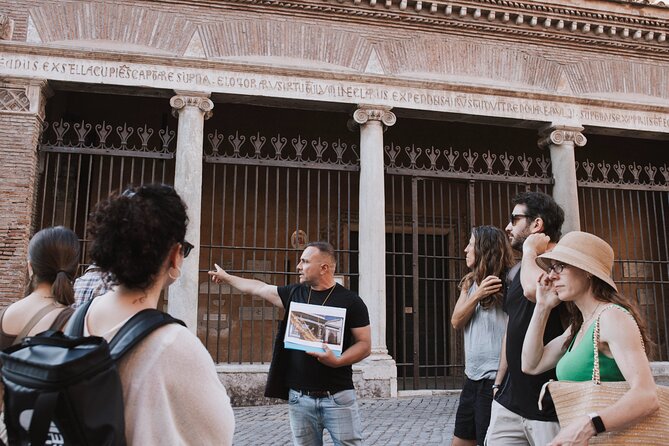
The tour wraps at Il Portico di Ottavia, with Empress Livia as the final chapter. This is a smart ending because Livia represents continuity. Cleopatra represents a threat and a dramatic confrontation. Livia represents the system settling into its long-term shape.
The tour frames Livia as the first First Lady in the Western world, and the storytelling explains why her influence mattered. You leave with the sense that “behind-the-scenes” power is still real power, even when it is exercised through etiquette, messaging, and family networks.
If you’ve ever wondered why Roman history reads like men taking center stage, this ending helps you see the missing half. You do not need to agree with every interpretation, but you will understand what to look for next time you walk through Rome.
The guide style: why Massimo’s storytelling works
Several details from the experience help explain why this tour keeps earning top marks.
First, the pacing is built like a story. The guide moves between characters, motivations, and places so your brain can keep track. You are not drowning in dates for the sake of dates.
Second, the explanations include psychological angles. It is not only about what happened. It is also about why people made choices inside the pressure of Roman expectations.
Third, the atmosphere stays friendly and interactive. The tour is structured for a small group, and Massimo is the kind of guide who can answer questions without making you feel like you disrupted the flow. That also helps kids and families, since the tone does not get too dry.
One extra practical perk: there is often time for a bathroom and beverage break. If you want, there can be an option to stop for a glass of wine. The tour does not turn into a pub crawl, but it respects that you are walking for hours.
Group size, comfort, and who will enjoy this most
This experience caps at 20 travelers, which is a big deal in Rome. With that size, you do not lose the conversation to crowd noise, and you are more likely to hear every point clearly.
It also helps that the tour is designed for general participation for most visitors, and it is near public transportation. Service animals are allowed too, so the practical comfort level is higher than you might expect for a city walking tour.
Best fit:
- First-time visitors who want a fresh Rome perspective beyond the usual headline sites
- Long-time Rome lovers who want to learn how the city connects across centuries
- Anyone who likes character-driven history, especially where women’s roles are not treated as footnotes
- Families, since the storytelling style can hold attention even when patience gets thin
A simple way to plan your Rome day around this tour
Because the tour ends in the Jewish Quarter, it’s easy to plan the rest of your day.
Here’s a realistic rhythm that works well:
- Start the tour early enough that you can enjoy the Forum viewpoint without feeling rushed
- Keep dinner flexible, since you may get a beverage break during the walk
- After the final stop, head straight to the Jewish Quarter for a meal and an unhurried stroll
If you can, wear layers. Rome weather changes fast, and this walk mixes open views with archaeological areas where shade might be limited.
Should you book Cleopatra and the Women of Ancient Rome?
Yes, you should book it if you want Rome explained through people, not just monuments. This tour is especially strong when you care about politics, family influence, and how reputation and power work in real life.
I would skip it if you need very long inside visits, museum-style collections, or a tour that focuses only on famous battle sites. This is a storytelling walking experience, and its power comes from narrative and context.
If you want a smart, character-focused way to understand Cleopatra without reducing her to a single cliché, this is one of the best options in Rome. The small-group feel, the guide’s ability to connect scenes, and the lineup of women you might not know as well as you think make it a high-value choice.
FAQ
How long is the Cleopatra and Women of Ancient Rome tour?
The tour lasts about 2 hours 30 minutes.
What does it cost?
The price is $46.96 per person.
Where do I meet, and where does the tour end?
You start at Via dei Fori Imperiali, 1, 00186 Roma RM and end at the Portico of Octavia, Via del Portico d’Ottavia, 29, 00186 Roma RM.
Is there an admission fee for the stops?
The tour listing shows admission ticket free for the stops included.
How big is the group?
The tour has a maximum of 20 travelers.
What is the cancellation policy?
You can cancel for a full refund up to 24 hours in advance of the experience start time. If you cancel less than 24 hours before, the amount paid is not refunded.
Latest additions from Rome
- Rome: Angels and Demons Private Tour with Transfers★ 5.0 · 8 reviews
- Vatican City: St. Peter’s Basilica and Papal Tombs Guided Tour★ 4.0 · 8 reviews
- Vatican City: Museums & Sistine Chapel Tour with St. Peter’s★ 3.1 · 8 reviews
- Colosseum, Palatine and Forum tour with virtual guide★ 5.0 · 8 reviews
- Sistine Chapel @ its best! First time slot Vatican Museums access★ 5.0 · 8 reviews
- Vespa Rental in Rome★ 4.0 · 8 reviews
- Private Vatican In Depth 5-Hour Tour – Skip The Line★ 4.5 · 8 reviews
- VIP Yacht Escape from Rome to Naples Island Gems Ischia & Procida★ 5.0 · 8 reviews
Tours, compared.
Vatican Museums, Sistine Chapel & St. Peter’s Basilica Tour
Read our review →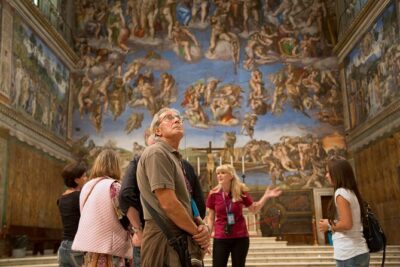
Vatican Museums, Sistine Chapel & St Peter’s Basilica Guided Tour
Read our review →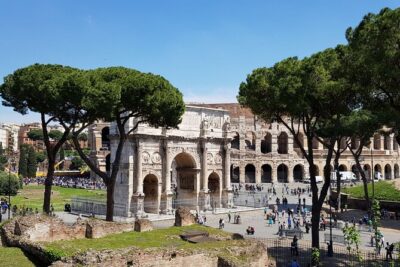
Colosseum, Palatine Hill and Roman Forum Guided Tour
Read our review →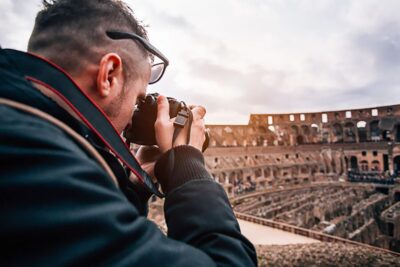
Guided Tour of Colosseum, Roman Forum & Palatine Hill
Read our review →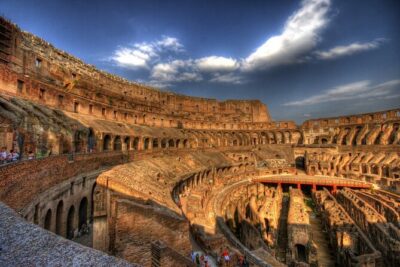
Colosseum, Roman Forum and Palatine Hill Guided Tour
Read our review →
Colosseum Arena Floor, Palatine & Forum Guided Tour
Read our review →
Vatican Museums, Sistine Chapel and Basilica Tour
Read our review →