
Reviewed · SMALL-GROUP TOURS IN ROME
Christian Rome and Underground: Half Day Semi-Private Tour
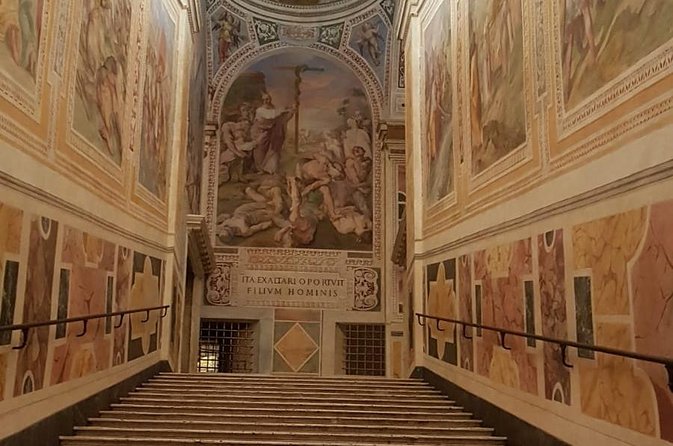
One of Rome’s most layered churches sits underground. This 3-hour, small-group tour strings together San Giovanni in Laterano, Ss. Quattro Coronati, and San Clemente’s stacked levels, so you can see how pagan Rome and early Christianity overlap in the same space. I especially like the fast-track entry into Basilica of San Clemente, and the chance to descend below street level to see the ancient remains up close. The main downside to plan for is the walking and the stair-heavy underground portion, which means you need comfortable shoes and a calm attitude about dark spaces.
This is a guided experience designed for intimacy, with a maximum of 12 people, plus headphones provided for groups starting at 9. You’ll also be required to follow a strict church dress code, so bring something shoulder-covering and knee-covering, ideally with a scarf on hand. If you have mobility concerns, this tour is still walk-based and includes entrances and steps, so it is best to think through your comfort level before you book.
In This Review
- Key Highlights to Know Before You Go
- A Lateran Rome Tour That Feels Like You Found a Secret Shortcut
- Price and What You Actually Pay For
- Where You Start, Where You End, and How the 3 Hours Usually Flow
- Stop 1: San Giovanni in Laterano, the Big Idea of Church Rome
- Stop 2: Ss. Quattro Coronati, Carolingian Calm on the Celio
- Stop 3: San Clemente’s Stacked Churches and the Mithras Connection
- Stop 4: San Pietro in Vincoli and Michelangelo’s Moses
- The Two Things That Make This Tour Work Better Than Wandering Alone
- Watch-Outs Before You Book
- Who This Tour Is Perfect For (And Who Should Skip It)
- Should You Book Christian Rome and Underground?
- FAQ
- What is the duration of the Christian Rome and Underground tour?
- What time does the tour start?
- What language is the tour offered in?
- How big is the group?
- What is included in the price?
- Is the Basilica of San Clemente fast-track entry included?
- What is the dress code for this tour?
- Is pickup or drop-off included?
Key Highlights to Know Before You Go
- Fast-track entry at San Clemente so you lose less time standing and waiting.
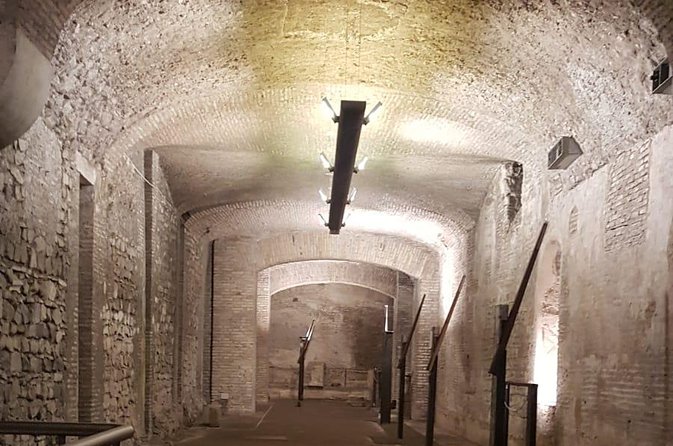
- Underground access at San Clemente, where Roman buildings and a Mithraeum sit under the church.
- A max of 12 people, which keeps the pace humane and questions welcome.
- Real time for photos and questions, helped by a guide who works the group efficiently.
- Strict dress code support, with guidance on what to wear (and a scarf can save you).
- A route focused on Lateran Rome, not the usual packed shortcuts.
A Lateran Rome Tour That Feels Like You Found a Secret Shortcut
If your Rome day is mostly Colosseum selfies and Trevi crowds, this tour offers a different kind of payoff. You start in the Lateran area, home to major Christian landmarks, then move through quieter, older complexes like Ss. Quattro Coronati, before ending at San Pietro in Vincoli. The big idea is simple: Rome’s early church story is not only in paintings and books, it is in actual buildings you can stand inside and, in one case, climb down into.
What makes this experience especially satisfying is how it teaches you to read the city. You see the same place as Constantine-era power, later imperial Rome, and medieval devotion, all folded together. You also get a guide who can connect the visuals to the why: why a site mattered to popes, why a church was built where it was, and why certain relics became so important.
More Private Tours in Rome
- Rome by Golf Cart Private Tour: Beyond the Landmarks
★ 5.0 · 4,361 reviews - Early Morning Vatican, Sistine, St. Peter’s Semi or Private Tour
★ 5.0 · 3,779 reviews - Rome on a Golf Cart Semi-Private Tour Max 6 with Private Option
★ 5.0 · 2,502 reviews - Rome Private Arrival Transfer: Fiumicino Airport to Hotel in Rome
★ 4.5 · 2,492 reviews
Price and What You Actually Pay For
At $176.33 per person for about 3 hours, this is not a “cheap and cheerful” add-on. You are paying for three things that matter in Rome: a professional guide for the whole window, entry to the key archaeology stop (San Clemente), and a fast-track approach that can save a chunk of your sightseeing time.
Here is what you can reasonably expect to be covered:
- A professional guide for the full tour duration
- Entrance ticket to Basilica of San Clemente
- Headphones for groups of 9 or more, so you do not have to strain to hear
- Some sites on the route that list free admission, which helps keep costs focused on the timed, ticketed portion
Tips are not included, and there is no pickup or drop-off. In plain terms: you will get your money’s worth if you value guided context and you are ready to do a walk with underground steps.
Where You Start, Where You End, and How the 3 Hours Usually Flow
The tour starts at Laterano Caffè, Piazza di S. Giovanni in Laterano 52, at 2:30 pm. It ends at Basilica of San Pietro in Vincoli, Piazza di San Pietro in Vincoli 4/A. That end point matters because it is not the same neighborhood as the start, so plan your next stop accordingly.
Because it is a walk-based route, comfortable shoes are not optional. The underground portion at San Clemente also means you should expect stairs and a cooler, darker feel than you get at street level. If you ever feel uneasy underground, the tour notes that the guide can handle it by having you sit in the top church while the rest of the group visits the underground.
There is also a dress code requirement for churches and selected museum spaces:
- No shorts
- No sleeveless tops
- Knees and shoulders must be covered for both men and women
A scarf is worth bringing in Rome. If your shirt sleeves are borderline, you can usually fix it fast.
Stop 1: San Giovanni in Laterano, the Big Idea of Church Rome
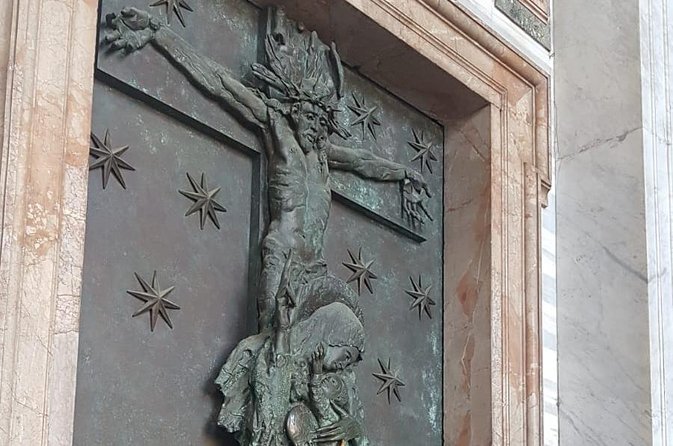
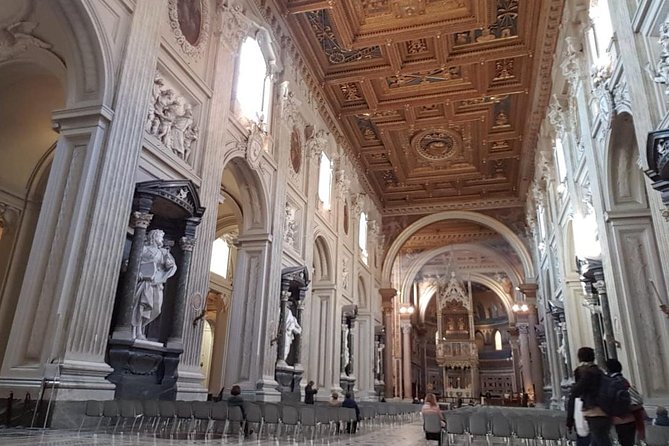
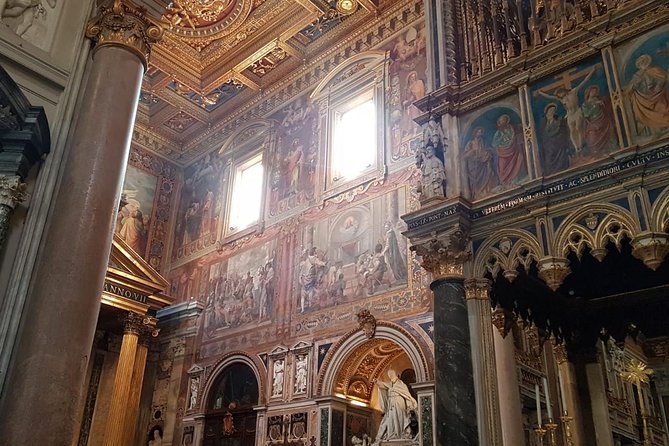
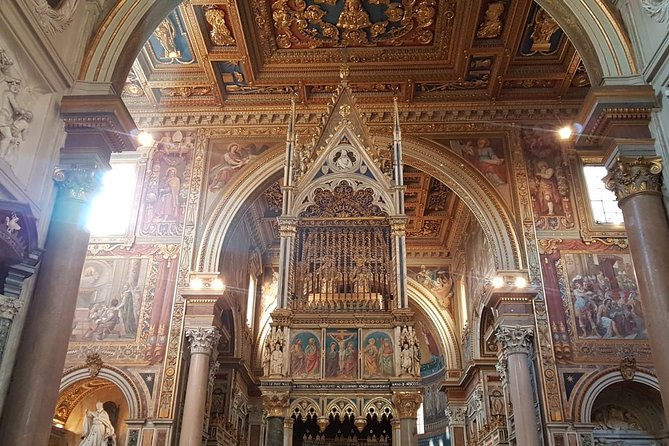
Your first major stop is Arcibasilica di San Giovanni in Laterano. This is the big cathedral in the Lateran complex, and it is often described as the mother of all churches. Even if you do not know the theology, the building’s authority shows through in its scale and status as a papal seat.
What I like about starting here is the timeline your guide can paint. The Lateran area connects to Constantine-era Christianity, built around the early 300s on land associated with the Lateran family. The site also sits on older layers of Roman history, and the stories around the Laterans trace back through imperial politics. You may hear references to confiscations tied to emperors and court power struggles, because that is exactly what Rome does best, history with footnotes.
Practical note: San Giovanni is enormous. On a tour like this, that can be a good thing because you get guided orientation, not just random wandering.
Stop 2: Ss. Quattro Coronati, Carolingian Calm on the Celio
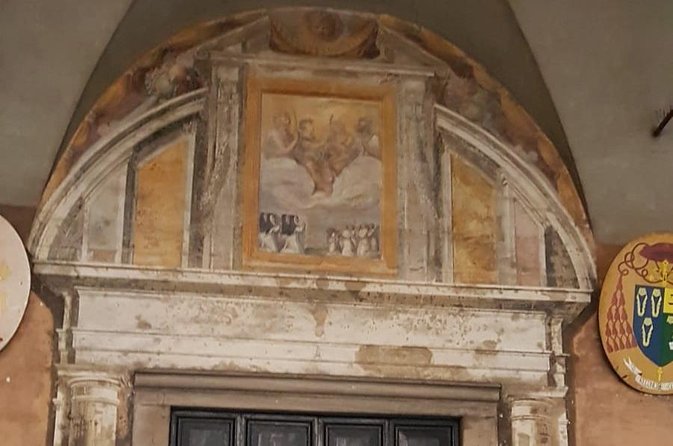
Next comes Ss. Quattro Coronati, tucked on the slopes of the Celio. This is a monastery and church complex with a long life, from its mid-5th century beginnings over older Roman structures. The mood here is different from the big cathedral stop. It feels slower, more contemplative, and a lot less crowded, which is great after you just absorbed something massive like San Giovanni.
The church name comes from tradition about the martyrdom of four Roman soldiers and five stonecutters. Then you get the architectural story: rebuilding after the fire that devastated Rome in 1084, and later additions like the monks’ cells, cloister, and a fortified cardinal’s palace in the early 1200s.
If you only remember one detail from this stop, make it the entrance dominated by the Torre Maggiore. Even if you are not a tower person, it is a visual anchor that helps you place the complex in the city.
More Small-Group Tours in Rome
Stop 3: San Clemente’s Stacked Churches and the Mithras Connection
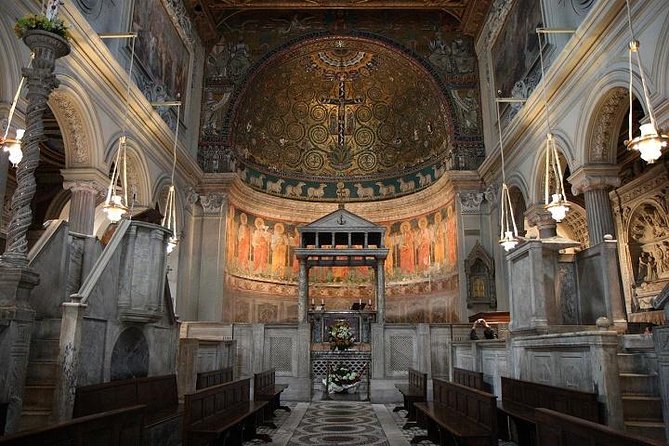
This is the star stop. You get fast-track entry to Basilica of San Clemente and then the real experience begins. San Clemente is famous because it is not one church, it is multiple levels built on top of each other. One of the best ways to understand early Rome is to watch how later generations build over earlier ones, and San Clemente makes that idea physical.
Here is what you are looking at, step by step:
- The basilica is dedicated to San Clemente and dates back to the 4th century (built before 385).
- It includes two superimposed churches: an upper level and a lower basilica.
- The structure sits on top of Roman buildings and also preserves traces connected to a temple of Mithras.
In the lower basilica, you can see frescoes, including scenes tied to the legend of Sisinno. You may also encounter fragments connected to the relics of Saint Cyril and Methodius, and references to the Glagolitic alphabet, which later relates to the Cyrillic script. That connection matters because it shows how the story of Christianity spreads across Europe and languages, not only through Rome.
Then, when you go further down (this is the part that makes the tour worth doing), you reach still lower levels:
- Roman buildings from the imperial age
- A Mithraeum, including a preserved marble altar showing the killing of the bull by Mithras
This is where the tour’s name makes sense. You are not only seeing Christian art, you are literally moving between layers of belief. That alone is enough value for many people. The fast-track entry simply reduces the time you spend waiting to access that experience.
Stop 4: San Pietro in Vincoli and Michelangelo’s Moses
You finish at San Pietro in Vincoli, a church founded in the 5th century to guard the chain said to have bound St. Peter in Jerusalem. That relic is preserved under the high altar, and it is displayed to the faithful on August 1st each year. Even if you have no interest in relic culture, it is a powerful example of how devotion shaped church identity.
The building changed over time:
- Rebuilt in the 8th century
- Further interventions to the façade and portico in the 1500s
- Interior modifications in the 18th century
You will notice the portico with five arches supported by octagonal pillars carrying the coat of arms of Pope Julius II. Inside, the layout includes three naves separated by 20 Doric columns of Greek marble. If you like architecture, this is a strong finish, because it feels structured and grounded in material detail.
And then there is the artistic headline: the church has housed Michelangelo’s Moses since 1545. The colossal statue was sculpted in 1513 for the funerary monument of Julius II, and it is one of those works that makes you stop mid-walk and stare at the scale and energy.
This ending works well because it ties the tour together. You start with a central papal church story, you pass through early medieval monastery life, you go underground into layered spirituality, and you end with Renaissance sculpture tied to a specific relic and pope.
The Two Things That Make This Tour Work Better Than Wandering Alone
1) It gives you a map of meaning. Rome’s churches can look similar until someone tells you what to notice. Here, your guide helps you connect each site to a bigger story, from early Christian dominance to how later power and faith reused earlier spaces.
2) It buys you time at the one place where time matters. San Clemente’s fast-track entry helps you spend your limited afternoon inside the site instead of losing it to queues.
Both of these help you get more out of the 3 hours than you would from a loose self-guided walk.
Watch-Outs Before You Book
A few things to consider so you do not get surprised:
- This is a walking tour with an underground component. Bring shoes you can handle on stone stairs and uneven surfaces.
- There is a strict dress code: shoulders covered and knees covered. If you fail the basics, access can be denied.
- Timing can be affected by real-world factors like traffic. You should keep your next appointment flexible if you are stacking tours.
If you have mobility limitations, this is where you should be extra careful. The tour’s design includes steps and a mix of open and underground spaces. While the guide can handle discomfort underground by seating some people in the upper church, that does not replace the reality of a walk-based route. If mobility is a concern, ask the operator what works for your specific needs before you go.
Who This Tour Is Perfect For (And Who Should Skip It)
This experience is ideal if you want:
- An intro to Lateran Rome without heading into the most overrun tourist lanes
- Guided context that helps you understand what you are seeing
- Underground access that many Rome church visits simply do not offer
It is less ideal if:
- You hate stairs and enclosed underground spaces
- You cannot meet the church dress code requirements
- You need true step-free access throughout (this tour is not described that way)
If you are a history-minded traveler who likes religion and architecture as one story, this hits the sweet spot.
Should You Book Christian Rome and Underground?
Yes, if your goal is to see how Rome’s layers overlap, and you specifically want the San Clemente underground experience with fast-track entry. I think this tour is strong value because the guide is doing real work for your eyes and your time, and because the ticketed underground stop is the kind of experience you cannot easily replicate on your own without losing hours.
If you are flexible with walking, comfortable following a dress code, and ready for stairs, you will likely leave with a better grasp of Christian Rome than you would get from a quick checklist. If underground spaces make you uncomfortable, still consider it, but plan to talk to the operator and go in with realistic expectations about the underground portion.
FAQ
What is the duration of the Christian Rome and Underground tour?
It lasts about 3 hours.
What time does the tour start?
The start time is 2:30 pm.
What language is the tour offered in?
The tour is offered in English.
How big is the group?
The maximum group size is 12 travelers.
What is included in the price?
It includes a professional guide for 3 hours, entrance ticket to the Basilica of San Clemente, and headphones for groups starting from 9 people.
Is the Basilica of San Clemente fast-track entry included?
Yes. The tour includes fast-track entry to the Basilica of San Clemente.
What is the dress code for this tour?
No shorts or sleeveless tops are allowed. Knees and shoulders must be covered for both men and women.
Is pickup or drop-off included?
No pickup and drop-off are included.
Latest additions from Rome
- Rome: Testaccio Market Food Tour with Street Food & Wine★ 5.0 · 8 reviews
- Exclusive Pasta & Tiramisu Class with Wine near by Colosseum★ 5.0 · 8 reviews
- Private Professional Photoshoot in Rome★ 5.0 · 8 reviews
- Loreto “Shrine of the Holy House of the Virgin Mary” Private Tour from Rome★ 5.0 · 8 reviews
- Rome Day to discover Florence and Pisa Hotel Pickup★ 4.5 · 8 reviews
- Rome: Christmas Nativities and Angels Tour★ 3.1 · 8 reviews
- Guided Tour of Vatican Museums and Sistine Chapel★ 5.0 · 8 reviews
- Rome: Cooking Class of fresh Pasta and Tiramisu Cake★ 5.0 · 8 reviews
Small-Group Tours in Rome, compared.
Skip-the-Line Vatican, Sistine Chapel & St. Peter’s | Small Group
Read our review →
Colosseum Underground Small Group Guided Tour
Read our review →
Skip the Line Vatican, Sistine Chapel, St Peter Small Group
Read our review →
Rome on a Golf Cart Semi-Private Tour Max 6 with Private Option
Read our review →
Complete Early Morning Vatican Tour | Small Group
Read our review →
Borghese Gallery & Gardens Small Group Guided Tour
Read our review →
Colosseum & Forum Small Group Tour with Palatine Hill
Read our review →
Rome by Night: E-bike Small Group Tour -Food & Wine (Option)
Read our review →Browse the lists this tour appears in