
Reviewed · CATACOMBS OF ROME TOURS
Catacombs Guided Tour with Transfers
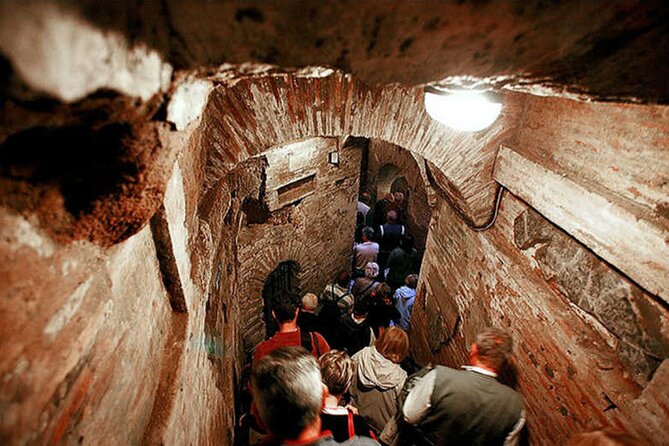
Staying underground in Rome has a payoff. This guided catacombs tour takes you into Catacombe di San Callisto, with an English-speaking guide and air-conditioned transfers, plus real-world context about how these sites formed, declined, and were rediscovered. I especially liked the chance to see the tombs connected to Rome’s church leaders, including the Pope Damasus engraved marble slab, and how the guide connects the dots from early Christian life to what survives today. The main drawback to plan around is timing, because some schedules can include long waiting before and after the visit, and the entrance fee may cost extra.
This is the kind of tour that works best when you’re not trying to squeeze every minute into a tight itinerary. You get a mobile ticket and a live guide, and the group size is capped at 100. Still, you’ll want to read your booking details carefully about entry, since the tour price and the on-site entrance fee can create confusion.
In This Review
- Key things to know before you go
- San Callisto Catacombs: why this stop feels different
- The guides’ real job: turning stone into meaning
- What you’ll see: bishops, marble, and engraved memory
- Stop 1 at Catacombe di San Callisto: how the visit typically plays
- Transfers and meeting point: convenient, but time can slip
- Price and value: what $32.30 really buys
- Who this tour is best for
- Quick expectations check: what you should picture before you go
- Should you book this catacombs guided tour with transfers?
- FAQ
- How long is the Catacombs Guided Tour with Transfers?
- What is the price per person?
- Is the tour offered in English?
- What’s included in the tour price?
- Is the entrance fee included?
- Do I get a mobile ticket?
- Where does the tour start?
- What is the group size limit?
- What is the cancellation policy?
Key things to know before you go
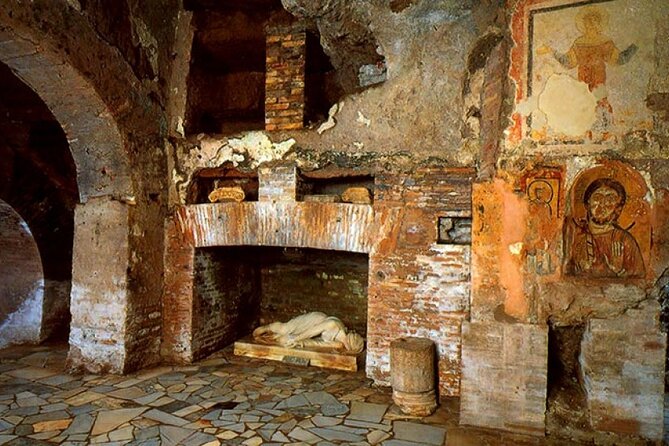
San Callisto scale: a network of galleries about 12 miles long, in four levels, more than 20 meters underground.
Big-picture storytelling: origin, decline, and rediscovery, tied to early Christian burial practices.
What you’ll spot underground: tombstones connected to bishops of Rome in the Crypt of the Popes area.
The Pope Damasus marble slab: engraved verses that connect faith and memory to physical stone.
Transport included, with a common meeting point: pickups and drop-offs using an air-conditioned vehicle, starting at Via Labicana, 125.
Timing can be tight: the visit itself may be shorter than you expect if the day’s transfer flow causes waiting.
San Callisto Catacombs: why this stop feels different
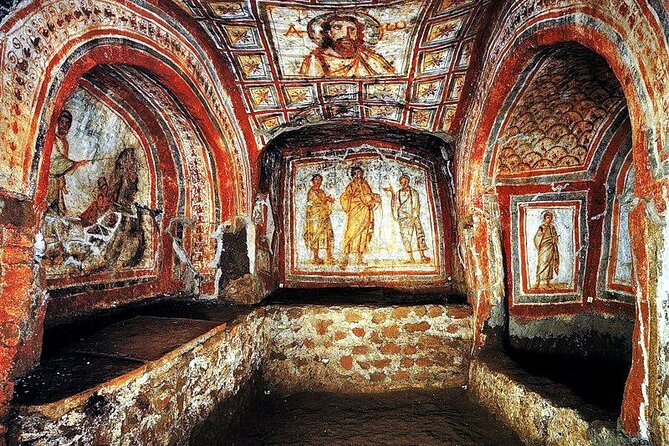
The catacombs of St. Callixtus, also called San Callisto, are not just spooky hallways. They are a full burial complex with real depth, real history, and a layout that helps you picture how a community handled death and remembrance over time. The scale is the first shock.
You’re stepping into a cemeterial complex that covers about 90 acres, with galleries roughly 12 miles long and four levels. That’s not a quick side chapel visit. It’s built for a long stretch of the story, from the middle of the 2nd century onward, when the complex was forming.
Your guide’s job is to make that size understandable. I like tours where the guide doesn’t just point at walls, but explains what the spaces meant. Here, the tour focus is on origin, decline, and rediscovery, which is exactly the right framing for ruins you might otherwise treat like an eerie museum prop.
Other descents into the catacombs:
- Rome: Capuchin Crypts and Catacombs Tour with Transfers
★ 4.6 · 6,456 reviews - The Original Roman Crypts and Catacombs Tour with Transfers
★ 4.5 · 4,896 reviews - Rome: Catacombs of St. Callixtus Entry Ticket & Guided Tour
★ 4.6 · 3,037 reviews - Rome: Guided Roman Catacombs Tour with Transfers
★ 4.6 · 1,830 reviews
The guides’ real job: turning stone into meaning
Inside catacombs, it is easy to miss the message if you treat it like sightseeing only. The history matters because these were not anonymous tombs. In this complex, people were buried across centuries, including tens of martyrs and 16 popes, alongside many Christians.
So when your guide talks about the origin and decline of the catacombs, you should listen for the “why.” These sites weren’t permanent public attractions in the way we think of monuments today. They changed, became less central, and then later were rediscovered, which is when the surviving art and inscriptions started to matter to visitors again.
This is where the best part of the tour can click. In the happy moments, you get a guide who speaks clear English and explains what you’re seeing while you’re actually standing in the space. One review highlighted a guide who was genuinely enthusiastic about showing the route and the meaning behind what’s on the walls. Even when the itinerary runs long, that live commentary is what makes the time feel useful instead of wasted.
What you’ll see: bishops, marble, and engraved memory
The highlights you’re promised are not random photo stops. They are the points that connect the catacombs to leaders in early Christianity.
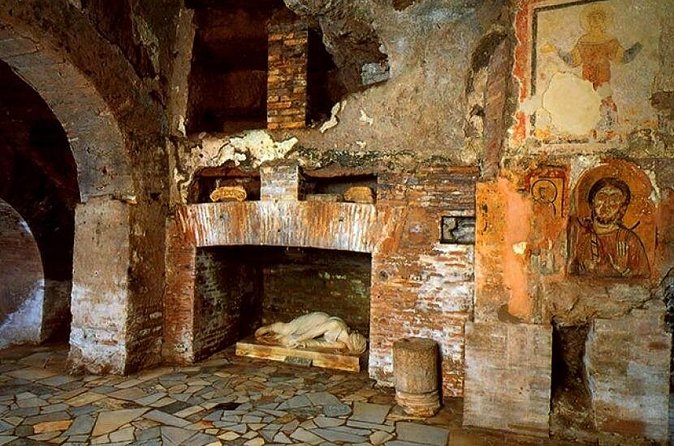
You’ll spend time at the Crypt of the Popes area, where you can see tombstones linked to bishops of Rome. Even if you know very little going in, the idea is simple: these places served as physical memory for church figures. That changes the feel from “old rooms” to “places of reverence and continuity.”
Another standout is the marble slab engraved with verses of Pope Damasus. This is the kind of thing you can’t really fake with a quick glance. Marble with engraved text is a direct bridge between what was said and what lasted. It’s also a strong reason to choose a guided format, because your guide can explain what you’re looking at rather than leaving you to guess.
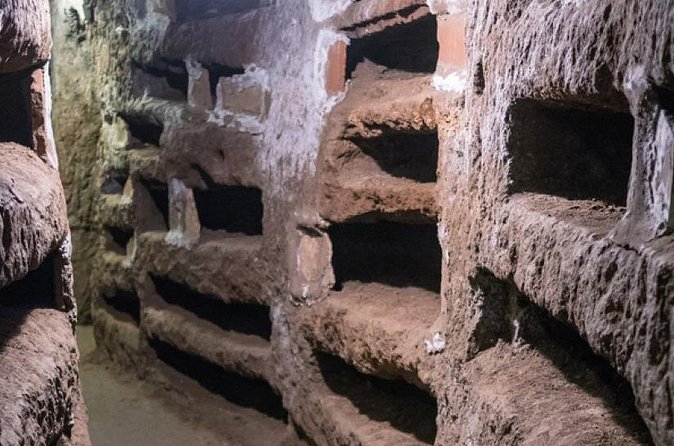
And yes, you should set expectations about what the catacombs look like. Some people go in expecting “bones everywhere,” and that is not the vibe here. What you’ll notice more is stonework, tomb spaces, wall openings, and inscriptions. If that sounds like your kind of archaeology, you’ll likely enjoy it.
Stop 1 at Catacombe di San Callisto: how the visit typically plays
The tour centers on one main stop: Catacombe di San Callisto. The scheduled visit time for the catacombs portion is about one hour, with admission tied to that segment in the tour description.
Once you go underground, focus on the big structural cues your guide will point out. The complex has four levels, and it is easy to feel disoriented if you are just staring at the floor and walls. The guide helps you understand how the corridors and spaces relate to each other, and why the layout is so important for burial history.
You’ll also likely get a chance to see tombstones and the marble slab highlighted in the tour’s main promise. That is where the English narration really matters. The “story” is not just an essay. It is tied to specific locations in the complex.
Practical note: your overall tour length is about three hours, but the exact flow can vary. One common pitfall is spending too much time waiting in the middle of the day. If you have limited time in Rome and you hate uncertainty, build in a buffer.
Transfers and meeting point: convenient, but time can slip
The tour includes transportation in an air-conditioned vehicle to and from the start area. The meeting point is Via Labicana, 125, 00184 Roma RM, Italy, and the experience ends back at that same meeting point.
This matters because you are not starting from a random curb with no plan. You do have a set location. Still, the transport portion can be the difference between feeling efficient and feeling stuck.
Here’s the balanced truth: the transfer system can feel smooth when pickups are on time. But it can also turn frustrating if your group is moved earlier than planned, then waits to enter, or if pickup after the visit runs late. Some guests experienced long waits, and it turned an advertised 3-hour experience into something closer to 4 hours, with a much smaller portion spent actually inside.
So how should you handle it? Treat the tour as “guided time plus travel time,” not as a perfectly timed hour-by-hour program. If you’ve scheduled lunch, a museum, or the Vatican right after, give yourself a cushion. Catacombs are cool, but you cannot control the clock of a group pickup once everyone is in transit.
A few more Rome options worth a look

Price and value: what $32.30 really buys
The tour price is $32.30 per person, and it includes transportation and a live guide. You also get a mobile ticket, and the tour is offered in English.
The entrance fee is not included, listed as €10.00 per person. That means the total cost at the end of the day is not just the $32.30 price you see first.
Some people have run into on-site entry costs that didn’t match what they expected from their booking materials. One guest reported paying around 8 euros on site, even though the tour notes say €10. Another guest said the tickets they expected to use didn’t work as smoothly as planned and they had to purchase entry at the location. I can’t promise that will happen to you, but I can tell you what to do: check your confirmation details and be ready to pay the entrance fee if your mobile ticket does not cover it.
Value comes from two places:
1) You are paying for a live guide to translate history into what you see underground.
2) You are paying for transport so you do not have to plan the whole trip solo.
If you already love self-guided archaeology and you’re comfortable navigating Rome yourself, you might find a cheaper approach. If you want the easiest route and a guide to keep the experience coherent, this price can feel reasonable, as long as you protect your schedule and your expectations about the entrance fee.
Who this tour is best for
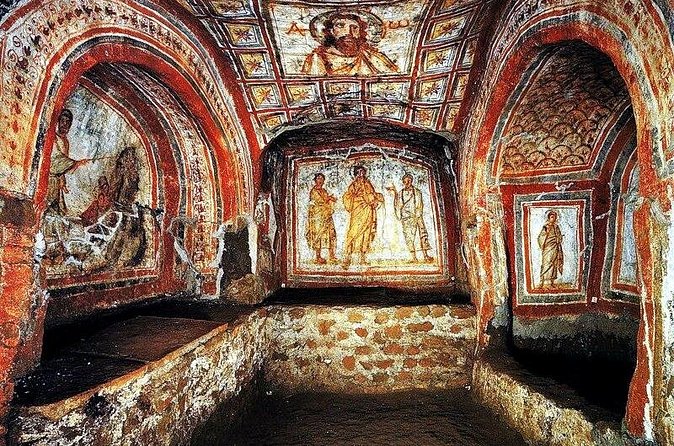
This is a good fit if you want early Christian history and you appreciate guided interpretation. The tour’s focus on origin, decline, and rediscovery is exactly what you want if you like context, not just pictures.
I also think it suits people who prefer logistics handled for them. Air-conditioned transfers, an English guide, and a set meeting point can make a small group experience feel less chaotic than building your own plan in Rome.
On the other hand, it may not suit you if you are ultra time-sensitive. If you have only a morning slot and every minute matters, the risk of waiting can be a dealbreaker. Also, if you expect a long, slow walk through catacombs for the full duration, the one-hour guided visit plus potential waiting can feel short.
Quick expectations check: what you should picture before you go
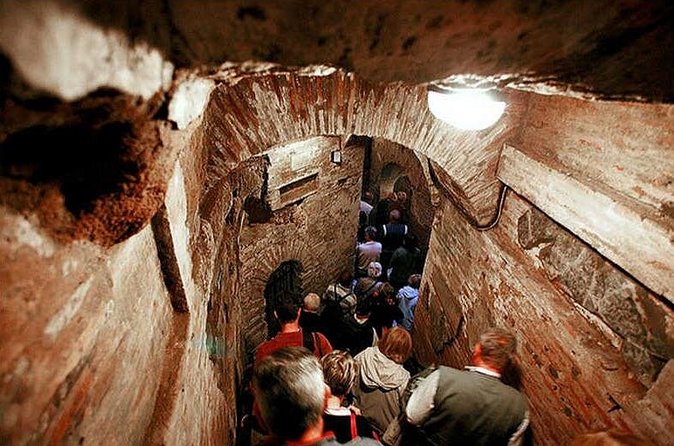
Catacombs are not a theater show. You should expect a guided underground walk where stone, layout, and inscriptions do the talking.
Here’s what you’re aiming to notice:
The scale and levels of the site.
Tombstone features and engraved text connections to early church figures.
The specific “highlight” stops tied to the Crypt of the Popes area and the Pope Damasus marble slab.
The way history changes your interpretation of what looks like simple wall openings.
And keep your energy realistic. If the day’s timing includes delays, at least you’ll know what to focus on so the time feels purposeful rather than wandering.
Should you book this catacombs guided tour with transfers?
If you want the easiest way to see San Callisto with an English guide and you’re okay with the possibility of some waiting, I think you should book it. The core value is the guided explanation and the chance to connect the site to named church memory like the Pope Damasus engraved verses and the Crypt of the Popes tombstones.
But if you are working with a hard schedule, or you absolutely hate any chance of losing time to group logistics, consider a different option. Catacombs are worth seeing, yet you should protect your day.
My recommendation is simple: book if you can flex your timeline by at least half a day, and double-check your entry fee expectations before you go. That way, you’ll spend your limited Rome hours looking at the stone, not chasing tickets.
FAQ
How long is the Catacombs Guided Tour with Transfers?
The duration is approximately 3 hours.
What is the price per person?
The price is $32.30 per person.
Is the tour offered in English?
Yes, it is offered in English.
What’s included in the tour price?
Transportation and a live guide are included.
Is the entrance fee included?
No. The entrance fee is listed as €10.00 per person, and it is not included in the tour price.
Do I get a mobile ticket?
Yes, the tour includes a mobile ticket.
Where does the tour start?
The meeting point is Via Labicana, 125, 00184 Roma RM, Italy.
What is the group size limit?
This tour has a maximum of 100 travelers.
What is the cancellation policy?
You can cancel for a full refund if you cancel at least 24 hours before the experience’s start time. Free cancellation is available.
Latest additions from Rome
- Rome: Testaccio Market Food Tour with Street Food & Wine★ 5.0 · 8 reviews
- Exclusive Pasta & Tiramisu Class with Wine near by Colosseum★ 5.0 · 8 reviews
- Private Professional Photoshoot in Rome★ 5.0 · 8 reviews
- Rome Day to discover Florence and Pisa Hotel Pickup★ 4.5 · 8 reviews
- Loreto “Shrine of the Holy House of the Virgin Mary” Private Tour from Rome★ 5.0 · 8 reviews
- Rome: Christmas Nativities and Angels Tour★ 3.1 · 8 reviews
- Guided Tour of Vatican Museums and Sistine Chapel★ 5.0 · 8 reviews
- Rome: Cooking Class of fresh Pasta and Tiramisu Cake★ 5.0 · 8 reviews
Catacombs of Rome Tours, compared.
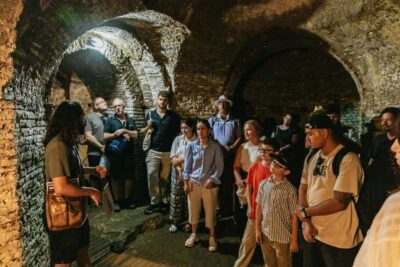
Capuchin Crypts and Catacombs Tour with Transfers
Read our review →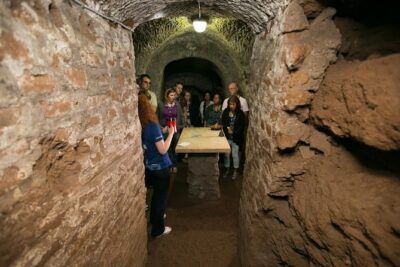
The Original Roman Crypts and Catacombs Tour with Transfers
Read our review →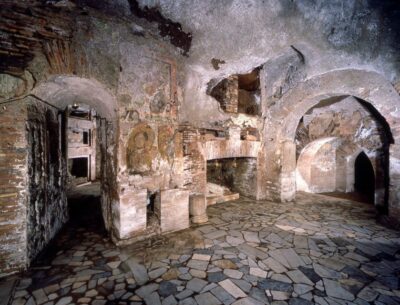
Catacombs of St. Callixtus Entry Ticket & Guided Tour
Read our review →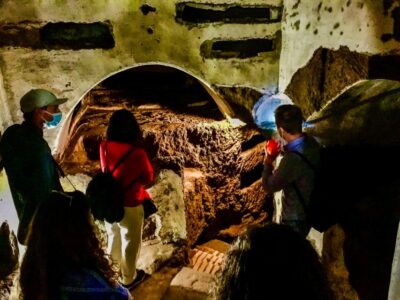

Catacombs and Capuchin Crypt Guided Tour with Transfer
Read our review →
Appian Way & Aqueducts E-Bike Tour (Catacombs & Food)
Read our review →
Appian Way, Catacombs, & Roman Aqueducts E-bike Tour
Read our review →Browse the lists this tour appears in