
Reviewed · SMALL-GROUP TOURS IN ROME
Ancient Rome with Archaeology – Small Group Only
Rome feels different when you read ruins.
This small-group walk across central monuments is built around archaeology, so you learn why Rome’s buildings look the way they do, and how the city kept changing shape over centuries. You start with a quick timeline, then move monument to monument, using Imperial planning and construction clues to make sense of what you’re seeing.
I especially like the way the guide, Leonardo, connects each site to the bigger story, from the early city layout to later imperial showpieces. I also like that the tour focuses on visuals and interpretation, with references to the buildings as works of art and architecture, not just sightseeing checkboxes. The one thing to consider is that this experience does not include tickets or entry inside the Colosseum or the forums, so your view is from outside and open areas.
In This Review
- Key things about this tour that matter
- A small-group archaeology walk through Rome’s core
- Piazza Mattei meeting point, then a timeline that clicks
- The Colosseum stop, explained as Roman engineering and power
- Imperial Fora views, where politics becomes a building style
- Roman Forum and Palatine perspectives, making the city’s logic visible
- Capitoline Hill square, where Rome’s civic center makes sense
- Theatre of Marcellus, Temple of Apollo, Porticus of Octavia
- What the best part feels like: Leonardo’s history style
- Pace and walking level, and what to wear
- Price and value: is $49 a smart buy?
- Route coverage: what you’ll get, and what you won’t
- Who should book this tour, and who might prefer something else
- Should you book Ancient Rome with Archaeology?
- FAQ
- What is the duration of the tour?
- How many people are in the group?
- Where do we meet?
- Which monuments and areas does the tour cover?
- Does the tour include tickets or entry inside the Colosseum and forums?
- What languages are offered?
- Is this a walking tour and is it strenuous?
- Is it wheelchair accessible?
Key things about this tour that matter
- Archaeology-first explanations that help you read monuments instead of just watching them.
- A tight, 2.5 hour route covering the Colosseum, Imperial Fora, Roman Forum views, and the Theatre of Marcellus area.
- Small group size of 6, which keeps the pace personal and question-friendly.
- English and Portuguese with Leonardo, who is half Brazilian and has a talent for making big eras feel clear.
- Ends in an archaeological zone around the Theatre of Marcellus, plus Temple of Apollo and Porticus of Octavia.
A small-group archaeology walk through Rome’s core
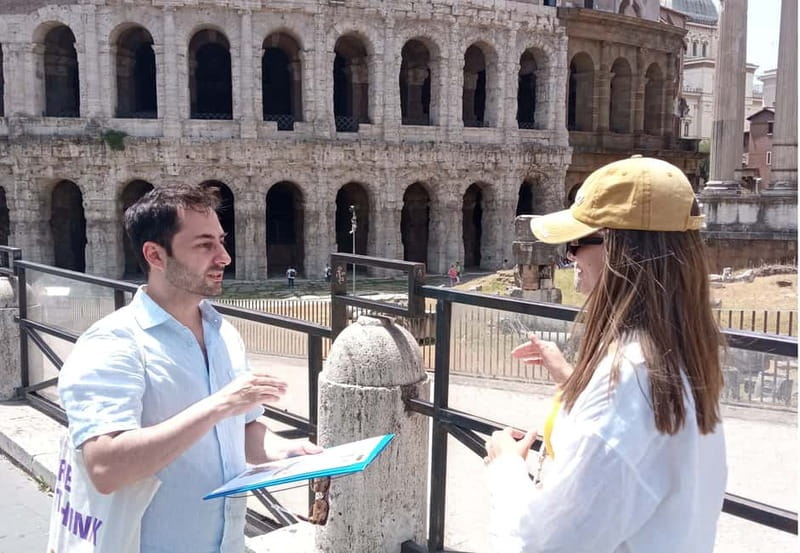
Rome’s biggest problem is the same as its biggest charm: there’s so much to see that your brain can feel like a storage closet. This tour attacks that head-on with one smart idea. Instead of treating the Colosseum, Roman Forum, and Imperial Fora as separate icons, you learn to see them as parts of one evolving city.
You’ll walk a light route that is described as suitable for all ages, and it’s wheelchair accessible through the city’s routing. The group limit is 6 people, which is a big deal in Rome, where crowds can turn history into noise. Here, the format is built for listening, asking questions, and actually connecting the monuments you’re looking at to the evidence you can see.
More Small-Group Tours in Rome
- Skip-the-Line Vatican, Sistine Chapel & St. Peter’s | Small Group
★ 5.0 · 7,060 reviews - Rome: Colosseum Underground Small Group Guided Tour
★ 4.7 · 4,844 reviews - Rome: Skip the Line Vatican, Sistine Chapel, St Peter Small Group
★ 5.0 · 3,847 reviews - Rome on a Golf Cart Semi-Private Tour Max 6 with Private Option
★ 5.0 · 2,502 reviews
Piazza Mattei meeting point, then a timeline that clicks
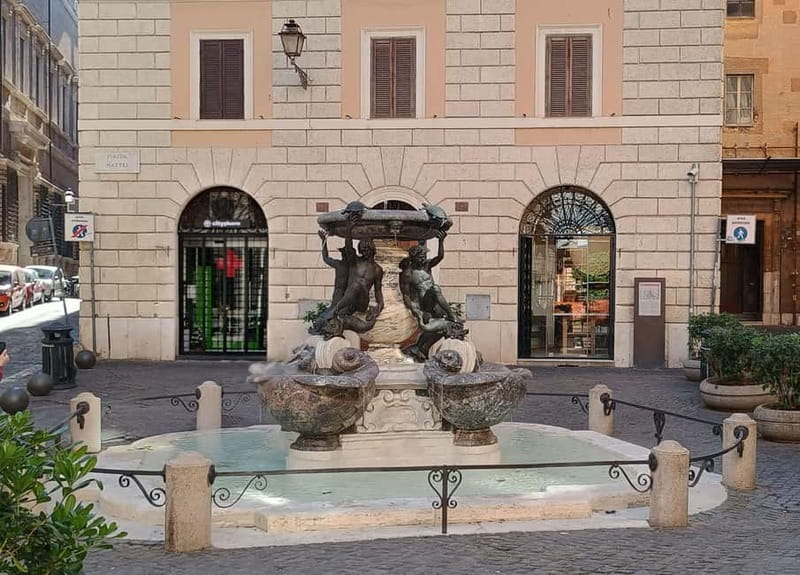
You meet right by the Fountain of the Turtles in Piazza Mattei, 1. That location is close enough to help you orient fast, and it also gives you a gentle start before the walking begins.
What I like about the opening flow is the structure. The tour starts with a brief timeline introduction, either in a café or just while walking. This matters because you’re about to see multiple layers of Rome. Without a timeline, the monuments can feel like random leftovers. With it, you start noticing patterns: what gets reused, what gets rebuilt, what shifts from practical space to imperial theater, and what the Romans chose to monumentalize.
Leonardo’s style, based on what you’ll learn during the walk, leans visual and organized. One review highlights that he brings a map showing historical periods and ruling personalities, and that kind of tool helps you keep your bearings while you’re moving.
The Colosseum stop, explained as Roman engineering and power
You get a guided tour and a walk of about 30 minutes at the Colosseum area. Even without entering, this stop can be extremely instructive because archaeology can tell you how Romans thought.
Here’s the payoff of an archaeology approach: you’re not only looking at the iconic exterior. You’re learning what its presence meant in the broader urban plan, and how later changes around it help explain why the site looks the way it does today. You also learn to connect the Colosseum to the political mood of different reigns and the way architecture worked as public messaging.
Practical note: since tickets and entry are not included, don’t book this if your main goal is inside-the-Colosseum views. Do book it if you want the bigger picture, because your time goes to interpretation rather than waiting in lines or collecting an indoor checklist.
Imperial Fora views, where politics becomes a building style
Next you head to the Imperial Fora for about 30 minutes of guided sightseeing and walking. This section is where many people start to feel Rome’s scale. The Imperial Fora are basically the city telling you that emperors didn’t just rule, they built.
From your vantage points, you’ll learn how the fora functioned as more than markets or passageways. They were designed to control movement, display authority, and shape how people understood the empire’s story. When you hear the explanation in an archaeology framework, you can start reading the ruins like a map of priorities: what got emphasized, what got rebuilt, and what was left behind.
This is also the kind of place where context helps. If you treat each forum as an isolated monument, you miss the pattern. With this tour, you’re learning the evolution and continuity between them, so the stones feel less random.
Roman Forum and Palatine perspectives, making the city’s logic visible
Then it’s on to the Roman Forum for around 30 minutes of guided sightseeing and walking. And this is where the tour can really pay off, even if you’re not going inside anything.
The Roman Forum is where you can feel the overlap of daily civic life and political performance. The tour’s archaeology focus helps you understand why certain structures appear where they do and how the area developed from earlier uses into the ceremonial core people associate with Rome.
You’ll also connect what you see to the idea that Rome grew in layers. Archaeology is useful here because it turns assumptions into evidence. You start noticing how later planning absorbed earlier space. And once you learn that idea, the “ruins” stop looking like random piles and start looking like an evolving city blueprint.
Another shape for the same afternoon in Rome:
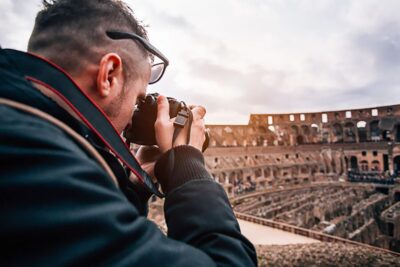
Capitoline Hill square, where Rome’s civic center makes sense
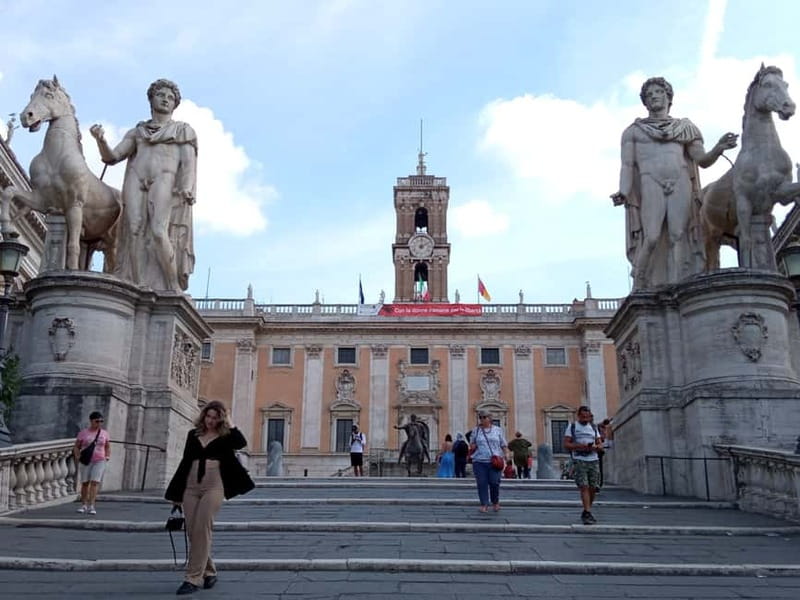
You continue to the Capitoline Hill area, with a visit, guided tour, sightseeing, and about 30 minutes of walking around Piazza del Campidoglio, Rome.
This is a smart stop because it gives you a different kind of perspective. The Capitoline area helps you understand Rome as a planned civic system, not just a collection of dramatic landmarks. From this vantage, you can see how space and symbolism work together.
If you’ve ever looked at photos of Rome and thought, I get the building looks important, but I don’t understand how it fits, this is where that question gets answered. The explanation helps you locate the visual hierarchy of Rome’s public areas: what points the eye, what frames the experience, and how the city’s layout supported authority.
Theatre of Marcellus, Temple of Apollo, Porticus of Octavia
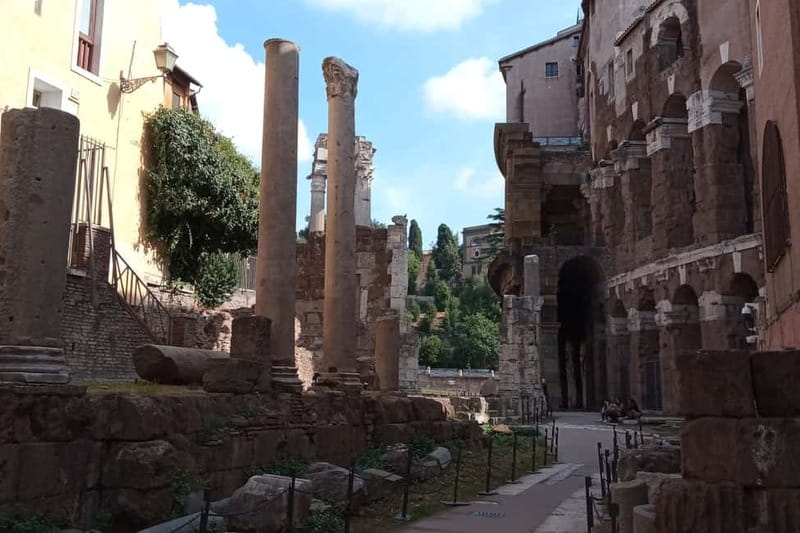
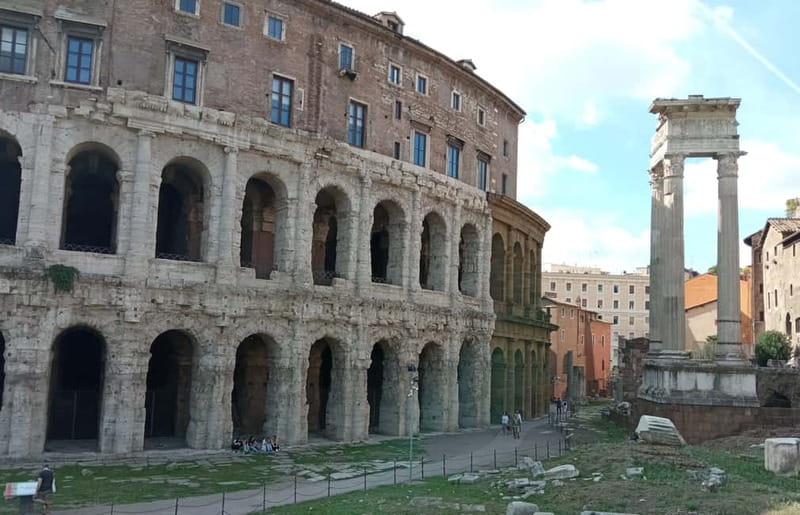
The tour finishes at the Theatre of Marcellus archaeological area, plus the nearby Temple of Apollo and Porticus of Octavia. You get a guided visit and sightseeing here, with about 30 minutes of walking.
This ending matters because it closes the loop. Earlier stops show monumental scale. This area shows how Rome’s public life and imperial identity extended through complex urban reuse. The Theatre of Marcellus area is also connected to the broader neighborhood story you’ll hear referenced during the tour, including its link to the former Jewish Ghetto area.
A practical upside here is that the tour notes this as a free entrance archaeological area. That means your tour time ends without you needing to spend it buying and using separate entry tickets for this specific portion.
What the best part feels like: Leonardo’s history style
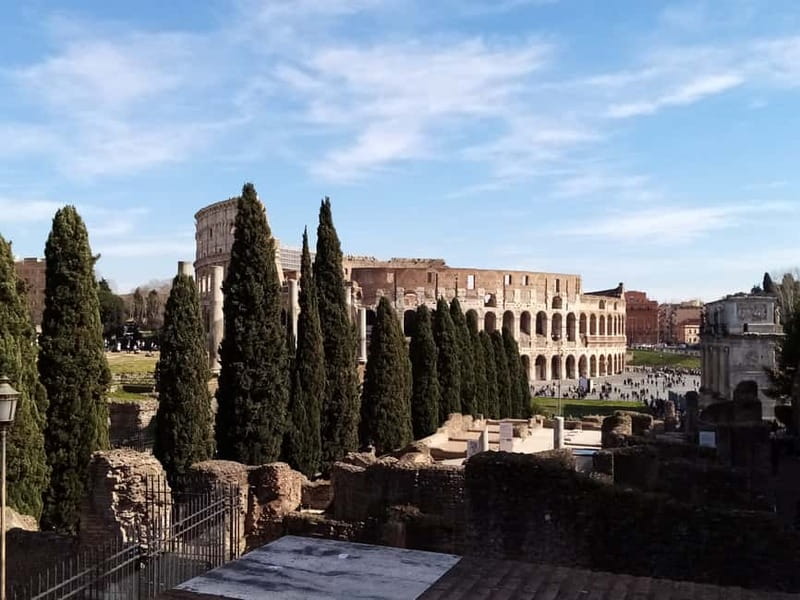
Across the route, the biggest praised element is how Leonardo teaches. Multiple reviews point out that he’s extremely committed, with a way of explaining architecture and Roman history that makes you feel the logic behind the buildings.
A few specific teaching tools stand out in the details you can expect:
- He introduces the timeline so each stop has a place.
- He uses photos of original monuments, which helps you visualize what has been lost.
- He’s able to answer questions and connect to how people live and think in Rome now, not only in the ancient world.
- He works in English and Portuguese, and since he’s half Brazilian, some explanations come through in a Brazilian Portuguese style depending on the language chosen.
That combination is exactly what makes an archaeology tour worth your time. You aren’t just collecting facts. You’re learning a way of looking.
Pace and walking level, and what to wear
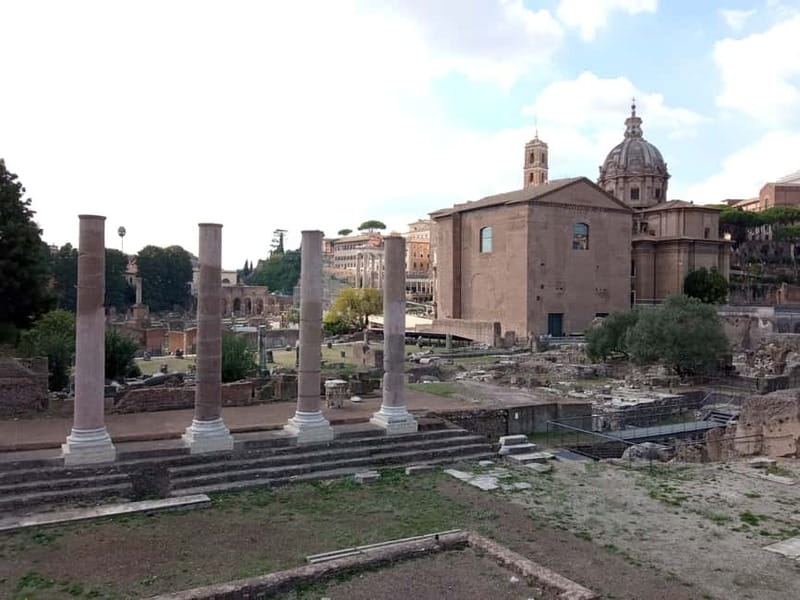
The tour is described as light walking that does not require effort, and it’s meant to be suitable for all ages. That said, “light” in Rome still means cobblestones, uneven surfaces, and time outdoors.
I’d plan around that. Wear comfortable shoes with good grip and bring a water bottle. If you’re traveling in hot months, start earlier in the day. If you’re in the colder months, dress in layers so you can handle sun versus shade.
Because entry tickets are not included, your time is mostly outdoors plus explanations at viewpoints and open archaeological areas. You’ll be glad you dressed for walking, not for waiting in lines.
Price and value: is $49 a smart buy?
At $49 per person for about 2.5 hours, you’re paying for guidance and interpretation across multiple major zones of central Rome. The value depends on what you want most.
If you want to maximize ticketed time inside major monuments, this may not match your priorities because tickets for inside visits are not included. You’ll see a lot from vantage points, plus open areas and archaeology zones.
If you want something more useful for your brain, this is strong value. You’re getting a guided narrative that connects the Colosseum, Imperial Fora, Roman Forum views, Capitoline area, and the Theatre of Marcellus zone into one storyline. For many people, that connection is the difference between seeing Rome and understanding Rome.
Also, the small group limit of 6 is part of the value. In a city of crowds, paying for a less chaotic experience is worth something.
Route coverage: what you’ll get, and what you won’t
Here’s the key expectation to set upfront.
You’ll cover these major areas:
- Colosseum area
- Imperial Fora
- Roman Forum and Palatine views
- Capitoline Hill area near Piazza del Campidoglio
- Theatre of Marcellus archaeological area, plus Temple of Apollo and Porticus of Octavia
- Finishing drop off near Piazza del Colosseo area and Via Nicola Salvi
You won’t include:
- Inside entry to the Colosseum or inside visits to major monuments
- Any ticketed monument time
So this is best treated as a guided “Rome explained” experience, not a full museum style package. It pairs well with a later add-on if you decide you want to enter specific spaces on your own schedule.
Who should book this tour, and who might prefer something else
This experience fits well if:
- You like history that explains how buildings evolved, not just when they were built.
- You want to connect multiple monuments into one coherent story.
- You enjoy learning from an expert guide in either English or Portuguese.
- You’d rather spend time understanding what you see than maximizing indoor access.
You might prefer a different type of tour if:
- Your main goal is timed entry inside major sites like the Colosseum and Roman Forum structures.
- You want a longer duration and more stops beyond the core zones listed here.
Should you book Ancient Rome with Archaeology?
If you’re the kind of traveler who gets annoyed by obvious photo spots without context, book it. The structure is focused: you cover the big names, but the real product is the way Leonardo uses archaeology, history, and art and architecture to connect them.
I’d especially recommend it as your first or second major history tour in Rome. It gives you a mental map, then later visits start making sense faster. And with a small group size and an organized timeline start, you’re set up to enjoy the monuments instead of just rushing through them.
FAQ
What is the duration of the tour?
The tour lasts 2.5 hours.
How many people are in the group?
The group is limited to 6 participants.
Where do we meet?
You meet right by the Fountain of the Turtles in Piazza Mattei, 1.
Which monuments and areas does the tour cover?
It covers the Roman Forum, Colosseum, Imperial Forums, Capitoline area, Theatre of Marcellus, Temple of Apollo, and Porticus of Octavia.
Does the tour include tickets or entry inside the Colosseum and forums?
No. The tour does not include going inside the monuments or tickets for them.
What languages are offered?
The live guide offers English and Portuguese.
Is this a walking tour and is it strenuous?
It is a light walking tour suitable for all ages and does not require effort.
Is it wheelchair accessible?
Yes, the tour is listed as wheelchair accessible.
Latest additions from Rome
- Rome: Testaccio Market Food Tour with Street Food & Wine★ 5.0 · 8 reviews
- Exclusive Pasta & Tiramisu Class with Wine near by Colosseum★ 5.0 · 8 reviews
- Private Professional Photoshoot in Rome★ 5.0 · 8 reviews
- Loreto “Shrine of the Holy House of the Virgin Mary” Private Tour from Rome★ 5.0 · 8 reviews
- Rome Day to discover Florence and Pisa Hotel Pickup★ 4.5 · 8 reviews
- Rome: Christmas Nativities and Angels Tour★ 3.1 · 8 reviews
- Guided Tour of Vatican Museums and Sistine Chapel★ 5.0 · 8 reviews
- Rome: Cooking Class of fresh Pasta and Tiramisu Cake★ 5.0 · 8 reviews
Small-Group Tours in Rome, compared.
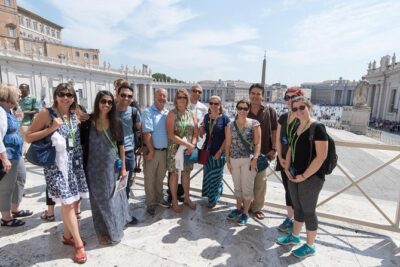
Skip-the-Line Vatican, Sistine Chapel & St. Peter’s | Small Group
Read our review →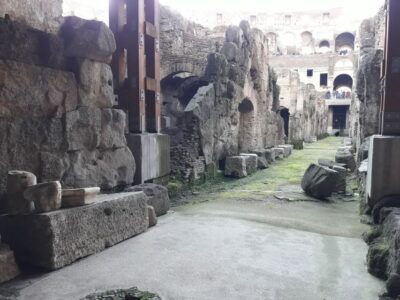
Colosseum Underground Small Group Guided Tour
Read our review →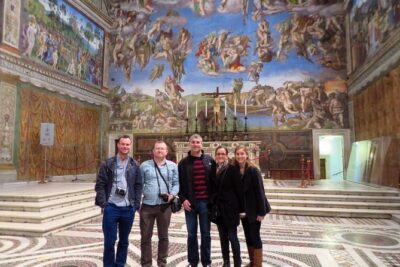
Skip the Line Vatican, Sistine Chapel, St Peter Small Group
Read our review →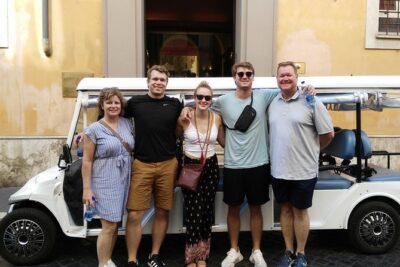
Rome on a Golf Cart Semi-Private Tour Max 6 with Private Option
Read our review →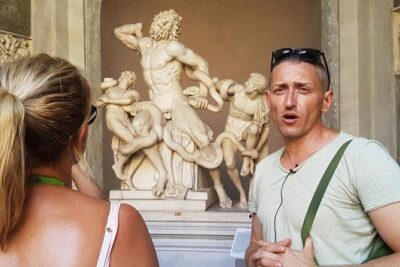
Complete Early Morning Vatican Tour | Small Group
Read our review →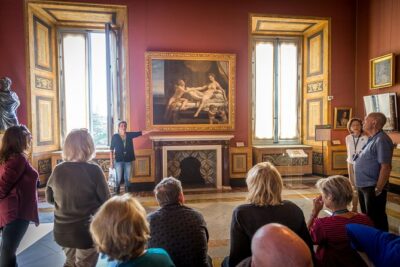
Borghese Gallery & Gardens Small Group Guided Tour
Read our review →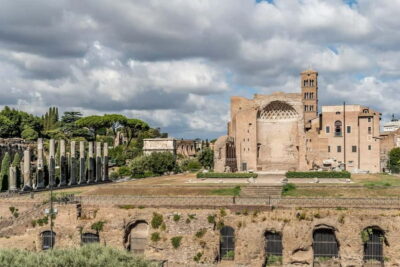
Colosseum & Forum Small Group Tour with Palatine Hill
Read our review →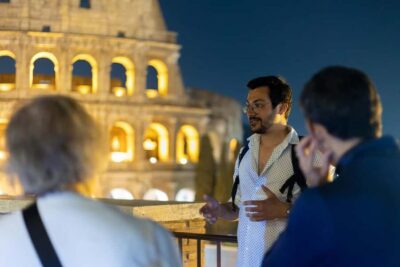
Rome by Night: E-bike Small Group Tour -Food & Wine (Option)
Read our review →Browse the lists this tour appears in