
Reviewed · ROME
Ancient Rome VR Experience in Golf Car
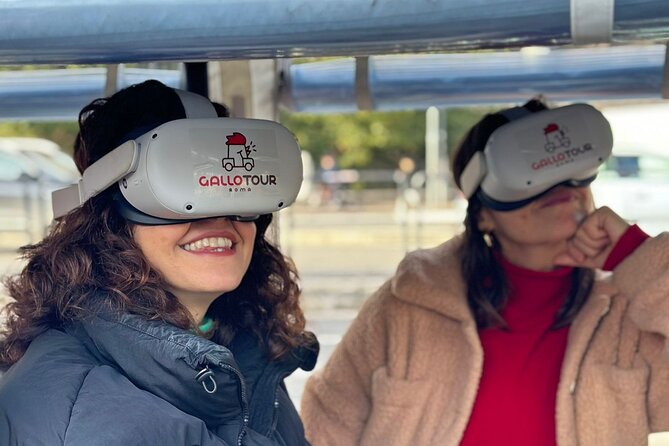
Rome rewards slow attention, even at speed. This private golf cart tour turns the city’s biggest ancient landmarks into short, photo-friendly stops, then adds VR reconstructions for the Colosseum, Piazza Navona, and Circus Maximus. It is a smart mix of street-level sights and tech-based “what this looked like” moments.
I especially like the pacing. You get multiple major stops in about 3 hours, with a comfortable ride that saves your legs for later Roman strolling. I also like the human touch, the kind of guides who happily answer your questions as you go, with examples including Max and Eva Dubuisson.
One thing to consider: this is not a monuments-inside tour. It is built around exterior views, with VR doing the heavy lifting for the ancient crowd scenes.
In This Review
- Key highlights worth planning for
- First impressions: electric golf cart, private pace, real photo stops
- Price and value: what you are really paying for
- Stop 1: the Pantheon exterior and the dome moment
- Stop 2: Piazza Navona with VR of Domitian’s stadium
- Stop 3: Circus Maximus chariot races, from your seat
- Stop 4: Trevi Fountain, the coin tradition, quick magic
- Stop 5: Colosseum exterior plus VR arena reconstruction
- Stop 6: Giardino degli Aranci for views and calmer photos
- Comfort details that matter more than you think
- What kind of traveler should book this?
- Quick call: should you book it?
Key highlights worth planning for
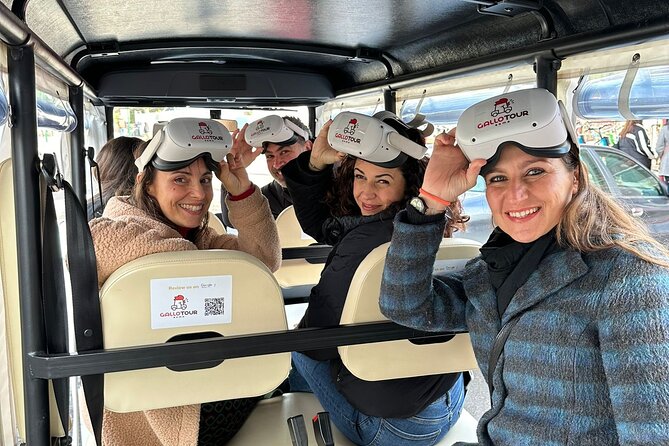
- Electric golf cart comfort for seeing a lot without long walks
- VR reconstructions at Colosseum, Circus Maximus, and Piazza Navona
- Coffee or tea plus bottled water included, so you are not hunting for a break
- Private format for only your group, which helps with questions and pace
- Plenty of photo moments, including viewpoints like Giardino degli Aranci
- Clear expectations on tickets, with admission not included for some stops
First impressions: electric golf cart, private pace, real photo stops
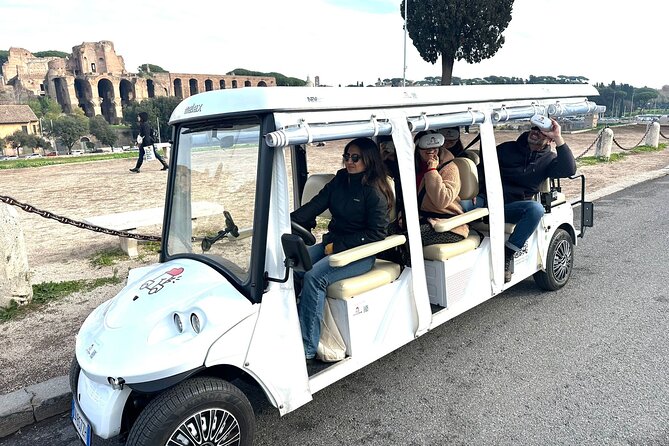
This tour is built for people who want Rome’s highlights without doing a hardcore legs workout. The ride is in a comfortable, electric-powered golf cart. That matters because Rome’s historic center can be stop-and-go, with traffic, cobblestones, and crowds around the famous sights. Here, you trade some walking time for easy movement and more time at each stop to look, snap photos, and ask questions.
Because it is private, you can usually set a steadier rhythm. You are not trying to keep up with a larger group while also photographing everything. The cart also makes a difference for first-time visitors. If you are still figuring out where everything sits in the ancient center, this route helps you build a mental map fast.
And yes, you will still get the street reality. You are not watching Rome through a screen the whole time. You will see the Pantheon area, Piazza Navona’s baroque face, Trevi Fountain’s chaos, and the Colosseum’s exterior presence. The VR is the “now picture” layer on top, not a replacement for the city you are standing in.
Not settled yet? These cover similar ground in Rome:
- Vatican Museums, Sistine Chapel & St. Peter’s Basilica Tour
★ 4.3 · 73,970 reviews - Vatican Museums, Sistine Chapel & St Peter’s Basilica Guided Tour
★ 4.5 · 39,149 reviews - Rome: Colosseum, Palatine Hill and Roman Forum Guided Tour
★ 4.8 · 32,814 reviews - Rome: Guided Tour of Colosseum, Roman Forum & Palatine Hill
★ 4.7 · 27,897 reviews
Price and value: what you are really paying for
The price is listed at $157.83 per person for about 3 hours. That sounds like a lot until you break down what is included.
You get:
- Private transportation by golf cart
- VR headset with 3 reconstructions (Colosseum, Circus Maximus, Piazza Navona)
- Bottled water
- Coffee and/or tea
If you were doing the same route on foot, you would spend time and energy moving between sites that are spread out just enough to be annoying. If you were doing a pure museum-style audio tour, you would not get the cart comfort, the quick photo stops, or the on-the-spot “Roman before” visuals.
So the value is not just the VR. It is the whole package: short stops, guided context, and a ride that keeps the day fun instead of exhausting. This is a good “get oriented fast” experience, especially if your schedule is tight.
Stop 1: the Pantheon exterior and the dome moment
Your first stop is the Pantheon, one of Rome’s best-preserved ancient buildings. Expect a focused exterior visit where your guide explains what you are seeing and why it matters, including the dome. This is the kind of architecture that rewards looking slowly at a few key features, even if your stop is only about 15 minutes.
A key consideration: admission ticket is not included. Also, the tour is limited to exterior monument visits. So you should plan this as a “take it in from outside” moment, not a step-inside Pantheon experience.
That said, the Pantheon exterior still hits hard. Even if you have seen photos before, standing near it helps you understand scale. If you care about engineering, you will likely enjoy how the dome is described, because it is still a head-turner in a modern skyline.
Practical tip: wear something comfortable and keep your camera ready. This is one of those stops where you will want a couple angles, not just one quick shot.
Stop 2: Piazza Navona with VR of Domitian’s stadium
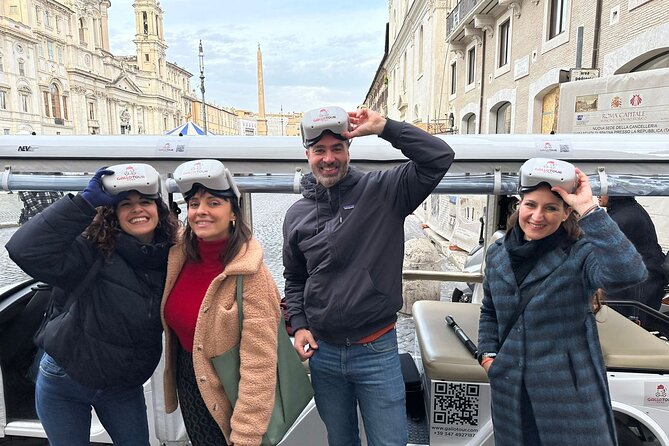
Next up is Piazza Navona. On the surface, it is baroque and lively, the kind of square where street performers and fountains practically share the spotlight. But your guide frames a deeper layer underneath it: the Stadium of Domitian, an ancient arena site.
This is where the VR becomes the main event. With your headset, you get a reconstruction of how the space would have looked when it functioned as a Roman sports arena. The goal is not to make you memorize dates. It is to help you visualize transformation, how Rome’s layers stack over time.
Your stop here is about 25 minutes, and the admission is listed as free. That aligns with the exterior-tour approach.
What I like about this stop is the payoff. Piazza Navona is already famous, so it is easy to feel like you already know it. The VR gives you a second identity for the place, which makes the baroque square feel like a storyline rather than just a pretty backdrop.
Stop 3: Circus Maximus chariot races, from your seat
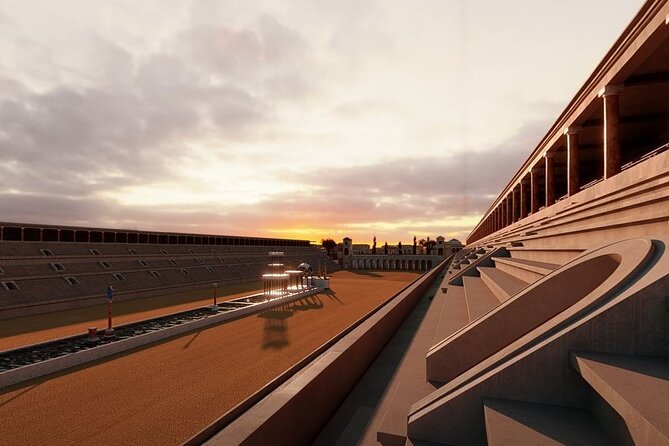
At Circo Massimo (Circus Maximus), the theme shifts from stadium-in-disguise to pure spectacle. Your guide sets the scene for ancient chariot races, then you watch a reconstructed VR version of the arena.
The tour description emphasizes horses, chariots, and spectators. Practically, that means you get a “you are there” sense of scale without needing access to hard-to-plan archaeology or long waits. And because you are on a golf cart, you are not losing your rhythm to walking distances between stops.
This stop is also about 25 minutes, and admission is listed as free. Again, treat it as an outside viewing experience for the location, with VR doing the historical re-creation.
If you are coming to Rome with kids, this is often the easiest sell. Chariot races are simple to picture, and the VR makes the ancient action concrete. Even if you are a serious history person, it is a useful mental anchor: you can’t always picture “where did everyone stand,” but the VR helps.
Another shape for the same afternoon in Rome:
Stop 4: Trevi Fountain, the coin tradition, quick magic
Then it is Trevi Fountain. Expect a short stop, around 15 minutes, built for photos and the classic ritual. Your guide will cue you for the tradition of tossing a coin over your shoulder to ensure a return to Rome.
Admission is free for this stop. But the real factor is time and crowds. Trevi is busy, even outside peak hours, and your best strategy is to arrive ready to move. Use your time to get a few shots, find a spot that gives you a full fountain view, and then keep the pace so you do not miss the rest of the day.
This stop feels almost like a palate cleanser between big-ticket ancient sites. After VR and domes and arenas, Trevi reminds you Rome is still Roman today, still playful, still focused on public spaces.
Practical tip: if you want fewer crowd headaches in your photos, choose your angles carefully and be patient. You will get your shot, but you might need one extra attempt.
Stop 5: Colosseum exterior plus VR arena reconstruction
Now for the headline: the Colosseum. This is the stop people talk about because it is the most recognizable name in ancient Rome.
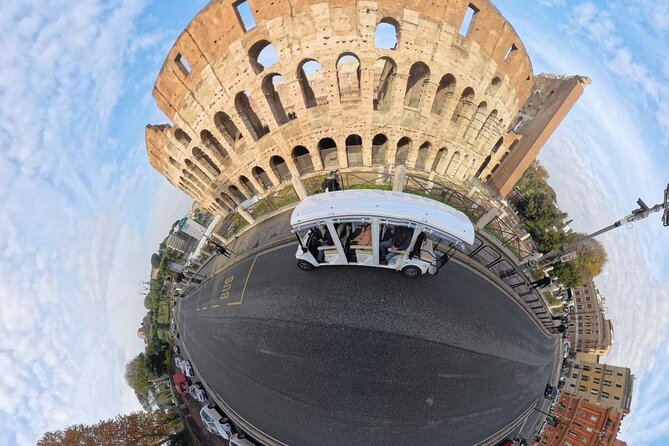
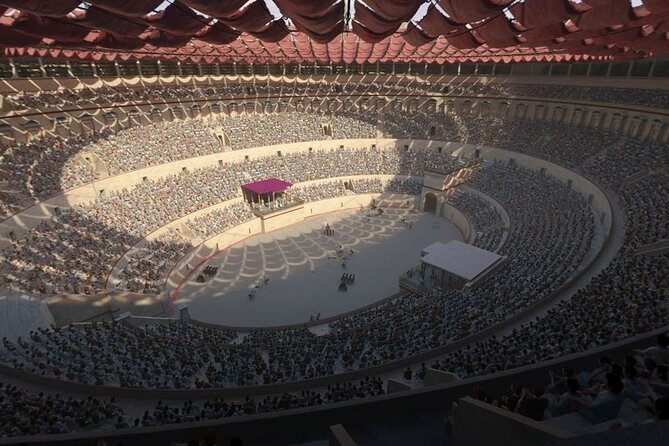
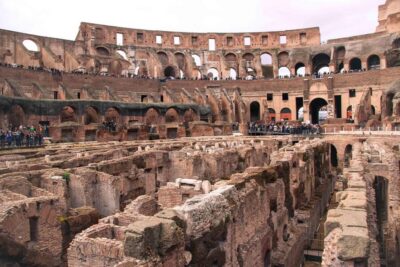
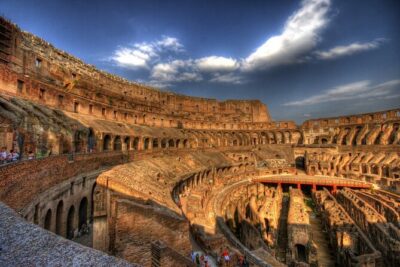
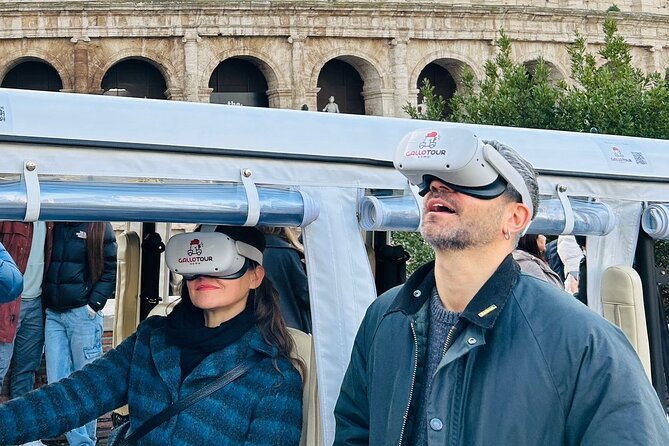
Here is how to calibrate your expectations. The tour includes VR headset reconstruction of the Colosseum arena, with roaring crowds and Roman architecture around you. But the tour does not include monument admission, and you are limited to exterior visits. So you are not walking into the Colosseum itself as part of this experience.
Your stop is about 25 minutes, and admission is listed as not included. In practice, that means you should treat the Colosseum as a viewing and photo anchor, while the VR provides the “gladiator era” atmosphere.
What works well about this setup is that the Colosseum exterior does the emotional hit. You see the massive structure in real life. Then VR gives context, the way the arena environment feels when it is active and crowded. The combination is a strong start for first-time visitors, especially if you are not planning a separate Colosseum ticket during your trip.
Also, if you are worried about getting “just another Colosseum photo,” the VR helps break that pattern. You get a visual time bridge that makes the place feel less like a postcard and more like a working arena.
Stop 6: Giardino degli Aranci for views and calmer photos
To end on a softer note, you go to Giardino degli Aranci (Orange Garden). This is a terrace stop with panoramic views of Rome, and it is a great place for photos without the same pressure you feel at the most famous squares.
This stop is about 25 minutes and admission is listed as free. It fits the outside-view format perfectly. You are not trying to do more history inside a venue. You are stepping into a quieter moment with a wider horizon.
It is also a smart finish because it gives you a chance to reset. After fountains and arenas, you get to look out over Rome and see how the city spreads beyond the ancient core. If you time it for sunset, the photos can look especially good, and even without sunset, the view helps you “locate” what you just saw.
Comfort details that matter more than you think
There are a few small things built into the experience that keep it from feeling like a rushed sightseeing sprint.
- Bottled water is provided. In Rome heat or even mild afternoon warmth, this helps you keep going without paying for a mid-tour drink.
- Coffee or tea is included. It is a classic Roman energy reset, and it is nice not to interrupt your schedule to find a café.
- The golf cart keeps things comfortable. If you have a travel day with jet lag, or you simply want to keep your energy for dinner plans later, this matters.
- English is offered, so you can follow the explanations clearly.
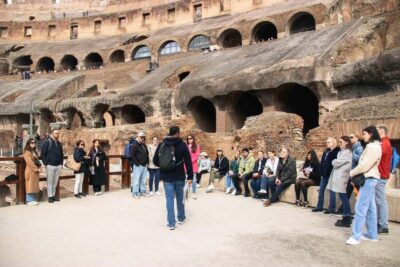
The guide style also seems to be a standout part of the experience. Across names like Max, Eva Dubuisson, Ludo (Ludovico), Mario, Matteo, and Valerio, the common thread is confident storytelling and a willingness to answer questions. That is exactly what you want on a “see a lot fast” tour.
What kind of traveler should book this?
This tour fits best if you want:
- A first-time orientation to ancient Rome
- A way to see major landmarks without long walking routes
- A combo of street sights plus VR reconstructions for Colosseum, Piazza Navona, and Circus Maximus
- A private format where you can ask questions and move at your pace
It is less ideal if you want:
- Guaranteed monument entry tickets and a fully inside-the-site experience
- A deep lecture-style history day packed with minute detail
One review also pointed out a lighter touch with history, even describing a pop quiz game and a balance between facts and fun. That suggests the vibe can be engaging rather than academic, which is a plus for many visitors.
Quick call: should you book it?
I think you should book this if you want an efficient, comfortable way to connect the dots between Rome’s big ancient landmarks, and you like the idea of seeing how places looked when they were active. The cart makes the day easier, the VR adds context fast, and the coffee, tea, and water keep it practical.
Skip it or pair it with something else if you specifically want monument entry tickets, long interior exploration, or a fully history-heavy day. For many people, the best move is to treat this as your “Rome setup,” then build the rest of your trip with the sites you want to go deeper on.
If you are deciding, I would choose this when convenience and clarity matter most, and you want ancient Rome to make sense quickly.
Latest additions from Rome
- Rome: Angels and Demons Guided Walking Tour★ 5.0 · 7 reviews
- Rome in a Nutshell Private Driving Tour★ 5.0 · 7 reviews
- Rome: Pasta and Tiramisu Class at a Local’s Home★ 4.8 · 7 reviews
- Vatican Guided Tour Experience in St. Peter’s with Holy Door★ 3.9 · 7 reviews
- Colosseum 1 Hour Tour★ 4.5 · 7 reviews
- Rome Vatican St Peter’s Basilica & Dome Private Tour & Breakfast★ 5.0 · 7 reviews
- Private transfer from Rome to Positano or Sorrento plus 2 hrs stop in Pompeii★ 5.0 · 7 reviews
- Gladiator school for adult★ 4.5 · 7 reviews