
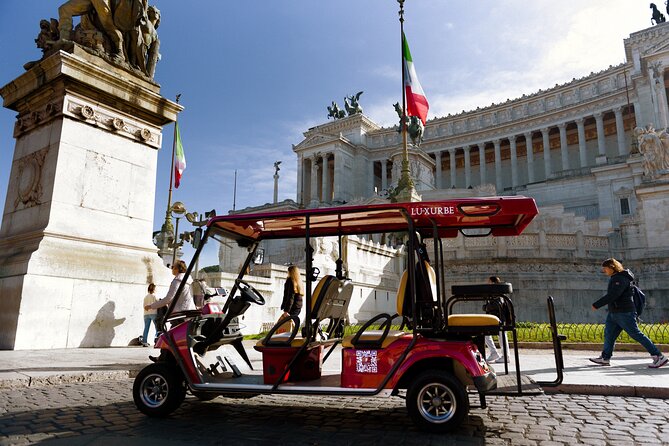
Reviewed · GOLF CART TOURS IN ROME
Ancient Rome Tour in a Golf Cart
Rome moves fast, and this tour moves with it. You zip between major ancient sights by golf cart, so you can see the Colosseum, Circus Maximus, and the Roman Forum area without turning your day into a workout.
What I like most is the guided story built around easy stops. You get reading material, and headsets when needed, so you are not just looking at stone, you are getting the who, what, and why as you go. The one thing to consider: the ride can feel a bit shaky on Rome’s rougher streets, and comfort may vary by road conditions.
In This Review
- Quick hits that matter
- What you’re really paying for at $84.46 per person
- Where the tour starts on Via dei Condotti
- Via dei Condotti: a fashion-street warm-up for ancient Rome
- Largo di Torre Argentina: ruins plus a cat sanctuary stop
- Piazza Venezia: Altare della Patria views and orientation energy
- The Theatre of Marcellus and Forum Piscarium: Rome’s show business and market life
- Temple of Venus and Rome: a massive statement in stone
- Domus Aurea: Nero’s palace complex under the ground
- Colosseum plus Imperial Forums: the big power zone, still visual from outside
- Circus Maximus: where crowds once packed the racecourse
- The in-ride experience: reading material, headsets, and real group size
- Comfort and safety on the golf cart ride
- Best for first-time Rome days, quick overviews, and less-walking itineraries
- Should you book this Ancient Rome golf cart tour?
- FAQ
- How long is the Ancient Rome golf cart tour?
- How much does the tour cost?
- Where does the tour start and end?
- Is pickup available?
- Will I be able to hear the guide clearly?
- Do you go inside the monuments?
- Is bottled water included?
- What if my plans change?
Quick hits that matter

- Golf cart pace cuts down on long walks while still covering Rome’s top anchors
- Stops with time for photos at each major site, not a rush-through drive
- Headsets and reading material help you follow the stories while you ride
- Small group cap of 15 keeps the tour feeling more personal
- You stay mostly outside the monuments, which is great for overview, but not the same as going in
What you’re really paying for at $84.46 per person
For $84.46, you are buying three practical things: a vehicle that gets you around quickly, a licensed guide who also drives, and the extra context that turns sightseeing into understanding. The cart matters in Rome. You avoid the constant stopping and starting of walking routes, plus you reduce how much you are at the mercy of heat, stairs, and distance.
The guide package is the other half of the value. Instead of hoping you can connect the dots yourself, you get explanations at each stop, supported by interactive reading material and headsets if required. If you are in Rome for a short time or you want a clean first-day orientation, this format is a smart use of money.
The only clear trade-off is that bottled water is not included. I’d plan on bringing your own small bottle so you can stay comfortable, especially in summer.
More Golf Cart Tours in Rome
- Rome by Golf Cart Private Tour: Beyond the Landmarks
★ 5.0 · 4,361 reviews - Rome on a Golf Cart Semi-Private Tour Max 6 with Private Option
★ 5.0 · 2,502 reviews - Rome Highlights by Golf Cart Private Tour
★ 5.0 · 2,379 reviews - Rome: Golf Cart Tour with Artisanal Gelato Tasting
★ 4.8 · 1,396 reviews
Where the tour starts on Via dei Condotti
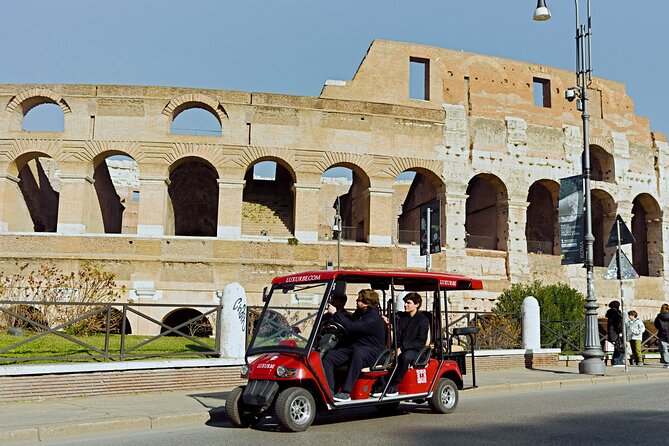
The meeting point is Via dei Condotti, 61, right in the luxury-shopping strip between the Spanish Steps area and Via del Corso. You will wait in front of the building entrance. There is no obvious shop sign to hunt for, so the driver will come to you and is easy to recognize, since you are looking for a golf cart.
Pickup, if offered for your booking, is arranged through the same area. Keep in mind pickup timing can shift slightly because of Rome traffic. If you are coming from another neighborhood, give yourself a little buffer so you are not sprinting across the city at tour start time.
Via dei Condotti: a fashion-street warm-up for ancient Rome
You start with a quick stop on Via dei Condotti, one of Rome’s most prestigious streets. It is known for high-end boutiques, luxurious stores, and elegant buildings, stretching from Piazza di Spagna toward Via del Corso. You only get about 10 minutes here, but it sets the mood.
Why this works on a golf cart tour: you ease in without immediately being overwhelmed by ruins. Then the day snaps into history as the route heads toward the ancient core.
If you love city contrasts, this is a nice moment to notice how Rome layers eras. Modern luxury is right next to ancient remains, and you start to see how close everything really is.
Largo di Torre Argentina: ruins plus a cat sanctuary stop
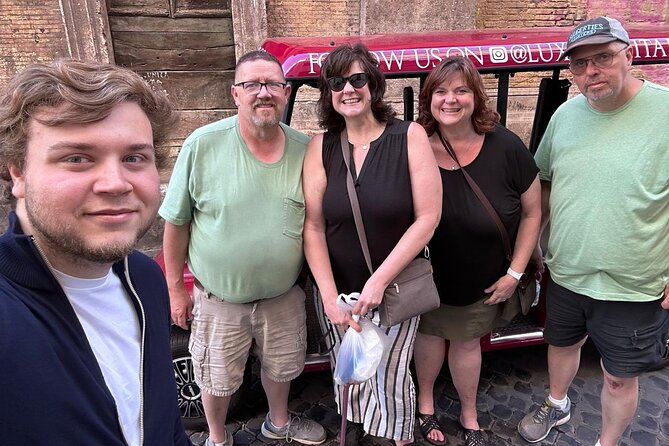
Next is Largo di Torre Argentina, a historic square packed with Republican-era ruins. You see four temples from the late Republican period and also the Curia of Pompey, tied to the famous assassination context.
This stop is about 20 minutes, and it includes a unique Rome detail: the cat sanctuary. If you are a cat person, this is the kind of unexpected, humane stop that makes Rome feel real, not just museum-like.
A small practical tip: even though it is a short stop, bring your eyes. The guide explanations help you identify what you are looking at, so you get more out of the visible ruins than you would wandering on your own.
Piazza Venezia: Altare della Patria views and orientation energy
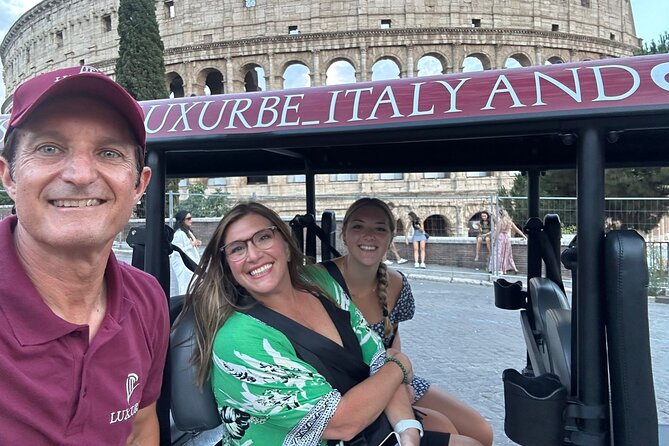
Piazza Venezia is a major hub, dominated by the massive Altare della Patria, dedicated to Victor Emmanuel II. From here, you get a strong sense of Rome’s geography and how major streets feed into the ancient sites.
You have about 20 minutes. That time is useful, because it gives you both context and photo chances. If you are planning later visits to the Forum area or Capitoline Hill, this stop helps you understand where those places sit relative to the rest of the city.
This is the moment when the tour feels like it is actively building your mental map.
Another shape for the same afternoon in Rome:
The Theatre of Marcellus and Forum Piscarium: Rome’s show business and market life
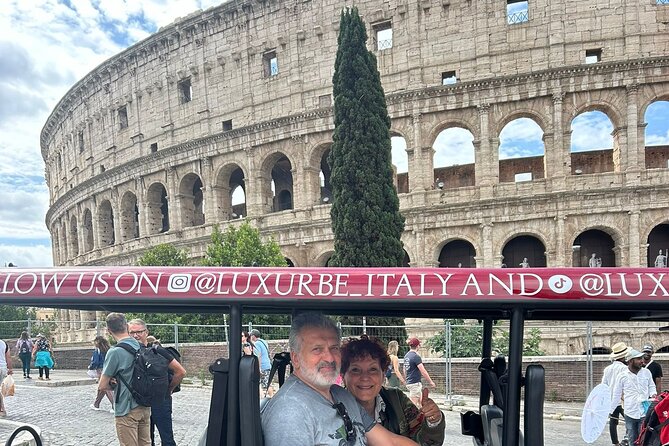
The Theatre of Marcellus is next, with about 20 minutes. It is an ancient open-air theatre built in the late 1st century BC, associated with Julius Caesar’s commission and completed under Augustus. It once could hold around 20,000 spectators and it is a precursor to the Colosseum.
Then you hit the Forum Piscarium, a fish market area near the Roman Forum and the Theatre of Marcellus, with about 10 minutes. You are looking at remnants of a marketplace that dates back to early Roman Republic times, when seafood trade was part of daily economic life.
This pairing is smart. One stop shows how Romans gathered for entertainment at scale. The other reminds you that the city ran on commerce, not just ceremonies.
What to watch for: when the guide points out connections between sites, you will start to understand Rome as a functioning city, not a set of isolated landmarks.
Temple of Venus and Rome: a massive statement in stone
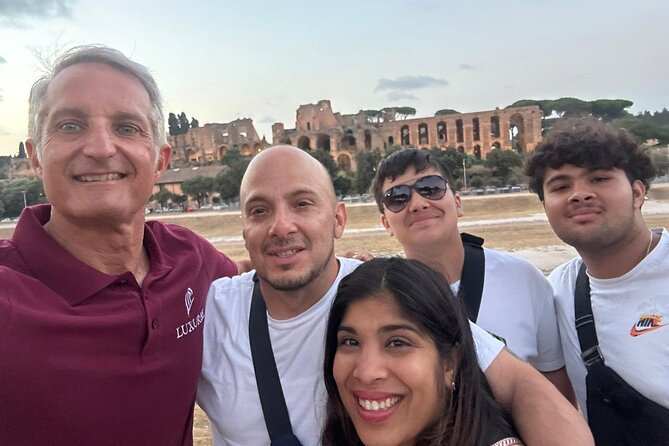
You then reach the Temple of Venus and Rome, another 20-minute stop. This is a grand temple dedicated to Venus Felix and Roma Aeterna. Designed by Hadrian and completed in 135 AD, it was the largest temple in Ancient Rome, with impressive scale and ornate decoration.
Even if you are not a history nerd, this kind of site hits because of its size and intention. It is propaganda in stone, using architecture to underline power, identity, and religion all at once.
If you want to get more out of this stop, pay attention to how the guide frames what the temple was meant to represent. The explanation is the difference between looking at ruins and reading a message.
Domus Aurea: Nero’s palace complex under the ground
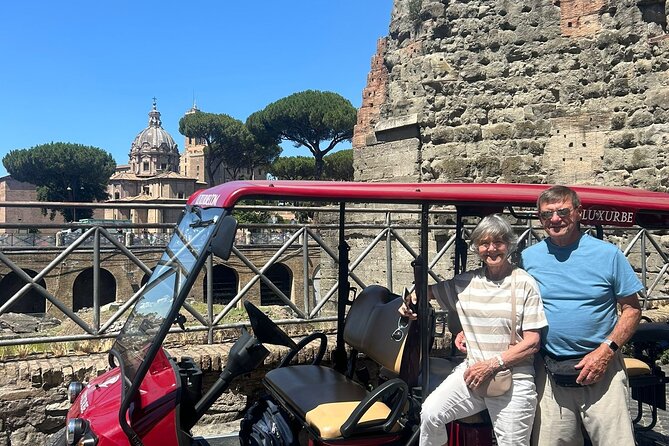
Next is the Domus Aurea, with about 20 minutes. This was Emperor Nero’s vast, opulent palace complex built after the great fire of 64 AD. It is famous for lavish frescoes, gold-plated walls, and intricate mosaics, even though much of what you see today is its remains and underground story.
Why this stop works on a golf cart tour: it gives contrast. The day has been about temples, theatres, markets, and forums. Domus Aurea shifts you into the world of imperial luxury and political drama, centered on one ruler’s ambition.
For photo lovers, it can be a great chance to get perspective on how much of Rome’s story is hidden beneath your feet.
Colosseum plus Imperial Forums: the big power zone, still visual from outside
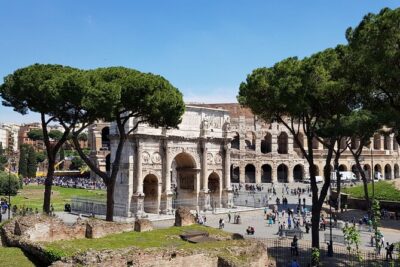
You arrive at the Colosseum, with about 20 minutes. It is the iconic amphitheatre built in 80 AD under Vespasian, known for gladiatorial contests and public spectacles that seated up to around 50,000 people. Even from outside, it is still the kind of structure that makes you stop talking for a second and just look.
Then you move to the Imperial Forums, again around 20 minutes. These monumental public squares were commissioned between 46 BC and 113 AD by different emperors, including Caesar and Trajan. This was the center for politics, commerce, and religion, and the ruins show the scale of Roman ambition.
Important expectation to set: this tour keeps you seeing monuments from outside, then stopping for explanations and pictures. That means it is ideal for overview and orientation. If you want to do deep, ticketed exploration inside buildings, you will still want to plan separate visits.
But as a first big-history hit, the Colosseum plus Imperial Forums combination is hard to beat. It gives you a sense of how power, entertainment, and civic life blended in the same district.
Circus Maximus: where crowds once packed the racecourse
The last main ancient stop is the Circus Maximus, about 20 minutes. It was an ancient chariot racing stadium and mass entertainment venue, built as early as the 6th century BC. It could hold over 150,000 spectators, and today the long, elongated shape still gives you the scale of what it was like.
If you have only seen modern stadiums, this is a reality check. The Romans did crowds in a different way, with entertainment integrated into everyday urban rhythm.
It is also a nice way to end. After so much architecture and ideology, Circus Maximus brings you back to motion and noise, the public energy that drove Rome’s social life.
The in-ride experience: reading material, headsets, and real group size
A lot of Rome tours either overwhelm you with walking or bore you with nothing but driving. This one tries to land in the middle.
You make frequent stops, and the guide provides explanations at each site. When headsets are available, they help you hear clearly even in busy streets or around groups. Interactive reading material also supports the stories, so you can follow along without needing to pull your phone out constantly.
Group size is capped at 15, which usually keeps things smoother. In the best moments, it can feel like a small-class city briefing, not a chaotic stampede.
From the guide style you might encounter, the pace is adjustable. Guides like Matt, Daniel, and Elena have been praised for keeping the tour fun while still teaching, and Matteo or Roberto have been singled out for patient, clear explanations. If you see your guide listed as one of these names when booking, that is a good sign for how the day will feel.
Comfort and safety on the golf cart ride
The golf cart is the star of the practical side of this tour. It is faster than walking, and it can be easier on your legs, especially when you are combining a first-day overview with later plans.
That said, do plan realistically. Rome roads are not always smooth. You may feel some shake. One review noted the ride can feel like you are in a motorcycle with extra seats, and the surface can make it less comfortable for some older folks. If you are sensitive to motion, you may want to sit comfortably, hold on during rougher sections, and consider timing the ride earlier in the day when streets are calmer.
Also note that the guide drives, so you are not just watching from a bus. That can feel more personal and controlled, but it also means you are at the mercy of traffic conditions. Rome traffic is real, and it affects pacing.
Best for first-time Rome days, quick overviews, and less-walking itineraries
This is the kind of tour I would book when you want to:
- Get your bearings fast on a first full day
- Hit big ancient icons in a short window
- Learn just enough context to pick better priorities later
- Save your energy for longer, ticketed visits afterward
If you already walked a lot the day before, this can be a smart reset. The cart gets you moving and gives your feet a break while still keeping you in Rome’s main story zones.
If you are mainly after interior access, special exhibits, or museum ticketing, this may not be your best match, since the experience focuses on seeing monuments and ruins from outside.
Should you book this Ancient Rome golf cart tour?
Book it if you want an efficient, guided way to see Rome’s biggest ancient highlights without spending your whole day walking between them. The combination of golf cart transportation, licensed guide explanations, and the mix of major stops like Largo di Torre Argentina, the Colosseum, the Imperial Forums, and Circus Maximus is a strong value for time.
Skip it if you are very motion-sensitive and you cannot tolerate a ride that may feel a bit bumpy on older streets. Also consider booking a different format if you want lots of inside access, since this tour is built around outside viewing with photo stops.
If you are flexible and want a fun, educational overview that helps you plan the rest of your Rome trip, this one is a solid choice.
FAQ
How long is the Ancient Rome golf cart tour?
It runs about 3 hours (approx.), with the remaining time typically used for travel between stops.
How much does the tour cost?
The price is $84.46 per person.
Where does the tour start and end?
It starts at Via dei Condotti, 61, 00187 Roma RM, Italy, and it ends back at the same meeting point.
Is pickup available?
Pickup is offered, and if you booked a custom pickup, your driver will contact you shortly before arrival.
Will I be able to hear the guide clearly?
You get interactive reading material, and headsets are provided if required.
Do you go inside the monuments?
All participants see the monuments from outside. The tour stops at each site for explanations and time for pictures.
Is bottled water included?
No, bottled water is not included.
What if my plans change?
There is free cancellation, and you can cancel up to 24 hours in advance for a full refund.
Latest additions from Rome
- Guided Tour Vatican Museums & Sistine Chapel★ 4.1 · 30 reviews
- Exclusive Rome by Night Vespa Tour★ 5.0 · 30 reviews
- Transfer Rome to Airports★ 4.5 · 30 reviews
- Vatican: St.Peter’s Basilica & Dome – Reserved Entry & Tour★ 4.1 · 30 reviews
- Tivoli, Hadrians Villa and Villa d’Este, a charming day trip from Rome★ 4.5 · 30 reviews
- Rome street art tour: off the beaten path with a local guide★ 5.0 · 30 reviews
- Rome Food Tasting with Wine Pairing Italian Authentic Flavors★ 5.0 · 31 reviews
- Inspirational Cooking on the Roman Chef’s Panoramic Terrace★ 5.0 · 30 reviews
Golf Cart Tours in Rome, compared.
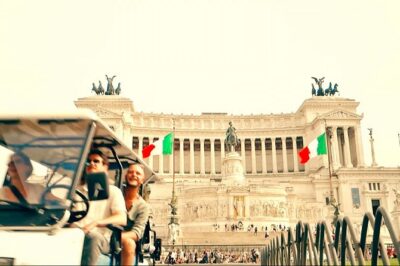
Rome by Golf Cart Private Tour: Beyond the Landmarks
Read our review →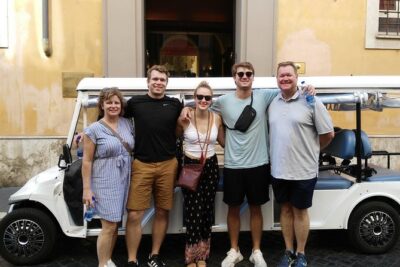
Rome on a Golf Cart Semi-Private Tour Max 6 with Private Option
Read our review →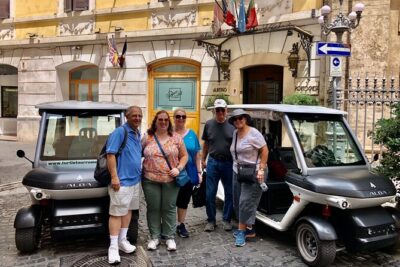
Rome Highlights by Golf Cart Private Tour
Read our review →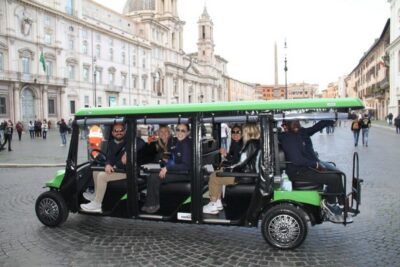
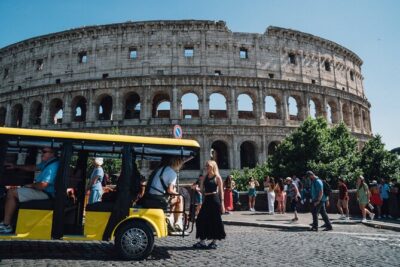
Golf Cart Small-Group Guided Tour: Rome City Highlights
Read our review →
Private/Group 4 Hours Golf Cart SightseeingTour
Read our review →
Browse the lists this tour appears in