
Reviewed · WALKING TOURS IN ROME
Ancient Rome Guided Walking Tour: Colosseum, Forum and Palatine
On a tight schedule, Rome still feels huge. This half-day guided walk takes you to Palatine Hill, the Colosseum, and the Roman Forum with pre-booked entry and wireless headsets so you can actually follow the story. Two things I really like are the focused route (no random wandering) and the headset setup for clear commentary even when crowds swell. The main drawback to plan for is that the walking includes hills, stairs, and uneven museum surfaces, so wear proper shoes and don’t assume it’s an easy stroll.
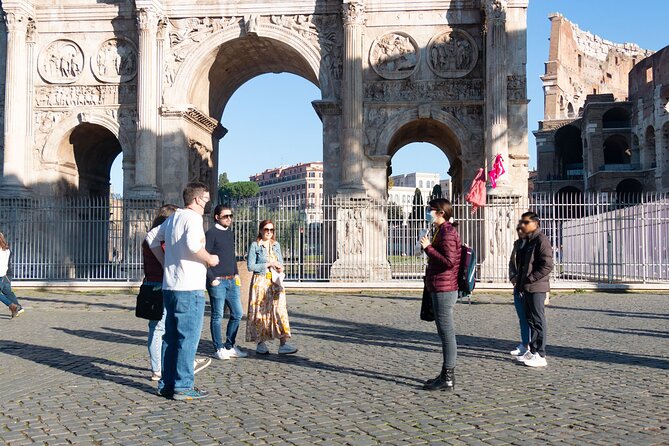
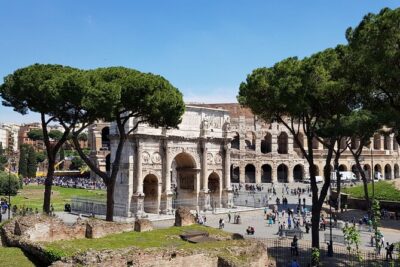
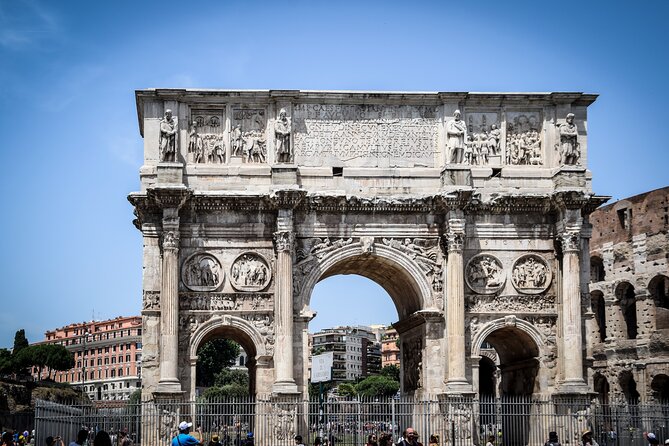
You’ll start in the area of the Arch of Constantine, then move to Palatine first, then the Colosseum, and finish near the Forum. Expect security checks and crowd flow at the big sites, which can add some delay. With a small group limit of 20, it usually feels controlled, not chaotic.
In This Review
- Key Things That Make This Tour Work
- How the Route Builds the Roman Story (Palatine to Forum)
- Meeting Point and Timing: Start Times, Flags, and the Move in 2025
- Palatine Hill First: Context, Views, and the “Older Rome” Feel
- Entering the Colosseum: Pre-booked Tickets and Crowd Reality
- The Roman Forum Finish: Politics, Religion, and Big Names
- Headsets, Group Size, and Hearing the Guide Through the Noise
- Walking Level: Moderate Fitness, Hills, Stairs, and Medium-Hard Surfaces
- Price and Value: What You’re Paying For at $71.65
- Who This Tour Fits Best (And Who Should Rethink)
- Practical Tips for a Smoother Colosseum and Forum Day
- Should You Book This Colosseum, Forum, and Palatine Tour?
Key Things That Make This Tour Work
- Headsets for clearer guide audio: wireless audio helps you keep up even in noisy, crowded areas.
- Pre-booked Colosseum admission included: you’re not hunting for tickets or wasting time in long lines.
- Palatine Hill first: you get the “older Rome” context before you hit the amphitheater.
- A tight 3-hour route: three major stops without the day-long grind.
- Small group size (max 20): easier pacing and group control than many big tours.
How the Route Builds the Roman Story (Palatine to Forum)
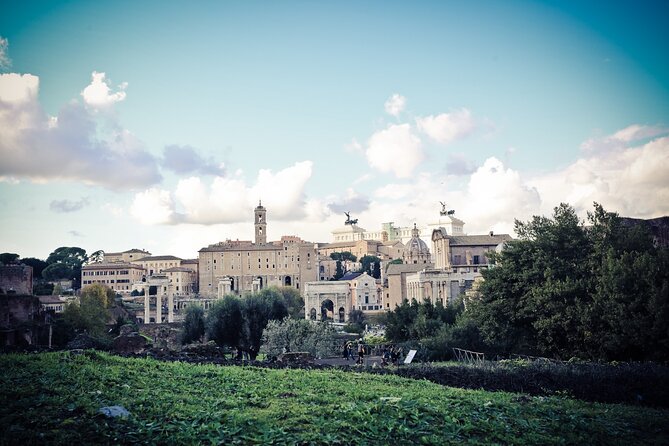
This tour is built like a simple storyline: origins, then spectacle, then power. You start on Palatine Hill, one of Rome’s seven hills, often described as part of the city’s earliest layer. The legend of Romulus and Remus tied to the Palatine is the kind of starting point that helps the rest of the sites make sense. You’re not just looking at ruins, you’re learning why they mattered.
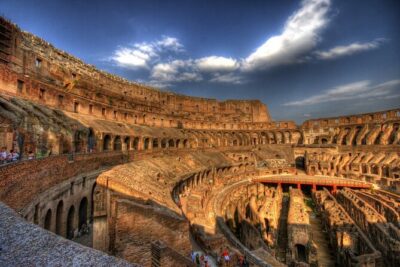
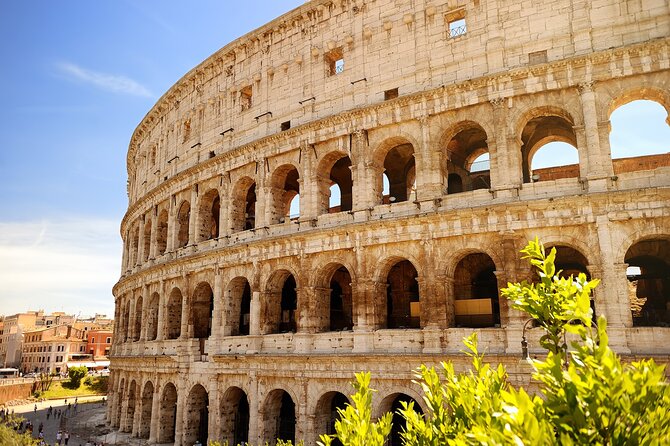
Next comes the Colosseum, where the scale hits you fast. Your guide explains how the amphitheater developed centuries before modern engineering, and it once held an enormous number of spectators. That context makes it easier to picture what you’re seeing, not just read a sign.
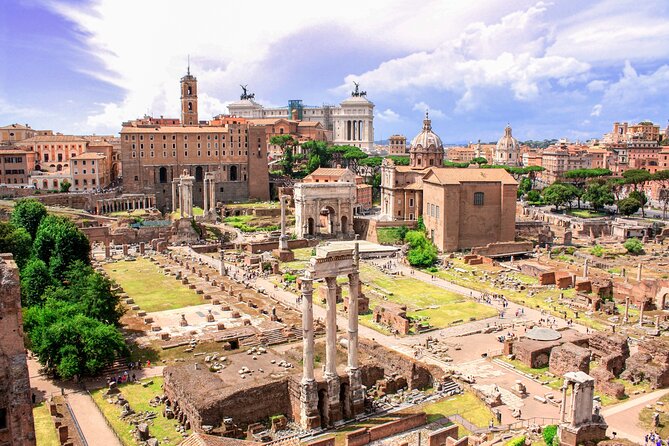
Finally, the Roman Forum brings you back to everyday control. This is where public and religious life of ancient Rome played out, and your guide points out major highlights like the Temple of Julius Caesar and the House of the Vestal Virgins. It’s a strong finish because you can connect politics, religion, and spectacle into one mental picture.
More Walking Tours in Rome
- Rome: Guided Food Walking Tour with Wine in Trastevere
★ 4.9 · 3,105 reviews - Rome: Trastevere & Campo de Fiori Street Food Walking Tour
★ 4.9 · 2,768 reviews - Rome: Paranormal Night Walking Tour & Secret Backstreets
★ 4.9 · 1,921 reviews - Rome: Trastevere Street Food Walking Tour with Local Expert
★ 4.8 · 1,784 reviews
Meeting Point and Timing: Start Times, Flags, and the Move in 2025
Plan around two big variables: your start time and the meeting point location.
Start times depend on the season:
- 2:30 PM from the start of the listed summer period (until Oct 26, 2024) and again from Apr 1, 2025 through Oct 25, 2025
- 1:30 PM from Oct 27, 2024 through Mar 31, 2025, and from Oct 26, 2025 onward
Meeting point details can also change:
- The listed meeting area includes Via delle Terme di Tito, 75, 00184 Roma RM
- From Apr 1, 2025, the meeting point moves to Colle Oppio Park, Via delle Terme di Tito corner of Via Nicola Salvi, inside the park
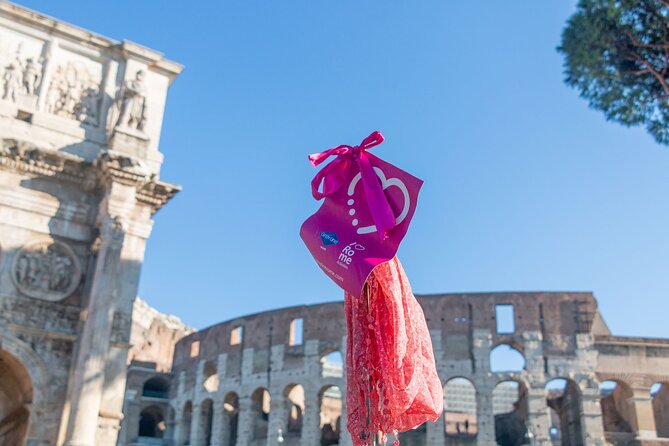
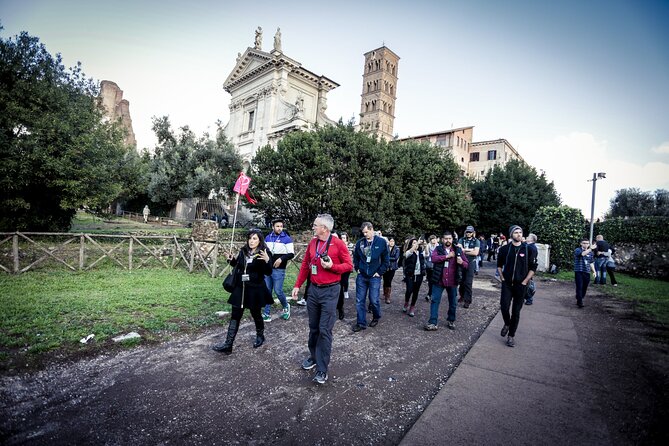
Here’s the practical part: show up early enough to handle Rome crowds and confusion. One theme that comes up is that the Arch of Constantine area is busy with multiple tour groups, so you want an unmistakable meetup system. A helpful tip is to look for visible identifiers like the pink flag some groups use, and then follow staff direction if the exact spot is a short walk from what you first assume.
Palatine Hill First: Context, Views, and the “Older Rome” Feel
Palatine Hill is where the tour earns its “beginner-friendly” power. Before you see the Colosseum, you start on one of Rome’s oldest parts, which makes your later stops feel less random. The hill sits between the Velabro and the Roman Forum, and it’s now essentially an open-air museum during the day.
You’ll get about one hour here, and this is where a guide’s pacing really matters. You’re not just walking through space, you’re learning how Palatine connects to legends and to the idea of where Rome’s elite and power centers developed over time. Because it’s earlier in the route, it’s also a good time to get your bearings for the rest of the day.
The practical downside: Palatine is not flat and polished like a city sidewalk. Wear shoes with grip. There can be medium-hard surfaces, and the tour notes rain or shine, so plan for weather.
Entering the Colosseum: Pre-booked Tickets and Crowd Reality
The Colosseum is the headline, but the real value in this tour is what surrounds the visit. Your ticket and Colosseum reservation fee are included, and that matters because entry systems at major sites can be slow and unpredictable. Instead of standing in line for basic logistics, you enter using your pre-booked tickets.
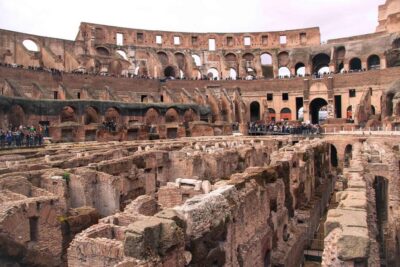
You’ll have about one hour inside, which is enough to see key areas and get guided explanation without turning it into a full-day museum marathon. Your guide also connects engineering and design ideas to what you’re looking at, including how the amphitheater became a massive spectator venue, once holding up to roughly 80,000 people.
One thing to expect: sound and flow can be tricky. Even with headsets, the Colosseum area can be loud, and groups can cluster at popular photo spots. That’s why your guide’s group management matters, especially if your group is near other tours.
The Roman Forum Finish: Politics, Religion, and Big Names
The Roman Forum is where your brain goes from scenes to systems. This is the area that served as the center of public and religious life. After the fall of the empire, it fell into oblivion and was buried gradually over centuries. Excavations began much later, in the 20th century, which is a useful reminder that what you see today is the product of long-term rediscovery, not an instantly uncovered time capsule.
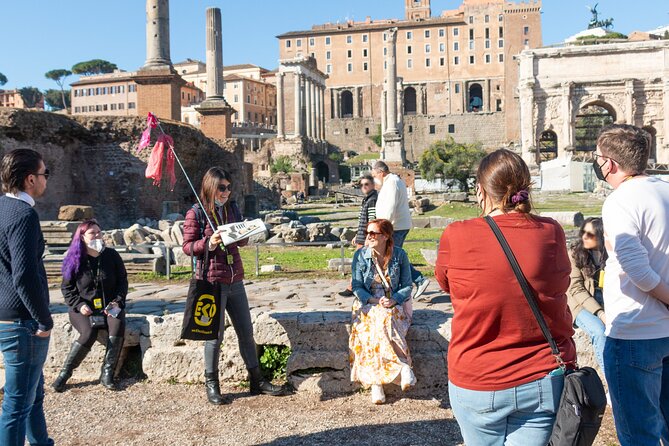
You get about one hour here. Your guide points out highlights such as the Temple of Julius Caesar and the House of the Vestal Virgins. Those stops are valuable because they give you concrete anchors, not just wandering through stone fragments. You can leave understanding what those names meant and how they fit into Rome’s power structure.
Also, since you finish near the Forum area, you’re in a strong position to explore independently after the tour. You’ll end around Via dei Fori Imperiali, which keeps you close to more ruins and viewpoints.
More ways into the Colosseum:
Headsets, Group Size, and Hearing the Guide Through the Noise
One detail that makes a real difference is the wireless audio headsets. This is a walking tour through places where crowds, echo, and distance can make normal conversation impossible. With headsets, you’re more likely to actually catch the explanation when you stop at viewpoints or while moving through tighter areas.
The group size is capped at 20 travelers, which usually helps with coordination. Smaller groups tend to move more cleanly, and it’s easier for staff to keep everyone together. Still, pay attention when your guide pauses. If you’re the kind of traveler who stops to read every label, you may need to gently manage your pace to avoid getting left behind.
In some experiences, accent clarity can affect how easy the headset audio is to understand, especially in crowded outdoor spots. If audio clarity is a concern for you, consider using the headset early, set the volume to something comfortable, and listen for guide instructions at meeting points before you begin walking.
Walking Level: Moderate Fitness, Hills, Stairs, and Medium-Hard Surfaces
This isn’t a flat, stroller-friendly promenade. The tour is described as requiring moderate physical fitness, and it’s not recommended for impaired mobility. The archaeological areas involve walking on medium-hard floors, with attention needed for comfortable shoes.
From the on-the-ground reality, you should assume:
- hills and stairs
- uneven ground
- heat risk if you’re in the warmer part of the year
A smart move is to dress like you’re walking a few miles outdoors, not like you’re visiting a short city museum. Bring water, and protect yourself from sun even in late afternoon if the weather is clear. If rain hits, your footing matters more than you’d think on ancient stone paths.
Price and Value: What You’re Paying For at $71.65
At $71.65 per person, you’re paying less for admissions and more for the guided structure and timed access. The Colosseum entry is included, and the listing values the Colosseum ticket at €18 plus a reservation fee at €2. That means your admission costs are handled, and the remaining portion covers guide service, headset provision, and tour operations.
Is it good value? Usually, yes, because Rome’s major sites can eat time fast, and a guided route helps you make sense of what you’re seeing in the limited time window. The tour is also half-day, around 3 hours, so you’re not paying for a full day of services if your goal is just the essential ancient trio.
The best way to judge value is to compare what you’d spend on your own: Colosseum ticket logistics plus the time needed to connect Palatine and the Forum into a meaningful narrative. For most first-time visitors, this format is a time-saver.
Who This Tour Fits Best (And Who Should Rethink)
This tour suits you if:
- you want the big three of ancient Rome in a controlled time window
- you like understanding context, not just taking photos
- you appreciate clear audio support through headsets
- you’re comfortable walking hills and stairs for a few hours
You might want a different option if:
- you have mobility limitations or need step-free routing
- you struggle with uneven surfaces and long outdoor walks
- you expect a relaxed, easy pace with lots of sitting breaks
If you’re traveling with kids, the guide experience can still work well, especially when the group pacing is friendly. The tour is structured enough to keep momentum, but make sure the walking level matches your family’s tolerance.
Practical Tips for a Smoother Colosseum and Forum Day
Here are my favorite practical habits for this type of Rome day:
- Arrive early for the meeting point, especially in the Arch of Constantine area where multiple tour groups overlap.
- Double-check your meetup location if traveling during the listed timing changes. From Apr 1, 2025, the meeting point is inside Colle Oppio Park near the specified corner.
- Bring comfortable shoes with grip. The tour notes medium-hard floors.
- Expect security checks and a possible delay due to heightened measures.
- Have your passport or ID ready and matching the full name provided at booking.
- If you use a pacemaker, bring the required certificate for screening.
Small effort here pays off. You spend less time stuck in “where do we go” mode and more time where you want to be: at Palatine, inside the Colosseum, and finishing in the Forum zone.
Should You Book This Colosseum, Forum, and Palatine Tour?
I’d book this tour if you want a focused ancient Rome hit with pre-booked Colosseum entry, headsets, and a logical order that helps the sights click together. It’s also a strong choice if you value time efficiency, because the route is tight and the structure prevents the common problem of seeing ruins with no connective tissue.
I would not book it if walking comfort is a deal-breaker, since the experience is clearly built for people with moderate fitness and it involves uneven archaeological surfaces. If that’s you, you’ll likely enjoy Rome more with a different format that reduces stairs and distance.
If you’re on the fence, decide based on one question: do you want help turning three famous ruins into an understandable story in about 3 hours? If yes, this is a solid pick.
Latest additions from Rome
- Guided Tour Vatican Museums & Sistine Chapel★ 4.1 · 30 reviews
- Exclusive Rome by Night Vespa Tour★ 5.0 · 30 reviews
- Transfer Rome to Airports★ 4.5 · 30 reviews
- Vatican: St.Peter’s Basilica & Dome – Reserved Entry & Tour★ 4.1 · 30 reviews
- Rome street art tour: off the beaten path with a local guide★ 5.0 · 30 reviews
- Tivoli, Hadrians Villa and Villa d’Este, a charming day trip from Rome★ 4.5 · 30 reviews
- Rome Food Tasting with Wine Pairing Italian Authentic Flavors★ 5.0 · 31 reviews
- Inspirational Cooking on the Roman Chef’s Panoramic Terrace★ 5.0 · 30 reviews
Walking Tours in Rome, compared.

Guided Food Walking Tour with Wine in Trastevere
Read our review →
Trastevere & Campo de Fiori Street Food Walking Tour
Read our review →
Paranormal Night Walking Tour & Secret Backstreets
Read our review →
Trastevere Street Food Walking Tour with Local Expert
Read our review →
Guided City Center Evening Sightseeing Walking Tour
Read our review →
Small-Group City Highlights Moonlight Walking Tour
Read our review →
Best of Rome Walking Tour including Trevi Fountain
Read our review →Browse the lists this tour appears in