
Reviewed · 3-HOUR EXPERIENCES
3 Hours Mosaic Workshop in Trastevere
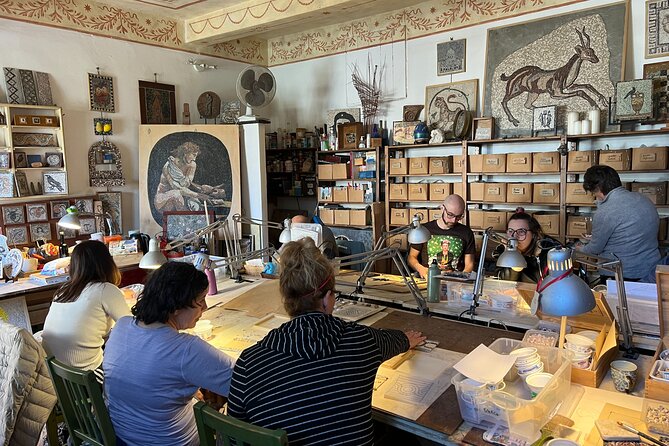
Roman mosaics get personal here. In a Trastevere studio, you create your own mosaic piece while learning the real, step-by-step craft behind the tiles you keep seeing in Rome’s churches.
I especially like the hands-on instruction that walks you through the process, even if your first few cuts look a little wobbly. The other standout is the take-home result: your finished mosaic is carefully packaged in a box so you can move with it.
You also get a welcome break from the city’s sightseeing pace. This is a small class, designed to keep things calm enough that you can actually learn, not just watch. With a maximum of 6 people and a guided pace, it feels personal rather than assembly-line.
One possible consideration: you’re making a craft project, not just attending a quick demo. Expect to spend real time cutting, gluing, and setting tiles, and if you’re hoping for something super effortless, the learning curve is part of the fun.
In This Review
- Key things to know before you go
- Why make a mosaic in Trastevere instead of another museum stop
- Meeting at Via Corsini 8, and what timing feels like
- The 3-hour workshop flow: design choice, cutting, setting, packaging
- 1) Choose your pattern and plan your look
- 2) Pick your stones and get a feel for the tools
- 3) Cutting and preparing the pieces
- 4) Gluing and placing tiles
- 5) Layering and finishing for a take-home result
- What you’ll learn that actually helps you appreciate Rome
- Instructor style in plain language, including language issues
- Price and value: what you’re really paying for
- Who this mosaic workshop suits best
- Practical tips so your mosaic arrives home looking good
- Should you book the 3 Hours Mosaic Workshop in Trastevere?
- FAQ
- How long is the 3 Hours Mosaic Workshop?
- Where does the workshop meet in Rome?
- How much does the mosaic workshop cost?
- What language is the workshop offered in?
- How many people are in the class?
- Will I receive a ticket on my phone?
- What will I make during the workshop?
- Is there free cancellation?
- Is the workshop suitable for most travelers, and can service animals attend?
Key things to know before you go
- Small group size (max 6) means more attention and easier troubleshooting as you work
- You pick a design and materials so your mosaic looks like you, not like a generic souvenir
- Step-by-step guidance covers the tricky parts, including setting the stones
- You leave with a boxed mosaic that’s meant to travel with you
- English is offered, and teaching can still be clear even if English is limited in the room
Why make a mosaic in Trastevere instead of another museum stop
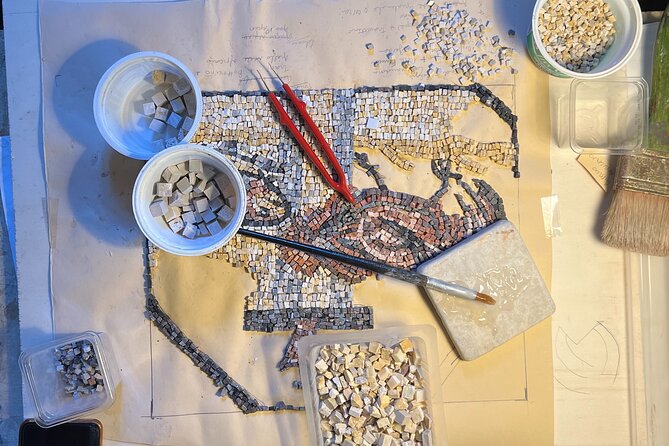
If you’ve already walked past Rome’s mosaics in churches, you know the feeling. You see the gold glint, the tiny details, and you think: how on earth did they make that look so sharp? This workshop is the fast route to understanding the craftsmanship, because you’re doing the same kind of tile work with your own hands.
I like this format because it turns background decoration into actual skill. Instead of only reading labels, you learn why tiny choices matter, like which stones are easier to handle, how patterns come together, and what makes a finished surface look clean. It’s also a nice “reset” in the middle of a trip. You get to slow down for a few hours in a studio setting rather than rushing between landmarks.
Trastevere adds another layer. The neighborhood vibe helps the experience feel more like a Roman day activity than a tourist add-on. Even if you’re not a craft person, being in a local-feeling area makes the class feel grounded.
Other Roman benches to work at for a morning:
- 3 in 1 Cooking Class near Navona: Fettuccine, Ravioli & Tiramisu
★ 5.0 · 7,376 reviews - Rome: Pasta & Tiramisu Class with Fine Wine by the Vatican
★ 4.9 · 4,852 reviews - Rome: Pasta Making Class with Wine, Limoncello, and Dessert
★ 4.9 · 3,177 reviews - Rome Cooking Class: Make Pasta and 3 Spritz Cocktails
★ 5.0 · 2,937 reviews
Meeting at Via Corsini 8, and what timing feels like
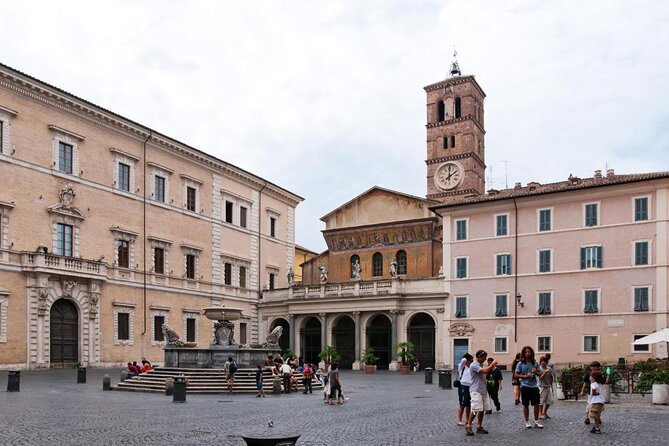
Your start point is Via Corsini, 8, 00165 Roma RM. The activity ends back at the meeting point, so you are not left figuring out transport on your own when you’re carrying a project.
The class runs about 3 hours, and in that time you’ll go from selecting a design to leaving with a finished mosaic packed for travel. Booking is typically done around a month in advance on average, about 23 days, which usually means you’ll want to lock in your slot sooner rather than later if you’re traveling in peak weeks.
Also, plan to arrive ready to work. This is not a “watch for a bit, then take a photo” activity. You’ll be cutting and placing materials, and you may find you use your forearms more than you expected once the real setting begins.
The 3-hour workshop flow: design choice, cutting, setting, packaging
The workshop is structured to keep you moving, but it still leaves room to make decisions. Here’s the flow you can expect, step by step.
1) Choose your pattern and plan your look
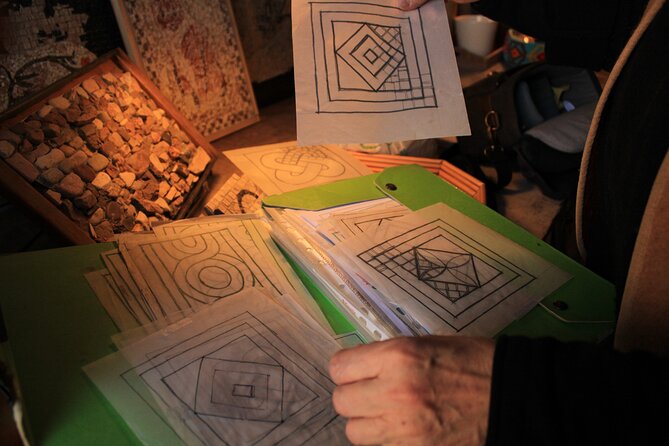
At the start, you select from a set of pre-made mosaic patterns. The designs are chosen to work well for a workshop format, so you’re not left inventing a blueprint from scratch. One helpful approach the class uses is letting you pick your base design first, then match your colors of stone.
This matters because Roman mosaic style is all about small visual decisions. When you choose a pattern and then choose your stones, the result feels personal without turning the session into a design course.
2) Pick your stones and get a feel for the tools
Once you’ve chosen the look, you choose the materials. You’ll then move into learning how the stones behave and how to handle the tools safely and confidently.
In real mosaics, every tile edge can matter. That’s why the class doesn’t rush past this stage. Even if you’re new, the goal is to get you into a rhythm: cut with intention, place with care, adjust if needed.
A few more Rome options worth a look
3) Cutting and preparing the pieces
Cutting is one of the steps that can feel intimidating at first. The good news is that you’re working under professional guidance, and you’ll learn what’s easiest as you go. Some stones and cuts are simply simpler than others, and the instructor will help you steer your choices toward a result that looks good.
The cutting stage is also where you’ll realize the craft is more than brute force. It’s about control and small corrections, not just speed.
4) Gluing and placing tiles
After pieces are ready, you’ll glue them down and start building the mosaic. This is where you see the design come alive. The work is detailed, and you’ll likely get hands-on help to make sure your placement matches the pattern and looks clean.
One strong point from the teaching style is patience. You’re not expected to master the craft instantly. The instructor role is to keep you on track, help you get the hang of the process, and make sure the mosaic reads correctly as it takes shape.
5) Layering and finishing for a take-home result
The final steps include layering and completing the mosaic so it’s ready to go home. In at least one class description, the process is described as building the mosaic and then layering it into a base, so you leave with a piece that feels like a finished work rather than a half-done craft project.
Then comes the part you’ll be glad is handled for you: packing. Your mosaic is placed into a box built for travel. People love this step because the mosaic isn’t fragile-for-nothing. It is designed to survive the trip from the studio to your lodging and beyond.
What you’ll learn that actually helps you appreciate Rome
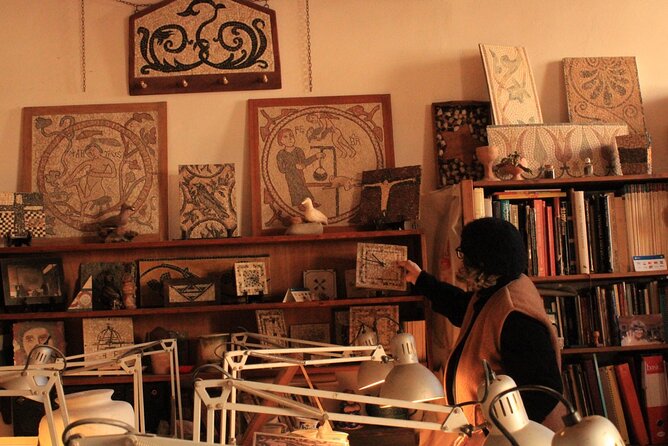
This workshop isn’t just about making something pretty. You’ll learn why Roman mosaics look the way they do, and once you know a few basics, you’ll notice more on the rest of your trip.
For example, you’ll understand that:
- tile choice affects ease of handling and the final surface
- pattern planning matters, because a mosaic is made of many tiny decisions
- placement is about consistency, not just random artistic flair
- the finished look comes from careful work, then the right finishing steps
Even if you visit multiple churches after the class, the workshop gives you a new way to look. Mosaics stop being background decoration and start looking like a carefully planned system of tiny pieces.
And if you’re planning this early, it can change how you experience the rest of Rome’s mosaic-heavy sites. You’re already primed to notice craftsmanship instead of just admiring the overall effect.
Instructor style in plain language, including language issues
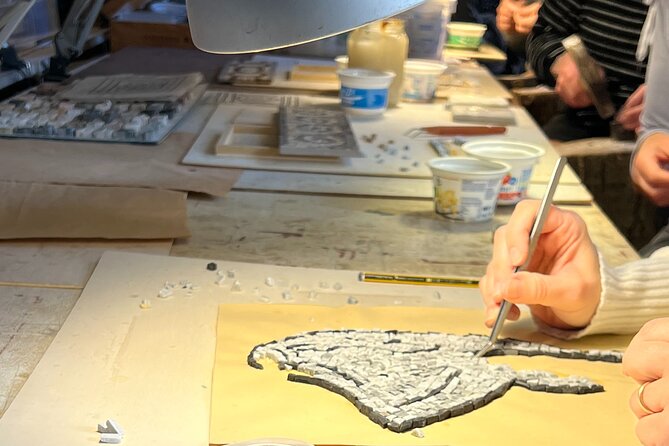
English is listed as the language option, but the workshop’s teaching method seems to work even when English is limited. One class experience notes the instructor used tools like Google Translate to communicate. The key takeaway for you is that instruction relies on clear demonstrations and guidance, not just perfect verbal explanations.
A name you may hear in these classes is Nadia. The teaching vibe is repeatedly described as patient and helpful. People consistently highlight that you do not have to be an artist to get a good result.
So if you’re worried you’ll be the slow one, or you’re afraid your hands won’t cooperate, you’re not the target audience for embarrassment. You’re the target audience for coaching. The session is built so you can learn as you go.
Price and value: what you’re really paying for
At $168.67 per person for about 3 hours, you’re paying for much more than a craft demo.
Think of what’s included:
- professional artist guidance from start to finish
- materials and tools to make a real mosaic
- a guided pattern process (so you’re successful in the timeframe)
- finishing steps that make the piece travel-ready
- expert packing in a box
When you compare it to typical sightseeing costs, this is the kind of experience that gives you a lasting souvenir. You don’t just get photos. You leave with an object that represents the time you spent learning a Roman craft.
Also, small-group size helps justify the price. With a maximum of 6 travelers, you get more personal attention, which reduces frustration and boosts your final result.
Is it expensive? It’s not cheap. But it’s also not just a ticket into a studio. You’re buying instruction, materials, and an end product that you can actually take home.
Who this mosaic workshop suits best
This workshop fits best if you like doing, not just watching.
You’ll likely enjoy it if:
- you want an alternate to museums and want a break from walking
- you enjoy hands-on activities, even if you’re a beginner
- you’re traveling as a couple, since the class format is relaxed and social
- you want a souvenir that feels more meaningful than a postcard or magnet
- you’re curious about Roman art and want to understand the process
It can also be a good “early trip” activity. Learning the basics of Roman mosaic craftsmanship early helps the art you see later feel more alive.
And if you’re worried about your skill level, the workshop is repeatedly described as welcoming to non-craft people. You’ll still work hard, but you won’t be left to figure everything out alone.
Practical tips so your mosaic arrives home looking good
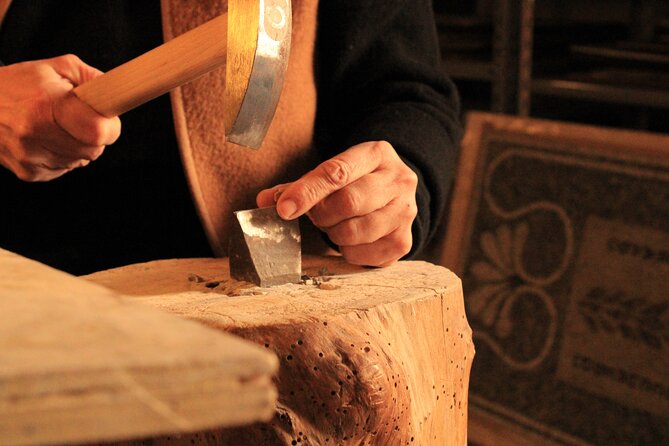
A few practical things will make your day smoother.
- Wear clothes you don’t mind getting a bit messy. You’ll be cutting, gluing, and handling materials.
- Give yourself a little extra time to get there. The class runs on a tight but friendly schedule.
- Keep your boxed mosaic protected on the trip back to your lodging. The box is meant for travel, but you still want to avoid rough handling.
- If you’re tempted to rush through the placement step, slow down. Accuracy early helps you look good in the final mosaic.
You’ll also find that some designs are easier to execute than others, so if you’re offered choices, pick a pattern that matches your confidence level. The instructor can help you steer, but your selection sets the tone.
Should you book the 3 Hours Mosaic Workshop in Trastevere?
If you want a memorable Rome experience that turns “I saw mosaics” into “I understand how mosaics are made,” I think this is a strong choice. The combination of small group teaching, a clear step-by-step process, and a boxed take-home mosaic makes it feel like value, not just entertainment.
Book it if you’re:
- planning a trip with plenty of church mosaics and want better context
- craving a calmer break from busy days
- looking for a unique souvenir you can feel proud of later
Skip it if:
- you want zero mess and zero effort
- you’re short on time and only want a quick stop
- you are expecting to create a mosaic fully from your own original design with no pattern options
If you’re on the fence, consider this your best bet for a Roman craft day that feels authentic, not touristy.
FAQ
How long is the 3 Hours Mosaic Workshop?
The workshop lasts about 3 hours.
Where does the workshop meet in Rome?
Meet at Via Corsini, 8, 00165 Roma RM, Italy.
How much does the mosaic workshop cost?
The price is $168.67 per person.
What language is the workshop offered in?
English is offered.
How many people are in the class?
The workshop has a maximum of 6 travelers.
Will I receive a ticket on my phone?
Yes, it includes a mobile ticket.
What will I make during the workshop?
You’ll create your own mosaic, and you’ll pack it in a box to take it with you.
Is there free cancellation?
Yes. You can cancel for a full refund up to 24 hours in advance.
Is the workshop suitable for most travelers, and can service animals attend?
Most travelers can participate, and service animals are allowed.
Latest additions from Rome
- Private Professional Photoshoot in Rome★ 5.0 · 8 reviews
- Rome: Testaccio Market Food Tour with Street Food & Wine★ 5.0 · 8 reviews
- Exclusive Pasta & Tiramisu Class with Wine near by Colosseum★ 5.0 · 8 reviews
- Loreto “Shrine of the Holy House of the Virgin Mary” Private Tour from Rome★ 5.0 · 8 reviews
- Rome Day to discover Florence and Pisa Hotel Pickup★ 4.5 · 8 reviews
- Rome: Christmas Nativities and Angels Tour★ 3.1 · 8 reviews
- Guided Tour of Vatican Museums and Sistine Chapel★ 5.0 · 8 reviews
- Rome: Cooking Class of fresh Pasta and Tiramisu Cake★ 5.0 · 8 reviews
3-Hour Experiences, compared.
Jewish Ghetto and Synagogues with Jewish Roman Guide 3 Hours
Read our review →

Rome Vespa Small Group Sightseeing Tour, 3 Hour Experience
Read our review →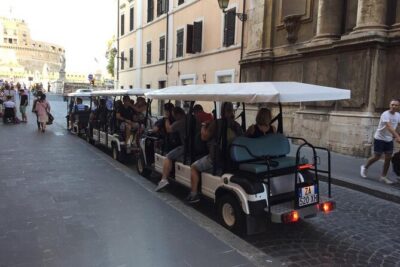
3 hours Private Golf Cart Tour – The major highlights in 3 hours.
Read our review →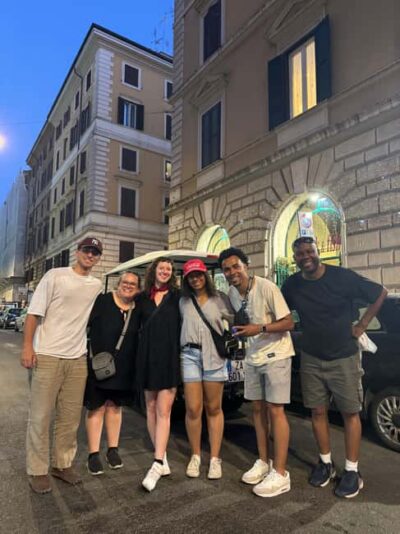
3-Hour Private Golf Cart Tour with Culinary Tasting Included
Read our review →Rome 3-Hour Evening Vespa Sidecar Tour with Gourmet Pizza Tasting
Read our review →
3 Hours Private/Group Tour Golf cart with Gelato
Read our review →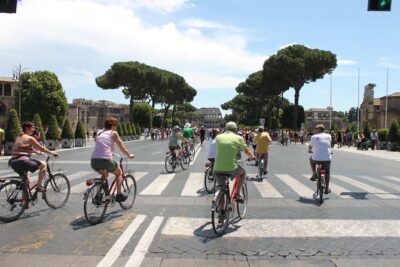
Rome Highlights Bike Tour 3 Hour City Cycling Experience
Read our review →Browse the lists this tour appears in