
Reviewed · ROME
10 Wonders of Rome in 3 hrs
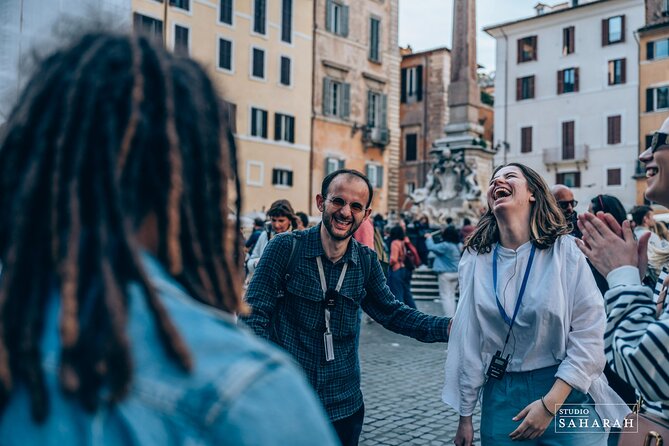
Rome can feel like too much. This 3-hour walking loop strings together Rome’s top sights with time for photos and real stories along the way. I especially like the small group feel and the steady rhythm of photo stops that keeps your bearings tight. One thing to plan for is the fact you do not enter the monuments, so it’s more about seeing and learning from the outside than buying ticketed add-ons.
I love that you can pick morning or afternoon to match your schedule, and the guide handles the crowd-control basics for a smooth walk. The only drawback is simple: it’s still a lot of pavement in a short window, so you’ll want moderate fitness and comfortable shoes.
In This Review
- Key Highlights at a Glance
- Why This 3-Hour 10 Wonders Walk Works in Rome
- Price and What Your $48.39 Covers (No Entry Tickets)
- The Route, Start to Finish, and How It Fits a Half-Day Plan
- Stop 1: Colosseum Start, Then Learn How to Read the Stone
- Stop 2: Vittoriano Photos, Mussolini’s Via dei Fori Imperiali, and the Power of Axes
- Stop 3: Pantheon, Then the Best Kind of Break Near the Church
- Stop 4: Passing Pontifical Gregorian University, a Jesuit First
- Stop 5: Trevi Fountain Time, Plus Photo-First Positioning
- Stop 6: Spanish Steps, Romance Meets Geometry
- Stop 7: Tempio di Adriano, a Quick Context Stop That Pays Off
- Stop 8: Column of Marcus Aurelius, a Free Finish Before the Views
- Villa Borghese Park and the Secret Panoramic View
- Small Group Energy, Official Guide, and Why the Guide Style Matters
- Who Should Book, and Who Should Think Twice
- Should You Book This 10 Wonders of Rome Tour?
- FAQ
- How long is the 10 Wonders of Rome tour?
- Is the tour offered in English?
- Are admission tickets included for the monuments?
- Is the Trevi Fountain stop free to view?
- What’s the group size?
- Where does the tour start and end?
- When will I receive confirmation after booking?
- What is the cancellation policy?
Key Highlights at a Glance
- Small group size (max 12), so your guide can answer questions without rushing you
- Official guide + Wi-Fi included, helpful for directions and quick info sharing
- No monument entry tickets included, which keeps the pace fast and the cost lower
- Photo-forward stops, especially Trevi Fountain and the Vittoriano photo points
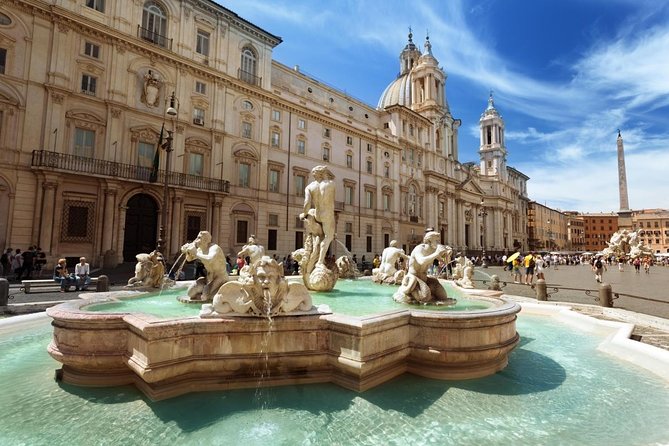
- Espresso and gelato nearby Pantheon, with a well-timed break in the center
- A final panoramic view at Villa Borghese Park, a satisfying “last look” over Rome
Why This 3-Hour 10 Wonders Walk Works in Rome
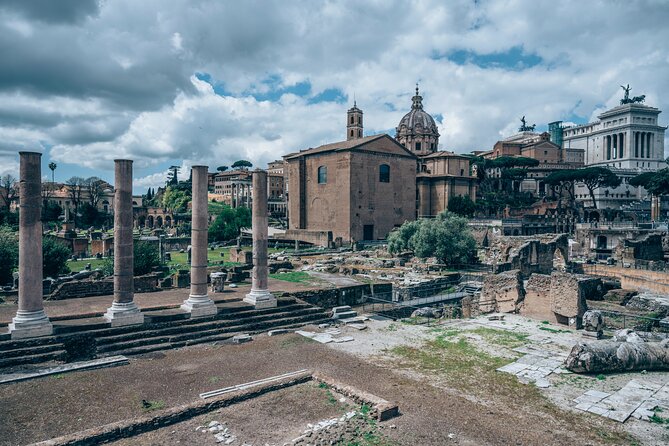
Rome has a talent for overwhelming you fast. This tour is built for that first-day feeling, when you want major landmarks without getting stuck in ticket lines for hours. In just about 3 hours, you get a logical route that hits the big symbols of the city, plus a view finish that feels like a reward.
What I like most is the pace. Each stop is short enough to keep momentum, but long enough to orient yourself, take pictures, and hear the key points. The guide’s style also matters here, because a good storyteller helps you see what you’re looking at instead of just snapping photos.
This is also a smart option if you want an introduction before you make bigger plans. After this, you’re better at choosing where to return, where to linger, and what to skip on a later day.
Not settled yet? These cover similar ground in Rome:
- Vatican Museums, Sistine Chapel & St. Peter’s Basilica Tour
★ 4.3 · 73,970 reviews - Vatican Museums, Sistine Chapel & St Peter’s Basilica Guided Tour
★ 4.5 · 39,149 reviews - Rome: Colosseum, Palatine Hill and Roman Forum Guided Tour
★ 4.8 · 32,814 reviews - Rome: Guided Tour of Colosseum, Roman Forum & Palatine Hill
★ 4.7 · 27,897 reviews
Price and What Your $48.39 Covers (No Entry Tickets)
At $48.39 per person for roughly 3 hours, this tour is priced like a “guided walking overview,” not a museum ticket package. That’s not a bad thing. In fact, skipping entry can be a huge value in Rome, where timed reservations and long lines can eat up your day.
Here’s the key tradeoff: for multiple stops, admission is not included, so you’re viewing the sights from the outside with commentary. That keeps things moving, and it prevents surprise costs if you’re trying to budget for multiple experiences.
Some sights are listed as free for admission, which means you’re not paying extra just to see the location. Trevi Fountain, Spanish Steps, and the Column of Marcus Aurelius are all part of the “no extra-ticket” lineup, so your money goes into the guide and the route.
If you want to go inside the Colosseum or the Pantheon, you should plan that separately. This tour is best for getting your story straight first, so your later ticketed visits feel more meaningful.
The Route, Start to Finish, and How It Fits a Half-Day Plan

The walk starts at Via del Monte Oppio, 3, 00184 Roma RM and ends at Viale del Belvedere, 00187 Roma RM. That end point matters because it helps you finish near the viewpoints, rather than backtracking to where you began.
You can choose a morning or afternoon departure, which is useful if your Rome day is already packed. The tour runs as a small group with a maximum of 12 travelers, so you’re not swallowed by a huge crowd.
You’ll also get a mobile ticket and Wi-Fi included, which is handy when you’re trying to save maps, confirm meeting details, or look up quick answers mid-walk. The tour is offered in English, and confirmation is sent within 48 hours of booking, based on availability.
Bottom line: this route is designed as a central-city sweep. It’s not a “get on and off buses” day. If you like walking through real Rome streets and hearing what you’re seeing, this format will feel efficient.
Stop 1: Colosseum Start, Then Learn How to Read the Stone
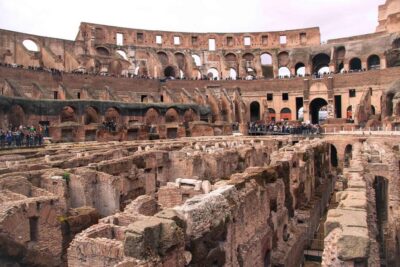
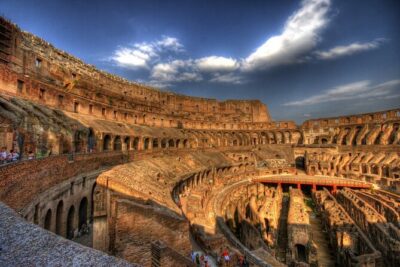
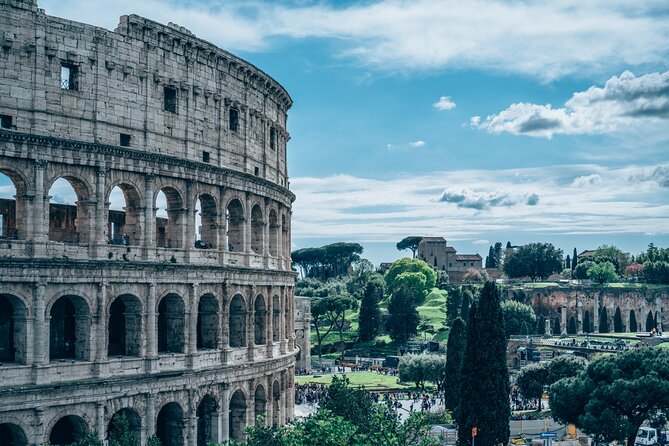
The tour kicks off in front of the Colosseum. Even without entering, that first moment sets the tone, because the building is still one of Rome’s clearest visual symbols. Your guide uses that opening to help you understand the site in plain terms, so it doesn’t feel like just a photo backdrop.
You’ll start with a short introduction and then move into the next stretch. Expect time for looking up at the scale and taking pictures from where your group is positioned. Because the Colosseum stop is quick, you won’t get bogged down, and the walk keeps you from spending the entire morning frozen in one spot.
Practical note: this is a high-traffic area. The benefit of having a guide is that you get pointed in the right direction for the viewpoints your group can use, without wasting time guessing where to stand.
If you’ve never been to Rome before, this is a strong first stop. It gives you a reference point that makes every later sight feel connected instead of random.
Stop 2: Vittoriano Photos, Mussolini’s Via dei Fori Imperiali, and the Power of Axes
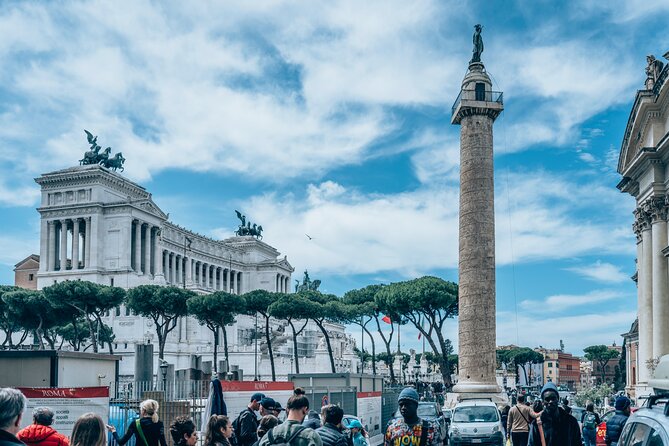
From the Colosseum area, you walk through Via dei Fori Imperiali, the grand route often associated with Mussolini’s dramatic planning style. This stretch is interesting because you can actually feel the idea of an architectural axis, where monuments line up to communicate power and message.
Next up is Monumento a Vittorio Emanuele II, also called the Vittoriano. The tour includes a photo stop in Venezia Square, positioned specifically for the big symbolic centerpiece, the Altar of the Fatherland. You get time to frame it well and take pictures that look like classic Rome postcards.
This is one of those stops where the exterior viewing actually works. The value is in understanding why the monument exists and how its placement relates to the city’s story. If you’re the type who likes to know what you’re looking at before you even take the photo, this part will feel satisfying.
One consideration: because your time is shared across stops, the photo moments are intentional but not long. Come prepared with a few “must get” angles in mind, and you’ll leave happy.
Another shape for the same afternoon in Rome:
Stop 3: Pantheon, Then the Best Kind of Break Near the Church
The Pantheon stop is timed so you can look at one of Rome’s most famous surviving structures while it continues to function as a church. That detail matters, because it changes how you interpret the building. You’re not just seeing ruins; you’re seeing a monument still in use.
After the Pantheon, you get a short break with Italian espresso, my treat. This is a small line in the description, but it’s a big deal in real life, because it turns a heavy sightseeing day into something more human. It also gives you a chance to reset before Trevi Fountain.
There’s also a well-known gelato option nearby, Gelateria Fiocco Di Neve, if you’re ice-cream-focused. Even if you skip it, knowing the neighborhood is food-friendly helps you plan what to do after the tour.
The Pantheon area can be crowded, so the guide’s job is to keep the group moving and positioned well. If you’re hoping for photos without endless standing and waiting, this stop is paced with that in mind.
Stop 4: Passing Pontifical Gregorian University, a Jesuit First
Next you pass the Pontifical Gregorian University, described as the first university founded by Jesuits. It’s a quick stop, but it’s a nice shift from ancient Rome into the long influence of the Church on education and culture.
This part works best if you enjoy connecting the dots. Rome isn’t only emperors and emperors’ stone. It’s also centuries of institutions shaping the city’s mindset. Even from the sidewalk, that context can make the surroundings feel more intentional.
The stop is brief, about 10 minutes, so you won’t get stuck in one place. Instead, you’ll keep walking toward the next iconic landmark.
If you’re expecting a deep classroom-style history lecture, this is not that. The value here is direction and context, so later you can choose how deep to go on your own terms.
Stop 5: Trevi Fountain Time, Plus Photo-First Positioning
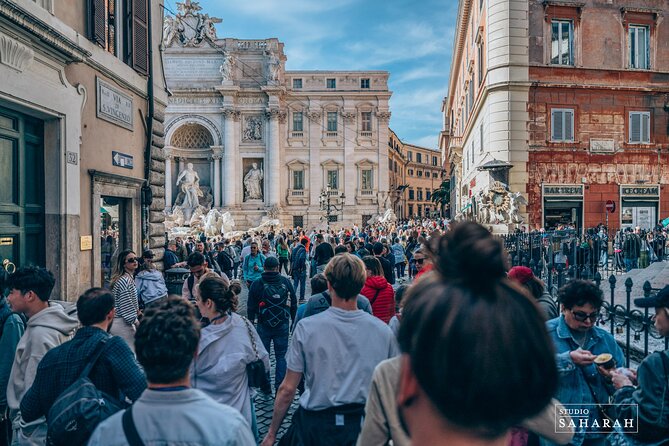
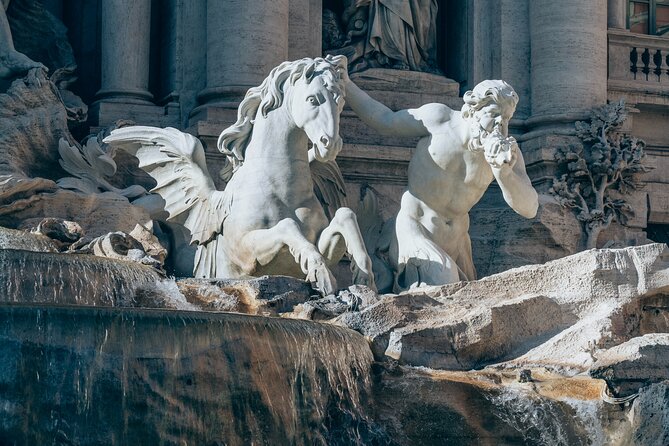
Trevi Fountain is where the tour leans hard into the camera. Your guide helps you admire the fountain as a jewel of water and stone, with a 15-minute stop that gives time to get the best angles. The fountain is listed with free admission, so this is one of the easiest “worth it” stops.
Many Rome tours rush through Trevi. This one tries to balance seeing with photography. The pacing also matters because Trevi can get chaotic, and you’ll feel better if you have a plan for where to stand, when to move, and what to focus on.
From a practical point of view, I like that the route keeps you near central areas where it’s easy to continue exploring after the tour ends. Trevi is also a great reference point for your next day plans, because you’ll know what streets radiate outward.
If you’re doing this early in your trip, Trevi becomes your “bookmark” landmark. If you’re doing it later, it still works as a fast reality check on what you’ve already seen.
Stop 6: Spanish Steps, Romance Meets Geometry
The Spanish Steps are next, again listed as free for admission. The tour highlights them for their unique design, elegance, and romantic atmosphere, and you’ll get about 10 minutes to take it in.
This stop is a good example of how the tour uses short time wisely. Instead of a long pause, you get enough minutes to capture images, notice the symmetry, and understand why these steps became part of Rome’s visual identity.
Even if the steps are crowded, your guide’s role is to help the group find workable photo positions without turning your walk into a standstill. That’s a big part of why this tour can feel smooth rather than frantic.
If you love classic Rome scenes, this is the kind of stop you remember even after you’ve left. It’s one of the most recognizable silhouettes in the city.
Stop 7: Tempio di Adriano, a Quick Context Stop That Pays Off
The route then mentions the Tempio di Adriano, with only about 5 minutes allotted. That short stop might sound small, but it’s exactly the point of a highlights tour. You learn what it is, you connect it to the broader theme of Rome’s sacred and civic structures, and you keep moving.
This is also a useful moment for your brain. After the big crowd magnets like Trevi and Spanish Steps, a quieter historical stop can feel like a mental breather.
Because there is no entry included for this stop, you’re not sacrificing a ticket experience. You’re getting the context so that when you see related sites later, your understanding sticks.
Stop 8: Column of Marcus Aurelius, a Free Finish Before the Views
The Column of Marcus Aurelius is listed with free admission, and the tour assigns about 4 minutes here. That’s brief, but the column is visually impressive, and the guide focuses on the art and what it represents.
This is a “look up and notice details” stop. Columns like this reward attention, and the short timing keeps it from turning into a slow slog. You’ll also appreciate that you’re not paying entry money for a major work of art.
From here, the route transitions into the final showstopper area.
Villa Borghese Park and the Secret Panoramic View
After the Spanish Steps, you pass by Villa Borghese Park and reach a final destination that’s described as a Secret panoramic view. This is the part that makes the whole tour feel like it has an ending, not just a series of stops.
Finishing with views also changes how you carry the day home. Instead of memorizing only monuments, you leave with a sense of where things sit relative to one another. It helps you plan future walks, museum days, and casual wander time.
Because the total tour length is short, you’ll likely feel the walk more than you would on a longer full-day program. Still, ending with a panoramic look is a smart way to justify the movement.
It’s also a good time to reset for photos that don’t feel like tourist-card snapshots. The viewpoint angle can feel more personal, even in a busy city.
Small Group Energy, Official Guide, and Why the Guide Style Matters
This is a walking tour with an official tour guide, with Wi-Fi included and a max of 12 people. That matters because Rome walking tours can go one of two ways: one that feels like a stampede, or one that feels like a guided conversation in motion.
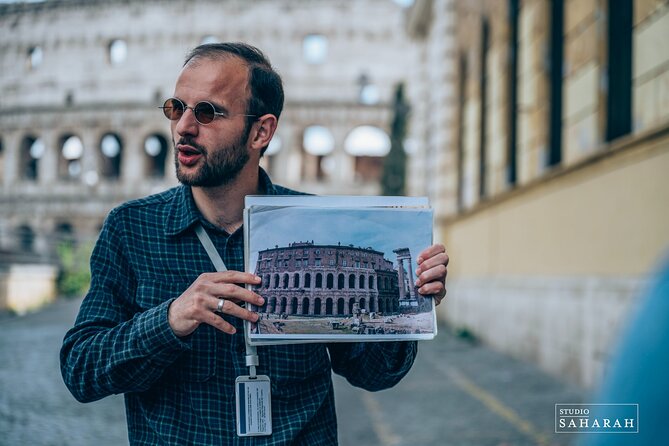
The guides associated with this tour include Joseph, Drita, and Isuf. Their teaching styles show up in the way the stops are explained, with humor and interactive elements like quick quizzes. That kind of “check-in” keeps the information from sliding off your brain the moment you reach the next street.
You’ll also hear practical tips along the way. In particular, the tour is known for helpful answers to common questions, like how to navigate the subway. That makes this tour more than sightseeing, because it saves you time later.
Finally, guides are photo-minded. Many tours help you take one picture at a stop. Here, the focus on photo positioning is part of why the walk feels worth it.
Who Should Book, and Who Should Think Twice
This tour is best for you if you want a high-impact overview of central Rome in a short window. It’s especially good for first-time visitors who want to get your bearings fast and understand how the main sites connect.
It also suits you if you like guided explanations and short stops over long museum time. Since monument entry tickets are not included, you avoid the “paying to wait” trap and still learn the essentials.
If you prefer to linger at sites for an hour or two, this probably won’t feel perfect. The stops are timed, and the whole format is about moving and seeing many places quickly.
It’s also worth noting the tour requires moderate physical fitness, and the route includes walking and steps in the final area, so plan accordingly if mobility is a concern.
Should You Book This 10 Wonders of Rome Tour?
Yes, if your goal is a smart first pass through Rome’s main highlights and you want a guided route that keeps you from feeling lost. The value is in the combination: small group, official guidance, practical tips, and multiple major landmarks in about 3 hours.
Skip it only if you know you want deep inside-the-monument experiences during those same hours. This is an outside-view learning tour, designed to reduce friction and maximize orientation.
If you’re trying to decide, I’d book it early in your trip. Then you can use what you learn to pick your best follow-up visits, with a much clearer sense of what matters most to you.
FAQ
How long is the 10 Wonders of Rome tour?
It runs for about 3 hours.
Is the tour offered in English?
Yes, it is offered in English.
Are admission tickets included for the monuments?
No, admission tickets are not included for several stops, and the tour does not include entering the monuments.
Is the Trevi Fountain stop free to view?
Trevi Fountain is listed as free for admission.
What’s the group size?
The tour has a maximum of 12 travelers.
Where does the tour start and end?
It starts at Via del Monte Oppio, 3, 00184 Roma RM, Italy and ends at Viale del Belvedere, 00187 Roma RM, Italy.
When will I receive confirmation after booking?
Confirmation is received within 48 hours of booking, subject to availability.
What is the cancellation policy?
This experience is non-refundable and cannot be changed for any reason.
Latest additions from Rome
- Guided Tour Vatican Museums & Sistine Chapel★ 4.1 · 30 reviews
- Exclusive Rome by Night Vespa Tour★ 5.0 · 30 reviews
- Transfer Rome to Airports★ 4.5 · 30 reviews
- Vatican: St.Peter’s Basilica & Dome – Reserved Entry & Tour★ 4.1 · 30 reviews
- Rome street art tour: off the beaten path with a local guide★ 5.0 · 30 reviews
- Tivoli, Hadrians Villa and Villa d’Este, a charming day trip from Rome★ 4.5 · 30 reviews
- Rome Food Tasting with Wine Pairing Italian Authentic Flavors★ 5.0 · 31 reviews
- Inspirational Cooking on the Roman Chef’s Panoramic Terrace★ 5.0 · 30 reviews